The ‘Tiger in the Tree’ Hold: Why This Traditional Burping Method Releases Stubborn Gas Instantly
Welcome to the Quiet Hours, Mama
It is 3:00 AM, the house is silent except for the rhythmic, pained cries of your little one, and your heart is heavy with that familiar mixture of exhaustion and deep empathy. We have all been there. You have tried the gentle back pats, the swaying, and the shushing, but that stubborn bubble of gas just won’t budge. As a doula, I have sat in those dimly lit nurseries more times than I can count, and if there is one ‘magic’ tool I wish I could hand every new mother, it is the Tiger in the Tree hold.
This traditional burping method, often passed down through generations of midwives and healers, is more than just a way to get a burp; it is a full-body soothing technique. It works with gravity, gentle abdominal pressure, and the warmth of your skin to release trapped air that standard over-the-shoulder burping often misses. In this guide, we are going to dive deep into why your baby gets so gassy, how to master this hold with confidence, and how to turn those fussy evenings into peaceful bonding moments.
“You are the exact mother your baby needs. Even in the middle of the crying, your presence is their greatest comfort. Take a deep breath; we are going to figure this out together.”
Understanding the ‘Witching Hour’ Belly: Why Babies Get So Gassy

The Biology of the Bubble
To understand why the Tiger in the Tree hold is so effective, we first have to look at why babies are so prone to gas in the first place. A newborn’s digestive system is incredibly immature. The muscles that move food and gas through the intestines are still learning their rhythm, a process called peristalsis. When air gets trapped—whether from gulping during a feeding, crying, or even just the breakdown of lactose—it can create painful pressure in their tiny abdomens.
Common Culprits of Infant Gas
- Immature Digestion: The gut flora is still developing, which can lead to more gas production during digestion.
- Air Swallowing (Aerophagia): This happens most often with a shallow latch during breastfeeding or if a bottle nipple flows too quickly.
- Overstimulation: Believe it or not, a stressed nervous system can lead to a tense belly, making it harder for gas to pass.
- The Crying Cycle: When a baby cries because of gas, they swallow more air, which creates more gas. It is a frustrating loop that we need to break.
Standard burping positions, like holding the baby upright against your chest, rely almost entirely on the bubble rising naturally. But sometimes, that bubble is ‘stuck’ under the curve of the stomach or deep in the intestinal folds. That is where positional therapy comes into play.
Mastering the Tiger in the Tree: A Step-by-Step Physical Guide
The Anatomy of the Hold
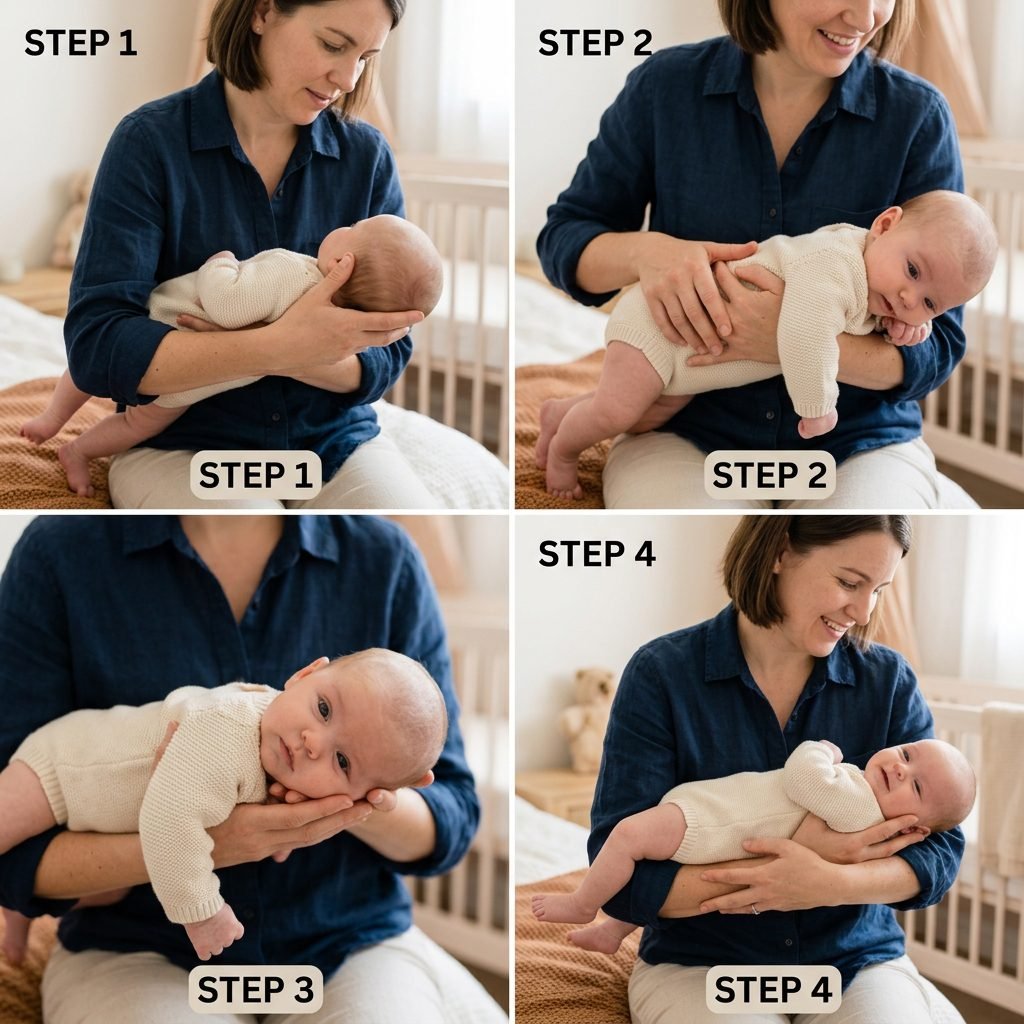
The Tiger in the Tree (also known as the ‘Football Hold’ or ‘Colic Carry’) is a masterpiece of ergonomic soothing. It places the baby in a face-down position across your arm, which provides constant, gentle pressure on the tummy while allowing the limbs to hang relaxed.
How to Perform the Hold Safely
- The Foundation: Slide your dominant hand between your baby’s legs and support their chest and tummy with your forearm.
- The Head Support: Rest your baby’s head in the crook of your elbow or in your hand, ensuring their face is clear and their chin is not tucked too tightly against their chest (this keeps the airway open).
- The Angle: Tilt your arm slightly so the baby’s head is higher than their bottom. This allows gravity to help the gas bubbles rise toward the esophagus.
- The Soothing Motion: Use your other hand to gently pat or rub your baby’s back. You can also add a gentle ‘bounce’ by bending your knees or swaying your hips.
“Remember, Mama: The goal isn’t just the ‘pop’ of a burp. The goal is relaxation. When the baby’s body relaxes, the gas moves much more easily.”
I often tell my clients to think of their arm as a warm, sturdy branch and the baby as a tired little tiger draped over it. The warmth of your forearm acts like a heating pad for their tummy, which can significantly reduce cramping.
Why This Method Works When Others Fail

Pressure, Gravity, and Warmth
Why do we see such instant relief with this method? It comes down to three physical factors that standard burping lacks. In the over-the-shoulder position, the baby’s abdomen is often pressed against your collarbone, which can be too hard or improperly angled. In the ‘sit-up’ burp, the baby often slumps, which can actually compress the stomach and trap air further.
| Feature | Over-the-Shoulder | Tiger in the Tree |
|---|---|---|
| Pressure Point | Upper Chest | Lower Abdomen (The ‘Gas Zone’) |
| Gravity Help | Moderate | High (Downward pressure on bubbles) |
| Spine Alignment | Vertical | Neutral/Curved (Promotes relaxation) |
| Visibility | Hard to see baby’s face | Easy to monitor cues and airway |
By laying the baby across your arm, you are providing counter-pressure. As the baby breathes, their tummy pushes against your firm forearm. This massage-like action helps break up large gas bubbles into smaller, easier-to-pass ones. Furthermore, the ‘dangling’ of the arms and legs in this position helps to switch the baby’s nervous system from ‘Fight or Flight’ (crying) to ‘Rest and Digest’ (parasympathetic activation).
Customizing the Technique for Your Baby’s Needs

Adapting for Reflux and Size
Every baby is a unique little soul, and what works for one might need a slight tweak for another. If your baby has Gastroesophageal Reflux (GERD), you’ll want to be extra mindful of the angle. While the Tiger in the Tree is excellent for gas, a baby with severe reflux may need a steeper incline to prevent ‘spit-up’ from becoming uncomfortable.
The ‘Doula Pro-Tips’ for Success
- The Heat Factor: If your baby is particularly fussy, try placing a warm (not hot!) washcloth over your forearm before picking them up. The extra heat helps relax the abdominal muscles.
- The Movement: While in the hold, perform a ‘slow-motion’ walk. The gentle vibration of your footsteps combined with the tummy pressure is often enough to send a baby straight to sleep.
- The Switch: If your arm gets tired, you can transition this hold to your lap. Sit with your legs crossed and lay the baby across your thighs in the same face-down position.
Warning: Always ensure the baby’s nose and mouth are completely unobstructed. Never use this position for sleep; it is strictly a soothing and burping technique for supervised, wakeful moments.
The Strategic Burping Schedule: When to Use the Tiger

Timing is Everything
In my years as a doula, I’ve found that burping isn’t just something you do at the end of a meal. To prevent the ‘buildup’ that leads to a screaming baby at 7:00 PM, we need to be proactive. I recommend using the Tiger in the Tree hold at specific intervals throughout the day.
| Severity of Gas | Recommended Frequency | Best Method to Pair With |
|---|---|---|
| Mild (Occasional fussing) | Once after every feed | Gentle back rubs |
| Moderate (Squirming during feeds) | Mid-feed ‘break’ burp | Bicycle legs + Tiger Hold |
| Severe (Colic/Witching Hour) | Every 15-20 minutes during fussy peaks | Tiger Hold + White Noise |
If you notice your baby pulling away from the breast or bottle, arching their back, or pulling their knees to their chest, don’t wait for the end of the feeding. Transition them immediately into the Tiger in the Tree. Releasing that mid-meal bubble makes room for the rest of the milk and prevents the baby from swallowing even more air due to discomfort.
Conclusion
You’ve Got This, Mama
The journey of early motherhood is filled with steep learning curves, and infant gas is one of those hurdles that can feel overwhelming when you are sleep-deprived. But remember, the Tiger in the Tree hold is a tool you can carry with you anywhere. It requires no special equipment—just your loving arms and a little bit of technique.
As you practice this hold, you will start to recognize the specific ‘sigh’ your baby gives when the pressure finally releases. You’ll feel their little body go limp against your arm as they finally find comfort. In those moments, you aren’t just ‘fixing’ a gas problem; you are building trust. You are showing your baby that when they are in pain, you have the tools and the heart to help them through it. Sleep well tonight, knowing you have one more secret weapon in your motherhood toolkit.