
5 High-Contrast Black and White Sensory Activities to Boost Newborn Brain Development
Welcome to the Beautiful World of Newborn Discovery
Hello, sweet mama. If you are reading this, you are likely in the thick of those hazy, beautiful, and sometimes exhausting early weeks of motherhood, or perhaps you are nesting and preparing for your little one’s arrival. As a doula and maternal wellness guide, I want to whisper something reassuring in your ear: you are doing an incredible job. Those quiet moments spent gazing into your baby’s eyes are more than just bonding; they are the foundation of their entire world. In the first few months of life, a baby’s brain is a marvel of rapid expansion, forming millions of neural connections every second. However, because their vision is the least developed sense at birth, they see the world as a blurry, desaturated place. That is where the magic of high-contrast play comes in.
Newborns can only focus about 8 to 12 inches away—coincidentally, the exact distance from your face to theirs while nursing or rocking. Their retinas can initially only distinguish between high-contrast boundaries, specifically black and white. By providing them with bold patterns and intentional sensory experiences, we aren’t just ‘playing’; we are literally helping their brain’s visual cortex to organize and strengthen. In this guide, we will explore five practical, stylish, and evidence-based activities that you can easily integrate into your daily rhythm. These activities are designed to be low-stress for you and high-impact for your little one. Let’s dive into the science and the soul of sensory play.
The Science of Monochrome: Why High Contrast Matters
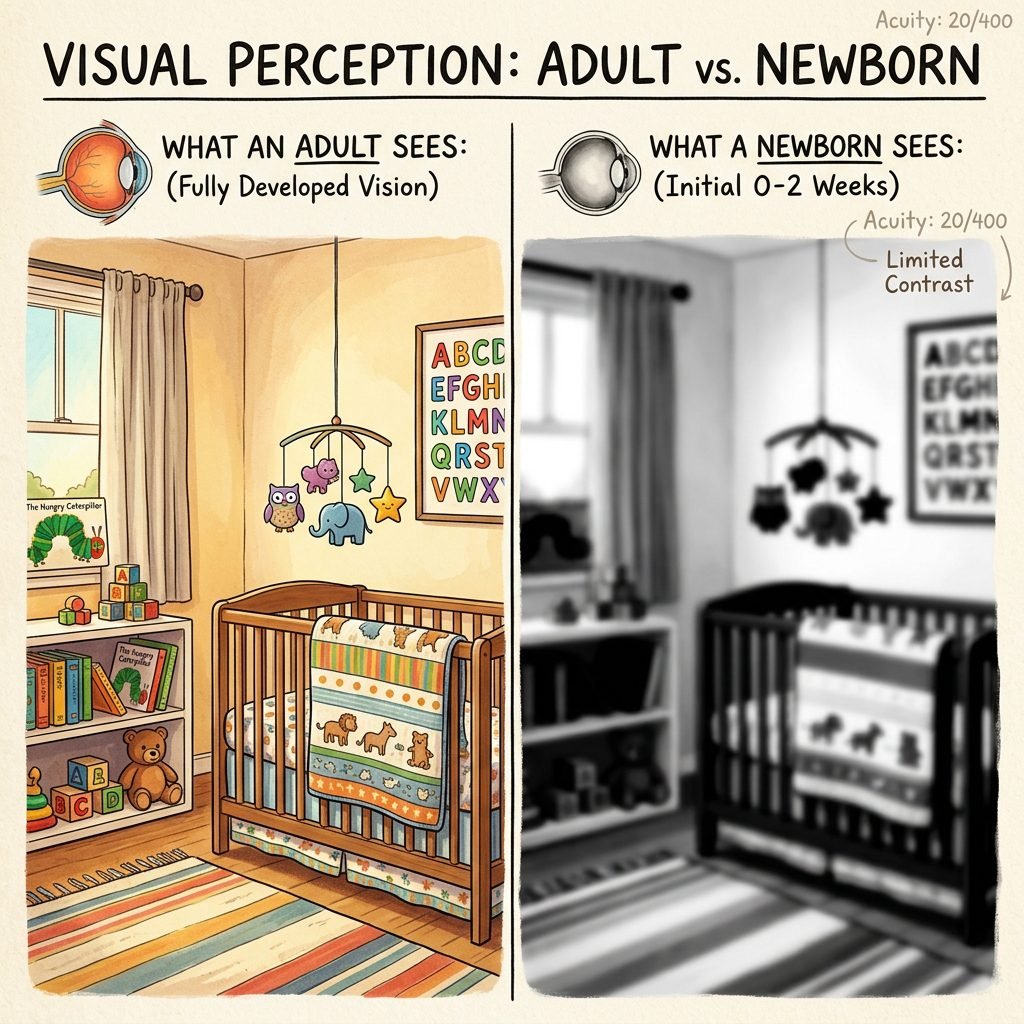
Understanding the Newborn Eye
At birth, the nerve cells in your baby’s brain and eyes are not yet fully connected. While they can perceive light and shadow, they lack the ability to see subtle color gradients or depth. Research shows that high-contrast images send the strongest visual signals to the baby’s brain. These signals trigger more growth in the visual center of the brain compared to soft pastels or muted tones. This is why those beautiful, pale nursery colors we love are actually quite invisible to your newborn!
The Benefits of Visual Stimulation
- Increased Focus: High-contrast patterns help babies learn how to track objects and coordinate their eye movements.
- Longer Attention Spans: When a baby has something clear to look at, they are more likely to stay engaged and calm.
- Cognitive Foundations: Identifying shapes and boundaries is the first step toward complex visual processing and future literacy.
Remember, mama: you don’t need expensive gadgets. The most powerful tool for your baby’s development is a simple, bold image and your loving presence.
| Age Range | Visual Milestone | What They See |
|---|---|---|
| 0-1 Month | Focusing on close objects | Black, white, and shades of gray |
| 2-3 Months | Tracking moving objects | Primary colors (Red is often first) |
| 4-6 Months | Depth perception | A full spectrum of vibrant colors |
Activity #1: The Tummy Time Art Gallery
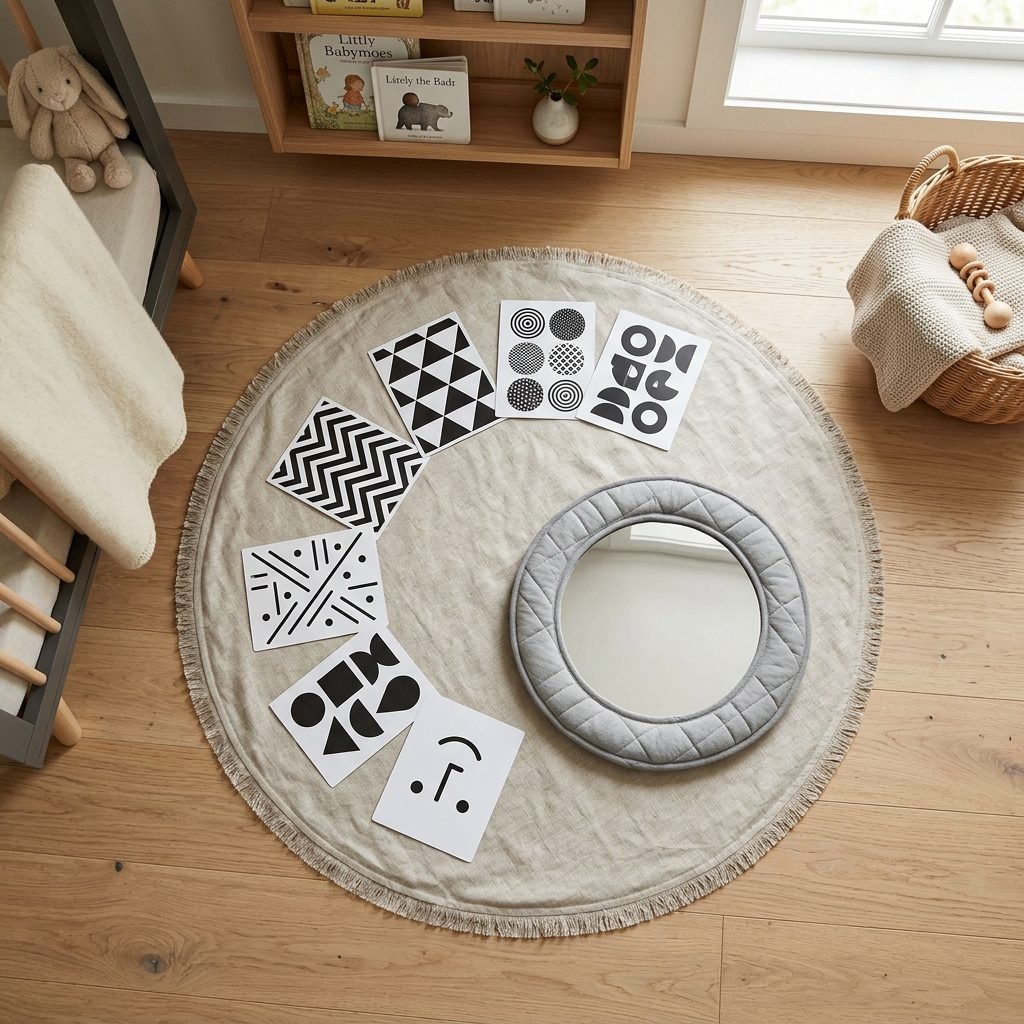
Transforming a Necessary Chore into a Visual Feast
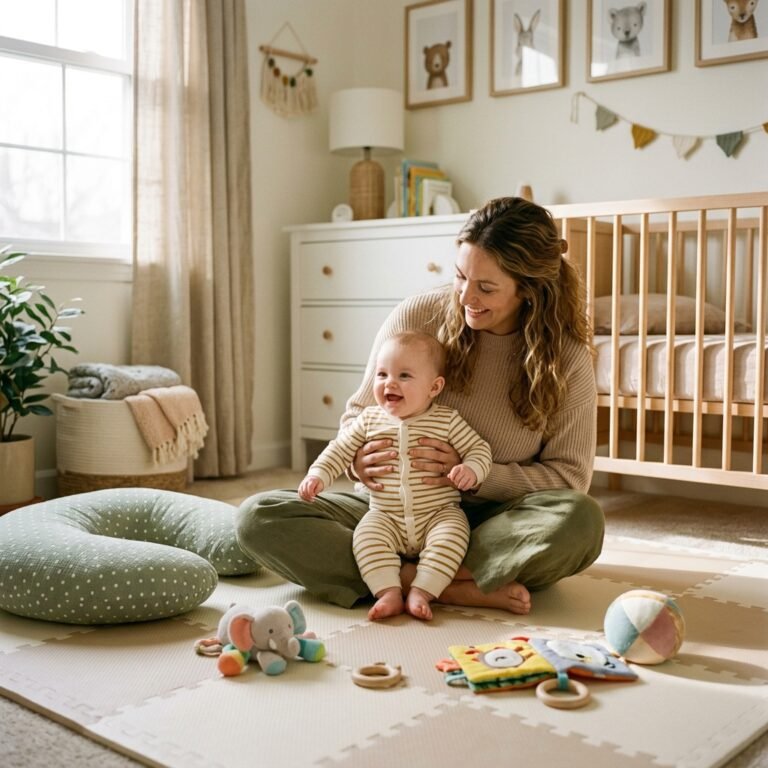
Tummy time is essential for building the neck, back, and shoulder strength your baby needs for rolling and sitting. However, many babies find it frustrating. By creating a Tummy Time Art Gallery, you provide a visual ‘reward’ for their hard work. This activity uses DIY high-contrast cards to keep them engaged while they build physical strength.
How to Create Your Gallery
- Print or Draw: Use heavy white cardstock and a thick black permanent marker to draw bold shapes: circles, stripes, checkerboards, and simple happy faces.
- The Setup: Place a soft play mat on the floor. Prop the cards up against the baseboards or a low-profile nursing pillow about 10 inches from where your baby’s head will be.
- The Rotation: Change the cards every few days. Start with simple shapes and move to more complex patterns as your baby gets older.
Pro-Tip: If your baby gets fussy, try lying on your tummy facing them. Your face is the most ‘high-contrast’ and beautiful thing they can see! Interspersing your face with the cards creates a wonderful social-emotional connection.
Activity #2: The High-Contrast Mobile & Visual Tracking
Developing the Art of the Follow
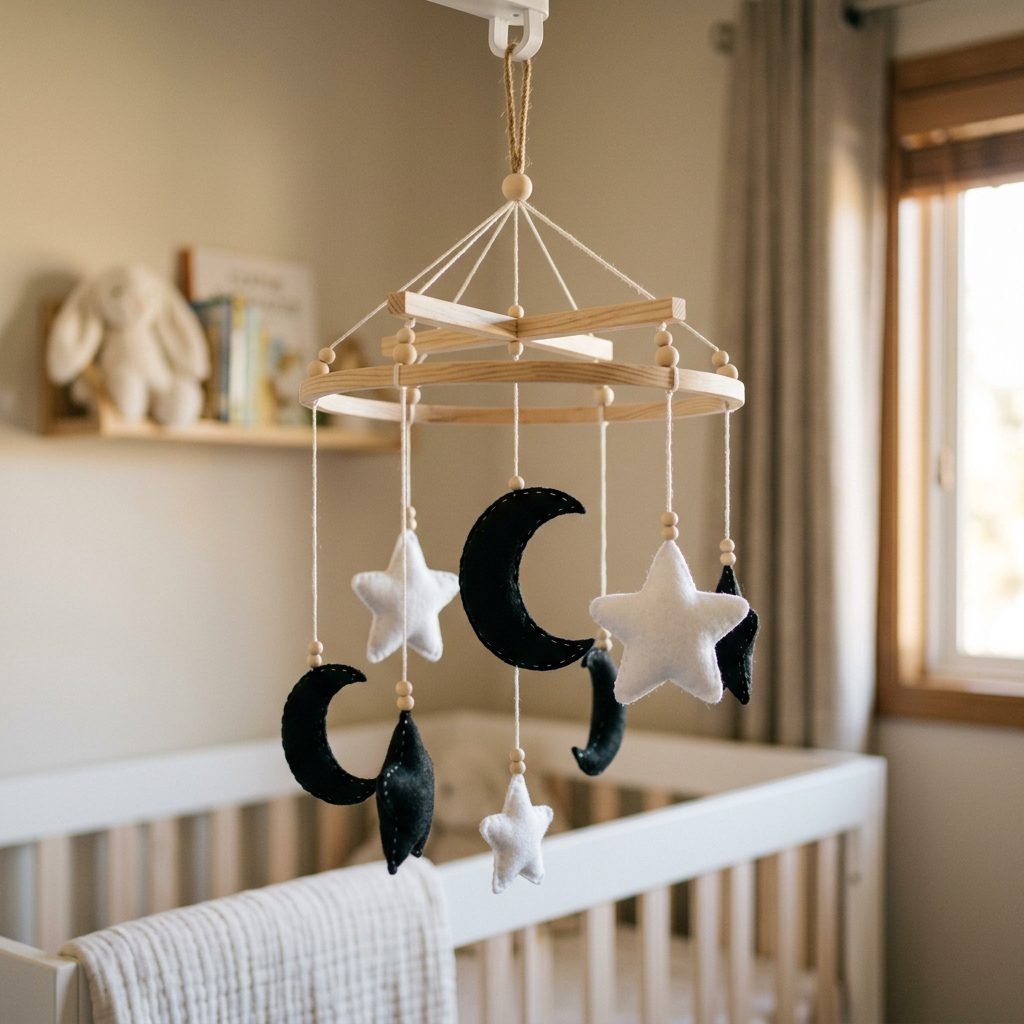
Visual tracking—the ability to follow a moving object with the eyes—is a critical developmental milestone. A high-contrast mobile placed over a changing table or a play area (not the crib, as we want the crib to be for sleep!) can provide the perfect practice. When the air gently moves the mobile, your baby’s eyes work to ‘lock on’ to the black and white shapes.
Implementation Steps
- Safe Placement: Ensure the mobile is securely fastened and hanging about 12 inches above the baby’s chest, not directly over their face.
- Slow Movement: Gently blow on the mobile to start a slow, rhythmic rotation. Watch your baby’s eyes. You may see them ‘jump’ at first, but over time, their tracking will become smooth and fluid.
- Contrast Variety: Use 3D shapes like black and white felt spheres, cubes, or even simple ribbons tied to a wooden hoop.
Affirmation: My baby is learning at their own pace, and I am the perfect guide for their journey.
Activity #3: The Sensory Scarf Rhythms

A Dance of Light and Shadow
This is one of my favorite doula-recommended activities because it involves rhythm and bonding. Using a lightweight black or white silk scarf (or even a piece of muslin fabric), you can create a gentle ‘dance’ that stimulates both the visual and tactile senses.
How to Play
- Lay your baby comfortably on their back.
- Take a black scarf and slowly move it across their line of vision, from left to right.
- Pause when they lock eyes with the fabric, then move it slowly back.
- Gently let the fabric brush against their feet or hands, describing what you are doing: ‘Here is the soft, black scarf on your toes.’
This activity helps with midline crossing—the ability for the eyes to track across the center of the body—which is vital for future skills like reading and writing.
Activity #4: The Monochrome Book Club
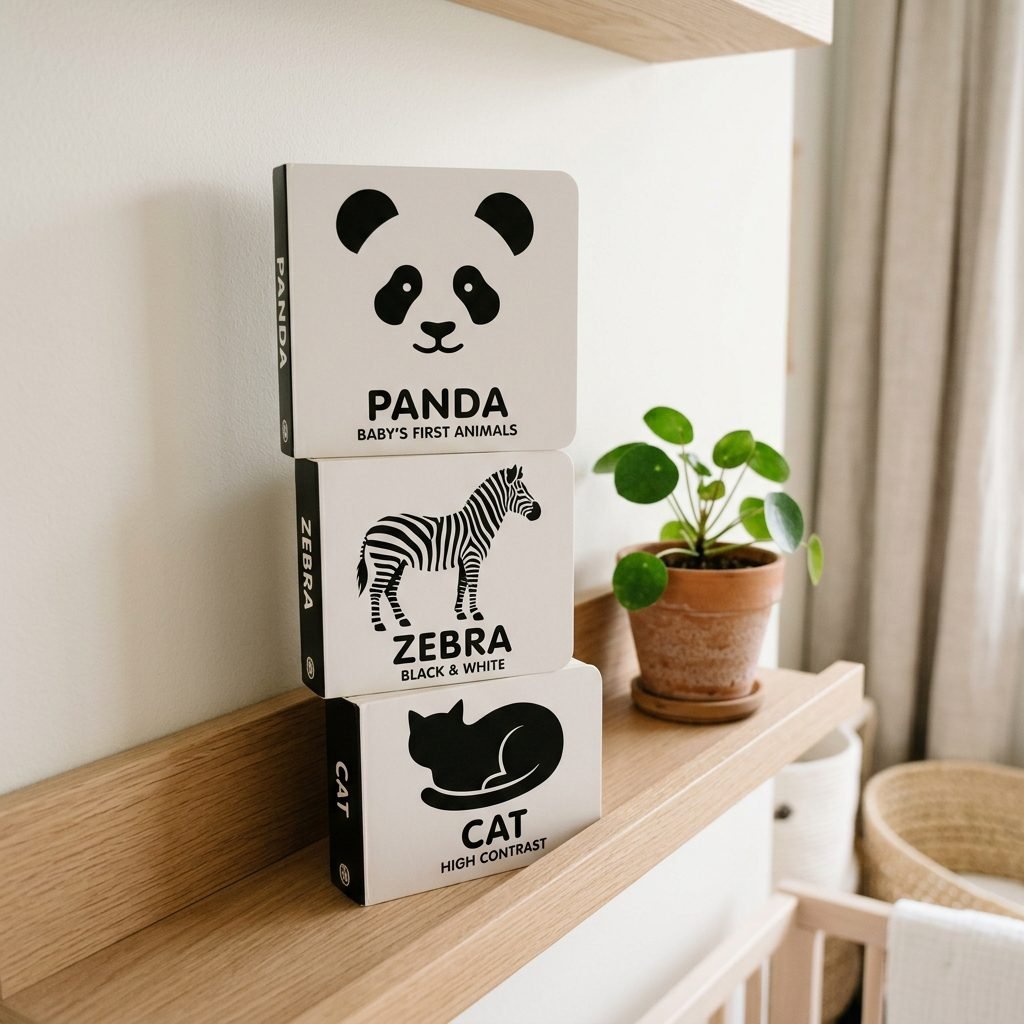
Early Literacy and Visual Anchors
It is never too early to read to your baby! While they won’t understand the plot, the rhythm of your voice combined with high-contrast illustrations creates a powerful multisensory experience. Board books specifically designed in black and white are perfect for this ‘Monochrome Book Club’ session.
Materials and Budget
| Item | Purpose | Estimated Cost |
|---|---|---|
| B&W Board Books | Visual focus and bonding | $7 – $15 |
| Black Cardstock | DIY card making | $5 |
| White Paint Pen | Drawing on black paper | $3 |
| Laminating Sheets | Protecting DIY cards | $10 |
| Total Budget | Sensory Starter Kit | ~$25 – $40 |
When reading, point to the shapes. Say, ‘Look at the bold black circle.’ This introduces the concept that symbols have meaning, laying the very first bricks for language development.
Activity #5: Mirror, Mirror on the Floor
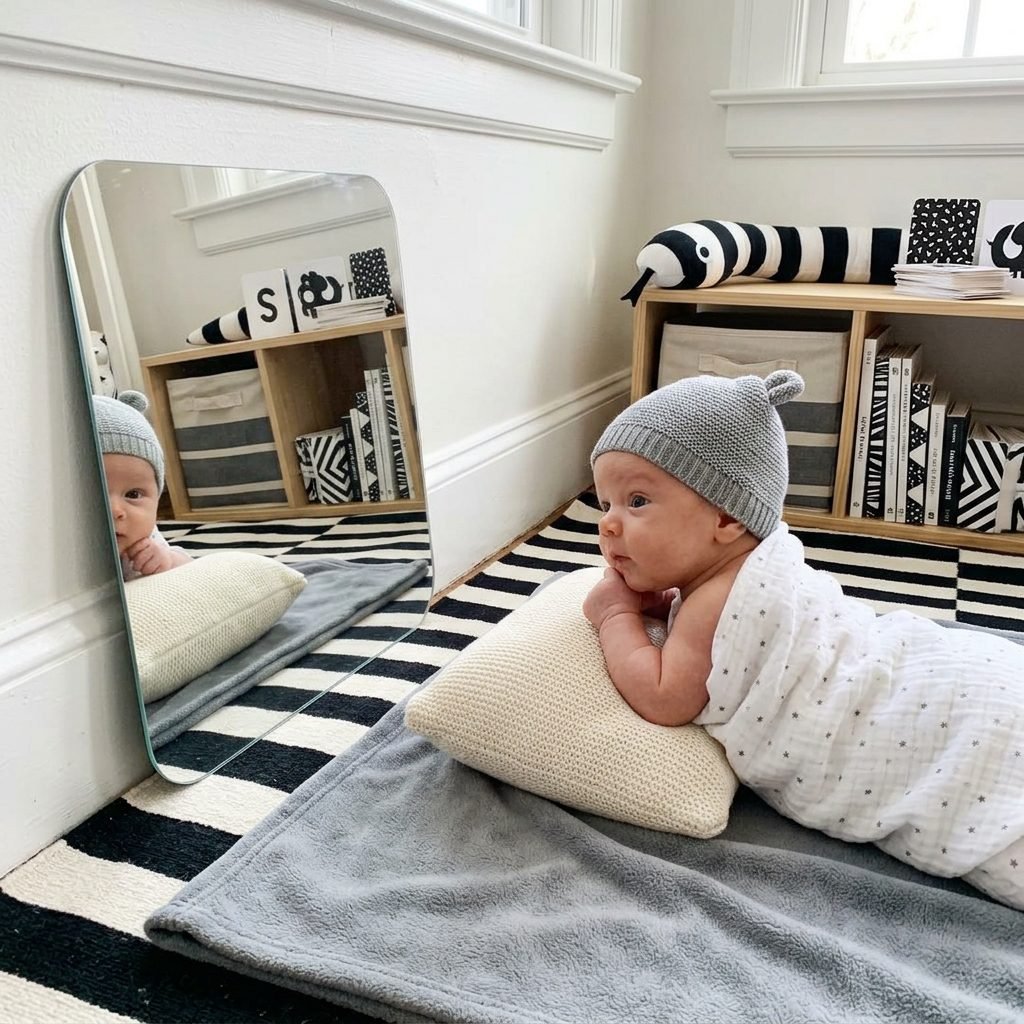
Social-Emotional and Visual Synergy
Babies are obsessed with faces. A mirror provides a high-contrast experience because of the way light reflects, and it also features the most interesting face of all: their own! Using a shatterproof baby-safe mirror during floor play is a fantastic way to boost brain development.
The Mirror Setup
- Angle the Mirror: Place the mirror vertically against a wall or use a floor-standing baby mirror.
- Double the Contrast: Place your black and white cards so they are reflected in the mirror. This creates a complex visual environment that encourages the baby to look back and forth, building spatial awareness.
- Social Interaction: Look into the mirror with your baby. Smile, stick out your tongue, and watch as they try to process the ‘two’ mamas they see.
Safety Warning: Always ensure mirrors are specifically designed for infants and are made of acrylic or polished metal to prevent breaking.
Creating a Calm Sensory Environment
Avoid Overstimulation
While stimulation is good, a newborn’s nervous system is easily overwhelmed. As a doula, I always remind parents to watch for ‘disengagement cues.’ If your baby turns their head away, arches their back, or starts to cry, it’s time to put the cards away and offer a ‘sensory reset’—usually a snuggle in a dark room or some quiet skin-to-skin time.
Stylist’s Touch: Integrating Contrast into the Nursery
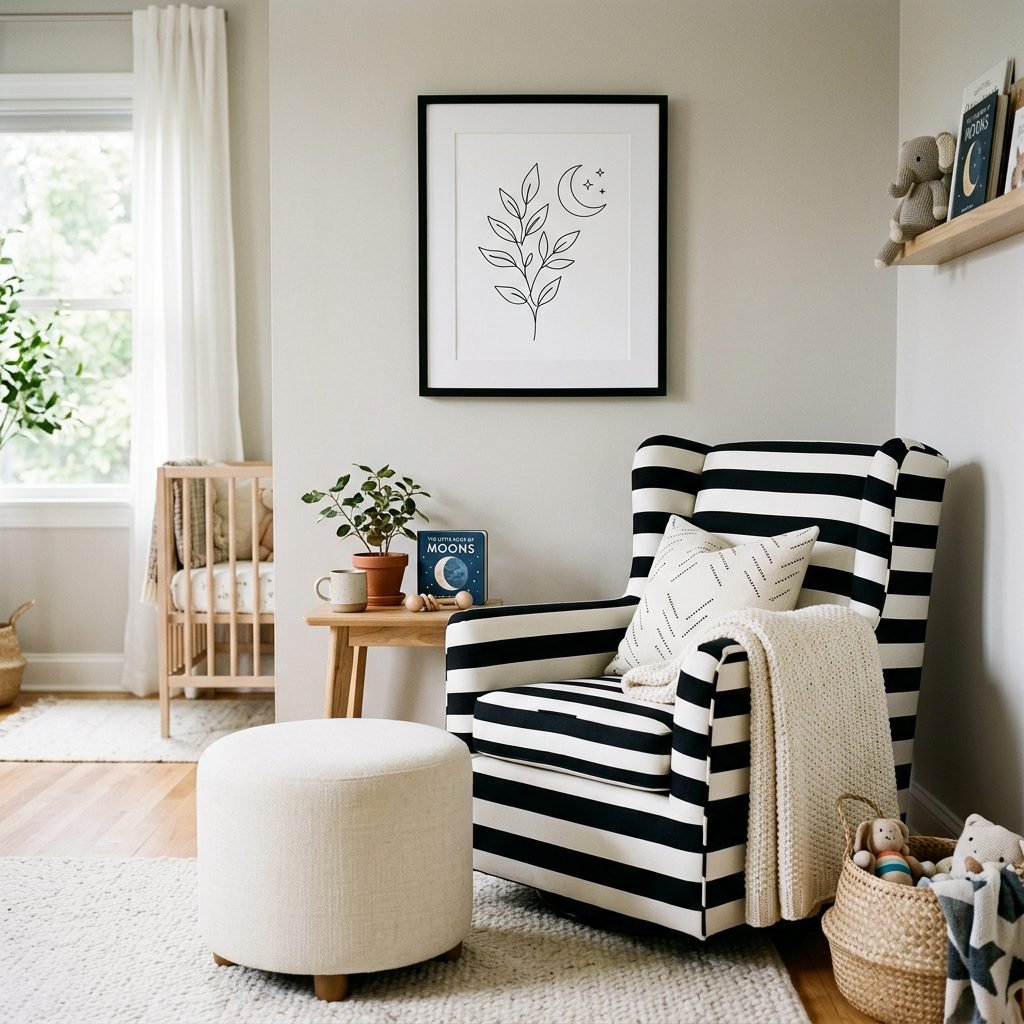
You don’t have to sacrifice your aesthetic! You can integrate high contrast through stylish elements like a black and white striped throw blanket, a minimalist geometric rug, or even framed monochrome line art. These elements serve as ‘passive’ brain boosters that beautify your home while benefiting your baby.
Conclusion
Nurturing the Spark of Intelligence
Mama, as you embark on these simple activities, remember that the goal isn’t to create a ‘genius’ overnight. The goal is to connect. By meeting your baby where they are—in their world of shadows and bold lines—you are telling them that their development matters and that you are right there with them. These five activities—the Tummy Time Gallery, the Mobile, the Scarf Dance, the Book Club, and the Mirror—are simple tools in your motherhood toolkit. They cost very little but offer a wealth of benefits for your baby’s growing brain.
Enjoy these fleeting moments of discovery. Before you know it, they will be pointing at rainbows and chasing colorful butterflies, but for now, the simple beauty of black and white is exactly what they need. You’ve got this, sister.