How to Make a No-Sew Sensory Treasure Chest for Babies using Scrap Fabrics
Welcome to the Magic of Sensory Discovery
Hello, mama. Whether you are currently nesting and waiting for your little one’s arrival, or you are deep in the beautiful, blurry haze of the postpartum weeks, I see you. As a doula, I know that the simplest moments of connection are often the most profound. We don’t need expensive, battery-operated plastic toys to stimulate our babies’ growing brains. In fact, some of the most powerful developmental tools are already hiding in your closet or your scrap fabric bin.
Today, we are going to create a No-Sew Sensory Treasure Chest. This project is close to my heart because it combines sustainability, tactile exploration, and that stylish, handmade touch we love for our nurseries. Sensory play is the foundation of early learning, helping to build neural pathways while providing a calming, grounding activity for both you and your baby. Let’s dive into this gentle, creative journey together.
The Science of Touch: Why Your Baby Needs Sensory Play
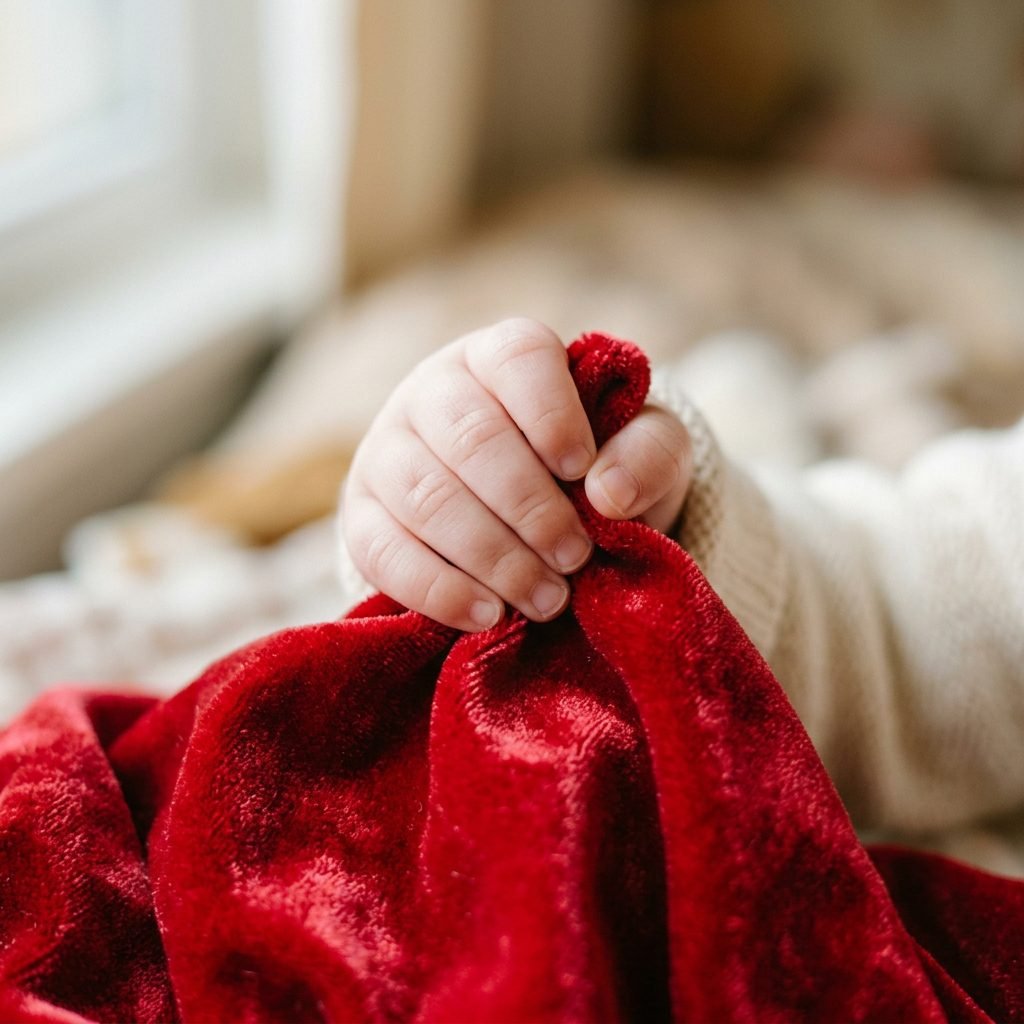
From the moment your baby is born, their skin is their largest sensory organ. They experience the world through the weight of your arms, the warmth of your chest, and the texture of their swaddle. As they grow into the ‘grasping’ phase, providing a variety of textures helps them refine their fine motor skills and cognitive processing.
Building Neural Pathways
When a baby touches silk, their brain registers ‘smooth’ and ‘cool.’ When they touch burlap or corduroy, they register ‘rough’ or ‘ridged.’ These distinctions are tiny miracles of brain development. By offering a Sensory Treasure Chest, you are providing a safe ‘laboratory’ for them to experiment with these sensations.
“Play is the work of the child, and through these simple textures, your baby is learning to navigate and understand the physical world around them.”
This activity also encourages object permanence—the understanding that things still exist even when they are tucked away inside the chest. It’s a foundational concept that helps ease separation anxiety later on.
Gathering Your Materials: An Eco-Friendly Scavenger Hunt
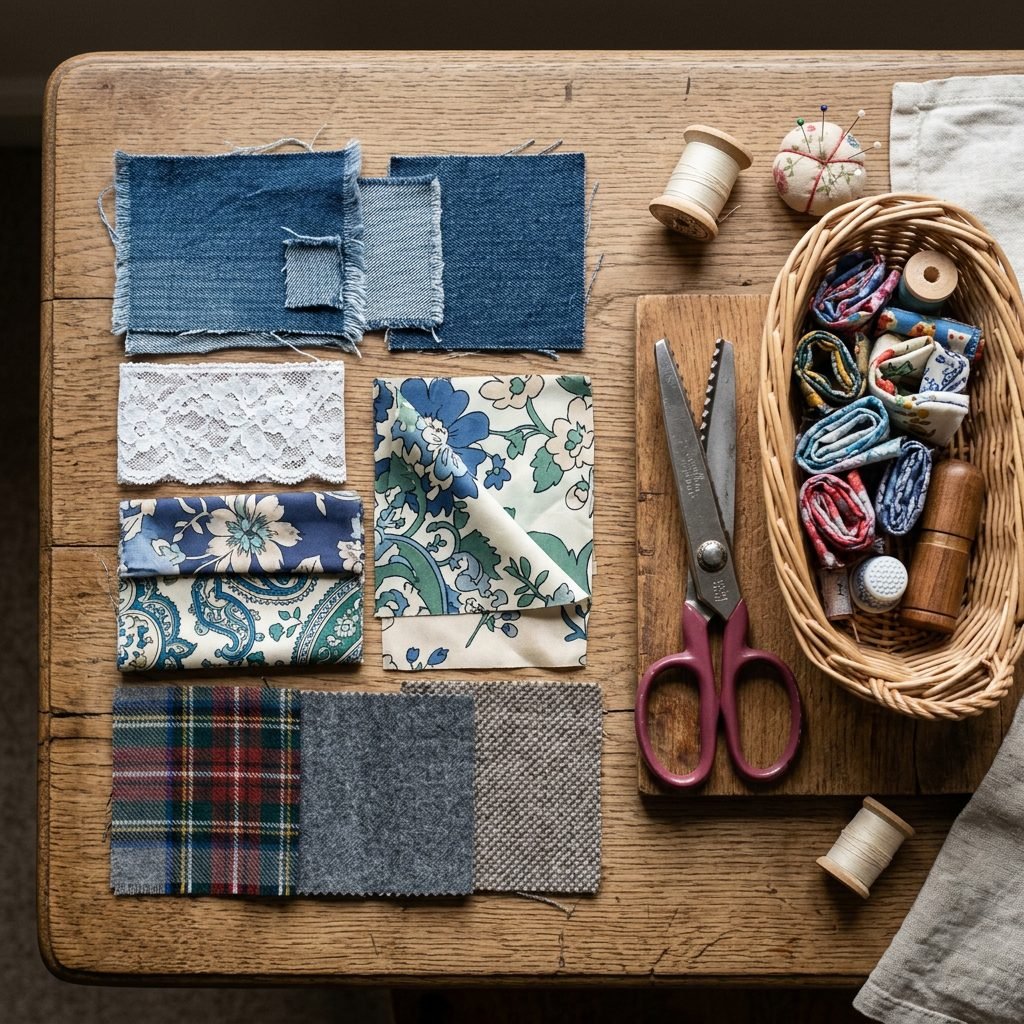
One of the most beautiful aspects of this project is that it costs almost nothing. We are going to upcycle materials you likely already have. Look for fabrics with high contrast in both color and texture. Here is a breakdown of what you’ll need and why each piece matters.
| Material Type | Sensory Benefit | Source Ideas |
|---|---|---|
| Silk or Satin | Cool, slippery, and smooth. Great for light tactile input. | Old scarves, lining of a coat, or pajama scraps. |
| Velvet or Minky | Soft, plush, and comforting. Provides deep pressure. | Baby blankets, old pillows, or hair ribbons. |
| Denim or Canvas | Sturdy, rough, and heavy. Offers resistance. | Old jeans or tote bags. |
| Corduroy or Seersucker | Ridged and bumpy. Excellent for fingernail exploration. | Pants or button-down shirts. |
| Tulle or Lace | Scratchy, airy, and light. High visual and tactile interest. | Party decorations or vintage linens. |
Pro-Tip: Always wash your scrap fabrics in a baby-safe, fragrance-free detergent before starting. Since babies explore with their mouths as much as their hands, we want everything to be pristine and safe.
Step-by-Step Guide: Crafting Your No-Sew Chest

You don’t need a sewing machine or even a needle and thread for this. We want this to be a relaxing, stress-free activity you can do during a nap time or while listening to your favorite parenting podcast.
- Select Your Container: Choose a container that is soft-sided or has rounded edges. An old wooden cigar box (sanded smooth), a small wicker basket, or even a sturdy cardboard box wrapped in fabric works perfectly.
- Prepare the Scraps: Using pinking shears (the scissors that cut in zig-zags), cut your fabrics into strips or squares. Aim for pieces that are roughly 6×6 inches. The zig-zag edge prevents fraying, which is crucial for safety.
- Create ‘Texture Pairs’: If you have enough fabric, cut two of each. This allows you to play matching games with your baby as they get older.
- The Layering Technique: Instead of just tossing them in, fold some, roll others into ‘snails,’ and leave some loose. This creates different levels of difficulty for the baby to pull them out.
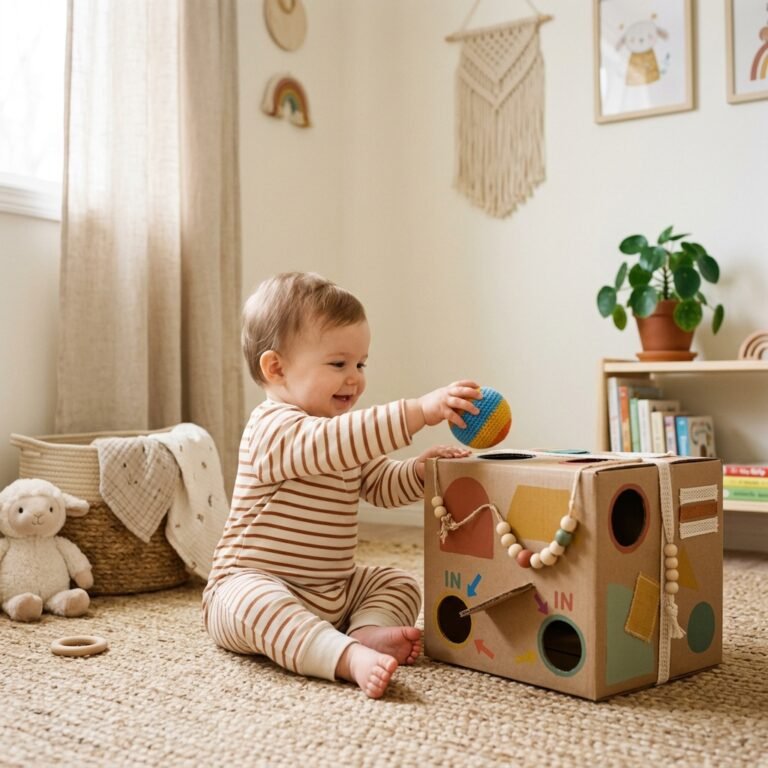
- The Finishing Touch: If using a cardboard box, you can cut a ‘dispenser slot’ in the lid (like a tissue box). This adds an extra layer of motor skill challenge as they pull the fabric through the hole.
“Take a deep breath, mama. There is no right or wrong way to do this. Your baby will love it because it was made by you.”
Safety First: Ensuring a Worry-Free Playtime
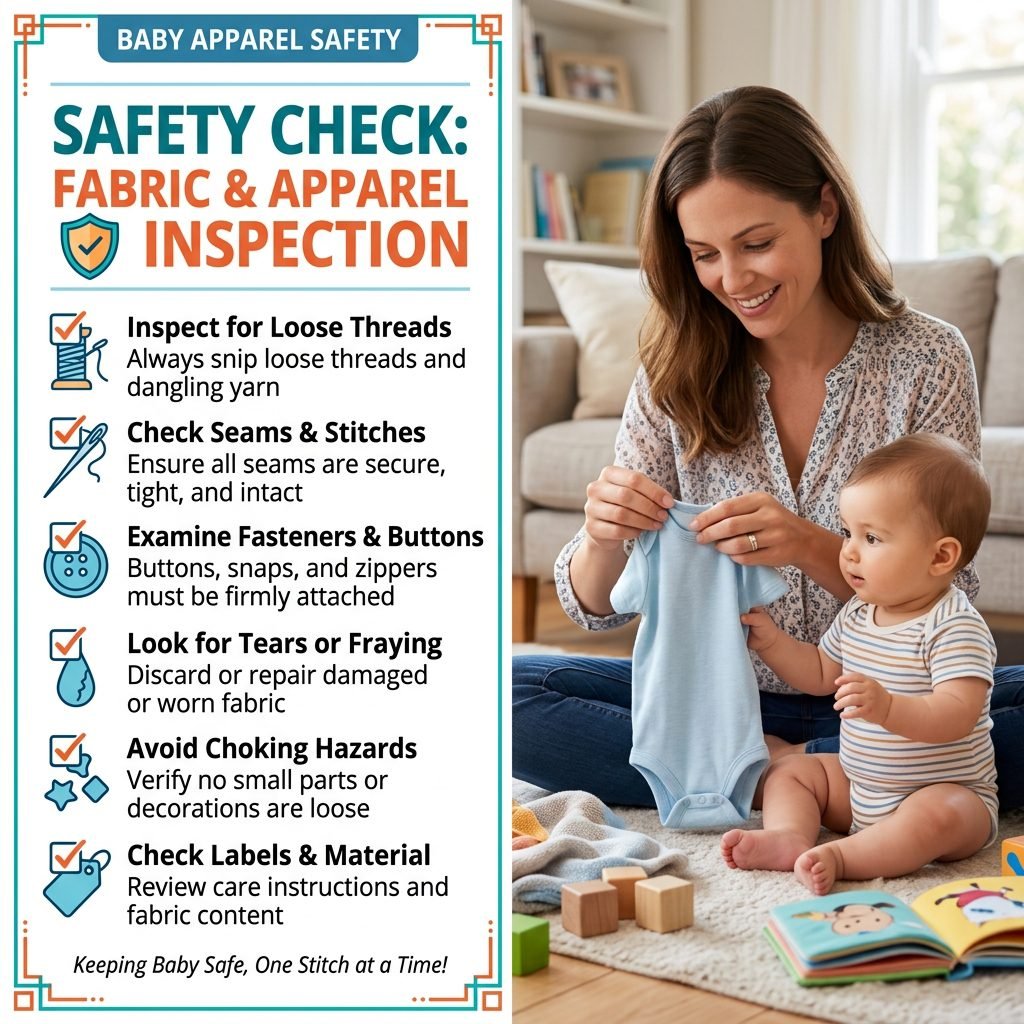
As a doula and safety advocate, I cannot stress enough the importance of supervision. While this toy is simple, babies are incredibly creative at finding ways to get into trouble!
The Safety Checklist
- Size Matters: Ensure no scrap is small enough to be a choking hazard. A good rule of thumb is that if it fits through a toilet paper roll, it is too small.
- Fraying Edges: Regularly check your scraps for loose threads. Long threads can wrap around tiny fingers or toes (tourniquet syndrome). This is why pinking shears are your best friend!
- Button and Sequin Alert: Avoid using scraps that have buttons, sequins, or beads attached. These can easily be chewed off.
- Supervised Play: This is not a ‘set it and forget it’ toy. Use the treasure chest as a tool for active engagement between you and your baby.
By following these steps, you create a secure environment where your baby can explore their boundaries safely. If a piece of fabric starts to look worn or thin, simply toss it and replace it with a fresh scrap!
Ways to Play: Developmental Milestones and Games
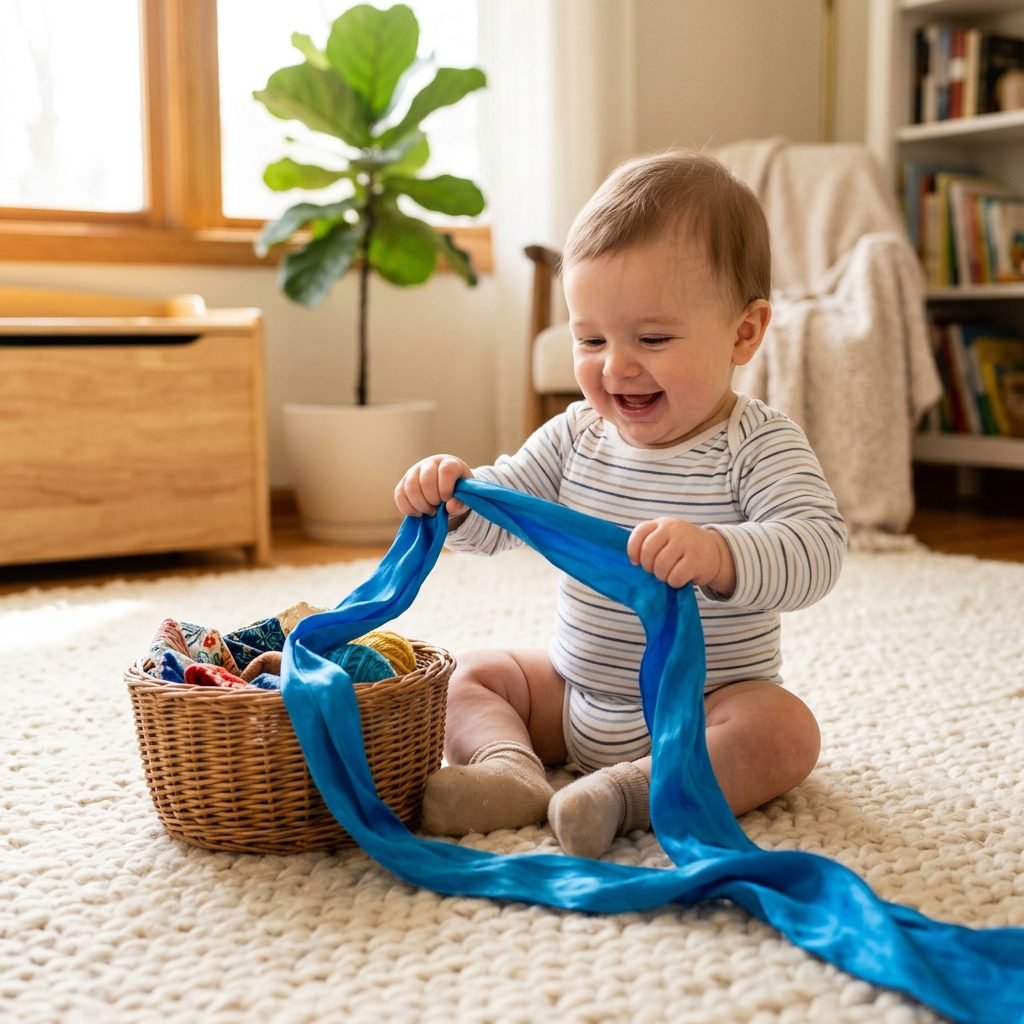
This treasure chest grows with your child. Depending on their age and stage, you can adapt how you use these fabric scraps to support their current milestones.
0-3 Months: High Contrast Visuals
At this stage, babies see high-contrast colors best. Use your black-and-white scraps (like a striped shirt or dark denim against white lace) and wave them slowly 8-12 inches from their face to encourage visual tracking.
4-7 Months: The ‘Reach and Grasp’ Phase
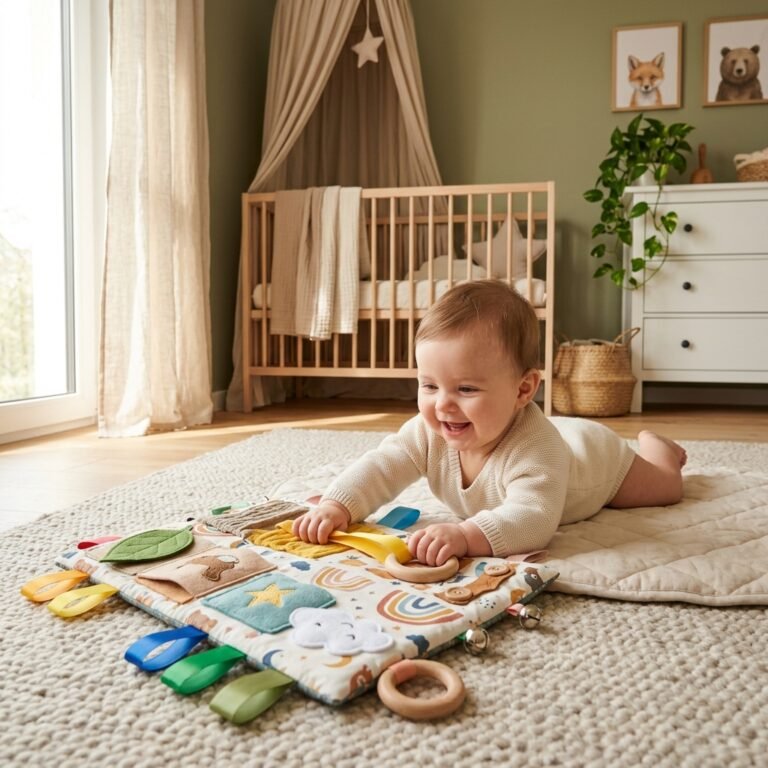
During tummy time, place the chest just out of reach. This encourages them to pivot, reach, and eventually crawl toward the textures. The sound of crinkling fabric (you can tuck a piece of clean cereal bag liner inside a fabric scrap) is especially enticing now.
8-12 Months: The ‘In and Out’ Game
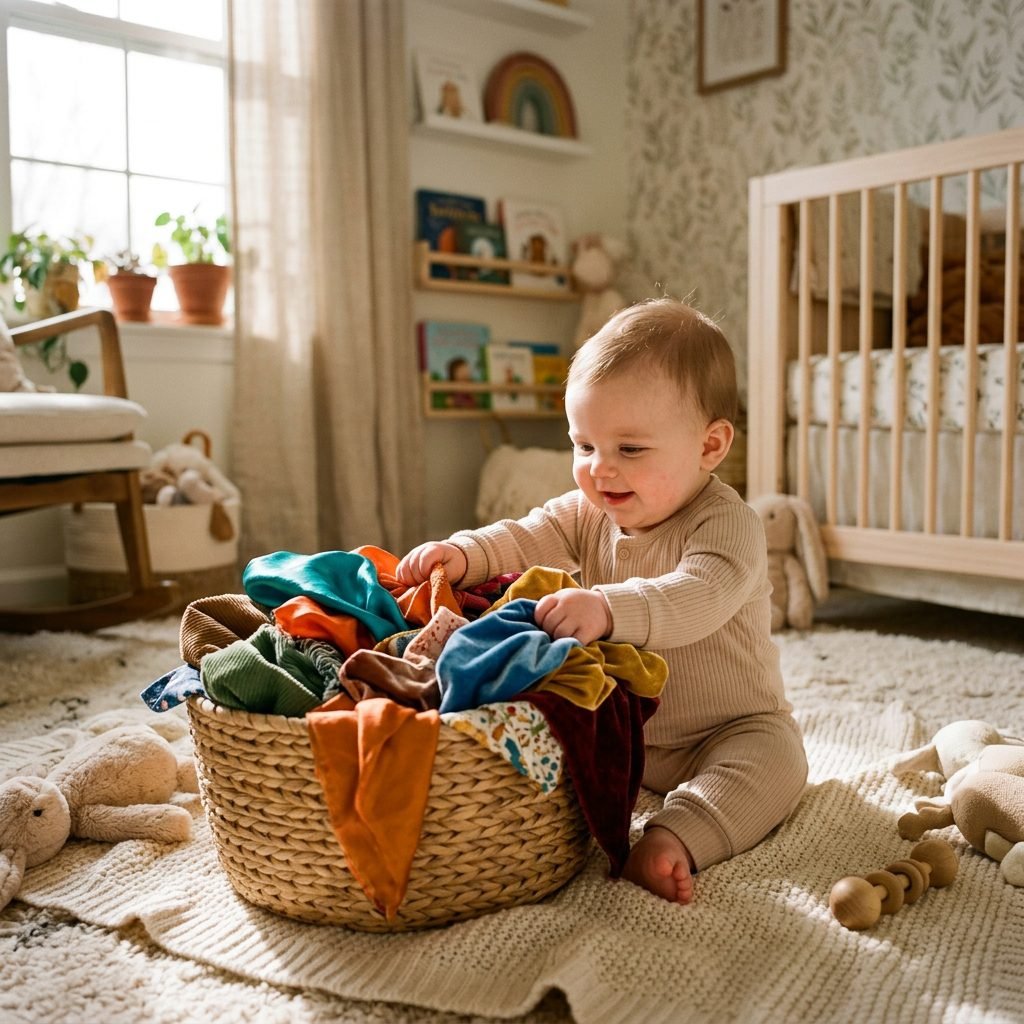
At this age, babies love putting things into containers and taking them out. This builds spatial awareness. You can also start naming the textures: ‘This is soft velvet,’ or ‘This is bumpy corduroy,’ to help build their receptive language.
| Age Group | Focus Activity | Developmental Goal |
|---|---|---|
| 0-3 Months | Visual Tracking | Optic Nerve Development |
| 4-7 Months | Tummy Time Reach | Core Strength & Gross Motor |
| 8-12 Months | In/Out Sorting | Fine Motor & Logic |
Cleaning and Maintenance: Keeping It Fresh
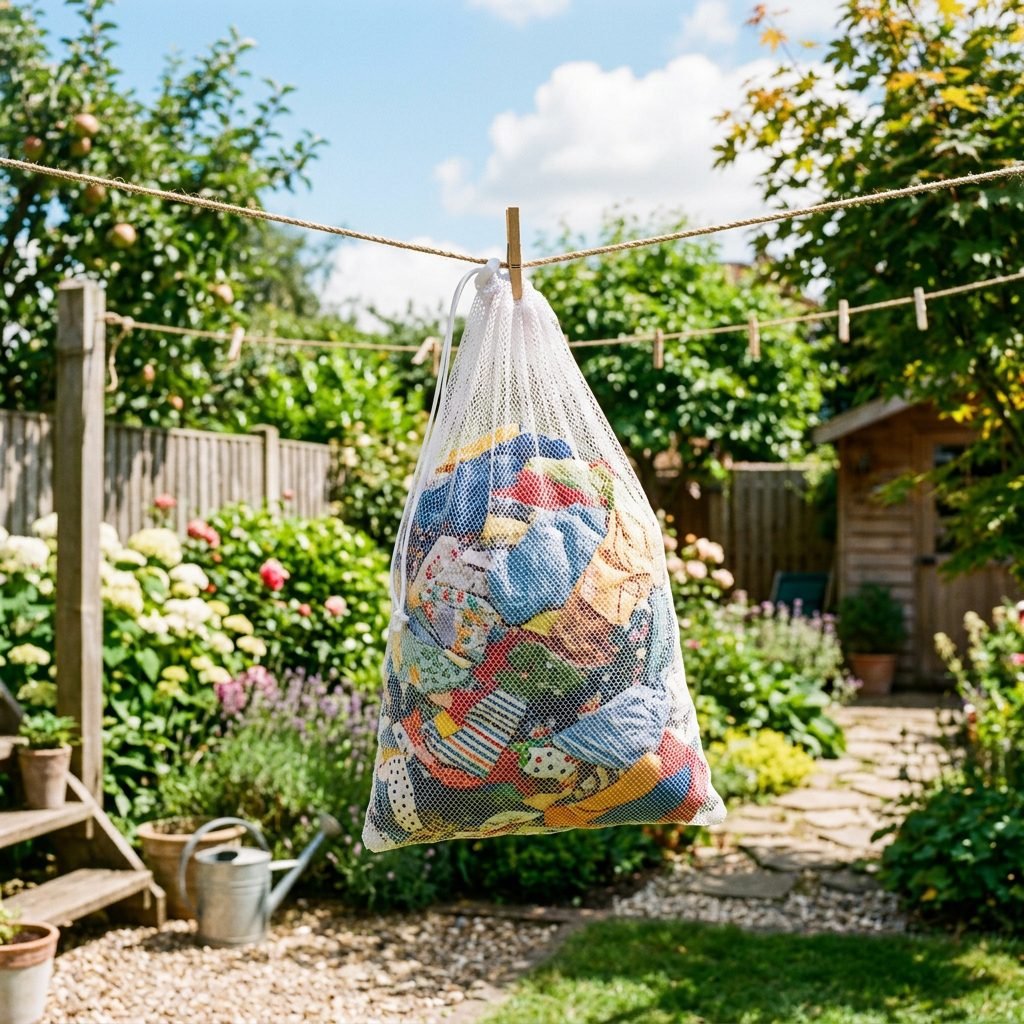
Babies are messy—it’s part of the charm! Since these scraps will likely be drooled on and dragged across the floor, you need a simple cleaning routine.
- The Mesh Bag Trick: Once a week, gather all the fabric scraps and place them in a mesh laundry bag. Toss them in the wash with your regular baby laundry.
- Sun Disinfecting: After washing, let the fabrics dry in the sun. Sunlight is a natural disinfectant and helps keep the colors bright.
- Rotating the ‘Stock’: To keep your baby interested, don’t put all the scraps in at once. Rotate 5-6 pieces every few days so the ‘treasure’ always feels new and exciting.
This simple maintenance ensures that the sensory chest remains a hygienic and stimulating part of your daily routine without adding more stress to your plate.
Conclusion
Bonding Through Every Thread
Mama, you are doing an incredible job. Creating a No-Sew Sensory Treasure Chest is more than just a DIY project; it’s an act of love and a commitment to your baby’s growth. In a world that often tells us we need to buy more, this project reminds us that what we already have is enough. These scraps of fabric—perhaps from your own old clothes or a baby blanket—carry stories and textures that will become part of your baby’s first memories of discovery.
Enjoy these quiet moments of play. Watch their eyes light up when they feel something new. You are building their brain, their motor skills, and most importantly, your bond. Happy crafting!