

Gassy Baby? The Bouncy Knee Burping Method That Works in Under 60 Seconds
Welcome to the No-Gas Zone, Mama
Oh, sweet mama, I see you. It is 3:00 AM, your eyes are heavy, and your precious little one is arching their back, pulling their legs up, and letting out that unmistakable, high-pitched ‘gas cry.’ You’ve tried the traditional over-the-shoulder pat for twenty minutes, but nothing is happening. Your heart is breaking because you just want them to feel better—and, let’s be honest, you really need some sleep. As a doula who has walked these hallways with countless families, I want to tell you: you are doing an amazing job. Infant gas isn’t a reflection of your parenting; it’s a physiological hurdle that almost every newborn faces. Their tiny digestive systems are still learning the ropes, and sometimes, those little air bubbles get trapped like stubborn hitchhikers. That is exactly why I am sharing my ‘secret weapon’ with you today. The Bouncy Knee Burping Method is a game-changer that often works in under 60 seconds. It uses physics, gravity, and rhythmic motion to help those bubbles find the exit. Grab a burp cloth, take a deep breath, and let’s get that baby comfortable.
The Anatomy of an Infant Bubble: Why Traditional Burping Fails
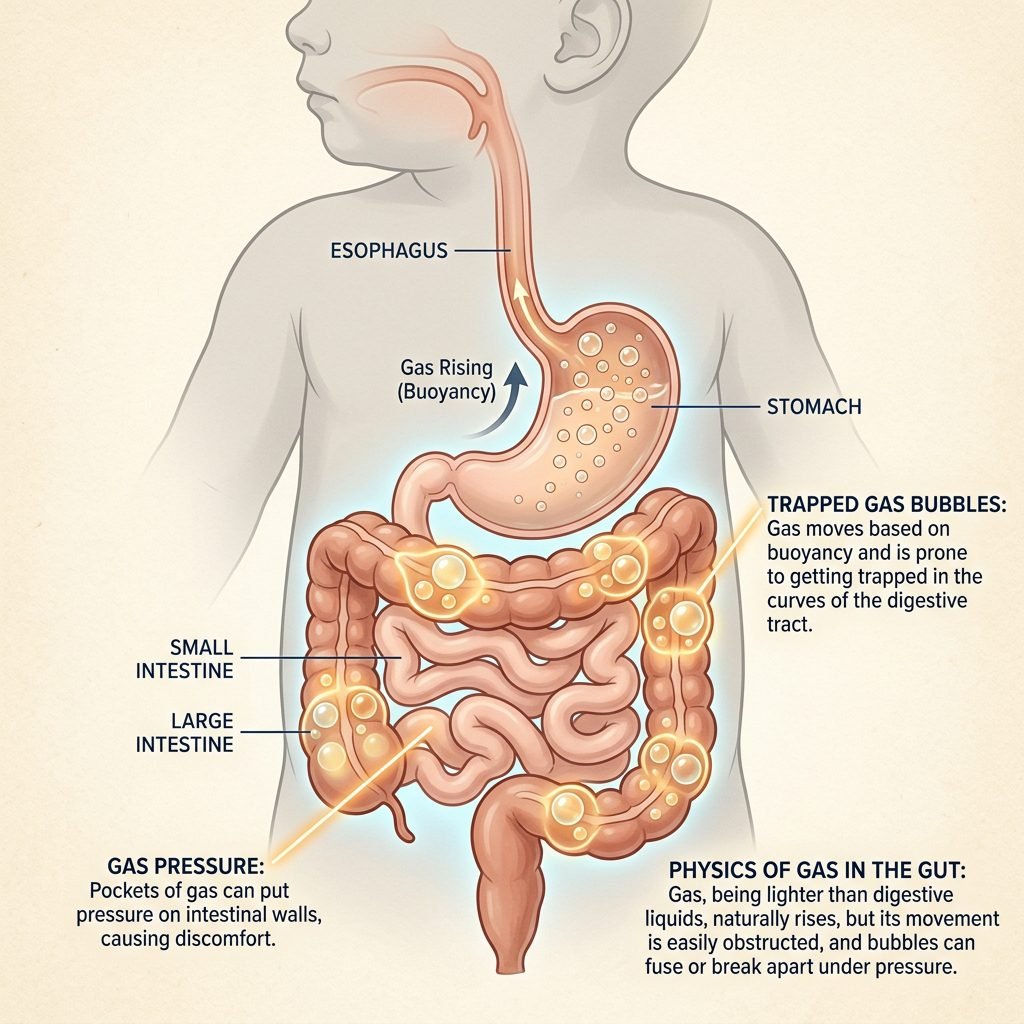
Why is My Baby So Gassy?
Before we dive into the technique, let’s talk about the ‘why.’ Babies swallow air during breastfeeding, bottle-feeding, and even during those intense crying spells. Because their esophageal sphincter is immature, and they spend so much time lying flat, that air gets trapped under the milk in their stomach.
The Problem with the ‘Over-the-Shoulder’ Method
While the classic shoulder burp is a staple, it often fails for stubborn gas because it actually compresses the baby’s tummy against your collarbone in a way that can ‘trap’ the bubble rather than help it rise. If the baby is slumped, the airway and the esophagus aren’t aligned for an easy exit. We need a position that elongates the torso and provides a gentle, rhythmic vibration to ‘shake’ the bubbles to the top.
| Method | Success Rate | Best For |
|---|---|---|
| Over-the-Shoulder | 60% | Light bubbles after a calm feed |
| Face-Down on Lap | 75% | Babies with strong neck control |
| Bouncy Knee Method | 95% | Stubborn gas and fussy newborns |
The Bouncy Knee Method: A Step-by-Step Guide
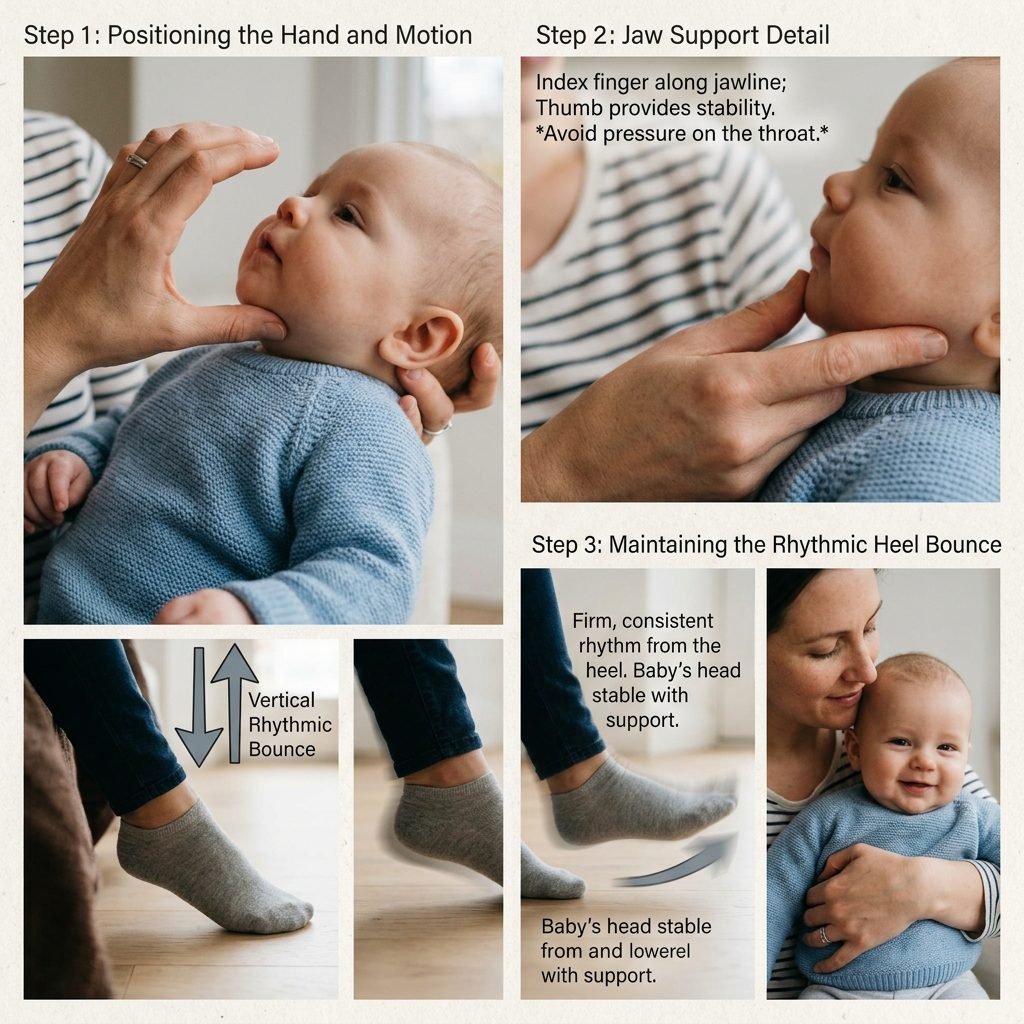
Mastering the 60-Second Burp
This technique is all about posture and rhythm. It works by straightening the baby’s digestive tract and using a gentle ‘jiggle’ to move air through the liquid in the stomach. Follow these steps carefully:
- The Setup: Sit on a firm chair or the edge of your bed with your feet flat on the floor. Drape a thick burp cloth over your thigh—trust me, you’ll need it!
- The Position: Sit your baby sideways on your lap, facing away from you, perched on one of your knees. Crucial: Use one hand to support their chest and jaw. Place your thumb and forefinger under their jawline (not the throat!) to keep their head steady and their spine elongated.
- The Lean: Gently lean the baby slightly forward. This ‘stretches’ the stomach area and allows the air bubble to move to the highest point of the stomach.
- The Heel Bounce: Begin to lift and drop your heel rhythmically. This creates a gentle, vertical ‘bounce’ on the knee where the baby is sitting. This vibration is the secret sauce—it breaks up large bubbles into smaller ones that can escape easily.
- The Circular Rub: While bouncing, use your other hand to firmily rub the baby’s back in upward circular motions. Start at the lower back and work your way up to the base of the neck.
- The Wait: Keep this up for 30 to 60 seconds. You will often feel the baby’s body relax just seconds before the ‘grand finale’ burp occurs.
“The Bouncy Knee isn’t about force; it’s about the rhythm. Think of it like trying to get the last bit of ketchup out of a bottle—you don’t just hit it; you give it a steady, rhythmic shake.”
Beyond the Burp: The Doula’s Advanced Gas-Relief Toolkit

When the Burp Isn’t Enough
Sometimes the gas has already moved past the stomach and into the lower intestines. When this happens, a burp won’t solve the problem—you need to help them ‘pass’ it from the other end. Here are my favorite doula-approved moves:
1. The ‘Tiger in the Tree’ Hold
Lay your baby face-down along your forearm, with their head near your elbow and their legs straddling your hand. This puts gentle pressure on their tummy while the gravity helps move gas along. Walk around the room while doing this; the motion combined with the pressure is magic.
2. The ‘I Love You’ Tummy Massage
Using baby-safe oil, trace the letters I, L, and U on your baby’s tummy.
- I: A straight line down the left side of their belly.
- L: An upside-down ‘L’ from the right side across and down the left.
- U: An upside-down ‘U’ from the bottom right, up, across, and down the left.
This follows the path of the large intestine and helps move waste and gas toward the exit.
| Technique | Target Area | When to Use |
|---|---|---|
| Bicycle Legs | Lower Gut | When baby is arching their back |
| Tiger in the Tree | Full Torso | General fussiness/Colic hours |
| Warm Compress | Abdominal Wall | To relax cramped muscles |
Prevention: How to Stop Gas Before It Starts
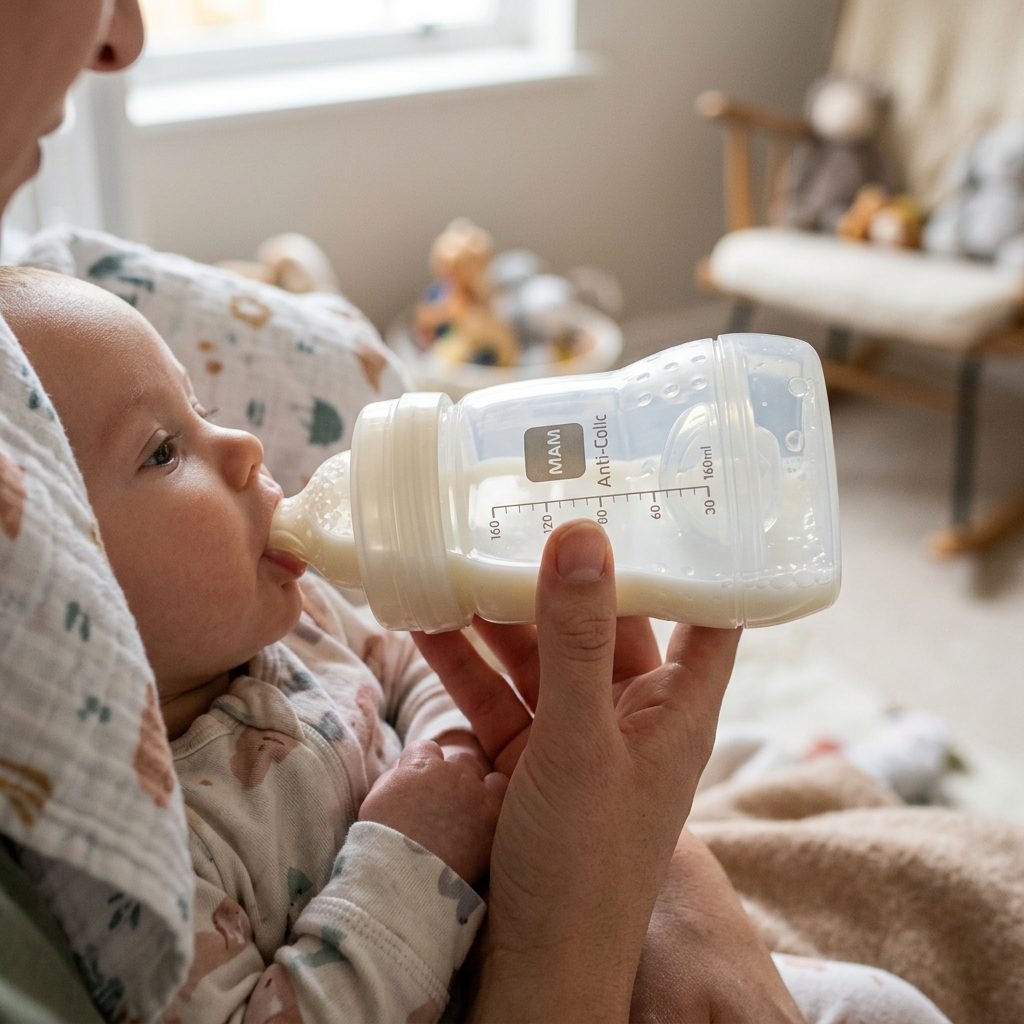
Proactive Feeding Strategies
While we love a good burping method, preventing the air from getting in is even better! Whether you are breastfeeding or bottle-feeding, small tweaks can make a 100% difference.
For Breastfeeding Mamas
Ensure a deep latch. If you hear a ‘clicking’ sound, your baby is breaking the seal and swallowing air. Consider the laid-back nursing position, which allows the baby to better manage the flow of milk, especially if you have a fast let-down.
For Bottle-Feeding Mamas
Use the Paced Bottle Feeding method. Keep the bottle horizontal so the baby has to actively suck, and ensure the nipple is always full of milk, not air. If you see lots of bubbles in the bottle, try stirring the formula instead of shaking it, as shaking introduces thousands of tiny air micro-bubbles.
“Feed the baby, not the clock. A calm baby swallows less air than a frantic, starving baby who is gulping for air between cries.”
The Emotional Side: Staying Calm When the Crying Won’t Stop

A Sisterly Reminder: You Are Not Failing
I want to look you in the eyes and tell you: The ‘Witching Hour’ is real, and it is not your fault. Between 4:00 PM and 11:00 PM, many babies experience a peak in fussiness. When your baby is screaming and you’ve tried the Bouncy Knee, the Tiger in the Tree, and the massage, and nothing is working, it is okay to feel frustrated. It is okay to put the baby in a safe space (like their crib) and walk into the other room for 5 minutes to breathe. Your baby is safe, and your mental health matters. A regulated mama helps regulate a baby. You are the best mother for this child, and this phase—no matter how long the nights feel—is temporary. You will sleep again. Your baby’s gut will mature. You are doing the hard work of love.
Conclusion
You’ve Got This, Mama
Dealing with a gassy baby is one of the most taxing parts of the ‘fourth trimester,’ but with the Bouncy Knee Method in your toolkit, you are no longer powerless. Remember the 60-second rule: give it a solid minute of rhythmic bouncing and rubbing. If that doesn’t work, move to the lower-gut techniques like bicycle legs. You are learning your baby’s language, and every burp is a little victory. Keep going, stay hydrated, and don’t forget to lean on your village. You’ve got this!