How to Use Hanging Plants as a Natural Room Divider for Your Bedroom Nursery Nook
Welcome to Your Living Sanctuary, Mama
Oh, sweet mama, I see you. You are in that beautiful, whirlwind phase of nesting, trying to carve out a tiny, sacred space for your little one within the walls of your own bedroom. Whether you are living in a cozy apartment or simply want to keep your newborn close during those first precious months, the ‘nursery nook’ is a reality for so many of us. But how do we create a sense of separation without building cold, hard walls? How do we maintain the intimacy of our primary bedroom while giving the baby a space that feels like their own?
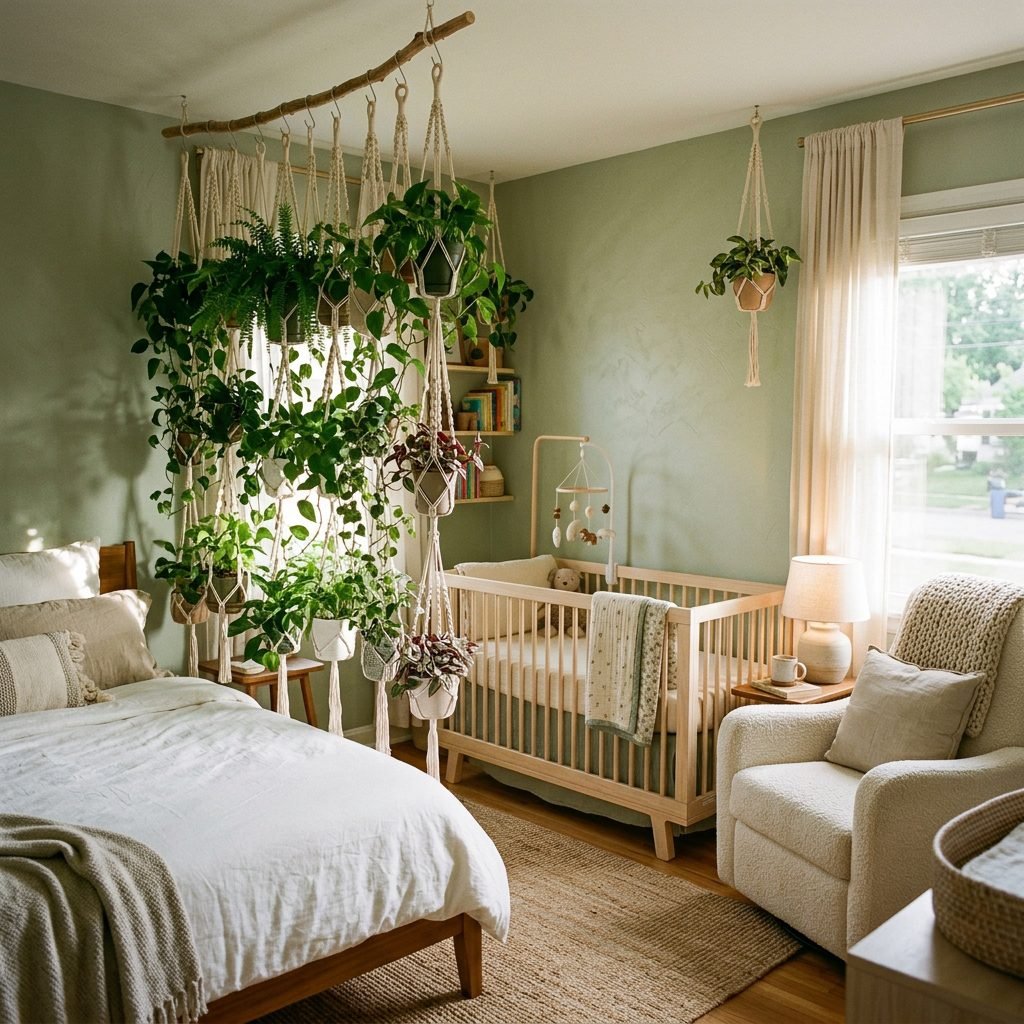
As a doula and a lover of all things maternal wellness, I always lean toward solutions that nourish the soul as much as the floor plan. Enter the hanging plant room divider. It is more than just a trend; it is a way to bring life, purified air, and a sense of calm into your shared space. Plants act as a soft, organic screen that filters light and dampens sound, creating a gentle ‘living wall’ that protects the peace of your baby’s sleep area. In this guide, we are going to walk through exactly how to choose, hang, and maintain a botanical barrier that is safe for your baby and restorative for you.
Curating Your Green Team: Selecting Non-Toxic, Baby-Safe Plants
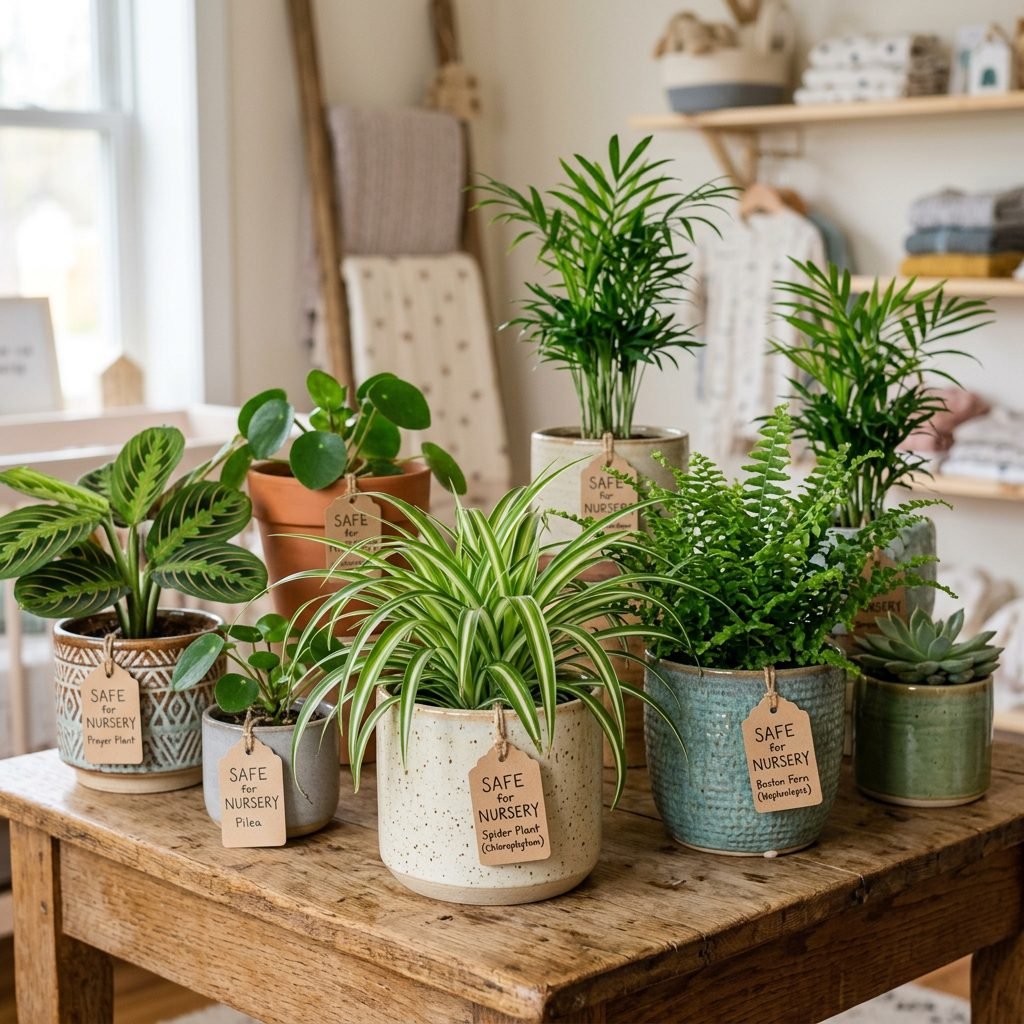
When we are bringing nature into the nursery, safety is our absolute north star. As a mama-to-be, you are likely already scanning every label, and your plants should be no different. While the plants will be hanging high and out of reach of tiny hands, leaves can occasionally drop, or curious toddlers (they grow so fast!) might eventually find a way to reach. We want to choose varieties that are 100% non-toxic and excellent at air purification.
Top Picks for Your Living Divider
- Spider Plants (Chlorophytum comosum): These are the champions of the nursery. They are incredibly hardy, non-toxic, and produce ‘pups’ that hang down, creating a beautiful cascading effect that fills the vertical space perfectly.
- Boston Ferns (Nephrolepis exalta): For a lush, bushy screen that offers maximum privacy, the Boston Fern is unmatched. They love humidity—perfect if you’re running a humidifier for the baby!
- Prayer Plants (Maranta leuconeura): These have stunning variegated leaves that fold up at night like hands in prayer—a sweet, symbolic addition to a sleeping space.
- Calathea: Known for their large, striking leaves, they provide a denser visual block if you’re looking to truly hide the crib from the view of your bed.
| Plant Variety | Visual Density | Maintenance Level | Benefit |
|---|---|---|---|
| Spider Plant | Medium (Whimsical) | Low | Top Air Purifier |
| Boston Fern | High (Full Screen) | Moderate | Natural Humidifier |
| Calathea | High (Broad Leaves) | Moderate | Striking Aesthetics |
| Hoya (Wax Plant) | Low (Trailing) | Low | Sweet Scent (Safe) |
Remember, mama: even with non-toxic plants, we want to avoid anything with sharp edges or heavy shedding. A clean, safe environment is a happy environment.
The Architecture of a Hanging Divider: Installation and Hardware

Creating a divider out of thin air requires a little bit of structural magic. We aren’t just hanging one plant; we are creating a rhythmic line of greenery. To do this safely, we need to ensure our hardware can handle the weight of damp soil and pots. This is a perfect task for a partner, a friend, or a nesting-support person!
Step-by-Step Installation Guide
- Map the ‘Wall’: Use painter’s tape on the ceiling to mark a straight or slightly curved line where you want the ‘divider’ to exist. This usually sits between the foot of your bed and the side of the crib.
- Choose Your Support: You have two main options: individual ceiling hooks or a heavy-duty ceiling-mounted curtain rod. A rod allows you to slide the plants around, while hooks offer a more staggered, organic look.
- Find the Joists: Use a stud finder. Hanging plants from drywall alone is a recipe for a midnight crash. Always screw your hooks or rod brackets directly into the wooden ceiling joists.
- Vary the Heights: To create a ‘wall’ effect rather than just a row, use adjustable macrame cords or different lengths of chain. You want some plants at eye level (when standing) and some slightly higher to create a layered canopy.
| Hardware Type | Best For… | Installation Difficulty |
|---|---|---|
| Swivel Ceiling Hooks | Individual, heavy pots | Easy |
| Industrial Curtain Rod | Multiple small plants in a row | Moderate |
| Tension Pole (Floor to Ceiling) | Renters who can’t drill holes | Easy |
Safety Warning: Ensure all pots are secured tightly in their hangers. As your baby grows and begins to stand or jump in the crib, you must ensure that no trailing vines are within their reach. Keep the lowest point of any plant at least 36 inches above the top of the crib rail.
Styling Your Nook: Texture, Pots, and Mood
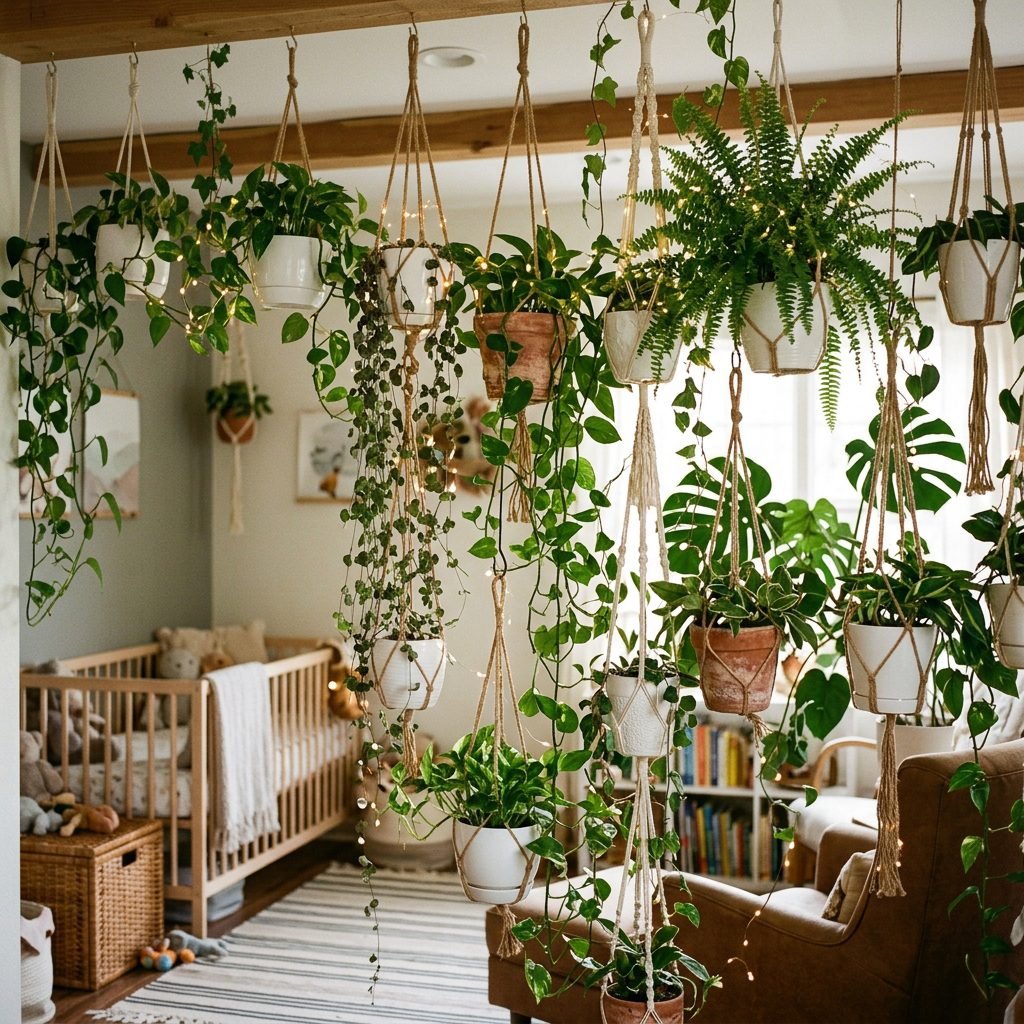
Now for the fun part—the aesthetics! This is where you infuse your personality into the nursery nook. Since this divider sits in your bedroom, you want it to bridge the gap between ‘adult sanctuary’ and ‘baby wonderland.’ I love using a cohesive color palette for the pots to keep the look from feeling cluttered.
Design Tips for a Cohesive Look
- The Macrame Touch: Using cream or off-white macrame hangers adds a soft, bohemian texture that feels very ‘doula-chic.’ It softens the lines of the room and adds a tactile warmth.
- Consistent Potting: Try using pots in the same material but different shapes. Terracotta offers a warm, earthy vibe, while white ceramic feels clean and modern.
- The ‘Waterfall’ Effect: Place your fullest, bushiest plants (like ferns) in the center of the line to block the most sight-lines, and use the wispy plants (like spider plants) on the ends to taper the divider into the rest of the room.
Affirmation for the Nesting Mama: “I am creating a space of peace, growth, and love. Every leaf I hang is a breath of fresh air for my family.”
Don’t be afraid to mix in a few non-plant elements! You can hang a few lightweight wooden stars or a soft felt mobile at the same level as the plants to integrate the ‘nursery’ feel into the ‘living wall.’
Maintenance for the Tired Mama: Keeping the Divider Alive
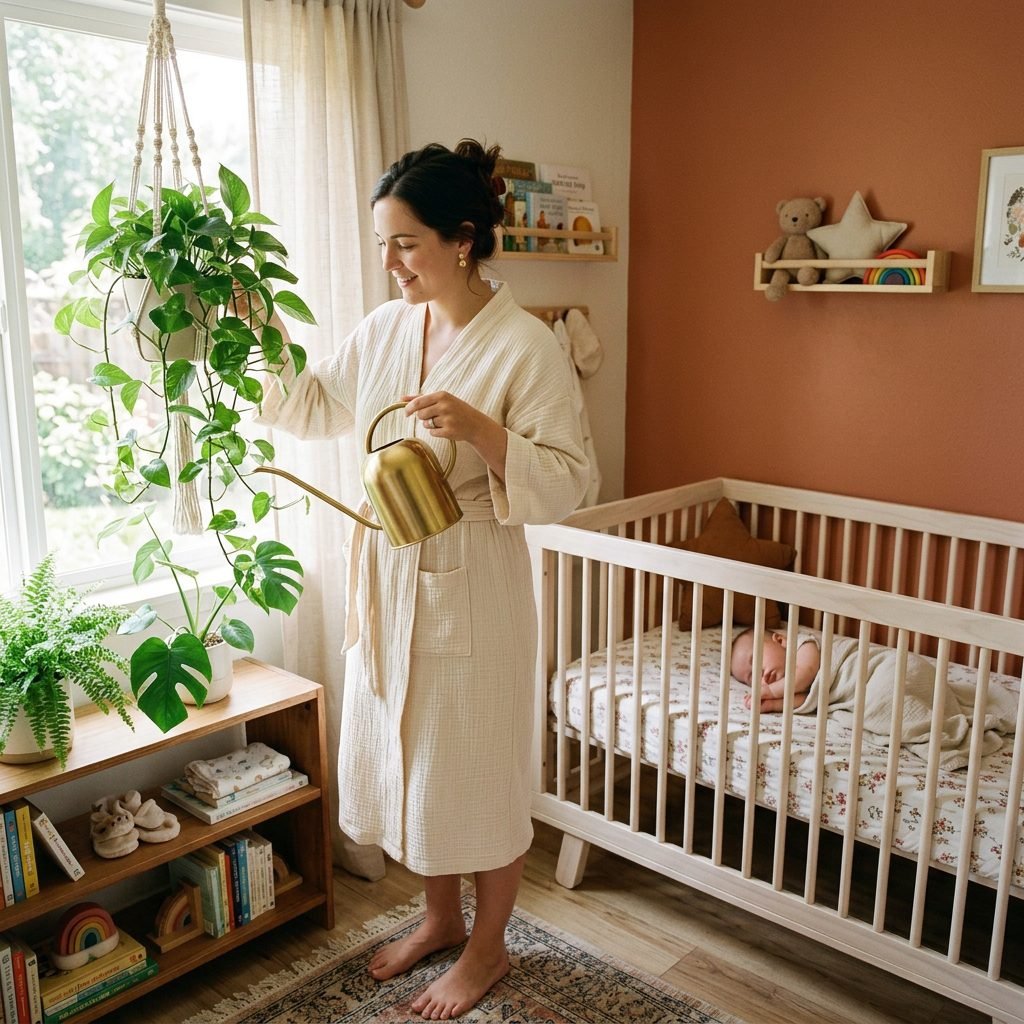
Let’s be real, mama: once the baby arrives, your ‘mental load’ is going to be full. We don’t want your beautiful room divider to become a source of stress or a collection of brown, crunchy leaves. The key to a successful nursery garden is low-maintenance systems.
The Postpartum Plant Care Plan
- Self-Watering Pots: These are a lifesaver. They have a reservoir at the bottom that allows the plant to drink as needed, meaning you only have to refill them every 7-10 days.
- The Long-Spout Watering Can: Since these plants are hanging, reaching them can be a chore. Invest in a watering can with a very long, thin neck so you don’t need a step stool every time.
- Group by Need: Hang all your ‘thirsty’ plants (like ferns) on one side and your ‘drought-tolerant’ plants on the other. This helps you remember who needs a drink and who doesn’t.
| Maintenance Task | Frequency | Time Required |
|---|---|---|
| Watering (Standard) | Once a week | 10 Minutes |
| Mist Ferns (for humidity) | Every 2-3 days | 2 Minutes |
| Dusting Leaves | Once a month | 5 Minutes |
| Checking for Pests | Bi-weekly | 2 Minutes |
If you find yourself overwhelmed in those early weeks, it is perfectly okay to ask your partner or a visiting friend to ‘water the wall.’ People love having a specific task to help with, and ‘plant doula’ is a wonderful role for a guest!
The Sensory Benefits: Why Greenery Matters for Baby and You
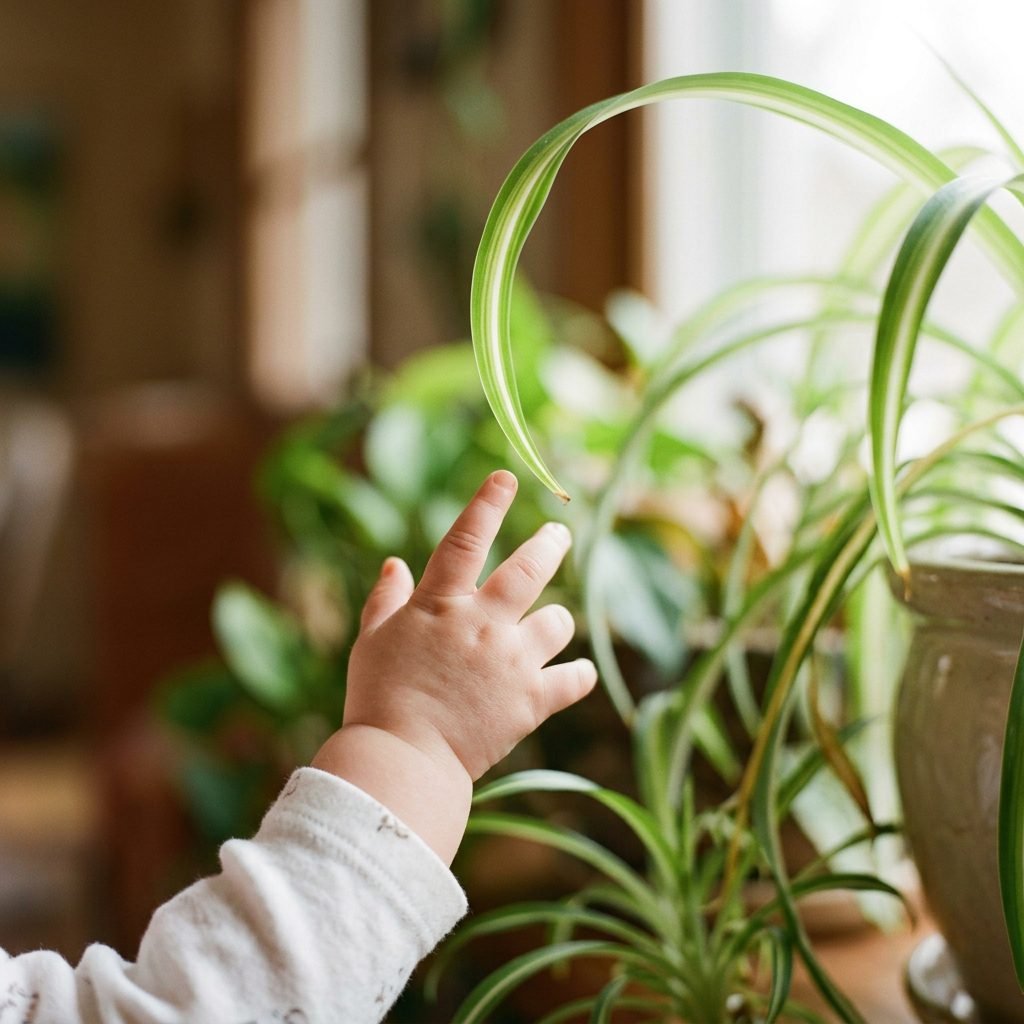
Beyond just looking pretty, your living divider is doing hard work for your health. Studies show that being around indoor plants can lower cortisol levels (the stress hormone) and improve mood. For a postpartum mama navigating hormone shifts, this is vital.
A Breath of Fresh Air
Plants like the Spider Plant and Boston Fern are natural air purifiers. They help filter out VOCs (volatile organic compounds) that can be found in new furniture or carpets. By surrounding the nursery nook with these plants, you are creating a literal ‘bubble’ of cleaner air for those tiny, developing lungs.
Visual Soothing for Baby
Babies’ eyes are still developing. The gentle movement of leaves in a soft breeze (perhaps from a nearby window or fan) provides a calm, natural form of visual stimulation. It’s like a living mobile! The high-contrast patterns of variegated leaves are also wonderful for infant brain development without being overstimulating like bright plastic toys.
Pro-Tip: Place a comfortable nursing chair right next to your plant wall. The scent of damp earth and the sight of green can help trigger the ‘let-down’ reflex by helping your body relax during breastfeeding.
Conclusion
Your Living Legacy of Love
Creating a nursery nook is about more than just square footage; it’s about creating a feeling. By using hanging plants as your room divider, you’ve chosen a solution that grows alongside your child. As your little one moves from bassinet to crib to toddler bed, these plants will continue to purify the air and provide a sense of calm. You’ve built a sanctuary that honors both your needs as a woman and your baby’s needs as a new soul on this earth.
Take a deep breath, mama. Look at the beautiful, green space you’ve curated. You are doing an incredible job, and your home is a reflection of the care and life you are pouring into your family. Enjoy your botanical haven!