The Camping Out Sleep Training Method: A Gentle Way to Support Your Baby to Sleep
Welcome to Your Gentle Sleep Journey
Mama, grab a warm cup of chamomile tea, wrap yourself in your coziest cardigan, and take a deep, restorative breath. If you are reading this, chances are you are running on fumes. The beautiful, messy, and exhausting reality of motherhood often peaks in the middle of the night, when the world is quiet but your little one is anything but. Sleep deprivation is not just tiring; it is physically and emotionally draining. As a doula and pediatric sleep specialist, I want you to know right now: you are doing an incredible job, and it is entirely okay to want more sleep for both you and your baby.
When we hear the phrase ‘sleep training,’ it often brings up a wave of anxiety, guilt, and visions of leaving our precious babies to cry alone in the dark. But what if I told you there is a supportive, deeply nurturing middle ground? Enter the Camping Out Method (often referred to as the Chair Method or Fading Method). This approach is the ultimate sisterly hug of sleep training. It allows you to gently guide your baby toward independent sleep while remaining physically present in the room to offer comfort, reassurance, and love.
You do not have to choose between your baby’s emotional security and your own sanity. The Camping Out method is designed for parents who want to support their babies through the transition of learning to fall asleep on their own, step-by-step, night-by-night. In this comprehensive guide, we will walk through exactly how to set up your nursery, the precise timeline for moving your chair, and how to troubleshoot those inevitable bumps in the night. Let us reclaim your rest, gently and together.
Understanding the Camping Out Method: What It Is and Why It Works
The Philosophy Behind the Method
The Camping Out method is rooted in the concept of gradual fading. Instead of removing yourself from your baby’s sleep environment abruptly, you act as a physical anchor of safety. You start by sitting right next to your baby’s crib until they fall asleep, and over the course of a few weeks, you gradually move your chair further and further away until you are out of the room entirely. This method is incredibly popular among gentle parenting advocates and postpartum recovery nurses because it respects the baby’s need for attachment while gently stretching their ability to self-soothe.
Why Choose This Gentle Approach?
- Maintained Trust: Your baby never feels abandoned. Your physical presence reassures them that they are safe in their sleep space.
- Lower Stress for Parents: Listening to your baby cry from another room can spike cortisol levels and trigger postpartum anxiety. Being in the room allows you to monitor them and intervene with a comforting voice or touch when necessary.
- Adaptable to Your Pace: While we provide a standard timeline, you can adjust the pace based on your baby’s temperament and your own comfort level.
- Great for Toddlers Too: This method is not just for infants; it is highly effective for toddlers transitioning to a big kid bed who suffer from separation anxiety.
Before beginning, it is generally recommended that your baby be at least 6 months old. At this age, they have developed the neurological maturity to begin learning self-soothing techniques, and their circadian rhythms are more established. Always ensure your baby is healthy, not currently teething severely, and not in the middle of a major developmental leap or illness before starting any sleep shaping routine.
Your Step-by-Step Camping Out Timeline
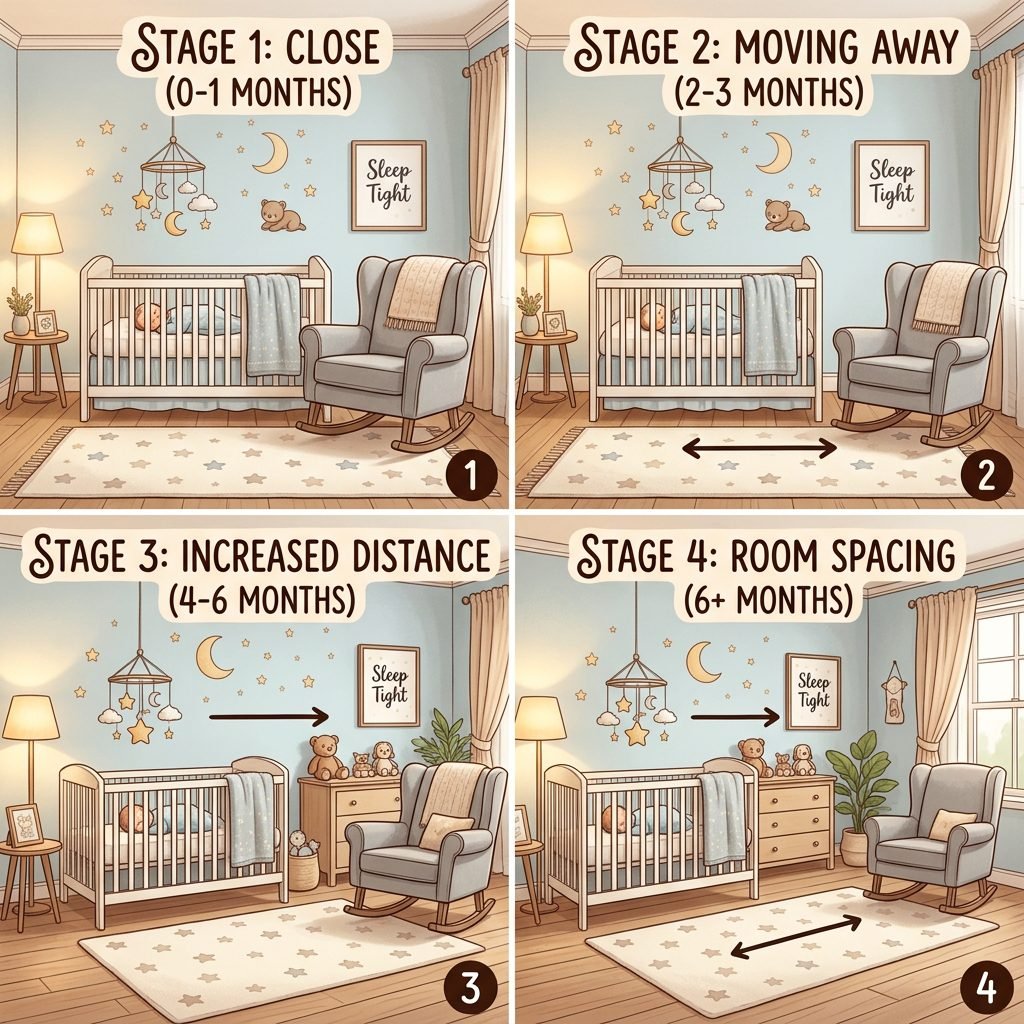
The Gradual Retreat
Consistency is your absolute best friend here. The goal is to reduce your intervention while maintaining your presence. Below is the standard timeline, but remember to read your baby’s cues. If they need an extra day at a certain phase, give yourself the grace to pause.
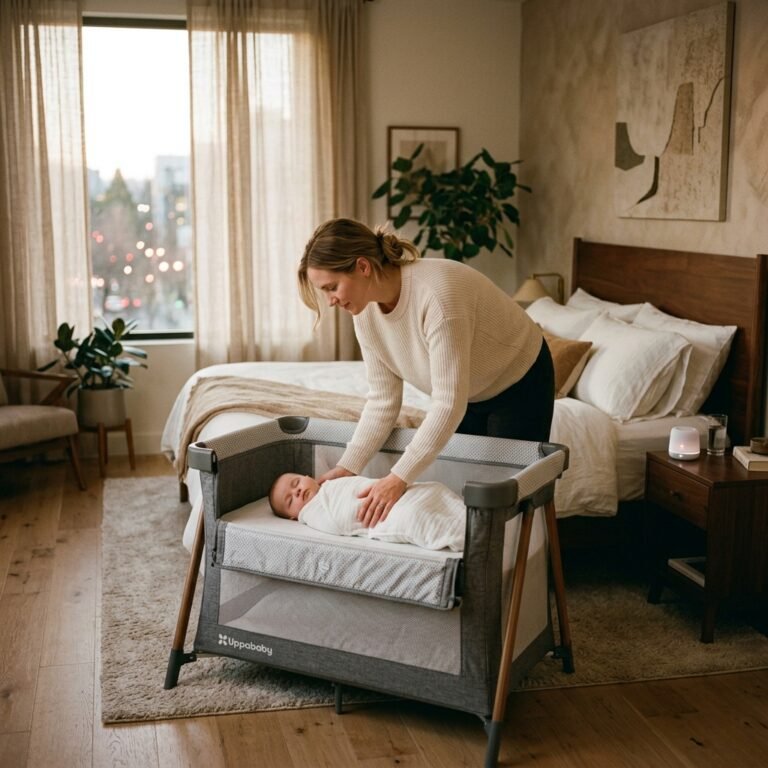
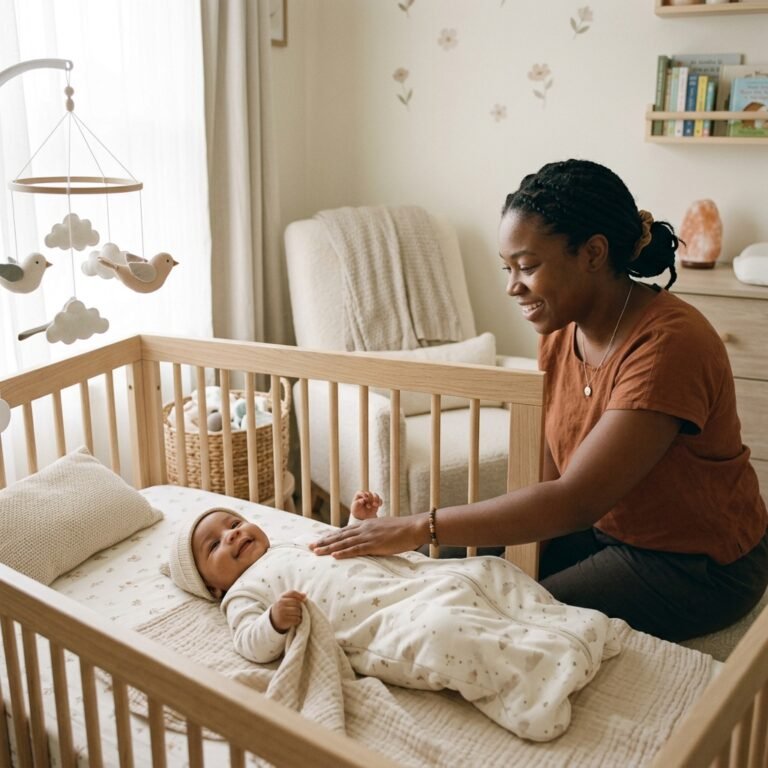
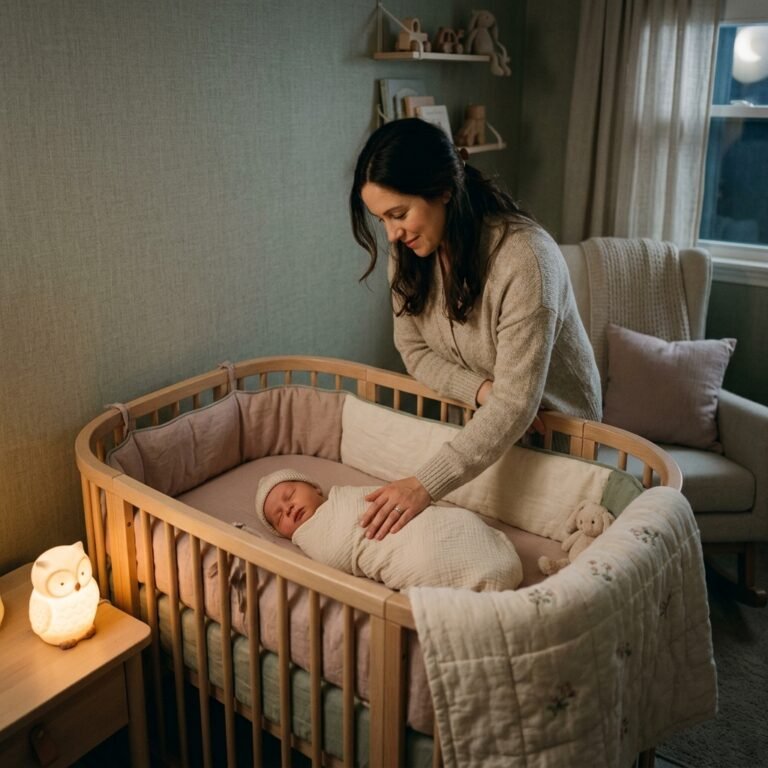
- Phase 1 (Days 1-3): The Crib-Side Camp. Place a comfortable chair right against the crib. Do your normal soothing bedtime routine, lay your baby down awake but drowsy, and sit in the chair. You may offer physical touch—like resting a warm hand on their chest or patting their mattress—and use your voice to shush them. Stay in the chair until they are completely asleep.
- Phase 2 (Days 4-6): The Mid-Way Point. Move your chair about halfway between the crib and the door. At this stage, physical touch is removed. If your baby fusses, use only your voice to reassure them.
“Mommy is right here. It is time to sleep. You are safe.”
Keep your voice low, rhythmic, and calm.
- Phase 3 (Days 7-9): By the Door. Move your chair so it is right inside the doorway. You are still visible, but the distance is growing. Continue using your voice sparingly if they protest, but give them space to try and settle themselves first.
- Phase 4 (Days 10-12): The Hallway. Move your chair just outside the door, out of your baby’s direct line of sight. You can still use your voice from the hallway if they become highly distressed, but you are now allowing them to take the lead on falling asleep independently.
The Camping Out Schedule Matrix
| Phase | Days | Chair Position | Level of Intervention |
|---|---|---|---|
| Phase 1 | Days 1-3 | Touching the crib | Voice and gentle physical touch (patting, hand on chest) |
| Phase 2 | Days 4-6 | Halfway to the door | Voice only (shushing, reassuring phrases); no physical touch |
| Phase 3 | Days 7-9 | Inside the doorway | Minimal voice only; allow baby time to attempt self-soothing |
| Phase 4 | Days 10-12 | Outside the door (Hallway) | Out of sight; voice only if highly distressed |
Setting the Stage: Environment and Routine Optimization
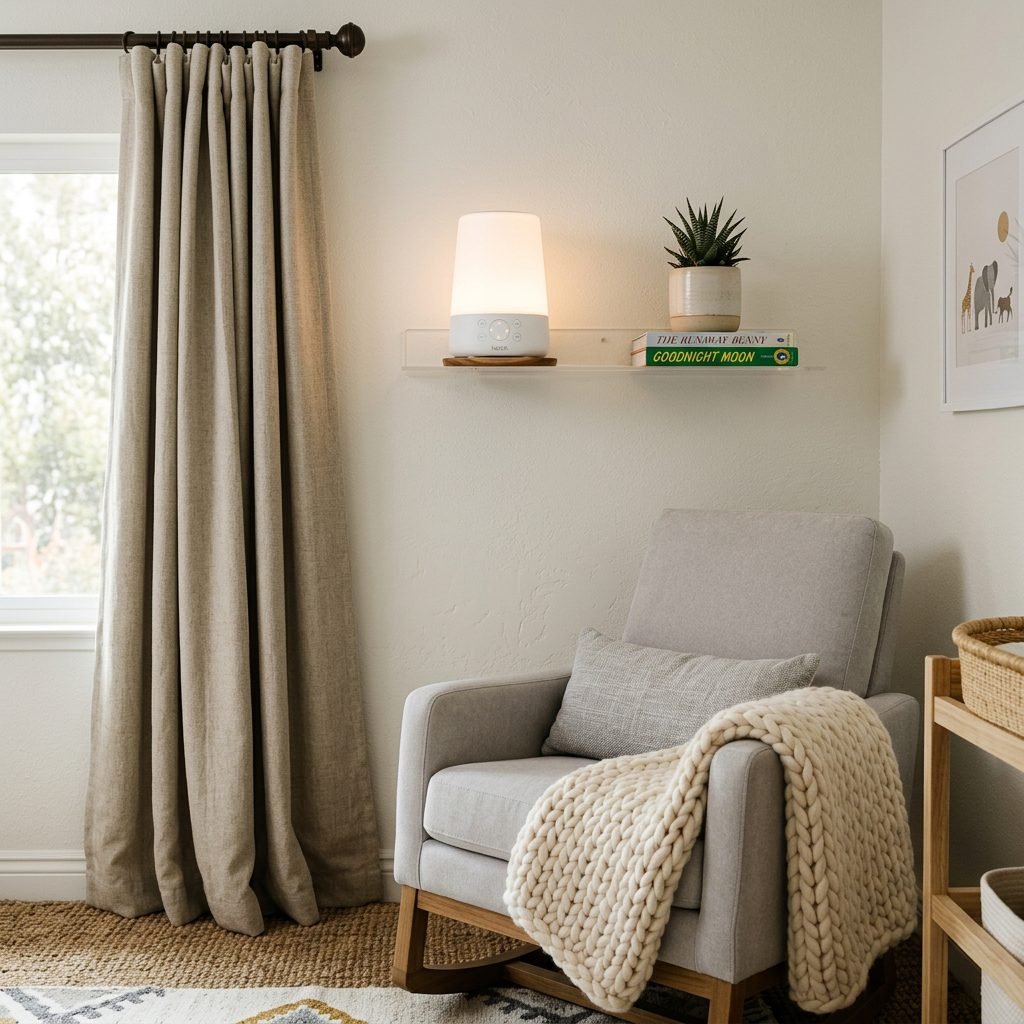
Creating a Sleep-Inducing Sanctuary
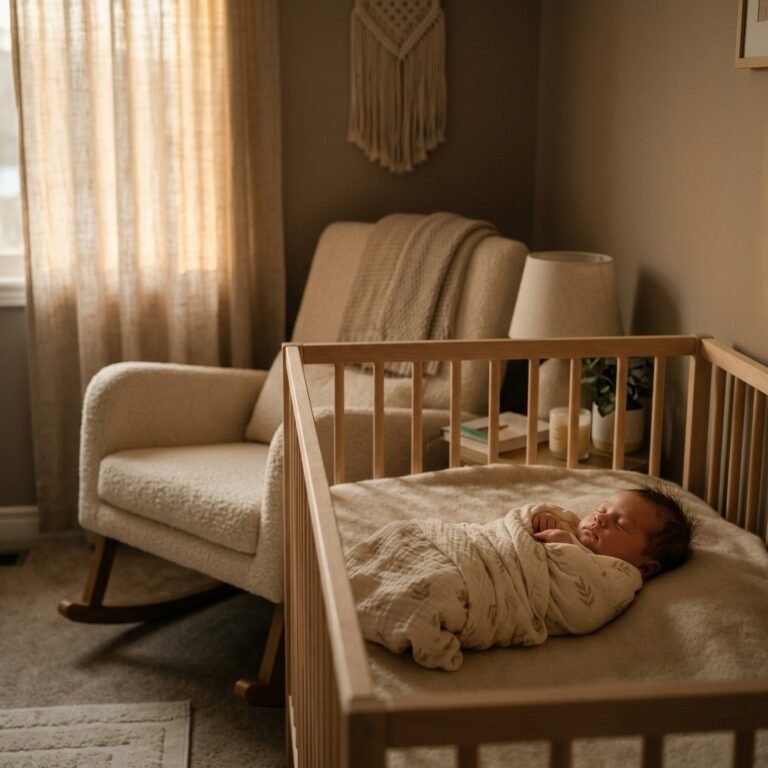
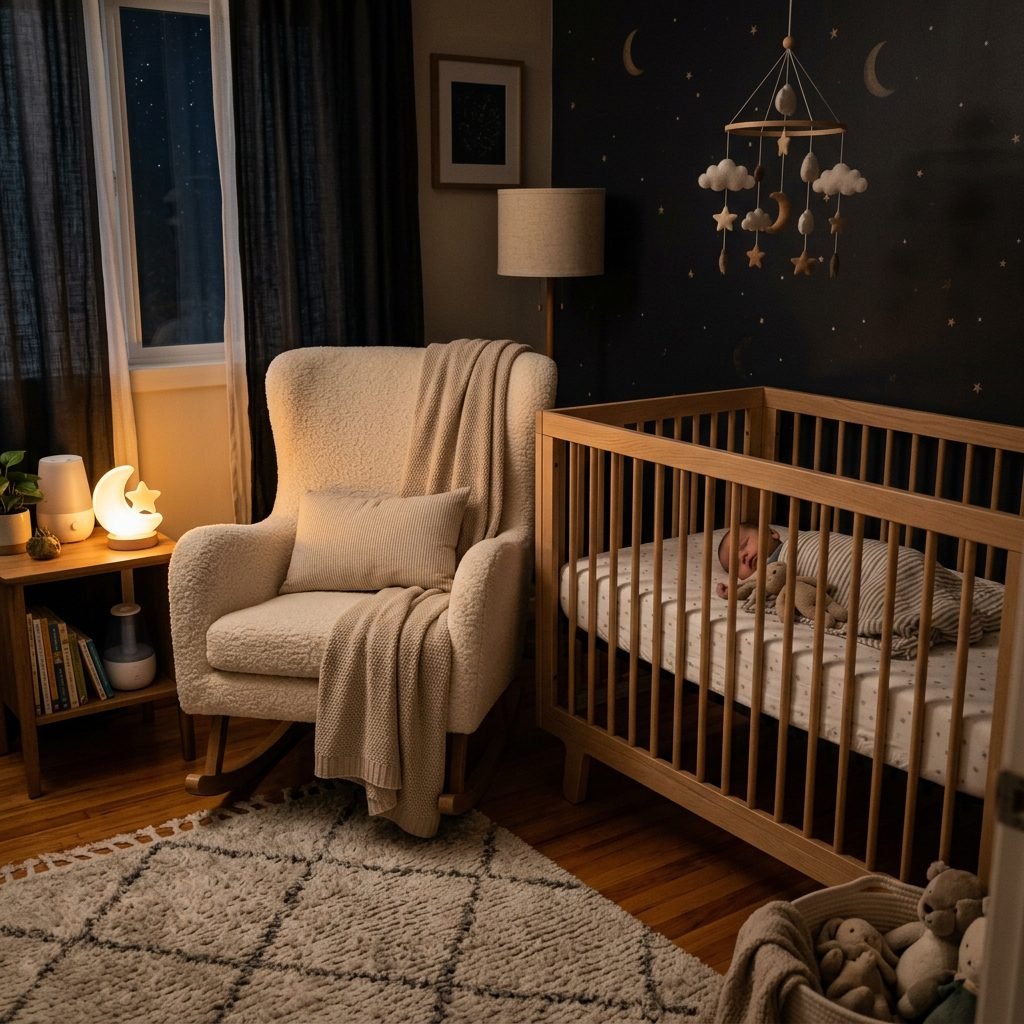
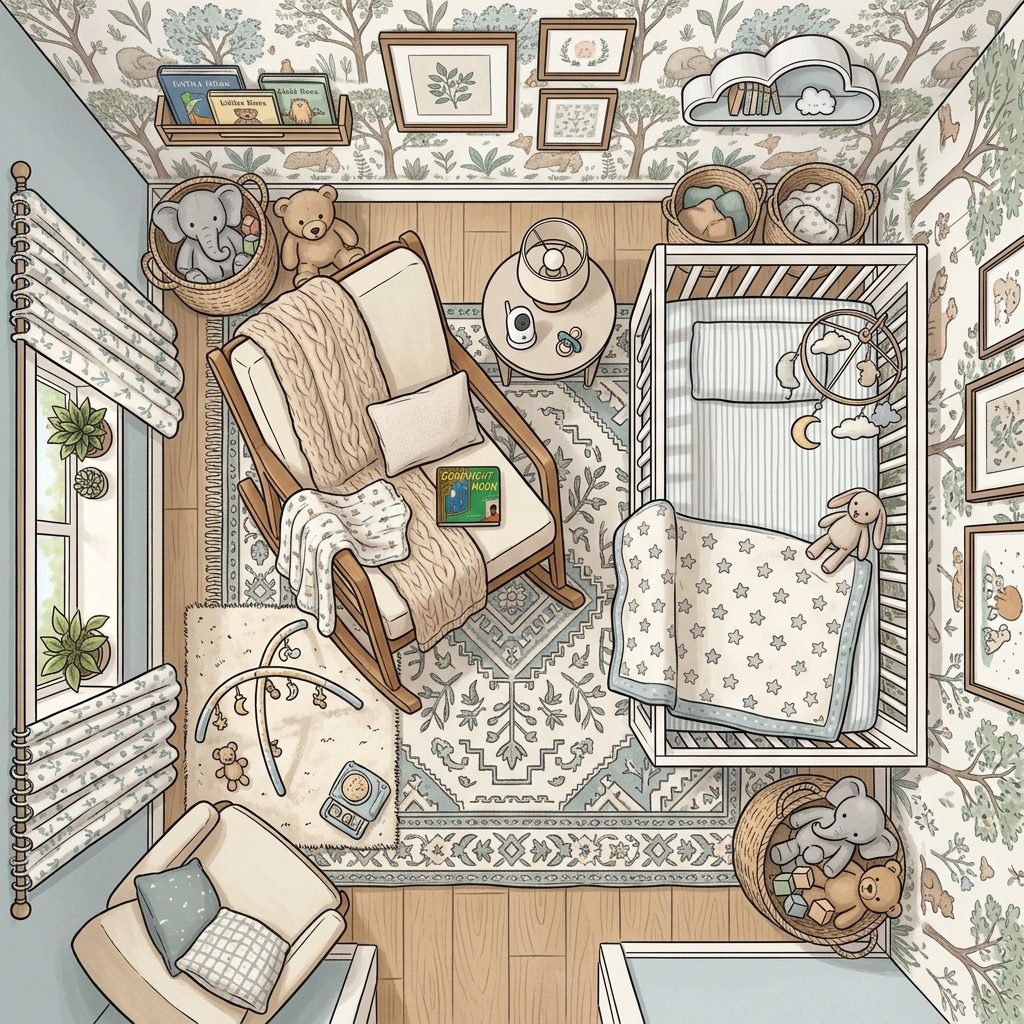
As a nursery designer and maternal stylist, I always tell my clients: the environment does half the heavy lifting when it comes to sleep. If you are going to be ‘camping out’ in this room for a couple of weeks, we need to make sure the space is optimized for both your baby’s sleep and your comfort.
- Blackout Curtains: This is non-negotiable. Even the smallest sliver of street light or early morning sun can disrupt melatonin production. Invest in high-quality, wrap-around blackout curtains.
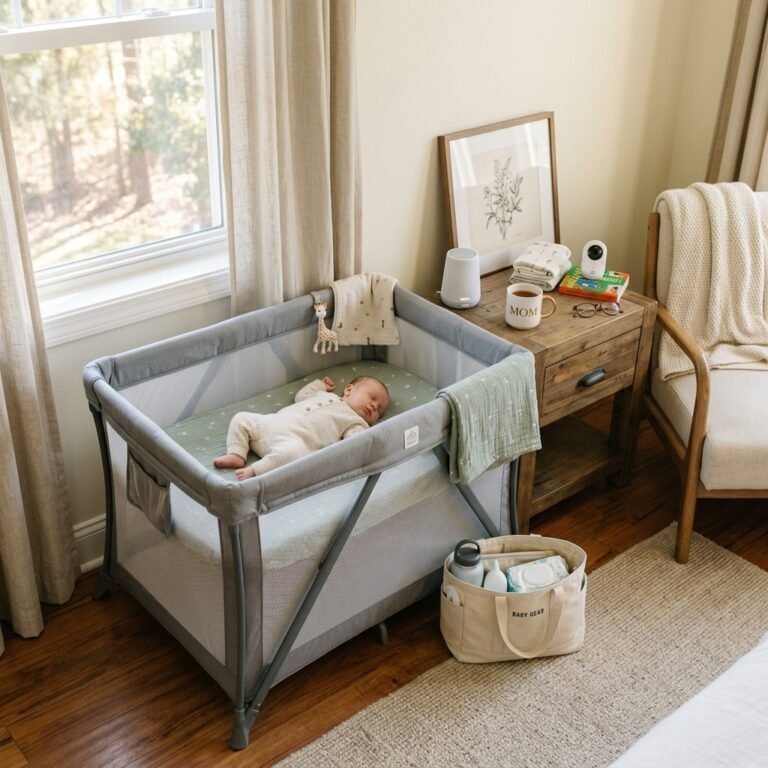
- Continuous White Noise: Place a white noise machine at least three feet away from the crib. Keep it running continuously through the night. It should mimic the low, rumbly sound of the womb and be no louder than a running shower (around 50-60 decibels).
- Temperature Control: Babies sleep best in a cool room. Aim for a temperature between 68 to 72 degrees Fahrenheit. Dress them in a breathable, tog-rated sleep sack to keep them cozy without the risk of loose blankets.
- Your Comfort Station: Mama, do not sit on a hard wooden dining chair for this! Bring in an ergonomic nursing glider, a plush floor pouf, or a comfortable armchair. Have a cozy throw blanket for yourself, and perhaps a pair of wireless earbuds so you can listen to an audiobook or a guided meditation while you sit in the dark.
The Power of the Pre-Sleep Routine
Babies thrive on predictability. A solid 30-minute bedtime routine signals to their brain that sleep is coming. A beautiful, calming routine might look like this: a warm bath, a gentle infant massage with pregnancy-safe, unscented lotion, into pajamas and a sleep sack, a feeding (kept separate from falling asleep to avoid feed-to-sleep associations), and reading two quiet storybooks. Once the books are done, turn on the white noise, turn off the lights, say your designated sleep phrase, and take your seat in the chair.
Troubleshooting: Navigating the Bumps in the Night
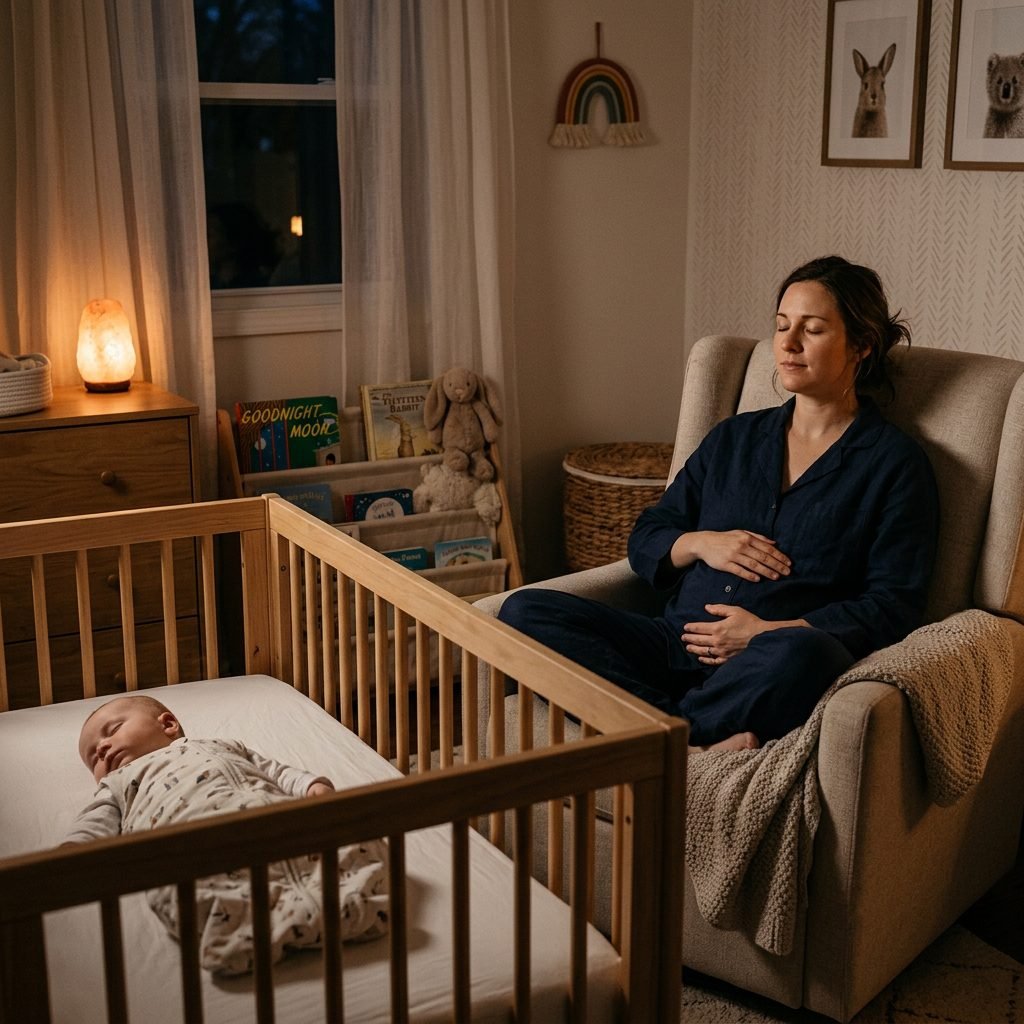
Handling the Protests
Let us be radically honest: even the gentlest sleep training methods will likely involve some tears. Crying is your baby’s primary way of communicating frustration, and learning a new skill is frustrating! When your baby cries during the Camping Out method, your job is not to immediately fix it, but to support them through it.
“Your presence is their safe harbor. You are not abandoning them; you are guiding them. It is okay for them to be frustrated, and it is okay for you to hold space for that frustration.”
Common Scenarios and How to Handle Them
- The Baby Stands Up in the Crib: If your baby pulls to a stand and cries, gently lay them back down the first time and say your sleep phrase. If they pop right back up, do not engage in a power struggle. Let them stand. Keep sitting in your chair. Eventually, they will get tired and lie down on their own. Consistency is key.
- The Middle-of-the-Night Wakings: The Camping Out method applies to night wakings as well! If they wake up at 2:00 AM, go back to the chair position you are currently at for that specific day. Do not revert to day 1 just because it is the middle of the night.
- The Extinction Burst: Around Day 3 or 4, you might experience an ‘extinction burst’—a sudden regression where the crying temporarily gets worse before it gets better. This is completely normal! It is your baby’s way of saying, ‘Wait, my old ways of getting to sleep aren’t working, let me try harder.’ Stay the course. Do not move the chair backward.
Managing Your Own Postpartum Anxiety
Sitting in the dark listening to your baby fuss can be incredibly triggering. If you feel your heart racing or your shoulders tensing, practice deep belly breathing. Inhale for four counts, hold for four, exhale for four. Remind yourself that they are fed, dry, safe, and loved. If you have a partner, tag-team this process! Taking shifts can save your sanity and ensure you both get rest.
Pros, Cons, and Is It Right for Your Family?
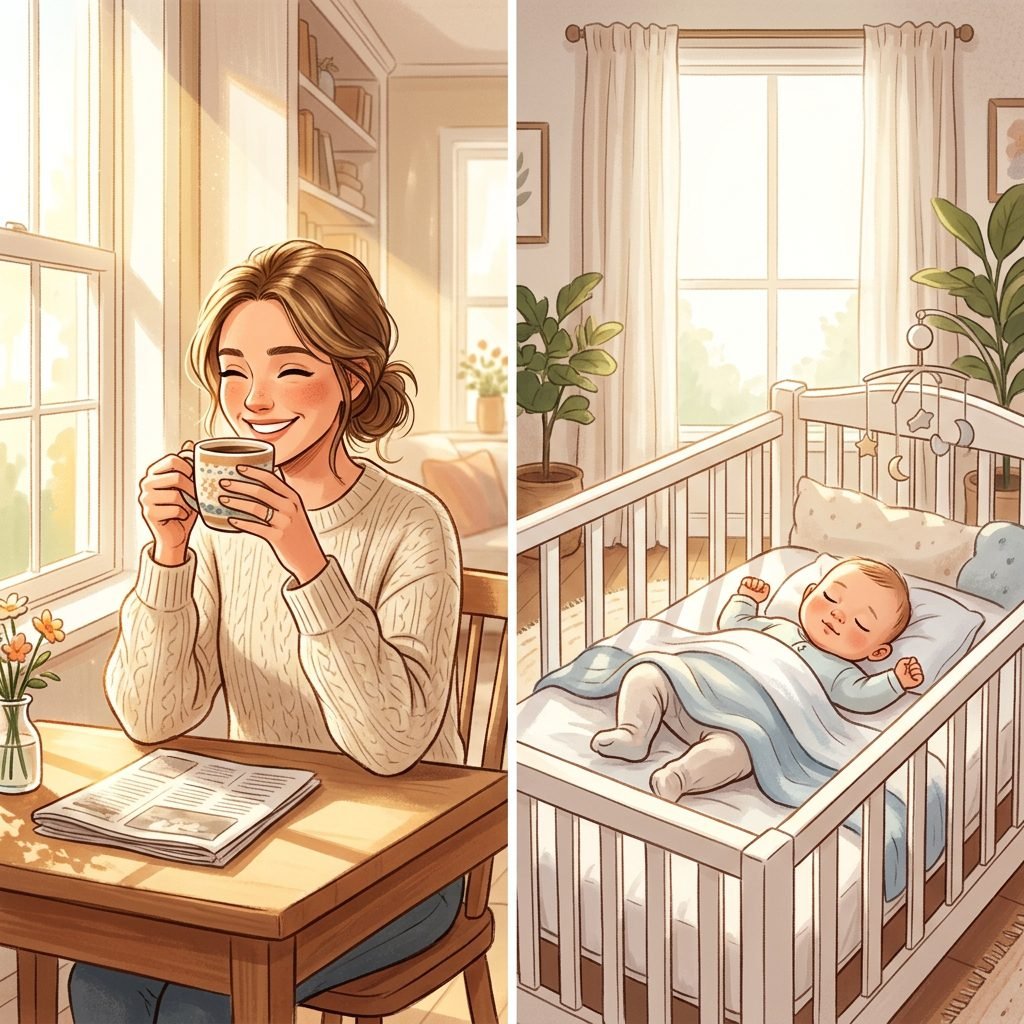
Making the Best Choice for Your Unique Baby
As a doula, I never believe in a one-size-fits-all approach to motherhood. What works miracles for one family might be a disaster for another. The Camping Out method is beautiful, but it requires patience and stamina. Let us look at an honest breakdown to help you decide if this is the path you want to take.
| Pros of the Camping Out Method | Cons of the Camping Out Method |
|---|---|
| Highly responsive and gentle; minimizes parent guilt. | Takes longer to see results (often 2-3 weeks) compared to faster methods. |
| Maintains a strong sense of security and attachment for the baby. | Can be physically exhausting for parents who have to stay awake in the chair. |
| Highly adaptable; you can slow down the timeline if needed. | Some babies find the parent’s presence in the room stimulating, leading to more crying. |
| Excellent for older babies and toddlers with separation anxiety. | Requires immense consistency; moving the chair backward resets progress. |
Signs Your Baby Might Find Your Presence Stimulating
While most babies find comfort in having you nearby, a small percentage of babies are actually ‘FOMO’ (Fear Of Missing Out) babies. If you notice that your baby is making eye contact with you, reaching for you, and escalating their crying specifically *because* you are in the room but not picking them up, the Camping Out method might be too stimulating. In these cases, a method where you leave the room and do timed check-ins might actually result in less crying overall.
Conclusion
Embracing the Journey to Restful Nights
Motherhood is a profound journey of letting go, in tiny, incremental steps. Teaching your baby to sleep independently is often one of the first major milestones where we have to step back and trust in their capabilities. The Camping Out method allows you to do this with immense grace, warmth, and supportive presence. Remember, there is no magic wand for baby sleep, and progress is rarely linear. You will have great nights, and you will have nights where you feel like you are back at square one. Give yourself and your baby abundant grace.
Stay consistent, keep your environment optimized, and trust your maternal instincts. You are laying the foundation for healthy sleep habits that will benefit your child for years to come. Sweet dreams to you and your little one, Mama. You have got this.