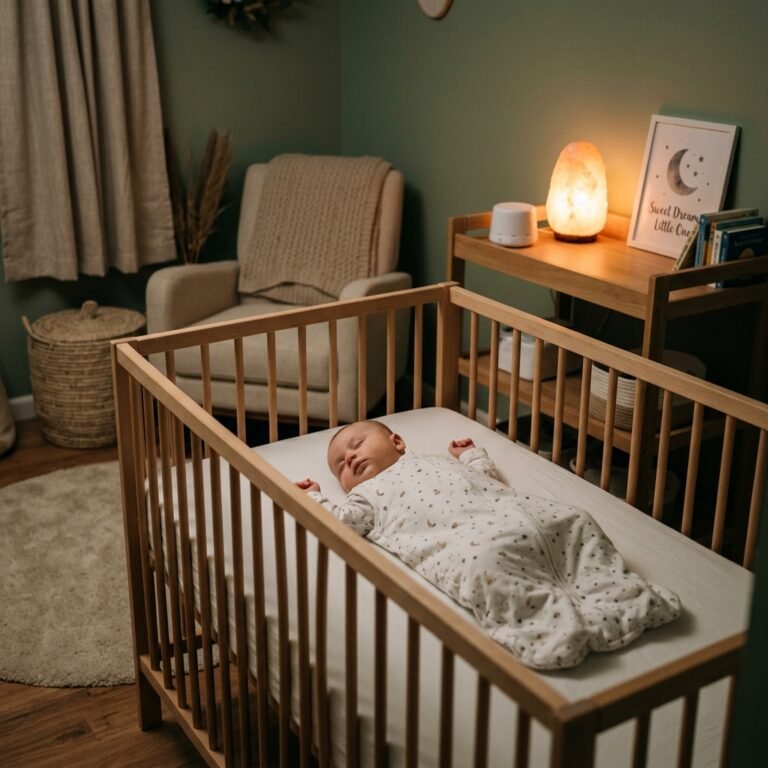
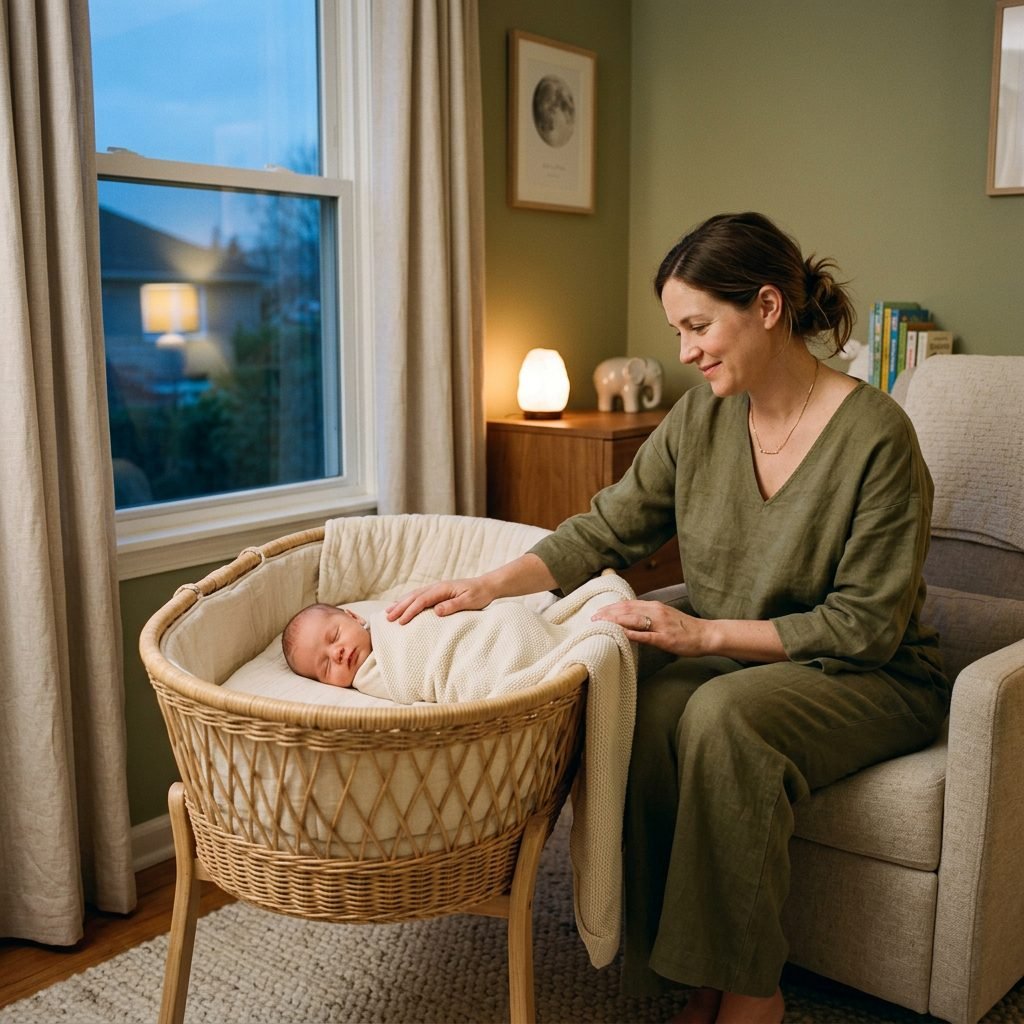
The Gentle No-Cry Method to Teach Your Newborn Baby How to Self-Soothe
Welcome to the fourth trimester, sweet mama. If you are reading this at 3:00 AM with a baby resting on your chest, feeling the heavy ache of sleep deprivation behind your eyes, please take a deep breath. You are doing a beautiful job. In my years as a postpartum nurse and certified doula, I have sat with countless mothers in the quiet, lonely hours of the night, listening to their desperate desire for just one solid stretch of sleep. The phrase ‘sleep training’ often brings up images of crying babies and closed doors, which can make any mother’s heart ache. But I am here to tell you that teaching your newborn the gentle art of self-soothing does not require you to ignore their cries or abandon your maternal instincts. In fact, it is quite the opposite.
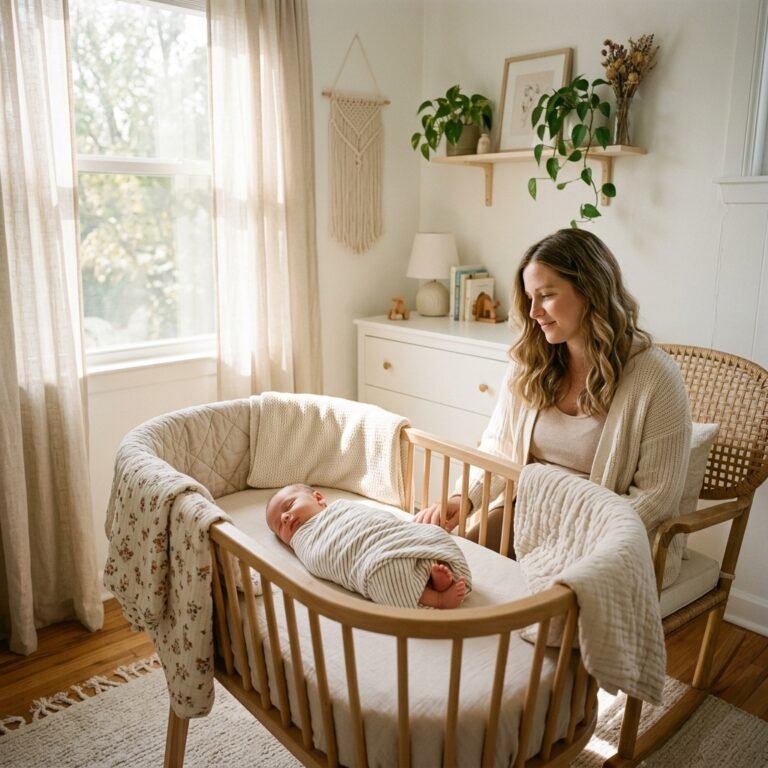
True self-soothing in the newborn stage (from birth to twelve weeks) is not about forcing independence on a tiny, helpless infant. Developmentally, your baby’s brain is not yet wired to self-regulate complex emotions. Instead, the gentle, no-cry method is about laying down a foundation of comfort, predictability, and environmental cues that gently guide your baby toward sleep. It is about creating a safe space where they feel secure enough to drift off, and giving them the microscopic moments of grace they need to settle themselves before we rush in. Together, we are going to explore evidence-based pediatric sleep science, combined with the warm, stylish, and practical doula secrets that will help both you and your baby find rest.
Mama, your intuition is your superpower. We are not breaking your baby’s attachment; we are building a bridge to peaceful rest, one gentle step at a time.
Redefining ‘Self-Soothing’ for the Fourth Trimester

Before we dive into the techniques, we need to completely reframe what ‘self-soothing’ means for a baby under twelve weeks old. In the pediatric sleep world, true self-soothing—the ability to wake up fully, realize they are alone, and put themselves back to sleep without assistance—is a developmental milestone that typically emerges between four and six months. However, newborns possess a primitive, instinctual version of settling that we can nurture. When they were in the womb, they were constantly rocked, shushed by your heartbeat, and tightly swaddled by your body. When they enter the world, the sudden silence and stillness can be alarming.
The Science of Newborn Sleep Cycles
Newborns spend about 50% of their sleep in REM (Rapid Eye Movement) or ‘active sleep.’ During this phase, your baby might grunt, squeak, thrash, roll their eyes, and even let out short cries. To a new, exhausted mother, this looks and sounds exactly like a baby who is waking up and needs immediate rescuing. However, in many cases, the baby is actually fast asleep! Rushing in and picking them up during active sleep is one of the most common ways parents accidentally wake their sleeping babies.
Our goal in the fourth trimester is not to expect the baby to put themselves to bed, but to provide them with the optimal environment and the opportunity to connect their short sleep cycles. We do this by minimizing disruptions and maximizing comfort.
| What is Normal (Do Not Panic) | What Needs Intervention |
|---|---|
| Grunting, snorting, and whistling noises | Continuous, escalating crying for more than 2 minutes |
| Brief, sudden cries that stop after a few seconds | Signs of hunger (rooting, lip smacking) |
| Thrashing arms and legs (Moro reflex) | Fever, extreme fussiness, or signs of pain |
| Eyes fluttering open and rolling back | A dirty diaper that is causing discomfort |
The Magic of ‘The Pause’ (Le Pause): Your First Step to Gentle Sleep
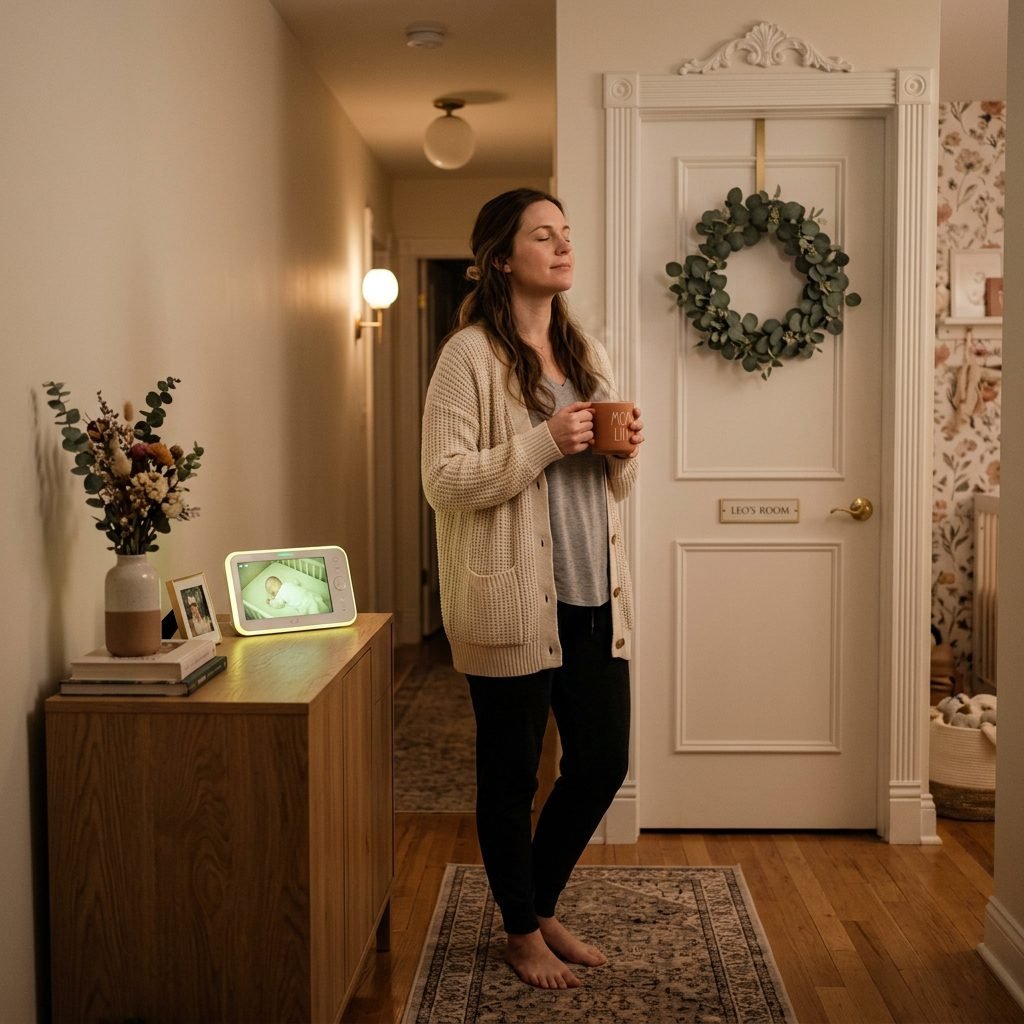
If there is one doula secret I could gift to every expectant and new mother, it is the French concept of Le Pause. It is the absolute cornerstone of the gentle, no-cry method. The Pause is simply the act of waiting a few moments before responding to your baby’s nighttime noises. It is not ‘Cry It Out’ (CIO). It is a brief, observant delay that allows you to assess whether your baby is truly awake and in need, or simply transitioning between sleep cycles.
How to Execute The Pause
- Listen carefully: When you hear your baby stir, grunt, or let out a cry, freeze. Do not immediately jump out of bed.
- Start the clock: Mentally (or literally) count to 90 seconds. In the middle of the night, 90 seconds feels like an eternity, but it is scientifically the sweet spot for allowing an infant to settle.
- Observe the escalation: Is the cry ramping up into a frantic, red-faced wail? Or is it a rhythmic, fussy mantra cry that rises and falls? If it is the latter, they are likely trying to settle.
- Intervene if necessary: If the 90 seconds pass and your baby is escalating, or if you hear the distinct, sharp cry of hunger or pain, go to them immediately. You have lost nothing by waiting, but you have given them a crucial window of opportunity.
By practicing The Pause, you are teaching your baby that they have the capability to squirm, get comfortable, and drift back off without needing to be bounced on a yoga ball for forty-five minutes. It is a profound act of trust in your baby’s natural rhythms.
Script for the Anxious Mind: ‘My baby is safe. My baby is learning. I am giving them the space to find their comfort. I am right here if they truly need me.’
Recreating the Womb: Designing a Sleep-Inducing Nursery
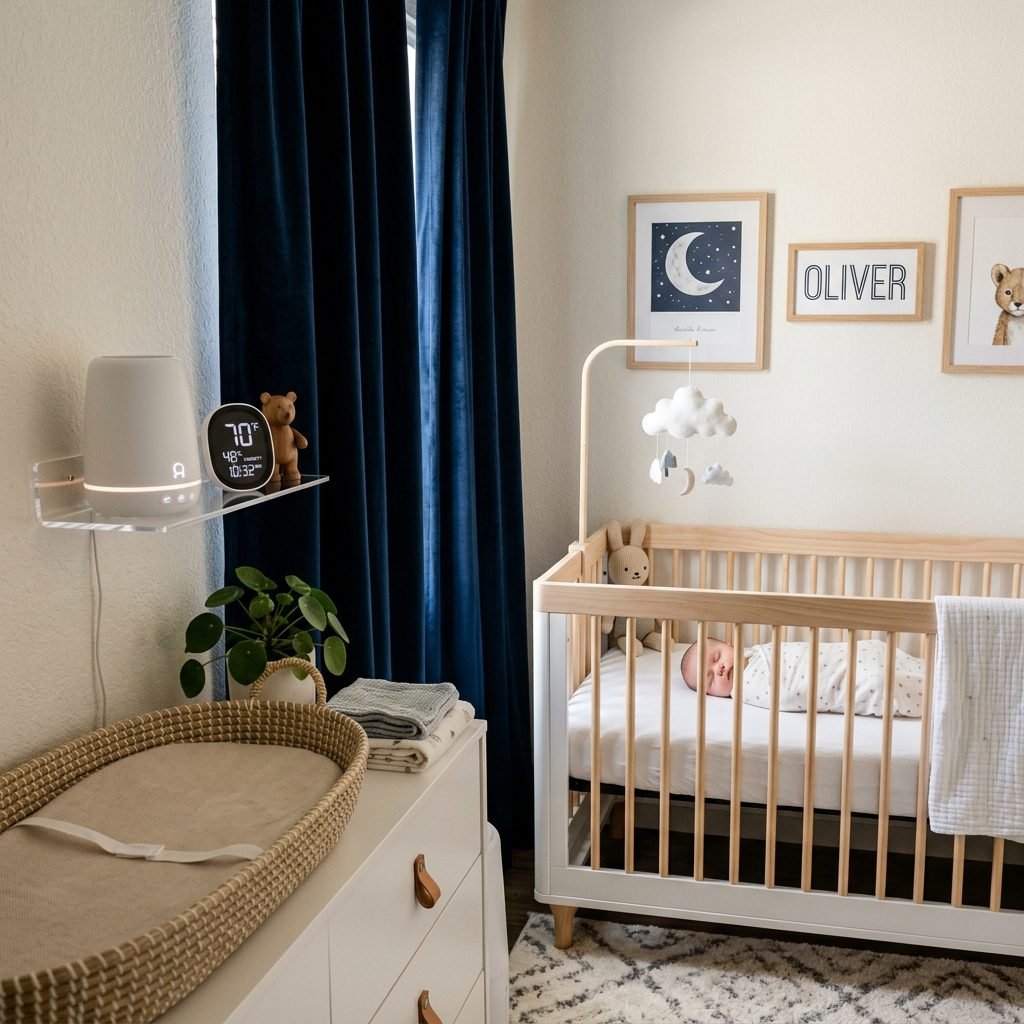
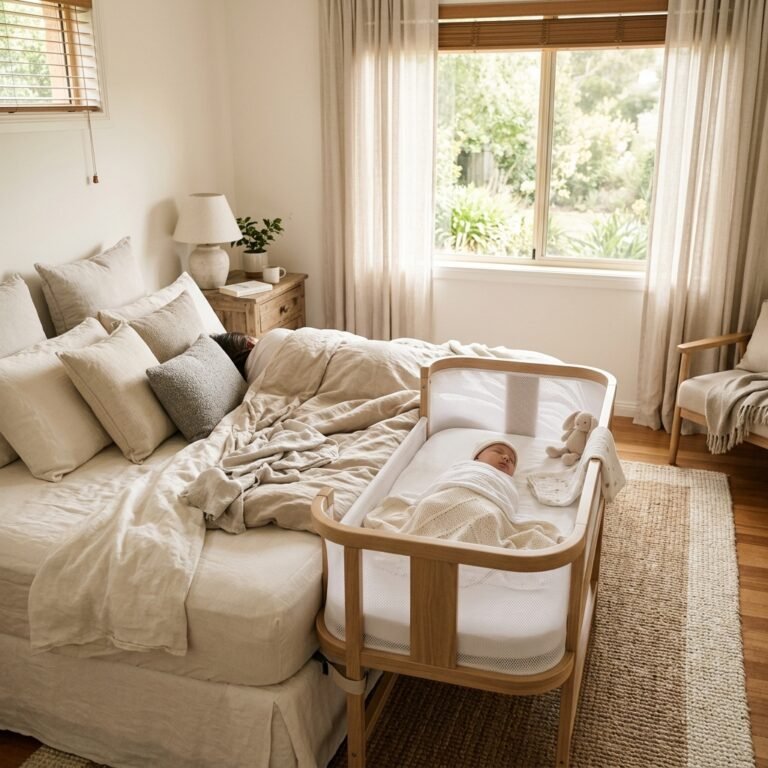
A newborn’s sensory system is incredibly delicate. To encourage self-soothing, we must first ensure their physical environment mimics the cozy, secure, and sensory-rich environment of the womb. A baby cannot self-soothe if they are freezing, startled by their own reflexes, or distracted by a streetlamp shining through the window. As a nursery designer and maternal stylist, I always emphasize that function must meet comfort.
The 5 S’s of Sleep Environment
- Swaddling: Until your baby shows signs of rolling, a snug swaddle is essential. It suppresses the Moro (startle) reflex, which is the number one culprit for waking a sleeping newborn. Opt for breathable, stylish bamboo or organic cotton swaddles to prevent overheating.
- Sound (White Noise): The womb is as loud as a vacuum cleaner! Total silence is terrifying to a newborn. Use a continuous white noise or pink noise machine placed across the room from the crib. Keep the volume around 50 to 60 decibels (about the sound of a normal shower).
- Shade (Total Darkness): Even at a few weeks old, light exposure affects circadian rhythms. Invest in high-quality blackout curtains. If you need a nightlight for feedings, use a dim, red-hued light, which does not disrupt melatonin production.
- Sucking: A pacifier is a wonderful tool for self-soothing. The act of non-nutritive sucking lowers a baby’s heart rate and blood pressure, naturally inducing calmness.
- Safe Temperature: The ideal nursery temperature for infant sleep is between 68°F and 72°F (20°C – 22°C). Dress your baby in one more layer than you are wearing to be comfortable.
| Nursery Element | Ideal Setup for Self-Soothing | What to Avoid |
|---|---|---|
| Lighting | 100% Blackout curtains, amber/red nightlight | Blue lights, bright overheads, streetlights |
| Sound | Continuous, low-pitch white/pink noise | Lullabies with changing pitches, total silence |
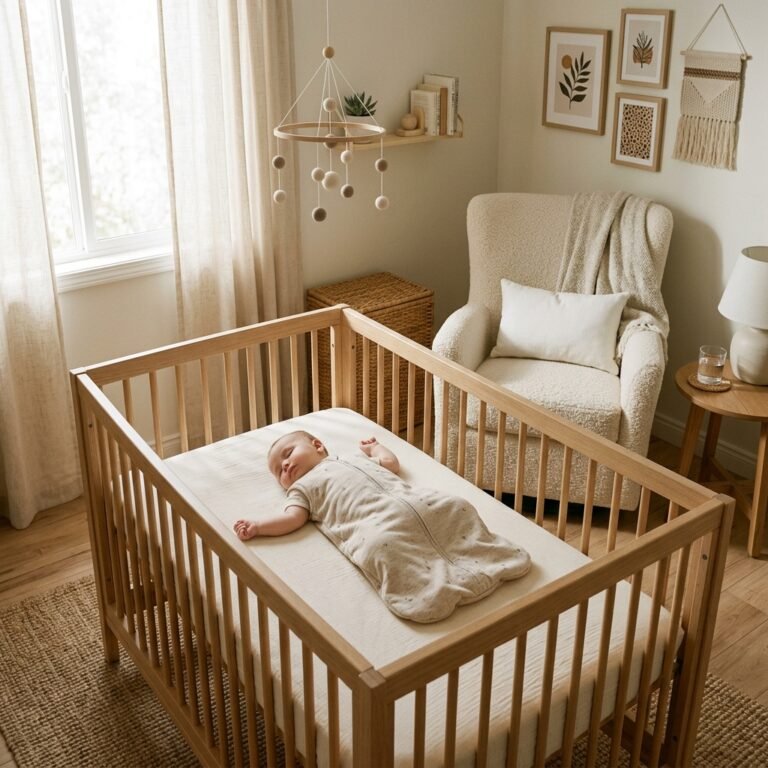
| Bedding | Firm, flat mattress with a fitted sheet only | Loose blankets, pillows, crib bumpers |
| Temperature | 68°F – 72°F with a 1.0 TOG sleep sack/swaddle | Overheating, heavy fleece over-layers |
The Ladder of Soothing: Step-by-Step Gentle Intervention
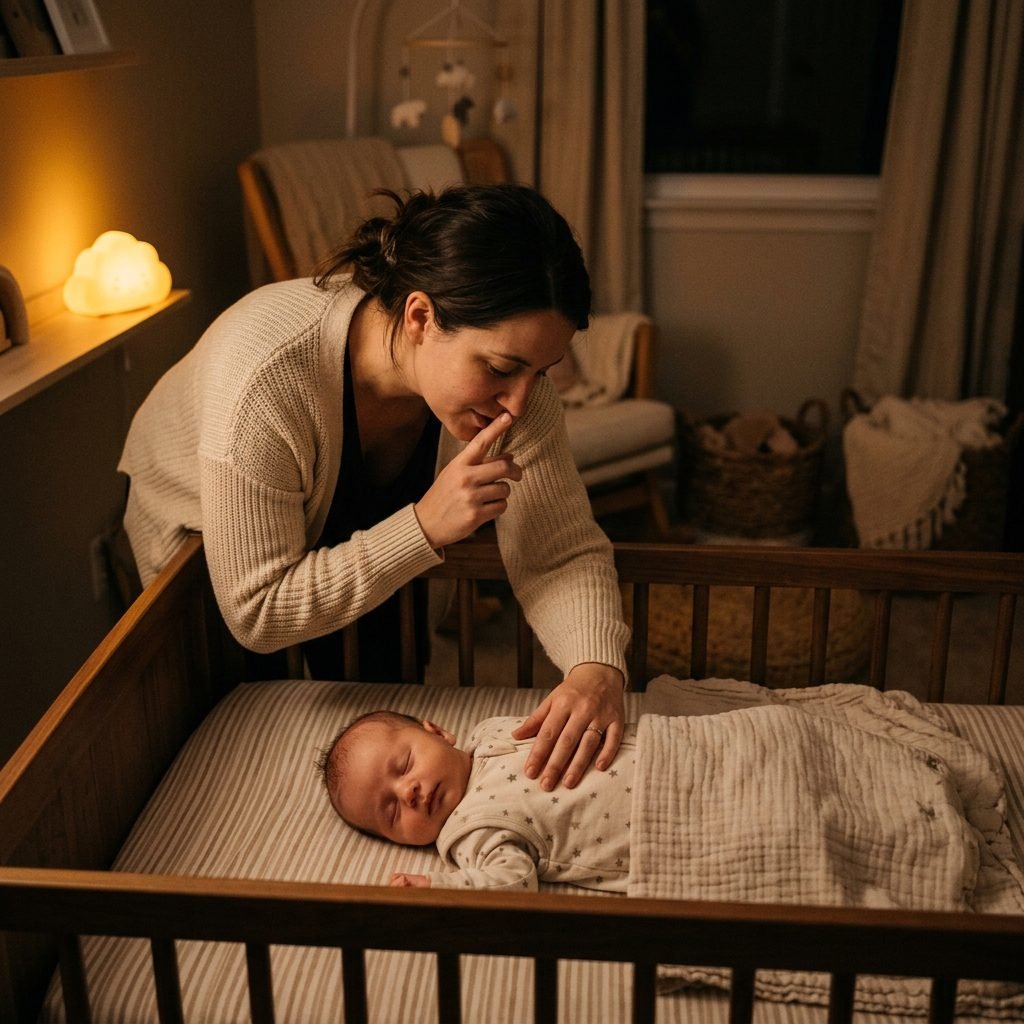
So, you have practiced The Pause, the room is perfectly dark, the white noise is humming, but your baby is still fussing and escalating. What now? This is where we implement ‘The Ladder of Soothing.’ Instead of immediately picking your baby up and offering the breast or a bottle (which creates a sleep association that requires you every time they wake), we intervene with the least invasive method first, slowly climbing the ladder until the baby is calm.
Step-by-Step Soothing Escalation
- Level 1: Presence. Walk into the room quietly. Stand next to the crib so your baby can smell you and sense your presence. Do not make eye contact, as eye contact is highly stimulating for newborns. Wait 30 seconds.
- Level 2: Voice. If they are still fussing, introduce a low, rhythmic ‘Shhhhh, shhhhh’ sound. You can also softly hum a familiar tune. Wait 30 seconds.
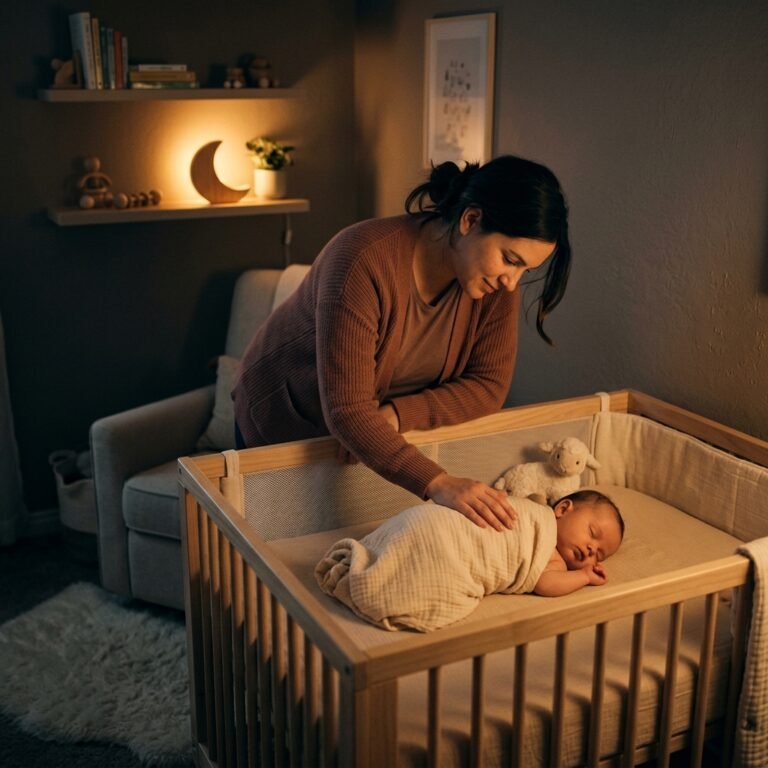
- Level 3: Touch. Place a warm, firm hand gently on their chest. You can softly jiggle or rock their torso back and forth while they remain flat in the crib. This mimics the movement of the womb. Wait 30 seconds.
- Level 4: Pacifier. Offer the pacifier. Gently tap it on their lips to encourage them to take it. The sucking reflex will often take over and soothe them to sleep.
- Level 5: Pick Up to Calm. If they are fully crying, pick them up. Rock them, bounce them, and soothe them until they are calm and drowsy, but not completely asleep. Once they are calm, place them back in the crib awake. If they cry again, start the ladder over.
This method requires patience, mama. It is a dance of offering support while allowing them the physical space to try and settle. Over the course of a few weeks, you will find that you rarely have to climb past Level 2 or 3 before they drift off.
Mastering Awake Windows: The Secret to Preventing Overtired Meltdowns

As a pediatric sleep consultant, the most common roadblock I see to a baby learning to self-soothe is overtiredness. An overtired baby experiences a spike in cortisol and adrenaline—the body’s stress hormones. When these hormones flood their tiny system, their brain essentially goes into ‘fight or flight’ mode. An overtired baby cannot self-soothe; they can only scream. Therefore, mastering your baby’s awake windows is the most preventative measure you can take for peaceful sleep.
What is an Awake Window?
An awake window is the total amount of time your baby is awake between naps, including feeding, diaper changes, and play. For a newborn, this window is shockingly short. If you miss the window, you hit the overtired zone.
- Early Sleep Cues: Staring blankly off into space, pink or red eyebrows, turning their head away from stimulation, slow blinking. (This is when you start the sleep routine!)
- Late Sleep Cues: Yawning, rubbing eyes, pulling at ears, fussing. (The window is closing quickly!)
- Overtired Cues: Frantic crying, arching back, rigid body. (Damage control mode—do whatever it takes to get them to sleep).
| Baby’s Age | Ideal Awake Window | Total Daytime Sleep Needed |
|---|---|---|
| 0 – 4 Weeks | 45 to 60 minutes | 5 to 7 hours |
| 4 – 8 Weeks | 60 to 90 minutes | 4 to 6 hours |
| 8 – 12 Weeks | 90 to 120 minutes | 4 to 5 hours |
By putting your baby down in their crib when they are showing early sleep cues, they are relaxed enough to actually practice the self-soothing techniques we have discussed. A relaxed baby is a sleepy baby.
Conclusion
Sweet mama, teaching your newborn to self-soothe through the gentle, no-cry method is not a linear journey. There will be nights where the ladder of soothing works perfectly, and you feel like a maternal superhero. There will also be nights during growth spurts or leaps where nothing works except holding them tightly against your chest while you rock in the dark. Both of these nights are normal, and neither means you are failing. You are laying a beautiful, secure foundation of sleep hygiene that will serve your child for years to come. Give yourself grace, trust your instincts, and remember that this exhausting, beautiful season is fleeting. You are exactly the mother your baby needs.