Sleeping On the Go: 7 Tips to Keep Baby on Schedule While Traveling
Oh, mama, I see you. You’ve finally found a rhythm at home. The 7:00 PM bedtime is a sacred ritual, the white noise machine is your best friend, and you’ve finally mastered the art of the ‘dream feed.’ But now, a family wedding, a holiday, or a much-needed vacation is on the horizon, and the anxiety is bubbling up. ‘Will my baby ever sleep again?’ ‘Will one week of travel ruin months of sleep training?’
As a doula and a mama who has navigated airports with a blowout and a crying infant, let me take your hand and whisper this: You can do this. Your baby is more resilient than you think, and with a little bit of strategic planning and a lot of grace, you can maintain that precious sleep schedule while making beautiful memories. We aren’t just surviving the trip; we are thriving through it. Let’s dive into my expert-tested, heart-centered tips for keeping your little one’s sleep on track while you’re on the move.
1. Creating a Sensory Bridge: Bringing the ‘Smell of Home’
Babies are incredibly sensory-oriented. Their sense of smell is one of their strongest links to safety and security. When you move a baby from their familiar nursery to a sterile hotel room or a guest bedroom at Grandma’s, the unfamiliar scents can trigger an ‘alert’ response in their nervous system. To combat this, we create a Sensory Bridge.
The Unwashed Sheet Trick
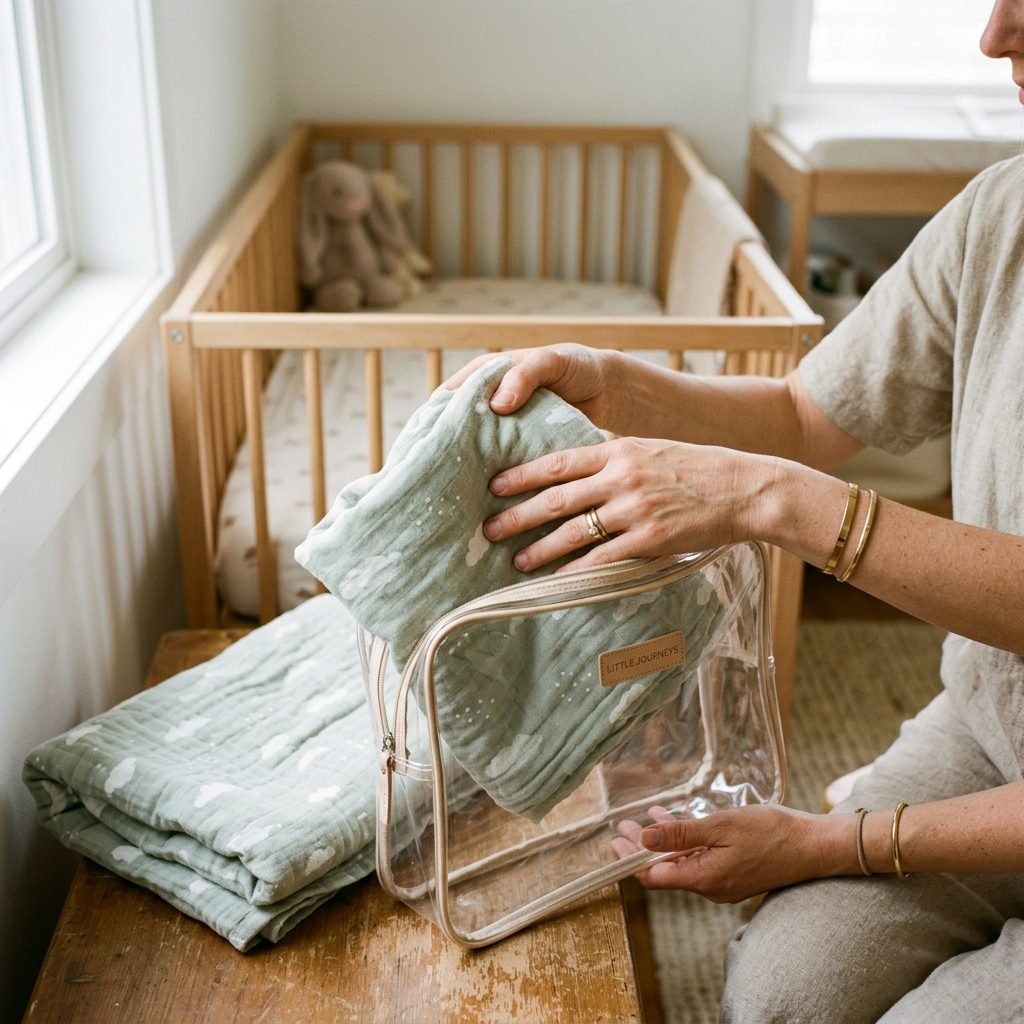
Three days before your trip, put a fresh sheet on your baby’s crib mattress. Let them sleep on it until the morning you leave. Do NOT wash it. Fold it up, seal it in a gallon-sized Ziploc bag to preserve the scent of home (and you!), and place it on the travel crib mattress as soon as you arrive at your destination. This familiar scent signals to their brain: ‘This is a safe place to sleep.’
“Mama, remember that your scent is your baby’s ultimate north star. When the world feels big and new, the smell of home tells their heart they are safe.”
| Sensory Element | Home Version | Travel Alternative |
|---|---|---|
| Smell | Nursery detergent/Mother’s scent | Unwashed crib sheet in a sealed bag |
| Sound | Large plug-in sound machine | Portable, rechargeable white noise unit |
| Touch | Standard sleep sack | The exact same weight/brand sleep sack |
| Sight | Blackout curtains | Travel suction-cup blackout shades |
2. The Strategic Transit: Timing Your Travel with Wake Windows
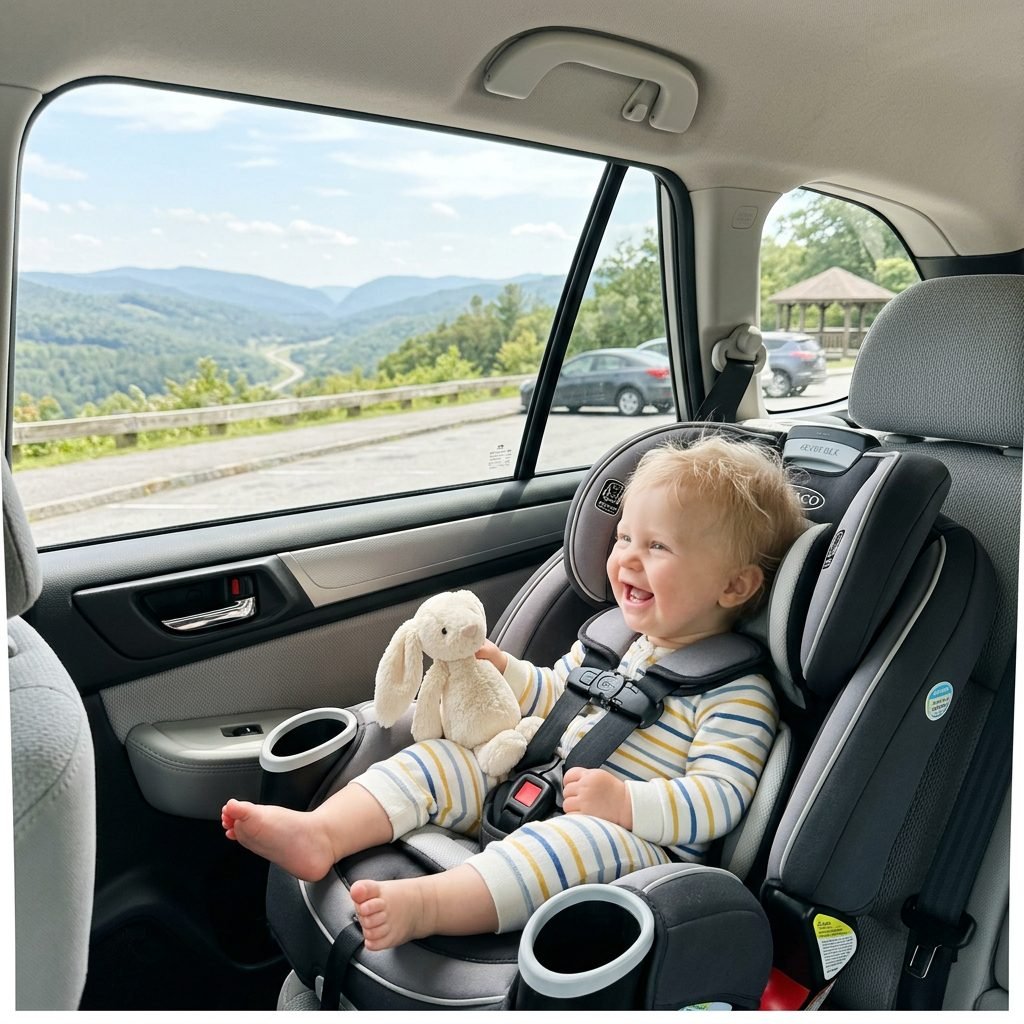
One of the biggest mistakes parents make is trying to ‘tire the baby out’ before a flight or car ride. An overtired baby does not sleep longer; they produce cortisol (the stress hormone), which makes falling asleep nearly impossible. Instead, we want to work with their biological clock.
For Road Trips: The ‘First Nap’ Launch
Try to leave about 30 minutes before your baby’s first scheduled nap of the day. This allows them to get out their initial morning energy in the car seat before the motion of the car lulls them into their longest nap. For long hauls, plan your stops during the baby’s ‘Wake Windows’—the times they are naturally alert and need to wiggle.
For Air Travel: The Feeding/Pressure Hack
If you are flying, try to time a feeding (breast or bottle) for takeoff and landing. The sucking motion helps equalize the pressure in their tiny ears, preventing the pain that often leads to mid-air meltdowns. If your baby is on a strict schedule, don’t be afraid to offer a ‘bonus’ snack to keep them comfortable.
| Baby Age | Typical Wake Window | Travel Strategy |
|---|---|---|
| 0-3 Months | 60-90 Minutes | Wear baby in a wrap; they will likely sleep through most transit. |
| 4-7 Months | 2-3 Hours | Time the longest leg of travel with the midday nap. |
| 8-12 Months | 3-4 Hours | Provide high-contrast toys during wake time; use a car-seat cover for naps. |
| Toddlers | 5+ Hours | Burn energy at the gate; use snacks as a distraction during descent. |
3. The Portable Sanctuary: Mastering the Hotel Sleep Setup
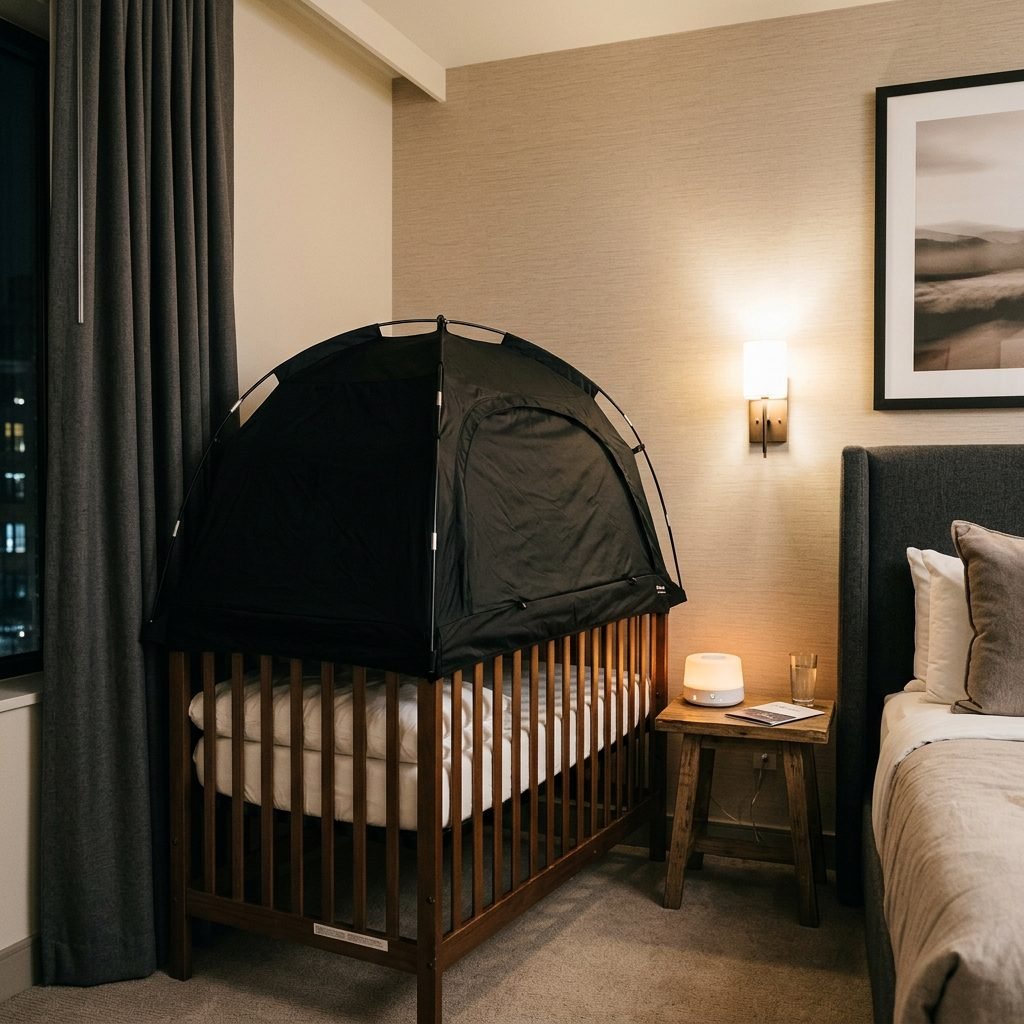
Hotel rooms are notorious for ‘light leaks’—that sliver of light under the door or the bright red glow of the alarm clock. To a baby, a tiny bit of light can look like a morning sunbeam, signaling it’s time to wake up at 4:00 AM. Creating a dark, cave-like environment is essential.
The SlumberPod & Blackout Hacks
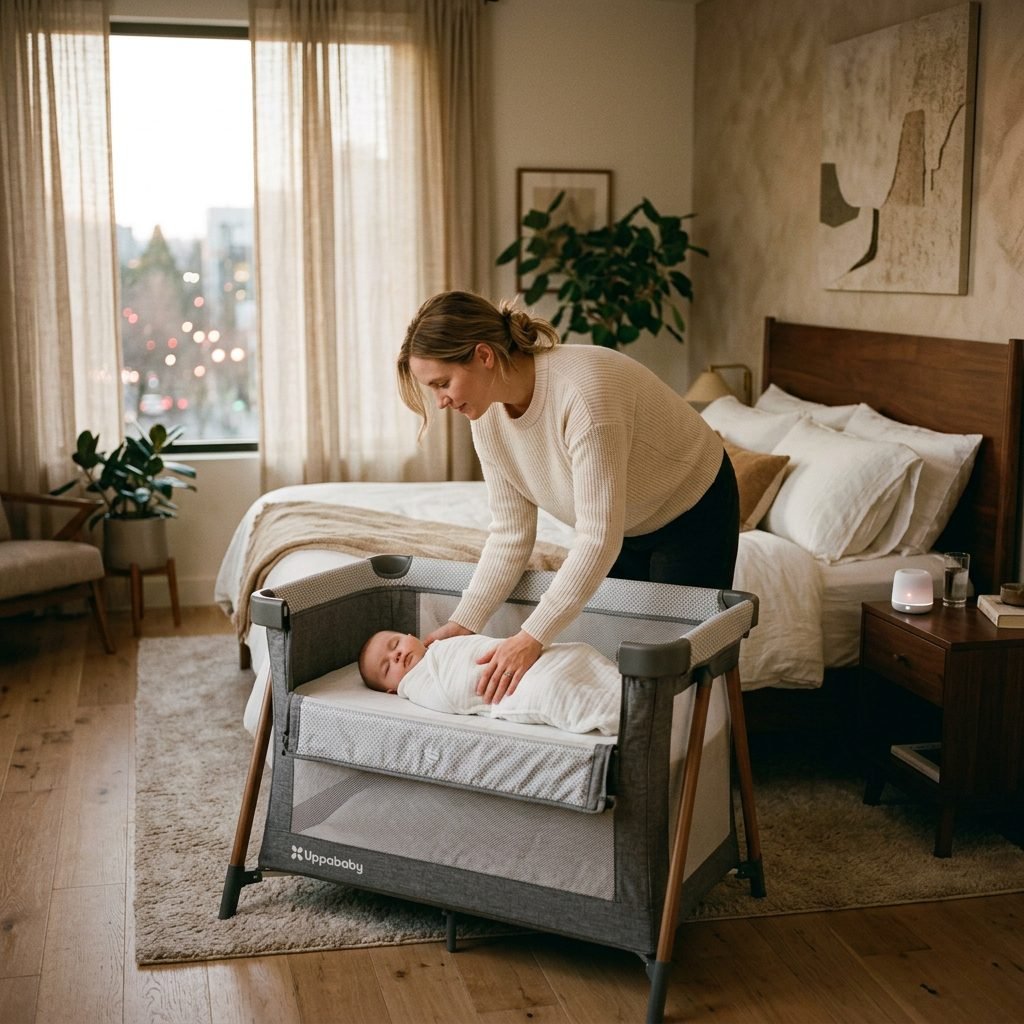
I always recommend the SlumberPod or a similar bottomless privacy canopy that fits over a travel crib. It creates a dark, breathable space regardless of how bright the hotel room is. If you don’t have one, use travel-friendly blackout shades with suction cups. Pro Tip: Use the hotel’s pants hangers (the ones with clips) to pin the heavy window curtains shut so no light peeks through the middle.
Step-by-Step Hotel Room Setup:
- Identify the ‘Quiet Corner’: Place the travel crib as far from the door and the bathroom as possible.
- Set up the White Noise: Place the machine between the baby and the source of noise (the door or the AC unit).
- Check the Temperature: Aim for 68-72°F (20-22°C). Hotel rooms can be finicky; bring a small travel thermometer if you’re worried.
- Do a ‘Safety Sweep’: Ensure no cord for the blinds or the lamp is within reach of the crib.
4. The 80/20 Rule: Balancing Routine with Adventure
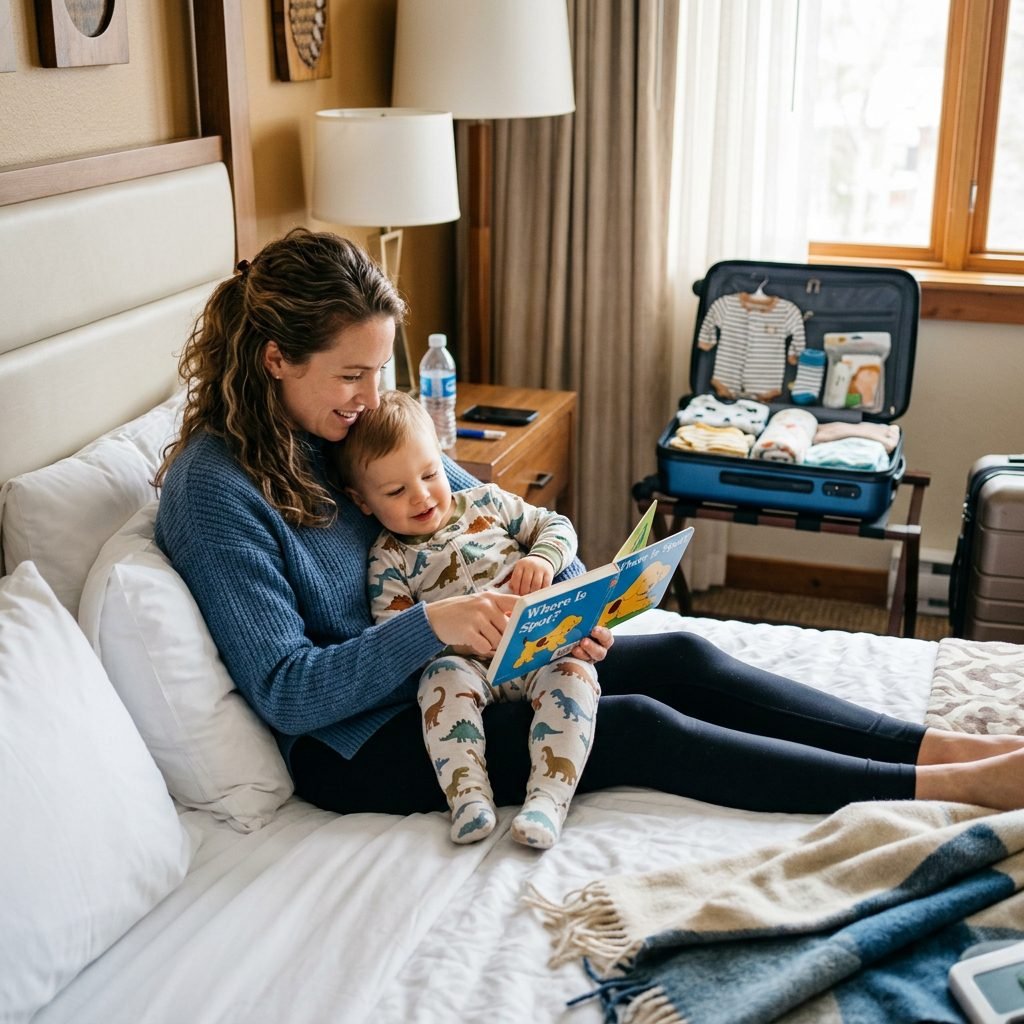
When we travel, we have to let go of perfection. As a doula, I teach my clients the 80/20 Rule. If you can keep 80% of the sleep routine intact, the other 20% can be flexible for travel delays, late-night dinners, or extra snuggles.
Consistency in the Chaos
Even if the location changes, the sequence of events should stay the same. If your routine at home is ‘Bath, Book, Song, Sleep,’ do that exact same sequence in your Airbnb. The brain recognizes the pattern even if the bathtub is different. This psychological ‘priming’ is powerful for lowering infant anxiety.
“You are not a failure if your baby naps in the stroller today. You are a mother giving her child the gift of the world. The routine will be there when you get home.”
| The Routine Step | Why It Matters | Travel Modification |
|---|---|---|
| The Bath | Lowers core body temp for sleep | Warm washcloth wipe-down if no tub is available |
| The Story | Cognitive transition to quiet time | Digital e-book or a small soft-cover favorite |
| The Affirmation | Emotional connection/Safety | Whisper the same words you use at home |
5. Navigating Time Zones: The ‘Gradual Shift’ vs. ‘Cold Turkey’
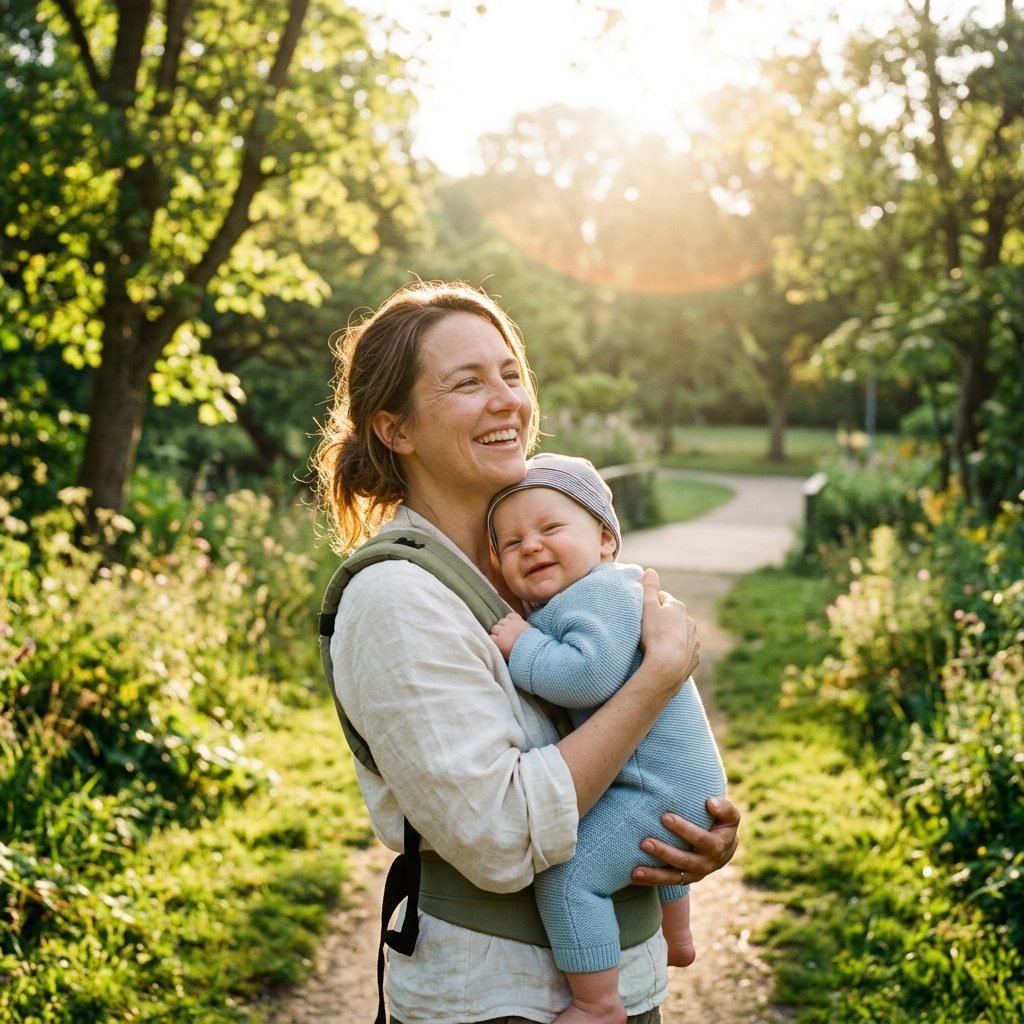
Jet lag is the ultimate travel villain. Whether you’re moving one hour or ten, it affects your baby’s internal circadian rhythm. There are two main ways to handle this, depending on the length of your stay.
The Short Trip (1-3 Days)
If you are only going away for a weekend and the time difference is only 1-2 hours, I often recommend staying on your ‘Home’ time. If baby goes to bed at 7:00 PM at home and you’re an hour ahead, let them stay up until 8:00 PM. It saves you from the headache of shifting back just as they adjust.
The Long Trip (4+ Days)
For longer trips or significant time shifts, you need to jump into the new time zone immediately. The best tool? Sunlight.
- Morning Sun: Get the baby outside in direct (safe) sunlight as soon as they wake up in the new time zone. This resets their internal clock.
- The ‘Anchor’ Nap: Try to get at least one nap in the crib/cot at the ‘correct’ local time to anchor the day.
- Patience: It typically takes one day for every hour of time difference for a human body to fully adjust.
6. Feeding, Hydration, and the Sleep Connection
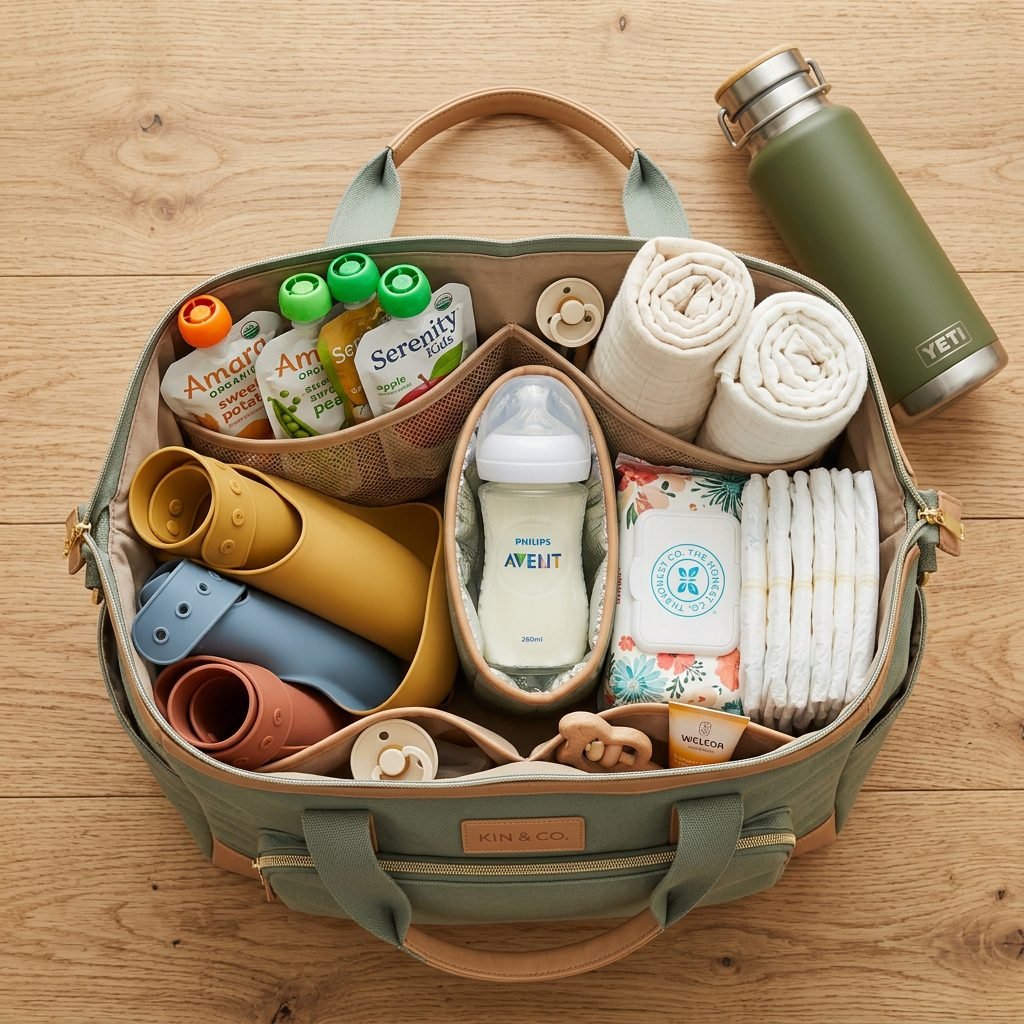
A hungry baby will not sleep, and travel is notoriously dehydrating—especially air travel. If you are breastfeeding, your supply might dip slightly due to the stress of travel or dehydration. If you are bottle-feeding, the change in water source can sometimes cause digestive upset.
The Travel Nutrition Checklist
- Hydrate Yourself: If nursing, drink 8-10 ounces of water for every hour of flight time.
- Offer Extra Feedings: Travel is overstimulating. Your baby might need the comfort of nursing or a bottle more frequently than at home. This is okay!
- Pack Familiar Foods: If your baby has started solids, bring their favorite pouches or snacks. Now is not the time to introduce a brand-new texture or flavor.
| Issue | Impact on Sleep | Solution |
|---|---|---|
| Dehydration | Restlessness/Early Waking | Offer 1-2 extra ounces of milk/water (if age appropriate) |
| New Foods | Gas/Tummy Aches | Stick to ‘Safe’ foods for the first 48 hours of travel |
| Constipation | Discomfort/Crying | ‘Bicycle legs’ exercise and plenty of tummy time on the floor |
7. The Post-Travel Reset: Getting Back to Normal
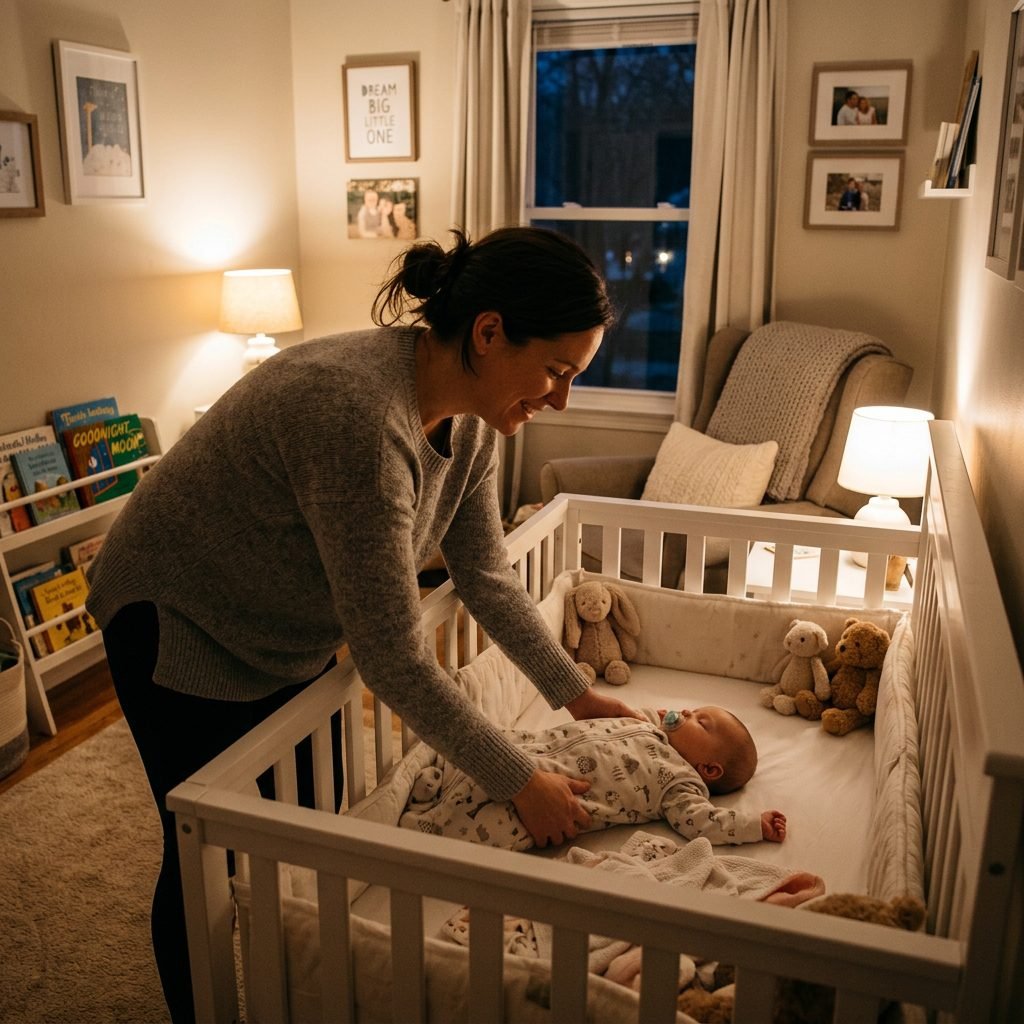
You’ve made it home! You’re exhausted, the laundry is piling up, and your baby is currently confused about what day it is. The first 48-72 hours after returning are crucial for re-establishing your home routine.
The ‘No-Plans’ Buffer
If possible, schedule a ‘buffer day’ before you have to return to work or social commitments. Use this day to be strictly ‘by the book’ with your home schedule. Consistency is your superpower here. If your baby got used to being rocked to sleep or sleeping in your bed while traveling, expect some protest when you put them back in their crib. This is normal. Be firm but loving.
The Return Protocol:
- Unpack the ‘Scent of Home’ immediately: Wash all travel clothes but keep the nursery smelling like its usual self.
- Early Bedtime: If they skipped naps during the travel home, an early bedtime (as early as 6:00 PM) can help prevent an overtired cycle.
- Re-Introduce the Cues: Use the same sleep sack, the same book, and the same lullaby immediately.
Conclusion
Traveling with your little one is an act of bravery and a beautiful way to expand their world (and yours!). While sleep might not be as perfect as it is in your carefully curated nursery, these tips will give you the framework to keep the wheels from falling off. Remember, mama: You are doing a great job. A few nights of disrupted sleep is a small price to pay for the magic of seeing the world through your child’s eyes. Pack the extra coffee, take the photos, and trust that you’ve built a strong enough foundation that a little adventure won’t shake it. Safe travels, and sweet dreams!