The Step-By-Step Guide To The Drowsy But Awake Sleep Training Method
Welcome to the Sleep Journey, Mama
Oh, sweet mama, I see you. I see the heavy eyelids, the fourth cup of lukewarm coffee, and the deep, soul-aching desire for just four consecutive hours of sleep. As a doula and sleep consultant, I want to wrap you in a virtual hug and tell you: you are doing an incredible job. Sleep deprivation is one of the hardest parts of early motherhood, but there is a gentle, evidence-based light at the end of the tunnel. The Drowsy But Awake (DBA) method isn’t just a technique; it’s a gift of independence you give to your baby and a gift of rest you give to yourself.
“Your baby is learning a new skill, just like crawling or walking. Be patient with them, and even more patient with yourself.”
In this guide, we are going to walk hand-in-hand through the science of sleep pressure, the art of the nursery environment, and the exact physical steps to help your little one drift off without needing to be rocked until your arms ache. We’re combining pediatric expertise with the practical, stylish eye of a nursery designer to ensure your success.
Decoding the Drowsy State: Knowing When to Transition

The Science of Sleep Pressure
To master the Drowsy But Awake method, you first need to become a detective of your baby’s biological cues. Sleep isn’t just about being tired; it’s about the perfect intersection of circadian rhythms and sleep pressure (adenosine buildup). If you miss the window, you hit the ‘overtired’ zone where cortisol spikes, making sleep nearly impossible.
Identifying the ‘Early’ Sleep Cues
Most parents wait until the baby is crying or rubbing their eyes aggressively. By then, you’ve often missed the golden window. Look for these subtle shifts instead:
- The ‘Glassy’ Stare: Your baby starts staring into space, losing interest in toys or your face.
- Decreased Activity: Their movements become slower and less jerky.
- The Pink Brow: Many babies get a slight reddish or pink tint to their eyebrows when they are ready for a nap.
- Turning Away: They physically turn their head away from stimulation.
When you see these signs, it is time to begin your wind-down routine. The goal of DBA is to put the baby down when they are 90% asleep but still aware that their back is touching the mattress. This builds the neurological pathways for ‘self-soothing’—though I prefer to call it ‘independent sleep settling.’
The Sleep Sanctuary: Creating an Environment for Success

Setting the Stage for Slumber
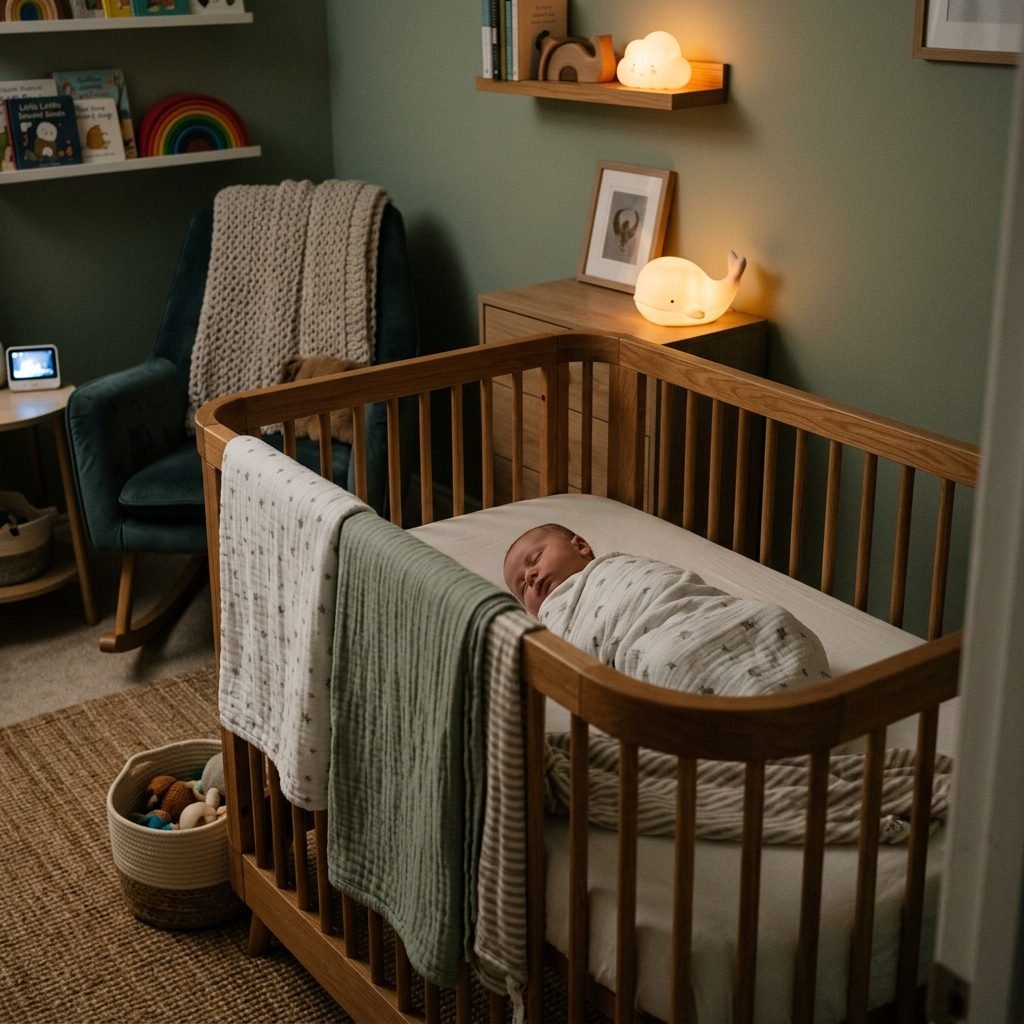
As a nursery designer, I believe that a sleep-optimized room is just as important as the technique itself. You want the environment to signal to the baby’s brain that it is time to produce melatonin. If the room is too bright or too distracting, the Drowsy But Awake method will feel like an uphill battle.
Essential Elements of a Sleep-Inducing Nursery
- Total Darkness: Use high-quality blackout curtains. If light is peeking through the sides, use painter’s tape or suction-cup blackout covers. It should be an 8 out of 10 on the darkness scale even at noon.
- White Noise: A consistent, low-frequency hum mimics the sound of the womb (which is louder than a vacuum cleaner!). Place the machine between the crib and the source of household noise (like the hallway or window).
- Optimal Temperature: The ‘Goldilocks’ zone for infant sleep is between 68 and 72 degrees Fahrenheit.
- Minimalist Crib: Ensure the crib is a safe haven. No bumpers, pillows, or stuffed animals—just a firm mattress and a tight-fitting sheet. For a touch of style, choose a neutral-toned organic cotton sheet that feels soft against their skin.
| Feature | Why It Matters | Pro-Tip |
|---|---|---|
| Blackout Curtains | Prevents cortisol spikes from sunlight | Use ‘Easy Night’ travel shades for vacations. |
| White Noise | Masks household ‘startle’ sounds | Keep it at 50-60 decibels (about a shower’s volume). |
| Sleep Sack | Provides safe warmth and security | Choose 100% cotton or bamboo for breathability. |
The Step-By-Step Routine: From Snuggle to Solitary Sleep

Implementing the Method
Now, let’s get into the physical mechanics. This is where your doula-expert training comes in. We aren’t just ‘dropping and running’; we are transitioning with intention.
- The 15-Minute Wind Down: Dim the lights in the house. Move to the nursery for a diaper change and a feeding. Ensure the feeding ends at least 15-20 minutes before they go into the crib to avoid a ‘feed-to-sleep’ association.
- The Power of the Swaddle/Sleep Sack: Secure your baby in their wearable blanket. This dampens the Moro (startle) reflex, which often wakes babies up the moment they hit the mattress.
- The ‘Soothe to Drowsy’ Phase: Rock, sway, or hum to your baby in the darkened room. You want their limbs to feel heavy and their eyes to be ‘fluttering.’ They should be heavy-lidded but not completely unconscious.
- The Gentle Lowering: This is the critical moment. Lower the baby into the crib feet first, then bottom, then head. Lowering them head-first can trigger the sensation of falling, which will wake them up instantly.
- The ‘Pause’ and ‘Pats’: Once they are down, keep your hands on their chest and tummy for 30 to 60 seconds. This provides a ‘bridge’ of physical comfort. If they wiggle, offer a gentle ‘shhh’ or rhythmic pats.
- The Slow Retreat: Gradually remove your hands and step back. Stay in the room for a minute to ensure they are settling, then quietly exit.
“If they wake up fully the moment you put them down, don’t panic. Take a deep breath, pick them up, soothe them back to that heavy-lidded state, and try one more time.”
Managing the ‘Startle’ and the ‘Struggle’: Troubleshooting Tips
What to Do When It Doesn’t Go to Plan
Let’s be real, mama: babies aren’t robots. Some nights, the Drowsy But Awake method will feel like magic; other nights, it will feel like a wrestling match. Here is how to handle the common hiccups with empathy and grace.
The ‘Insta-Wake’ Response
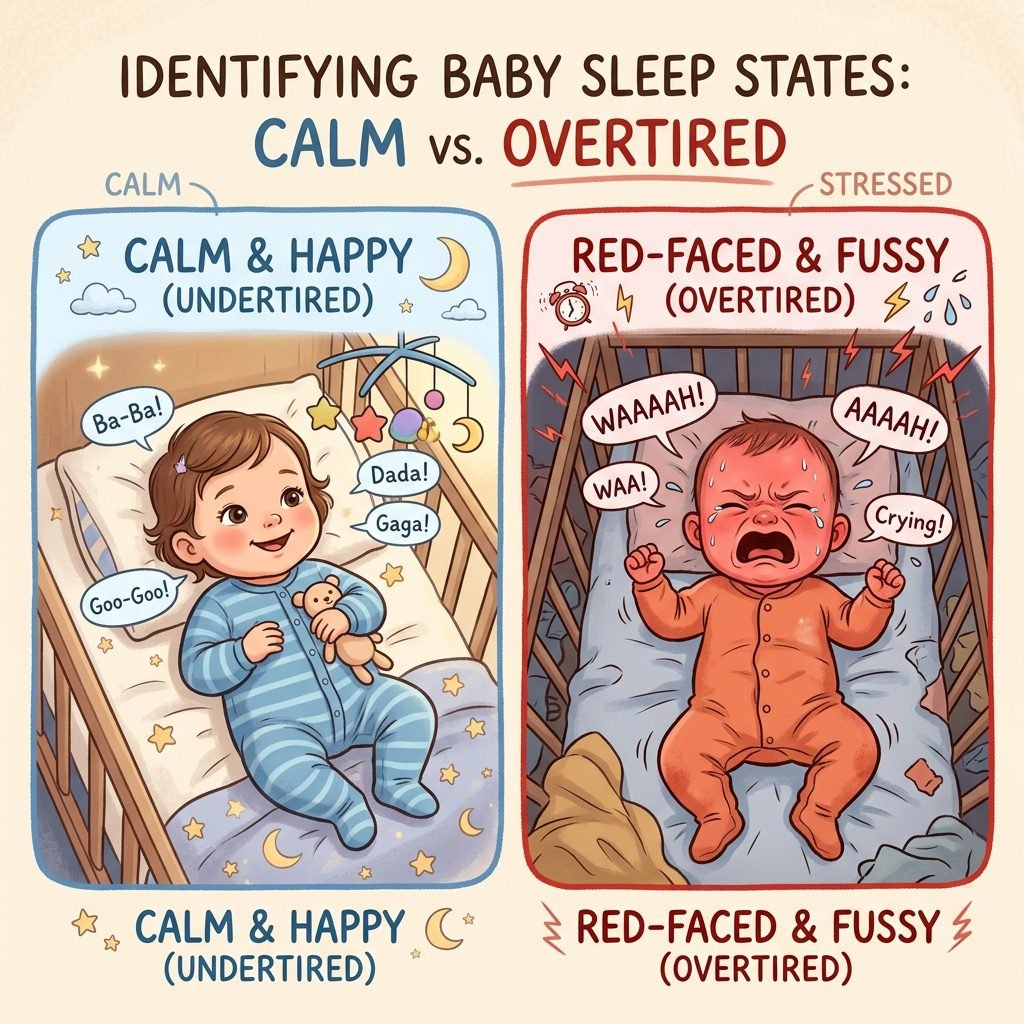
If your baby’s eyes pop wide open the second they touch the mattress, check your timing. They might be undertired (not enough sleep pressure) or overtired (too much cortisol). Use the following table to adjust your strategy:
| Observation | Likely Cause | The Fix |
|---|---|---|
| Baby fights the swaddle and screams | Overstimulated | Shorten the wind-down; add 5 mins of quiet rocking. |
| Baby plays/babbles for 30+ mins | Undertired | Extend the ‘Wake Window’ by 15 minutes next time. |
| Baby wakes after exactly 20 mins | Missed the window | Move bedtime 15 minutes earlier tomorrow. |
The ‘Leveled’ Approach to Crying: If they start to fuss, don’t rush in immediately. Give them 2-5 minutes to try and find their thumb or a comfortable position. If the fussing escalates to a distressed cry, go to them. Use the ‘Pick Up/Put Down’ method: pick them up to soothe, but as soon as they stop crying, put them back down drowsy. This reinforces the message: ‘I am here for you, but this is where you sleep.’
The Golden Sleep Schedule: Timing Your Success

Wake Windows by Age
The success of DBA depends entirely on Wake Windows—the amount of time your baby is awake between sleeps. As a pediatric sleep consultant, I recommend following these age-appropriate guidelines to ensure your baby is at peak ‘drowsiness’ when you start the routine.
| Baby’s Age | Wake Window Duration | Number of Naps |
|---|---|---|
| 0-6 Weeks | 45 – 60 Minutes | 4 – 5 (Very flexible) |
| 2-3 Months | 60 – 90 Minutes | 3 – 4 |
| 4-6 Months | 1.5 – 2.5 Hours | 3 |
| 7-9 Months | 2.5 – 3.5 Hours | 2 |
| 10-14 Months | 3 – 4 Hours | 1 – 2 |
Remember, these are averages! Your baby is an individual. If your 4-month-old is rubbing their eyes at the 90-minute mark, trust the baby, not the clock. Consistency is your best friend. Try to keep the routine identical every single time—same song, same swaddle, same ‘I love you’ whisper. This creates a powerful psychological trigger that tells the baby, ‘Sleep is coming, and I am safe.’
The Doula’s Heart: Emotional Support for the Transitioning Mama

You Are Not a Failure if They Cry
This is the most important part of the guide, sister. Your value as a mother is not measured by how fast your baby falls asleep. Some babies take to the Drowsy But Awake method in three days; others take three weeks. And that is okay.
Self-Compassion Practices
- Step Away: If you feel your frustration rising, put the baby in the safe crib, walk out, and take 10 deep breaths. A frustrated mama cannot soothe a frustrated baby.
- Shift Work: If you have a partner, take turns. One person does the first ‘drowsy’ attempt, the other handles the second.
- Celebrate Small Wins: Did they stay in the crib for 2 minutes before crying? That is progress! Did they fall asleep once out of four naps? That is a victory!
Postpartum recovery is a physical and emotional marathon. Ensure you are hydrating, eating nourishing fats to support your hormones, and being as kind to yourself as you are to your little one. You are building the foundation for years of healthy sleep habits. You’ve got this!
Conclusion
Rest is Within Reach
Mastering the Drowsy But Awake method is a journey of observation, patience, and love. By understanding your baby’s cues, optimizing their sleep sanctuary, and following a consistent step-by-step routine, you are teaching them the vital skill of independent sleep. It won’t always be perfect, and there will be nights where you end up rocking them anyway—and that’s perfectly fine! Motherhood is about the long game, not perfection in every moment.
Keep your heart full and your coffee hot, mama. You are doing the beautiful, hard work of raising a human, and soon enough, those long, restful nights will be your new reality. Sleep tight!