

The 3 Best Upright Burping Positions to Relieve Silent Reflux Fast
Oh, mama, I see you. It is 3:00 AM, and you are pacing the floor with a little one who is arching their back, crying out in sudden pain, yet never actually spitting up. That is the hallmark of silent reflux, and it can feel so incredibly helpless. As a doula, I have sat in those dark rooms with so many mothers just like you, feeling that same heavy weight of worry. Silent reflux is a tricky beast because the stomach acid travels up the esophagus but doesn’t quite make it out of the mouth, causing a double-burn that leaves your sweet babe feeling miserable and you feeling exhausted.
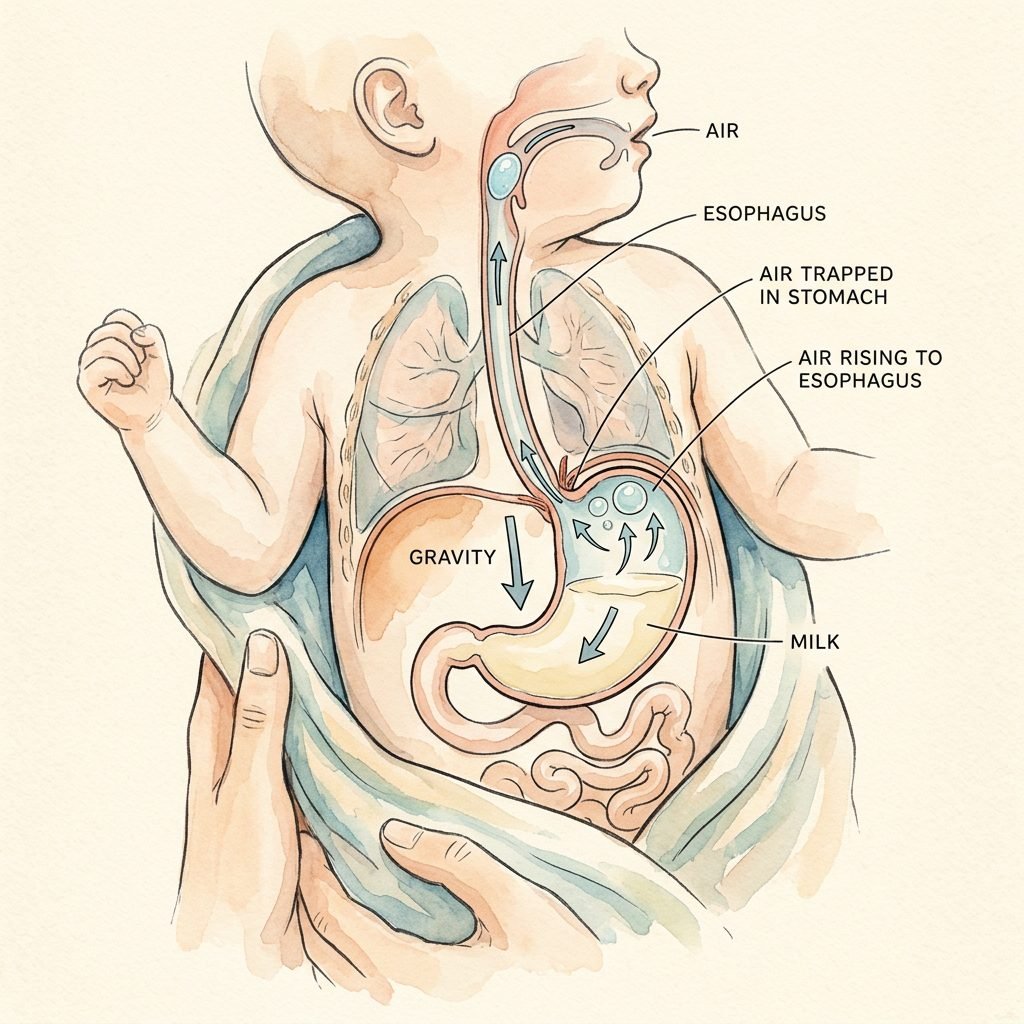
The secret to managing this without losing your mind—or your sleep—is all about gravity. Because the lower esophageal sphincter in infants is still maturing, it acts like a loose lid on a jar. When we keep them upright, we use nature to keep that ‘lid’ closed and the acid down. In this guide, I am going to walk you through the three absolute best upright burping positions that I have used for years to help babies find relief fast. We are going to move beyond the basic ‘pat on the back’ and dive into techniques that actually move those trapped air bubbles up and out before they can cause trouble.
Understanding the ‘Silent’ in Silent Reflux
What Exactly is Happening Inside?
Before we get into the ‘how-to,’ let’s talk about the ‘why.’ In a typical baby, reflux looks like a big ‘spit-up’ on your favorite silk blouse. But with silent reflux (Laryngopharyngeal Reflux), the stomach contents only rise into the esophagus or even the back of the throat before being swallowed back down. This means the delicate lining of the throat is exposed to acid twice. It is painful, and it often leads to a baby who is terrified of being laid flat.
The Telltale Signs of Silent Reflux
- Sudden, piercing cries shortly after feeding.
- Chronic congestion or a ‘wet’ sounding cough without a cold.
- Frequent swallowing or ‘gulping’ sounds when not feeding.
- Arching of the back and neck during or after a bottle or breast.
- Sour breath that smells like vinegar.
Your baby isn’t ‘difficult,’ mama. They are just uncomfortable. You are doing an amazing job listening to their cues and seeking out ways to help them feel safe.
When we burp a baby with silent reflux, our goal isn’t just a ‘burp.’ Our goal is complete gastric decompression while maintaining a strictly vertical alignment. This prevents the ‘sloshing’ effect that happens when a baby is moved too quickly or laid at an angle. We want to keep that milk settled at the bottom of the stomach while the air rises to the top like bubbles in a soda bottle.
Position 1: The High-Shoulder Perch (The Gravity King)

The Ultimate Alignment for Maximum Relief
The High-Shoulder Perch is the gold standard for silent reflux. Most parents hold the baby too low, with the baby’s tummy resting against the mother’s chest. For a reflux baby, we want to go higher. We want the baby’s stomach to be positioned right against your hard collarbone. This provides firm, steady pressure on the upper abdomen while keeping the airway and esophagus in a perfectly straight, vertical line.
How to Execute the High-Shoulder Perch
- Drape a burp cloth over your shoulder and slightly down your back.
- Lift your baby so their chin is resting comfortably over your shoulder. Their arms should dangle over your back.
- Ensure their torso is elongated. You don’t want them ‘slumped’ or curled in a ball; you want them stretched out.
- Instead of ‘patting,’ use a firm, upward stroking motion with the palm of your hand, starting from the lower back and moving up to the neck.
- If you do pat, make it a rhythmic, hollow-handed cup. It should sound like a soft drum, not a slap.
Why this works: By stretching the baby’s torso over your shoulder, you are physically lengthening the esophagus. This makes it much harder for acid to ‘creep’ upward. The pressure from your collarbone acts as a gentle valve, helping to push the air bubble out while keeping the liquid milk below the ‘splash zone.’
Position 2: The Lap-Sitter Lean (The ‘C-Hold’ Support)

Precision Pressure for Deep Air Bubbles
Sometimes, those air bubbles get trapped deep under a layer of milk. The Lap-Sitter Lean uses a forward-leaning angle to shift the air to the back of the stomach, making it easier to expel. This is particularly helpful for babies who are ‘lazy burpers’ or those who fall asleep mid-feed but still have gas trapped.
Step-by-Step Instructions
- Sit on a firm chair with your feet flat on the floor.
- Place your baby sitting sideways on your lap.
- Support the baby’s chest and jaw with one hand. Crucial: Do not put pressure on the throat. Cradle the chin in the ‘V’ of your thumb and forefinger, with the palm of your hand resting on their chest.
- Lean the baby forward slightly—about 15 to 20 degrees. This angle allows the air to rise to the ‘top’ of the stomach (which is now toward their back).
- With your free hand, use a circular rubbing motion on their back, followed by three firm pats.
Imagine you are trying to get the last bit of ketchup out of a glass bottle. You don’t just hit it; you tilt it and give it a purposeful tap. That is exactly what we are doing for your baby’s tummy.
This position is excellent because it allows you to see your baby’s face. If they start to ‘spit up’ or if they look like they are struggling, you can react immediately. It also keeps their tummy compressed, which many reflux babies find incredibly soothing.
Position 3: The Upright Football Carry (The ‘Tiger in the Tree’)

The Motion-Based Relief Method
If your baby is fussy and won’t stay still for the first two positions, the Upright Football Carry (a variation of the ‘Tiger in the Tree’) is your secret weapon. This position combines upright posture, tummy pressure, and gentle motion, which can distract a baby from the burning sensation of reflux while moving gas along.
How to Master the Upright Football Carry
- Slide your forearm under the baby’s chest and between their legs.
- The baby’s head should be supported in the crook of your elbow, kept significantly higher than their bottom.
- Their tummy should be resting firmly against your forearm.
- Use your other hand to rub their back or to provide extra support to their bottom.
- Walk around the room with a gentle ‘bounce’ in your step. The combination of the pressure on the belly and the vertical movement helps the air bubble ‘hop’ up the esophagus.
Doula Pro-Tip: Use this position when the ‘witching hour’ hits. The sensory input of your arm against their tummy is very grounding for a baby whose nervous system is overwhelmed by the pain of reflux. It is a ‘hug’ and a ‘burp’ all in one.
The ‘Golden 30’ Rule and Comparison of Methods
What Happens After the Burp?
Even if you get a ‘man-sized’ burp out of your little one, the job isn’t done. For a baby with silent reflux, the 30 minutes following a feed are the most critical. This is the time it takes for the stomach to begin emptying into the small intestine. If you lay them flat during this window, you are almost guaranteed a reflux episode.
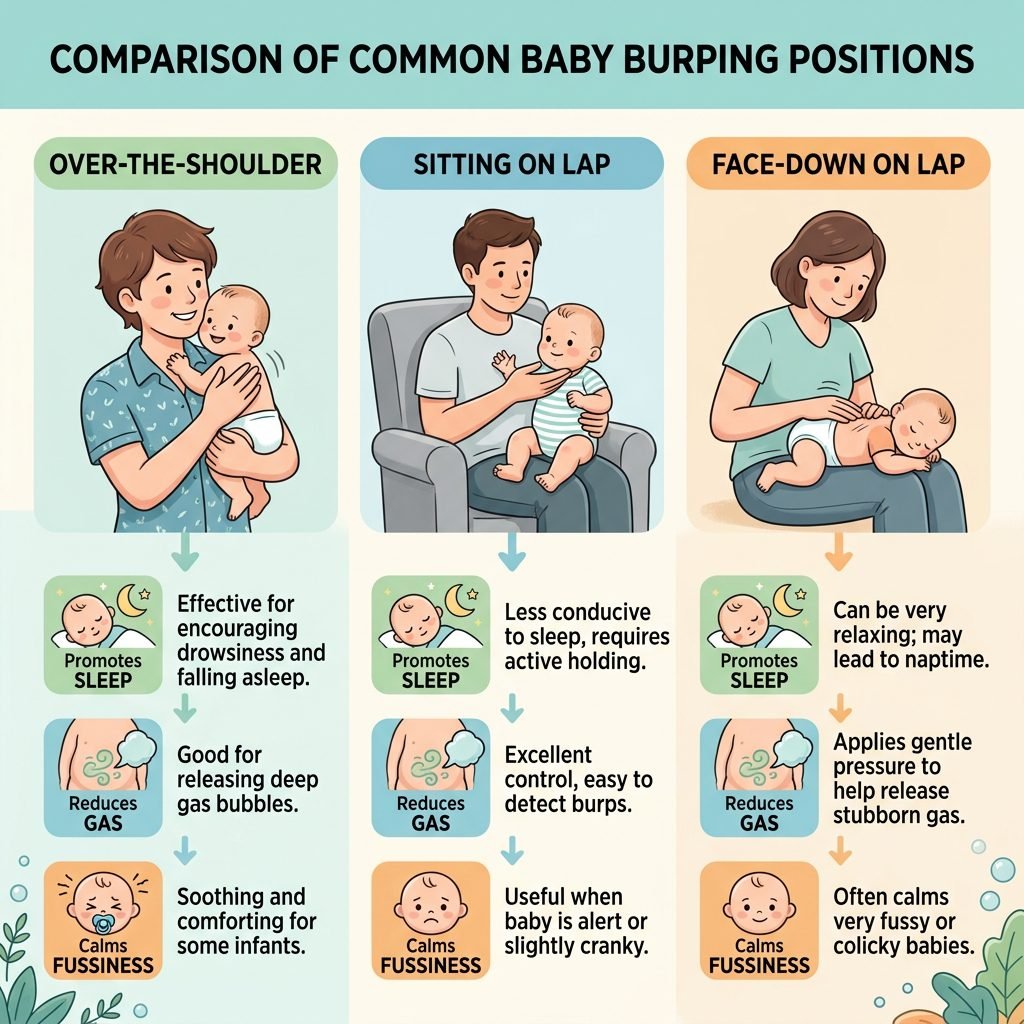
| Burping Method | Best For… | Key Benefit |
|---|---|---|
| High-Shoulder Perch | Deep sleep or post-night feeds | Maximum esophageal lengthening |
| Lap-Sitter Lean | Lazy burpers/Stubborn gas | Direct chest pressure to force air out |
| Upright Football Carry | Fussy, ‘witching hour’ babies | Combines motion with tummy pressure |
The Post-Feed Checklist
- Keep baby strictly vertical for 20-30 minutes.
- Avoid tight diapers or waistbands that put pressure on the stomach.
- Limit ‘active play’ or tummy time for at least 45 minutes after eating.
- If using a carrier or wrap, ensure the baby’s chin is ‘two fingers’ away from their chest to keep the airway open while they remain upright.
When to Call the Pediatrician: Red Flags

Trusting Your Motherly Instinct
While these positions are life-changers, it is important to know when reflux has crossed the line from ‘normal infant development’ to something that needs medical intervention. You are the expert on your baby, mama. If your gut tells you something is wrong, listen to it.
Watch for These Symptoms:
- Poor weight gain or weight loss.
- Projectile vomiting (shooting across the room).
- Green or yellow bile in the spit-up.
- Refusing to eat or pulling away from the breast/bottle in pain.
- Blood in the stool or spit-up.
- Apnea (briefly stopping breathing) or turning blue/pale.
If you notice these, reach out to your pediatrician immediately. There are wonderful options like thickened feeds, infant-safe acid blockers, or allergy testing (like checking for Cow’s Milk Protein Allergy) that can help your baby find the peace they deserve.
Conclusion
Mama, I know the days (and nights) feel incredibly long right now. Silent reflux is a season, not a forever sentence. By using these upright burping positions, you are giving your baby’s body the best possible chance to digest comfortably. You are doing the hard work of soothing, holding, and learning your baby’s unique language. Take a deep breath, keep that sweet babe upright, and know that you are exactly the mother they need. You’ve got this!