

The Birth Ball Bounce: How to Burp a Gassy, Reflux Baby Instantly
The Midnight Struggle: Why Traditional Burping Often Fails
Oh, mama, I see you. It is 3:00 AM, your back is aching, and your sweet little one is arching their back, pulling their legs up to their chest, and letting out that high-pitched, heart-wrenching cry that only a gassy baby can produce. You’ve tried the traditional ‘pat-pat-pat’ on the back. You’ve tried the over-the-lap wiggle. You’ve even tried the ‘walking the floor’ marathon. But that stubborn air bubble just won’t budge, and the reflux is making every swallow a struggle for your tiny human.
As a doula, I have sat in those darkened rooms with countless mothers just like you. I know the feeling of helplessness when your baby is in discomfort. But what if I told you that the very tool that helped you through labor—your birth ball—is actually the secret weapon for infant digestion? The Birth Ball Bounce is a rhythmic, physiological approach to burping that utilizes gravity, gentle vibration, and deep pressure to move air through the digestive tract faster than any traditional method. In this guide, we are going to dive deep into why this works and how you can master the bounce to bring instant relief to your reflux-prone baby.
The Science of the Soothe: Why the Birth Ball Works
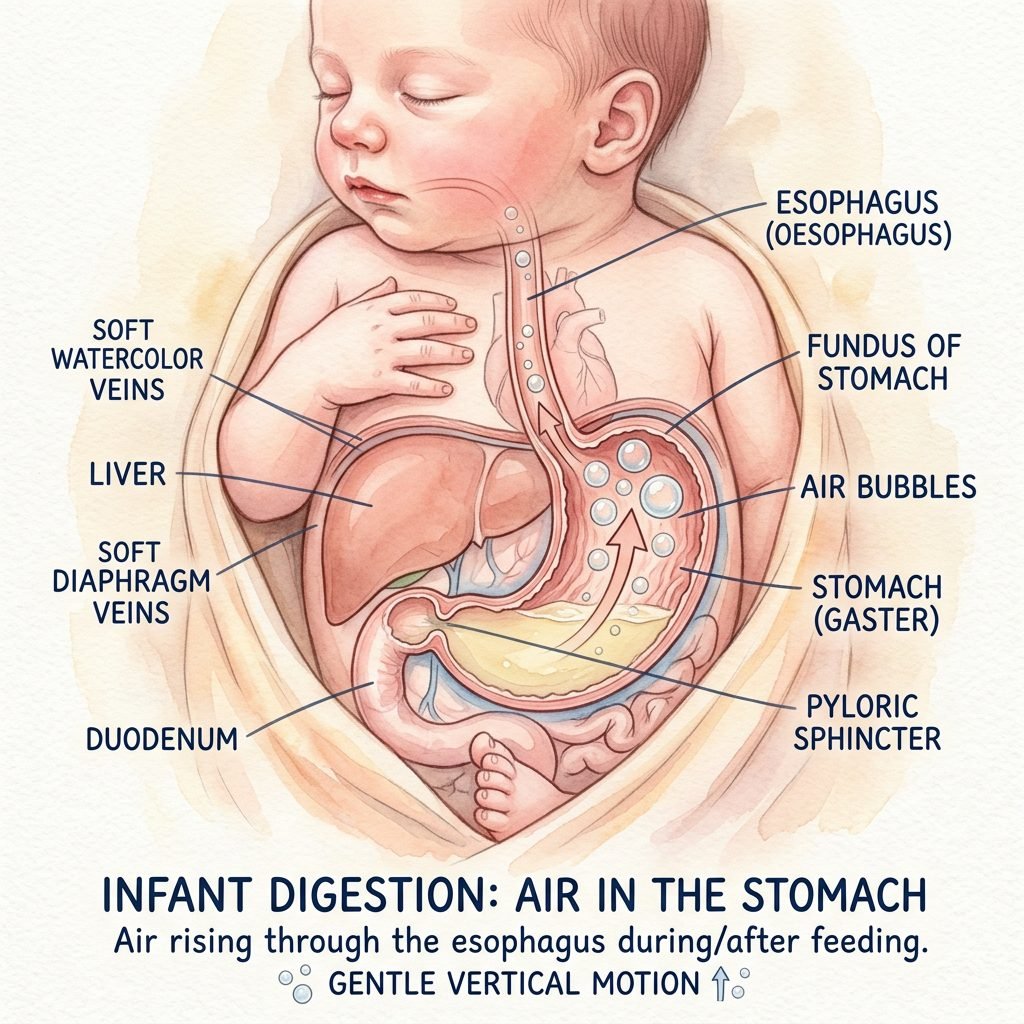
To understand why the birth ball is so effective, we have to look at the unique anatomy of an infant’s digestive system. A newborn’s lower esophageal sphincter (the ‘lid’ to the stomach) is immature and often stays open, which is why reflux is so common. When air gets trapped underneath a layer of milk, it creates pressure that pushes that milk back up, causing pain and spitting up.
The Power of Rhythmic Vibration
Traditional patting can sometimes be too jarring or too localized. The birth ball, however, provides a low-frequency rhythmic vibration that resonates through your body and into the baby’s. This vibration acts like a gentle ‘shaking’ of a carbonated bottle—it encourages smaller, trapped bubbles to coalesce into one larger bubble that is much easier to expel. Furthermore, the gentle vertical movement mimics the sensations of the womb, instantly lowering the baby’s cortisol levels and relaxing their abdominal muscles.
“When a baby’s body relaxes, their digestive tract relaxes. You cannot force a burp out of a tense baby; you must first invite the tension to leave.”
By sitting on the ball, you are also engaging your own core and pelvic floor, which subtly shifts the baby’s position in a way that hand-held burping cannot replicate. It is a full-body experience for both of you.
Safety First: Preparing Your Space and Your Ball

Before we get bouncing, we need to ensure the environment is safe for both you and your little one. Postpartum bodies are still healing, and your center of gravity might still feel a bit ‘off.’
- Check the Inflation: Your ball should be firm but have enough ‘give’ that you sink in slightly. If it’s too hard, the bounce will be too jarring for the baby. If it’s too soft, you won’t get the necessary upward momentum.
- Non-Slip Surface: Always place your birth ball on a rug or a yoga mat. Never use it on slick hardwood or tile floors, as the ball can slip out from under you.
- Foot Placement: Keep your feet flat on the floor, wider than hip-width apart. This creates a stable ‘tripod’ base.
- The ‘Three-Point’ Hold: When holding a gassy baby on the ball, ensure you have one hand supporting their bottom, one hand on their upper back/neck, and your chest providing the third point of contact.
Remember, mama, your safety is just as important as the baby’s. If you are feeling dizzy or extremely sleep-deprived, skip the bounce and stick to floor-based techniques until you feel steady.
The Step-by-Step Birth Ball Bounce Protocol
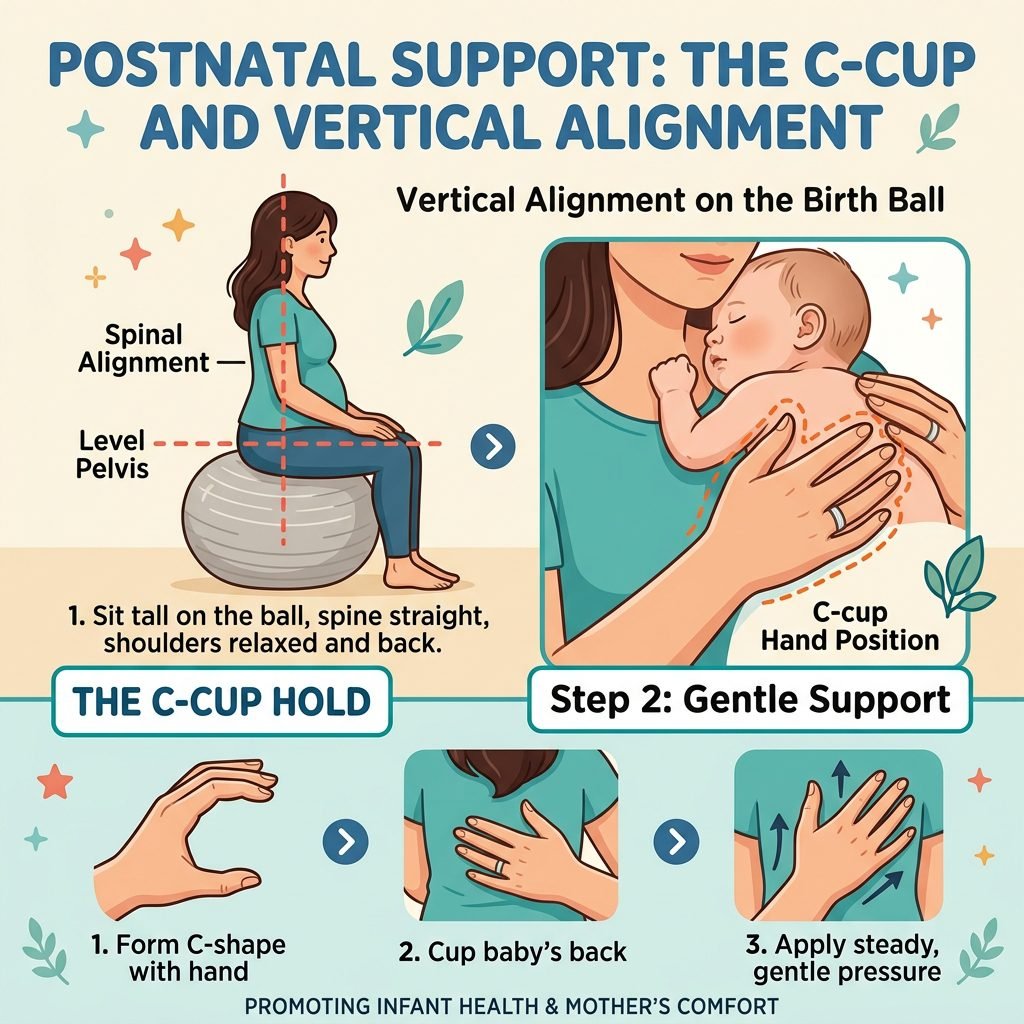
Ready to get that burp? Follow these steps precisely to maximize the ‘upward’ movement of the gas. This technique is specifically designed for reflux babies who need to stay upright.
- The Vertical Position: Hold your baby in a high over-the-shoulder position. Their tummy should be pressed firmly against the top of your chest/shoulder area. This ‘deep pressure’ on the abdomen is crucial.
- The Gentle Descent: Sit slowly onto the center of the birth ball. Ensure your spine is tall and your shoulders are relaxed. If you are tense, the baby will be too.
- The Rhythmic Bounce: Begin a very gentle, rhythmic bounce. Think ‘heartbeat rhythm’—about 60 to 70 beats per minute. The movement should be no more than 1-2 inches in height.
- The Hand ‘C-Cup’: Instead of a flat-handed pat, cup your hand slightly (the C-cup). Pat the baby’s left side (where the stomach is located) in an upward motion, from the mid-back toward the shoulder.
- The Pause and Tilt: Every 2 minutes, stop bouncing and gently tilt the baby forward slightly, then back to the shoulder. This change in angle helps the air bubble find the ‘exit’ of the esophagus.
Pro Tip: If your baby has silent reflux, keep the bounce even smaller. The goal is vibration, not heavy movement, to avoid splashing the stomach acid upward.
Comparing Burping Methods: Which One Does Your Baby Need?
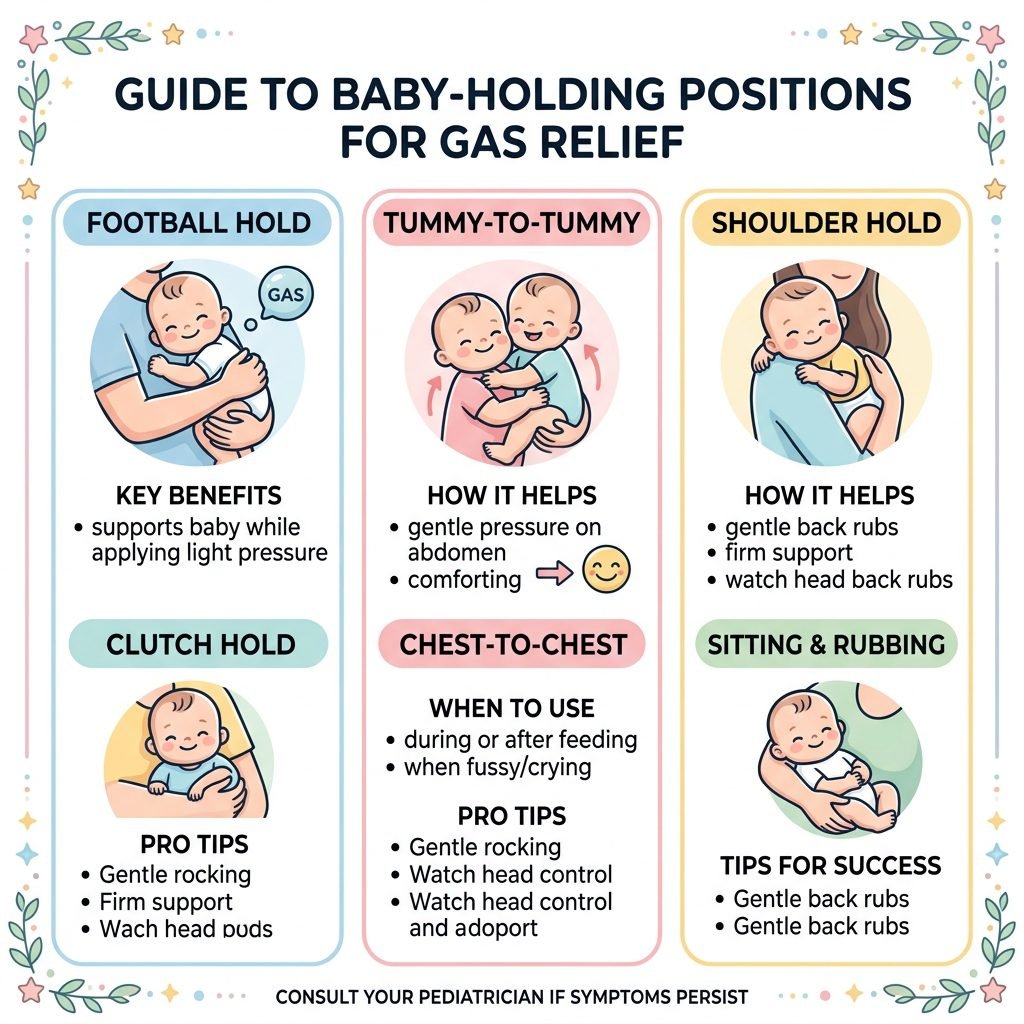
Not all gas is created equal. Some babies struggle with ‘upper gas’ (burps), while others struggle with ‘lower gas’ (farts). Use the table below to decide if the Birth Ball Bounce is the right tool for the moment.
| Method | Best For… | Gas Severity | Reflux Friendly? |
|---|---|---|---|
| The Traditional Pat | Routine feedings, easy burpers | Low | Yes |
| The Birth Ball Bounce | Stubborn bubbles, reflux, evening fussiness | High | Highly Recommended |
| Tiger in the Tree | Lower gas, colic, tummy pain | High | No (prone position) |
| Bicycle Legs | Lower intestinal gas, constipation | Medium | Neutral |
| The ‘Magic’ Football Hold | Immediate soothing, frantic crying | Medium | No |
As you can see, the Birth Ball Bounce is the gold standard for high-severity gas where reflux is a concern because it maintains that vital upright position while providing the movement necessary to dislodge air.
Troubleshooting: When the Burp Just Won’t Come

Sometimes, despite our best efforts, the burp remains elusive. This is often when ‘Silent Reflux’ or ‘Lower Gas’ is the culprit. If you’ve been bouncing for 10 minutes and nothing has happened, don’t panic.
Identify Silent Reflux
If your baby is pulling away, screaming during the bounce, or sour-smelling breath is present without a burp, they may be experiencing silent reflux. In this case, the acid is rising, but no air is coming out. Stop the bouncing and simply hold the baby upright and still. The movement might be overstimulating an already irritated esophagus.
Transition to Lower Gas Relief
If the discomfort seems to be lower in the abdomen (grunting, straining, turning red), it’s time to move from the ball to the floor.
“When the air won’t go up, help it go out.”
Use the ‘I Love You’ tummy massage or the ‘Bicycle Legs’ technique. Often, once the lower gas is cleared, the upper gas will follow suit because the entire digestive ‘logjam’ has been cleared.
The Doula’s Toolkit: Affirmations for the Gassy Phase

I know how exhausting this is. The ‘gassy phase’ usually peaks around 6-8 weeks, and it can feel like a lifetime. During those long bouncing sessions, your mental state matters. Babies are incredibly sensitive to our energy; if you are vibrating with frustration, they will remain tense.
Try repeating these affirmations while you bounce:
- “I am the calm my baby needs right now.”
- “This gas is temporary; my bond with my baby is permanent.”
- “We are a team, and we are working through this together.”
- “My body is a safe place for my baby to heal.”
Take deep, diaphragmatic breaths. Not only does this calm your nervous system, but it also expands your ribcage, providing a broader, more stable surface for your baby to rest against. You are doing an incredible job, mama. This is hard, but you are harder.
Conclusion
Bringing Peace Back to the Nursery
The Birth Ball Bounce is more than just a burping trick; it is a way to harmonize your body with your baby’s needs. By using the tools you already have—your birth ball, your rhythmic touch, and your steady breath—you can transform the ‘witching hour’ from a time of stress into a time of soothing connection. Remember that reflux and gas are physiological hurdles that your baby will eventually outgrow, but for now, you have the expertise to help them through it.
Keep that ball inflated, keep your heart open, and don’t be afraid to bounce your way to a happier, more comfortable baby. You’ve got this, sister!