

How to Master the Bicycle Legs Technique to Release Trapped Baby Gas in Seconds
Welcome Home, Mama: Understanding the Gassy Baby Struggle
Oh, sweet mama, I see you. If you are reading this in the middle of the night, or perhaps during that notoriously difficult ‘witching hour’ while your little one is arching their back and crying in discomfort, please take a deep breath. You are doing an incredible job. As a doula, I have sat in many dimly lit nurseries, holding space for mothers just like you who feel helpless when their baby is struggling with trapped gas. It is one of the most common challenges in those first few months of life, yet it remains one of the most stressful. Your baby’s digestive system is brand new; it is learning how to process milk, how to move waste, and how to navigate the physical sensations of air bubbles. When those bubbles get stuck, they cause pressure that can feel quite intense for a tiny body.
That is where the Bicycle Legs Technique comes in. This isn’t just a physical move; it is a rhythmic, soothing ritual that helps manually move gas through the intestines. It is a tool that empowers you to provide immediate relief without needing anything more than your own gentle hands and a bit of patience. In this guide, we are going to dive deep into why your baby gets gassy, how to prepare your environment for a successful ‘cycling session,’ and a step-by-step masterclass on the technique itself. We will also explore complementary moves like the ‘I Love You’ massage and the ‘Tiger in the Tree’ hold to ensure you have a full toolkit for infant comfort. My goal is to move you from a place of panic to a place of confident, calm caregiving. Let’s get started on bringing some peace back to your nursery.
The Science of the Squeak: Why Babies Get So Gassy
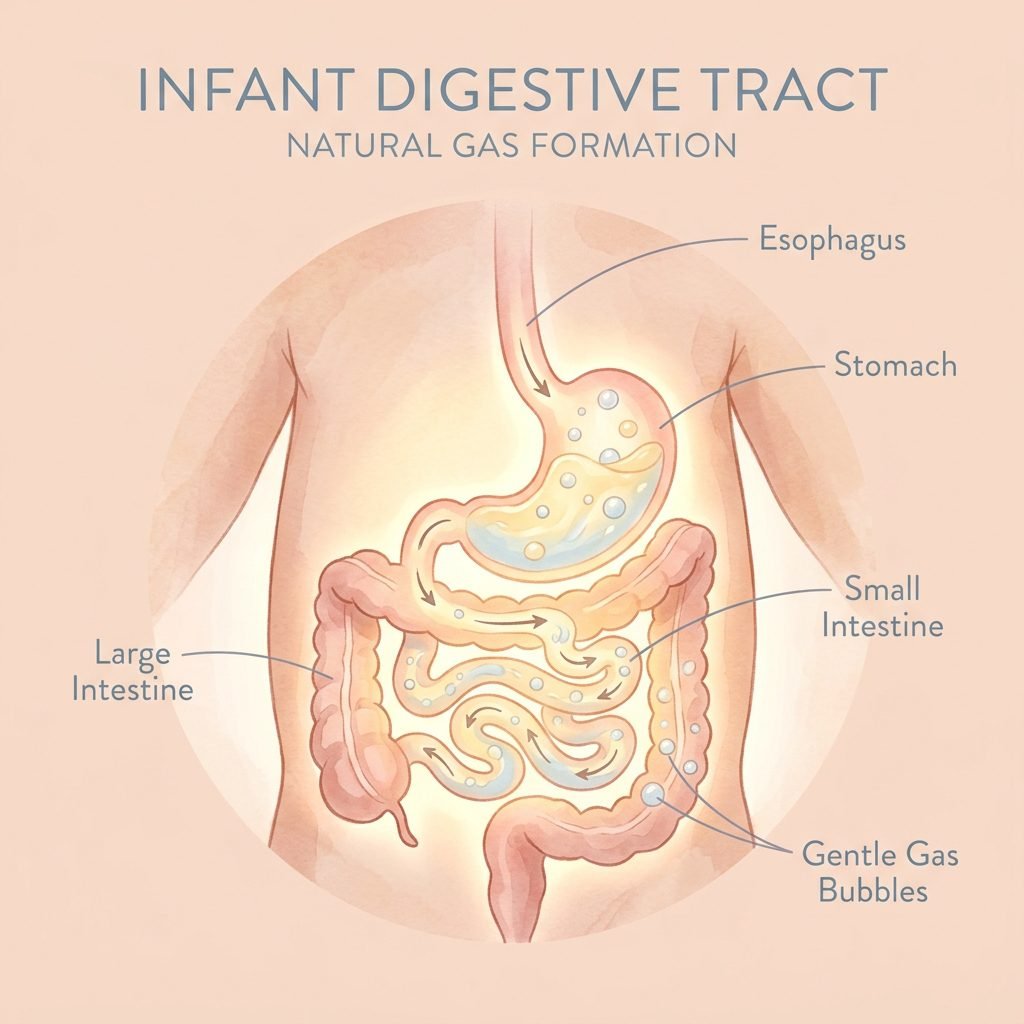
An Immature Digestive System
When babies are born, their digestive tracts are essentially ‘under construction.’ The muscles that move food and gas through the intestines (a process called peristalsis) are not yet fully coordinated. This means that even a small air bubble can become a significant roadblock. Trapped gas occurs when air becomes lodged in the digestive tract, causing the intestines to distend and creating that uncomfortable, bloated feeling that leads to fussiness.
Remember, mama: your baby isn’t crying to give you a hard time; they are crying because they are having a hard time. This is their only way to communicate physical discomfort.
Common Culprits of Gas Buildup
There are several reasons why your little one might be feeling the pressure. Understanding these can help you prevent future episodes while you master the relief techniques.
- Air Swallowing: Whether breastfed or bottle-fed, babies often swallow air during feedings. This is especially common if they have a shallow latch or if the bottle nipple flow is too fast or too slow.
- Overstimulation: Believe it or not, a baby who is crying from overstimulation often swallows more air, creating a cycle of gas and fussiness.
- Immature Gut Microbiome: The healthy bacteria in a baby’s gut are still establishing themselves, which can lead to temporary gas production as they break down lactose.
- Food Sensitivities: In some cases, a sensitivity to something in the mother’s diet (if breastfeeding) or a specific formula ingredient can cause excess gas.
By using the bicycle legs technique, we are physically assisting the body in moving these air pockets toward the exit. It is a mechanical solution to a mechanical problem.
Preparation: Setting the Scene for Success

Creating a Zen Environment
Before you start moving those little legs, it is vital to ensure both you and the baby are in the right headspace. If you are tense, your baby will feel that tension, and their abdominal muscles will tighten, making it harder to release the gas. Preparation is 50% of the technique.
The Checklist for a Calm Session
- Warmth is Key: Ensure the room is comfortably warm. A cold baby is a tense baby. If necessary, use a warm (not hot) compress on their tummy for a minute before starting.
- Flat, Safe Surface: Use a changing table with a safety strap, a firm bed, or a clean rug on the floor. You want a surface that provides enough resistance for your movements but is soft enough for comfort.
- Eye Contact and Voice: This is a bonding moment. Talk to your baby in a low, rhythmic tone. Tell them, ‘We’re going to help those bubbles out, sweetie.’ Your voice acts as a natural sedative.
- Wait After Feeding: Never perform bicycle legs immediately after a feeding. Wait at least 30 to 45 minutes to avoid inducing spit-up or reflux.
Once you are both settled, place your baby on their back. Make sure their diaper isn’t too tight, as you’ll need a bit of ‘give’ in the waist area to allow the abdomen to move freely.
The Masterclass: Step-by-Step Bicycle Legs Technique

Executing the Perfect Cycle
Now, let’s get into the physical mechanics. The goal here is to create a gentle, rhythmic ‘pumping’ action that encourages the bowels to move. Follow these steps carefully:
- The Hold: Gently grasp your baby’s lower legs or ankles. Your grip should be firm enough to guide them but light enough to feel any resistance.
- The First Rotation: Slowly push one leg up toward the baby’s chest. You want the knee to gently press against the side of the abdomen. This provides the necessary pressure to ‘nudge’ the gas.
- The Switch: As you bring the first leg back down to a straightened position, simultaneously bring the other leg up toward the chest. This creates the ‘bicycle’ motion.
- The Rhythm: Maintain a slow, steady pace. Think of it like a slow-motion bike ride through a park. Do not rush. Speed can cause the baby to tense up.
- The Pause and Press: Every few ‘cycles,’ bring both knees up to the chest at the same time and hold them there gently for 3 to 5 seconds. This ‘double press’ is often the moment when the gas is finally released.
- Repeat: Continue this cycle for about 2 to 3 minutes, or until you hear the sweet sound of relief (a toot!) or the baby begins to relax.
Affirmation: I am my baby’s calm. My hands bring comfort and relief.
If your baby starts to cry harder or resists the movement by stiffening their legs, stop immediately. Try a different soothing method and come back to the bicycle legs once they have calmed down.
Comparing Techniques: Finding What Works for Your Baby

A Quick Guide to Gas Relief Methods
Not every technique works for every baby every time. Sometimes you need to pivot. Below is a comparison of common manual techniques to help you decide which one to try next.
| Technique | Best For | Difficulty Level | Key Benefit |
|---|---|---|---|
| Bicycle Legs | Lower intestinal gas/Trapped wind | Easy | Manually moves gas through the colon. |
| Knees-to-Chest | Intense pressure/Hard bloating | Easy | Provides maximum abdominal compression. |
| I Love You Massage | Constipation/Digestion flow | Medium | Follows the natural path of the large intestine. |
| Tiger in the Tree | Upper gas/Burping issues | Medium | Uses gravity and heat to soothe the tummy. |
| Clockwise Circles | General fussiness/Mild gas | Easy | Stimulates the digestive tract gently. |
I often recommend starting with the Bicycle Legs because it is the most intuitive and usually the most effective for that sharp, lower-belly gas that causes babies to pull their legs up.
Advanced Maneuvers: The ‘I Love You’ Massage and Knees-to-Chest
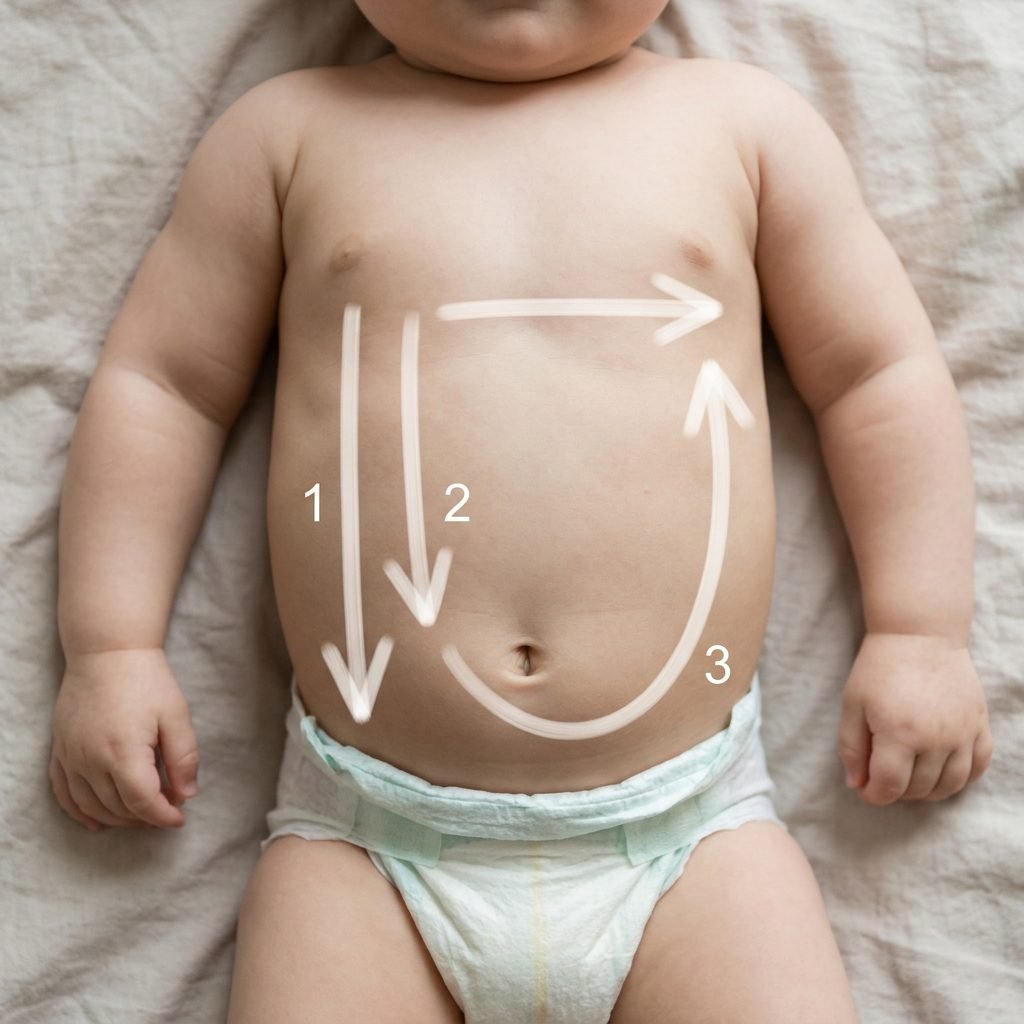
The ‘I Love You’ (I.L.U.) Massage
If the bicycle legs aren’t doing the trick, you can combine them with the ‘I Love You’ massage. This technique follows the path of the large intestine to move waste and gas toward the rectum.
- ‘I’: Using two fingers, trace a straight line down the left side of the baby’s abdomen (their left, your right).
- ‘L’: Trace an upside-down ‘L’ starting from the baby’s upper right abdomen, across to the left, and down.
- ‘U’: Trace an upside-down ‘U’ starting from the lower right abdomen, up, across, and down the left side.
The Knees-to-Chest Fold
This is the ‘power move’ of gas relief. Gently bring both of your baby’s knees up toward their chest, allowing their bottom to lift slightly off the surface. Hold this position for a few seconds. This position mimics the natural squatting posture that humans use for elimination, making it much easier for gas to pass. Pro Tip: Gently wiggle their hips from side to side while in this position to help ‘shake’ the air bubbles loose.
The Dos and Don’ts of Infant Gas Relief

Safety First, Mama
While these techniques are incredibly safe, there are a few ‘doula secrets’ and safety rules you should keep in mind to ensure your baby stays comfortable and safe.
The ‘Dos’
- DO use a little bit of baby-safe oil or lotion if you are performing skin-to-skin massage to reduce friction.
- DO watch your baby’s facial expressions. If they smile or coo, you’ve found the right pressure.
- DO be consistent. Sometimes it takes several sessions throughout the day to fully clear a gas ‘blockage.’
The ‘Don’ts’
- DON’T force the legs. If the baby is ‘guarding’ (stiffening their muscles), you could cause discomfort or even injury.
- DON’T do this on a full stomach. As mentioned, wait 30-45 minutes after a feed.
- DON’T panic if you hear a loud ‘explosion.’ That is the goal! It might be messy, but it means the technique worked.
Always remember that your touch is a form of communication. When you move their legs with love and confidence, you are telling their nervous system that they are safe, which helps their muscles relax and their digestion function more smoothly.
When to Call the Pediatrician

Distinguishing Gas from Other Concerns
While gas is a normal part of infancy, it is important to know when the fussiness might be something more. As a doula, I always advocate for trusting your ‘mother’s intuition.’ If something feels off, it probably is.
Signs It Might Be More Than Gas
- Fever: Any fever in a newborn (under 3 months) requires an immediate call to the doctor.
- Projectile Vomiting: This is different from normal spit-up and can indicate a condition like pyloric stenosis.
- Bloody Stools: This can be a sign of an allergy or a more serious intestinal issue.
- Inconsolable Crying: If your baby cries for more than 3 hours a day, 3 days a week, it may be diagnosed as colic, which requires a specific management plan.
- Poor Weight Gain: If gas is interfering with their ability to eat or they aren’t gaining weight, see a professional.
Most of the time, however, a gassy baby is just a baby who needs a little help from their mama’s magic hands. You’ve got this!
Conclusion
The Sweet Sound of Relief
Mastering the bicycle legs technique is like learning a secret language with your baby. It takes a little practice to find the right rhythm and the right pressure, but once you do, it becomes a powerful tool in your parenting arsenal. Remember that those early months of ‘digestive drama’ are temporary. As your baby grows and starts to move more on their own—rolling, scooting, and eventually crawling—they will become much better at moving gas independently. Until then, you are their hero. Take care of yourself, too, mama. A gassy baby is exhausting, so make sure you are getting the support you need, whether it’s a hand from a partner or a quiet moment to yourself. You are doing the beautiful, hard work of mothering, and your baby is so lucky to have your gentle hands to guide them through these first few hurdles. Happy cycling!