

That “Falling Out” Feeling? Why Pelvic Heaviness Happens And How To Lift It
Welcome, Sweet Mama
If you are reading this and feeling a strange, heavy, or even scary sensation ‘down there’—like something is literally falling out of your body—I want you to take a deep, slow breath. You are not broken, you are not alone, and your body is not failing you. This sensation, often described as pelvic heaviness or pressure, is incredibly common in the months (and sometimes years) following childbirth. Whether you are six weeks postpartum or six years, that ‘falling out’ feeling is a signal from your body that it needs a little extra support and a lot of grace. As a doula, I have sat with countless women who felt this same vulnerability. Today, we are going to pull back the curtain on pelvic organ prolapse (POP) and pelvic floor dysfunction, moving away from fear and toward functional, empowering healing. We will explore why this happens, how to manage the daily discomfort, and the steps you can take to lift that heaviness—both physically and emotionally.
Understanding the ‘Falling Out’ Sensation: What Is Actually Happening?
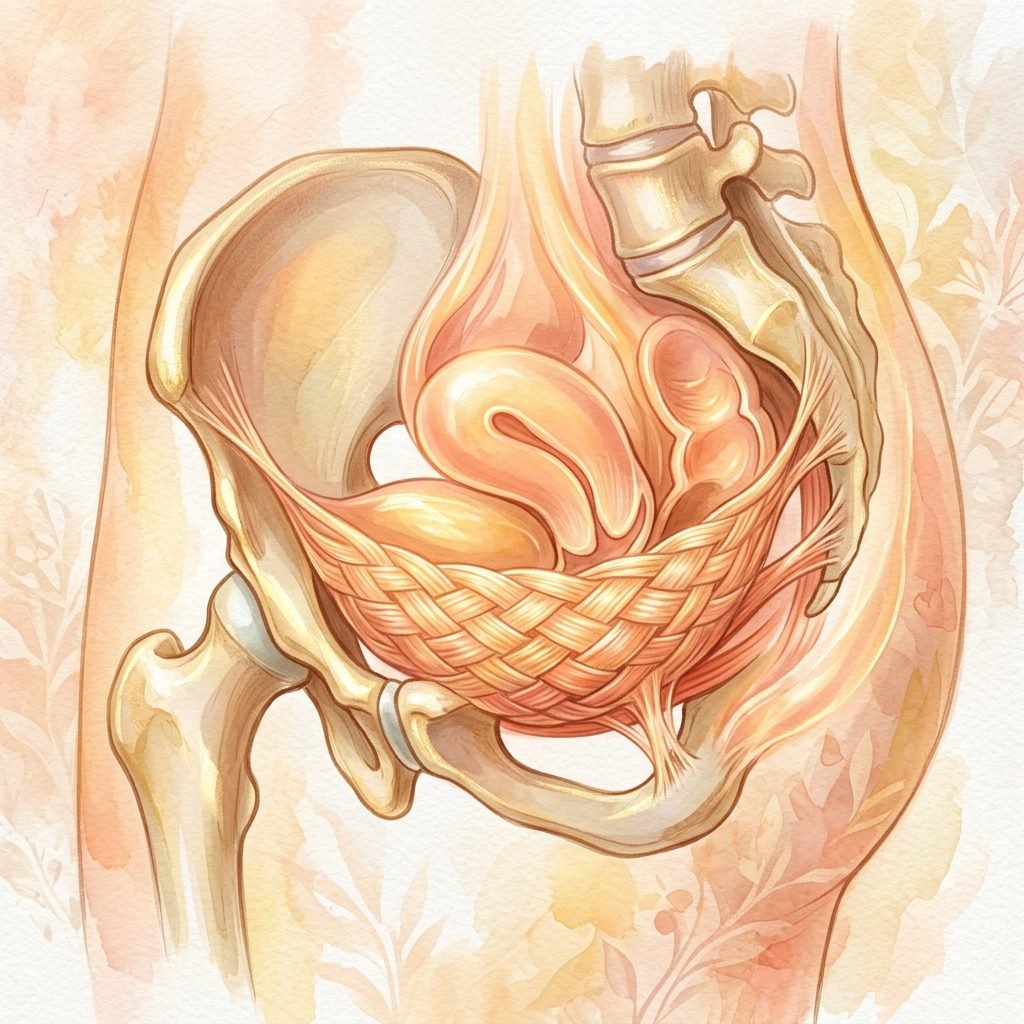
That heavy, dragging sensation is often the physical manifestation of Pelvic Organ Prolapse (POP). To understand it, think of your pelvic floor as a sturdy, flexible hammock made of muscle and connective tissue. This hammock supports your bladder, uterus, and rectum. During pregnancy, the weight of your growing baby puts immense pressure on this hammock for forty weeks. Then, the process of labor and birth further stretches these tissues.
The Mechanics of Heaviness
When the muscles or the connective tissue (fascia) of the pelvic floor become overstretched or weakened, they may no longer hold those organs firmly in place. As a result, one or more organs can shift downward, pressing against the vaginal walls. This is what creates that unmistakable feeling of a ‘bulge’ or ‘heaviness’ that often gets worse by the end of the day.
“It felt like I was walking around with a bowling ball between my legs, or like a tampon was slipping out when I wasn’t even wearing one.”
This quote from a mother I worked with perfectly encapsulates the sensory experience. It is important to realize that prolapse is a spectrum. It ranges from mild (Grade 1) where the organ has moved slightly, to more significant (Grade 3 or 4). Regardless of the grade, the way you feel is valid, and there are ways to manage the pressure.
Why Me? Identifying the Triggers of Pelvic Pressure

Many mothers wonder why they experience this while others don’t. The truth is, pelvic heaviness is a combination of genetics, birth history, and daily habits. Understanding your triggers is the first step toward relief.
Common Factors Contributing to Heaviness
- Pregnancy Weight: The sheer duration of carrying a baby alters the tension of your pelvic ligaments.
- Vaginal Delivery: Specifically long pushing stages or the use of forceps/vacuum can stretch the nerves and tissues.
- Chronic Constipation: Straining on the toilet is one of the biggest enemies of a healing pelvic floor.
- High-Impact Exercise: Jumping or running too soon after birth before the ‘hammock’ is ready.
- Heavy Lifting: Picking up toddlers or heavy car seats without proper core engagement.
To help you understand where you are in your recovery, let’s look at a comparison of how symptoms often present versus what they might actually mean:
| Symptom | Possible Meaning | Daily Impact |
|---|---|---|
| Heavy dragging at 5:00 PM | Muscle fatigue in the pelvic floor | High; requires evening rest |
| Feeling a bulge when wiping | Physical descent of an organ (POP) | Moderate; requires postural checks |
| Incontinence when sneezing | Stress urinary incontinence | Low to Moderate; lifestyle adjustment |
| Aching after a long walk | Over-exertion of the pelvic fascia | Moderate; need for shorter intervals |
The ‘Rescue Positions’: Immediate Relief for Heavy Days
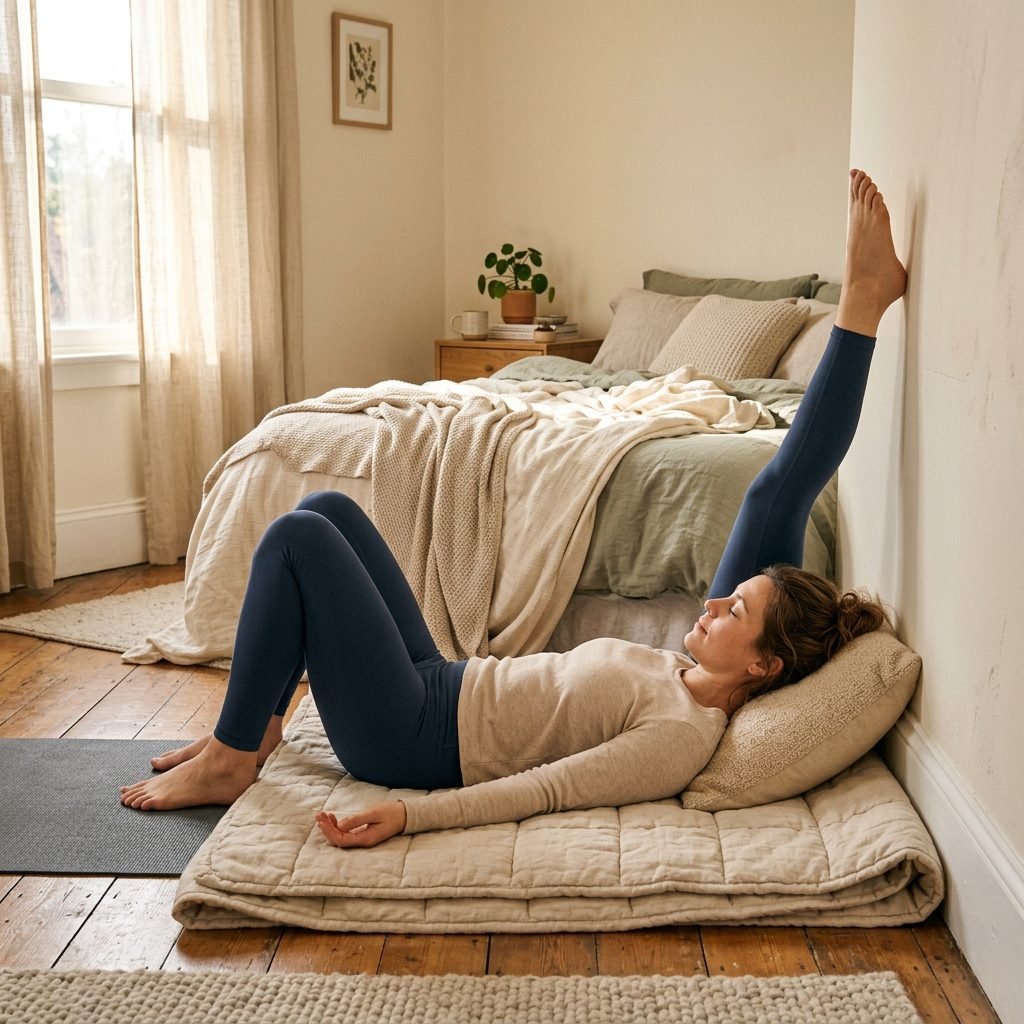
When the heaviness feels overwhelming, you need relief now. The goal of a rescue position is to use gravity to your advantage, allowing the pelvic organs to shift back toward your head and giving the pelvic floor muscles a much-needed break.
How to Perform the ‘Inverted Rest’
- Find a clear wall space or the edge of your bed.
- Lie on your back and scoot your hips as close to the wall as possible.
- Rest your legs up the wall (Legs-Up-The-Wall pose).
- Place a firm pillow or yoga block under your hips to elevate your pelvis above your heart.
- Place your hands on your lower belly and breathe deeply into your ribs for 5 to 10 minutes.
This position is a ‘reset button’ for your pelvis. By elevating your hips, you are manually decompressing the area. I recommend every mother with pelvic heaviness do this during her baby’s nap time or immediately after getting home from a walk. It reduces swelling and allows the blood flow to circulate away from the pelvic floor.
“Rest is not a luxury for a healing pelvic floor; it is a clinical necessity.”
The Golden Rule of Pressure Management: ‘Exhale on Effort’

One of the biggest mistakes we make is holding our breath. When you hold your breath while lifting your baby, pushing a stroller, or even getting up from a chair, you create intra-abdominal pressure. That pressure has to go somewhere, and usually, it pushes straight down onto your already-tired pelvic floor.
Mastering the ‘Blow Before You Go’ Technique
To protect your pelvic floor, you must learn to coordinate your breath with your movement. This simple habit can reduce the ‘falling out’ feeling by up to 50% during daily tasks.
- Step 1: Prepare for the movement (e.g., reaching for the car seat).
- Step 2: Start to exhale (blow out through pursed lips).
- Step 3: Perform the lift or the move while you are exhaling.
- Step 4: Never hold your breath during the ‘hard part’ of any activity.
By exhaling, you naturally engage your deep core and lift your pelvic floor, creating an internal support system that ‘catches’ the organs before they can press down.
Your Recovery Toolkit: Support Garments and Professional Help
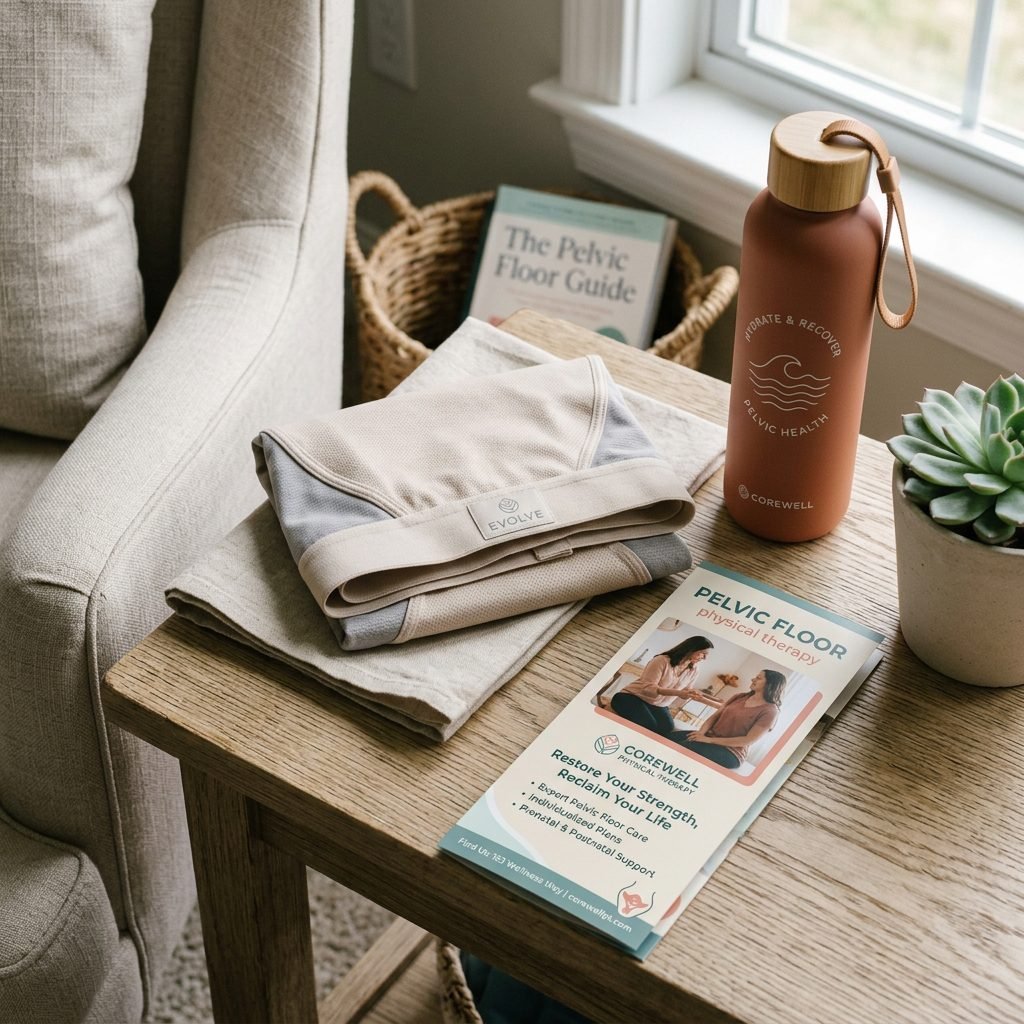
While exercises are vital, sometimes your body needs external support while it heals. Think of this like a brace for a sprained ankle. You wouldn’t walk on a sprained ankle without support, so why expect your pelvic floor to do all the work alone?
Choosing the Right Support
| Tool | Benefit | Best Used For… |
|---|---|---|
| Compression Bloomers | Provides upward lift and support | Daily wear, walking, chores |
| Pelvic Floor PT | Personalized internal assessment | Every postpartum mother |
| Pessary | A medical device worn internally | Significant prolapse or high-impact exercise |
| Poop Stool (Squatty Potty) | Aligns the rectum for easier voiding | Preventing straining during BM |
I cannot stress this enough: See a Pelvic Floor Physical Therapist (PFPT). They are the ‘gold standard’ for postpartum care. They can tell you exactly which muscles are tight, which are weak, and give you a plan tailored to your specific body. In many countries, this is a standard part of postpartum care; you deserve that same level of expertise.
Emotional Resilience: You Are Not Broken
Perhaps the hardest part of pelvic heaviness is the emotional toll. It can feel ‘un-sexy,’ embarrassing, or like you’ve aged decades overnight. You might feel disconnected from your body or afraid to be intimate with your partner. I want you to hear this: Your body did something miraculous, and it is currently in a state of transition, not a state of permanent damage.
Affirmations for the Heavy Days
When the frustration bubbles up, try repeating these words to yourself:
- “My body is healing at its own pace, and I am listening to its needs.”
- “This heaviness is a season, not my forever story.”
- “I am worthy of care, rest, and professional support.”
- “My strength is not defined by the tightness of my pelvic floor.”
Healing is not a linear path. You will have days where you feel light and strong, and days where gravity feels like your enemy. Both are part of the process. Be patient with your tissues; they are made of incredible, resilient material that knows how to find its way back to balance with the right tools.
Conclusion
Lifting the Weight, One Day at a Time
The journey from feeling ‘heavy’ to feeling ‘lifted’ is one of consistency, education, and self-compassion. Remember, that ‘falling out’ sensation is your body’s way of asking for a change in pressure management and a bit more rest. By incorporating inverted rest positions, mastering the ‘exhale on effort’ technique, and seeking the guidance of a Pelvic Floor Physical Therapist, you are taking proactive steps toward a vibrant, active life. You don’t have to live in fear of your own body. You are strong, you are healing, and you are doing an incredible job navigating the complexities of motherhood. Hang in there, mama—the lightness is coming back.