5 Kneeling Labor Positions That Open Your Pelvis and Speed Up Delivery
Welcome to Your Power, Mama
Hello, sweet friend. If you are reading this, you are likely preparing for one of the most transformative journeys of your life. As a doula, I’ve sat beside many mothers in the quiet intensity of labor, and I want to share a secret with you: your body is a masterpiece of engineering. During labor, your pelvis isn’t a rigid ring of bone; it’s a dynamic, moving gateway designed to expand and usher your baby into the world. However, the traditional image of giving birth while lying on your back (the lithotomy position) actually works against your anatomy, narrowing the pelvic outlet and forcing you to push uphill against gravity.
That is where kneeling comes in. Kneeling labor positions are a doula’s ‘secret weapon.’ They utilize the relentless, helpful pull of gravity, encourage your baby to rotate into the optimal position, and can actually increase the diameter of your pelvic outlet by up to 28-30%. In this guide, we are going to walk through five specific kneeling variations that will help you find comfort, manage intensity, and meet your little one just a bit sooner. You’ve got this, sister.
The Science of the Kneeling Pelvis
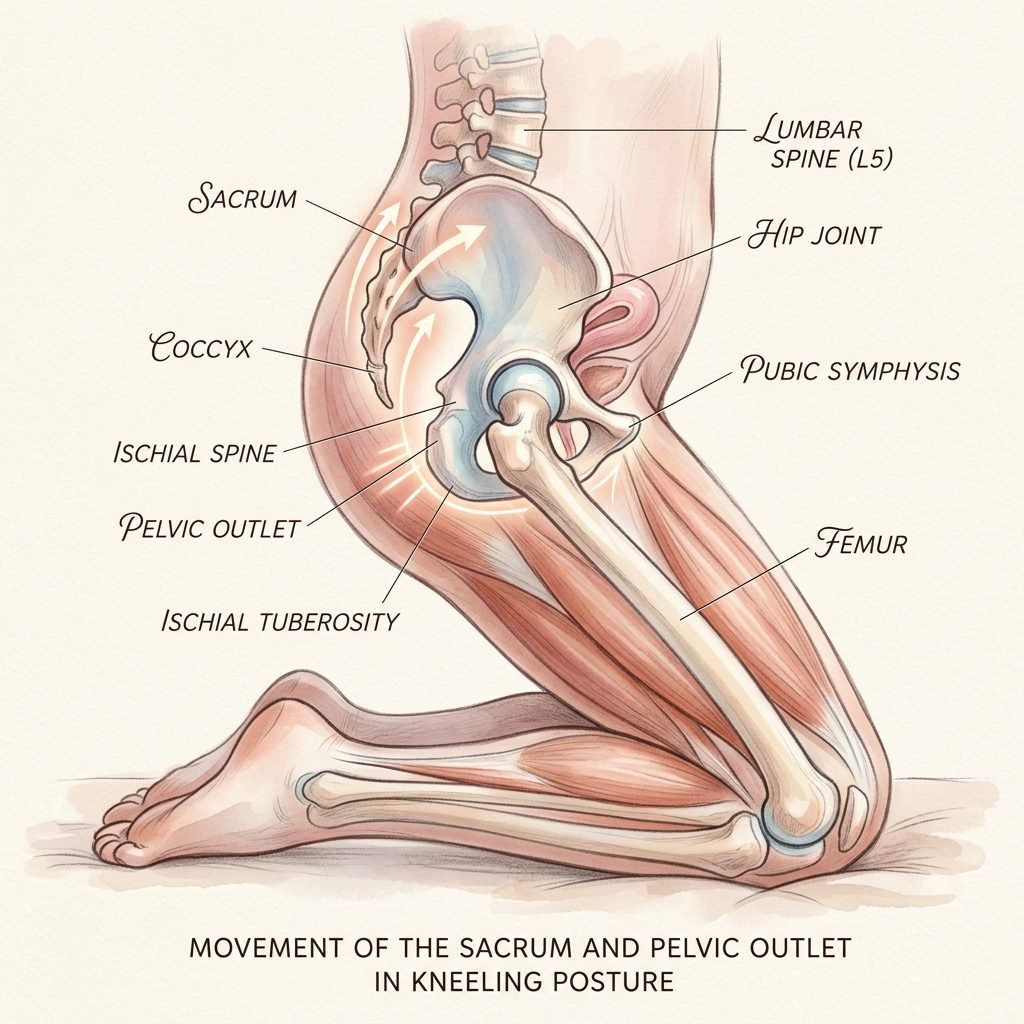
Before we dive into the moves, let’s talk about why kneeling is so effective. When you are upright and kneeling, your sacrum (the bone at the base of your spine) is free to move. When you lie on your back, you are essentially ‘sitting on your tailbone,’ which prevents the pelvic outlet from opening fully. Kneeling allows the pelvic bones to shift and tilt, creating the widest possible path for your baby.
Why Gravity is Your Best Friend
- Fetal Descent: Gravity naturally pulls the baby downward, applying consistent pressure to the cervix, which helps it dilate more efficiently.
- Optimal Positioning: Kneeling encourages the baby to move into an ‘anterior’ position (back of the head facing your belly), which is the easiest path for delivery.
- Reduced Tearing: Being upright can reduce the pressure on the perineum, potentially lowering the risk of severe tearing.
| Feature | Lying Down (Lithotomy) | Kneeling Positions |
|---|---|---|
| Pelvic Opening | Constricted/Narrowed | Maximally Expanded |
| Gravity Support | None (Pushing Uphill) | Significant (Natural Descent) |
| Back Pain | Often Increased | Often Relieved |
| Movement | Restricted | Highly Mobile |
1. The Classic Hands-and-Knees (All Fours)

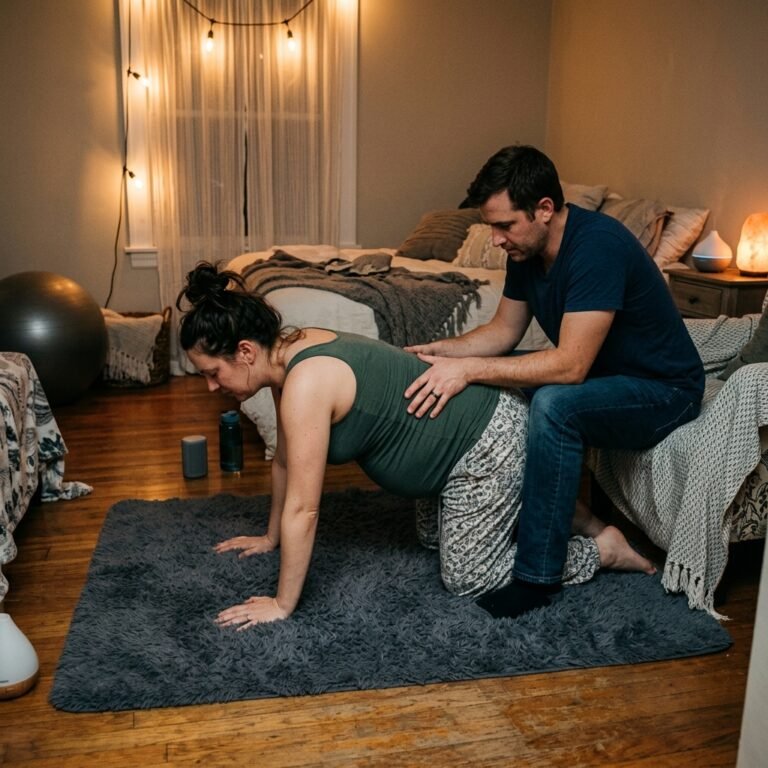
The ‘All Fours’ position is the bread and butter of active labor. It is particularly magical if you are experiencing back labor, as it allows the baby to drop away from your spine, providing immediate relief.
How to Do It:
- Lower yourself onto a soft surface like a yoga mat, a pile of pillows, or even your bed.
- Place your hands directly under your shoulders and your knees under your hips.
- Keep your back neutral—don’t let it sway too much or arch too tightly.
- During a contraction, gently rock your hips from side to side or in circles to help the baby navigate the pelvic mid-point.
“I feel my baby moving down with every breath. My body is open, my mind is calm, and I am safe.”
Doula Tip: If your wrists start to ache, you can drop down onto your elbows or lean over a stack of pillows or the back of a birthing bed for extra support.
2. The Asymmetrical Kneel (The Captain Morgan)

Movement is medicine in labor, and asymmetry is the key to unlocking a ‘stuck’ baby. By lifting one knee, you change the shape of the pelvis, often providing just enough extra room for the baby’s head to tuck and rotate.
How to Do It:
- Start in a kneeling position.
- Bring one foot forward and place it flat on the floor, while the other knee remains on the mat (similar to a lunge).
- You can lean forward onto a birth ball or the side of the bed for stability.
- Switch legs every 15-20 minutes or after a few contractions to ensure both sides of the pelvis are being stretched and opened.
This position is incredible for the Active Phase of labor when you need to encourage the baby to descend past the pelvic brim. It creates a shifting motion that ‘jiggles’ the baby into the right spot.
3. Kneeling with a Birth Ball Support

If you feel exhausted but want to stay upright, the birth ball is your best ally. This position allows for total upper-body relaxation while keeping the pelvis active and open. It’s perfect for the Transition Phase, where you might feel the need to ‘go inward’ and rest between the intense waves.
How to Do It:
- Kneel on a soft pad with your knees spread wide.
- Drape your arms and chest over a large, inflated birth ball.
- Rest your head on your hands or a pillow placed on top of the ball.
- Gently sway your hips or bounce very softly on your knees.
Why it works: The wide stance of the knees opens the pelvic inlet, while the soft support of the ball allows your shoulders and jaw to relax. Remember, mama: a relaxed jaw means a relaxed cervix!
4. The Forward-Leaning Inversion (Modified Kneeling)
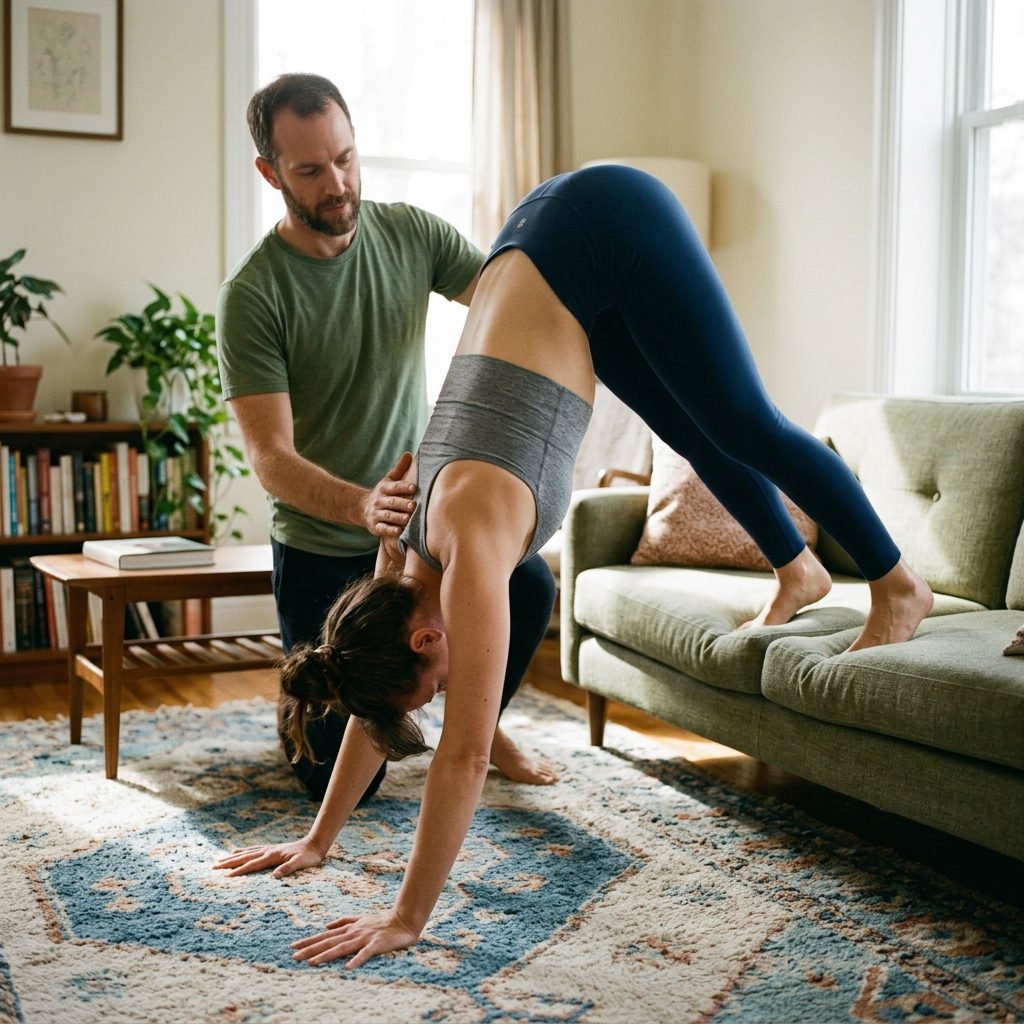
Sometimes, we need to create space in the lower uterus to help a baby who is ‘sunny-side up’ (OP position) rotate. This modified kneeling position uses gravity to pull the baby slightly out of the pelvis so they can find a better path back in.
How to Do It:
- Kneel on the edge of a sofa or a sturdy bed.
- Carefully lower your hands, then your forearms, to the floor (you may need a partner to help steady you).
- Your hips should be higher than your shoulders.
- Hold for only 3 contractions or about 30-60 seconds, then slowly climb back up to a regular kneeling position.
Caution: This is an advanced move. Always have a partner present to support your hips, and do not perform this if you have high blood pressure or an active risk of stroke.
5. The Kneeling Squat (Supported Pushing)

When it’s time to meet your baby, the kneeling squat is one of the most powerful pushing positions. It combines the opening power of a squat with the stability of kneeling.
How to Do It:
- Kneel on the bed or floor with your knees as wide as comfortably possible.
- Sit back slightly toward your heels, but keep your torso upright or leaning slightly forward.
- Hold onto the headboard of the bed, a squat bar, or your partner’s neck for leverage.
- As you push, think of ‘breathing the baby down’ rather than holding your breath and straining.
| Phase of Labor | Recommended Kneeling Move | Goal |
|---|---|---|
| Early Labor | Classic All Fours | Rest & Back Relief |
| Active Labor | Asymmetrical Kneel | Rotation & Descent |
| Transition | Birth Ball Support | Relaxation & Focus |
| Pushing | Kneeling Squat | Expulsion & Gravity |
Partner Support: How to Help from the Sidelines
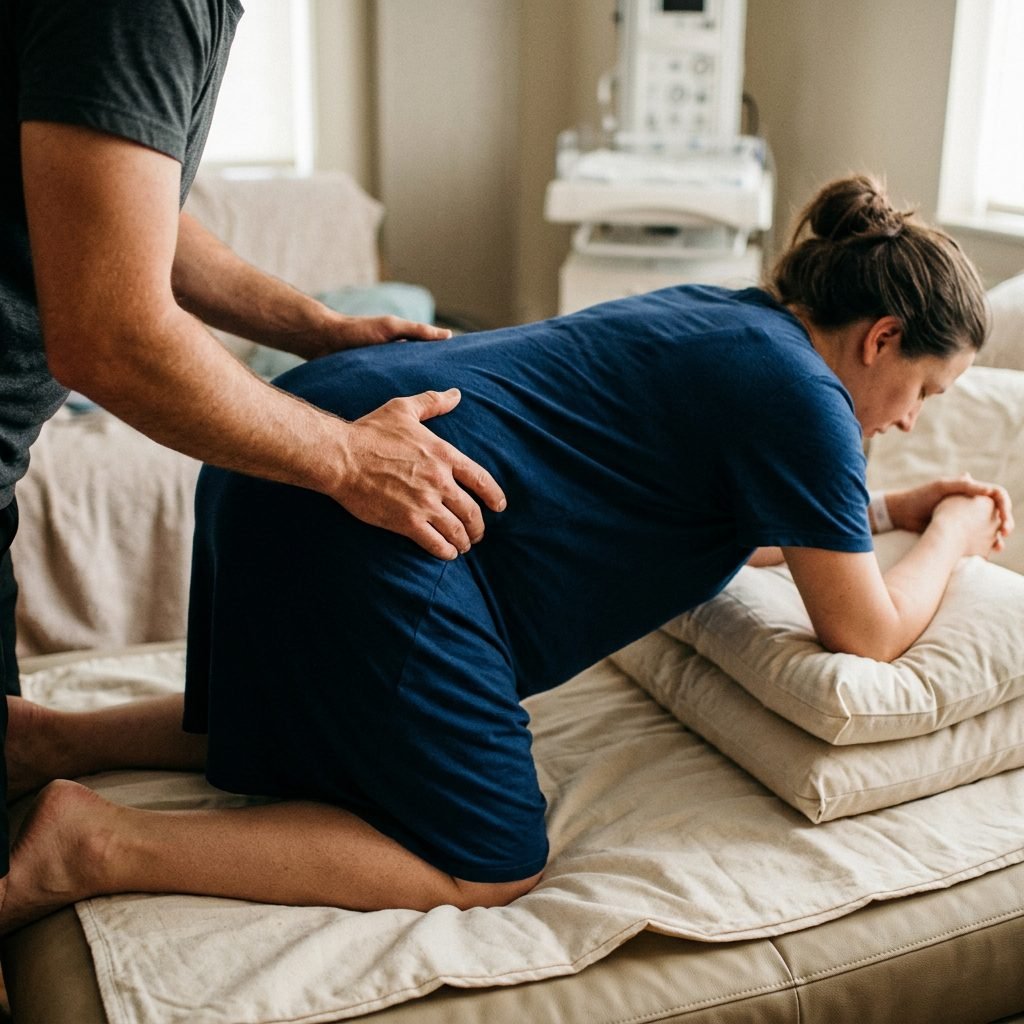
Partners, you are not just observers; you are part of the birth team! When she is kneeling, you have the perfect access to perform comfort measures that can significantly reduce her pain levels.
Key Partner Techniques:
- The Double Hip Squeeze: While she is on all fours, place your hands on the fleshy part of her hips and squeeze inward and upward toward her shoulders. This physically creates more room in the pelvis and relieves pressure.
- Counter-Pressure: Use the palm of your hand or a tennis ball to apply firm, steady pressure to her lower back (the sacrum) during a contraction.
- The Rebozo Sift: If she is leaning over a ball, you can drape a Rebozo (or a long, strong scarf) under her belly and gently jiggle it from side to side to relax her abdominal muscles.
“You are doing it, babe. Every surge brings us closer to our baby. You are so strong.”
Conclusion
You Are Built for This
As you prepare your birth plan, I encourage you to keep these kneeling positions in your ‘tool kit.’ Labor is a fluid process—what feels good at 2 centimeters might not feel right at 8 centimeters. The key is to listen to your body’s cues. If you feel the urge to move, move. If you feel the urge to kneel, trust that your body knows exactly how to position itself to bring your baby home.
Remember, mama, you are part of a long lineage of women who have birthed in strength and grace. These positions are simply tools to help you tap into the primal wisdom you already possess. Take a deep breath, trust the process, and get ready for the most beautiful ‘hello’ of your life.