

How to Use the Semi-Fowler Position in Hospital Beds for a Smoother Delivery
Welcome to Your Empowered Birth Journey, Mama
Oh, sweet mama, as you approach your big day, it is completely normal to feel a mix of excitement and a little bit of ‘how is this all going to go?’ One of the most powerful tools you have in your birth toolkit isn’t a fancy gadget—it is actually the hospital bed itself. While we often see movies showing moms lying flat on their backs, as a doula, I am here to tell you that gravity is your absolute best friend during labor. The Semi-Fowler position is a game-changer that combines the rest your body needs with the physiological advantages of being upright. In this guide, we are going to walk through exactly how to use this position to help your baby descend, keep your oxygen levels high, and make your delivery as smooth as possible. You are a powerhouse, and with these practical steps, you are going to navigate your labor with such grace and strength.
The Science of the Semi-Fowler: Why 45 Degrees is the Magic Number
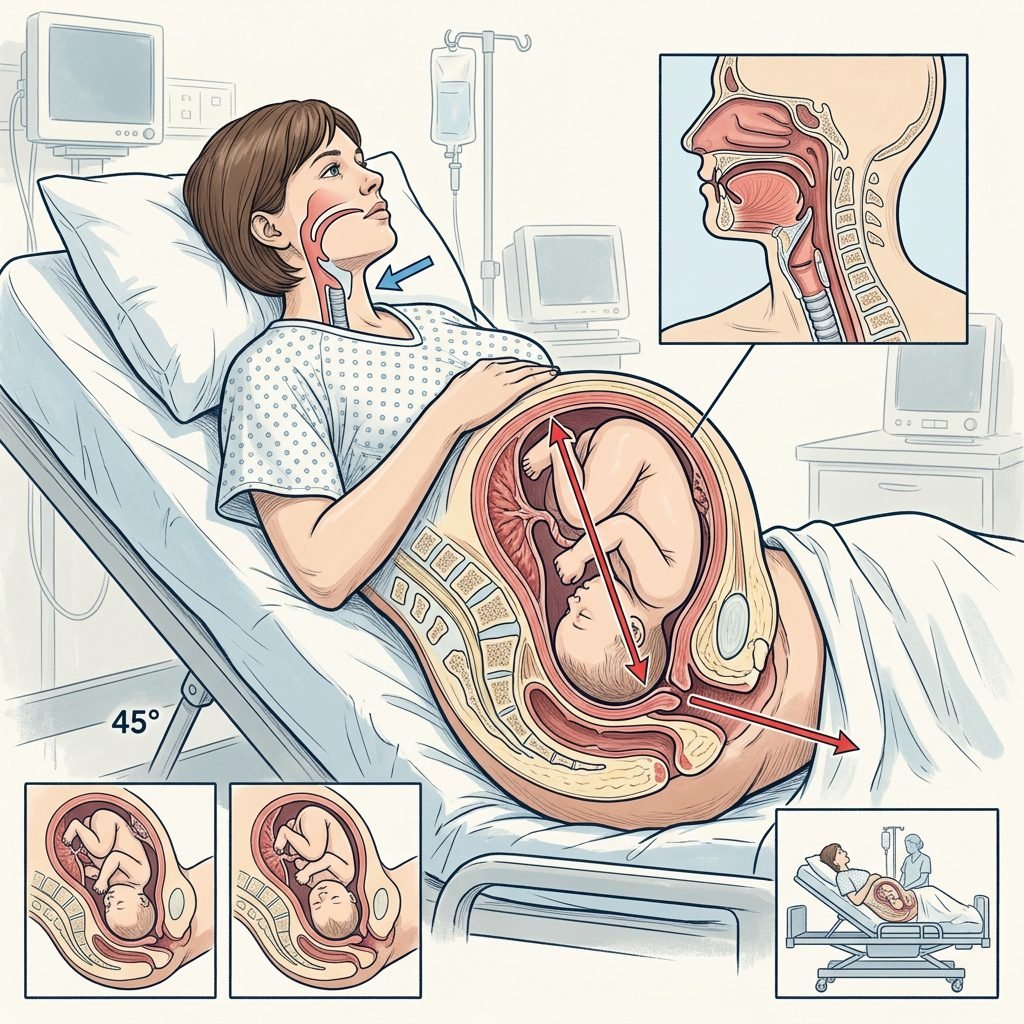
The Semi-Fowler position involves raising the head of your hospital bed to an angle between 30 and 45 degrees. But why does this specific tilt matter so much? When you lie flat on your back (the supine position), the weight of your uterus can compress the vena cava, the major vein that returns blood to your heart. This can lead to a drop in your blood pressure and potentially decrease the oxygen flow to your sweet baby. By simply clicking that button on your bed remote to elevate your upper body, you immediately relieve that pressure.
Gravity and Fetal Descent
In the Semi-Fowler position, gravity helps the baby’s head press firmly against your cervix. This pressure is the key to efficient dilation. Think of it as a gentle, constant nudge that tells your body, ‘It is time to open up!’ Furthermore, this position allows your pelvis to tilt in a way that creates more space for the baby to navigate the birth canal. It is the perfect middle ground between standing up (which can be exhausting) and lying down (which can slow things down).
| Feature | Supine (Flat) | Semi-Fowler (30-45°) |
|---|---|---|
| Gravity Support | Minimal | Significant |
| Oxygen to Baby | Potential Compression | Optimal Flow |
| Maternal Comfort | High Pressure on Back | Relieves Lower Back |
| Pelvic Opening | Restricted | Enhanced |
Preparing Your Nest: Setting Up the Hospital Bed for Maximum Ease
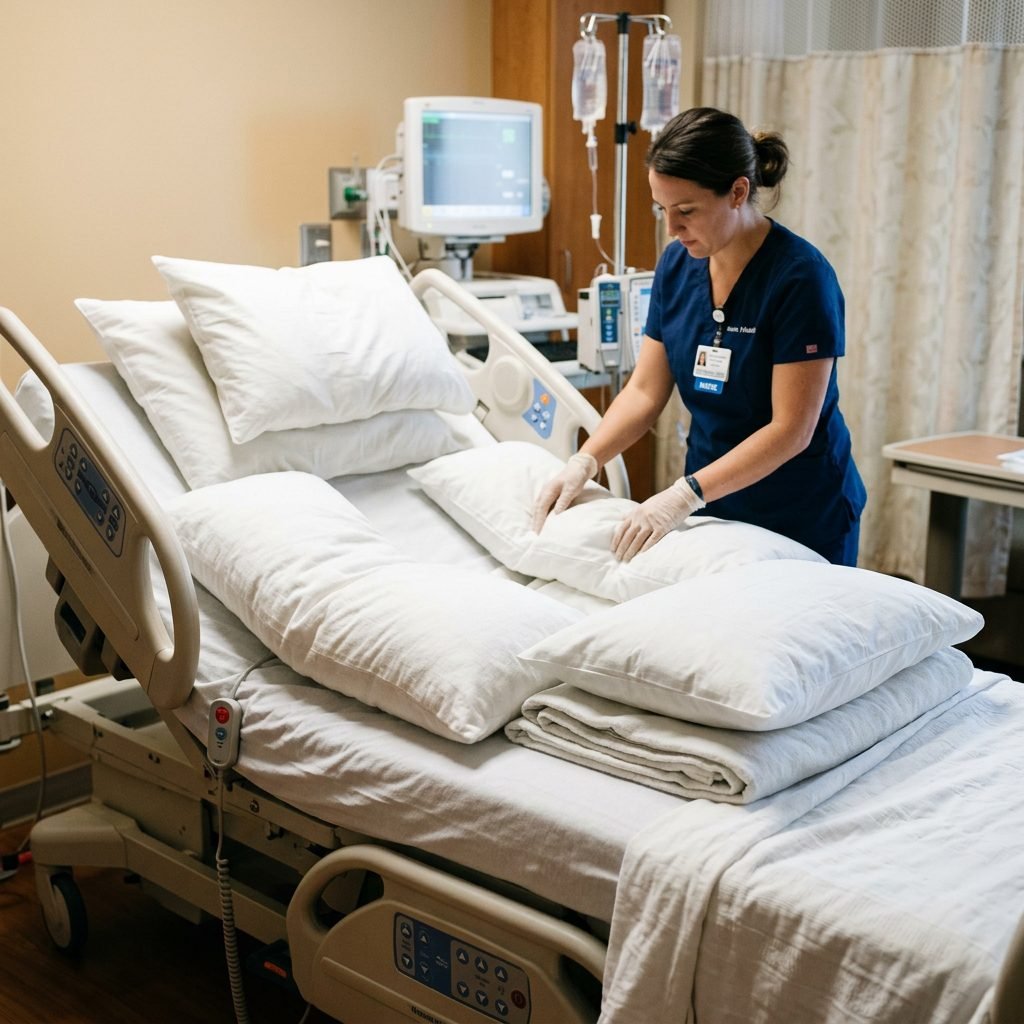
Your hospital room is your sanctuary, and the bed is your throne. To get the most out of the Semi-Fowler position, you need to do more than just raise the head of the bed. You want to create a ‘nest’ that supports every curve of your changing body. This is where your partner or doula can really shine. Most hospital beds have a ‘Fowler’s Notch’ or a knee-gatch setting that allows you to raise the area under your knees slightly. This is crucial because it prevents you from sliding down the bed, which can happen when the head is elevated.
The Pillow Protocol
Don’t be shy about asking for extra pillows! Here is how to arrange them for maximum comfort:
- The Lumbar Roll: Place a thin pillow or a rolled-up hospital blanket in the small of your back to maintain your natural curve.
- The Arm Rests: Place a pillow under each arm. This prevents your shoulders from hunching and helps you keep your chest open for deep, labor-enhancing breaths.
- The Knee Support: Ensure the bed’s knee-break is engaged, or place a pillow under your knees to take the strain off your hamstrings and lower back.
“Your environment influences your hormones. By creating a comfortable, supported nest in the Semi-Fowler position, you invite oxytocin—the hormone of love and labor—to flow freely.”
The Step-by-Step Guide to Mastering Semi-Fowler During Labor
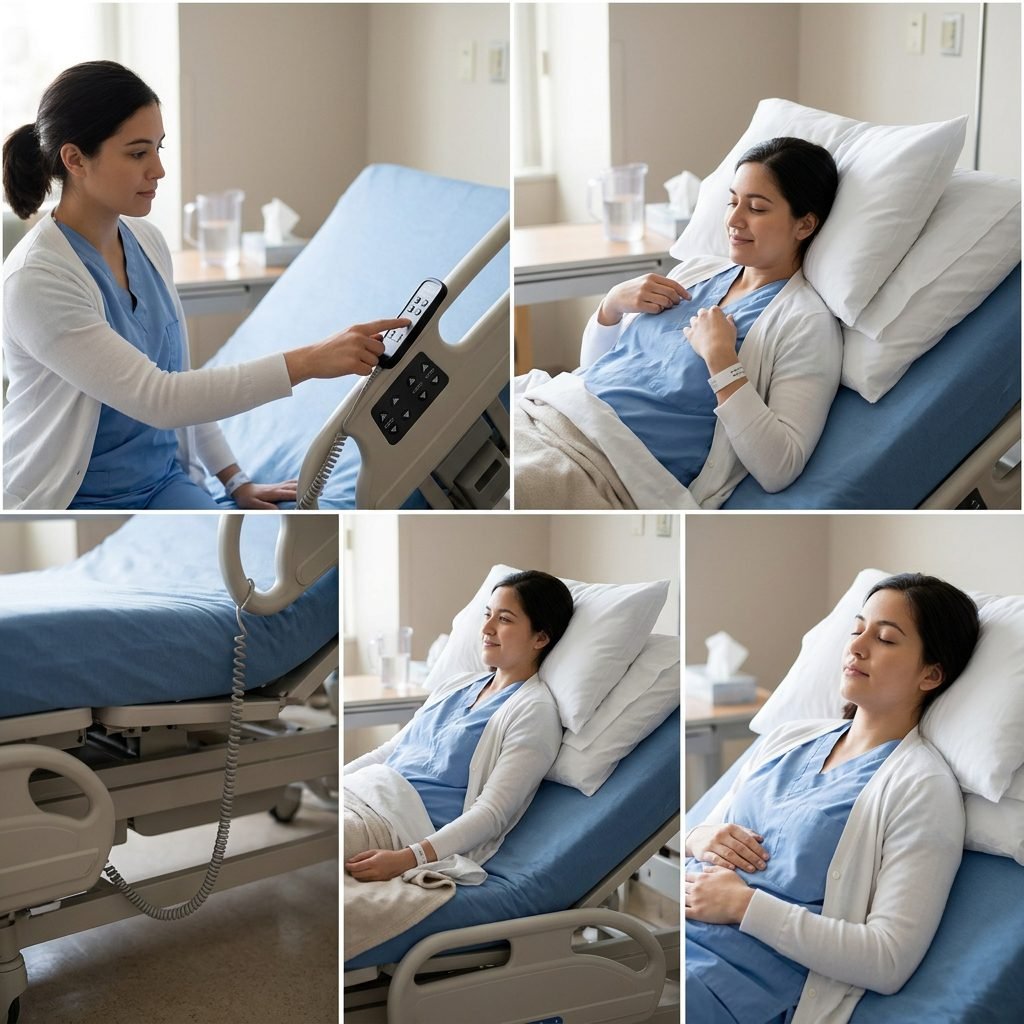
Transitioning into this position should be slow and mindful. As your contractions (or ‘surges’) get stronger, you want to find a rhythm that works for you. Follow these steps to ensure you are perfectly positioned:
- Engage the Bed Controls: Start by raising the head of the bed to a 45-degree angle. If you feel like you are straining your neck, bring it down slightly to 30 degrees.
- Set the Knee Break: Adjust the lower half of the bed so your knees are gently flexed. This stabilizes your pelvis.
- Check Your Hips: Ensure your bottom is tucked right into the ‘crease’ where the bed folds. This ensures the ergonomic design of the bed is actually working for your spine.
- Relax Your Jaw: There is a direct connection between your jaw and your pelvic floor. As you settle into the position, consciously relax your face and mouth.
- Focus Your Vision: In the Semi-Fowler position, you have a great view of the room. Choose a focal point—perhaps a photo of your ultrasound or a battery-operated candle—to keep you grounded during the peaks of your contractions.
Breathing Through the Surge
While in this position, focus on ‘Down-Breathing.’ Inhale deeply through your nose, imagining the air traveling all the way down to your baby, and exhale slowly through softened lips. The incline of the bed makes it easier for your diaphragm to move, allowing for much deeper breaths than if you were flat.
The Partner’s Role: Hands-On Support and Comfort Measures
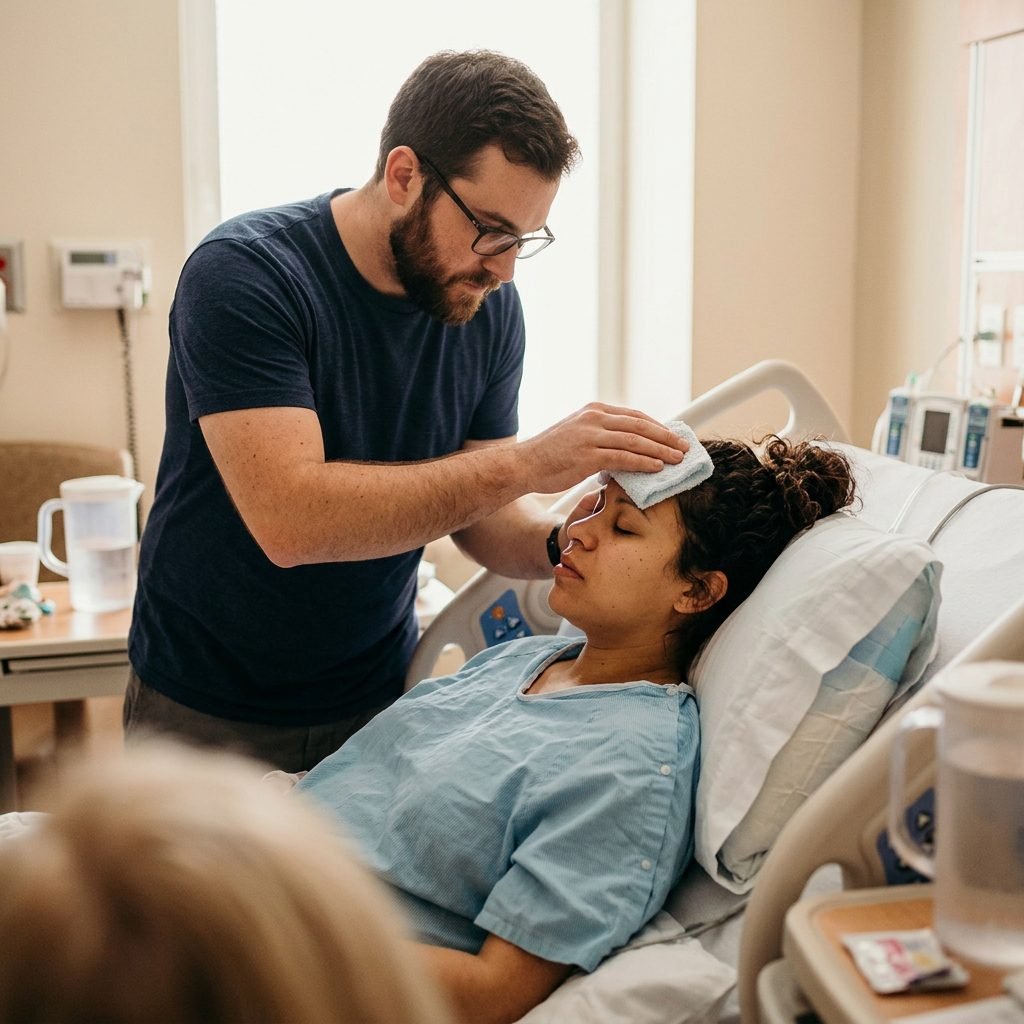
Partners, you are the guardians of the birth space! When she is in the Semi-Fowler position, you have excellent access to her shoulders, hands, and feet. This is the perfect time to implement some ‘doula-approved’ comfort measures. Since her back is supported by the bed, you can’t do traditional back rubs, but you can focus on other tension-holding areas.
Counter-Pressure and Connection
- Shoulder Melts: Stand behind the head of the bed and place your hands on her shoulders. During a contraction, apply a gentle downward pressure to remind her to drop her shoulders away from her ears.
- Hand Reflexology: Use your thumbs to massage the fleshy part between her thumb and index finger. This can be very grounding.
- Cool Compresses: Because the upper body is elevated, she might feel warmer. Apply a cool, damp cloth to her forehead or the back of her neck.
- Hydration Station: Offer sips of water or coconut water through a bendy straw between contractions. The upright angle makes it much easier for her to swallow without choking.
| Task | Partner Action | Benefit to Mom |
|---|---|---|
| Physical Support | Adjusting pillows and bed angle | Maintains ergonomic alignment |
| Pain Management | Shoulder presses and hand massage | Interrupts pain signals/promotes relaxation |
| Environment | Dimming lights/playing soft music | Boosts natural endorphins |
| Advocacy | Communicating her comfort to nurses | Allows her to stay in ‘labor land’ |
From Labor to Pushing: Transitioning Seamlessly in the Bed
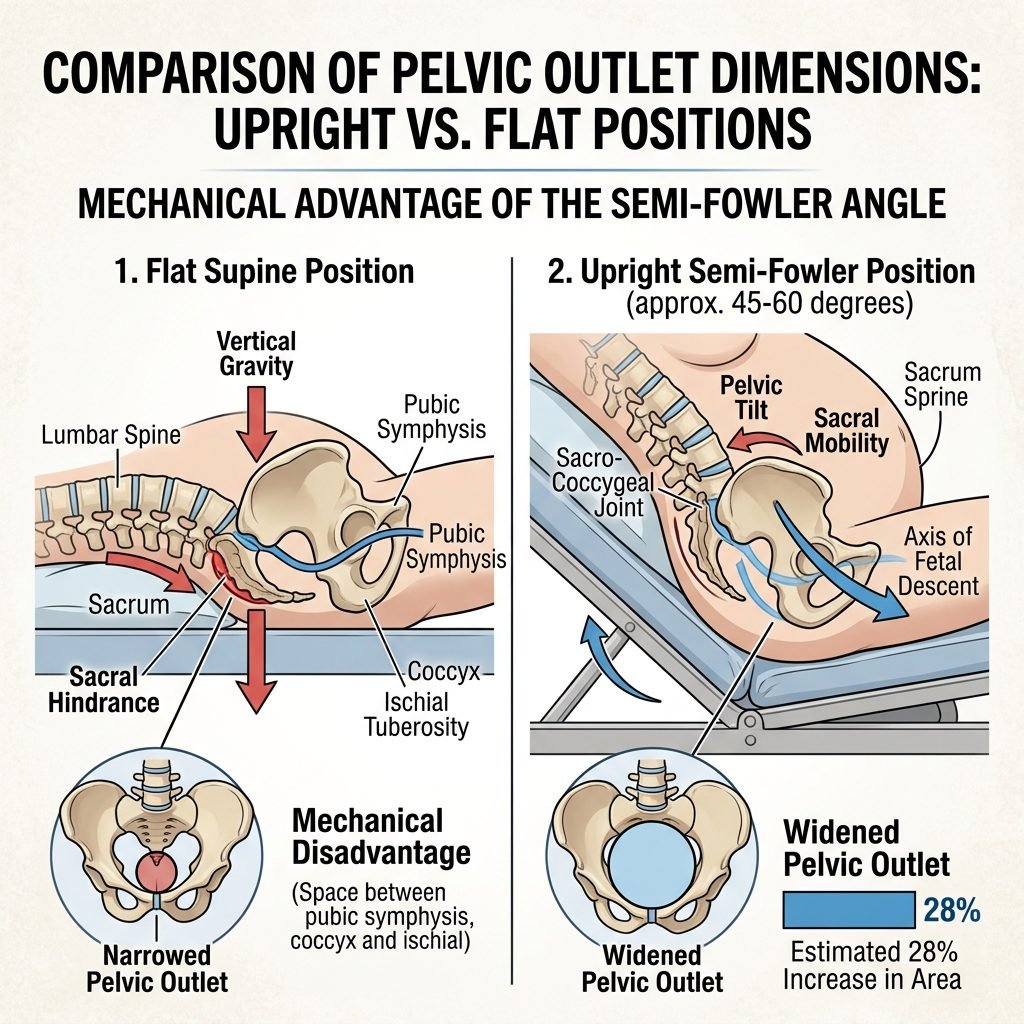
When it comes time to meet your baby, the Semi-Fowler position can easily be adapted into a powerful pushing position. Many hospitals use the ‘squat bar’ which can be attached to the bed, but even without it, the 45-degree incline is incredibly effective. This position is often called the ‘Modified Lithotomy’ when the legs are supported, but keeping the torso upright is what makes the difference.
The Physics of Pushing
When you are upright, your pelvic outlet can actually open up to 30% wider than when you are lying flat. During the pushing stage, you can use the bed’s side rails for leverage. Pulling on the rails or a ‘tug-of-war’ rope attached to the bed while in the Semi-Fowler position helps you engage your abdominal muscles more effectively. It allows you to ‘curl’ around your baby, directing all your energy downward.
“Remember, you aren’t pushing against gravity; you are working with it. Every breath brings your baby closer to your arms.”
If you feel the urge to change, don’t be afraid to ask your nurse to drop the bottom section of the bed. This can allow you to move into a semi-seated position with your feet on the bed frame, giving you even more power for those final pushes.
Beyond Delivery: Using Semi-Fowler for Postpartum Recovery

The beauty of the Semi-Fowler position is that it doesn’t stop being useful once your baby is in your arms. In fact, those first few hours and days postpartum are much more comfortable at an incline. If you’ve had a C-section, the Semi-Fowler position is often the only comfortable way to rest, as it takes the strain off your abdominal incision. It makes it much easier to get in and out of bed without using your core muscles excessively.
Breastfeeding and Bonding
For those first golden-hour nursing sessions, the Semi-Fowler position provides a stable, supported base. It allows for ‘laid-back breastfeeding’ (also known as biological nurturing), where the baby’s tummy is against your chest. Gravity helps the baby latch deeply and stay skin-to-skin without you having to hold their full weight. It also helps with postpartum drainage and reduces the swelling (edema) in your legs that many moms experience after IV fluids.
- Easy Breathing: Helps your lungs fully re-expand after the baby is no longer pushing against your diaphragm.
- Acid Reflux Relief: Many moms experience lingering heartburn; staying inclined helps keep stomach acid down.
- Safe Sleep: While you should always follow safe sleep for baby, an inclined position for you can make those short postpartum naps more restorative.
Conclusion
You’ve Got This, Mama!
As you prepare for your birth, remember that the hospital bed is just a tool, and you are the one in control of it. The Semi-Fowler position is a wonderful way to honor your body’s need for rest while still giving your baby the best possible path into the world. By staying at that 30 to 45-degree angle, you are supporting your circulation, maximizing your oxygen, and letting gravity do some of the heavy lifting for you. Whether you are in early labor or getting ready for those final pushes, don’t be afraid to speak up and ask for the bed to be adjusted, for more pillows to be brought in, and for the ‘Fowler’s Notch’ to be set. You are strong, you are prepared, and you are about to do something absolutely miraculous. Trust your body, trust the process, and enjoy the incredible journey of meeting your little one.