How to Make DIY Organic Lavender Baby Sleep Balm (Safe and Gentle)
Welcome to the Midnight Club, Mama
If you are reading this through the blurry, beautiful, and utterly exhausting haze of sleep deprivation, please take a deep breath and drop your shoulders. You are doing an incredible job. Whether you are a first-time mama rocking a fussy newborn, a seasoned parent navigating the dreaded four-month sleep regression, or a thoughtful friend looking to craft the perfect, heartfelt baby shower gift, you have landed in exactly the right place.
As mothers, doulas, and caregivers, we are constantly searching for ways to ease our little ones into a peaceful slumber. The transition from the cozy, rhythmic environment of the womb to the wide-open world is a massive sensory adjustment for a baby. In our quest to help them rest, we often turn to store-bought lotions and potions. But flip over the back of many commercial baby products, and you might find a paragraph of unpronounceable synthetic fragrances, petroleum byproducts, and artificial preservatives that have no business being near your baby’s delicate, permeable skin.
That is exactly why crafting your own DIY Organic Lavender Baby Sleep Balm is such a game-changer. It is a profoundly empowering act of maternal love. By making this balm in your own kitchen, you control every single drop that goes into it. You are trading synthetic “parfums” for the pure, therapeutic, and evidence-based calming properties of real lavender. You are trading petroleum jelly for nourishing, earth-born carrier oils that protect and hydrate your baby’s skin.
In this comprehensive, sisterly guide, we are going to walk through the beautiful process of making a safe, gentle, and highly effective sleep balm. We will cover the exact science of why lavender works, provide a foolproof recipe with the safest dilution ratios for infants, and teach you how to incorporate this balm into a soothing bedtime massage ritual that will help both you and your baby find some much-needed rest.
The Science of Scent: Why Lavender Works for Baby Sleep
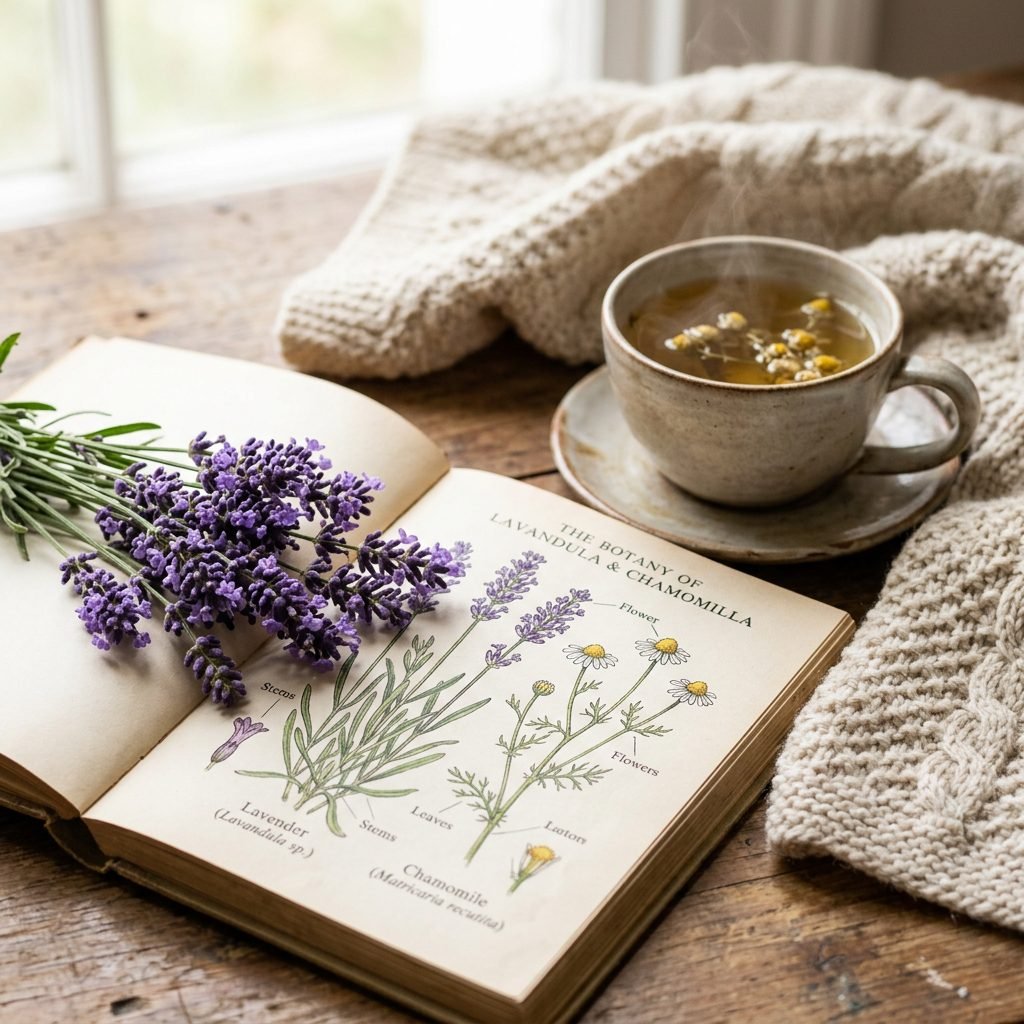
Understanding the Olfactory Magic
Before we melt our first ounce of beeswax, let us talk about the “why” behind the magic. As a doula and pediatric sleep advocate, I always want you to feel confident and informed about the tools you use. Lavender (specifically Lavandula angustifolia) is not just an old wives’ tale; its efficacy is deeply rooted in science and botanical medicine.
The Power of Linalool
True lavender essential oil contains high levels of two naturally occurring chemical constituents: linalool and linalyl acetate. When inhaled, these compounds interact directly with the limbic system—the part of the brain responsible for emotions, memories, and arousal. Studies have shown that inhaling lavender can decrease heart rate, lower blood pressure, and reduce the body’s “fight or flight” stress response. For a baby who is overstimulated from a day of growing and learning, this gentle scent acts as an olfactory cue that it is time to downshift from wakefulness to rest.
Building Positive Sleep Associations
Babies thrive on predictability. They do not know how to tell time, so they rely on environmental cues to understand what is coming next. When you incorporate the subtle, sweet scent of lavender into your baby’s bedtime routine every single night, you are building a powerful sleep association. Over time, the mere scent of the balm signals to your baby’s brain: “Ah, I know this smell. The lights are dim, the bath is done, and it is time for sleep.”
“Scent is the most primitive of our senses. By intentionally pairing the calming aroma of lavender with the safety of your touch, you are building a sensory bridge to peaceful sleep for your baby.”
Furthermore, this balm is not just for your little one. Postpartum mamas, you are riding a hormonal rollercoaster, and your nervous system needs soothing, too. The beautiful byproduct of applying this balm to your baby is that the lavender scent will naturally calm your own mind, helping to alleviate that late-night maternal anxiety.
Gathering Your Organic Arsenal: Ingredients and Tools
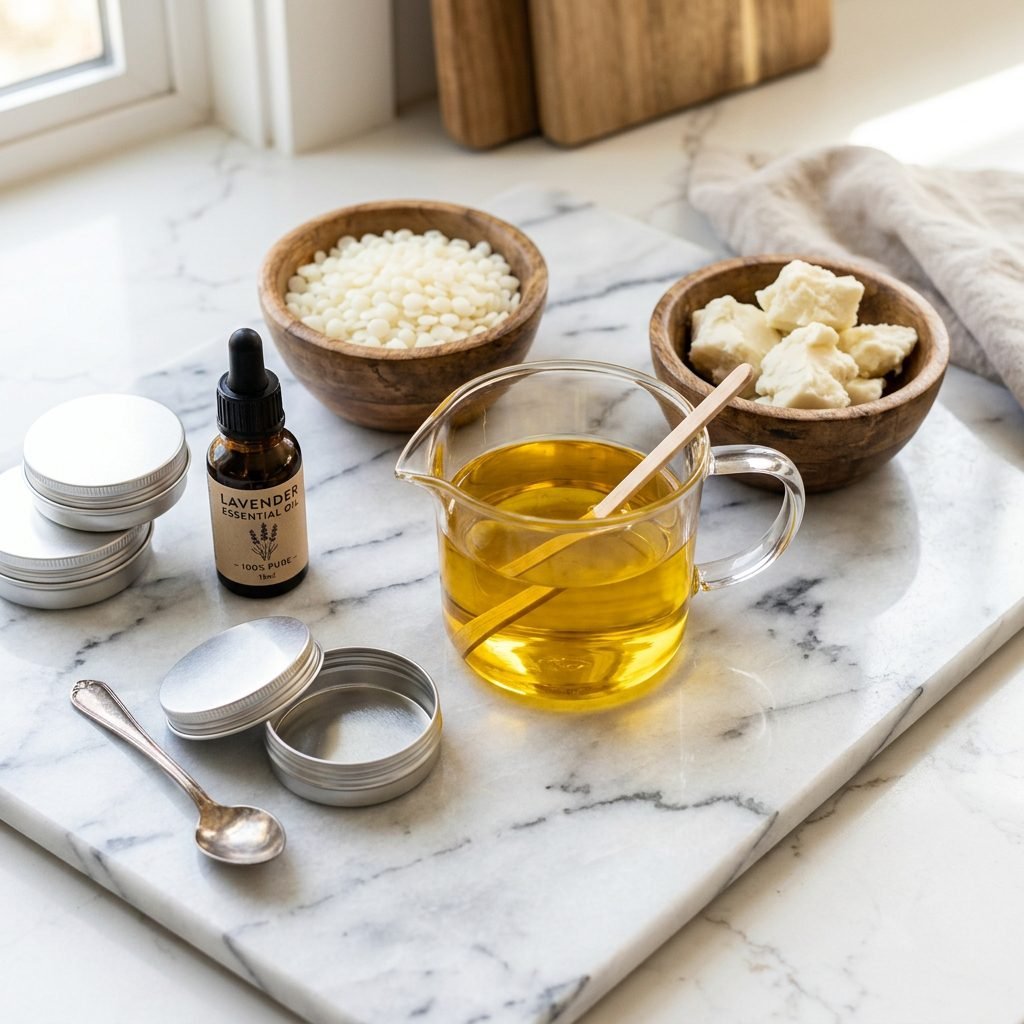
Curating Your Apothecary
Creating this balm requires only a handful of ingredients, but the secret to a safe and luxurious product lies entirely in the quality of what you buy. Because an infant’s skin is roughly 20% to 30% thinner than an adult’s, it absorbs substances much more readily. Therefore, we must insist on organic, unrefined, and pure ingredients.
The Core Ingredients Breakdown
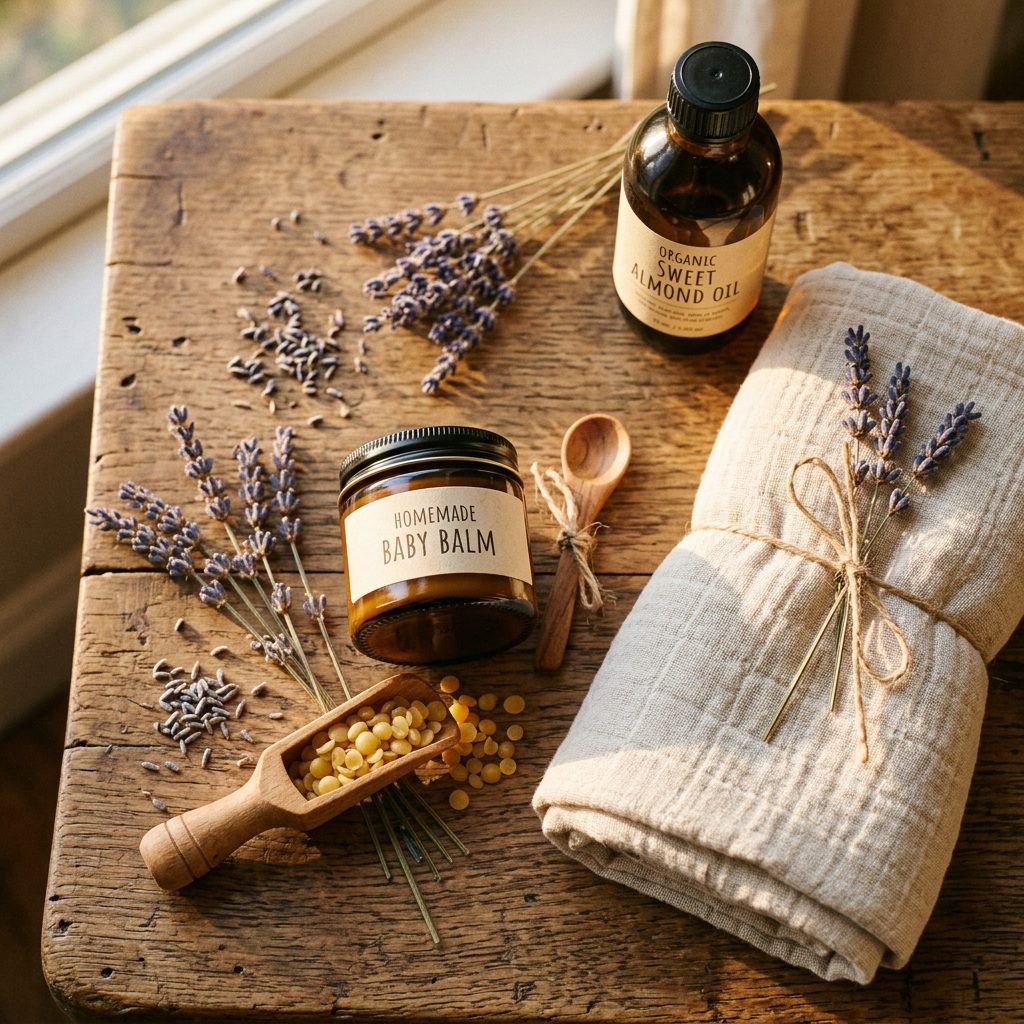
- Organic Beeswax Pastilles: Beeswax provides the balm with its structure and protective barrier. It locks in moisture without clogging pores. Using pastilles (small pellets) makes measuring and melting infinitely easier than dealing with a solid block. Vegan alternative: Candelilla wax (use about half the amount, as it is harder than beeswax).
- Organic Carrier Oil: This makes up the bulk of your balm. You want an oil that is deeply nourishing and gentle. Jojoba oil is fantastic because it closely mimics the skin’s natural sebum. Sweet Almond oil is a classic, rich in Vitamin E (ensure no nut allergies). Fractionated Coconut oil is lightweight and absorbs quickly.
- Organic Shea or Cocoa Butter (Optional but Recommended): Adding a rich butter gives the balm a creamier, more luxurious texture that melts beautifully on contact with warm skin.
- Lavender Essential Oil: This is where you must be uncompromising. Look for 100% pure, therapeutic-grade Lavandula angustifolia. Avoid anything labeled “fragrance oil” or “perfume oil,” as these are synthetic and offer no therapeutic benefits (and can cause skin irritation).
Budget & Sourcing Guide
To help you plan your DIY project—whether you are making a single jar for your nursery or a dozen jars for baby shower favors—here is a quick breakdown of what you will need.
| Ingredient / Tool | Purpose in Recipe | Estimated Cost & Sourcing |
|---|---|---|
| Organic Beeswax Pellets | Provides structure and a protective skin barrier. | $10-$15 (Online or local health food store) |
| Organic Carrier Oil (e.g., Jojoba) | Dilutes the essential oil and moisturizes skin. | $12-$18 (Apothecary or organic grocer) |
| Pure Lavender Essential Oil | Calms the nervous system and induces sleep. | $15-$25 (Reputable essential oil brand) |
| Small Glass Jars (2 oz) | Safe, non-toxic storage for your finished balm. | $10 for a multi-pack (Craft store or online) |
| Double Boiler (or Glass Bowl/Saucepan) | Gently melts ingredients without burning them. | Free (Use what you have in your kitchen!) |
Step-by-Step: Crafting Your Baby’s Sleep Balm
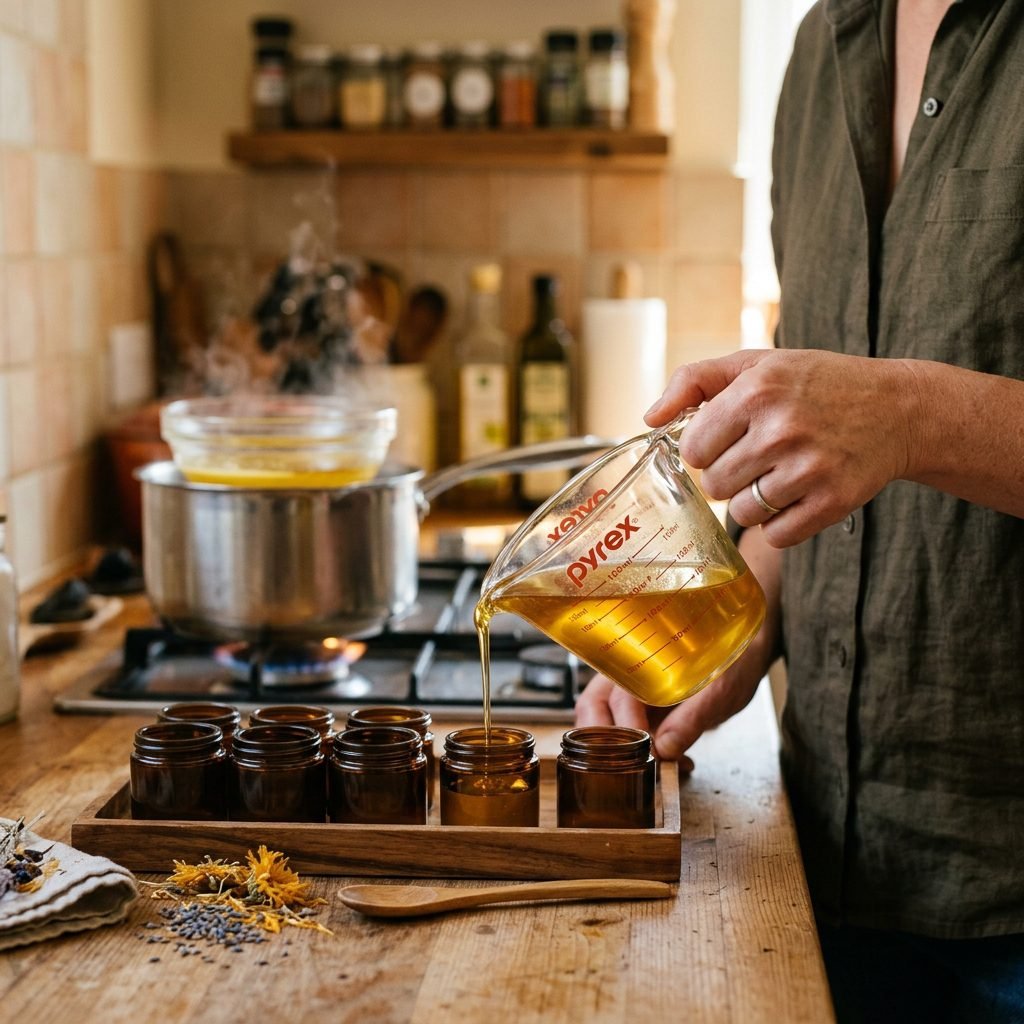
The Recipe and Ritual
Now comes the fun part. Making this balm takes less than 20 minutes of active time, but the result will last you for months. Before you begin, ensure your glass jars are clean, completely dry, and sterilized. Even a single drop of water in your balm can introduce bacteria and reduce its shelf life.
The Gentle Sleep Balm Recipe
This recipe yields approximately 4 ounces of balm (perfect for two 2-ounce jars).
- 2 Tablespoons Organic Beeswax Pellets
- 2 Tablespoons Organic Shea Butter (or Cocoa Butter)
- 1/4 Cup (4 Tablespoons) Organic Carrier Oil (Jojoba, Sweet Almond, or Olive Oil)
- 4 to 6 Drops Pure Lavender Essential Oil (This creates a highly diluted, baby-safe ratio of roughly 0.25% to 0.5%)
The Step-by-Step Method
- Set Up Your Double Boiler: Fill a medium saucepan with about two inches of water and place it on the stove over medium-low heat. Place a heat-safe glass bowl (or a dedicated wax-melting pitcher) into the water. Ensure the water does not splash into the bowl.
- Melt the Base: Add your beeswax pellets, shea butter, and carrier oil into the glass bowl. Stir gently and continuously with a wooden skewer or a dedicated spoon. The water should simmer softly, not boil.
- Watch the Transformation: It will take about 5 to 10 minutes for the ingredients to completely liquefy. The beeswax will be the last to melt. Once the mixture is completely clear and liquid, carefully remove the bowl from the heat.
- Cool Slightly and Add the Magic: Do not add the essential oil immediately! If the mixture is too hot, the delicate essential oil will evaporate, and you will lose the therapeutic benefits. Let the liquid cool for about 2 to 3 minutes until it just begins to look slightly cloudy at the edges, then stir in your 4 to 6 drops of lavender essential oil.
- Pour and Set: Carefully pour the liquid balm into your clean glass jars or metal tins. Leave the lids off and allow the balm to cool completely at room temperature. This usually takes about 1 to 2 hours. The balm will turn an opaque, creamy yellow or white as it solidifies.
“As you stir the melting oils, take a moment to breathe deeply. Pour your love, your hopes for restful nights, and your maternal warmth into the mixture. Crafting for your baby is a beautiful, ancient form of caregiving.”
The Bedtime Ritual: How to Apply the Balm Safely
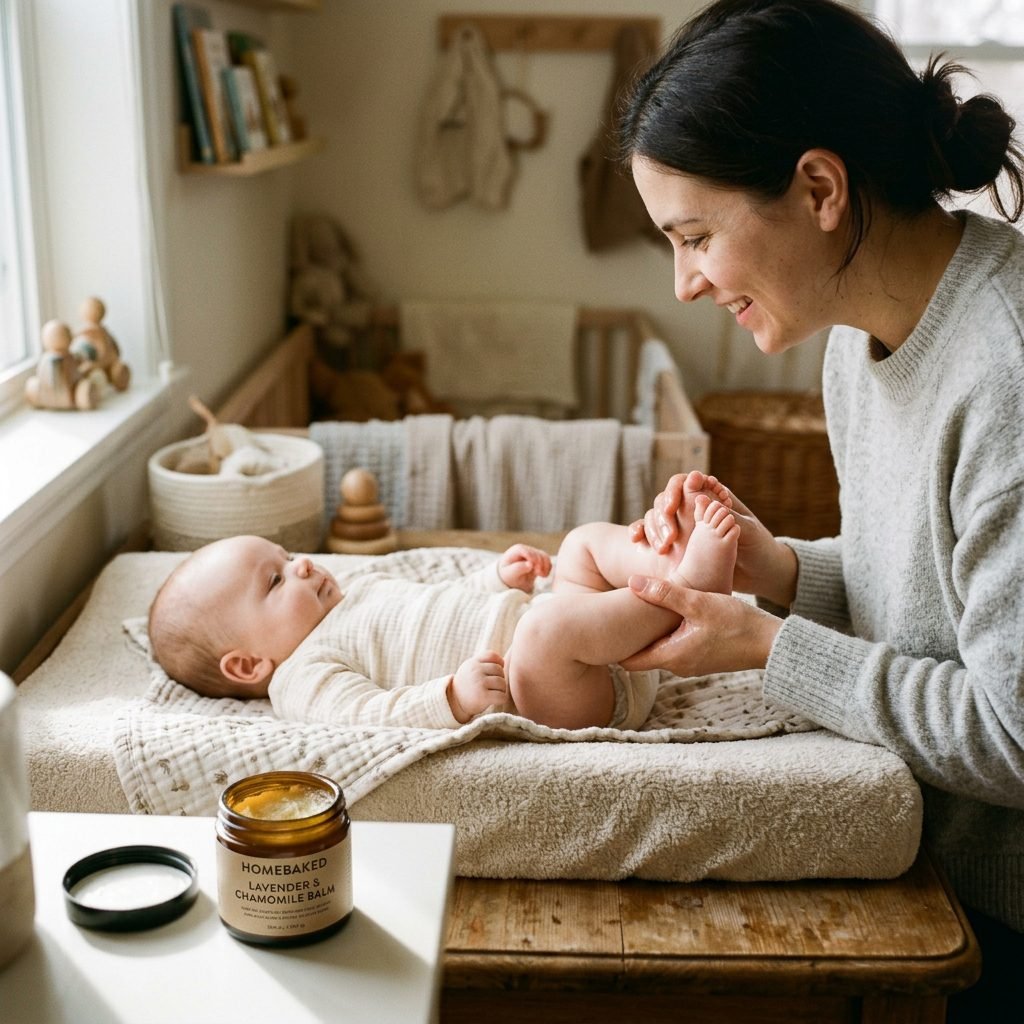
Transforming Routine into Connection
Having the balm is only half the magic; how you apply it is where the true sleep-inducing power lies. Infant massage is a beautiful, evidence-based practice that lowers cortisol (the stress hormone) and increases oxytocin (the love and bonding hormone) in both you and your baby.
Where to Apply the Balm
When it comes to babies, we want to be strategic about where we apply scented products. Never apply essential oil balms to a baby’s face, hands, or near their nose. Babies are notorious for rubbing their eyes and putting their hands in their mouths, and we want to avoid any risk of ingestion or eye irritation.
The absolute best place to apply this sleep balm is the soles of the feet. The skin on the bottom of the feet is thicker and less sensitive than the rest of the body, making it the safest place for essential oil application. Plus, according to reflexology, the feet are deeply connected to the entire nervous system. You can also apply a small amount to your baby’s chest or back, provided it is well covered by their pajamas or swaddle.
A Step-by-Step Massage Routine
- Set the Scene: Dim the nursery lights, turn on a continuous white noise machine, and ensure the room is a comfortable, cool temperature (around 68-72°F).
- Warm the Balm: Scoop a pea-sized amount of the balm out of the jar. Rub your hands together briskly to melt the balm and warm your palms. Cold hands will startle a sleepy baby!
- The Foot Massage: Gently hold your baby’s foot. Use your thumbs to stroke from the heel up to the toes in a gentle, rhythmic motion. Softly squeeze each tiny toe. Repeat on the other foot.
- The Chest Sweep: If applying to the chest, use flat palms to gently stroke outward from the center of the chest toward the shoulders, smoothing the skin like you are opening the pages of a book.
- Dress and Snuggle: Immediately put on their footie pajamas or sleep sack to lock in the moisture and the scent. Hold them close, allowing them to smell the subtle lavender aroma wafting up from their chest as you rock them.
Safety First: Essential Oil Dos and Don’ts for Babies
Navigating Natural Remedies with Caution
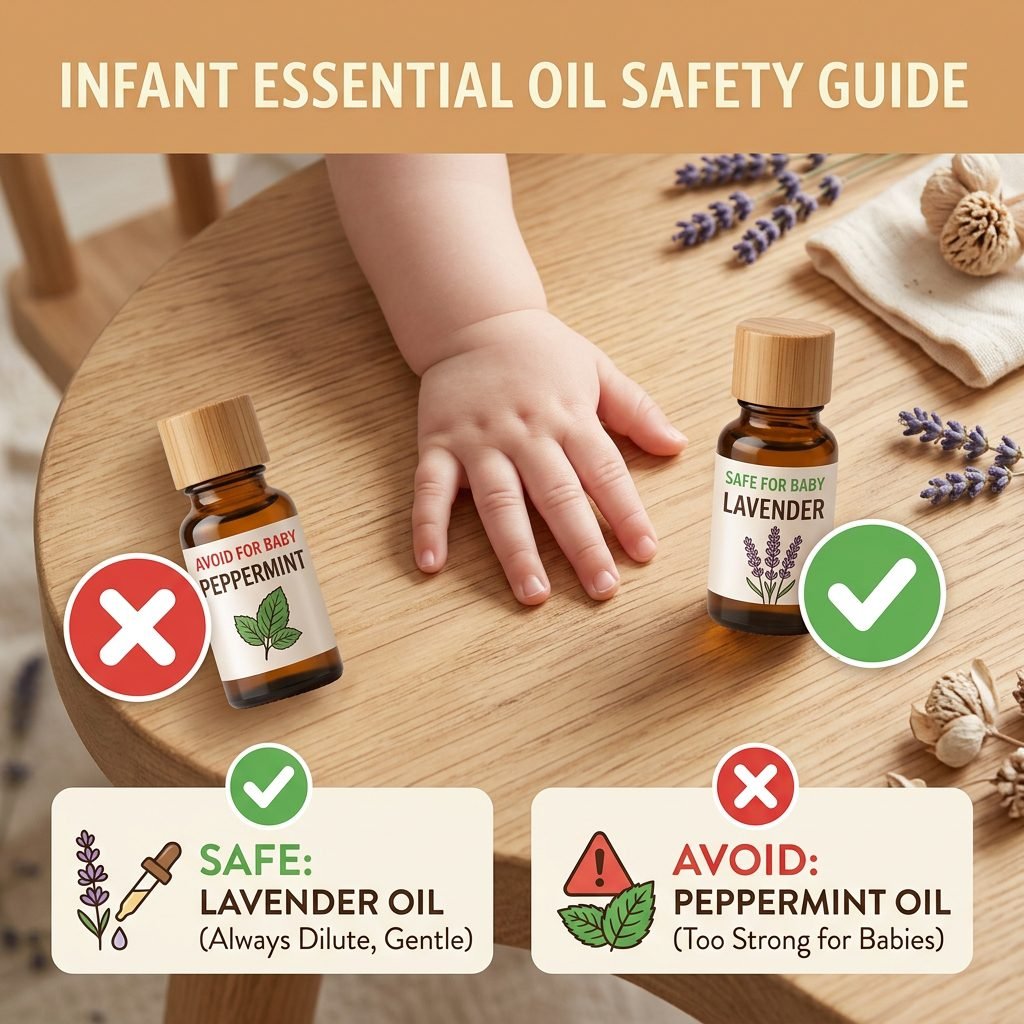
As a doula and maternal care advocate, I must emphasize that “natural” does not always mean “harmless.” Essential oils are highly concentrated plant extracts. A single drop of essential oil is incredibly potent, and a baby’s developing respiratory and hepatic (liver) systems are very sensitive.
The Golden Rules of Baby Aromatherapy
Before using any essential oil product on your infant, please adhere to these strict, evidence-based safety guidelines:
- Age Restrictions: It is generally recommended by pediatricians and aromatherapists to avoid the topical use of essential oils on infants under 3 months of age. For newborns, stick to plain, unscented carrier oils (like pure jojoba or coconut oil) for massage.
- Dilution is Non-Negotiable: For babies aged 3 to 24 months, the safe topical dilution rate is 0.25% to 0.5%. This translates to roughly 1 to 2 drops of essential oil per ounce of carrier oil/wax base. Our recipe strictly adheres to this ultra-gentle ratio.
- Patch Testing: Always perform a patch test before a full application. Apply a tiny smear of the finished balm to your baby’s ankle or inner thigh. Wait 24 hours to ensure there is no redness, rash, or irritation.
Essential Oil Safety Matrix
Not all oils are created equal. While lavender is generally recognized as safe (GRAS) for infants when properly diluted, many popular household oils are dangerous for little ones. Use this table as a quick reference guide.
| Essential Oil Type | Status for Babies (3+ Months) | Reasoning / Notes |
|---|---|---|
| Lavender (Lavandula angustifolia) | Safe (When diluted <0.5%) | Gentle, calming, highly researched for pediatric safety. |
| Roman Chamomile (Anthemis nobilis) | Safe (When diluted <0.5%) | Excellent alternative or addition to lavender for sleep. |
| Peppermint & Eucalyptus | UNSAFE | Contains menthol/1,8-cineole. Can cause severe respiratory distress and slowed breathing in infants. |
| Clove, Cinnamon, Oregano | UNSAFE | “Hot” oils that will cause severe skin burns and irritation. |
| Tea Tree Oil (Melaleuca) | Use with Extreme Caution | Generally avoid under 6 months; can be highly irritating to delicate skin. |
If your baby has a history of asthma, reactive airway disease, or severe eczema, always consult your pediatrician before introducing any new scented products or essential oils into their routine.
Conclusion
Embracing the Journey to Better Rest
Motherhood is a profound journey of learning, adapting, and finding small pockets of peace amidst the beautiful chaos. By taking the time to craft this DIY Organic Lavender Baby Sleep Balm, you are doing more than just mixing oils and wax; you are creating a tangible expression of your love and dedication to your baby’s well-being. You are building a gentle, sensory-rich bedtime routine that will serve your family for months to come.
Remember, sweet mama, there is no magic cure-all for baby sleep. Teething, growth spurts, and developmental leaps will inevitably disrupt the nights. But having a comforting ritual—a familiar scent, a soothing massage, and the warmth of your touch—provides a steady, loving anchor for your baby through all those changes. Be gentle with yourself, trust your maternal instincts, and enjoy the quiet, lavender-scented moments of connection tonight.