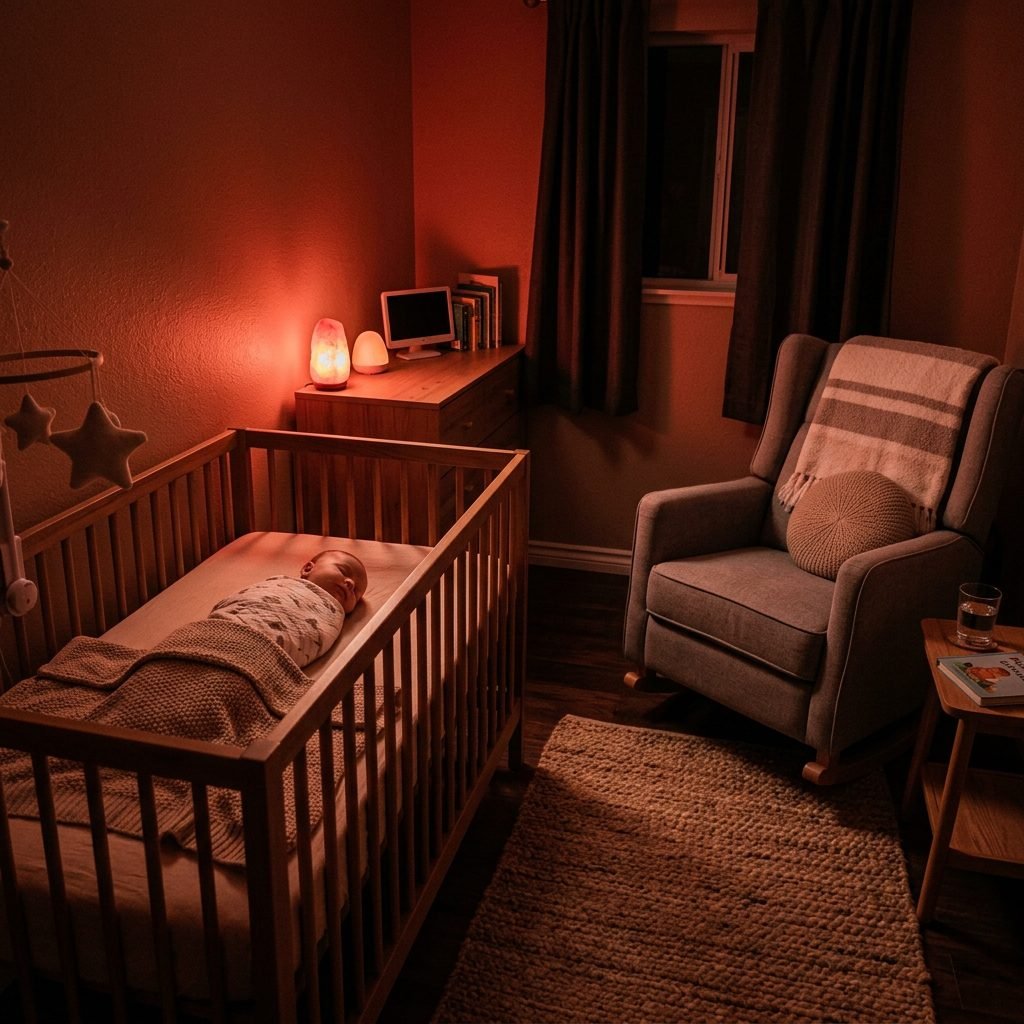
Why Red Light is the Secret to Helping Your Baby Fall (and Stay) Asleep
Mama, I See You in the 3 AM Haze
I know that feeling all too well—the quiet desperation of the middle-of-the-night wake-up call. You’re stumbling through the dark, trying not to trip over the diaper pail, squinting as you flip on a bright lamp that feels like a spotlight on your soul. Your baby, who was just peacefully drowsy, is now wide awake, blinking at the harsh light, and suddenly, the battle to get them back to sleep begins all over again.
As a doula and sleep consultant, I’ve spent years helping families reclaim their rest, and if there is one ‘secret weapon’ I recommend to every single one of my clients, it is the magic of red light. It’s not just a trendy nursery aesthetic; it is a science-backed tool that works with your baby’s biology rather than against it. In this guide, we are going to dive deep into why that crimson glow is the key to longer stretches of sleep, easier night feedings, and a much calmer postpartum experience for you, too.
“Rest is not a luxury; it is the foundation of your recovery and your baby’s growth. Protecting that sleep environment is an act of deep love for both of you.”
The Biological Blueprint: Melatonin and the Blue Light Thief
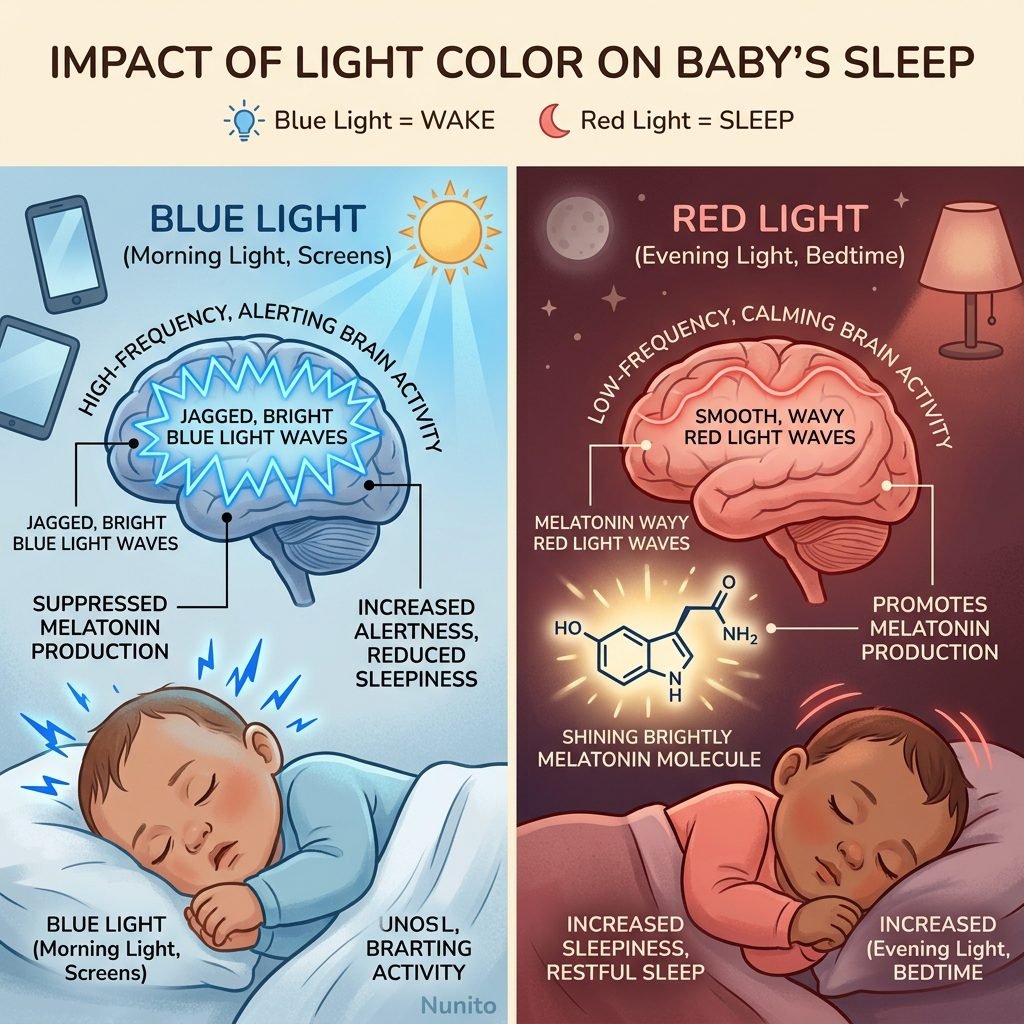
Understanding the Sleep-Wake Cycle
To understand why red light works, we first have to understand the ‘sleep hormone’ known as melatonin. Our bodies—and our babies’ bodies—rely on melatonin to signal that it is time to rest. However, this hormone is incredibly sensitive to light. Specifically, blue and white light (the kind emitted by your overhead LEDs, your smartphone, and even most standard nightlights) signals the brain to stop producing melatonin and start producing cortisol, the ‘alert’ hormone.
The Newborn Circadian Rhythm
Newborns aren’t born with a fully developed circadian rhythm; they have to learn the difference between day and night. When we expose them to bright, cool-toned lights during night feedings, we are essentially telling their tiny brains that it’s daytime. This leads to the dreaded ‘split nights’ where baby is ready to party at 2 AM.
| Light Type | Impact on Melatonin | Effect on Baby |
|---|---|---|
| Blue/White Light | High Suppression | Alertness, difficulty falling back to sleep |
| Yellow/Warm Light | Moderate Suppression | Slightly drowsy but still disruptive |
| Red Light | Zero to Minimal Suppression | Deep relaxation, maintains sleep state |
Red light has the longest wavelength on the visible spectrum, which means it is the least disruptive to our internal clocks. By using a red bulb, you are providing just enough visibility to change a diaper without ‘waking up’ the brain.
Creating a ‘Womb-Like’ Sensory Sanctuary
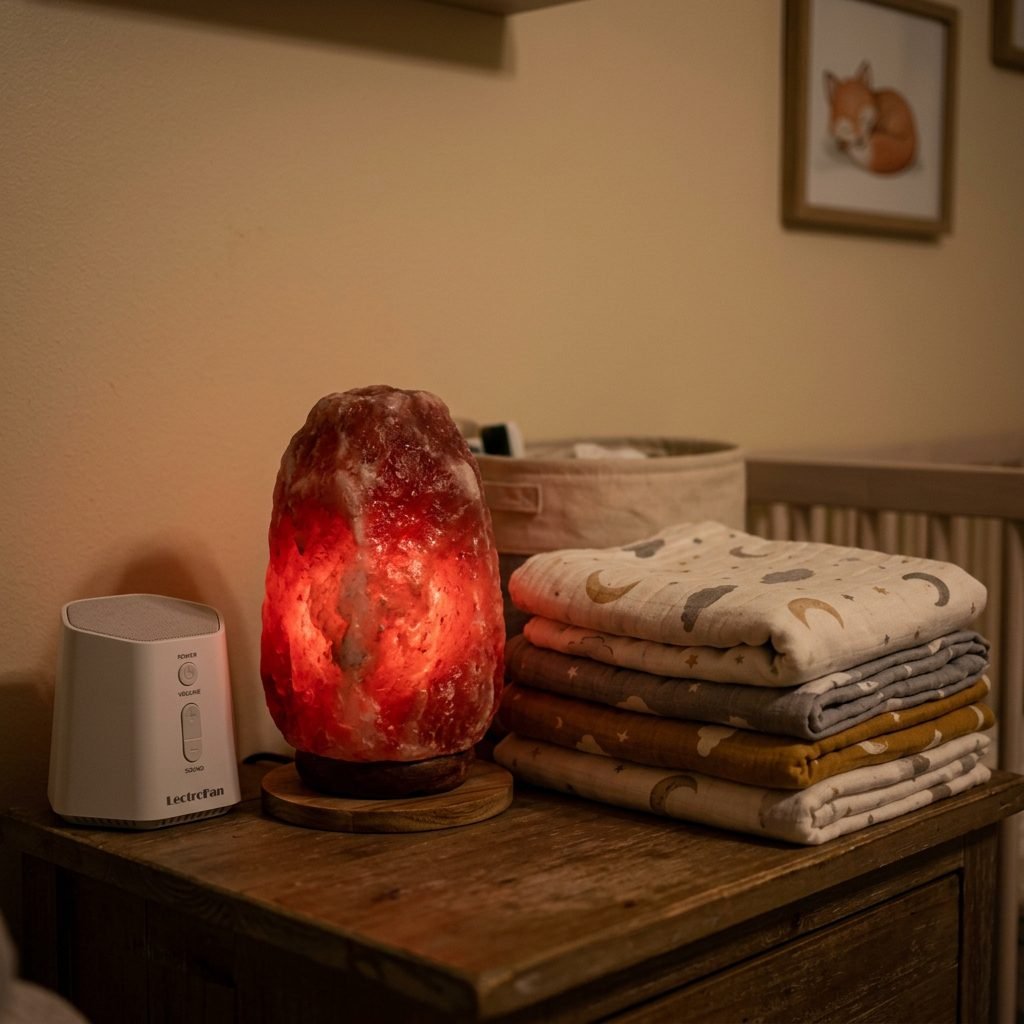
Why Red Feels Like Home
Think back to those 40 weeks your little one spent tucked safely inside you. They weren’t in total darkness, but they also weren’t in a bright white room. They were surrounded by the warm, filtered light of your body—a soft, reddish-pink glow. When we use red light in the nursery, we are tapping into a biological memory of safety and warmth.
The Psychological Comfort of Red
For a baby, the world is a big, overstimulating place. A nursery bathed in soft red light feels contained and familiar. It reduces the ‘startle’ factor that happens when a bright light is suddenly introduced. This is especially helpful during the fourth trimester, when the transition from womb to world is most intense.
- Red light mimics the sunset, naturally prepping the nervous system for down-regulation.
- It reduces shadows that can sometimes frighten older infants or toddlers.
- It provides a ‘cue’: eventually, your baby will associate the red glow with sleep time.
Practical Setup: How to Implement Red Light Like a Pro

Choosing the Right Gear
Not all red lights are created equal. You don’t want a neon-red ‘open’ sign; you want a soft, dimmable amber-red glow. As a nursery organizer, I recommend placing your red light sources strategically to maximize utility without over-lighting the room.
The Three-Point Lighting Strategy
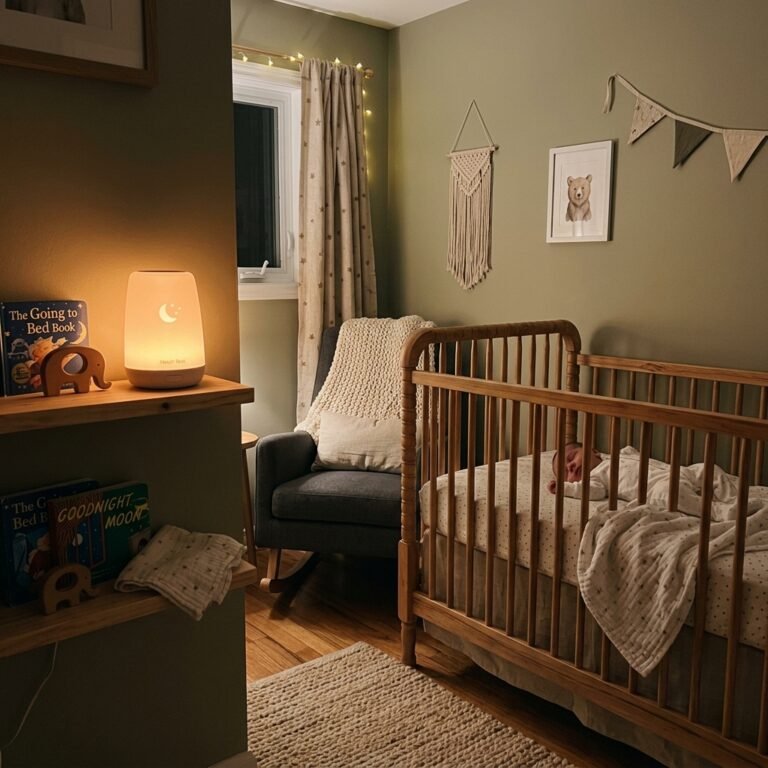
- The Feeding Station: Place a dimmable red lamp near your nursing chair. This allows you to see the latch without fully waking yourself or the baby.
- The Changing Table: A small, motion-activated red light under the changing table is perfect for those messy midnight blowouts.
- The Floor Level: Keeping lights low to the ground prevents light from hitting the baby’s eyes directly while they are lying in the crib.
| Product Type | Best For… | Doula Tip |
|---|---|---|
| Smart Bulbs (Red Setting) | Versatility | Set a schedule to turn red at 7 PM automatically. |
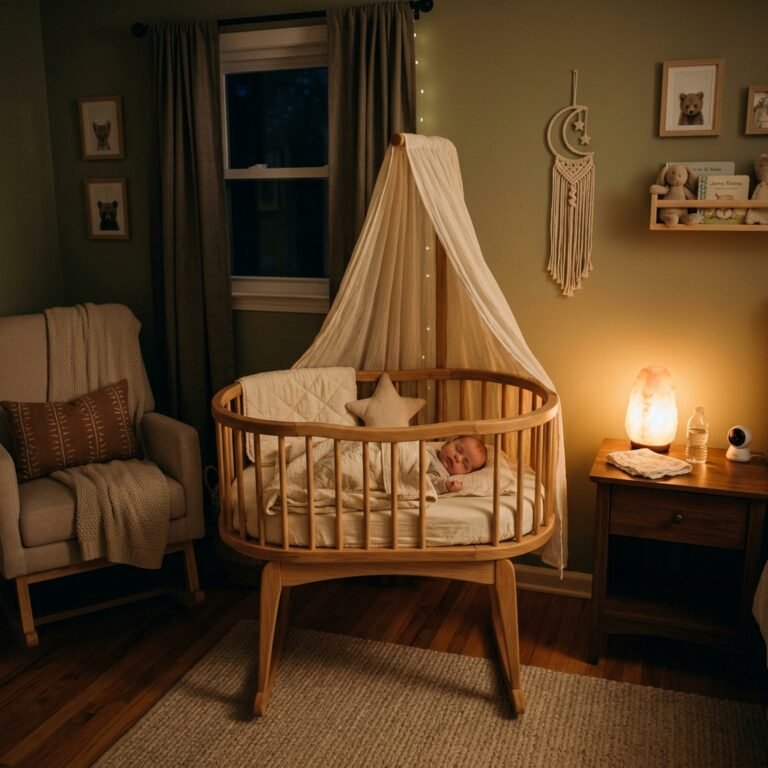
| Himalayan Salt Lamps | Soft Glow | Great for a natural, earthy vibe, but ensure it’s dimmable. |
| Red Book Lights | Reading/Feeding | Perfect for keeping the light focused only where you need it. |
“The goal is ‘functional darkness’—enough light to be safe, but not enough to be stimulating.”
The ‘Red Light’ Bedtime Routine: A Step-by-Step Guide
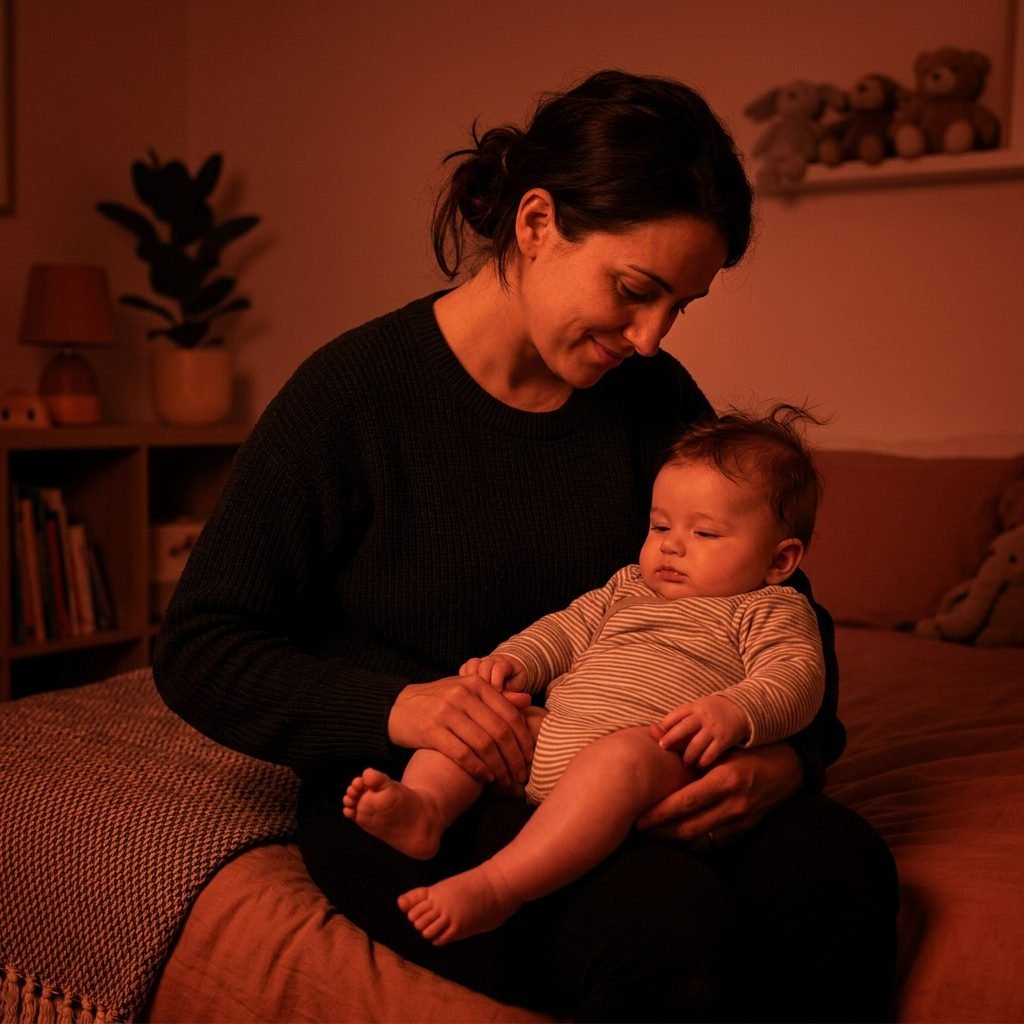
Setting the Stage for Success
Transitioning to sleep is a process, not a switch. Integrating red light into your evening flow can significantly reduce bedtime resistance. Here is how I suggest structuring your ‘Wind-Down Hour’:
The 60-Minute Countdown
- 60 Minutes Before Bed: Turn off all overhead white lights in the house. Switch to warm lamps or red-tinted bulbs in the living area and nursery.
- The Bath (45 Mins Out): If you do a bath, use a battery-operated red candle or a dimmable red light in the bathroom. This keeps the ‘sleepy vibes’ flowing.
- Massage & PJs (30 Mins Out): In the nursery, keep only the red light on. Use slow, rhythmic strokes. The red light helps you stay present and calm, too.
- The Final Feed (15 Mins Out): Whether breast or bottle, do this in the red light. The lack of blue light ensures that as soon as baby finishes, their brain is ready to drop straight into REM.
Pro-Tip: Avoid looking at your own phone during this time! The blue light from your screen can actually reflect off your face and stimulate the baby, even if the room is red.
Night Feedings and the ‘Postpartum Fog’
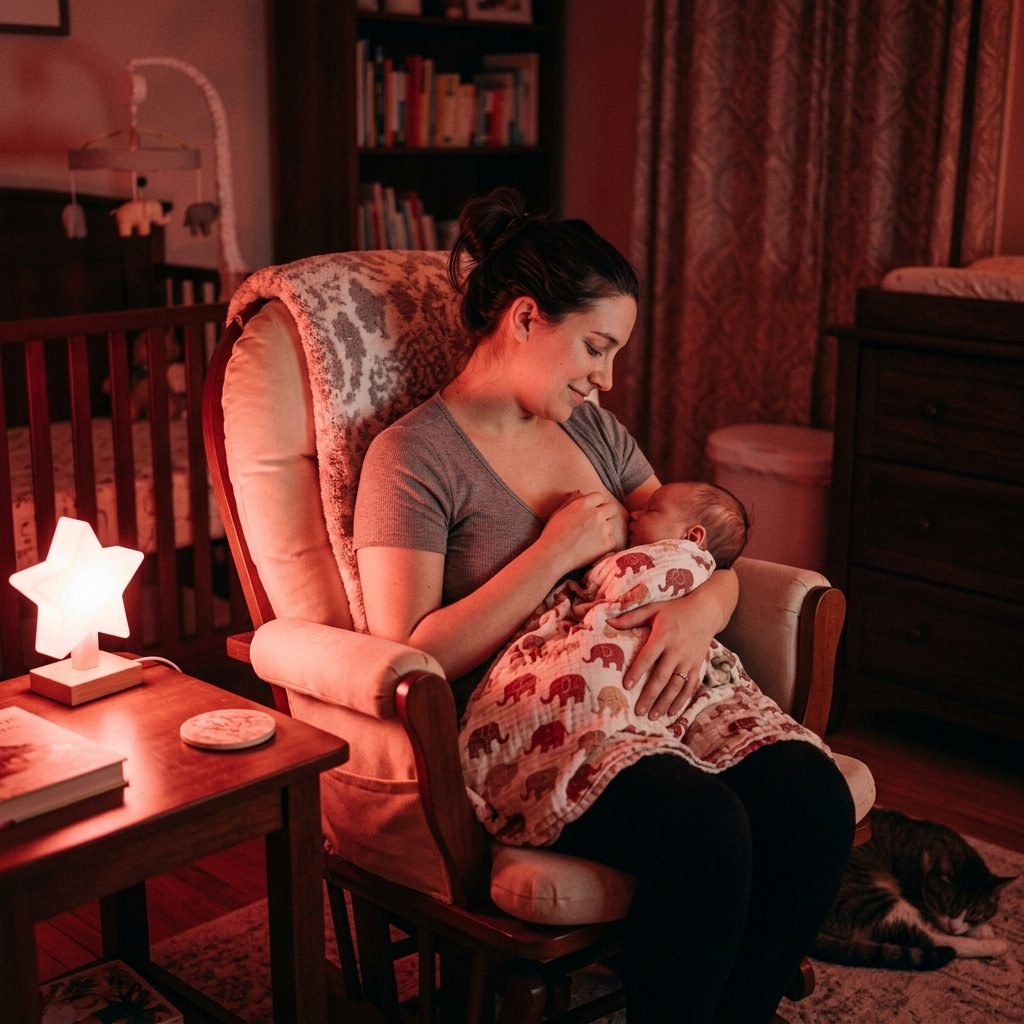
Why Red Light is for YOU, Too
We focus so much on the baby, but mama, your recovery matters just as much. When you wake up at 2 AM and turn on a bright light, you are suppressing your own melatonin. This is why many moms find it so hard to fall back to sleep after the baby is settled—your brain thinks it’s morning!
Protecting Your Maternal Mental Health
By staying in a ‘red light zone’ during night wakes, you remain in a semi-somnolent state. This makes it significantly easier for you to drift back into a deep sleep once the baby is back in the crib. This helps reduce the ‘wired and tired’ feeling that contributes to postpartum anxiety and exhaustion.
- Stay in the Zone: Keep the room quiet, the lights red, and the interaction minimal.
- Safety First: Ensure the red light is bright enough that you don’t trip, especially if you are recovering from a C-section.
- The Morning Reset: While red light is for night, make sure to get bright sunlight in your eyes first thing in the morning to ‘reset’ both of your clocks.
Conclusion
Embrace the Crimson Glow
The journey of infant sleep is rarely a straight line, but by making small, science-backed changes like switching to red light, you are giving your baby (and yourself) the best possible chance at a restful night. It’s about creating a rhythm that honors our biology and respects the delicate transition from womb to world.
Try it tonight. Swap out that one bulb, dim the lights an hour before bed, and watch how the atmosphere in your home shifts from chaotic to calm. You’ve got this, mama. Sweet dreams to you and your little soul.