10 Brilliant IKEA Flisat Table Hacks for Cheap Sensory Play at Home
Welcome to Your Sensory Sanctuary, Mama
Hello, sweet friend. If you are reading this, you are likely in the thick of it—the beautiful, messy, exhausting, and wonder-filled journey of motherhood. Whether you are currently nesting and preparing for your first little one, or you are a seasoned mama looking for a way to keep your toddler engaged while you finally drink a cup of coffee (that is actually hot!), I see you. As a doula and a fellow mom, I know that we are always looking for ways to foster our children’s development without breaking the bank or cluttering our homes with plastic eyesores.
Enter the IKEA Flisat Children’s Table. This humble piece of pine furniture is more than just a place to color; it is a blank canvas for sensory exploration. Sensory play is not just a trend; it is a vital part of brain development. It builds nerve connections in the brain’s pathways, leads to a child’s ability to complete more complex learning tasks, and supports cognitive growth, language development, gross motor skills, social interaction, and even problem-solving. Today, we are diving deep into 10 brilliant, cheap, and stylish hacks to turn this table into the ultimate sensory station.
“Play is the work of the child, and your presence—even just sitting nearby with a book—is the foundation of their security.”
The Foundation: Why the Flisat is a Doula-Approved Essential
Why This Table Wins Every Time
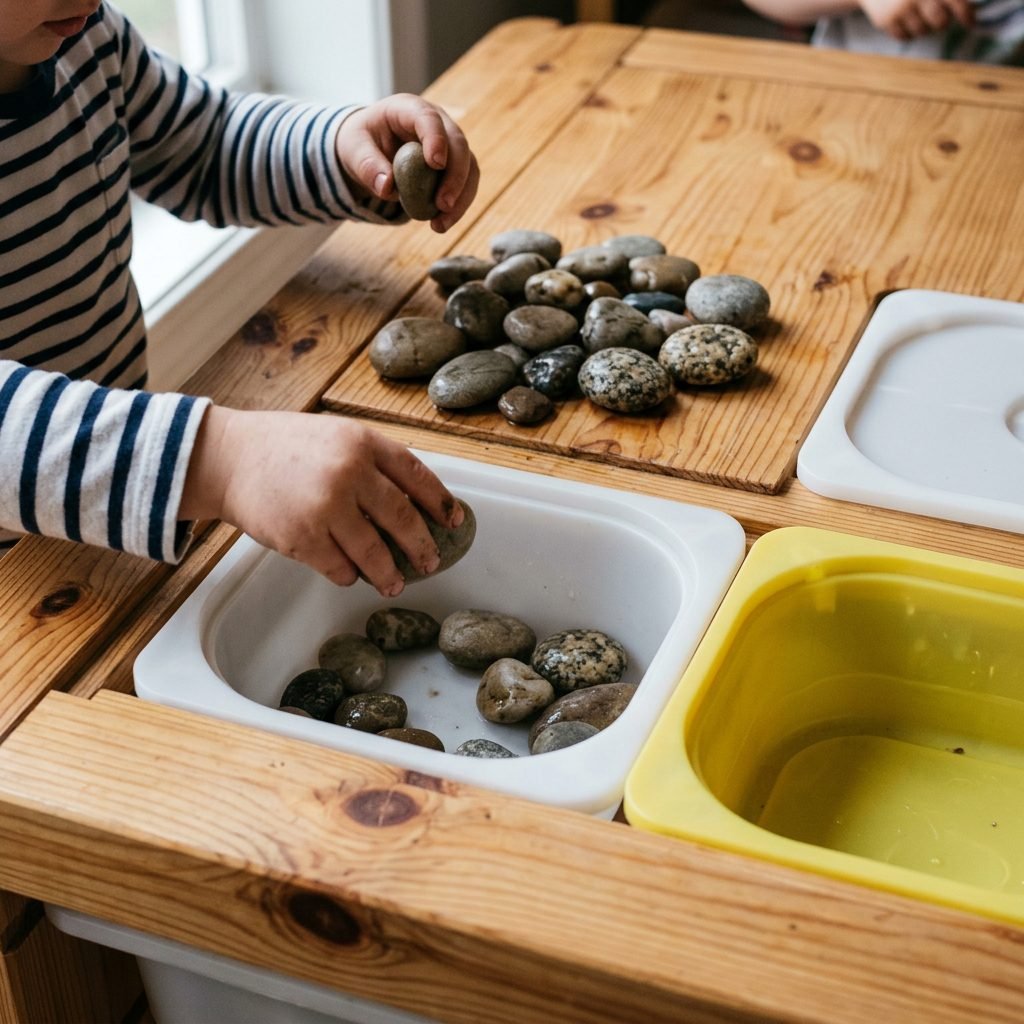
Before we get to the ‘how-to,’ let’s talk about the ‘why.’ In my work as a doula and nursery organizer, I recommend the Flisat table because of its versatility and ergonomic design. Unlike many sensory bins that sit on the floor (causing back strain for you and awkward posture for them), the Flisat is at the perfect height for toddlers and preschoolers. It encourages independent play, which is a gift for a postpartum mama who needs a moment of rest.
Developmental Benefits of Sensory Play
- Fine Motor Skills: Scooping, pouring, and pinching help develop the small muscles in the hands necessary for writing later on.
- Emotional Regulation: There is something incredibly grounding about running hands through rice or playing with water. It can help a ‘spirited’ toddler find their calm.
- Language Expansion: As you play together, you’ll use words like ‘crunchy,’ ‘translucent,’ ‘viscous,’ and ‘textured,’ expanding their vocabulary naturally.
The beauty of these hacks is that they use the Trofast bins that fit perfectly inside the table. You can swap them out in seconds, meaning you can transition from a ‘messy’ water play session to a ‘clean’ LEGO session without a massive cleanup. Let’s look at the budget breakdown for getting started.
| Item | Approximate Cost | Purpose |
|---|---|---|
| IKEA Flisat Table | $50.00 | The Base Unit |
| Trofast Bins (Large) | $5.00 each | Deep Sensory Play |
| Trofast Bins (Small) | $3.00 each | Sorting & Organization |
| Flisat Table Lids | Included/Replacements $10 | The Surface for Art |
Hacks 1-4: The Tactile & Visual Foundations
1. The ‘Taste-Safe’ Rainbow Rice Station
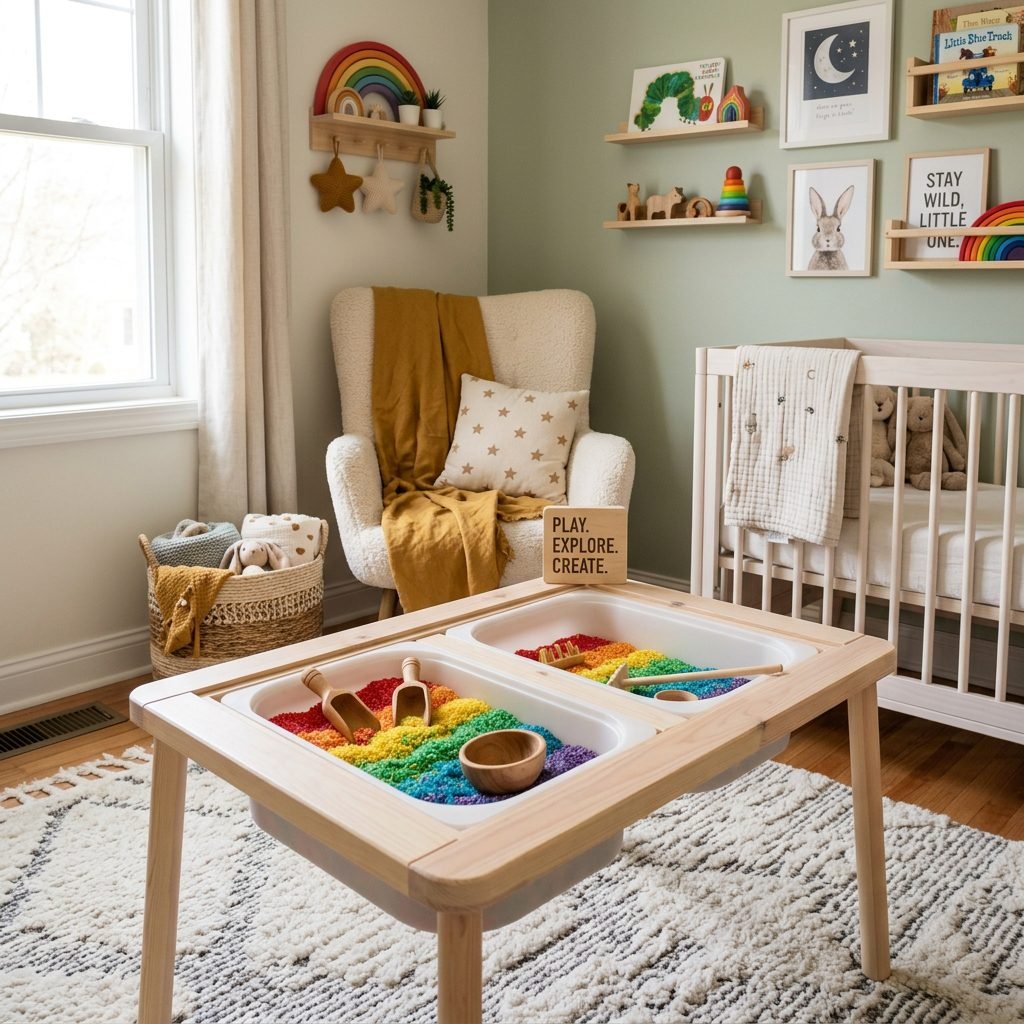
For our littlest explorers who still put everything in their mouths, we want textures that are safe. To make rainbow rice, simply mix 1 cup of white rice with 1 teaspoon of white vinegar and a few drops of food coloring in a baggie. Shake it up and let it dry! It’s cheap, lasts for years if kept dry, and provides hours of tactile fun. Add wooden scoops and bowls to encourage pouring.
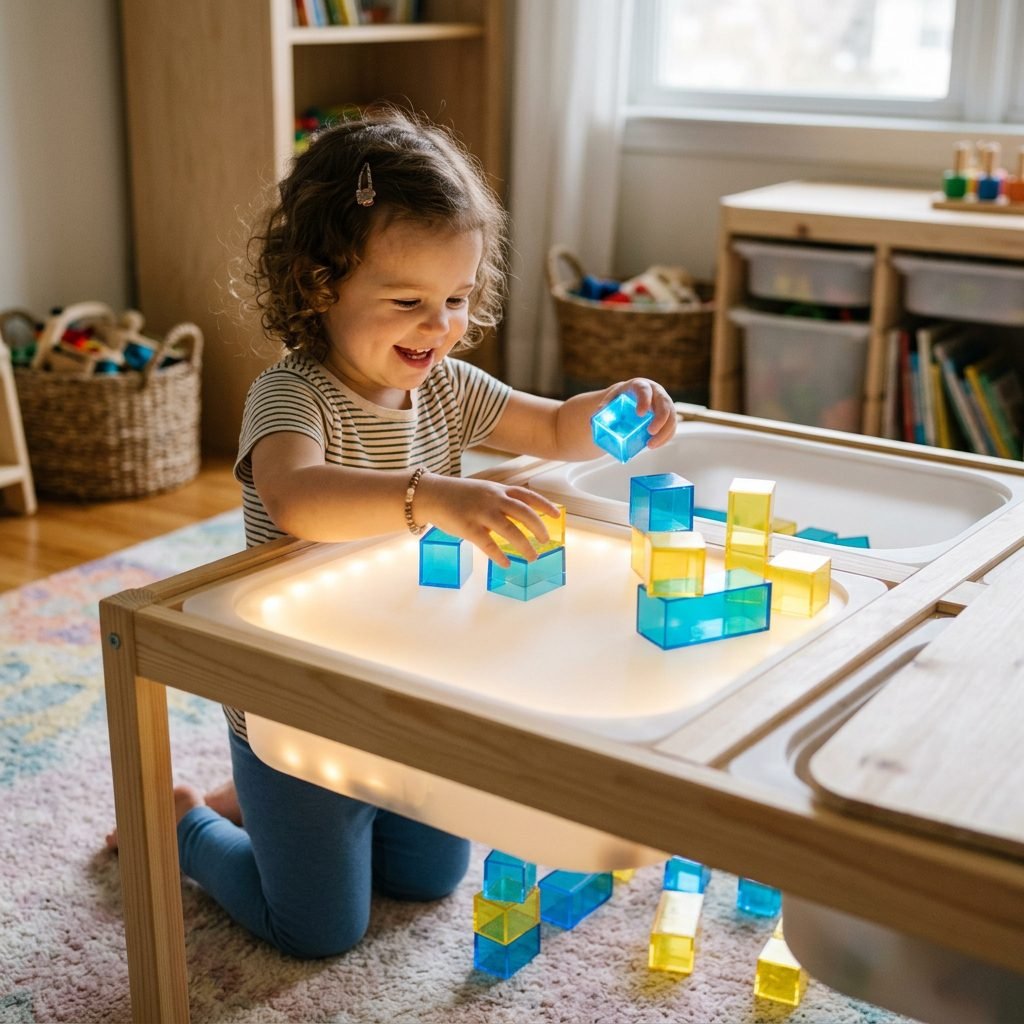
2. The LED Light Table Transformation
This is a game-changer for visual processing. Purchase a set of battery-operated LED strip lights or a flat light pad. Place them inside the Trofast bin and cover with the frosted IKEA lids or a piece of thin white acrylic. Give your child translucent shapes, colorful ‘gems,’ or even X-rays to look at. The glow is mesmerizing and perfect for rainy afternoon play.
3. The Vertical Chalkboard Hack
Did you know the Flisat lids can be painted? Use non-toxic chalkboard paint to coat one side of the wooden lids. Now, your child can draw directly on their table. It’s a great way to practice letter formation or just create temporary masterpieces. For a ‘cleaner’ version, use whiteboard contact paper instead!
4. The Magnetic Discovery Zone
Line the bottom of a shallow Trofast bin with a magnetic sheet or a small metal baking tray. Provide magnetic tiles, letters, or even ‘magnetic wands’ and paper clips (for older children). This introduces basic physics and cause-and-effect in a way that feels like magic.
“When we provide the tools for discovery, we step back and watch their confidence bloom. You are doing a wonderful job, mama.”
Hacks 5-8: Imaginative Worlds & Science-Based Play
5. The Indoor ‘Mud’ Kitchen
If you don’t have outdoor space, you can simulate a mud kitchen indoors using chocolate playdough or ‘Oobleck’ (cornstarch and water). Add some dried pasta, sticks, and stones. The Flisat holds the mess contained within the bins, making it much easier for you to manage than a tray on the floor. Pro-tip: Place a waterproof mat under the table for extra peace of mind!
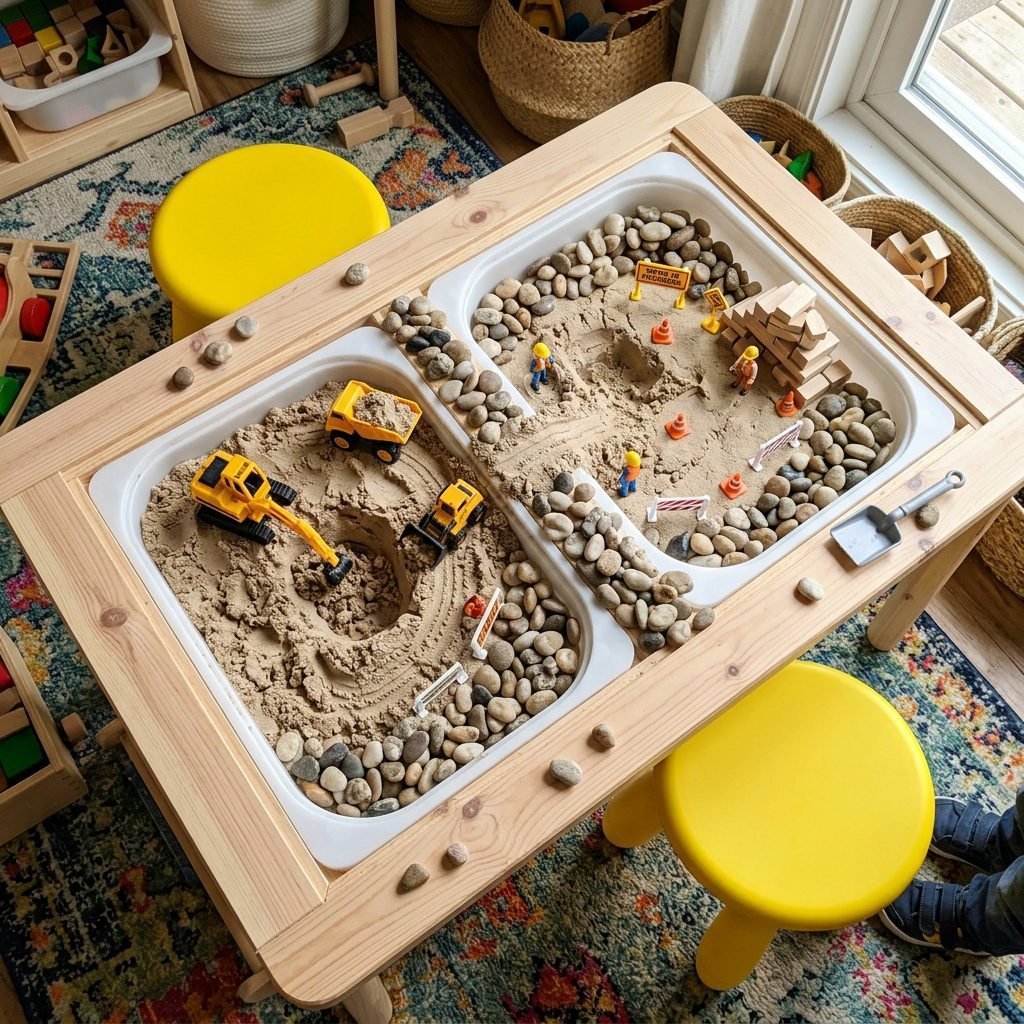
6. Kinetic Sand Construction Site
Kinetic sand is a sensory staple because it’s easy to clean and holds its shape. Fill a large bin with sand and add small construction vehicles. This is excellent for proprioceptive input—the pressure of squeezing the sand helps children understand their own body strength and boundaries.
7. The Water Play & Pouring Station
Water is the cheapest sensory material there is! Fill one bin with water and a drop of blue food coloring, and leave the other bin empty. Provide funnels, sponges, and different-sized pitchers. This ‘Practical Life’ activity is a core Montessori principle that builds concentration and coordination.
8. The Sensory ‘Seek and Find’
Fill a bin with dried beans or chickpeas. Hide small plastic animals or alphabet letters at the bottom. Give your child a checklist (visual or written) of what they need to find. This encourages visual discrimination and persistence. It’s also incredibly satisfying to ‘bury’ your hands in the cool beans!
Safety Check: Small Parts
Always remember that items like beans, rice, and small toys are choking hazards. Supervision is key, especially for children under 3. If you have a ‘mouther,’ stick to larger items like silk scarves or large pom-poms.
Hacks 9-10: Art, Organization, and the ‘Quiet Time’ Solution
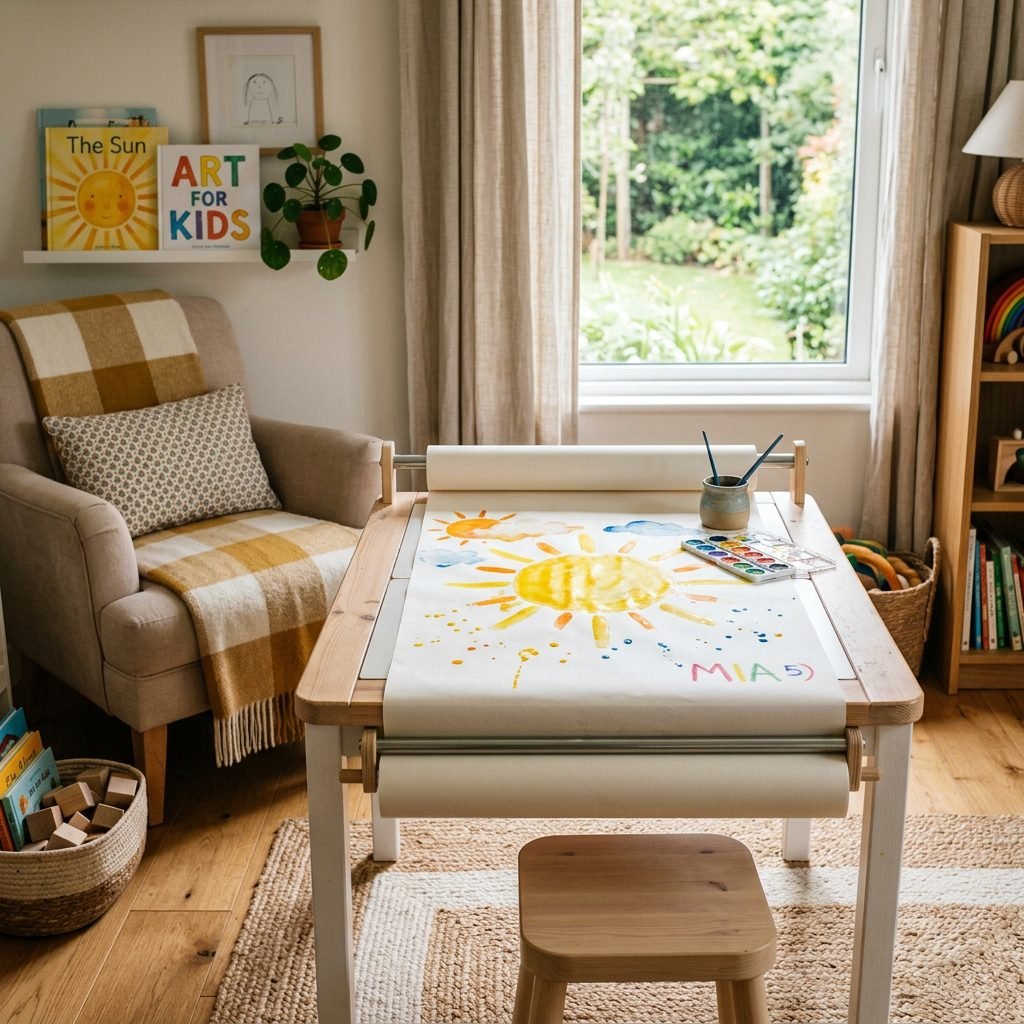
9. The Continuous Paper Roll Dispenser
IKEA sells the MALA paper roll, which fits perfectly when you add a simple dowel rod across the side of the Flisat table. Pull the paper across the top and secure it with the lids. This creates a never-ending canvas for painting, stamping, or ‘road map’ drawing with markers. It encourages bilateral coordination as they hold the paper with one hand and draw with the other.
10. The LEGO/Duplo Building Base
Purchase adhesive baseplates and stick them to the underside of the Flisat lids. When the lids are flipped over, the table becomes a sturdy building station. When play is done, the bricks are swept into the Trofast bins below, and the lids are flipped back to their smooth side. It is the ultimate small-space storage hack.
The Postpartum ‘Peace & Quiet’ Kit
As a doula, I often suggest that mamas of multiples keep a ‘special’ set of Flisat bins tucked away. These are the ‘high-value’ sensory bins (like the light table or the magnetic zone) that only come out when you need to nurse the baby or take a 20-minute rest. By keeping these activities novel, you ensure your older child stays engaged and happy while you tend to the newest member of the family.
| Hack Name | Primary Skill | Mess Level (1-5) |
|---|---|---|
| Rainbow Rice | Fine Motor | 2 |
| Light Table | Visual Tracking | 1 |
| Mud Kitchen | Imaginative | 5 |
| Water Pouring | Coordination | 4 |
| LEGO Base | Spatial Reasoning | 1 |
Conclusion
You Are Creating a World of Wonder
Mama, I hope these 10 hacks inspire you to see that you don’t need a massive budget or a dedicated playroom to give your child a rich, sensory-filled childhood. The IKEA Flisat table is a tool, but you are the magic. By setting up these small invitations to play, you are telling your child that their curiosity is valued and their development is a priority.
Remember, it doesn’t have to look ‘Pinterest-perfect’ every day. Some days, sensory play will just be a bin of soapy water and some plastic Tupperware. And that is enough. You are doing a beautiful job navigating these early years. Take a deep breath, grab some rice, and let the play begin!
Medical Disclaimer: This guide is for educational and entertainment purposes only. Sensory play should always be supervised by an adult. Be mindful of choking hazards (small parts) and allergies when using food items like flour, nuts, or beans for play. Consult with a pediatric occupational therapist if you have specific concerns about your child’s sensory processing or development.