How to Create a Cozy Montessori Nursery Reading Corner Your Toddler Will Love
The Magic of the First Story
Oh, mama, is there anything more magical than watching those tiny, dimpled hands reach for a favorite board book? As a doula and a nursery organizer, I’ve seen how a dedicated space can transform a toddler’s relationship with literacy. A Montessori reading corner isn’t just a stylish addition to your home; it is a sanctuary designed specifically for your child’s height, capabilities, and curiosity. By creating a space that whispers ‘this is for you,’ you are gifting your little one the independence to explore new worlds at their own pace.
In the Montessori philosophy, the environment is the ‘third teacher.’ When we prepare the environment with intention, we remove the barriers between the child and their development. Today, we’re going to walk through every step of creating a cozy, accessible, and breathtakingly beautiful reading nook that will grow with your child from those first gummy smiles to the toddler years of ‘read it again!’
The Foundation of Independence: Why Montessori Principles Matter
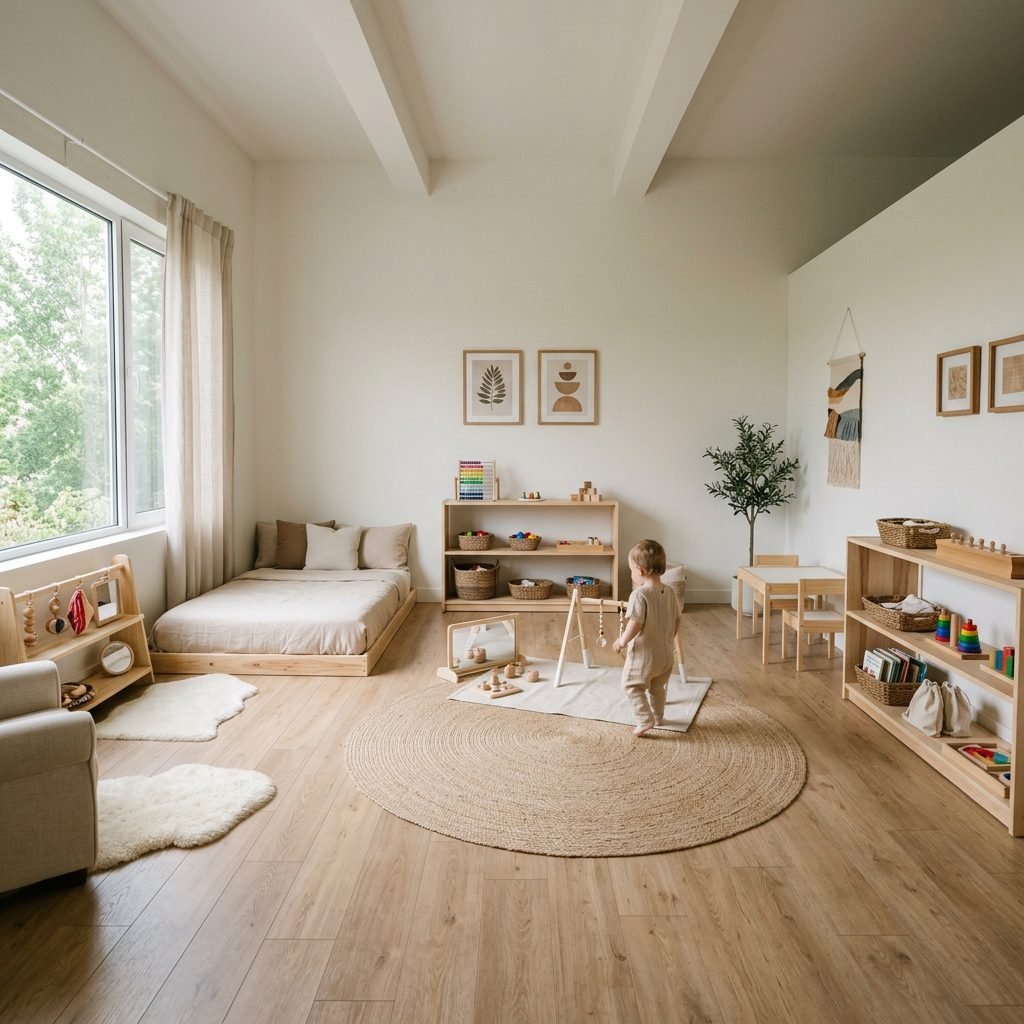
In a traditional nursery, books are often tucked away on high shelves, spine-out, where a toddler can’t see the covers or reach the stories without help. The Montessori approach flips this on its head. We want to foster autonomy. This means everything—from the height of the shelves to the softness of the seat—is curated for a person who is only two or three feet tall.
Key Montessori Elements for Your Nook
- Accessibility: Can your child reach every book without asking for help?
- Visibility: Are the covers facing forward to entice the child?
- Simplicity: Is the space uncluttered and inviting?
- Comfort: Does the space feel safe and grounded?
“The first aim of the prepared environment is, as far as it is possible, to render the growing child independent of the adult.” — Maria Montessori
By focusing on these pillars, you create a ‘yes space’ where your toddler is the master of their own literary journey. This builds confidence that spills over into every other area of their development.
Selecting the Perfect Spot: Light, Flow, and Quiet
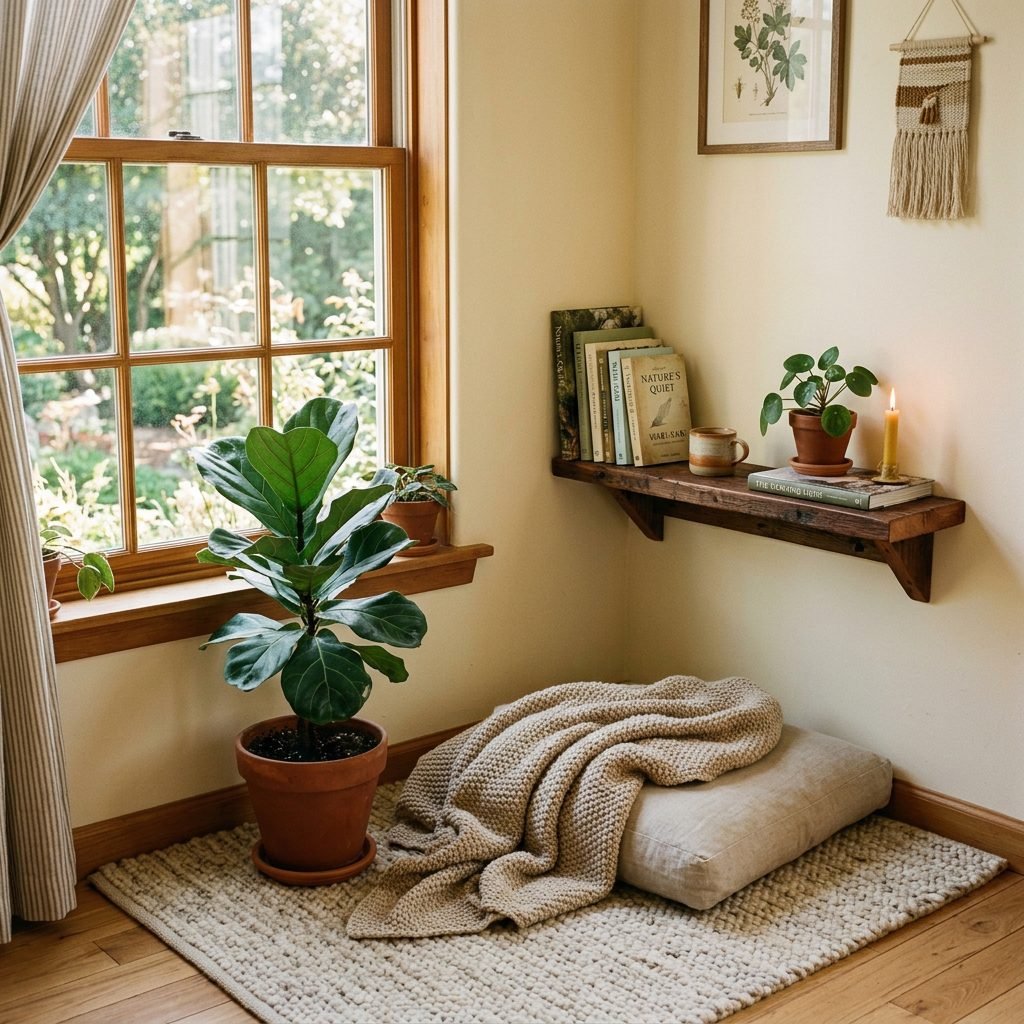
Before you buy a single shelf, look at your nursery with fresh eyes. Get down on your hands and knees to see the room from your toddler’s perspective. You’re looking for a corner that feels like a ‘hug.’ Avoid high-traffic areas where toys are scattered or where the door swings open frequently.
Natural Light vs. Cozy Glow
Ideally, place the reading corner near a window to take advantage of natural light during the day. However, for those evening wind-down sessions, you’ll want a soft, warm glow. Avoid harsh overhead lighting. Instead, consider a small, cordless LED lamp or a string of warm fairy lights (safely secured out of reach) to create a sense of wonder.
| Location Feature | Why It Matters |
|---|---|
| Away from the Toy Bin | Minimizes distractions and encourages focus on reading. |
| Near a Window | Provides healthy natural light for daytime exploration. |
| Corner Placement | Creates a ‘cocoon’ effect that feels psychologically safe. |
| Proximity to Bed | Transitions easily into a soothing bedtime routine. |
The Visual Library: Choosing Forward-Facing Bookshelves
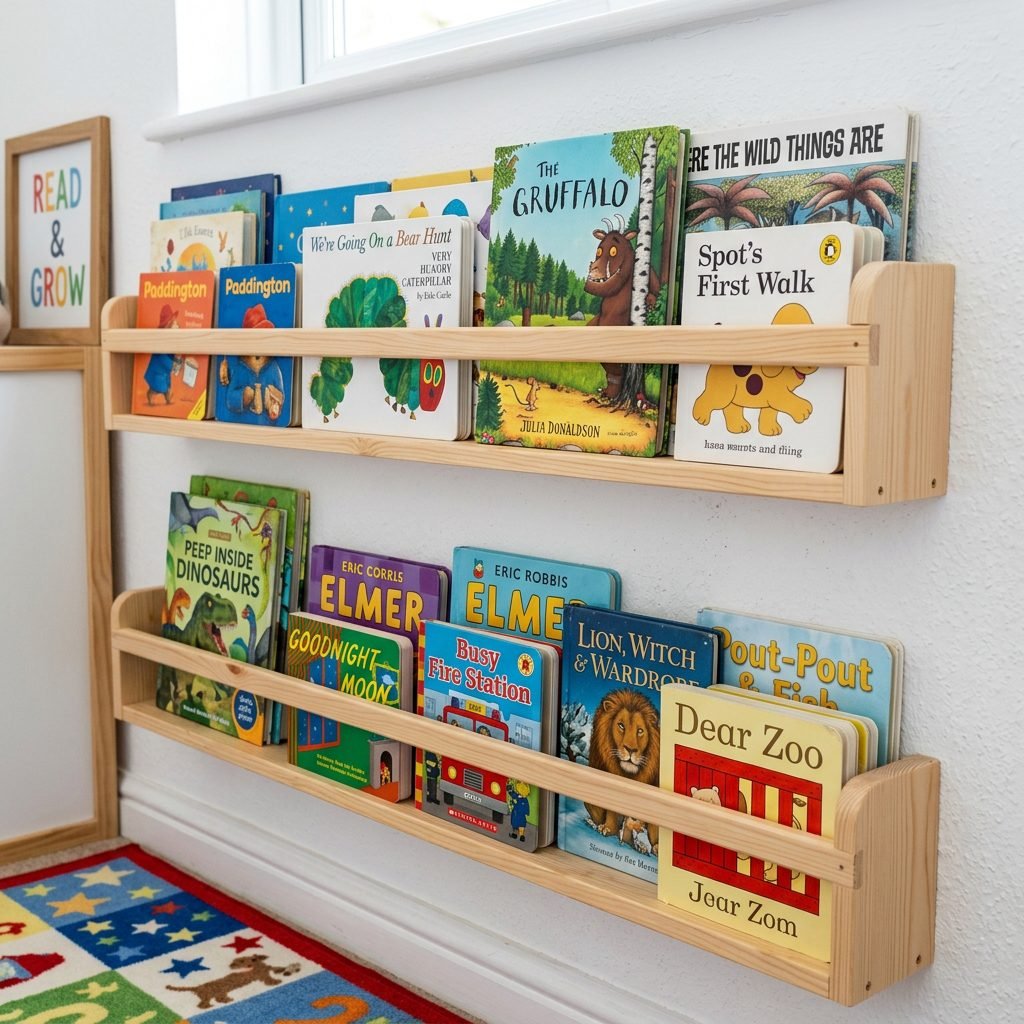
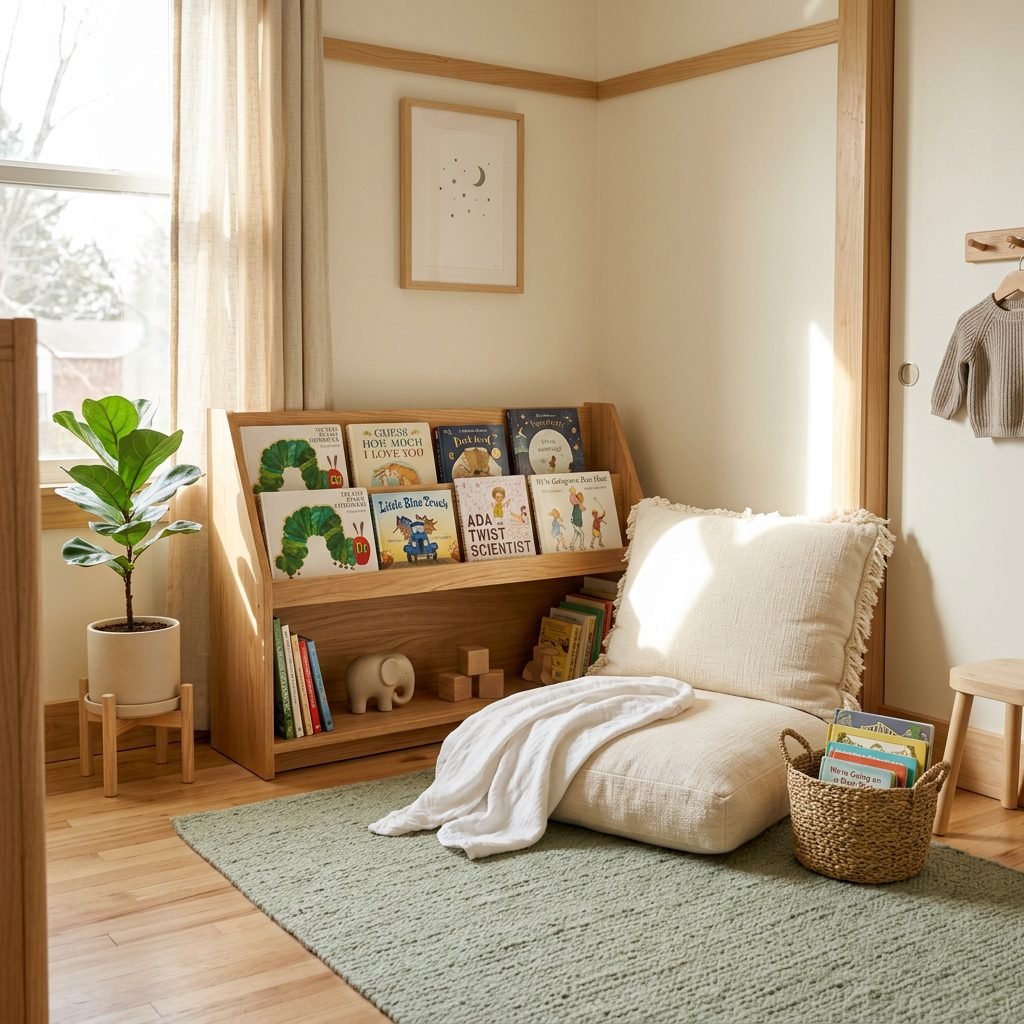
The biggest game-changer in a Montessori reading corner is the forward-facing shelf. For a toddler who cannot yet read titles on a spine, the cover art is the invitation. When they see the friendly face of a bear or the bright colors of a rainbow, they are motivated to engage.
IKEA Hacks and Affordable Options
You don’t need to spend a fortune to get this look. Many moms love the IKEA FLISAT wall shelves or even the BEKVÄM spice racks. When mounted low to the ground, these create a beautiful, slim-profile library. If you prefer a floor-standing unit, look for a sturdy wooden tiered shelf that won’t tip over.
- Measure the Height: Ensure the top shelf is no higher than your child’s shoulder height.
- Limit the Selection: Don’t crowd the shelves. Display 5-8 high-quality books at a time.
- Secure Everything: Always anchor wall-mounted shelves to studs or use heavy-duty anchors.
Pro Tip: Use acrylic floating ledges if you want a modern, ‘invisible’ look that makes the books look like they are floating on the wall!
The ‘Cozy’ Factor: Seating and Textiles
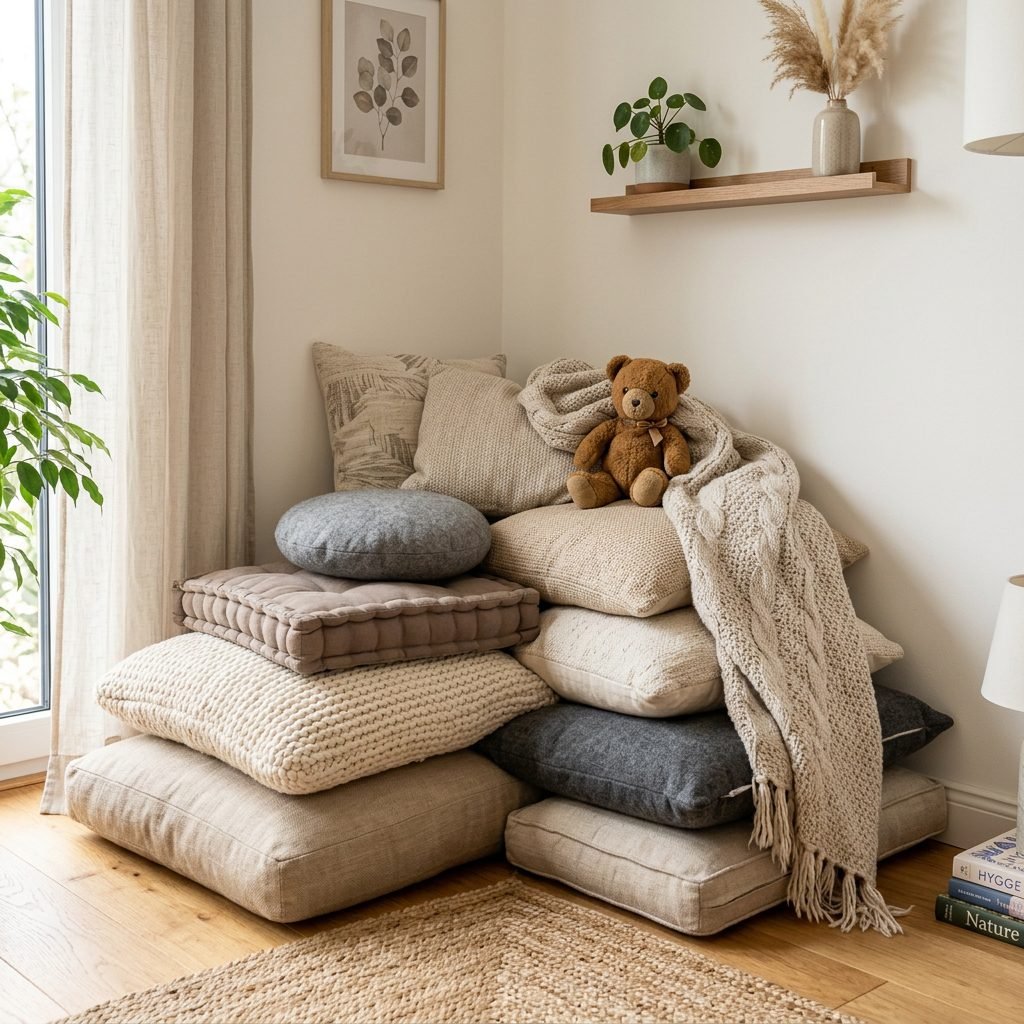
A reading corner is only as good as its ‘snuggle-ability.’ Since we are following Montessori principles, we want to stay low to the ground. This prevents falls and keeps the child grounded. However, ‘low’ doesn’t have to mean ‘hard.’
Layering for Maximum Comfort
Start with a high-quality rug. A washable cotton rug or a soft jute rug provides a defined boundary for the space. On top of that, add a plush floor cushion or a ‘nugget’ style play couch piece. I personally love using sheepskin (or faux sheepskin) rugs for that extra sensory softness that toddlers crave.
| Seating Type | Pros | Cons |
|---|---|---|
| Floor Pillow | Inexpensive, easy to move around. | May lose shape over time. |
| Bean Bag | Very ‘moldable’ and cozy. | Can be difficult for younger toddlers to climb out of. |
| Padded Mat | Great for small spaces, very stable. | Less ‘sink-in’ comfort than a pillow. |
| Miniature Armchair | Supports back for longer reading. | Takes up more visual and physical space. |
Remember, mama, this is where you will likely be sitting too! Make sure there is enough room for you to sit beside them for those precious shared reading moments.
The Art of Book Rotation: Preventing Overwhelm
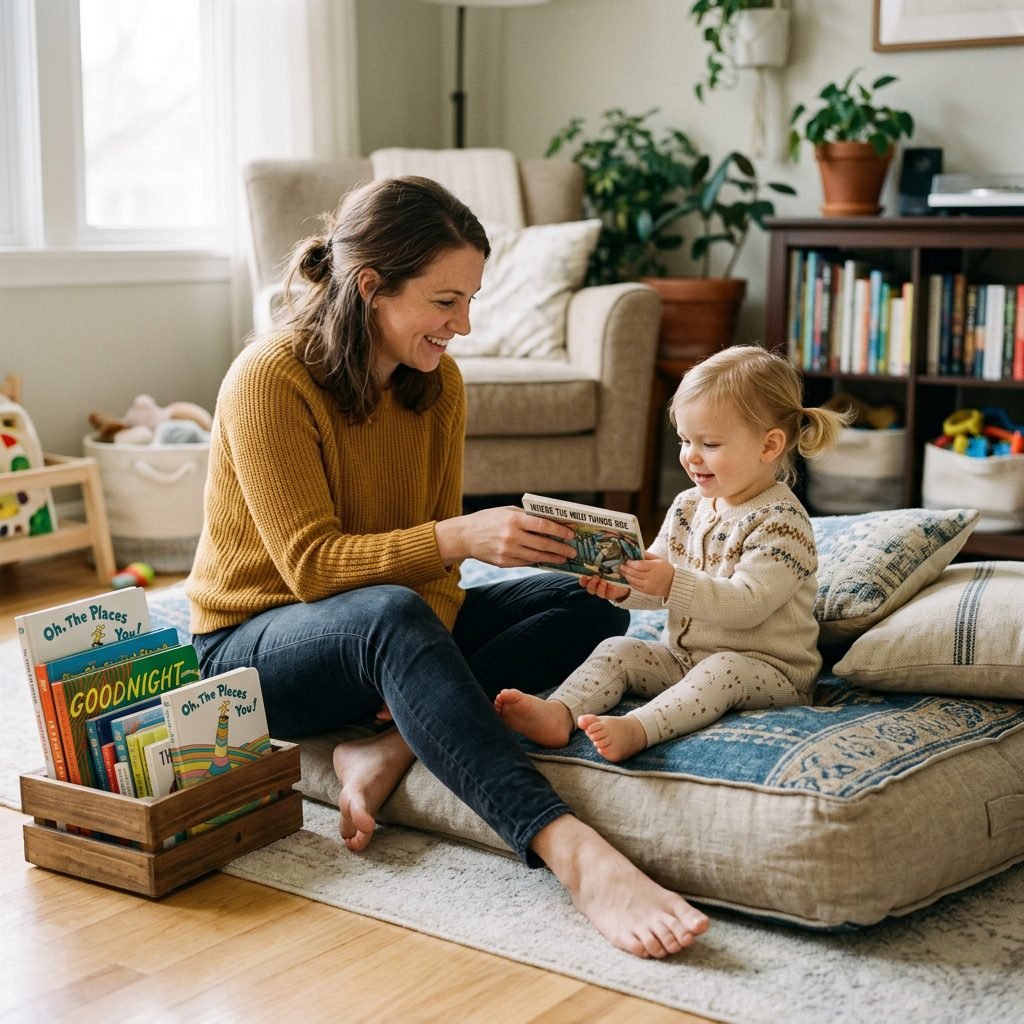
One of the most common mistakes I see as an organizer is ‘book clutter.’ If there are 50 books shoved onto a shelf, a toddler will likely just dump them all on the floor and walk away. This is called choice paralysis.
The 5-10 Book Rule
Keep only 5 to 10 books out at any given time. Store the rest in a ‘book hospital’ (a bin in the closet). Every two weeks, or when you notice your child losing interest, rotate the selection. This makes ‘old’ books feel brand new again!
- Seasonal Themes: Bring out books about snow in winter or flowers in spring.
- Interest-Led: If they are currently obsessed with garbage trucks, put three truck books on the shelf.
- Diverse Selection: Include a mix of board books, touch-and-feel books, and social-emotional stories.
“When a child is overwhelmed by choices, they often choose nothing. Silence the noise to let the story speak.”
Safety and Sensory Details: The Finishing Touches
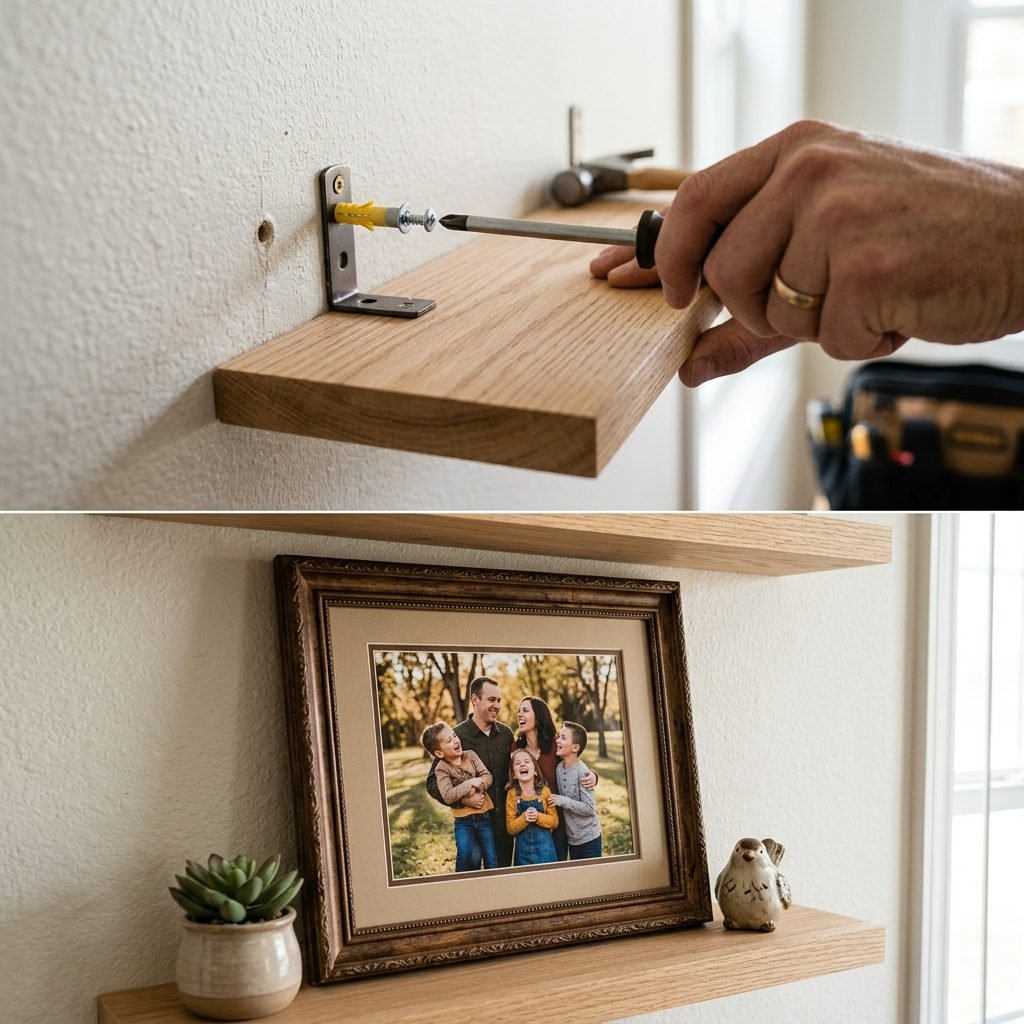
Safety is the silent partner of style. In a Montessori room, we assume the child will be left to explore independently, so the room must be 100% ‘toddler-proofed.’
The Safety Checklist
- Anchor Furniture: Any shelf taller than one tier must be bolted to the wall.
- Corner Guards: If your shelves have sharp wooden corners, consider clear silicone guards.
- Non-Toxic Materials: Choose solid wood over particle board (MDF) to avoid off-gassing of formaldehydes.
- Cord Safety: Ensure no lamp cords or blind strings are within reach of the nook.
Sensory Enrichment
To make the corner truly irresistible, add a few sensory elements. A small basket of calm-down tools like a wooden rattle or a silk scarf can be kept next to the books. You might also add a small framed photo of your family at the child’s eye level to create a sense of belonging and security.
Conclusion
Your Legacy of Literacy Starts Here
Creating a Montessori reading corner is one of the most impactful things you can do for your child’s early development. It’s more than just decor; it’s a dedicated space that says, ‘Your interests matter, and your independence is celebrated.’ Whether you live in a tiny apartment or a spacious home, you can carve out this little slice of magic for your toddler.
Take it one step at a time, mama. Start with a low shelf and a soft pillow, and watch as your little one discovers the joy of turning a page. You’ve got this! Before you know it, you’ll find them curled up in their nook, quietly ‘reading’ to their favorite teddy bear, and your heart will absolutely melt.
Medical Disclaimer: The information provided in this guide is for educational and design purposes only. Always follow the latest SIDS safety guidelines and ensure all furniture is properly anchored to prevent tip-over accidents. Consult with a pediatric specialist if you have concerns about your child’s developmental milestones.