
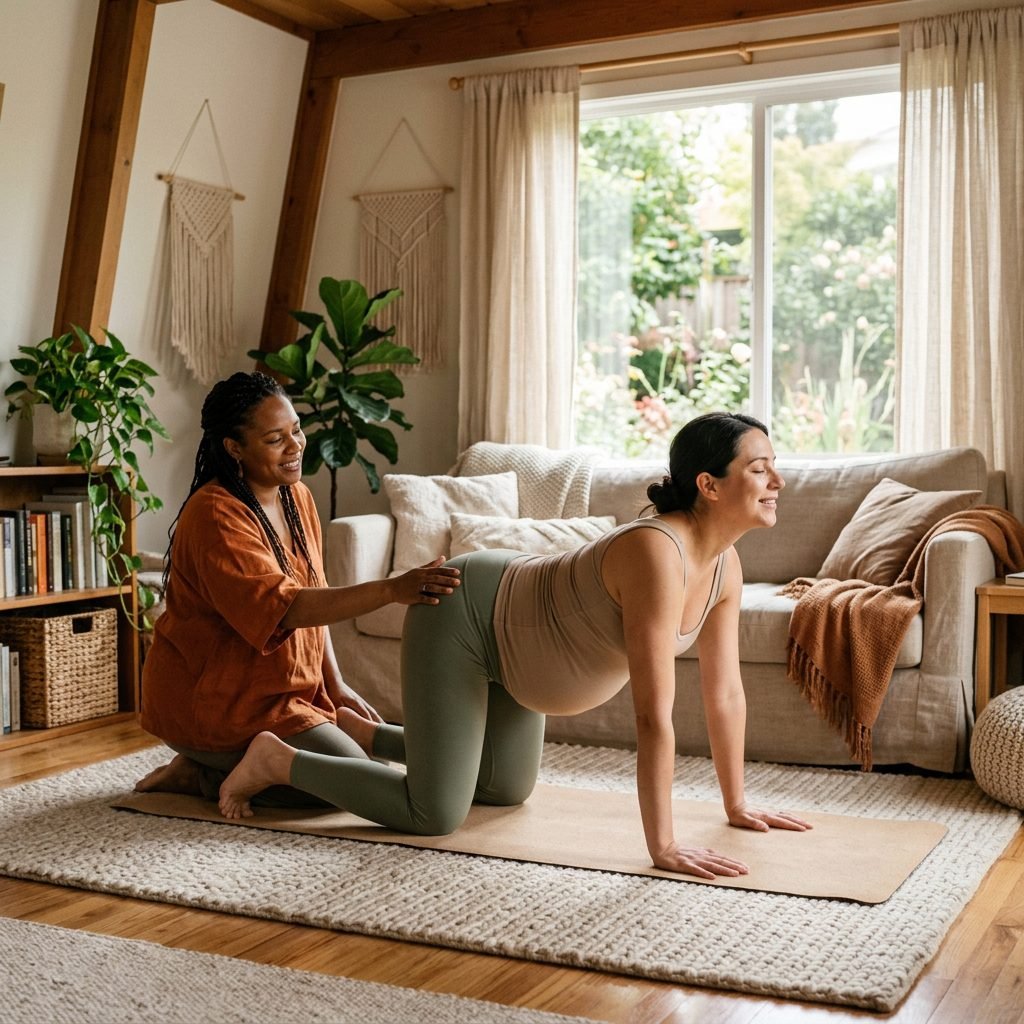
Ouch! 5 Gentle Moves To Stop Sharp Round Ligament Pain Instantly
Hey Mama, I See You Catching Your Breath!
Oh, sweet sister, I know exactly what just happened. You were simply reaching for your water bottle, turning over in bed, or maybe you just let out a particularly hearty sneeze, and—ZAP!—there it was. That sharp, stabbing, or pulling sensation in your lower abdomen or groin that made you freeze in your tracks. Welcome to the world of round ligament pain. While it feels incredibly intense, I want you to take a deep, soothing breath right now and know that you are okay, your baby is safe, and this is a very common (though admittedly literal) pain in the womb.
As a doula, I’ve sat with countless mothers who describe this as a ‘lightning bolt’ or a ‘tearing’ feeling. It usually shows up in the second trimester as your beautiful belly begins its most rapid expansion. Think of your round ligaments as two thick, supportive rubber bands that hold your uterus in place. Before pregnancy, they are short and firm. As your little one grows, those bands stretch, thin, and become taut. When you move suddenly, those ligaments ‘snap’ back like a rubber band that’s been pulled too tight, causing that sharp ouch. But here is the good news: you don’t have to just ‘deal with it.’ I’m going to walk you through five gentle, restorative moves designed to ease that tension instantly and teach you how to move your body with more grace and less grit.
Understanding the Anatomy of the ‘Zing’
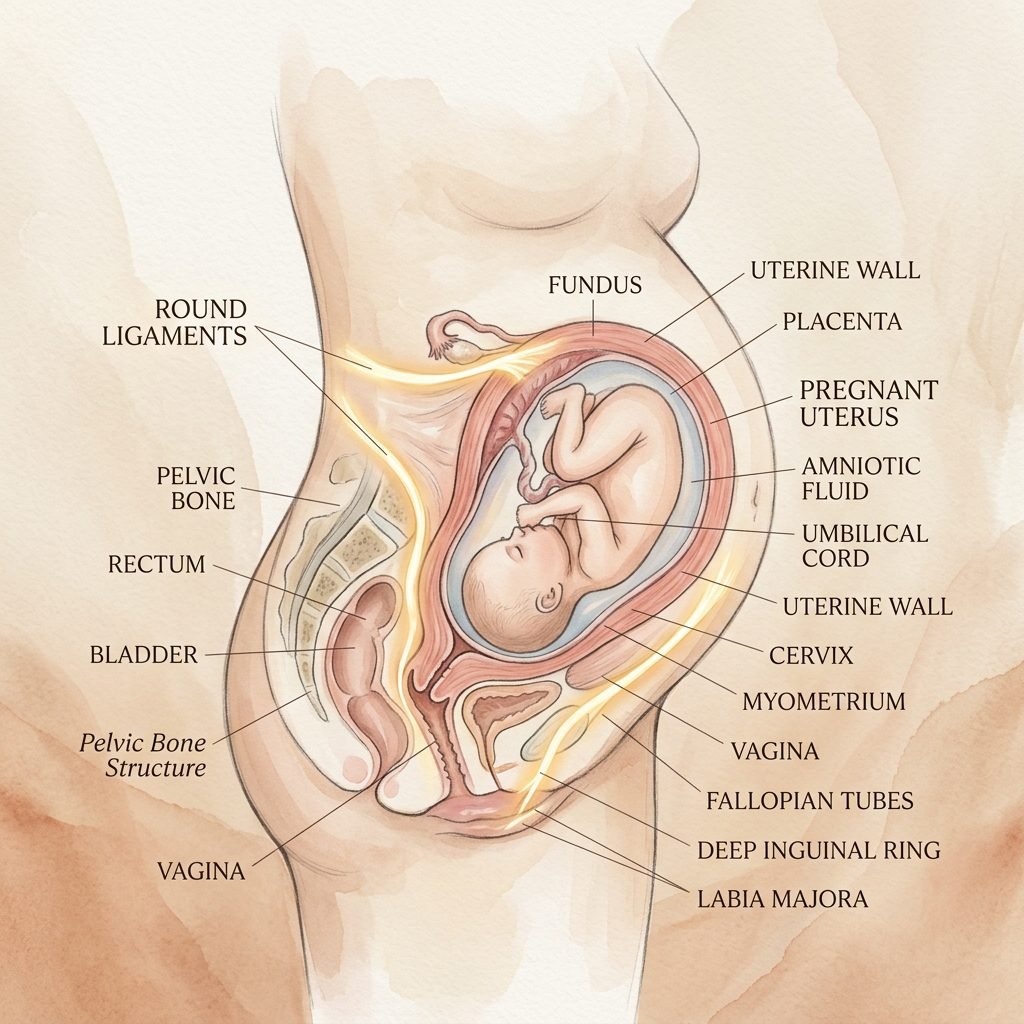
Before we dive into the relief moves, let’s talk about what is actually happening inside your changing body. Your uterus is supported by several ligaments, but the round ligaments are the most famous for causing discomfort. They run from the top corners of your uterus down through the groin area. As your baby grows from the size of an orange to a melon, these ligaments undergo incredible stress.
Why Does It Happen So Suddenly?
Round ligament pain is usually triggered by sudden movements. When you cough, sneeze, laugh, or change positions quickly, the ligaments contract rapidly. It is essentially a muscle spasm of the supporting structures. Common triggers include:
- Rolling over in bed at night.
- Standing up too quickly from a deep sofa.
- Vigorous walking or exercise.
- Sneezing or coughing without bracing.
Understanding that this is a structural response to growth—not a sign that something is wrong with the baby—is the first step in managing the anxiety that often accompanies the pain. We want to focus on softening the tension rather than fighting it.
Move 1: The ‘Slow-Motion’ Pelvic Tilt

The pelvic tilt is the bread and butter of prenatal comfort. It helps realign the uterus and takes the immediate strain off those overstretched ligaments. This move is perfect because it can be done almost anywhere—standing against a wall or down on all fours.
How to Do It:
- Get down on your hands and knees in a tabletop position. Ensure your wrists are under your shoulders and knees are under your hips.
- As you inhale, let your belly drop slightly (not too much!) and look forward.
- As you exhale, gently tuck your tailbone and round your lower back toward the ceiling, engaging your deep core muscles.
- Imagine you are hugging your baby with your abdominal muscles.
- Hold the ‘tuck’ for 3 to 5 seconds and release slowly.
“Think of this move as a reset button for your torso. It shifts the baby’s weight off the ligaments and back toward your spine for a moment of sweet relief.”
Move 2: The Supported Side-Lying Release

When the pain strikes while you are resting, it’s often because the weight of the uterus is pulling unevenly on one side. The Side-Lying Release is a classic doula technique to balance the pelvis and give those ligaments a break.
Step-by-Step Comfort:
- Lie on your side (the side that doesn’t hurt, if possible) at the edge of a bed or sofa.
- Stack your hips directly on top of each other.
- Place a firm pillow or pregnancy bolster between your knees and ankles. This is crucial! It keeps your hips neutral and prevents the top leg from pulling the pelvis forward.
- Allow your belly to rest on the mattress, or tuck a small ‘wedge’ pillow under the bump for extra support.
- Stay in this position for at least 10 minutes to allow the tissues to hydrate and soften.
By supporting the weight of the bump and the legs, you are effectively ‘slackening’ the rubber bands, allowing the spasm to dissipate naturally.
Move 3: The ‘Log Roll’ Transition
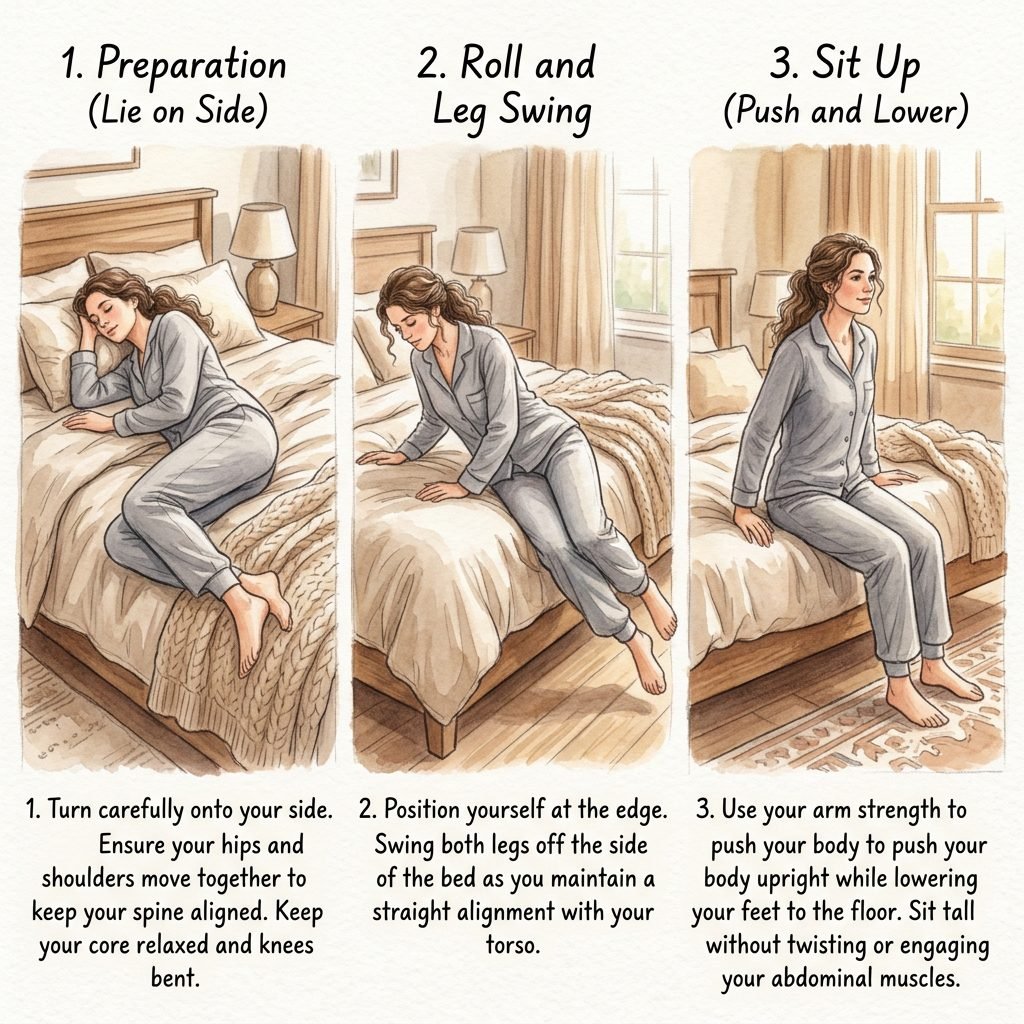
Many mamas experience the sharpest pain when getting out of bed in the morning. This happens because we tend to use our abdominal muscles to ‘sit up’ straight, which puts immense pressure on the ligaments. Instead, we use the Log Roll.
Mastering the Roll:
- While lying on your back (or side), bend your knees and keep them together.
- Roll your entire body—shoulders, hips, and knees—as one solid unit (like a log) onto your side.
- Drop your feet off the edge of the bed.
- Use your arms to push your upper body into a seated position while your legs act as a counterweight.
This technique completely bypasses the ‘crunch’ motion that triggers round ligament spasms. It’s a simple habit that will save you from that morning ‘ouch’ every single day.
Move 4: The Forward-Leaning Inversion (Modified)
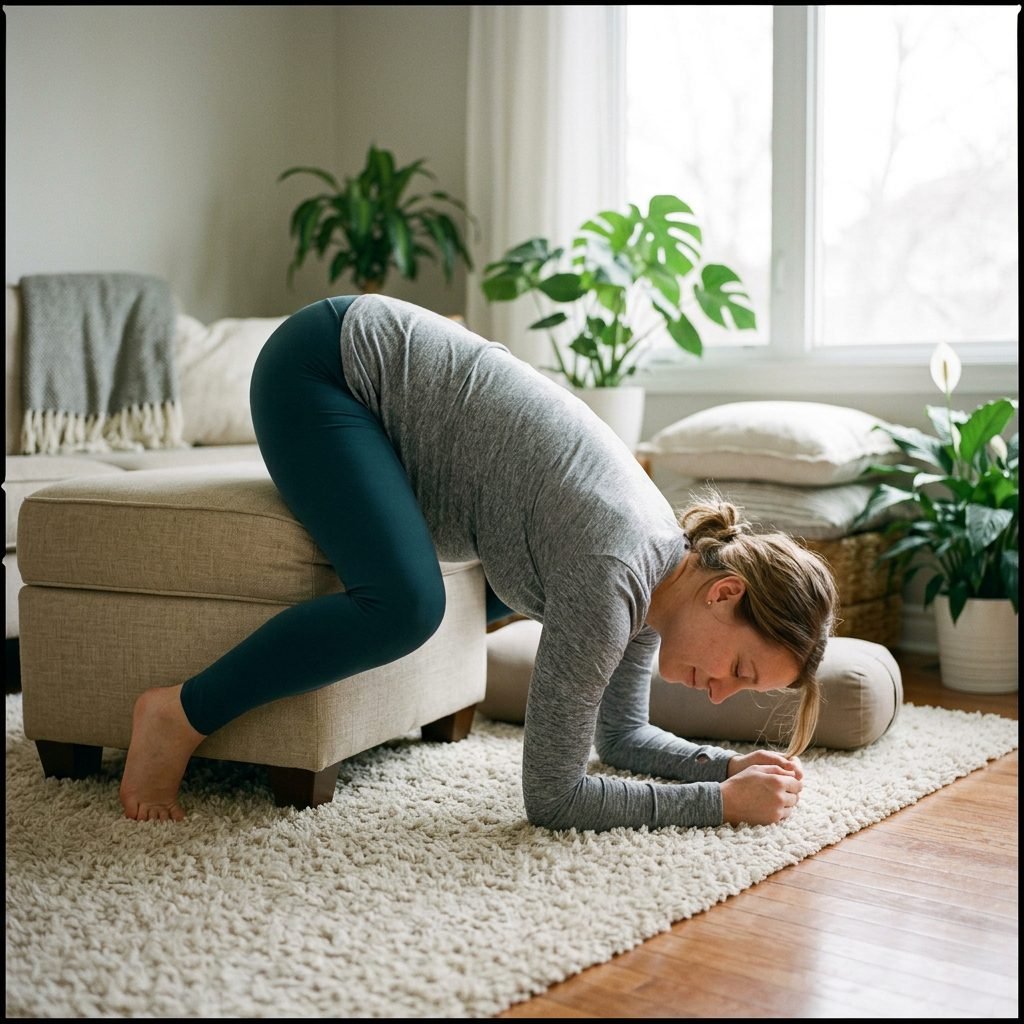
This is a favorite in the Spinning Babies® community. A modified version of this can help create space in the lower segment of the uterus, giving the ligaments room to relax. Note: Only do this if you feel stable and have someone nearby if you feel dizzy.
The Gentle Approach:
- Kneel on the edge of a sturdy sofa or chair.
- Slowly lower your hands to the floor, then your forearms.
- Let your head hang loosely. Your bottom should be the highest point of your body.
- Take 3 deep, diaphragmatic breaths.
- Carefully climb back up to a kneeling position and sit on your heels for a moment to let your blood pressure stabilize.
This move uses gravity to pull the uterus forward and ‘up’ out of the pelvis, which can instantly stop a persistent pulling sensation.
Move 5: The ‘Brace and Sneeze’ Technique

Sometimes the best move is a preventative one. If you feel a sneeze, cough, or laugh coming on, you can stop the pain before it starts with this simple physical brace.
The Technique:
When you feel that tickle in your nose, don’t stay upright. Bend your hips slightly and lean forward, then use your hands to physically ‘cradle’ or lift your bump. By shortening the distance between your ribs and your pubic bone, you take the tension out of the ligaments. When the sneeze happens, the ligaments won’t have the ‘room’ to snap back painfully.
Managing Your Daily Movement: Safe vs. Avoid

Consistency is key to staying comfortable. While your body is doing the hard work of growing a human, we want to minimize unnecessary strain. Use this guide to adjust your daily habits.
| What’s Safe & Supportive | What to Avoid (Triggers) |
|---|---|
| Belly Bands: Wearing a supportive maternity belt to lift the bump weight. | Sudden Twisting: Reaching for something in the backseat of the car. |
| Warm Baths: Using Epsom salts to relax the smooth muscles. | Heavy Lifting: Carrying toddlers or heavy groceries on one hip. |
| Pelvic Floor PT: Working with a specialist to balance the pelvic bowl. | Stretching the ‘Ouch’: Trying to ‘stretch out’ a sharp pain (this makes it worse!). |
| Gentle Yoga: Focus on cat-cow and child’s pose. | High-Impact Jumping: Movements that cause the bump to bounce rapidly. |
When Should You Call Your Provider?

While round ligament pain is a normal part of pregnancy, I always want you to trust your intuition. If the pain changes in character, it’s time to check in with your midwife or OB-GYN. As a doula, I tell my clients to look for these ‘Red Flags’:
- Pain that is constant and does not go away with rest or position changes.
- Pain accompanied by fever or chills.
- Any vaginal bleeding or unusual discharge.
- Pain during urination.
- Contractions that are regular or increasing in intensity (more than 4-6 per hour before 37 weeks).
Always remember: it is never a ‘bother’ to call your care team. They are there to support you and give you peace of mind!
Conclusion
You’ve Got This, Mama!
Round ligament pain is often called a ‘growing pain,’ and while it certainly feels like a challenge, it is a physical testament to the incredible home you are building for your baby. By slowing down your transitions, using the Log Roll, and embracing the Pelvic Tilt, you can navigate your second and third trimesters with much more ease. Remember to move like a queen—slowly, intentionally, and with plenty of support. You are doing a beautiful job, and this phase is just one small part of your journey toward meeting your little one. Keep your pillows close, your movements slow, and your heart full. You are stronger than you know!