

Waking Up With Numb Hands? Here’s How To Fix Pregnancy Carpal Tunnel Fast
Oh, mama, I see you. It is 3:00 AM, and instead of drifting off into those vivid pregnancy dreams, you are sitting up in bed, vigorously shaking your hands because they feel like they have been replaced by heavy, tingling blocks of wood. That ‘pins and needles’ sensation—or worse, a complete loss of feeling in your thumb and first three fingers—is more than just annoying; it is exhausting. As a doula, I want you to know right now: you are not alone, and your body is not failing you. What you are experiencing is likely Pregnancy Carpal Tunnel Syndrome (PCTS), a very common side effect of the incredible work your body is doing to grow your little one. While it feels like a permanent fixture of your third trimester, there are gentle, effective, and fast ways to find relief. In this guide, we are going to walk through exactly why this is happening and, more importantly, how to get your hands feeling like your own again so you can get the rest you truly deserve.
The Science of the ‘Pins and Needles’: Why Your Body is Holding Water
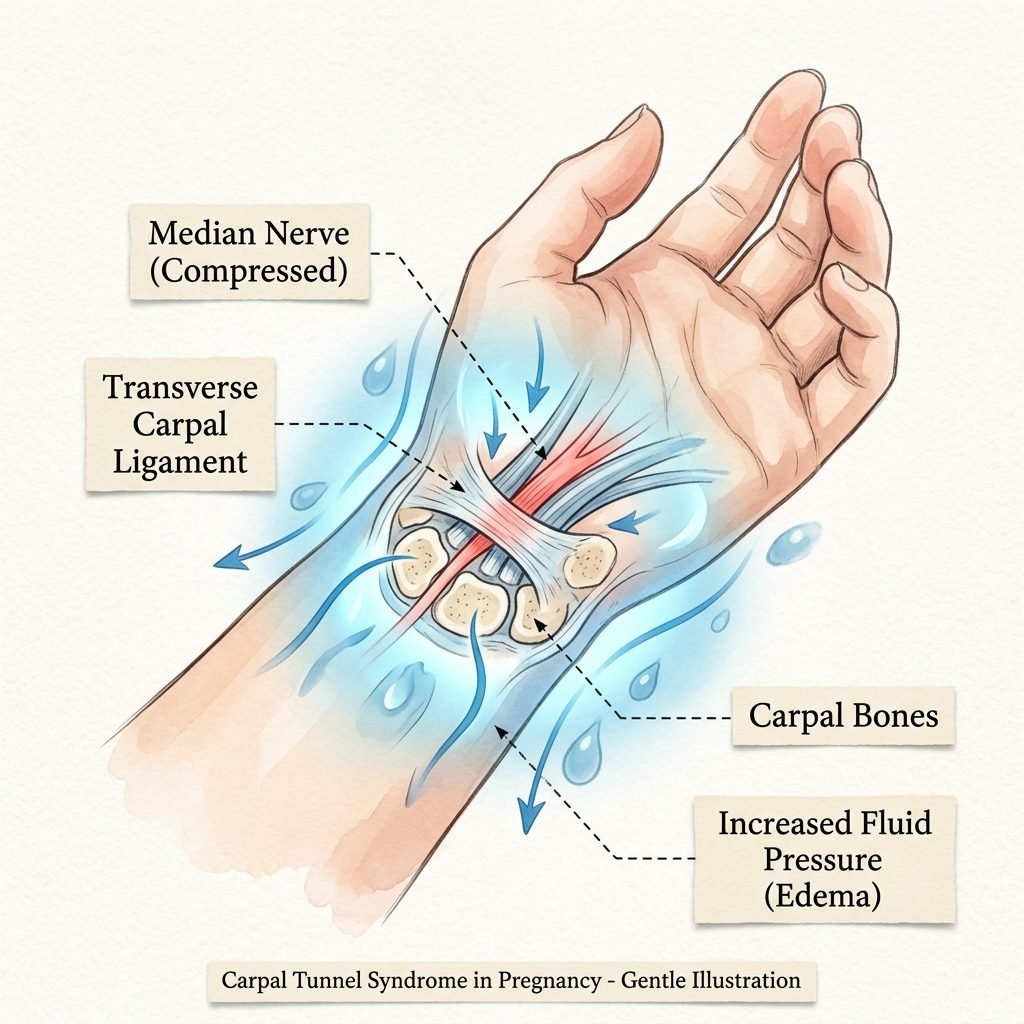
To fix the problem, we first have to understand the ‘why’ behind the pressure. During pregnancy, your blood volume increases by nearly 50 percent to support your growing baby. Along with that extra blood comes a significant amount of extra fluid, often referred to as edema. Because of gravity and the way our circulatory systems change, this fluid tends to pool in our extremities—our feet, our ankles, and yes, our wrists.
The Median Nerve Under Pressure
Inside your wrist is a narrow passageway called the carpal tunnel. This tunnel houses the median nerve, which controls sensation and movement in your thumb and first three fingers. When pregnancy swelling (edema) increases, that narrow tunnel becomes even tighter, putting direct pressure on the median nerve. The result? Numbness, tingling, and sometimes a sharp, shooting pain that can radiate up your arm. This is why you often feel it most at night or first thing in the morning; when we lie down, the fluid redistributes throughout the body, and if our wrists are tucked or bent, the pressure intensifies.
- Relaxin’s Role: The hormone relaxin, which helps your pelvis expand for birth, also loosens the ligaments in your wrists, making them more prone to misalignment and pressure.
- The Third Trimester Peak: Most mothers notice these symptoms peaking between weeks 28 and 40, as fluid retention reaches its highest point.
The Doula’s Toolkit: Gentle Exercises to Release the Pressure
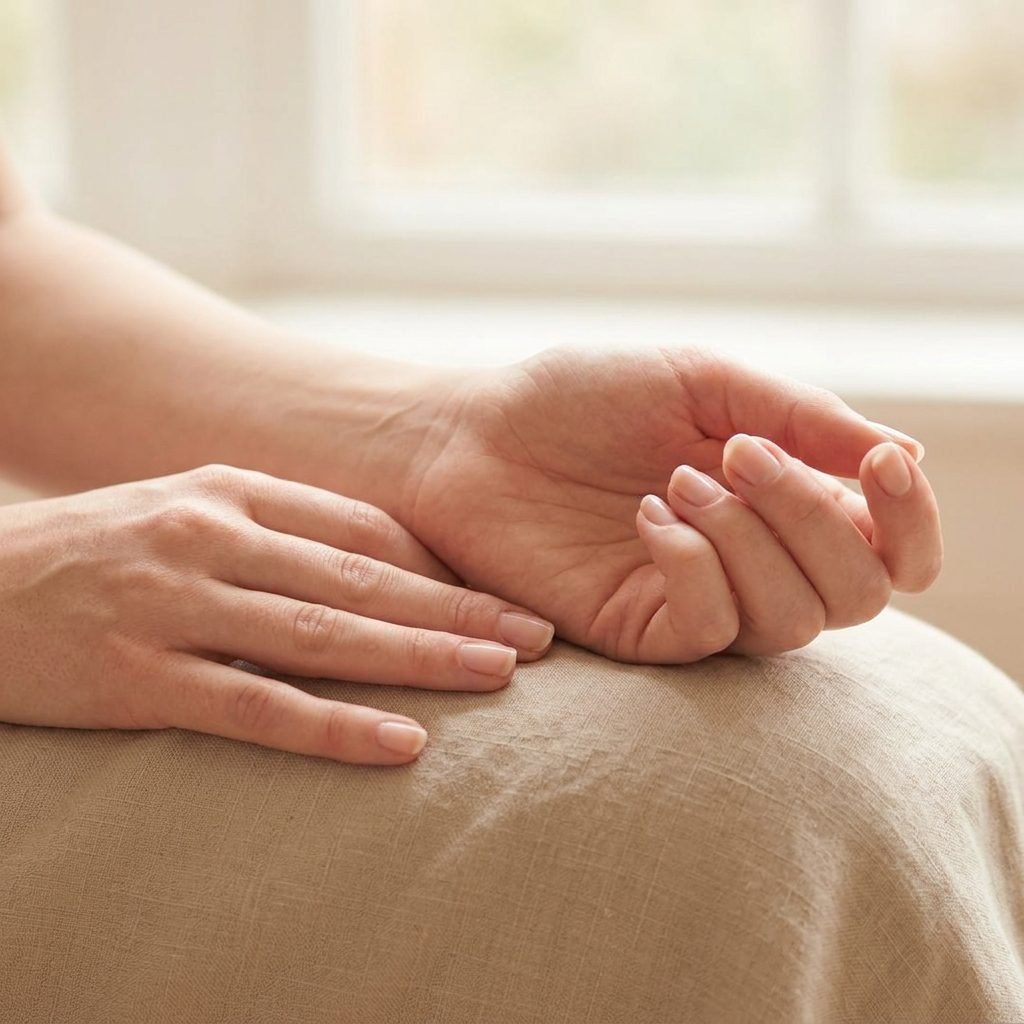
When you wake up with that ‘heavy’ feeling, the goal is to move the fluid out of the wrist and create space for the nerve to breathe. These are not ‘workouts’—they are gentle, restorative movements you can do right in bed. I recommend doing these three times a day, especially before you go to sleep.
- The Gentle Shake-Out: Imagine you are trying to flick water off your fingertips. Relax your wrists completely and shake your hands gently for 30 to 60 seconds. This helps stimulate blood flow and move stagnant fluid.
- Median Nerve Glides: Hold your hand up like you are waving. Slowly tuck your thumb into your palm and make a gentle fist. Then, extend your fingers straight up. Finally, gently tilt your hand back toward your forearm. This ‘gliding’ motion helps the nerve move smoothly through the tunnel.
- The Prayer Stretch: Place your palms together in front of your chest in a prayer position. Slowly lower your hands toward your waist while keeping your palms pressed together until you feel a gentle stretch in your wrists. Hold for 15 seconds and repeat 5 times.
- Finger Flicks: Rapidly open and close your fists, extending your fingers as wide as possible. This acts as a manual pump for the lymphatic system in your hands.
“My hands are a tool of comfort for my baby, and today I offer that same comfort to myself through gentle movement and care.”
Sleeping Without the Sting: Positioning and Nighttime Support

The night is often the hardest time for PCTS because we tend to curl our wrists inward like ‘squirrel paws’ while we sleep. This position completely shuts down the carpal tunnel. To fix this fast, we need to focus on neutral alignment.
The Power of the Wrist Splint
If you take only one piece of advice from this guide, let it be this: wear a wrist splint at night. You can find these at any drugstore. Look for a ‘neutral’ or ‘resting’ splint that has a metal or plastic stay to keep your wrist from bending. By keeping the wrist straight, you ensure the carpal tunnel remains at its maximum width all night long. Most moms find that their numbness decreases by 70 to 80 percent within just two nights of wearing a splint.
Propping and Elevation
Elevation is your best friend. When you are sleeping on your side (which is safest for baby!), use an extra pillow to prop up your ‘top’ arm. Keep your hand higher than your heart level if possible. This allows gravity to help drain the fluid away from your wrist and back toward your torso. Avoid tucking your hands under your chin or pillow, as this creates a ‘kink’ in the nerve’s path.
Safe Relief vs. Risky Remedies: Navigating Your Options

When you are in pain, it is tempting to reach for anything in the medicine cabinet. However, during pregnancy, we have to be extra mindful of what we use. Here is a quick guide to what is generally safe and what you should discuss with your midwife or doctor.
| Intervention | Safety Level | Doula’s Advice |
|---|---|---|
| Icing Wrists | Safe | Apply a cold pack for 10 minutes before bed to reduce inflammation. |
| Wrist Splints | Safe | The ‘Gold Standard’ for relief. Wear them every single night. |
| Prenatal Massage | Safe | Focus on lymphatic drainage in the arms; avoid deep pressure on the wrist bones. |
| Acetaminophen | Consult MD | May help with pain, but always check with your provider first. |
| NSAIDs (Ibuprofen) | Avoid | Generally not recommended in the third trimester due to fetal heart risks. |
| Diuretics | Avoid | Natural fluid shifts are necessary for pregnancy; do not use pills to ‘flush’ water. |
Pro-Tip: Try a ‘Contrast Bath.’ Dip your hands in cool water for 3 minutes, then warm (not hot!) water for 30 seconds. Repeat this three times. The temperature change causes the blood vessels to open and close, which acts like a pump to move the swelling out of your hands.
Ergonomics for the Expectant: Adjusting Your Daily Flow
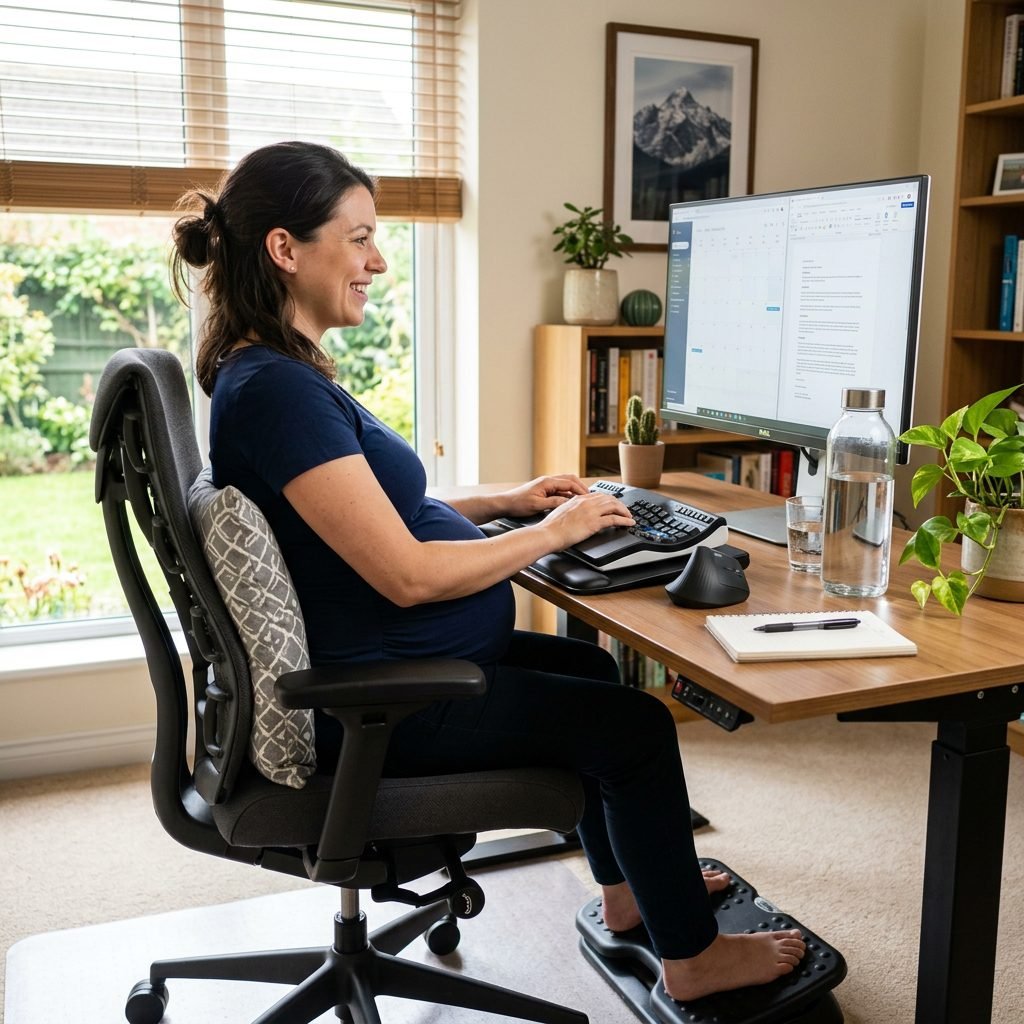
If you are still working at a computer or doing repetitive tasks (like knitting for the baby or scrolling on your phone!), your ergonomics matter more than ever. Your wrists are already compromised by fluid; don’t make them work harder by putting them in awkward angles.
- The 90-Degree Rule: Ensure your elbows are bent at a 90-degree angle when typing. Use a wrist rest for your keyboard and mouse to keep your hands in a neutral, flat position.
- Voice-to-Text: Give your thumbs a break! Use voice-to-text for emails and messages to reduce the repetitive strain of typing on a small screen.
- The Salt Balance: While it sounds counterintuitive, do not cut out salt entirely. Instead, focus on high-quality sea salt and pair it with massive amounts of water. Dehydration actually causes your body to hold onto fluid more aggressively. Aim for at least 80 to 100 ounces of water daily.
- Magnesium Support: Many doulas recommend magnesium (either as a supplement or a lotion) to help with muscle relaxation and fluid balance. Check with your provider, but a warm Epsom salt soak for your hands can be incredibly soothing.
The Postpartum Outlook: When Will This Go Away?

I know it feels like you will never be able to open a jar of pickles again, but here is the good news: for the vast majority of women, Pregnancy Carpal Tunnel Syndrome disappears almost as quickly as it arrived. Once you give birth, your body begins a massive ‘diuresis’ process—which is just a fancy way of saying you will pee out all that extra fluid! Within two to six weeks postpartum, the pressure on the median nerve usually subsides.
A Note for the Postpartum Recovery
Occasionally, the symptoms can linger if you are doing a lot of repetitive lifting (picking up your beautiful new baby!) or if you are breastfeeding in a position that kinks the wrist. Continue wearing your splints at night during those first few weeks of motherhood if you feel the tingles returning. Be mindful of ‘Mother’s Thumb’ (De Quervain’s Tenosynovitis), which is a different but related wrist pain caused by lifting. Remember, mama, your body has just performed a miracle. Be patient with the healing process. You are doing an incredible job, and this discomfort is just a temporary chapter in your beautiful story.
Conclusion
Pregnancy carpal tunnel is a literal ‘pain in the hand,’ but it doesn’t have to steal your joy or your sleep. By using nightly splints, practicing gentle nerve glides, and staying optimally hydrated, you can significantly reduce the numbness and tingling. Listen to your body, move with grace, and know that this too shall pass. You are so close to holding your baby in those hands—and trust me, that feeling will be more than worth it. If your pain becomes unbearable or you notice a loss of muscle strength in your thumb, please reach out to your healthcare provider. You deserve to feel comfortable and supported every step of the way.