

The Smart Mom’s Guide to Laboring at Home Safely Before Heading to the Hospital
Hello, sweet mama. If you are reading this, you are likely standing on the threshold of one of the most transformative experiences of your life. There is a special kind of magic in those early hours of labor—the quiet anticipation, the first rhythmic waves of your body doing exactly what it was designed to do. As a doula, I often tell my clients that the best place to navigate the ‘latent’ or early phase of labor is often the place where you feel safest: your own home. Laboring at home for as long as safely possible allows your oxytocin—the ‘love hormone’ that drives contractions—to flow freely without the interruptions of hospital check-ins and bright fluorescent lights. In this guide, we are going to walk through how to stay comfortable, how to track your progress with precision, and exactly how to know when it is time to transition from your living room to the delivery suite. You’ve got this, and I am right here with you.
The Philosophy of the Home Base: Why Waiting is Wise

The early phase of labor can last anywhere from a few hours to a couple of days. For first-time mothers, this ‘warm-up’ period is often the longest. Research consistently shows that laboring at home during this phase reduces the likelihood of unnecessary medical interventions. When you are in your own environment, you can eat what you like, move how you want, and rest in your own bed. This comfort keeps your adrenaline low and your oxytocin high.
Benefits of Staying Home Longer
- Lower Intervention Rates: Arriving at the hospital in active labor (usually 6cm dilated) often leads to fewer interventions like pitocin or epidurals.
- Emotional Comfort: Your home is your sanctuary. You have access to your own shower, your own snacks, and your own support system.
- Energy Preservation: Hospitals are for ‘doing,’ but early labor is for ‘being.’ Staying home allows you to conserve your energy for the hard work of active labor.
| Phase of Labor | Typical Duration | Focus Area |
|---|---|---|
| Early (Latent) | 6-12+ Hours | Rest, Hydration, Distraction |
| Active Labor | 4-8 Hours | Focus, Breathing, Movement |
| Transition | 30 mins – 2 Hours | Intense Focus, Support |
Setting the Stage: Creating Your In-Home Birth Sanctuary
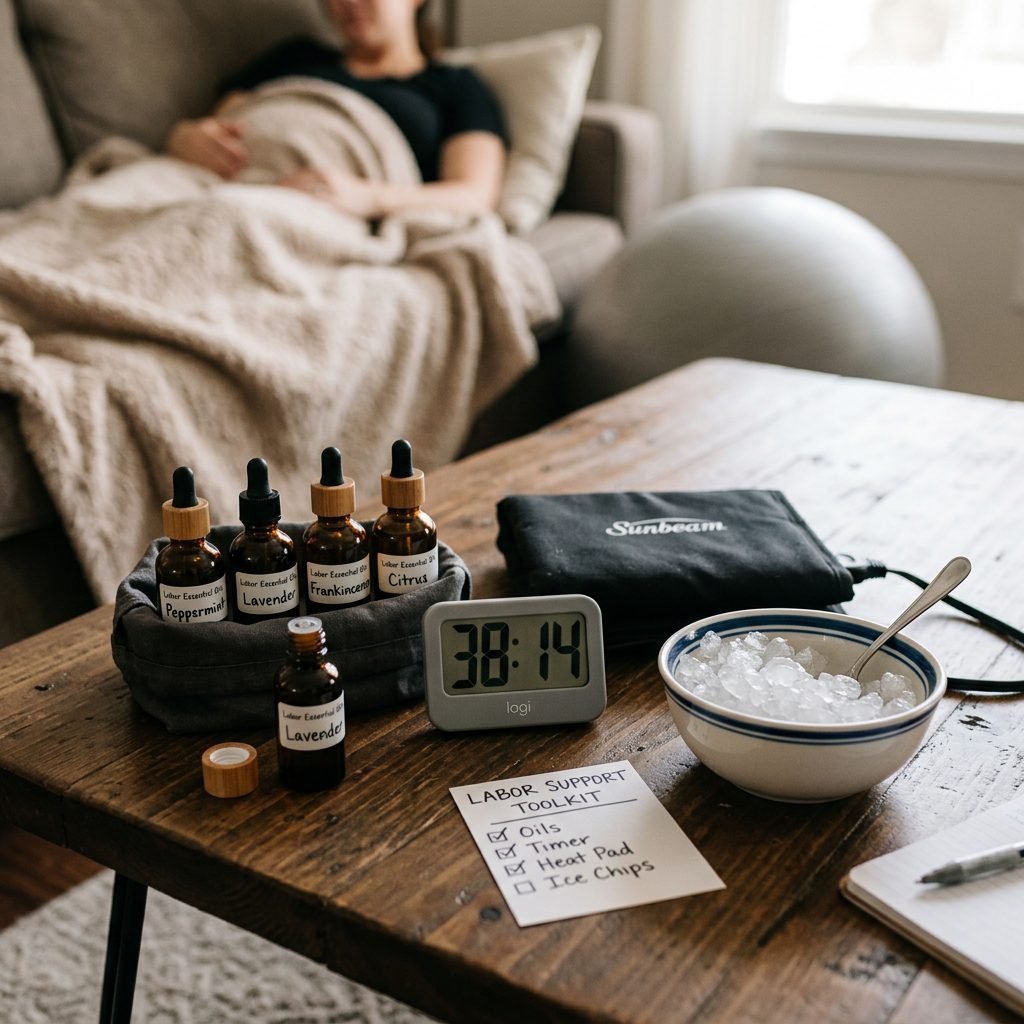
To labor effectively at home, you need to curate an environment that signals ‘safety’ to your brain. Your neocortex (the thinking brain) needs to shut down so your primitive brain can take over. This is where the doula-expert ‘vibe’ comes in.
The Sensory Checklist
- Dim the Lights: Darkness triggers melatonin, which works synergistically with oxytocin. Use battery-operated tea lights or salt lamps.
- Curate Your Soundscape: Whether it is a ‘Birth Affirmations’ playlist or the low hum of a white noise machine, sound can be a powerful anchor.
- Temperature Control: Labor can make you swing from hot flashes to chills. Have a heating pad for your back and a cool washcloth for your forehead.
- Scent: Lavender for relaxation or peppermint for nausea can be game-changers.
“My body is relaxed, my mind is calm, and I trust the process of birth. Every contraction brings me closer to meeting my baby.”
The 5-1-1 Rule and Beyond: Tracking Your Progress Safely
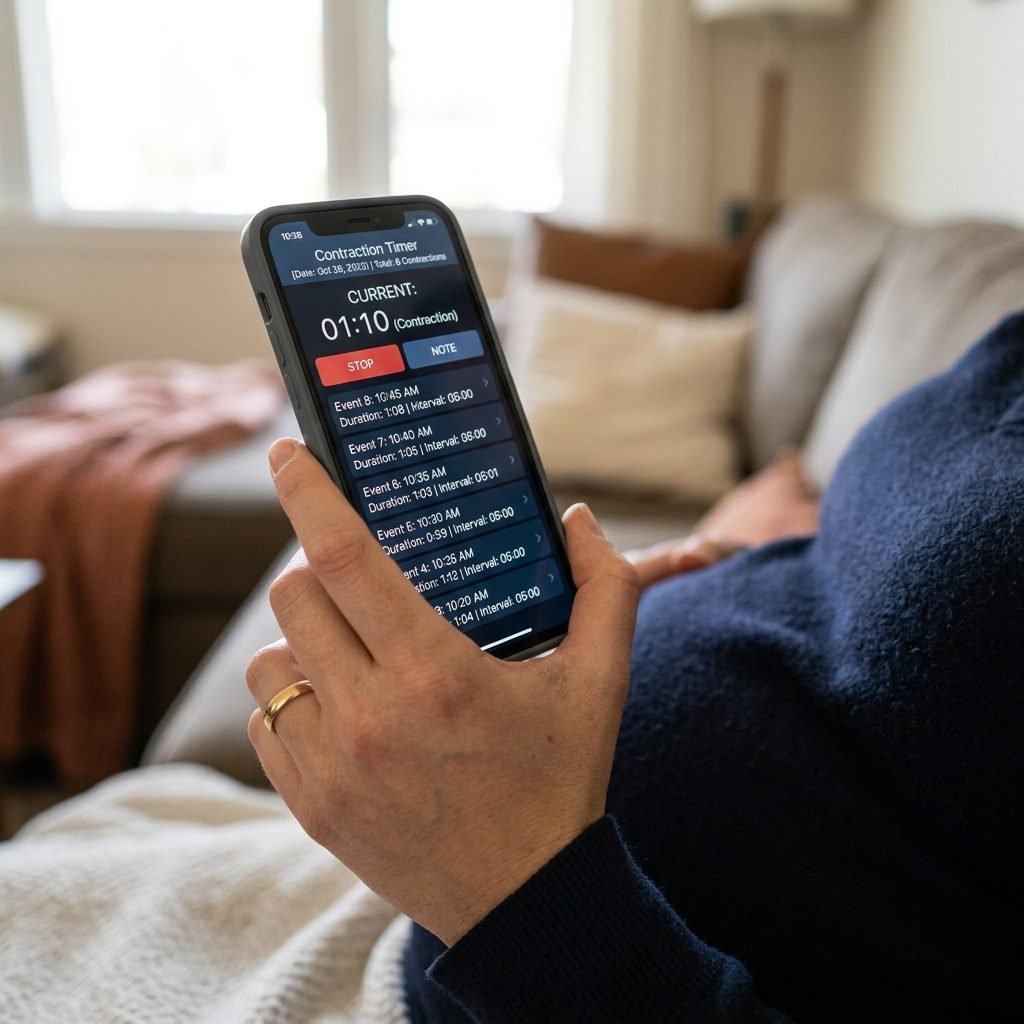
One of the most common questions moms ask is, ‘How do I know it is real?’ Braxton Hicks are practice, but true labor contractions have a pattern. They get longer, stronger, and closer together. To track this safely, you need a reliable method.
How to Use the 5-1-1 Rule
- 5 Minutes Apart: Contractions are occurring every 5 minutes (measured from the start of one to the start of the next).
- 1 Minute Long: Each contraction lasts for at least 60 seconds.
- 1 Hour: This pattern has been consistent for at least one full hour.
However, the 5-1-1 rule is just a baseline. You should also look for the ‘Emotional Signpost.’ When you can no longer talk or laugh through a contraction and must stop everything to breathe, you are likely moving into active labor. This is your cue to start thinking about the car ride.
| Contraction Frequency | Intensity | Action Plan |
|---|---|---|
| 10-15 mins apart | Mild, like period cramps | Ignore it, sleep if possible |
| 5-7 mins apart | Stronger, requires focus | Start 5-1-1 tracking, call doula/midwife |
| 3-4 mins apart | Intense, vocalizing | Head to the hospital now |
Doula-Approved Comfort Measures: Movement and Relaxation
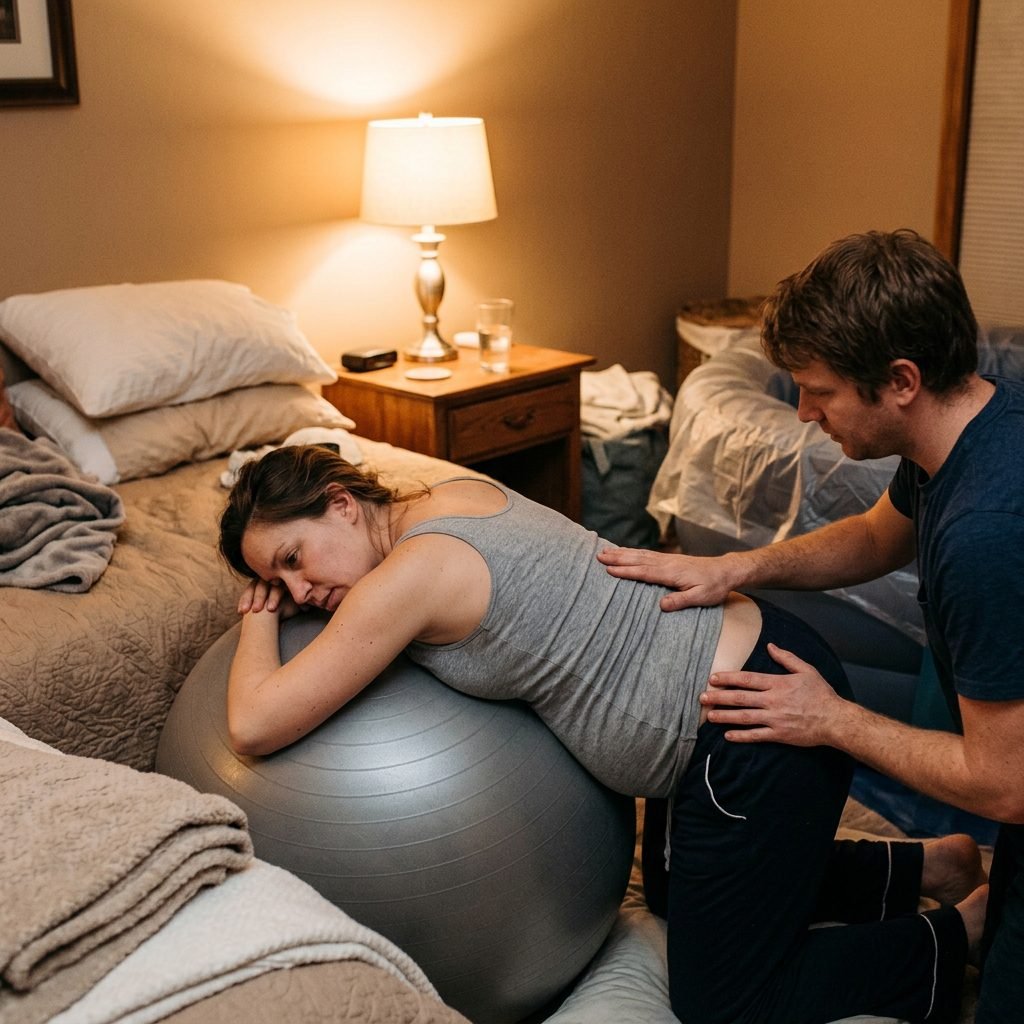
Movement is your best friend during home labor. It helps the baby navigate the pelvis and can significantly reduce the sensation of pain. Here are the top positions to try while you are still at home.
Step-by-Step Movement Guide
- The Miles Circuit: A three-part series of positions (open-knee chest, exaggerated side-lying, and curb walking) designed to help the baby rotate into the optimal position.
- The Birth Ball Bounce: Sitting on a 65cm or 75cm exercise ball and gently swaying your hips in a figure-eight motion helps open the pelvic outlet.
- The Slow Dance: Wrap your arms around your partner’s neck and sway. This allows you to go limp during contractions while your partner supports your weight.
- The Shower Sanctuary: Direct the warm water onto your lower back. Hydrotherapy is often called the ‘midwife’s epidural’ for its incredible soothing properties.
“Relax your jaw, relax your floor. A tight jaw means a tight cervix. Keep your mouth soft and your breath low.”
Partner Support: The Home Labor Action Plan

Partners, you are the gatekeepers of the environment. Your job is to protect the mother’s space so she can stay in ‘labor land.’ If she feels watched or stressed, her labor may slow down. Your presence should be a ‘non-anxious’ one.
The Partner’s To-Do List
- Hydration Station: Offer a sip of water or an electrolyte drink after every single contraction. Don’t wait for her to ask.
- Counter Pressure: If she is experiencing back labor, use the heels of your hands to press firmly into her lower back (sacrum) during contractions.
- The Gatekeeper: Handle all the phone calls and texts. No one needs to know labor has started except your birth team.
- Packing the Car: Ensure the hospital bag, the car seat, and the pillows are in the car long before you need to leave.
| Technique | When to Use | Partner Action |
|---|---|---|
| Double Hip Squeeze | Intense Contractions | Squeeze hips together firmly |
| Light Touch Massage | Between Contractions | Light, feathery strokes on arms |
| Verbal Affirmations | When she feels ‘done’ | “You are doing it,” “One at a time” |
The Transition: When to Grab the Bags and Go

Knowing when to leave is an art as much as a science. While the 5-1-1 rule is the gold standard, there are ‘Red Flags’ and ‘Green Lights’ you must monitor. Safety is our number one priority, so always stay in touch with your healthcare provider.
Safety Red Flags (Call Your Provider Immediately)
- Vaginal Bleeding: Anything heavier than a ‘bloody show’ (which is pinkish/brownish mucus).
- Reduced Fetal Movement: If you notice the baby is moving significantly less than usual.
- Rupture of Membranes (Water Breaking): Note the COAT—Color (should be clear), Odor (should be earthy, not foul), Amount, and Time. If the fluid is green or brown, head in immediately.
- Constant, Sharp Pain: Pain that does not ebb and flow like a contraction.
The Car Ride Strategy
The car ride is often the hardest part of laboring at home. To make it easier, bring a towel to sit on (just in case), a sick bag (nausea is common during transition), and a pillow to squeeze. Don’t forget to keep your eyes closed to stay in your internal ‘birth bubble.’
Conclusion
Laboring at home is a beautiful, empowering way to start your birth journey. By trusting your body’s rhythm and using the tools we’ve discussed—the 5-1-1 rule, sensory comfort, and partner support—you are setting yourself up for a more peaceful experience. Remember, mama, you are strong, you are capable, and your body was built for this. When the time comes to leave your home sanctuary, take that peace with you. You are one step closer to holding your baby in your arms. You’ve got this!