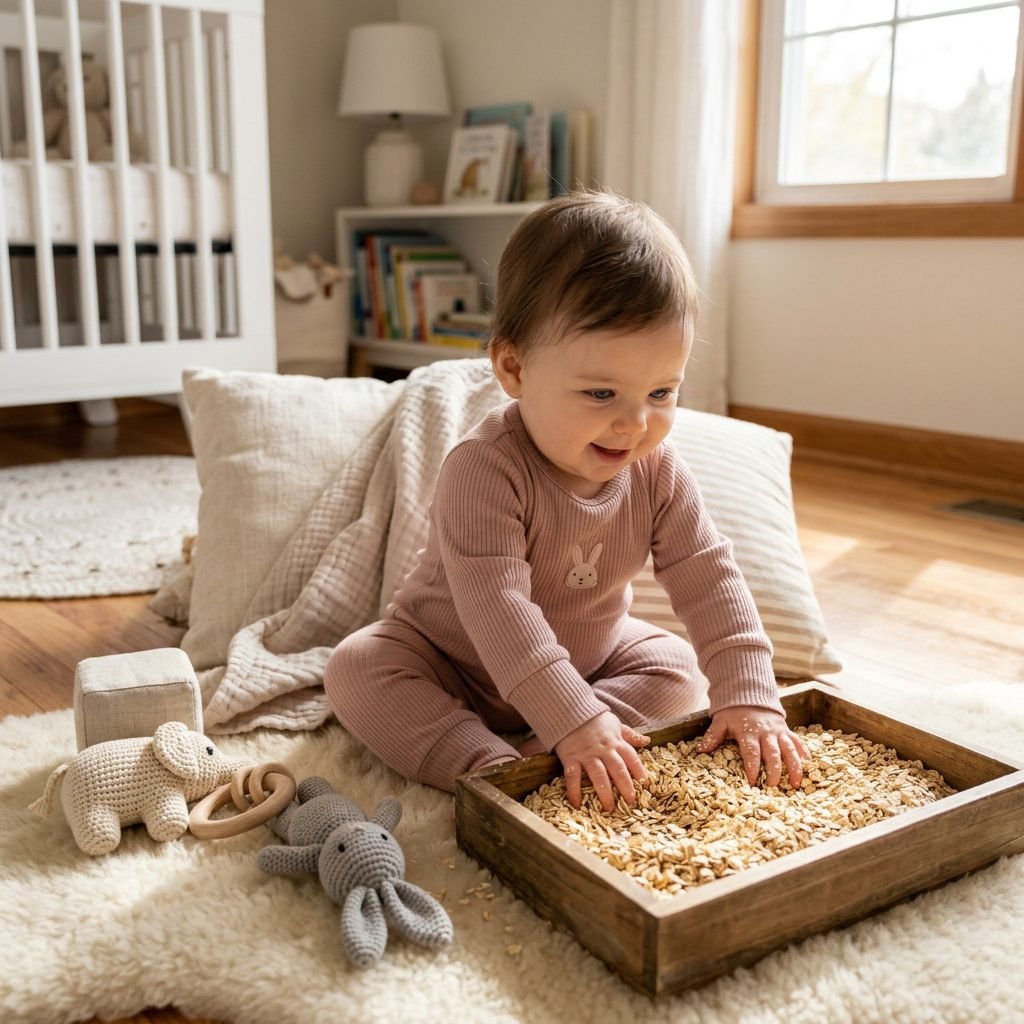
How to Make a Safe Dry Oatmeal Sensory Bin for 6-Month-Olds
Welcome to the Magical World of Sensory Exploration
Mama, if you have a 6-month-old at home, you are currently witnessing one of the most incredible transformations in human development. At this age, your little one is likely beginning to sit up, perhaps with a little help, and their world is expanding from the ceiling above their bassinet to the textures beneath their tiny fingertips. As a doula and a mama myself, I know that this stage is filled with a beautiful, albeit sometimes overwhelming, curiosity. Everything—and I mean everything—goes straight to the mouth. This is why sensory play at this age can feel a bit daunting. How do we encourage exploration without worrying about choking hazards or toxic materials?
The answer lies in your pantry. A dry oatmeal sensory bin is the ultimate ‘gold standard’ for first-time sensory play. It is taste-safe, budget-friendly, and provides a rich tactile experience that stimulates your baby’s brain without the stress of ‘what if they eat it?’ In this guide, we are going to walk through exactly how to set up this bin safely, the developmental science behind why it works, and my best ‘sister-to-sister’ tips for keeping the mess contained. Let’s dive into this nourishing activity that feeds both your baby’s mind and their sense of wonder.
Remember, Mama: Your baby isn’t just making a mess; they are building neural pathways. Every flake of oatmeal they touch is a lesson in texture, gravity, and cause-and-effect.
The Magic of 6 Months: Why Sensory Play is Your Baby’s Secret Superpower
Understanding the 6-Month Milestone
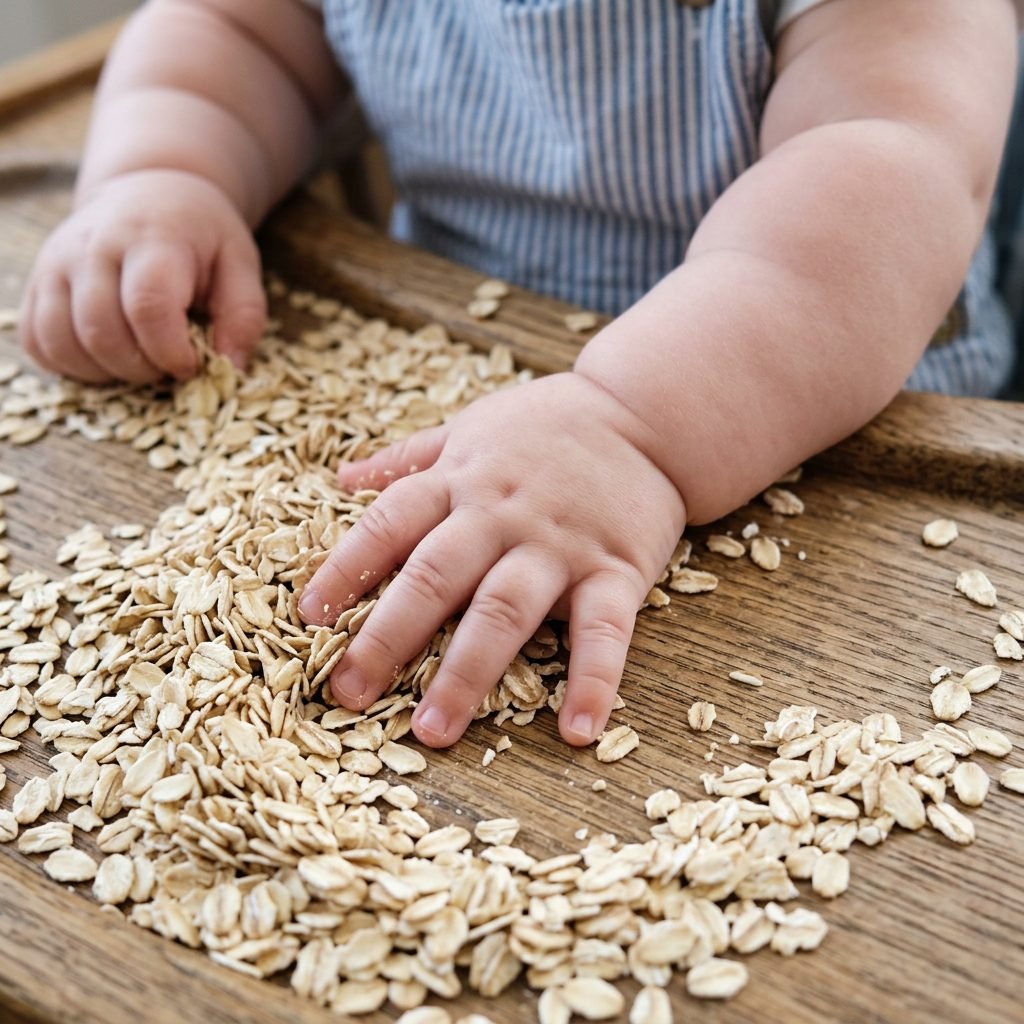
At 6 months old, your baby’s brain is like a sponge, absorbing every sensation to help make sense of the world. This is the peak of the ‘sensorimotor’ stage of development. During this time, babies learn primarily through their senses: sight, sound, smell, and most importantly, touch and taste. When a baby plunges their hands into a bin of dry oats, they aren’t just playing; they are performing a complex scientific experiment.
The Power of Tactile Input
Tactile play helps develop the somatosensory system, which is responsible for processing touch, temperature, and body position. By feeling the difference between a smooth wooden spoon and the flaky, slightly rough texture of dry oats, your baby is refining their ability to distinguish textures. This is a foundational skill for later tasks, like getting used to different food textures during weaning or even the feeling of different fabrics against their skin.
- Fine Motor Development: Grasping handfuls of oats encourages the ‘raking’ grasp, a precursor to the pincer grasp.
- Hand-Eye Coordination: Reaching for a specific toy hidden in the oats coordinates their visual input with physical movement.
- Cognitive Growth: Learning that the oats fall back down when dropped introduces the concept of gravity.
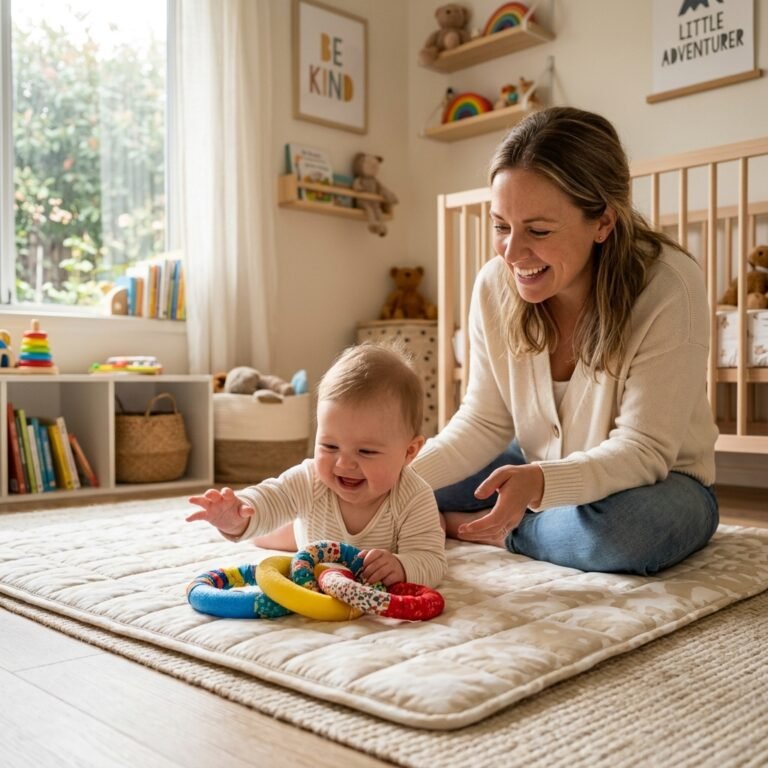
As a doula, I often remind parents that sensory play is also a wonderful way to practice mindfulness with your baby. Sitting on the floor, away from screens, and simply watching them explore can be a deeply grounding experience for your postpartum heart as well.
Safety First: Why Dry Oatmeal is the ‘Gold Standard’ for Taste-Safe Exploration

The Importance of ‘Taste-Safe’ Materials
Safety is our absolute priority. At 6 months, the ‘mouthing’ reflex is at its strongest. This is biologically intentional; the mouth is one of the most nerve-rich parts of a baby’s body, and they use it to ‘see’ objects. Therefore, any sensory bin we create must be 100% taste-safe. While many Pinterest boards suggest rice, beans, or water beads, these are not appropriate for a 6-month-old.
Why Oats Trump Other Fillers
Dry oatmeal is superior because it softens quickly when it hits saliva. Unlike uncooked rice or dried beans, which are hard and pose a significant choking risk if swallowed, a stray oat flake is much more manageable for a baby’s developing airway. However, constant supervision is still mandatory.
| Filler Material | Safety Rating | Reasoning for 6-Month-Olds |
|---|---|---|
| Dry Rolled Oats | High | Softens with saliva; low choking risk; edible. |
| Uncooked Rice | Medium-Low | Hard, small grains; potential choking hazard; difficult to digest. |
| Dried Beans | Low | Major choking hazard; hard; cannot be easily swallowed. |
| Water Beads | Dangerous | Extreme choking and internal blockage risk; toxic if ingested. |
Safety Tips for a Stress-Free Session
- Check for Allergies: Ensure your baby has already been introduced to oats in their diet before using them in a bin to rule out skin or digestive sensitivities.
- Supervision is Non-Negotiable: Never leave your baby alone with a sensory bin, even for a second.
- Size Matters: Use large, old-fashioned rolled oats rather than quick oats or ‘dusty’ oat flour to reduce the risk of inhalation or eye irritation.
The Ultimate DIY Setup: Crafting Your Perfect Oatmeal Sensory Bin
Materials and Budget Breakdown
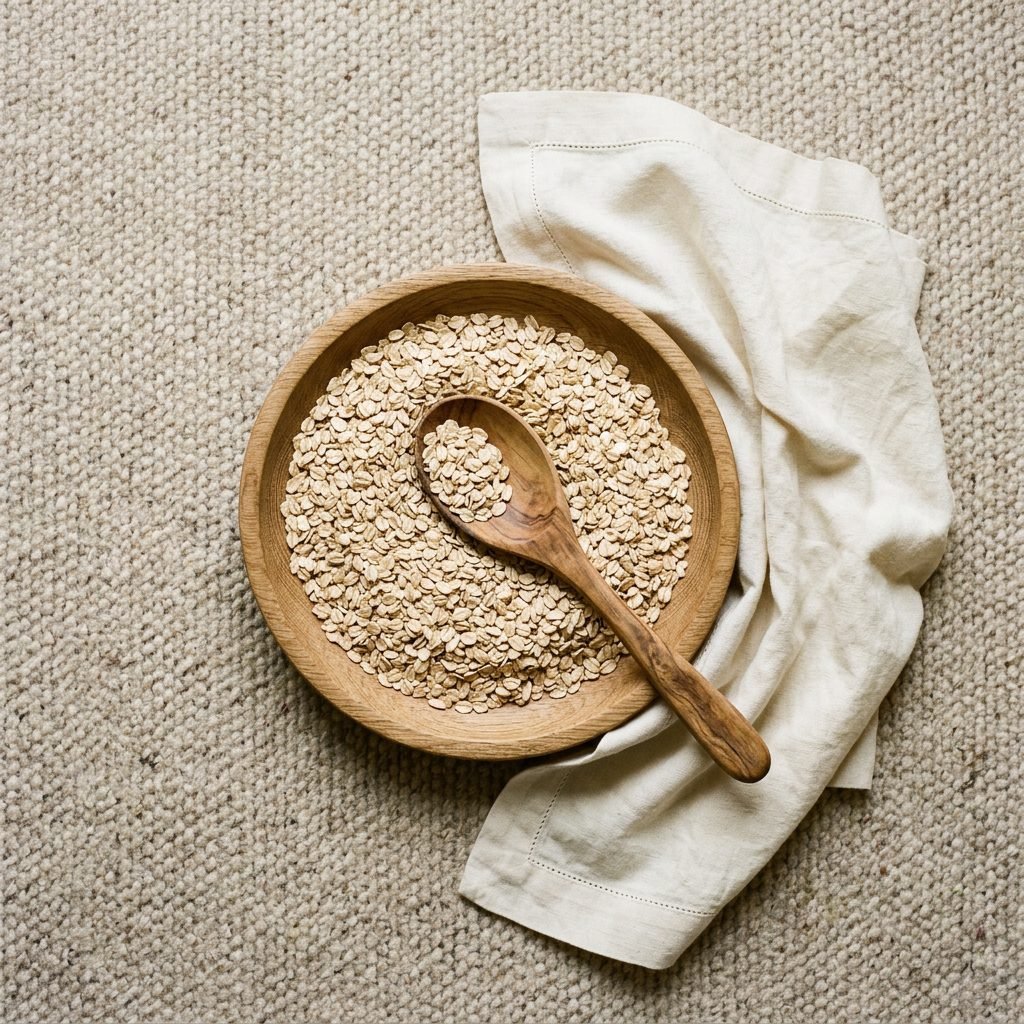
One of the best things about this activity is that you likely already have everything you need in your kitchen. You don’t need a fancy, expensive sensory table to make this happen. A simple plastic storage tub or even a large baking dish will work perfectly.
| Item | Purpose | Estimated Cost |
|---|---|---|
| Large Rolled Oats | The primary sensory filler. | $3.00 – $5.00 |
| Shallow Bin or Tub | To contain the oats and allow easy access. | $0.00 (Reuse a container) |
| Large Bed Sheet | To catch the ‘escapee’ oats for easy cleanup. | $0.00 (Use an old one) |
| Kitchen Utensils | Tools for scooping and pouring. | $0.00 (From your drawer) |
Step-by-Step Assembly
- Select Your Base: Find a shallow bin that is about 4-6 inches deep. If the bin is too deep, your baby won’t be able to reach in comfortably while sitting.
- Prepare the ‘Splash Zone’: Lay down a large, light-colored bed sheet on the floor. This is my #1 Doula Hack for sensory play. It makes cleanup as easy as gathering the corners and shaking it out outside.
- Add the Oats: Pour in about 2-3 inches of dry rolled oats. You want enough for the baby to bury their hands in, but not so much that it’s impossible to manage.
- Introduce Tools: Place 2 or 3 simple items in the bin. For a 6-month-old, keep it simple. A large wooden spoon, a silicone cupcake liner, or a chunky plastic ring are great starts.
Sisterly Tip: If your baby is still a bit ‘wobbly’ when sitting, place them in your lap or use a nursing pillow around their waist for support while they reach into the bin. Comfort equals longer play!
Leveling Up the Fun: Sensory Add-ins to Spark Curiosity and Fine Motor Skills
Engaging the Senses Beyond Touch
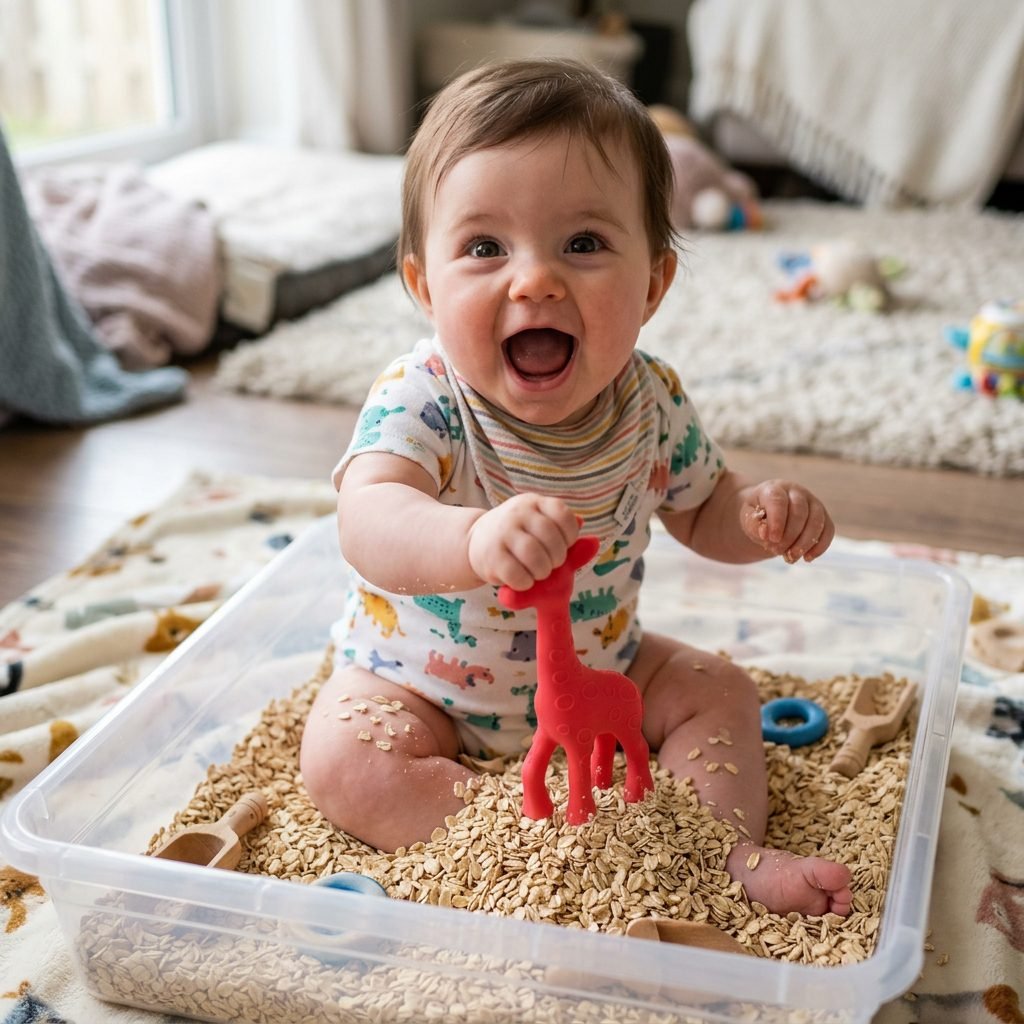
While the oats themselves are the star of the show, adding a few ‘surprises’ can extend the play session and provide different types of stimulation. At 6 months, babies are fascinated by cause-and-effect and object permanence.
Household Items to Include
- Silicone Whisks: These are amazing for ‘trapping’ large oat flakes or small toys inside, encouraging baby to figure out how to get them out.
- Measuring Cups: The ‘clinking’ sound of metal measuring cups hitting each other adds an auditory element to the play.
- High-Contrast Toys: Since vision is still refining, a black-and-white toy hidden under the oats is a thrilling discovery.
- Natural Scents: You can mix in a tiny pinch of cinnamon or a drop of vanilla extract into the oats to engage their sense of smell. Ensure it is well-mixed and safe for skin contact.
The ‘Buried Treasure’ Game
Take one of your baby’s favorite teething toys and bury it partially under the oats. Watch as they notice a piece of it sticking out and work to ‘rescue’ it. This simple game builds problem-solving skills and keeps them engaged for much longer than just the oats alone. As they pull the toy out, use descriptive words like, ‘You found it! The oats were hiding your ring. It feels bumpy, doesn’t it?’ Even though they aren’t talking yet, you are building their receptive language.
The ‘No-Stress’ Cleanup: Practical Hacks for Managing the Mess
Embrace the Mess, Control the Chaos
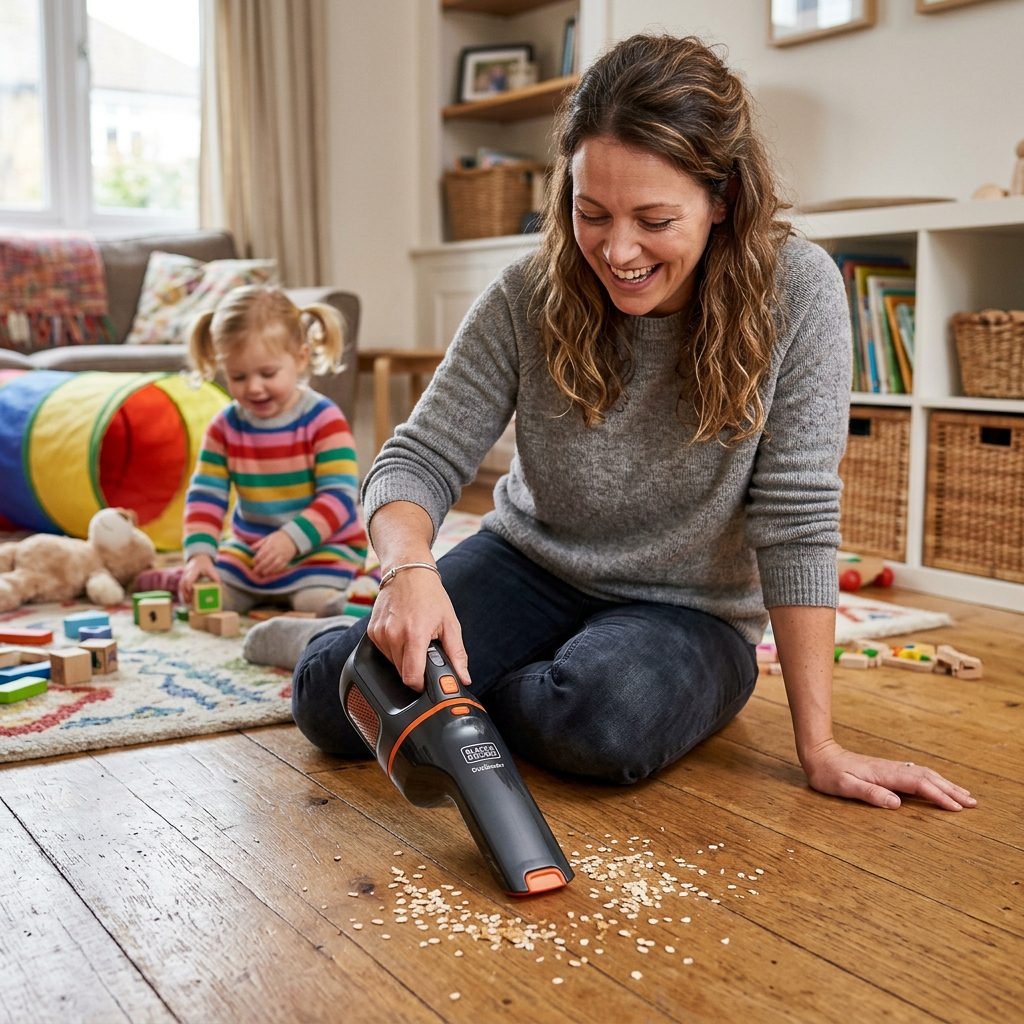
I hear you, Mama. The thought of dry oats scattered across your rug might make your eye twitch just a little. But I promise, the developmental benefits far outweigh the 5 minutes of cleanup. Here is how we keep it manageable.
The Sheet Method
As mentioned before, the sheet method is king. Use a white or light-colored sheet so you can easily see where the oats have landed. When playtime is over, simply lift the baby out, fold the sheet into a bundle, and take it to the trash or outside. If the oats are still clean, you can pour them back into a gallon-sized Ziploc bag for next time.
The High Chair Alternative
If you aren’t feeling up for floor play, use the high chair tray. Spread a handful of oats directly on the tray. This limits the ‘scatter’ and keeps the baby contained. It’s a perfect way to keep them occupied while you finish a warm cup of coffee or prep dinner. Just be prepared for the ‘gravity check’—babies love to swipe the oats off the edge just to see where they go!
Cleanup Tools Table
| Tool | Best For |
|---|---|
| Handheld Vacuum | Quickly sucking up stray oats from corners. |
| Lint Roller | Picking up fine oat dust from clothing or fabric bins. |
| Microfiber Cloth | Wiping down the baby’s hands (oat dust can get sticky with drool!). |
Pro-Tip: Have a damp washcloth ready before you start. Once the play is done, wipe those sticky, oat-covered hands immediately before they touch their hair or your clothes. You’ll thank me later!
Mindful Observation: What Your 6-Month-Old is Actually Learning

Being the ‘Scientific Observer’
One of my favorite things to teach as a doula is the art of mindful observation. Instead of directing the play, try sitting back and just watching. You will see your baby hitting major milestones in real-time.
What to Look For:
- Crossing the Midline: Watch if your baby reaches with their right hand to grab something on the left side of the bin. This is a huge step in brain communication!
- Transferring Objects: Do they pick up a scoop with one hand and move it to the other? This shows bilateral coordination.
- Intentional Release: At 6 months, letting go is harder than grabbing. If they intentionally drop oats or a toy, they are mastering their motor control.
This activity isn’t just about ‘keeping them busy.’ It’s about providing a safe container for them to test their physical limits. When they look up at you with a handful of oats and a big, gummy smile, they are sharing their discovery with you. This joint attention is the foundation of social communication and bonding. You are doing a great job, Mama. You are providing exactly what their growing brain needs: safety, love, and a little bit of messy fun.
Conclusion
Nurturing Growth, One Flake at a Time
Creating a dry oatmeal sensory bin for your 6-month-old is more than just a DIY project; it is an act of love and an investment in their rapidly developing brain. By choosing a taste-safe material like oats, you are removing the ‘no’ from their environment and replacing it with a ‘yes.’ You are giving them the freedom to explore, to taste, to touch, and to learn without boundaries. This is the essence of respectful, evidence-based parenting.
As you watch your little one navigate the textures of the bin, remember that these early experiences are the building blocks for a lifetime of curiosity. Don’t be afraid of the mess—it’s just a sign of a morning well-spent. Take the photos, enjoy the gummy smiles, and know that you are providing a rich, sensory-filled life for your baby. You’ve got this, Mama!