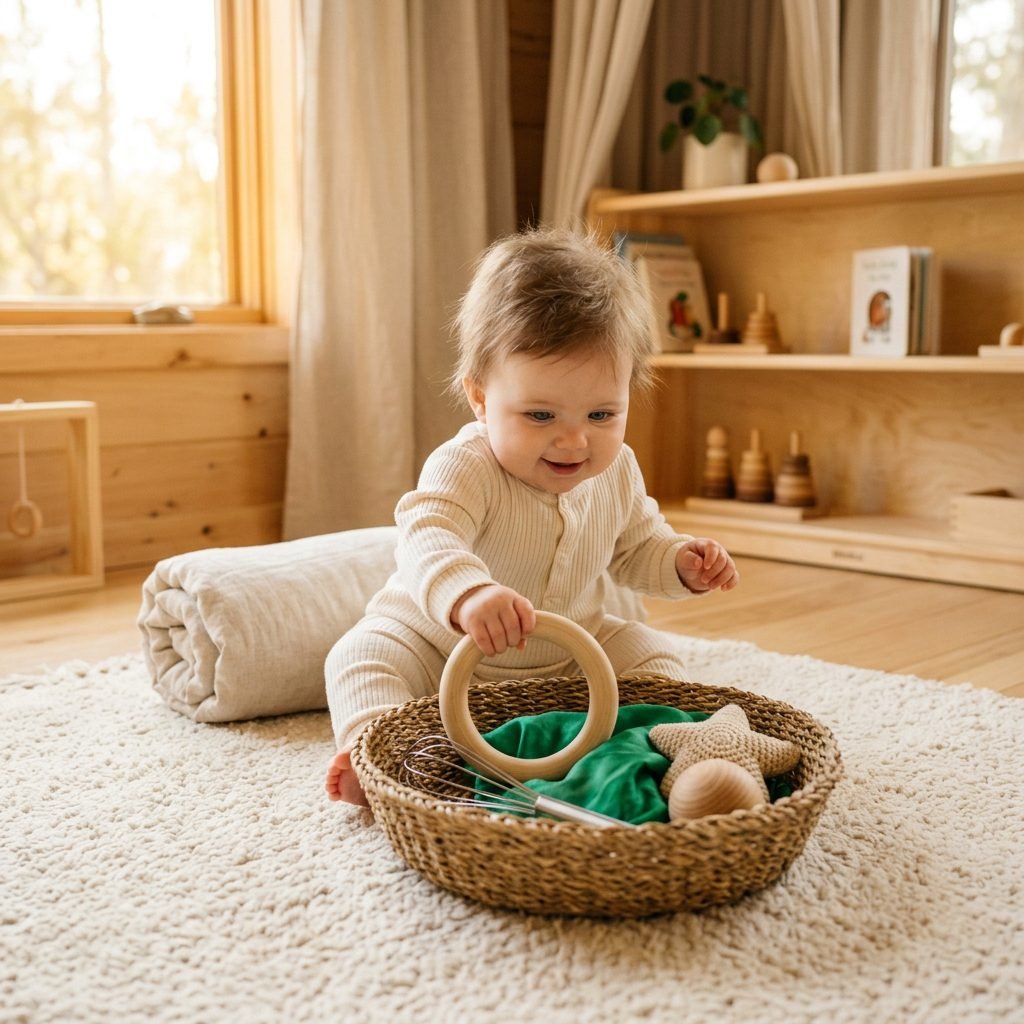
How to Create Montessori Sensory Baskets for Your 6-Month-Old Baby
Welcome to the Magic of Six Months
Oh, mama, take a deep breath and look at that beautiful little soul. You’ve made it to the six-month milestone, a truly transformative season in your baby’s first year. This is the age of ‘the great awakening.’ Your little one is likely starting to sit up—perhaps with a bit of support or a few adorable wobbles—and their hands have become their primary tools for discovering the world. As a doula and a fellow mama, I know this stage is both exhausting and exhilarating. You’re moving away from the ‘fourth trimester’ fog and into a phase of active, curious engagement.
In the Montessori tradition, we don’t need flashing lights or battery-operated plastic toys to stimulate a baby’s brain. Instead, we look to the Treasure Basket. Originally pioneered by Elinor Goldschmied and embraced by Montessori educators worldwide, the sensory basket is a simple, elegant way to satisfy your baby’s innate ‘urge to explore.’ At six months, your baby is learning about object permanence, cause and effect, and tactile discrimination. By providing a curated collection of real-world objects, you are offering them a rich ‘sensory buffet’ that respects their intelligence and fosters deep concentration.
“The hands are the instruments of man’s intelligence.” — Maria Montessori
In this guide, we’re going to walk through exactly how to create these baskets using items you likely already have in your home. We’ll focus on safety, aesthetics, and the specific developmental needs of your growing baby. Let’s create a world of wonder together, one basket at a time.
The Philosophy of the Treasure Basket: Why Natural Beats Plastic
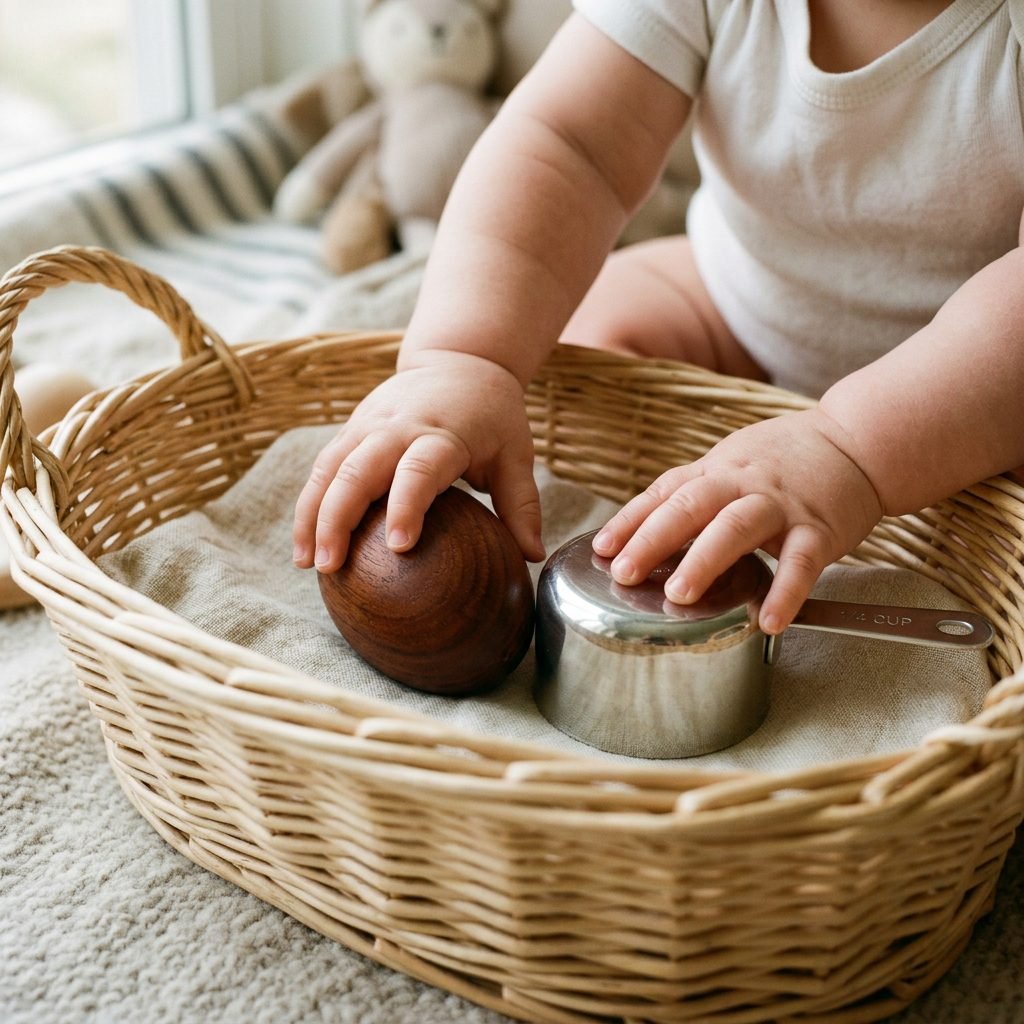
Engaging the Senses with Real-World Objects
At six months old, your baby’s brain is like a sponge, specifically tuned to the textures, weights, and temperatures of the environment. While plastic toys often feel the same—smooth, warm, and lightweight—natural materials offer a complex sensory profile. A stainless steel spoon is cold and heavy; a wooden block is warm and textured; a silk scarf is light and ethereal. These variations provide vital information to the developing nervous system.
When we curate a Montessori sensory basket, we are moving beyond mere entertainment. We are providing cognitive scaffolding. Your baby isn’t just ‘playing’; they are conducting scientific experiments. ‘What happens when I bang this metal tin?’ ‘How does this wool ball feel against my cheek?’ This type of open-ended play encourages sustained attention, a skill that will serve them for a lifetime.
Developmental Benefits at 6 Months
- Fine Motor Skills: Reaching, grasping, and transferring objects from hand to hand.
- Oral Exploration: Using the mouth to learn about shape and density (the most sensitive sensory tool they have!).
- Hand-Eye Coordination: Tracking the movement of objects as they are pulled from the basket.
- Language Foundations: As you sit nearby and name the objects—’smooth,’ ‘cold,’ ‘rough’—you are building their receptive vocabulary.
Setting the Stage: Essential Materials & Budget Breakdown
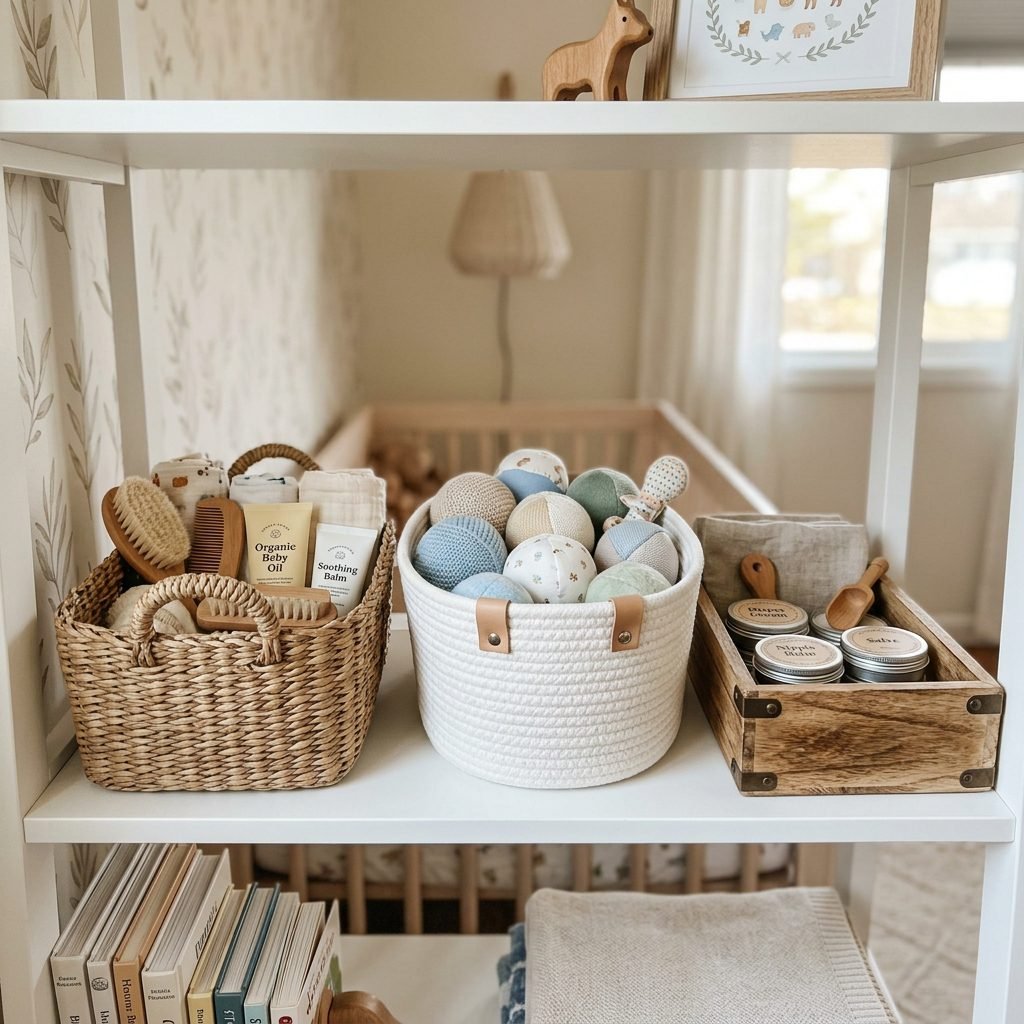
Choosing Your Foundation
The basket itself is just as important as the contents. For a 6-month-old, you want a basket that is low-profile and sturdy. If the sides are too high, your baby won’t be able to see the treasures inside while sitting. If it’s too flimsy, it will collapse when they lean on it for support. Look for natural materials like willow, seagrass, or heavy cotton rope.
Creating these baskets doesn’t have to break the bank. In fact, the most authentic Montessori environments are often built from upcycled household items. Below is a breakdown of what you might need to get started and the estimated costs if you were to buy them new versus sourcing them from your kitchen or craft closet.
| Item | Purpose | Estimated Cost (New) | Eco-Friendly/DIY Tip |
|---|---|---|---|
| Low Woven Basket | The container for exploration. | $10 – $20 | Check local thrift stores or use a sturdy wooden tray. |
| Wooden Kitchen Tools | Tactile warmth and organic shapes. | $5 – $8 | Sand down old wooden spoons and coat with food-grade beeswax. |
| Metal Items (Whisks/Cups) | Reflective surfaces and cool temperatures. | $3 – $10 | Use your spare stainless steel measuring cups. |
| Textile Scraps (Silk/Cotton) | Softness and varied friction. | $0 – $15 | Cut squares from old (clean) silk scarves or linen tea towels. |
| Natural Elements (Large Stones) | Weight and unique textures. | $0 | Ensure stones are too large to fit through a toilet paper roll (choke-safe). |
Pro Tip: Always have 2-3 baskets ready to rotate. If you see your baby losing interest in the ‘Kitchen Basket,’ swap it out for the ‘Textile Basket’ the next day. This keeps the environment fresh without overwhelming their nervous system with too many choices at once.
Themed Basket Recipes: Curating the Sensory Experience
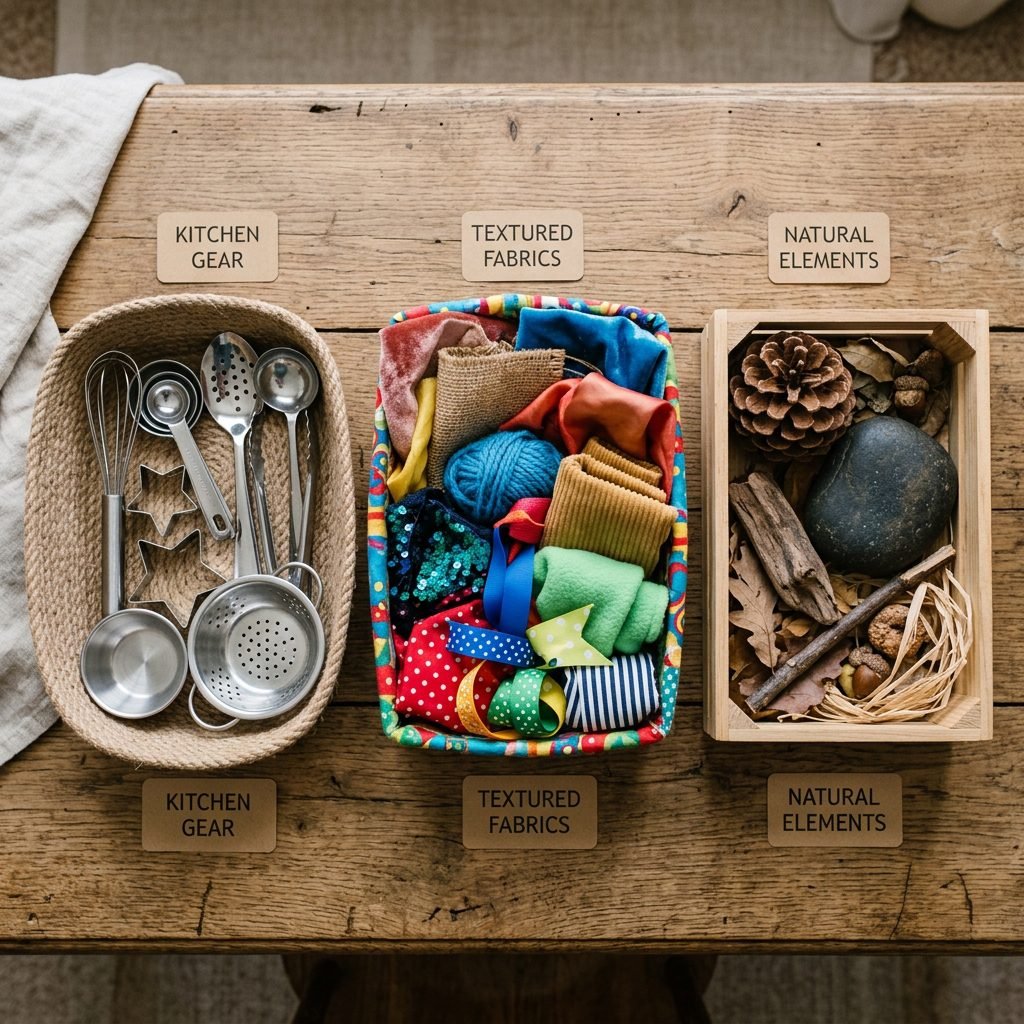
The Kitchen Collection (Metal & Wood)
The kitchen is a goldmine for Montessori treasures. For this basket, focus on the contrast between metal and wood. The shiny, reflective nature of stainless steel is endlessly fascinating to a 6-month-old who is just beginning to recognize reflections.
- Stainless Steel Whisk: Great for tiny fingers to grip.
- Small Metal Ramekin: Makes a satisfying ‘ping’ when dropped.
- Wooden Honey Dipper: Provides a unique ribbed texture for gums.
- Large Wooden Ring: Easy to grasp and safe for teething.
- Metal Tea Strainer: Interesting holes and a tactile hinge.
The Texture & Textile Collection
This basket is all about the ‘feel.’ At six months, babies are very sensitive to how things glide across their skin. Include a variety of weights and weaves.
- Silk Scarf: For ‘peek-a-boo’ and watching how it floats through the air.
- Crocheted Cotton Ball: A bumpy, grippy texture that’s easy to catch.
- Burlap Scrap: A rougher, more stimulating texture (ensure edges are hemmed).
- Velvet Ribbon: Smooth and luxurious.
- Wool Dryer Ball: Firm, slightly fuzzy, and rolls slowly.
The ‘Found in Nature’ Collection
Bringing the outdoors in is a core Montessori principle. However, safety is paramount here. Only choose items that cannot be broken into small pieces.
- Large Pinecone: Fascinating geometry and ‘prickly’ (but not sharp) feel.
- Extra Large Sea Shell: Smooth and cool (ensure no sharp edges).
- Loofah Sponge: A very unique, airy texture.
- Large, Smooth River Stone: Heavy and grounding.
Step-by-Step DIY: Crafting Your Own Non-Toxic Sensory Items
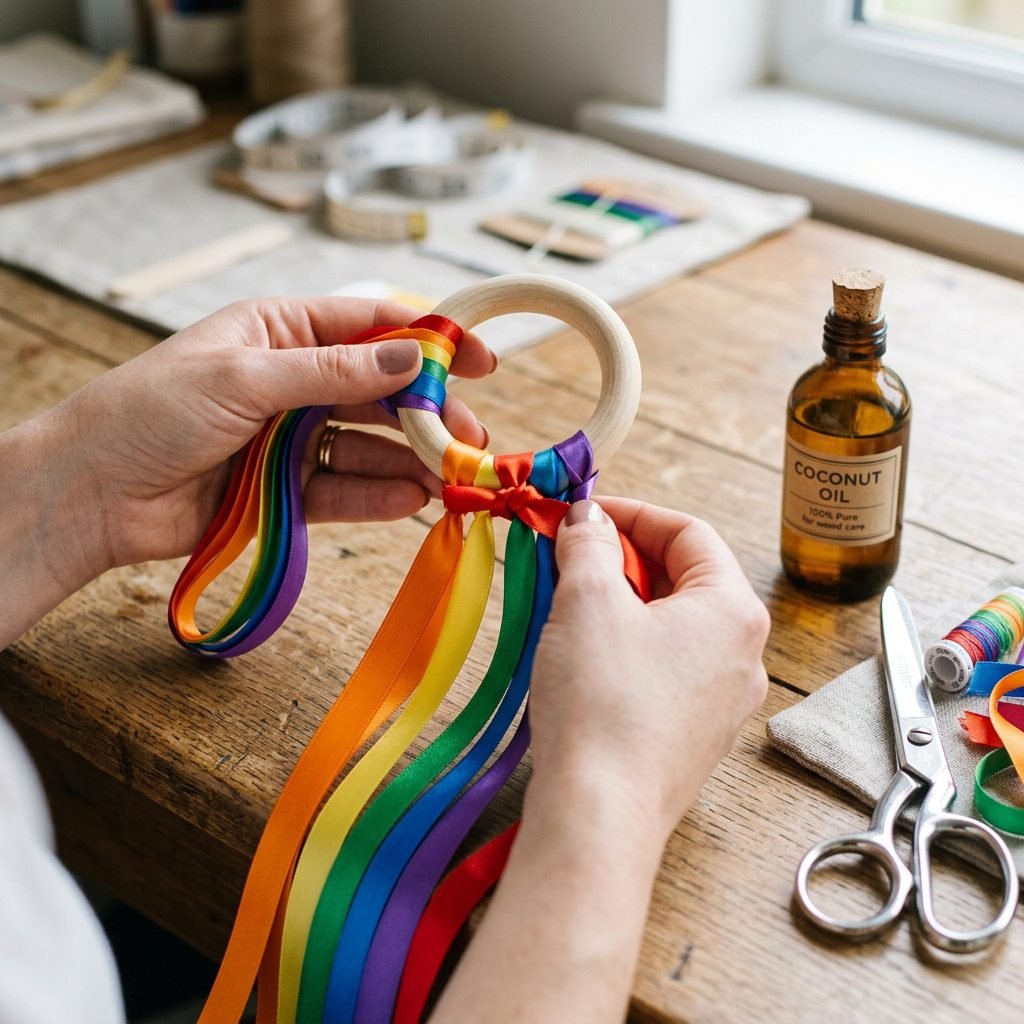
The Ribbon Ring: A 6-Month Favorite
One of the easiest and most beloved DIY items for a sensory basket is the Ribbon Ring. It encourages the ‘pincer grasp’ and provides a visual delight as the colors dance. Here is how to make one safely:
- Source a Natural Wood Ring: Use a 3-inch unfinished maple ring. Ensure it is sanded perfectly smooth with no splinters.
- Select Your Ribbons: Choose high-quality grosgrain or satin ribbons in varying colors. I love using a ‘high-contrast’ palette (black, white, and red) or a ‘rainbow’ palette.
- Cut to Length: Cut the ribbons into 8-inch strips. You will need about 5-7 strips.
- The Secure Knot: Loop the ribbon through the ring and tie a double-knot or a ‘cow hitch’ knot. Pull it very tight.
- Seal the Edges: Use a lighter to very briefly singe the ends of the ribbons to prevent fraying. (Do this away from the baby!).
- Finishing Touch: Rub the wooden ring with a tiny bit of organic coconut oil or olive oil to protect the wood and make it taste-safe.
“Every unnecessary help is a hindrance to development.” — Maria Montessori. Let them struggle a little to untangle the ribbons; it’s where the learning happens!
The Doula’s Guide to Safety: Choking Hazards & Material Integrity
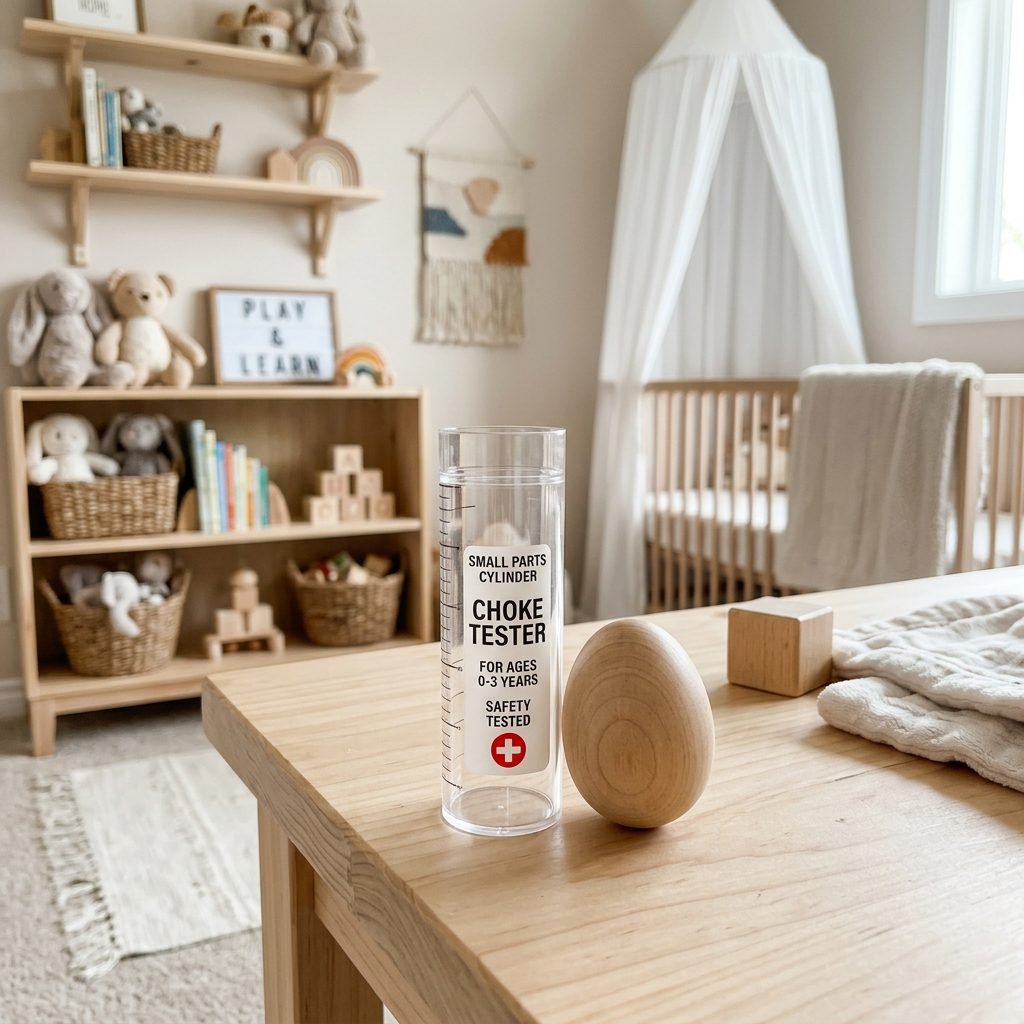
Safety is our North Star
Mama, I want you to feel confident and relaxed while your baby explores. Because 6-month-olds explore with their mouths, every single item in the basket must be non-toxic and ‘choke-safe.’ A good rule of thumb is the ‘Toilet Paper Roll Test’: if an object can fit through the center of a toilet paper roll, it is too small for a 6-month-old to play with unsupervised.
Regularly inspect your basket items for wear and tear. Wood can splinter over time, and metal can develop sharp edges if dropped frequently. Below is a quick-reference guide for what to prioritize and what to avoid.
| Material | Safety Status | What to Check For |
|---|---|---|
| Unfinished Wood | Safe & Recommended | Check for splinters or cracks. Ensure it’s not painted with lead-based paint. |
| Stainless Steel | Safe & Recommended | Ensure there are no rust spots or sharp ‘burrs’ on the edges. |
| Silicone (Food Grade) | Safe | Check for bite marks or tearing that could lead to small pieces breaking off. |
| Painted Plastics | Avoid | Paint can chip off during mouthing. Many older plastics contain BPA or phthalates. |
| Small Buttons/Beads | Strict Avoidance | High choking risk. Even if sewn on, they can be pulled off by determined gums. |
| Fragile Glass | Strict Avoidance | While Montessori uses real glass later, it is not appropriate for the ‘mouthing’ stage of 6 months. |
Always supervise play. These baskets are meant for ‘engaged’ time where you are present in the room, observing their discovery. It’s a beautiful time for you to sit back with a cup of tea and simply watch your baby’s mind at work.
The Art of Observation: How to Be a Montessori Guide
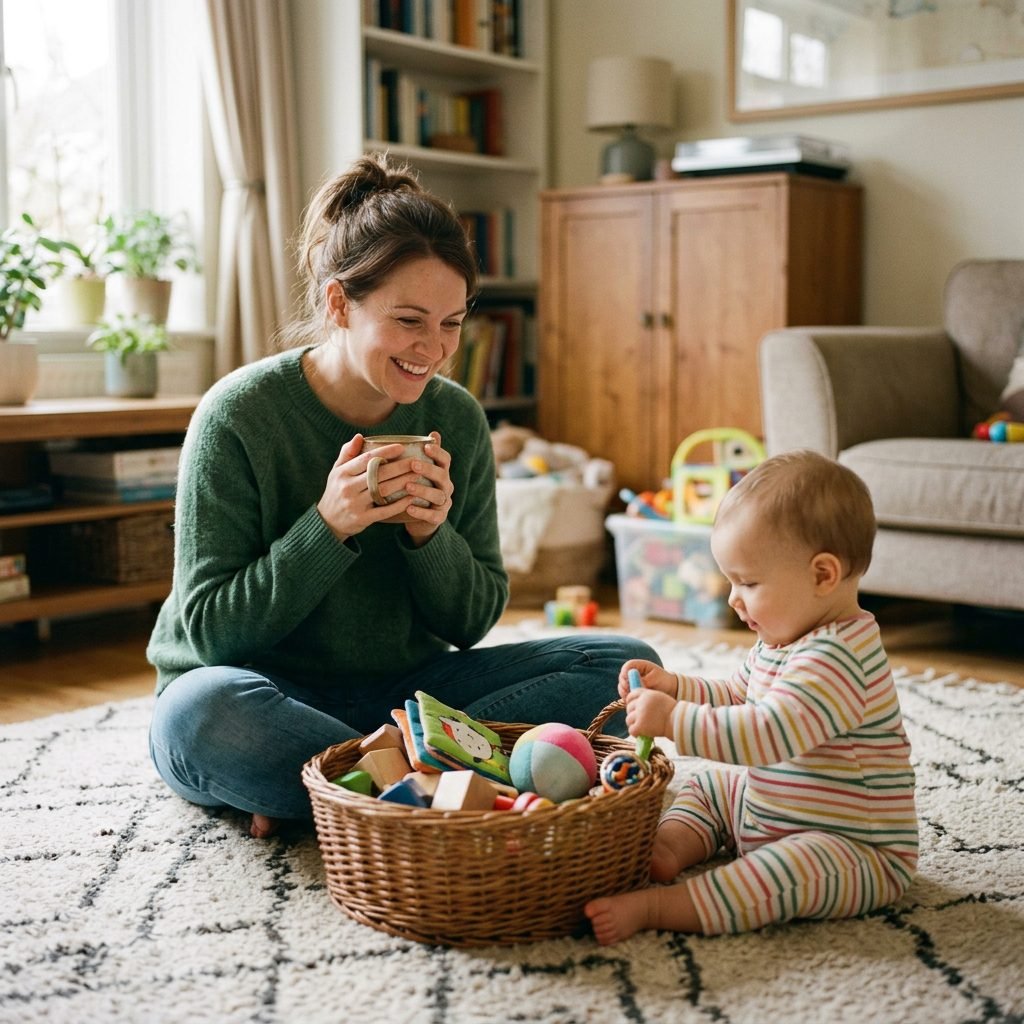
Step Back and Let the Magic Happen
As a doula, I often tell parents that the hardest part of Montessori is doing nothing. When you present the sensory basket, your instinct might be to show the baby how to use the items. ‘Look, honey, the whisk makes a sound!’ In Montessori, we try to resist this urge. We want the discovery to be entirely theirs.
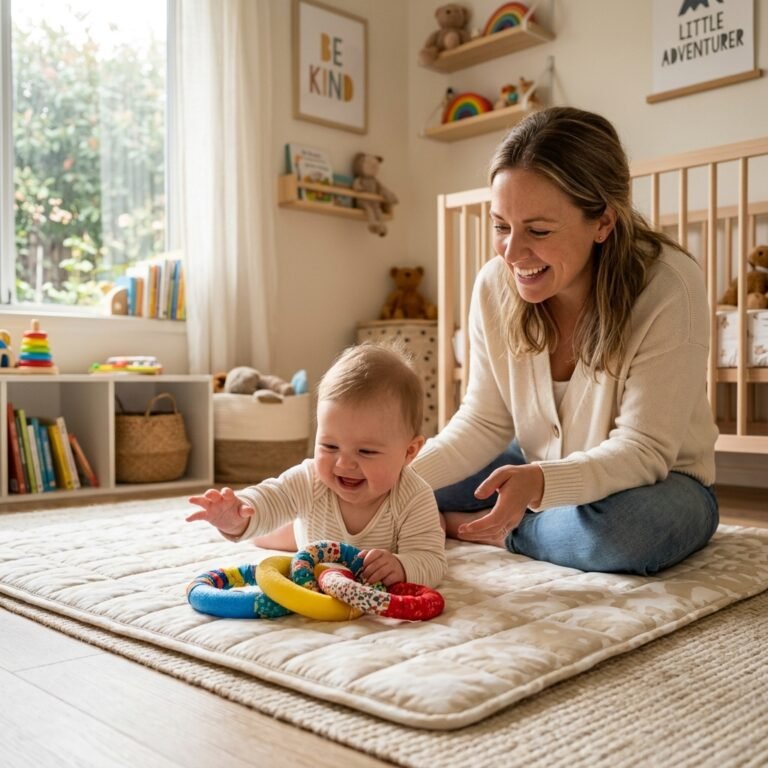
Place the basket on the floor in front of your baby. Sit nearby—close enough to be a ‘secure base,’ but far enough away that you aren’t intruding on their space. Watch their eyes. Watch which item they reach for first. If they struggle to pull an item out, wait a few seconds before helping. That ‘struggle’ is actually problem-solving in action.
When to Rotate the Baskets
You’ll know it’s time to change the items when your baby starts throwing the objects out of the basket without looking at them, or if they simply ignore the basket altogether. This usually happens every 7-10 days. You don’t need a whole new set of items; just swap out three old things for three ‘new’ things from around the house. This keeps the ‘sense of order’ while providing just enough novelty to spark interest.
Conclusion
You Are Your Baby’s Best Teacher
Creating Montessori sensory baskets is a labor of love that honors your baby’s developmental journey. At six months, your little one is stepping into a world of independence, and these simple baskets provide the perfect ‘training ground’ for their curious minds. Remember, mama, it doesn’t have to be perfect. It doesn’t have to look like a Pinterest board. What matters is the intentionality you bring to their play and the safety you provide as they explore.
As you watch your baby mouth a wooden spoon or marvel at the reflection in a metal bowl, take a moment to marvel at them. You are doing an incredible job navigating this postpartum season. By fostering their curiosity now, you are laying the foundation for a lifetime of confident, independent learning. Happy exploring!