How to Organize and Catalog Baby Books in Your Nursery Library
Welcome, sweet mama. If you are reading this, you are likely in the thick of the nesting phase, that beautiful, instinctive window where every fiber of your being wants to create a safe, organized, and magical nest for your little one. Or perhaps you are already in the postpartum flow, looking down at a mountain of gifted board books and wondering how on earth to make them accessible without the nursery looking like a cluttered bookstore clearance bin. As a doula, I have seen how a calm environment translates to a calm mother and a calm baby. Your nursery library is more than just a storage spot; it is the foundation for your child’s imagination, language development, and those precious bedtime bonding rituals. Organizing these books isn’t just about aesthetics—though a rainbow-colored shelf is certainly a mood-lifter—it is about creating a functional system that serves you during those 2:00 AM feedings and frantic toddler transitions. Let’s walk through the gentle process of curating, cataloging, and styling your baby’s first library together, ensuring every story has its place and every moment of reading is a breath of fresh air.
The Great Book Sort: Curating with Intention
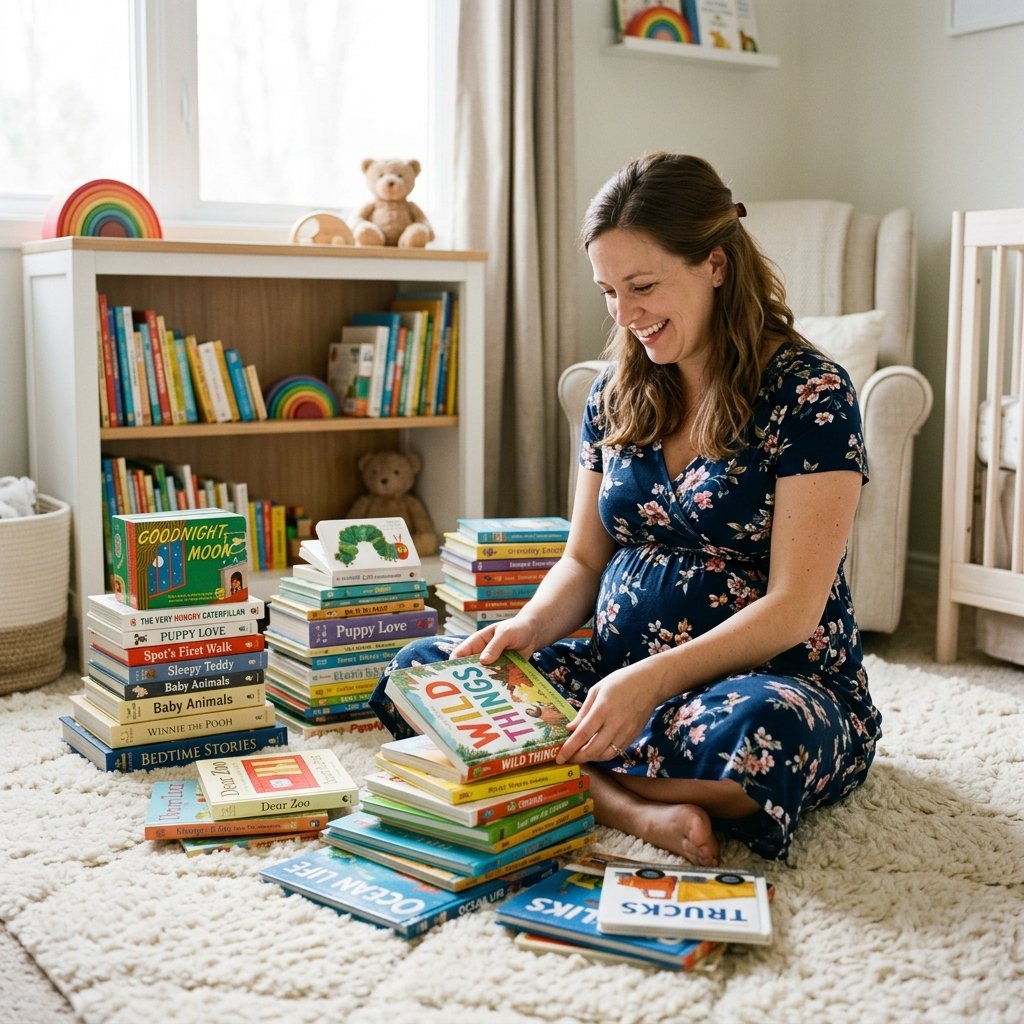
Before we pick out the perfect shelves, we must look at what we have. It is so easy to accumulate books—baby showers, hand-me-downs from cousins, and those irresistible Target dollar-spot finds. But a library that is overflowing is a library that goes unused. Start by gathering every single book in the center of the room. This is your ‘blank slate’ moment. We are going to sort them into three distinct categories to ensure your library remains a curated sanctuary rather than a storage locker.
Categorizing by Format
- Indestructible Board Books: These are the heavy hitters. Made of thick cardboard, they are designed for tiny hands that haven’t quite mastered the art of ‘gentle.’ These should be the most accessible.
- Classic Picture Books: These have paper pages. While beautiful, they are better suited for the ‘upper shelves’ until your little one is past the ripping phase.
- Keepsake & Heirloom Editions: These are the signed copies, the vintage classics from your own childhood, or the delicate pop-up books. These require a special, high-up ‘safety zone.’
Doula Tip: If you find books that are duplicates or stories that don’t resonate with your family values, set them aside for a ‘Little Free Library’ or a local women’s shelter. Decluttering is a form of self-care, mama. You only need the stories that spark a smile.
Choosing the Right Storage: Floating Shelves vs. Traditional Bookcases

Now that we know what we’re working with, let’s talk about the ‘where.’ The way you store your books changes the entire vibe of the nursery. In small spaces, we have to be clever. In larger rooms, we can afford a bit more furniture. Here is a breakdown of the most effective storage solutions for a nursery library.
The Magic of Front-Facing Shelves
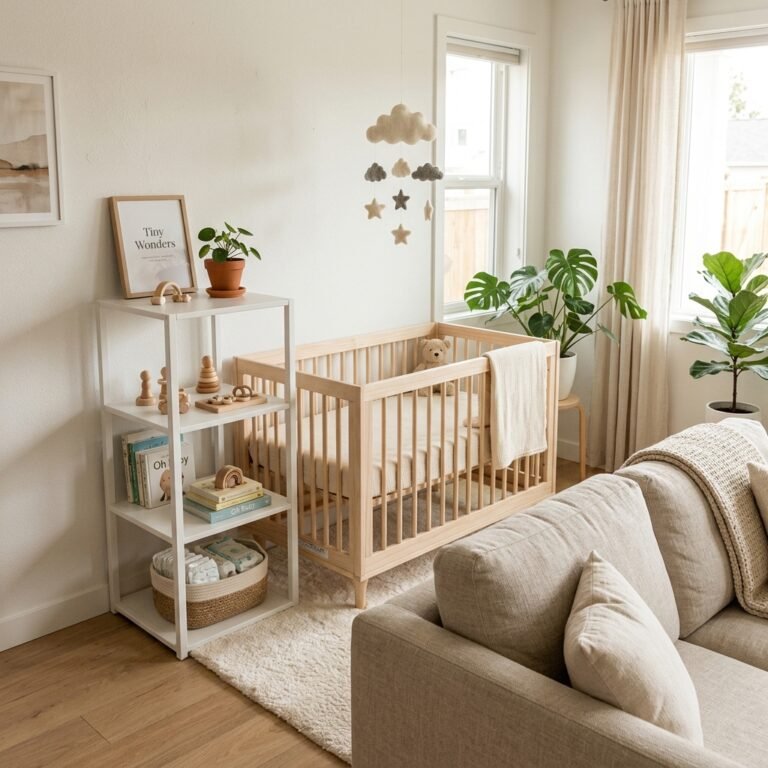
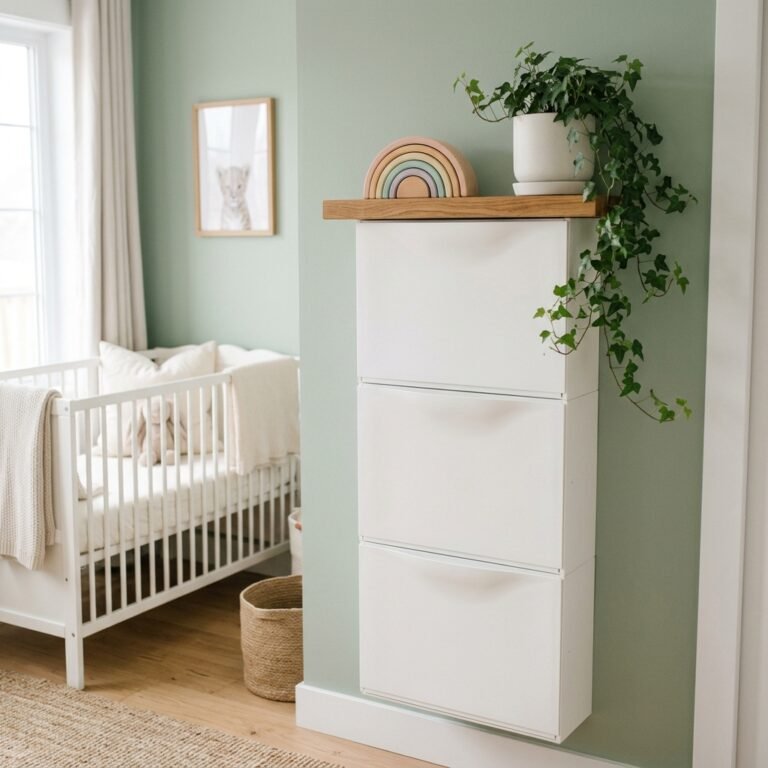
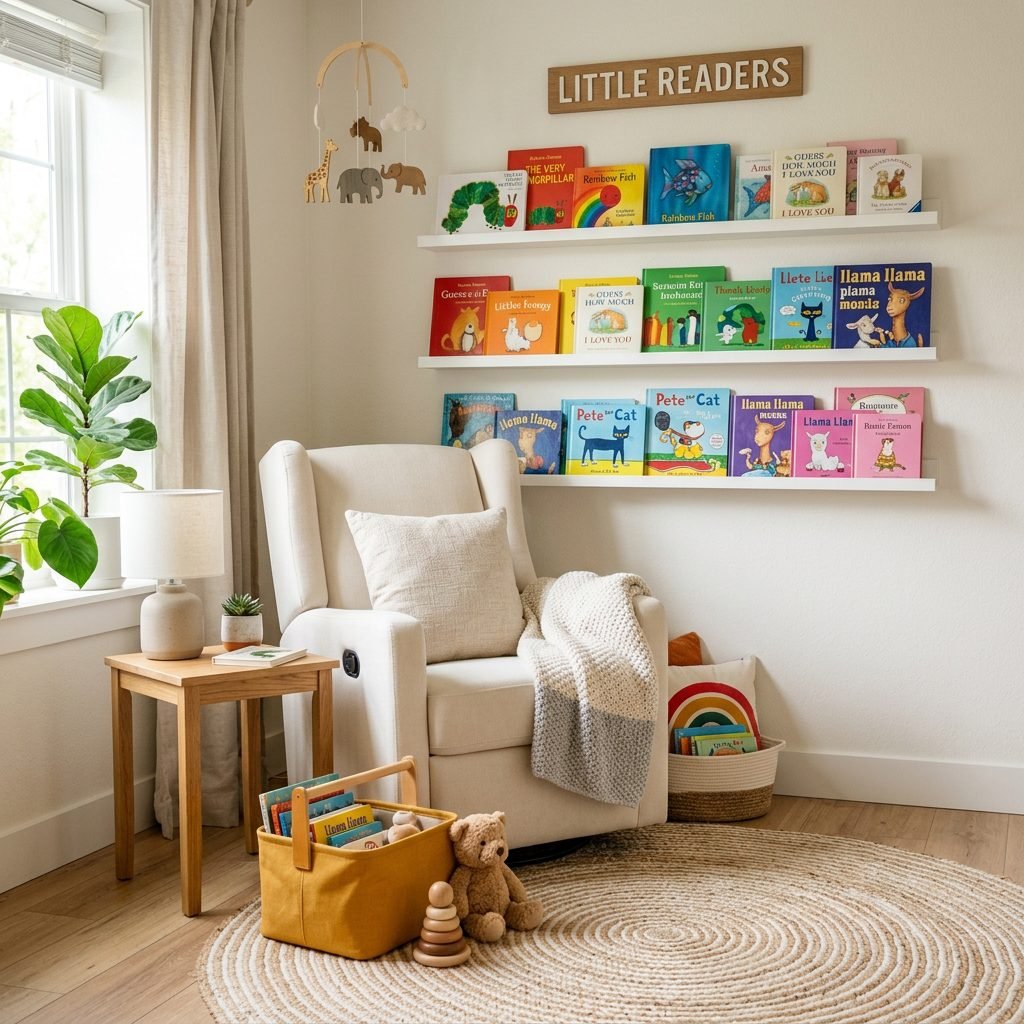
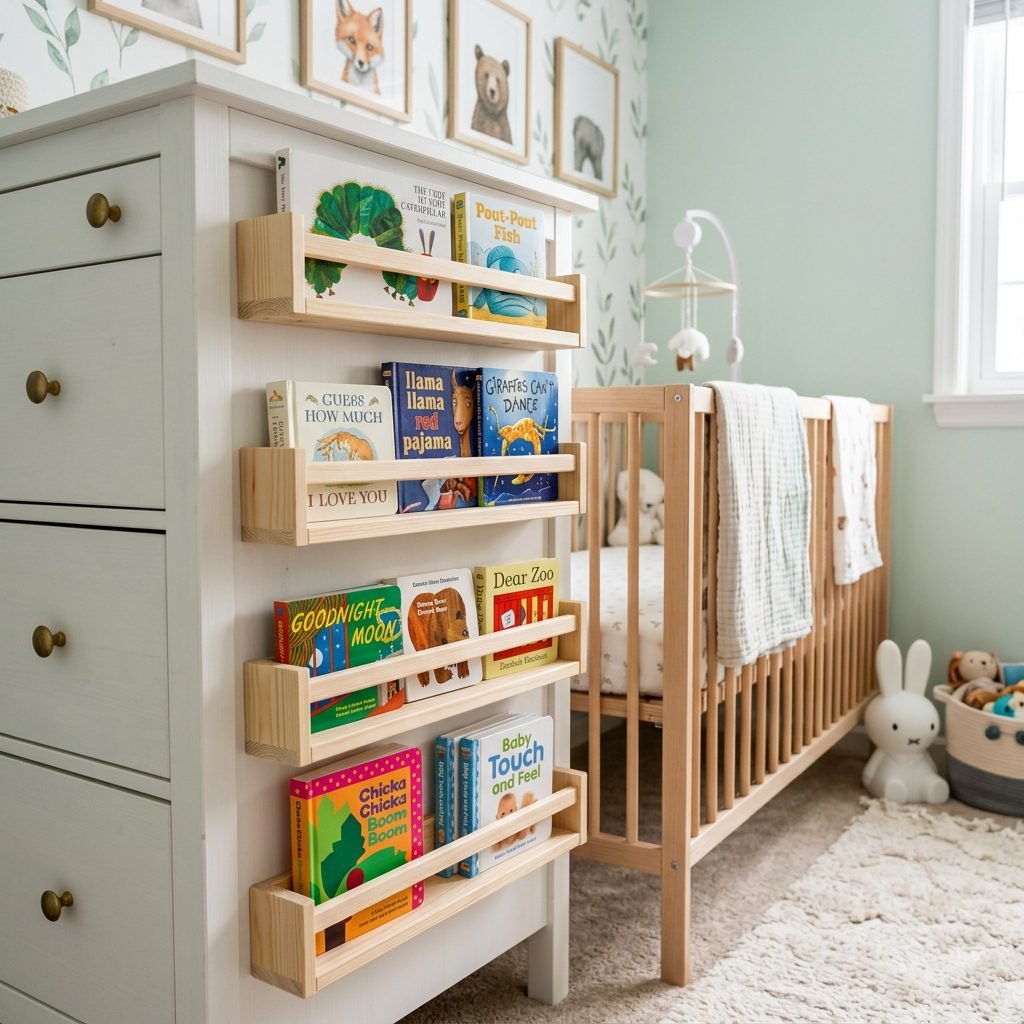
For babies and toddlers, ‘out of sight’ truly is ‘out of mind.’ Front-facing shelves, such as acrylic floating ledges or wooden spice racks (a classic IKEA hack!), allow the beautiful cover art to serve as the decor. This makes it much easier for a toddler to point to the book they want, reducing frustration during the bedtime transition.
The Reliable Kallax Hack
If you have a massive collection, the IKEA Kallax is your best friend. Use the top cubbies for books and the bottom cubbies for toy bins. To keep books from falling backward, you can add a small tension rod at the back of the cubby or use stylish bookends.
| Storage Method | Pros | Cons | Best For |
|---|---|---|---|
| Floating Acrylic Ledges | Saves floor space, visual decor, easy access | Limited capacity per shelf | Small nurseries & board books |
| Traditional Bookcase | Holds hundreds of books, long-term use | Takes up floor space, spines are hard for babies to read | Heirloom collections & large rooms |
| Rolling Utility Cart | Mobile, fits in tight corners, multi-level | Can be a tipping hazard for crawlers | Nightly rotation & breastfeeding stations |
The Art of Cataloging: Systems That Actually Work
How do you find Goodnight Moon at 7:00 PM when you’re exhausted? You need a cataloging system. While a Dewey Decimal system is overkill, a visual or thematic organization can save your sanity. Here are my three favorite ways to catalog a nursery library:
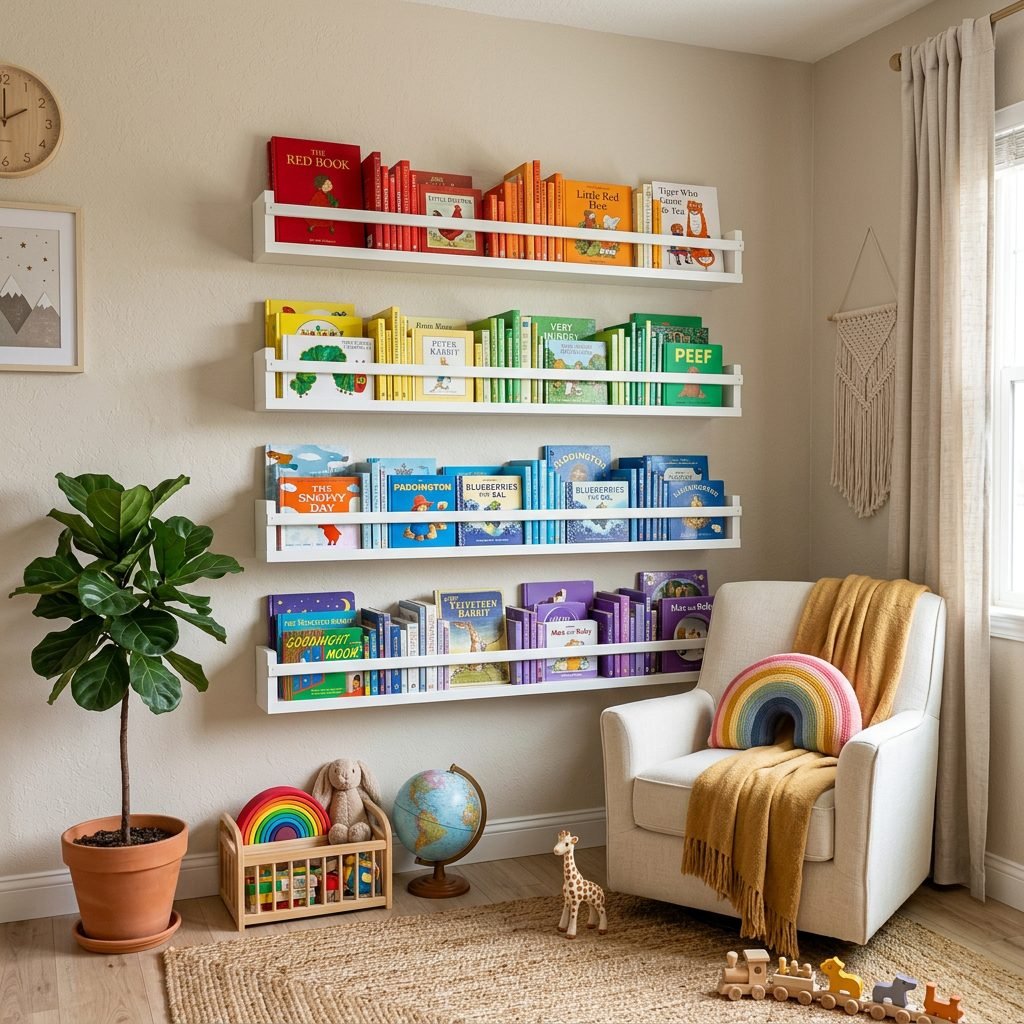
1. The Rainbow Method (Aesthetic & Intuitive)
Organizing by spine color is the gold standard for modern nurseries. Not only does it look stunning in photos, but it is surprisingly functional. Even young children can learn that ‘the blue book’ goes in ‘the blue section.’ It turns clean-up into a color-matching game.
2. Thematic or Genre Grouping
Group your books by the ‘energy’ they provide. This is the doula-preferred method for establishing rhythms.
The Routine System: Keep a ‘Sleepy Time’ basket right next to the glider with books about stars, bedtime, and quietness. Keep ‘Active Learning’ books (ABCs, 123s) on the main shelf. Keep ‘Sensory/Touch-and-Feel’ books on the lowest level for independent play.
3. The Developmental Rotation
You don’t need all 50 books out at once. Just like toy rotation, book rotation prevents overstimulation. Keep 10-12 books on display and store the rest in a closet bin. Every Sunday, swap out three books for ‘new’ ones. This keeps the library feeling fresh and exciting for your baby.
IKEA Hacks and Small Space Storage Solutions
Not every nursery has room for a grand library, and that is okay! We can find ‘lost’ space in the most unexpected places. If you are working with a small nursery or a shared bedroom, these hacks are for you.
The Spice Rack Secret
The IKEA BEKVÄM spice racks are an organizer’s dream. Sand them down, paint them to match your nursery trim, and mount them behind the door or on the side of a dresser. They are the perfect depth for board books and cost less than a fancy latte.
The Back-of-Door Organizer
Use a clear over-the-door shoe organizer to store soft cloth books or lightweight board books. This utilizes the ‘dead space’ behind the door and keeps the floor completely clear for tummy time. This is especially helpful for postpartum recovery when you want to minimize bending down to the floor.
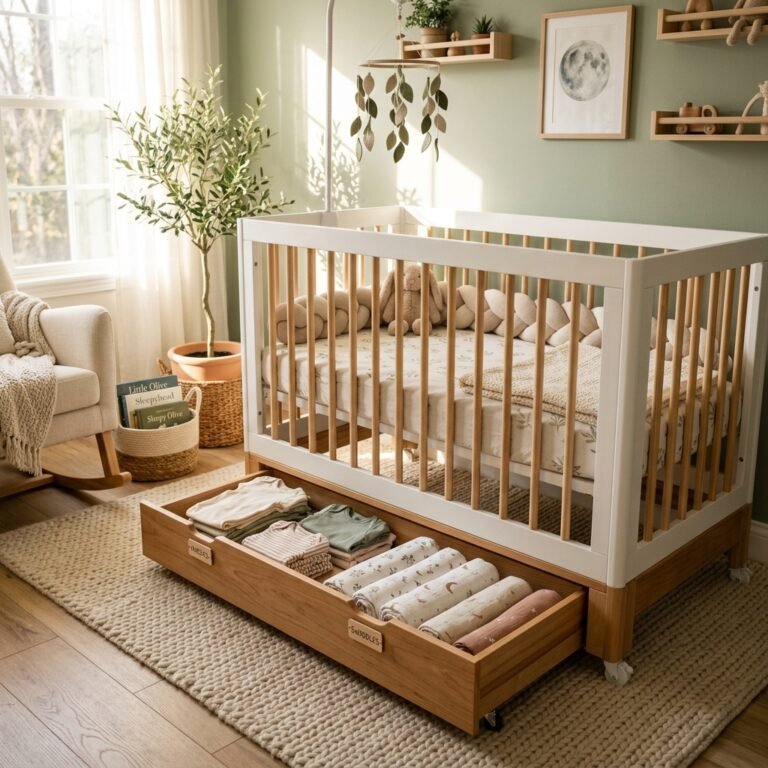
The Under-Crib Rolling Bin
If you have a crib with enough clearance, a low-profile rolling bin can house your ‘overflow’ library. It’s easy to pull out when you’re looking for a specific title but stays tucked away to maintain a minimalist look.
Maintaining the Magic: A Guide for the Weary Mama
The hardest part of any organization system isn’t the setup—it’s the maintenance. Life with a newborn is unpredictable, and your library will inevitably get messy. Here is how to keep it under control without adding stress to your plate.
- The ‘One-Hand’ Rule: Ensure your most-used books can be grabbed and put away with one hand. You will likely have a baby in the other arm 90% of the time.
- Label Your Bins: If you use baskets for books, use pretty wooden or acrylic labels. This helps partners, grandparents, and babysitters know exactly where things go.
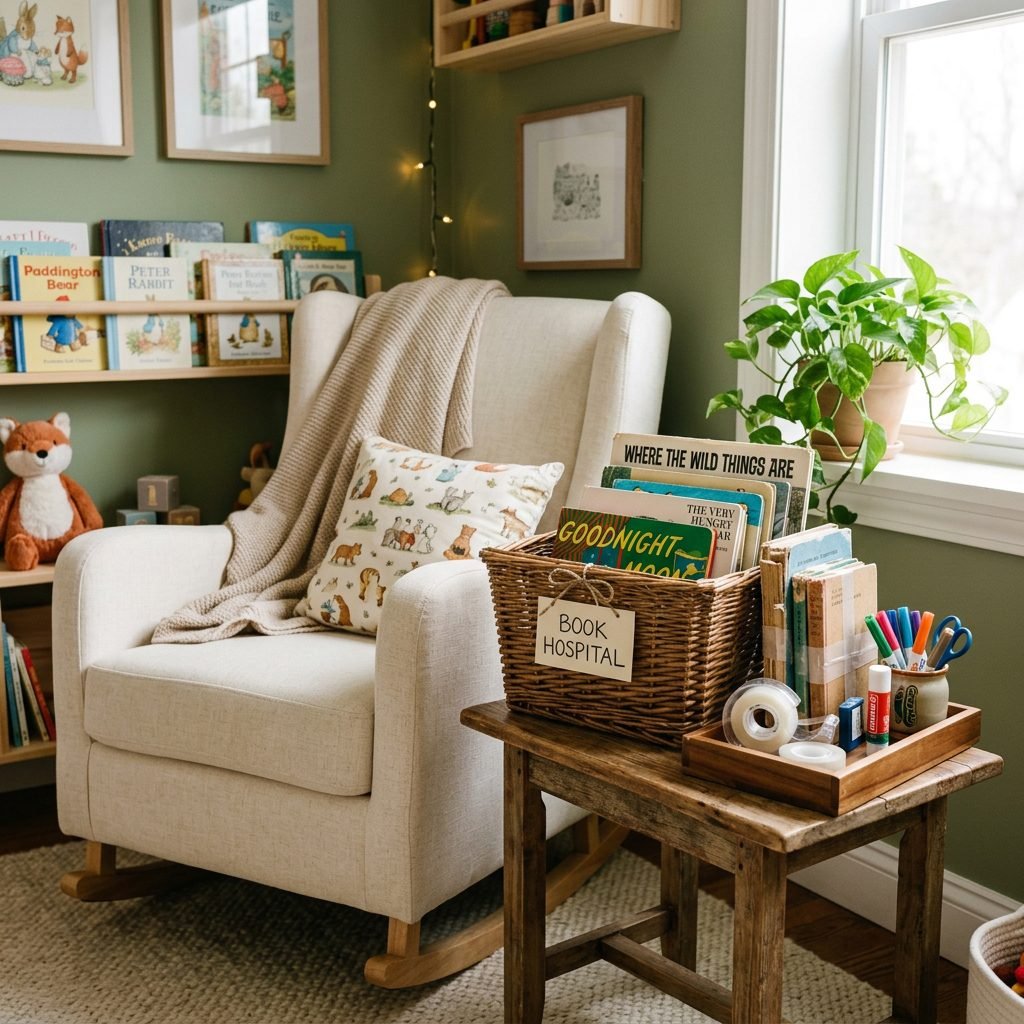
- The Monthly Mend: Once a month, check for ripped pages or loose spines. A little clear packing tape goes a long way in extending the life of a favorite story.
- Create a ‘Book Hospital’ Basket: If a book gets damaged during the day, don’t stress. Toss it in a designated ‘hospital’ basket to be fixed when you have a quiet moment and a cup of tea.
Remember, sweet friend, a library is meant to be used. A few stray books on the floor are a sign of a childhood well-lived. Don’t let the pursuit of perfection steal the joy of reading to your babe.
Conclusion
Creating a nursery library is one of the sweetest ways to prepare for your baby’s arrival. By sorting with intention, choosing smart storage like floating ledges or IKEA hacks, and implementing a simple cataloging system like rainbow ordering or thematic rotation, you are building more than just a shelf—you are building a sanctuary. This little corner of the room will be the backdrop for thousands of ‘once upon a times’ and ‘I love yous.’ As you fold those tiny clothes and arrange those colorful spines, take a deep breath and realize you are already doing an incredible job. Your baby won’t remember if the books were perfectly alphabetized, but they will remember the warmth of your lap and the sound of your voice. Happy nesting, mama. You’ve got this.