Sharing a Room: Clever Layout Ideas to Fit a Mini Crib in Your Master Bedroom
Welcome to the Sweet Season of Proximity
Oh, sweet mama, I see you. You are nesting, planning, and perhaps feeling a little bit like a puzzle master trying to fit a beautiful new life into your current square footage. Whether you are living in a cozy city apartment, staying in a smaller home while you save for the next chapter, or simply following the American Academy of Pediatrics (AAP) recommendation to room-share for the first six to twelve months, I want you to know something: a small space is not a limitation. It is an invitation to create an intimate, focused sanctuary for you and your little one.
As a doula, I have walked into countless homes where the ‘nursery’ was actually a perfectly curated corner of the parents’ bedroom. And you know what? Those spaces are often the most peaceful. There is something so grounding about having your baby within arm’s reach during those hazy, beautiful, and exhausting early months. Today, we are going to dive deep into the world of mini cribs—the unsung heroes of the modern nursery—and explore exactly how to layout your master bedroom so it feels like a shared retreat rather than a cluttered storage unit. We will talk dimensions, visual zoning, and the practical storage hacks that will keep your sanity intact. Let’s take a deep breath together and start sketching out your new shared haven.
Understanding the Mini Crib Advantage
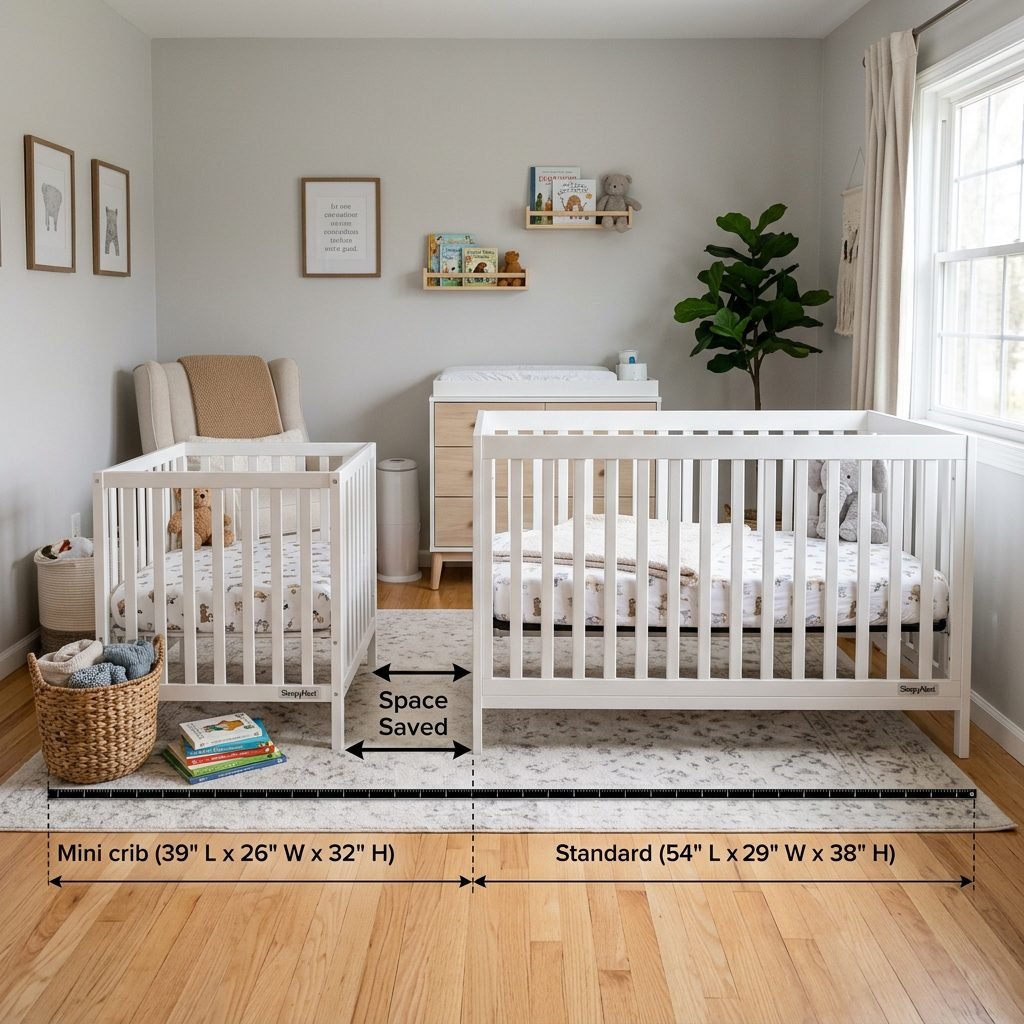
Before we start moving furniture, let’s talk about why the mini crib is your best friend in a shared-room scenario. While a standard crib measures about 28 inches wide and 52 inches long, a mini crib is a much more manageable 24 inches wide and 38 inches long. That might not sound like a huge difference on paper, but in a bedroom where every inch counts, it is a game-changer. It is the difference between being able to open your closet door and having it permanently blocked.
The Benefits of Going Small
- Portability: Many mini cribs come with wheels, allowing you to move the baby into a quiet corner during the day or even into the hallway if you need a moment of ‘grown-up’ space.
- Longevity: Most mini cribs can safely house a baby until they are about 18 to 24 months old, or until they reach 35 inches in height.
- Cozy Factor: Newborns often feel more secure in smaller environments that mimic the snugness of the womb.
| Feature | Mini Crib | Standard Crib |
|---|---|---|
| Average Dimensions | 24″ x 38″ | 28″ x 52″ |
| Mattress Thickness | 1″ to 3″ | 5″ to 6″ |
| Mobility | Often foldable/wheeled | Stationary |
| Space Saved | Approx. 5 sq. ft. | 0 sq. ft. |
The Bedside Sanctuary: Proximity and Peace

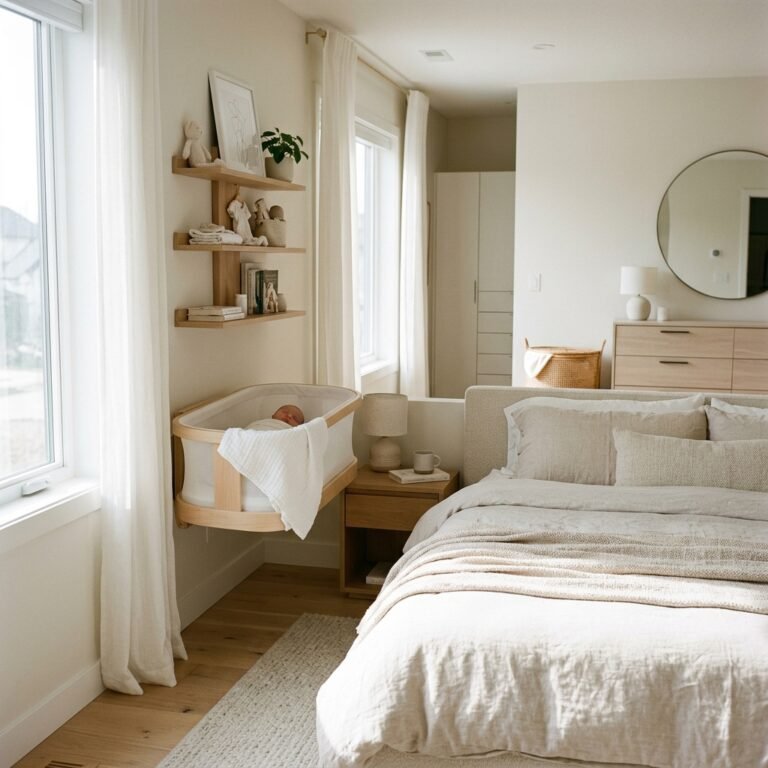
The most popular layout for room-sharing is the Bedside Sanctuary. This involves placing the mini crib parallel to your side of the bed. For a postpartum mama, especially one recovering from a C-section, this layout is a literal lifesaver. You don’t have to walk across the room in the middle of the night; you simply sit up, scoop up your little one, and begin the feeding.
Doula Tips for Bedside Placement
When setting up this layout, ensure there is at least a 2-foot clearance between the crib and the wall or other furniture so you can move safely in the dark. If your room is particularly tight, consider a ‘sidecar’ style mini crib that is designed to sit flush against your mattress (though always ensure it meets current safety standards with all four sides up when baby is sleeping). Safety Note: Keep all adult bedding, pillows, and loose blankets far away from the crib’s edge to prevent any accidental hazards.
“Your room is a sanctuary for both you and your baby. Sharing this space doesn’t mean losing your identity; it means expanding your heart and your home.”
The Closet Nursery: Carving Out a Secret Space
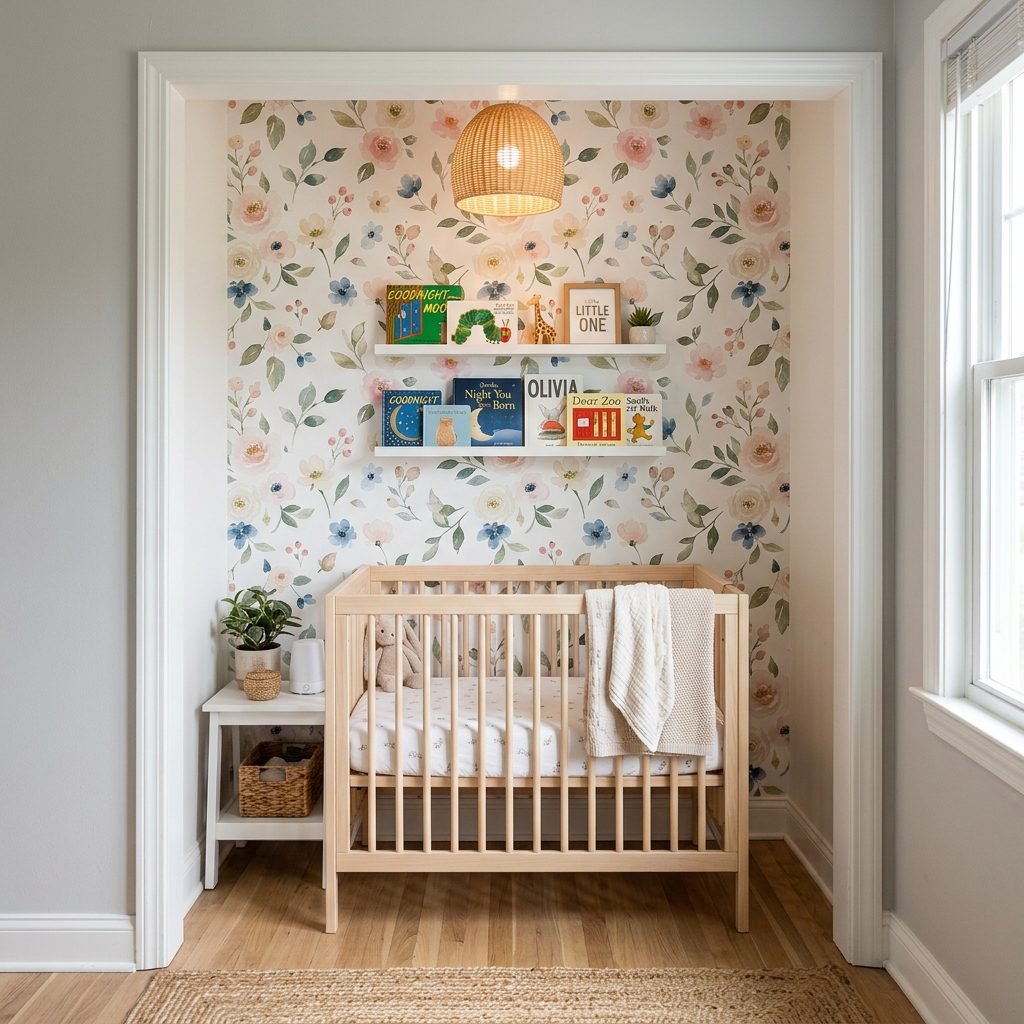
If you have a walk-in closet or even a standard double-door closet that you can spare, the ‘Clursery’ (Closet-Nursery) is a brilliant way to give the baby their own ‘room’ without adding a single square foot to your home. By removing the closet doors and tucking the mini crib inside, you create a recessed nook that feels separate from your sleeping area.
How to Execute the Perfect Clursery
- Remove the Doors: Take the doors off the hinges and store them under your bed or in the garage. This opens up the floor space and prevents finger-pinching.
- Lighting: Install a battery-operated, dimmable puck light. Avoid hardwiring unless you want a permanent change.
- Ventilation: Ensure the closet has good airflow. If it feels stuffy, a small, quiet clip-on fan (kept far out of baby’s reach) can help circulate air.
- Aesthetics: Peel-and-stick wallpaper on the back wall of the closet can make the space feel intentional and whimsical.
Defining the Zone: Visual Dividers and Aesthetic Harmony
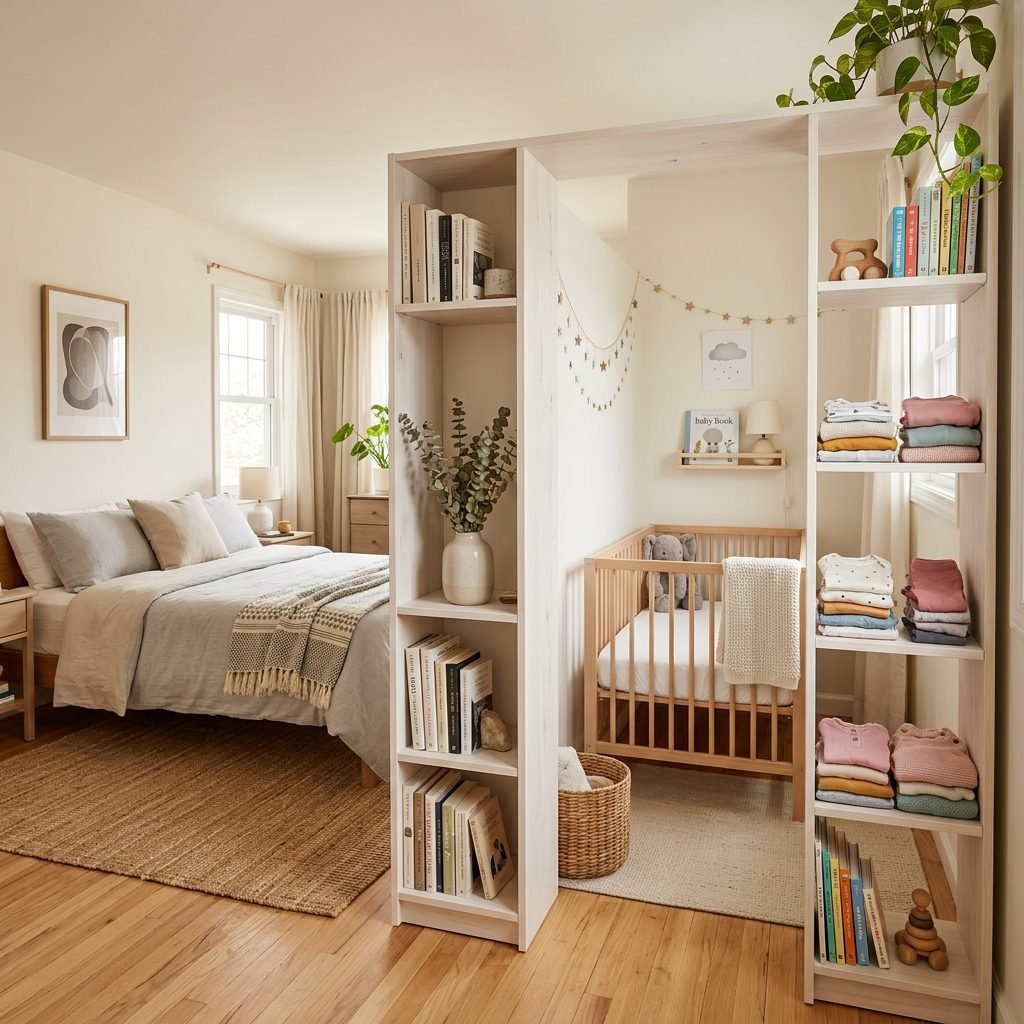
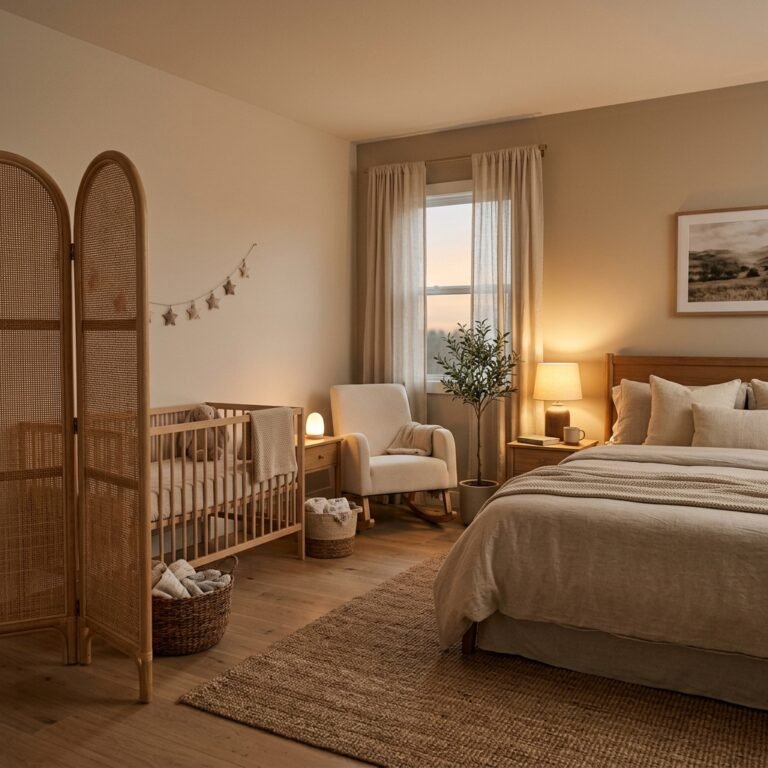
One of the biggest challenges of room-sharing is the feeling that baby gear is taking over your adult retreat. To combat this, we use Visual Zoning. This is the art of using decor to tell your brain where the ‘nursery’ ends and the ‘bedroom’ begins. Even in a small space, these boundaries help maintain a sense of order and peace.
Creative Ways to Divide the Space
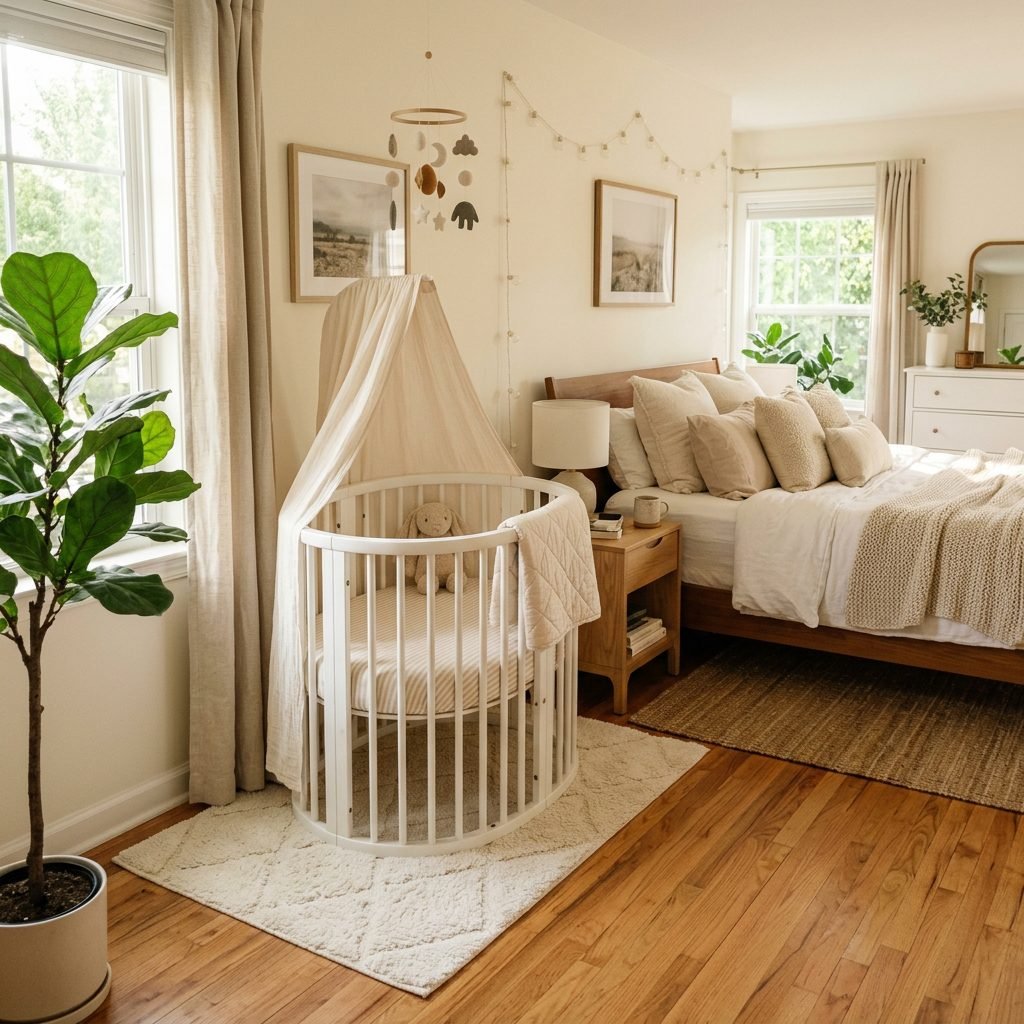
- The Rug Rule: Place a small, plush rug specifically under the mini crib. This creates a visual ‘island’ for the baby’s area.
- Sheer Curtains: A ceiling-mounted track with sheer, breathable curtains can provide a soft visual barrier without blocking light or airflow.
- The Bookshelf Divider: An IKEA Kallax unit placed perpendicular to the wall can act as both a room divider and a storage hub for diapers and blankets.
Remember, mama, keeping the colors cohesive helps the room feel larger. If your bedroom is all whites and linens, choose a mini crib in a natural wood or white finish. Consistency is the key to a calm environment.
Storage Solutions: Maximizing Every Square Inch
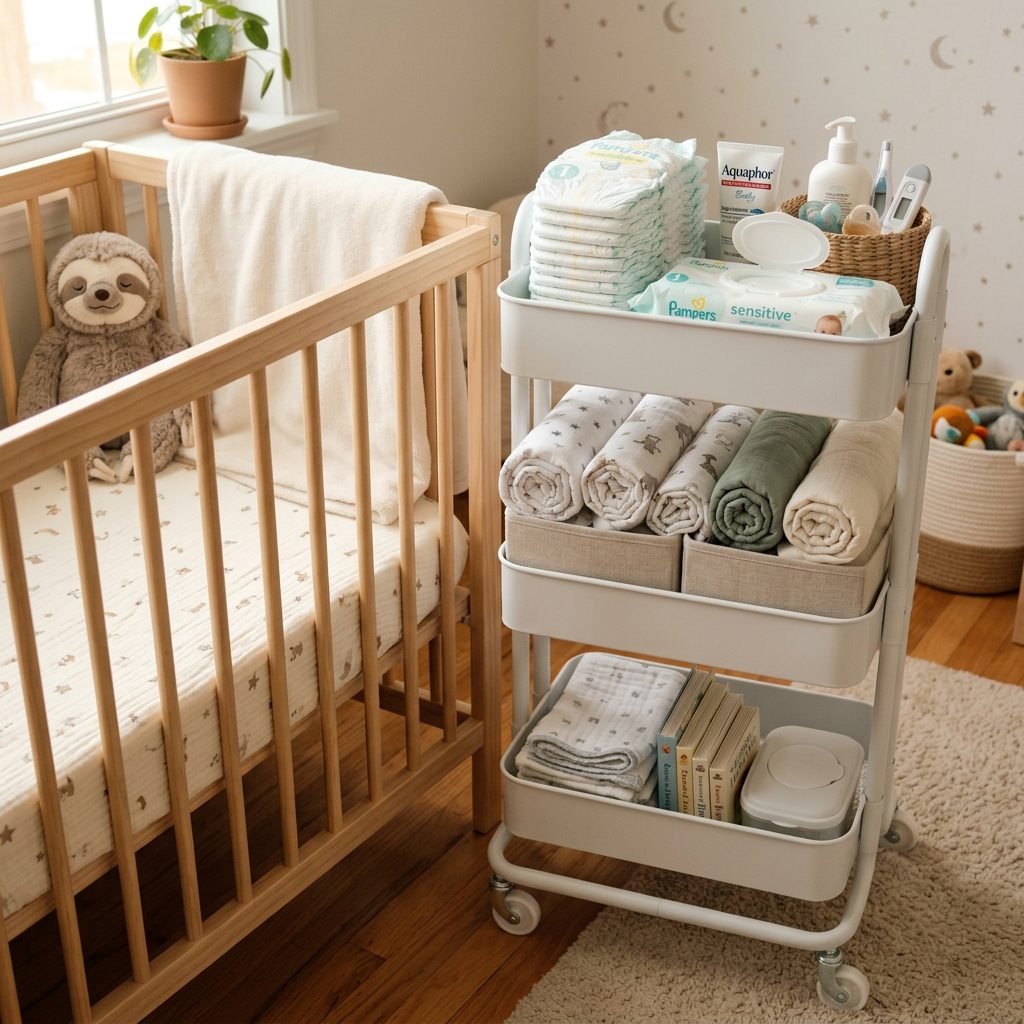
Where do the diapers go? Where do the tiny socks live? When you don’t have a full nursery, you have to get creative with vertical and hidden storage. Your master bedroom already has storage potential you haven’t tapped into yet.
Top Storage Hacks for Shared Rooms
- Over-the-Door Organizers: Use the back of your bedroom door for an organizer with clear pockets. This is perfect for diapers, wipes, creams, and onesies.
- Under-Crib Bins: Most mini cribs have enough clearance for slim rolling bins. Use these for ‘next size up’ clothing or extra packs of diapers.
- The Rolling Cart: A three-tiered metal cart (like the famous IKEA Raskog) is a mobile changing station. Keep it by the crib at night and wheel it into the living room during the day.
- Floating Shelves: Instead of a bulky dresser, use floating shelves for a small lamp, a sound machine, and a few favorite books.
| Storage Item | What to Store | Space Used |
|---|---|---|
| Over-Door Rack | Diapers, Wipes, Lotions | Zero Floor Space |
| Under-Bed Bins | Linens, Outgrown Clothes | Hidden |
| Rolling Cart | Daily Essentials | 1.5 sq. ft. (Mobile) |
The Sensory Environment: Managing Light, Sound, and Sleep
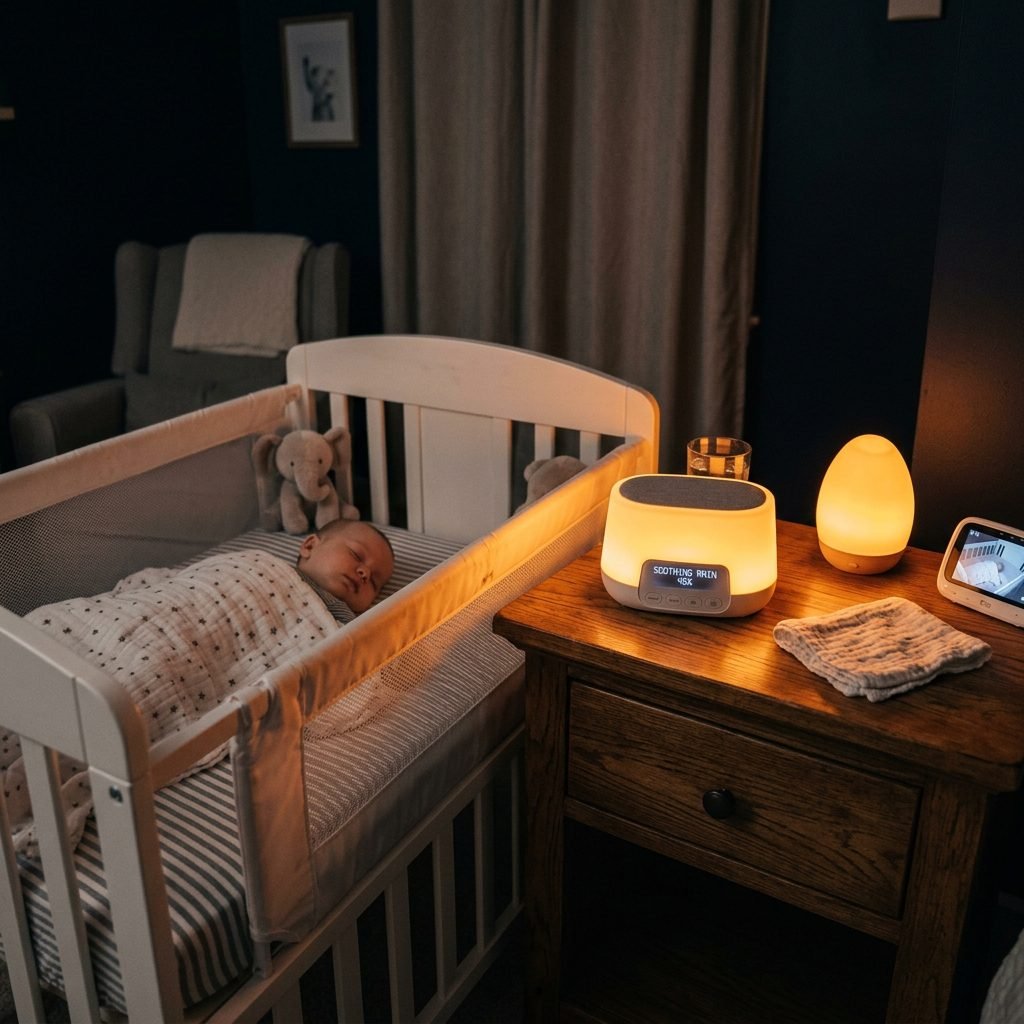
Sharing a room means you have to be mindful of how your movements affect the baby’s sleep, and vice versa. You don’t want your late-night reading or your partner’s early alarm to wake the sleeping giant. Creating a sensory bubble around the mini crib is essential for everyone’s rest.
Sound and Light Control
Invest in a high-quality white noise machine. Place it between your bed and the mini crib. This creates a ‘sound wall’ that masks the rustle of your sheets or the sound of the bathroom door. For light, use amber-toned nightlights. Amber light doesn’t inhibit melatonin production, allowing you to see what you’re doing during a diaper change without fully waking your brain (or the baby’s).
If your room gets a lot of morning sun, blackout liners for your curtains are a must. They will help the baby nap longer during the day, giving you a precious window of time to shower or—let’s be real—nap right alongside them.
Conclusion
Mama, as you prepare this space, remember that the most important thing your baby needs isn’t a 500-square-foot nursery with a crystal chandelier. They need you. They need the sound of your breathing, the warmth of your presence, and a safe place to rest their head. By choosing a mini crib and a clever layout, you are creating a nest that is both practical and profound. You are making room for love, for growth, and for the beautiful chaos of new motherhood. Trust your instincts, keep it simple, and enjoy these middle-of-the-night snuggles—they go by much faster than you think.