

The Upright Hold Trick: How to Burp a Reflux Baby Without the Spit-Up Mess
Hello, Sweet Mama. I See You.
If you are reading this while wearing a shirt covered in sour-smelling milk, with a baby who seems to fuss the moment they finish a bottle or breast, please know that I am reaching out to give you a giant, virtual hug. As a doula, I’ve spent countless nights in dimly lit nurseries, rocking babies who just can’t seem to get that stubborn bubble out without bringing their entire meal back up with it. Infant reflux is more than just a ‘laundry problem’; it is an exhausting cycle of discomfort for your little one and a source of immense stress for you.
Reflux occurs when the lower esophageal sphincter (LES)—the little muscular flap that acts as a gate between the esophagus and the stomach—isn’t quite strong enough yet to stay closed. This leads to stomach contents flowing back up. While most babies grow out of this by their first birthday, you need solutions right now. Today, we are going to master the ‘Upright Hold Trick’ and several other high-precision burping techniques designed specifically for the sensitive digestive systems of reflux babies. We aren’t just looking for a burp; we are looking for a peaceful, dry, and comfortable transition from feeding to sleep.
Understanding the ‘Happy Spitter’ vs. GERD
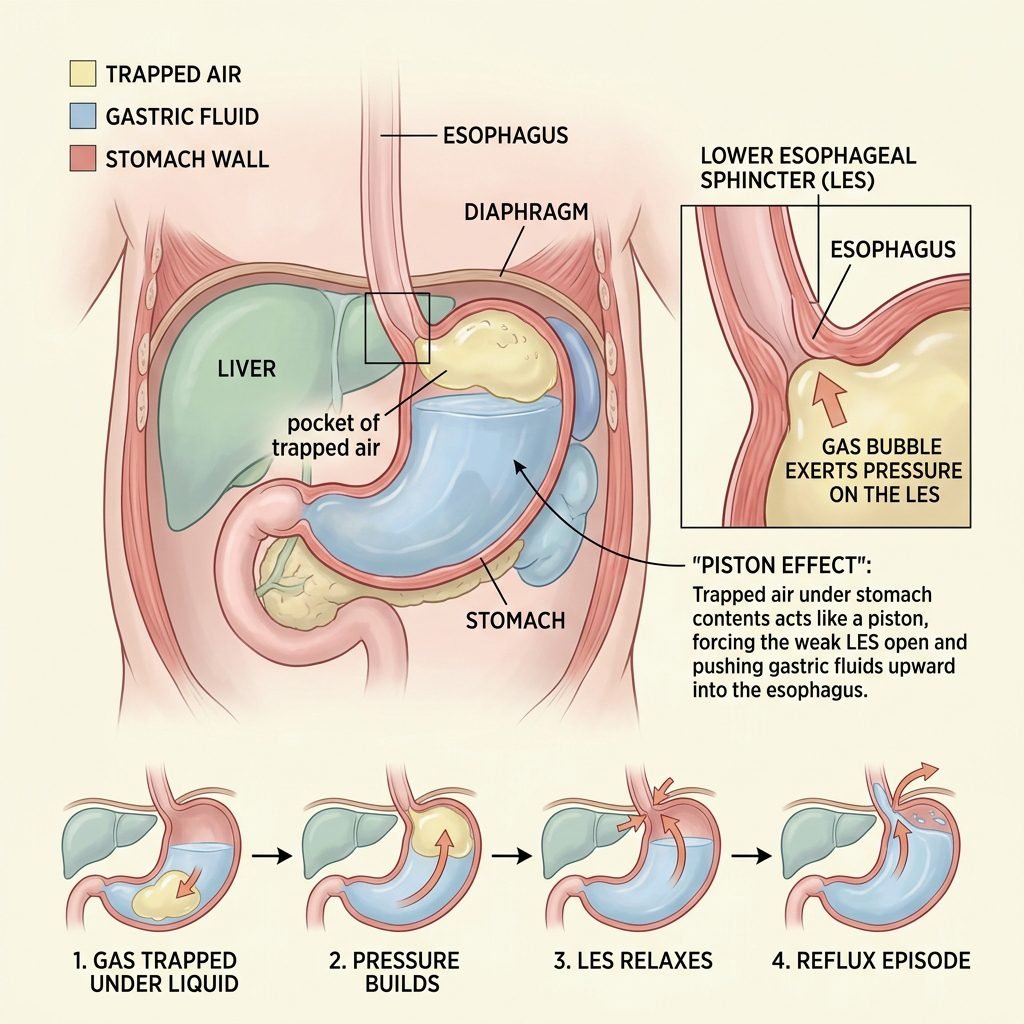
Before we dive into the physical techniques, it is vital to understand what is happening inside your baby’s tiny body. Most babies are what we call ‘happy spitters.’ They might create a mess, but they are gaining weight and generally content. However, for some, this becomes Gastroesophageal Reflux Disease (GERD), which involves pain and potential growth issues.
The Science of the Bubble
When a baby swallows, they often take in air. In a baby with reflux, that air bubble gets trapped underneath a layer of milk. When the bubble finally forces its way up, it acts like a piston, pushing the milk out with it. Our goal with the upright hold is to use gravity to keep the milk at the bottom of the stomach and the air at the top.
| Condition | Typical Symptoms | Action Level |
|---|---|---|
| Normal Reflux | Spitting up without pain, steady weight gain, ‘wet’ burps. | Manage with positioning and patience. |
| Silent Reflux | Arching back, coughing, irritability, no visible spit-up. | Consult pediatrician; focus on upright holds. |
| GERD | Projectile vomiting, weight loss, extreme distress during feeds. | Seek medical guidance immediately. |
The Master Technique: The Upright Hold Trick

This is the ‘holy grail’ for reflux parents. The key is to avoid any pressure on the baby’s abdomen, which is the primary trigger for spit-up during traditional burping. Follow these steps with precision:
- The Vertical Transition: As soon as the feeding ends (or during a mid-feed break), do not lay the baby flat. Move them slowly into a vertical position, keeping their spine as straight as possible.
- The High-Shoulder Placement: Instead of resting the baby’s tummy against your shoulder, slide them up higher. Their armpits should be resting on the top of your shoulder. This elongated position stretches the torso and opens the esophagus.
- The ‘C-Cup’ Chin Support: Use one hand to form a ‘C’ shape with your thumb and index finger. Gently support the baby’s jawline (not the throat!) to keep their head slightly tilted back. This creates a straight path for air.
- The Upward Stroke: Instead of patting, which can ‘shake’ the stomach contents, use a firm, slow upward stroking motion from the base of the spine up to the neck.
Remember, Mama: Your goal is to elongate, not compress. Every inch of stretch in their little torso helps that air bubble find the exit.
The ‘Magic Burp’ (The Sitting Method)
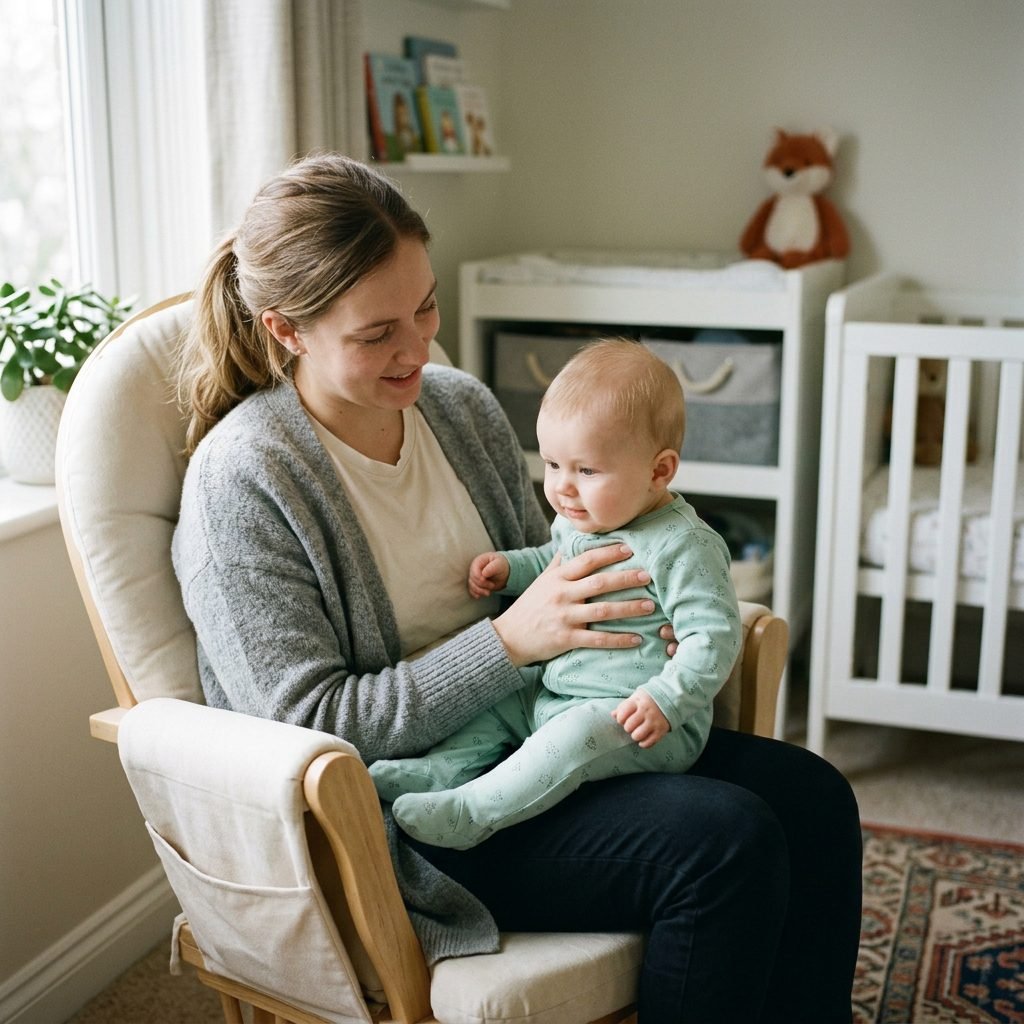
If the shoulder hold isn’t working, the Sitting Method is an excellent alternative that uses the baby’s own weight to help expel gas. This is particularly effective for babies with stronger neck control.
How to Execute the Sitting Burp:
- Sit the baby on your lap facing away from you or to the side.
- Place the palm of your hand against their chest, supporting their chin with your fingers (again, avoid the neck).
- Lean the baby slightly forward. This puts gentle, controlled pressure on the diaphragm without squishing the stomach.
- Use your other hand to pat the back gently. If no burp comes within 2 minutes, gently circle their torso in a clockwise motion (the ‘Hula’ move) to help the bubble move.
Expert Tip: If you feel the baby start to ‘stiffen’ or arch their back, they are likely experiencing a reflux flare. Immediately return to a fully upright, non-leaning position and sway side-to-side to calm the nervous system.
The 20-Minute Rule: Gravity is Your Best Friend

One of the biggest mistakes we make in the hazy, sleep-deprived ‘fourth trimester’ is laying the baby down too soon after a burp. For a reflux baby, the burp is only half the battle. The milk needs time to settle past that weak LES valve.
The Post-Feed Timeline
| Time Elapsed | Activity | Goal |
|---|---|---|
| 0-5 Minutes | Active Burping (Upright Hold) | Release immediate air bubbles. |
| 5-20 Minutes | Passive Upright Time | Allow gravity to settle milk into the duodenum. |
| 20-30 Minutes | Baby Wearing or Incline Hold | Maximum safety before any horizontal movement. |
During this 20-minute window, I highly recommend baby wearing. Using a soft wrap or carrier keeps the baby perfectly vertical while leaving your hands free to grab a snack or fold those endless burp cloths. Just ensure the carrier is not too tight across their stomach, as abdominal compression is the enemy of the reflux baby.
The ‘C-Cup’ Patting and Rhythmic Soothing

Not all pats are created equal! When you are dealing with a sensitive stomach, a flat-handed slap can be jarring. Instead, we use the ‘Doula Cupped Pat.’
The Technique
Cup your hand so that there is a pocket of air between your palm and the baby’s back. When you pat, it should make a hollow, ‘clucking’ sound rather than a sharp ‘smack.’ This creates a vibration that travels through the ribcage to the stomach, gently nudging the air bubble upward without agitating the liquid milk.
Rhythms to Try:
- The Heartbeat: Pat-pat… pause. Pat-pat… pause. This mimics the womb environment and lowers the baby’s cortisol.
- The Slow Climb: Start at the very bottom of the ribs and pat your way up to the shoulders, then start over.
- The Side-Tap: Gently tap the baby’s left side (where the stomach is located) to help dislodge bubbles stuck in the stomach lining.
Managing the Mess and Your Mental Health

Let’s be honest, Mama: Reflux is hard. It is demoralizing to spend 40 minutes feeding and burping only to have it end up on your last clean pair of leggings. Here are my sisterly tips for surviving the ‘Spit-Up Season’:
- The Uniform: Invest in 5-6 high-quality, oversized muslin swaddles to use as ‘shield’ cloths. Cover your entire torso, not just your shoulder.
- Scent Control: Keep a small spray bottle of water and lemon essential oil (or a dedicated enzyme cleaner) nearby to neutralize the smell of spit-up on furniture.
- Forgive Your Body: You are not doing anything wrong. Your milk is not ‘bad,’ and your baby is not ‘broken.’ This is a developmental milestone of the digestive system.
You are doing a great job. This laundry mountain is temporary, but the bond you are building through this extra holding time is permanent.
Conclusion
You’ve Got This, Mama
Mastering the Upright Hold Trick is a game-changer, but remember that every baby is a unique little soul. It might take a few days of practicing these positions to see which one resonates with your little one’s anatomy. Be patient with yourself and your baby. The ‘spit-up mess’ might still happen occasionally, but by using these doula-approved techniques, you are significantly reducing their discomfort and helping their tiny bodies process nourishment more effectively.
Keep your head up, keep your baby up, and know that this season of reflux will eventually pass. Soon enough, those wet burps will turn into giggles and solid food. Until then, hold them close, hold them high, and keep that cupped hand moving. You are a wonderful mother.