No-Prep Kitchen Cabinet Sensory Play Your Crawling Baby Will Love
Welcome to Your Kitchen, the Ultimate Developmental Playground
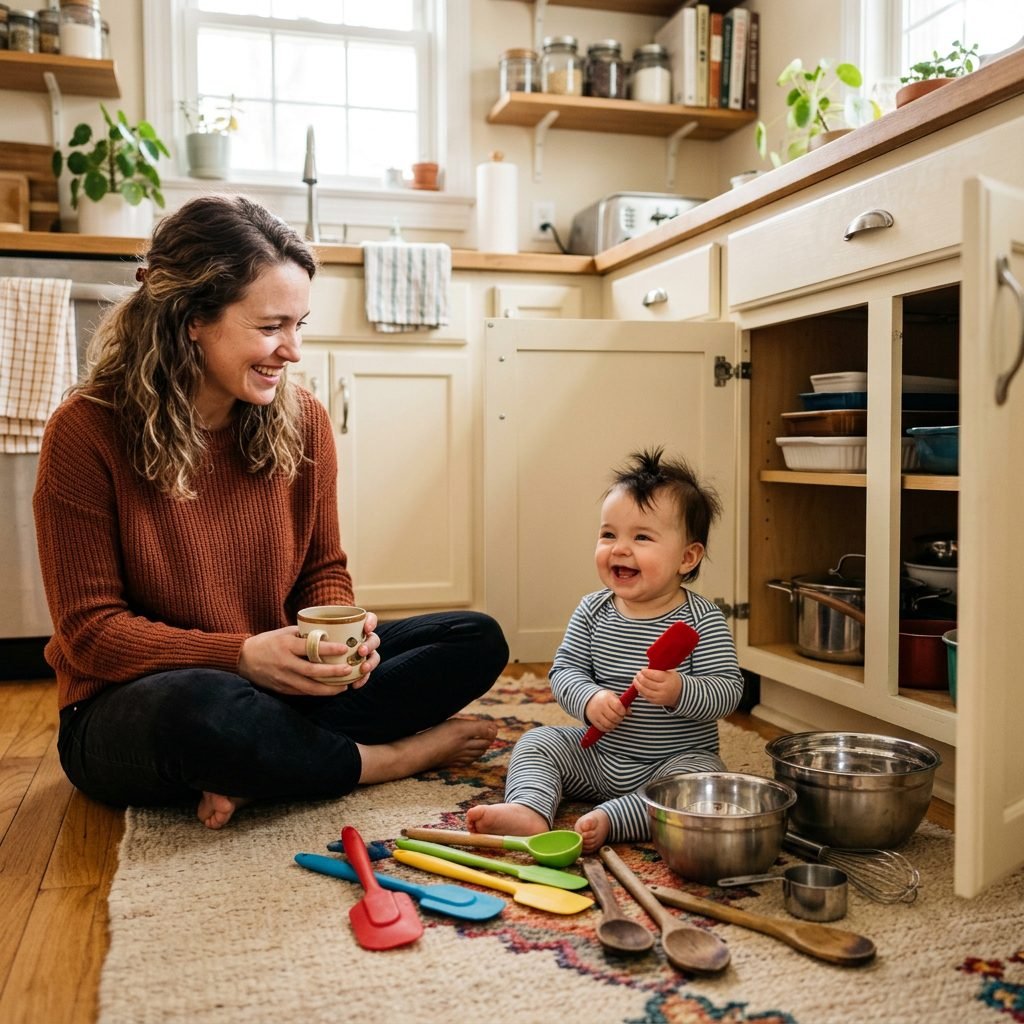
Mama, I see you. You are balancing the weight of the world, a growing baby, and a never-ending to-do list. Sometimes, the thought of setting up a complex ‘sensory bin’ with dyed rice and meticulously curated figurines feels like just one more chore you don’t have the energy for. As a doula and a fellow mom, I want to give you a gift today: the realization that your kitchen cabinets are already filled with the most engaging, brain-boosting toys your baby could ever want. We call this ‘Found Play,’ and it is the secret weapon of the stylish, practical, and evidence-based nursery. When your baby reaches that magical crawling milestone, their world expands exponentially. They aren’t just moving; they are exploring, testing, and learning. By opening up a ‘Yes Cabinet’ in your kitchen, you are providing a safe, stimulating environment that fosters independence while you finally get to finish that cup of coffee or prep a quick dinner. Let’s dive into how we can turn your lower cabinets into a sensory symphony with zero prep time.
The Philosophy of the ‘Yes Cabinet’: Why Kitchen Play Matters
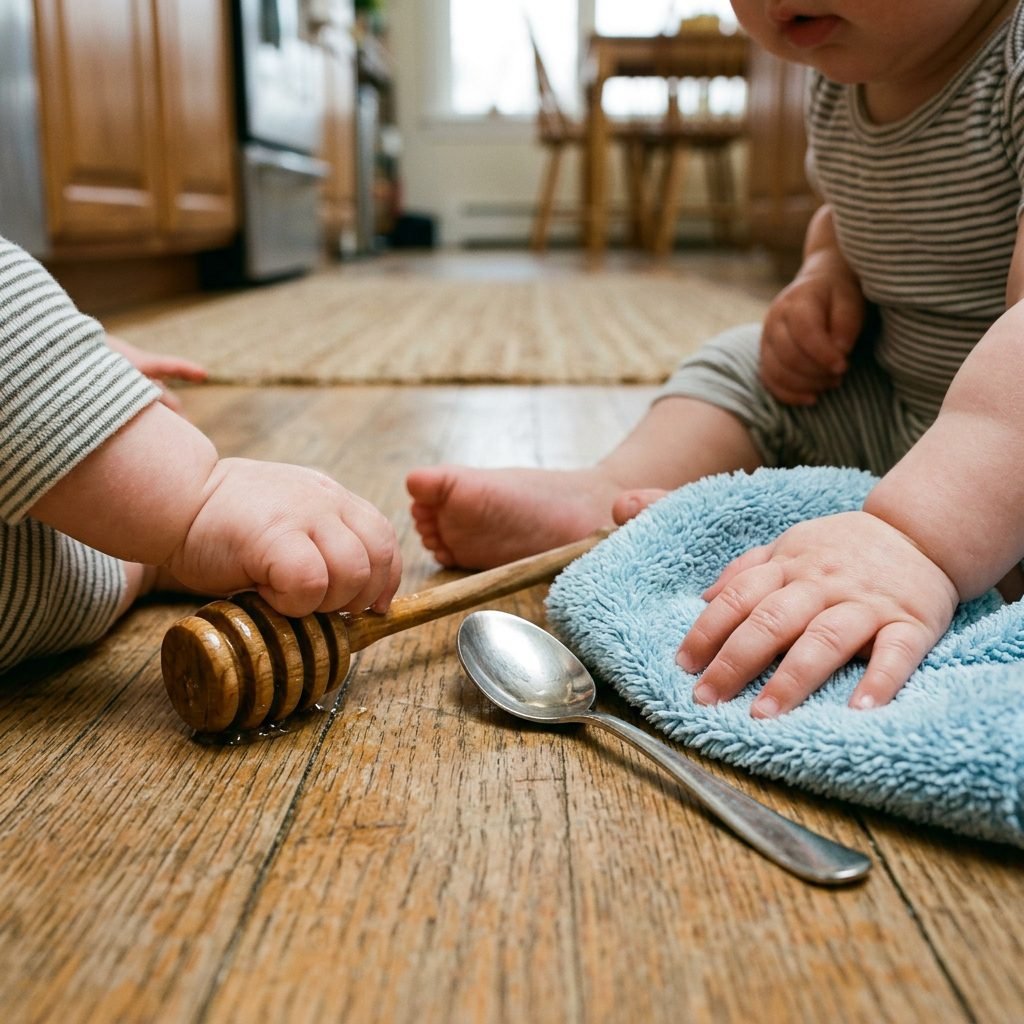
In the world of infant development, we often talk about ‘prepared environments.’ This doesn’t mean your house needs to look like a museum; it means creating spaces where your baby is allowed to say ‘yes’ to their curiosity. A ‘Yes Cabinet’ is a dedicated lower cupboard filled with baby-safe items that they are free to explore at will. This simple act of autonomy builds confidence and spatial awareness.
The Developmental Benefits
- Fine Motor Skills: Grasping a thin wooden spoon or pincer-grasping a silicone muffin liner strengthens the tiny muscles in their hands.
- Cause and Effect: Banging a metal whisk against a stainless steel bowl teaches them that their actions create specific sounds.
- Object Permanence: Hiding a whisk under a dish towel and letting them ‘find’ it is a foundational cognitive milestone.
- Sensory Integration: The cold touch of metal, the rough grain of wood, and the squishy texture of silicone provide a rich tactile menu.
Your baby doesn’t need expensive plastic toys that flash lights; they need the weight, texture, and reality of the world you live in. You are their best teacher, and your home is their best classroom.
The Safety Audit: Creating a Secure Sensory Zone
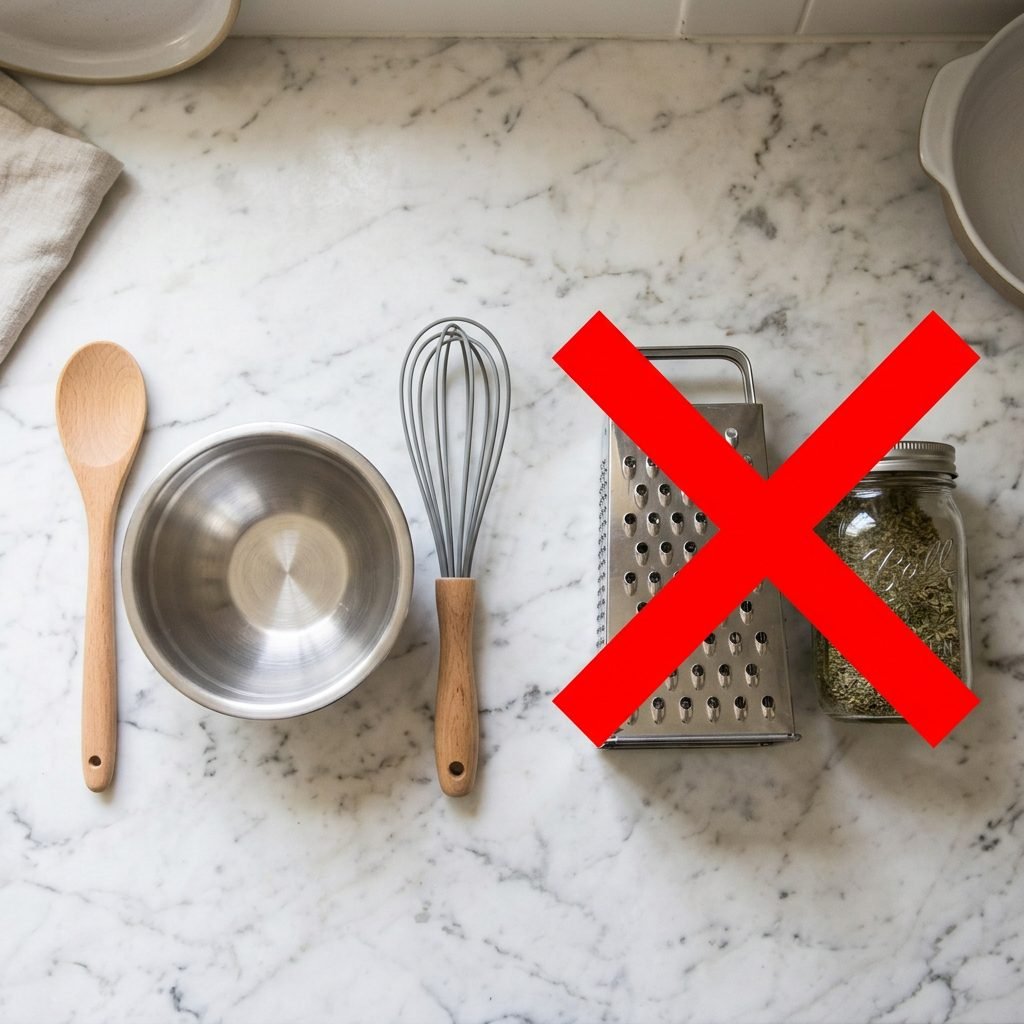
Before we open the doors to exploration, we must ensure the environment is 100% safe. As a postpartum nurse, safety is my first priority. We want to remove any ‘no’ items so you can relax while they play. Use this checklist to audit your lower cabinets.
| Category | Items to Remove (The ‘No’ List) | Items to Include (The ‘Yes’ List) |
|---|---|---|
| Kitchen Tools | Graters, knives, peelers, heavy glass. | Wooden spoons, silicone spatulas, whisks. |
| Containers | Glass jars, containers with small lids. | Plastic Tupperware, stainless steel bowls. |
| Textiles | Plastic wrap, aluminum foil, mesh bags. | Cotton dish towels, clean sponges, silicone mats. |
| Small Items | Bottle caps, magnets, bread ties. | Large measuring cups, colanders, muffin tins. |
Quick Safety Tips
- Check for Choking Hazards: Anything that can fit through a toilet paper roll is too small for a crawling baby.
- Mind the Hinges: Ensure the cabinet door doesn’t swing shut too quickly on little fingers. You can use a simple door stopper if needed.
- Cleanliness: Since everything goes in the mouth at this age, ensure the items are clean and free of old food residue or chipped paint.
Three No-Prep Play Stations Your Baby Will Love
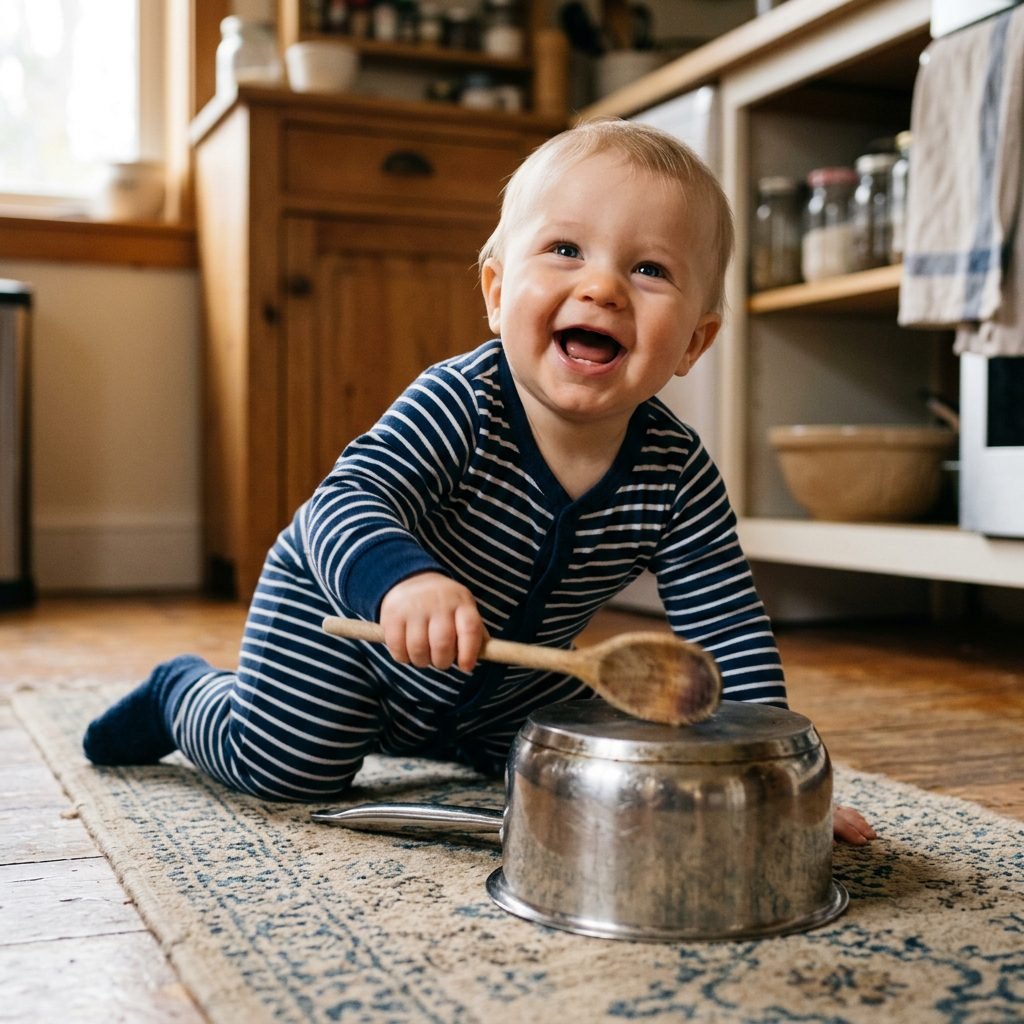
You don’t need a plan; you just need to open the door. However, if you want to gently guide their play, here are three ‘stations’ you can set up in seconds using what you already have.
1. The Percussion Pit
Gather three different-sized metal bowls and two wooden spoons. Place them upside down on the floor. Show your baby how to ‘drum.’ The variation in pitch between the bowls is fascinating to their developing ears. This activity promotes bilateral coordination as they use both hands to strike the ‘drums.’
2. The Texture Tunnel
Fill a large plastic bin or a low drawer with items of varying textures: a crinkly clean dishcloth, a bumpy silicone baking mat, a smooth plastic measuring cup, and a soft sponge. This is a tactile feast that helps with sensory processing.
3. The Nesting Challenge
Take your Tupperware (we all have a messy cabinet!) and place smaller containers inside larger ones. Babies at the crawling stage are beginning to understand spatial relationships. They will spend an incredible amount of time pulling things apart and trying to fit them back together.
Affirmation: I am providing a rich, educational environment for my child simply by sharing my daily life with them.
The Science of Sound and Touch: Why It’s Not Just ‘Making a Mess’
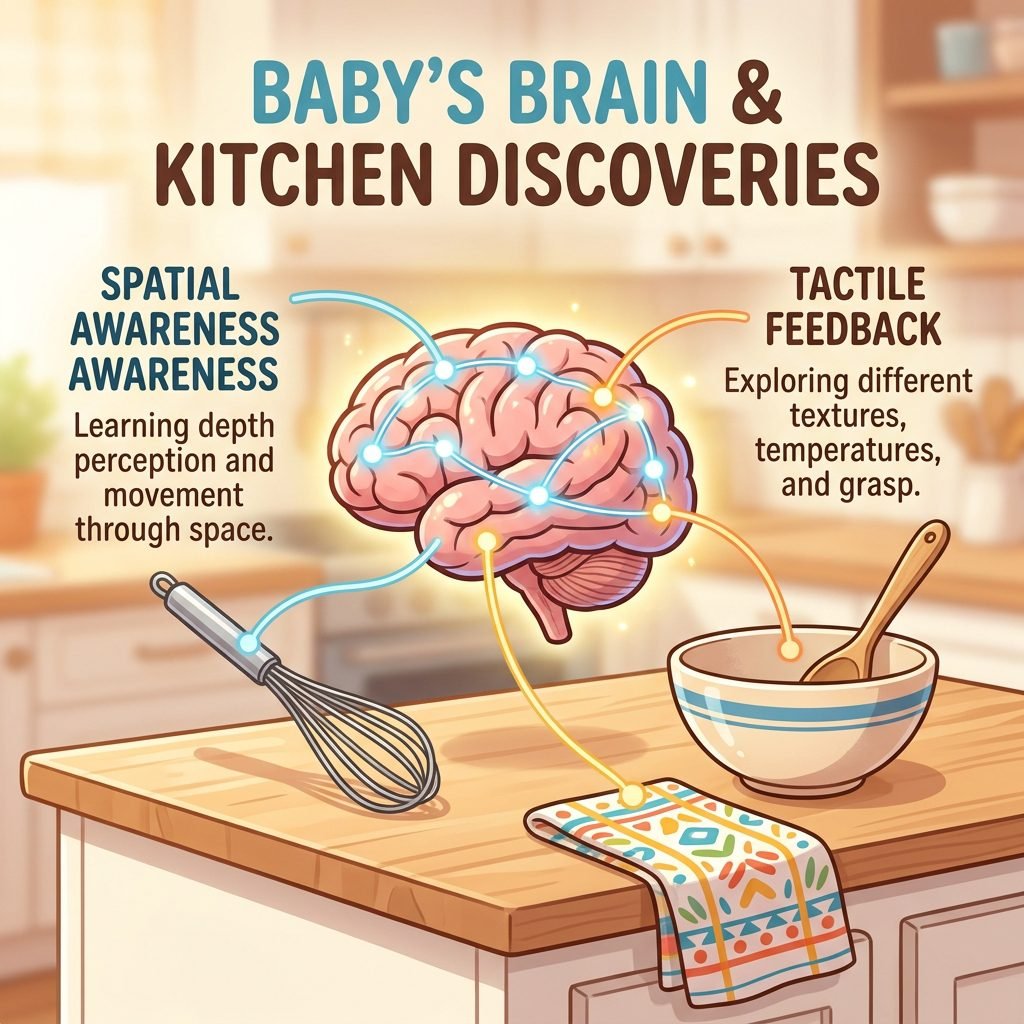
It might look like your kitchen is being dismantled, but inside your baby’s brain, synapses are firing at a rapid rate. When a baby bangs a spoon, they are learning about gravity, force, and acoustics. When they feel the coldness of a stainless steel bowl, they are building their somatosensory system.
Understanding the ‘Schema’ of Play
Babies often play in patterns called ‘schemas.’ You might notice your baby doing the following:
- The Enveloping Schema: Wrapping objects in dish towels or putting things inside boxes.
- The Trajectory Schema: Dropping a spoon repeatedly to see where it lands (and wait for you to pick it up!).
- The Rotation Schema: Turning the dials on a container or spinning a bowl on the floor.
By providing these kitchen items, you are giving them the ‘tools’ to master these developmental schemas without spending a dime on specialized Montessori kits.
The Stylish Mom’s Cleanup Hack: Keeping the Chaos Contained
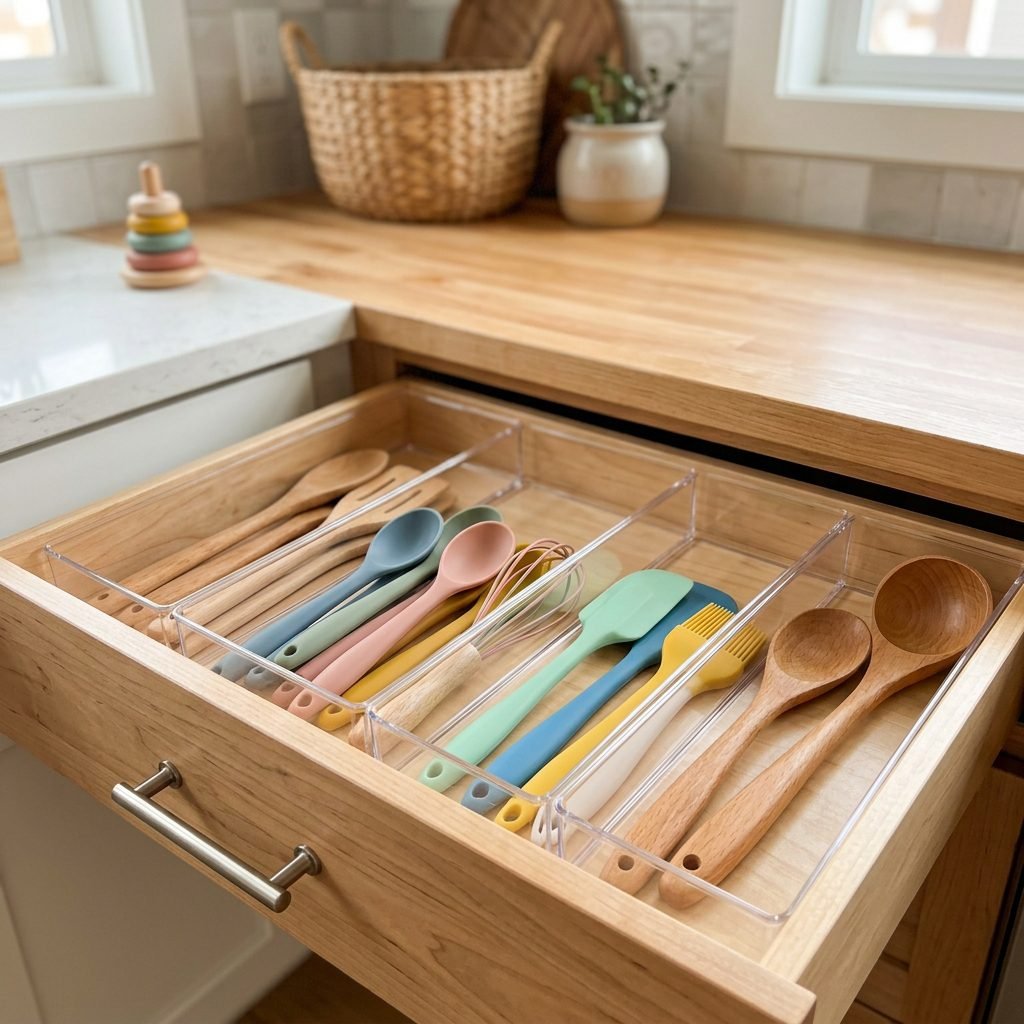
As an interior organizer, I know that the ‘mess’ of sensory play can sometimes trigger postpartum anxiety. The key to enjoying this process is having a re-set strategy. You want your kitchen to return to a place of peace once the baby is in bed.
The ‘One-Bin’ Reset
Designate one large, stylish basket or a specific deep drawer as the ‘Baby’s Kitchen.’ When play is over, simply sweep all the spoons, bowls, and cloths into that one container. You don’t need to organize it; the baby is just going to dump it out tomorrow anyway! This keeps the visual clutter at bay while ensuring the items are ready for the next ‘session.’
| Organization Tip | Benefit |
|---|---|
| Low Basket | Allows baby to ‘self-serve’ their toys safely. |
| Color Coding | Use colorful silicone items to make the drawer look intentional and bright. |
| Daily Rotation | Swap out a few items every few days to keep the ‘novelty’ high. |
Pro Tip: Keep a small spray bottle of water and vinegar and a clean cloth nearby. This makes it easy to give the ‘toys’ a quick wipe-down at the end of the day without using harsh chemicals.
Conclusion
You Are Doing an Amazing Job, Mama
Sensory play doesn’t have to be Instagram-perfect to be incredibly effective. By opening up your kitchen cabinets, you are inviting your baby into your world, showing them that they are a valued member of the family, and giving yourself a much-needed moment of breath. These ‘no-prep’ moments are often the ones where the most learning and connection happen. So, next time you feel the pressure to ‘do more,’ remember that a wooden spoon and a metal bowl are all your baby needs to discover the magic of the world. You’ve got this!