Safe and Sweet: 2-Ingredient Edible Fruit Paint for Baby Sensory Play
Welcome to the World of Taste-Safe Exploration
Oh, mama, I see you. You are navigating the beautiful, chaotic, and often messy world of early motherhood. Whether you are a first-time mom marveling at every new milestone or a seasoned pro looking for a way to keep your little one engaged while you sip a (hopefully warm) cup of coffee, sensory play is about to become your new best friend. As a doula and a mother, I know that the biggest worry we often have is: ‘Is this safe for my baby to put in their mouth?’ Because, let’s be honest, everything—and I mean everything—ends up in those sweet little mouths between the ages of 6 and 12 months.
That is why I am so thrilled to share this 2-ingredient edible fruit paint recipe with you. It is more than just a craft; it is a developmental powerhouse that respects your baby’s natural urge to explore through taste, touch, and sight. We are combining the nutritional goodness of fresh fruit with a smooth, safe base to create a rainbow of possibilities. This guide isn’t just about the ‘how-to’; it’s about the ‘why’—the science of the brain, the joy of the mess, and the bonding that happens when we let go of the ‘perfect’ and embrace the ‘playful’.
‘In the eyes of a child, there is no such thing as a mess—only a masterpiece in progress.’
In this guide, we will walk through the exact steps to create these vibrant paints, the developmental milestones they support, and how to set up your space so that the cleanup is as breezy as a Sunday morning. So, grab your blender and your favorite berries, and let’s dive into a world of safe, sweet, and sensory-rich fun.
The Science of Sensory Play: Why It Matters for Your Baby’s Brain
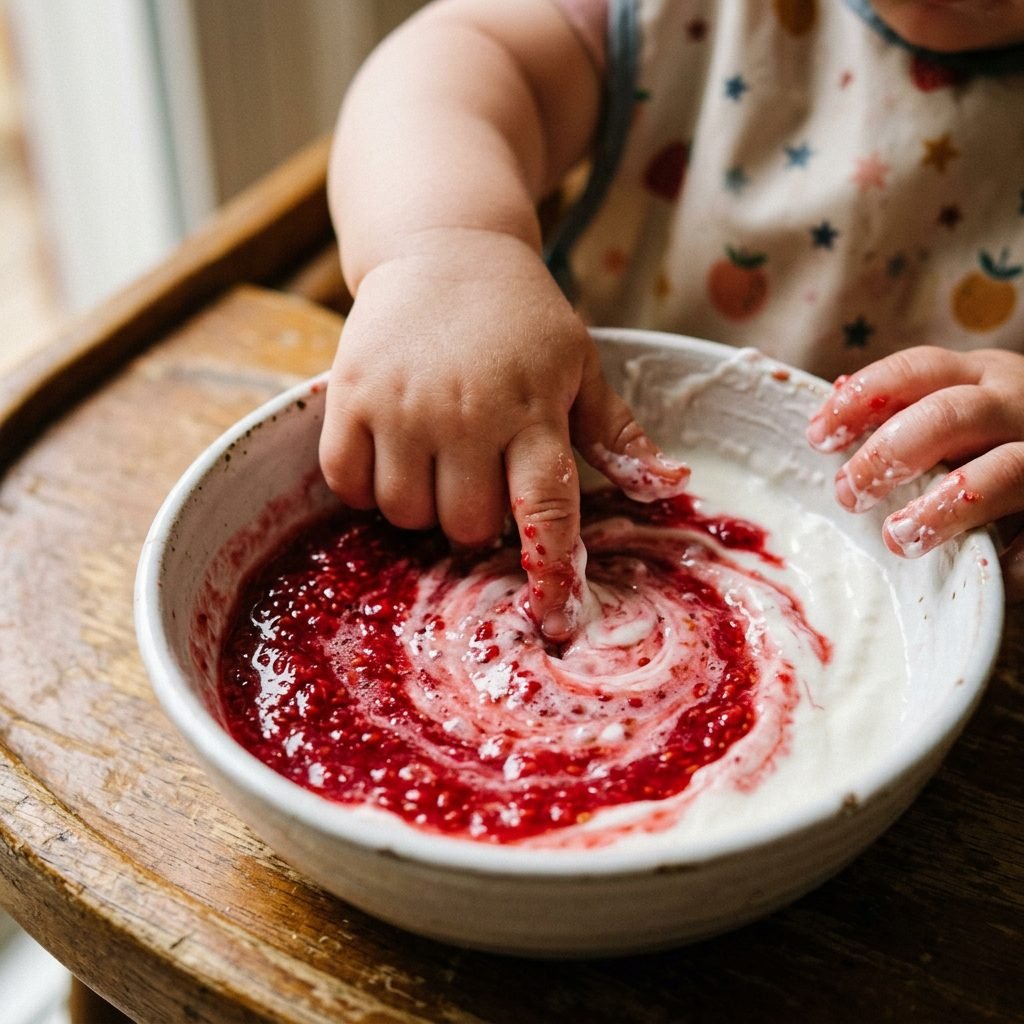
As a doula, I often talk to parents about the ‘fourth trimester’ and beyond, emphasizing that a baby’s brain is like a sponge, soaking up every tactile experience to build neural pathways. Sensory play is not just a trend; it is a fundamental part of cognitive development. When your baby dips their fingers into a bowl of cool, purple blueberry paint, their brain is processing temperature, texture, and color all at once.
Building Neural Connections
Every time your baby explores a new sensation, they are strengthening synapses in their brain. This ‘edible paint’ activity specifically targets the somatosensory system (touch) and the gustatory system (taste). By using fruit-based pigments, we are providing a multi-sensory experience that is far superior to store-bought, non-toxic (but non-edible) alternatives. We are teaching them that their world is a safe place to explore.
Language and Motor Development
Believe it or not, painting with fruit helps with future language skills! As you sit with your baby, using words like ‘squishy,’ ‘cold,’ ‘sweet,’ and ‘blue,’ you are building their receptive vocabulary. Physically, the act of dipping, spreading, and grasping small containers hones the pincer grasp and hand-eye coordination. It is the perfect precursor to self-feeding and, eventually, writing.
| Developmental Area | Benefit of Fruit Paint Play |
|---|---|
| Fine Motor Skills | Developing the pincer grasp and hand dexterity. |
| Cognitive Growth | Understanding cause and effect (smearing = color). |
| Sensory Processing | Integrating touch, taste, and visual stimuli. |
| Emotional Bonding | Shared joy and focused attention from the caregiver. |
The 2-Ingredient Recipe: Simple, Safe, and Sweet
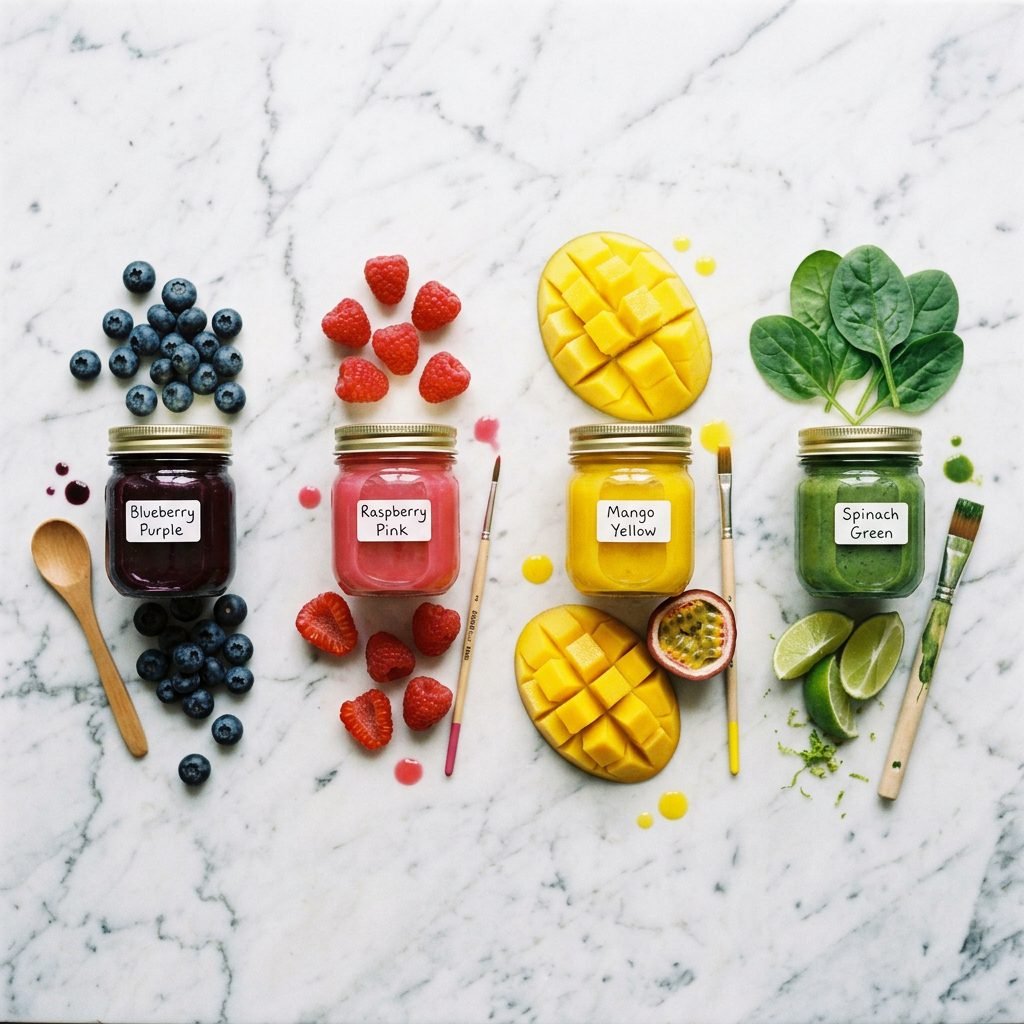
You don’t need a pantry full of expensive craft supplies to be a ‘crafty mom.’ In fact, the best ingredients are already in your refrigerator. This recipe relies on two simple components: a creamy base and a natural pigment. The beauty of this method is that it is entirely Baby-Led Weaning (BLW) friendly. If they eat the paint, they are just getting a healthy snack!
Step 1: Choose Your Base
You have two main options for your base, depending on your baby’s dietary needs and age:
- Greek Yogurt: Best for babies who have already been introduced to dairy. It provides a thick, ‘acrylic-like’ consistency that holds its shape well on paper or a tray.
- Baby Rice Cereal or Oatmeal: Best for babies with dairy sensitivities or those just starting solids. Mix it with breast milk or formula until it reaches a smooth, spreadable consistency.
Step 2: Create Your Pigment
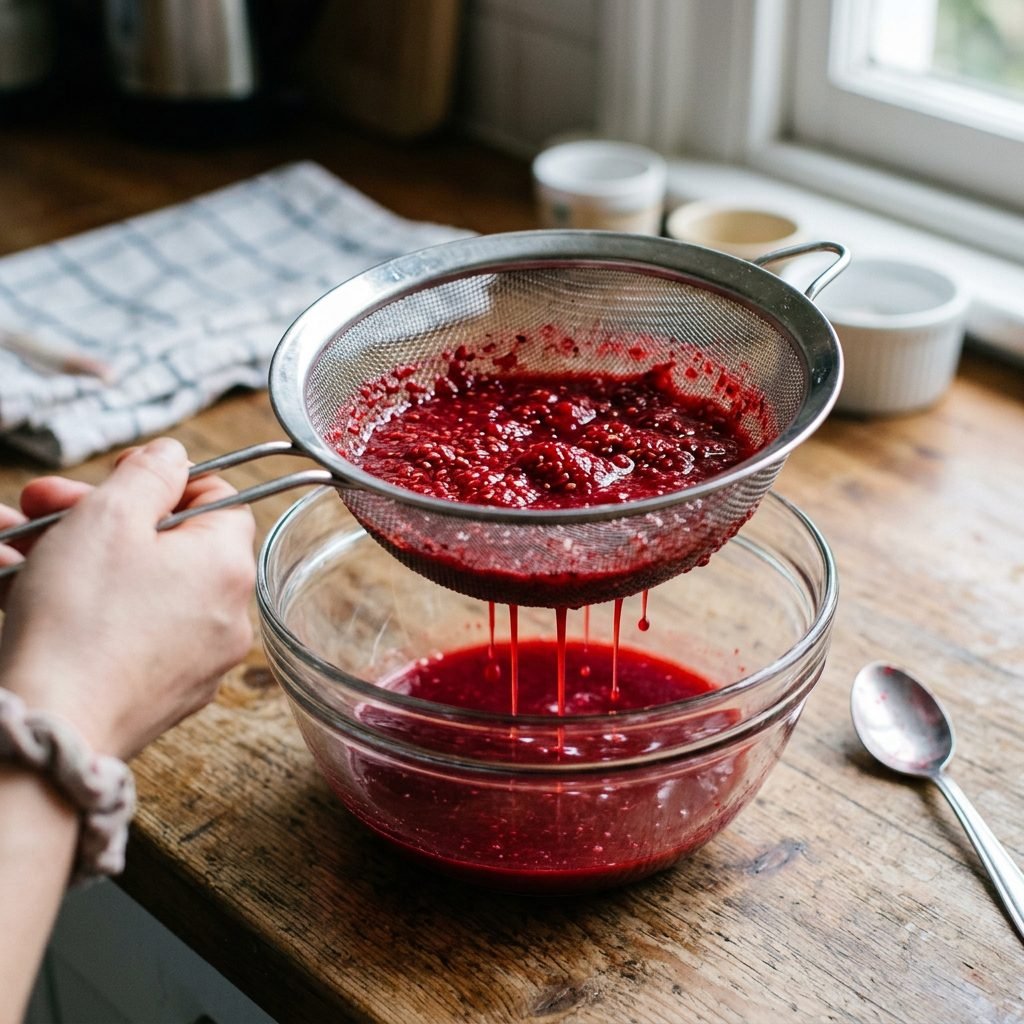
Nature provides the most beautiful palette! To create your ‘ink,’ you will need to blend or mash your chosen fruit and then strain it to remove any large chunks or seeds that could be a choking hazard. Pro Tip: For deeper colors, lightly simmer the fruit on the stove for 5 minutes to concentrate the juices before straining.
| Fruit Choice | Resulting Color | Nutritional Bonus |
|---|---|---|
| Blueberries | Deep Purple / Blue | High in Antioxidants |
| Raspberries / Strawberries | Vibrant Pink / Red | Vitamin C & Fiber |
| Mango / Peach | Bright Yellow / Orange | Vitamin A & Beta-carotene |
| Spinach (Steamed) | Earthy Green | Iron & Folate |
- Place 1/2 cup of your chosen base into a small bowl.
- Add 1-2 tablespoons of your strained fruit juice/puree.
- Whisk together until the color is uniform and the ‘paint’ is smooth.
- Repeat for as many colors as you desire!
Setting the Stage: Mess-Free (Mostly!) Preparation
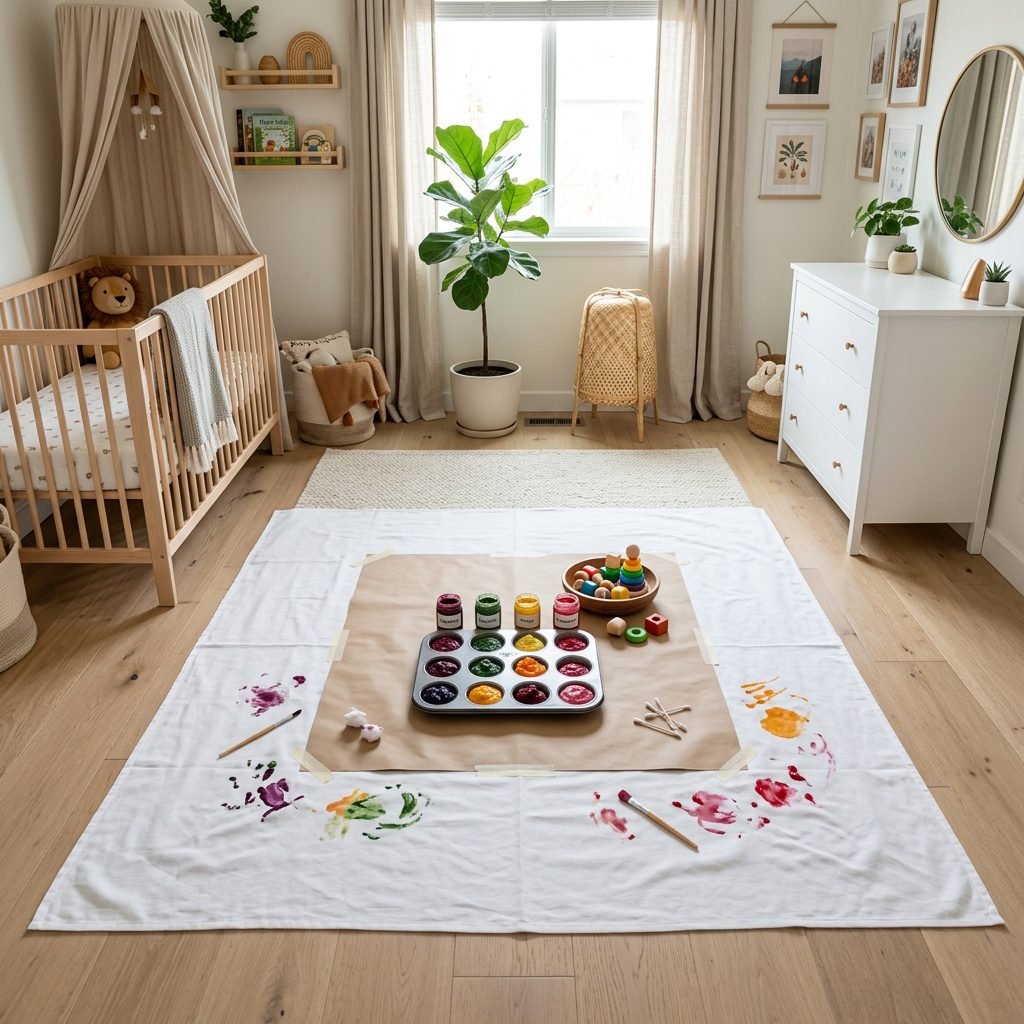
I know what you’re thinking: ‘This sounds like a disaster for my rug.’ Fear not! As an interior organizer and mom, I’ve mastered the art of the ‘contained mess.’ The goal is to create a ‘Yes Space’ where your baby can be as wild as they want without you hovering with a wet wipe every 2 seconds.
The ‘High Chair’ Method
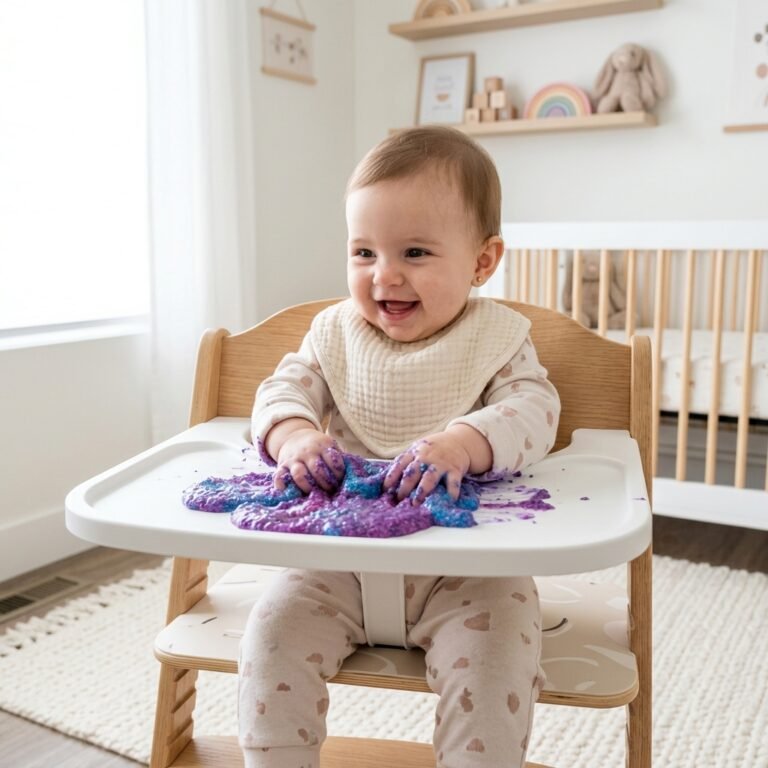
For younger babies (6-8 months), the high chair tray is the perfect ‘canvas.’ It keeps the mess contained to a small, wipeable surface. Simply dollop the paint directly onto the tray and let them go to town. This is also great for postpartum recovery moms who may need to sit down while engaging with their baby.
The ‘Floor Canvas’ Method
For babies who are sitting up confidently or crawling, try a floor-based setup. Lay down a washable splat mat or an old white bedsheet. This gives them more room to move their whole bodies. You can even tape down a large piece of heavy-duty watercolor paper or cardstock to the mat to give them a ‘real’ artist experience.
Styling for the ‘Gram’ (and Your Heart)
If you want to capture those precious memories, think about the lighting. Set up near a large window for soft, natural light. Dress your baby in just a diaper or a simple, solid-colored onesie that you don’t mind getting stained. The contrast between the bright fruit colors and their soft skin makes for the most heart-melting photos.
‘The mess is temporary, but the memory of their first ‘painting’ is forever. Take the photo, then jump in and get messy with them!’
| Setup Item | Purpose | Budget Tip |
|---|---|---|
| Splat Mat | Protects floors/carpets | Use an old shower liner or bedsheet. |
| Painter’s Tape | Secures paper to the floor | Available at any hardware store for under $5. |
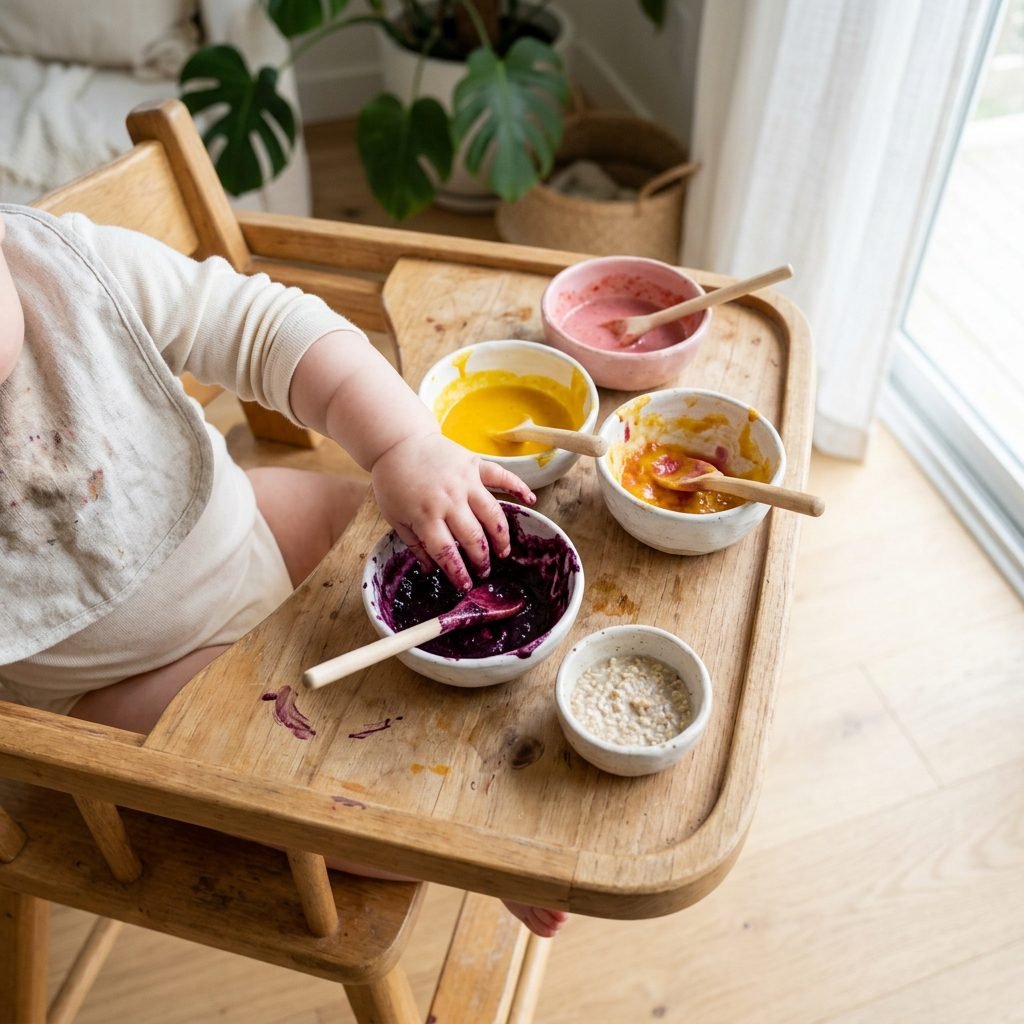
| Muffin Tin | Holds different paint colors | Uses what you already have in the kitchen! |
| Silicone Spatulas | For ‘mixing’ practice | Safe for baby to chew on during play. |
Developmental Milestones: What to Look For
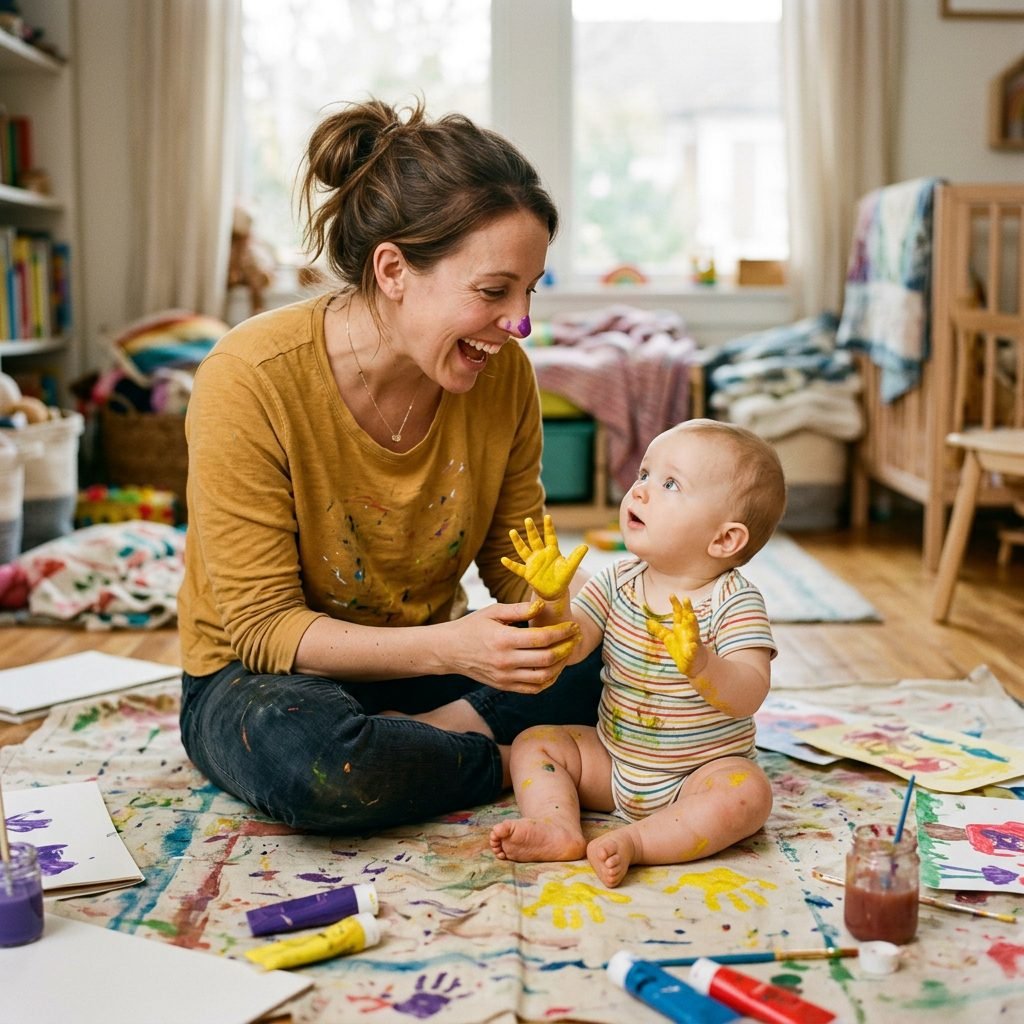
While your baby is busy smearing mango puree across their forehead, they are actually hitting some pretty impressive developmental markers. As a pediatric sleep consultant and doula, I love seeing how sensory engagement during the day leads to better sleep hygiene at night—a tired, stimulated brain is a brain ready for rest!
The 6-9 Month Phase
At this stage, you’ll notice your baby using their whole palm to move the paint. This is the ‘palmar grasp.’ They are learning about the boundaries of their body and the tray. You might see them ‘taste-testing’ every color. This is a great time to observe their sensory preferences—do they like the tartness of the raspberry or the sweetness of the mango?
The 10-12 Month Phase
As they approach their first birthday, you’ll see more intentionality. They might try to use a ‘brush’ (or a carrot stick!) to move the paint. This shows problem-solving skills. They are also beginning to understand object permanence—if they cover a small toy in paint and then ‘find’ it, they are practicing a vital cognitive skill.
Social and Emotional Connection
This is a wonderful time for mirroring. Sit across from your baby and mimic their movements. If they splash, you splash (gently!). This builds attachment and security, showing them that you are present and engaged in their world. It is a form of ‘serve and return’ communication that is essential for emotional health.
| Age Range | Expected Milestone | Activity Modification |
|---|---|---|
| 6-8 Months | Palmar Grasp / Tasting | Keep paints very thin and easy to smear. |
| 9-11 Months | Pincer Grasp / Pointing | Add small ‘dabs’ of paint for them to poke. |
| 12+ Months | Intentional Strokes | Introduce ‘tools’ like large sponges or silicone brushes. |
The Clean-Up: A Practical Mama’s Guide
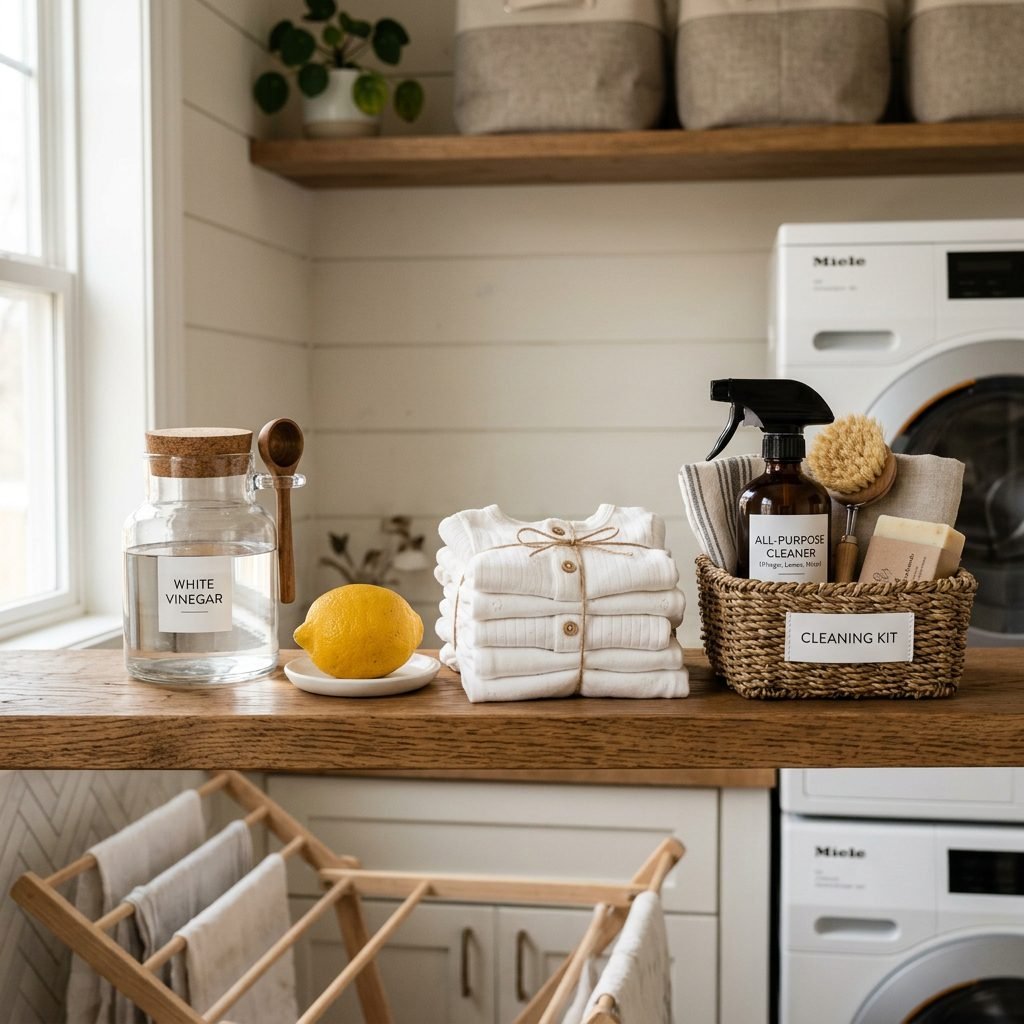
Let’s talk about the part everyone dreads: the cleanup. Because this paint is made of natural fruit pigments, it can stain certain fabrics if left to sit. However, because the base is yogurt or cereal, it’s generally very easy to wipe away if you act quickly.
The Post-Play Bath Ritual
The easiest way to clean a ‘painted’ baby? Straight into the tub! I love to transition from ‘Sensory Play’ to ‘Water Play.’ It extends the activity and makes the cleanup part of the fun. Use a warm washcloth to gently wipe their skin. Since the paint is edible, you don’t have to worry about them ‘eating’ soap while you scrub them down.
Treating Stains on Clothes
If some of that vibrant berry purple gets on your favorite onesie, don’t panic. Lemon juice or white vinegar are excellent natural pre-treatments for fruit stains. Apply a little to the spot, let it sit for 10 minutes, and then wash as usual. Strong Warning: Avoid using hot water on fruit stains initially, as it can ‘set’ the pigment into the fibers.
Storing Leftover Paint
Can you save the paint? Yes, but only for a short time. Because it contains fresh fruit and dairy (if using yogurt), it must be stored in an airtight container in the refrigerator. It will stay fresh for 24 to 48 hours. After that, it’s best to toss it and make a fresh batch for your next ‘art gallery’ session.
‘A clean house is a sign of a life lived, but a messy tray is a sign of a childhood cherished.’
Safety First: Essential Tips for Peace of Mind
As your ‘digital doula,’ I have to ensure we are playing it safe. While this paint is edible, there are a few things to keep in mind to ensure the experience is 100% positive for both you and your little artist.
Allergy Awareness
Always ensure that you have introduced each ingredient (the fruit and the base) to your baby individually before mixing them into paint. This allows you to monitor for any allergic reactions. If your baby has a known dairy allergy, stick to the baby cereal and water/breast milk base.
Choking Hazards
Ensure all fruit is blended to a completely smooth consistency. Small chunks of fruit or seeds (like whole blueberries or large strawberry seeds) can pose a choking risk for younger infants. Always strain your purees through a fine-mesh sieve to be safe.
Supervision is Key
Never leave your baby unattended during sensory play. Even though the paint is safe, they could still slip on a mat or try to eat a piece of the tape securing the paper. Stay close, stay engaged, and enjoy the process together.
| Safety Check | What to Do |
|---|---|
| Ingredients | Use only ‘already introduced’ foods. |
| Texture | Strain all purees for a smooth, chunk-free finish. |
| Environment | Secure all paper/mats to prevent slipping. |
| Supervision | Stay within arm’s reach at all times. |
Conclusion
Embrace the Mess and the Magic
There you have it, mama—a simple, soulful, and safe way to spark your baby’s imagination. This 2-ingredient edible fruit paint is more than just a DIY project; it is a celebration of your baby’s growing curiosity and your own incredible journey as their first teacher. By providing these moments of sensory delight, you are laying the groundwork for a lifetime of creative thinking and confident exploration.
Don’t worry if your kitchen looks like a fruit explosion occurred, or if your baby ends up with more paint on their tummy than on the paper. Those are the markers of a day well-spent. You are doing an amazing job, navigating the ‘everyday’ with love and intentionality. So, the next time you have a few extra berries and a spare 20 minutes, whip up a rainbow and watch your little one’s eyes light up. You’ve got this, and I’m right here cheering you on.
Medical Disclaimer: This content is for informational purposes only and does not constitute medical advice. Always consult with your pediatrician before introducing new foods to your baby’s diet or if you have concerns about allergies and developmental milestones.