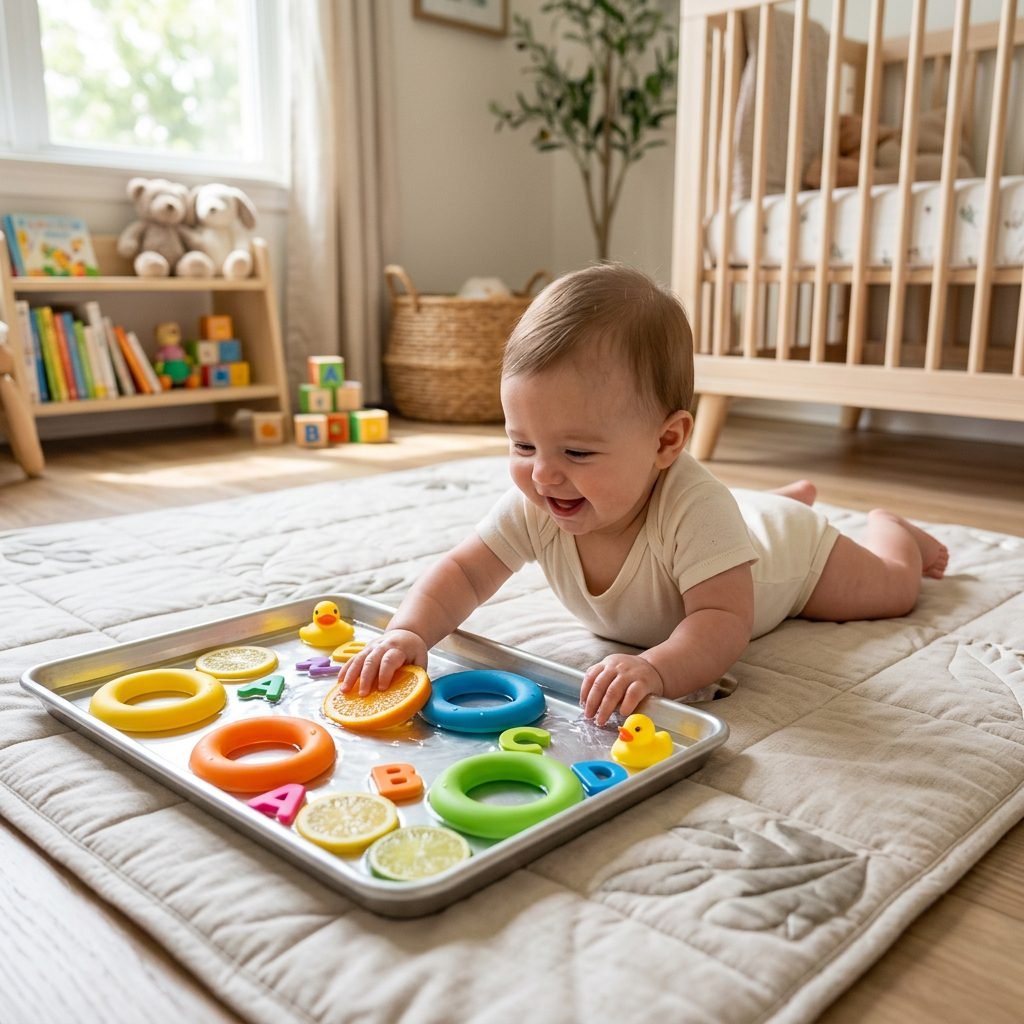
How to Set Up an Easy Water-Filled Baking Sheet Sensory Play Station for Infants
Hello, beautiful mama. If you are reading this while balancing a sleepy baby on your chest or pumping between nap times, take a deep breath and drop your shoulders. You are doing an incredible job.
Let’s talk about something that almost every new parent struggles with at some point: tummy time. We know the pediatricians recommend it, and we know it’s vital for building those strong neck and shoulder muscles. But let’s be brutally honest—sometimes tummy time feels like a wrestling match filled with tears, frustration, and a very unhappy baby. If you’ve been desperately searching for a way to make floor play engaging, stimulating, and actually fun for both of you, you are in exactly the right place.
As a doula, pediatric sleep consultant, and fellow mom who loves a beautifully organized space, I am always on the hunt for activities that hit the sweet spot: deeply beneficial for infant brain development, aesthetically pleasing, easy to clean up, and—most importantly—made from things you already have in your house. Enter: the Water-Filled Baking Sheet Sensory Play Station.
“You do not need an entire playroom of expensive, battery-operated plastic toys to stimulate your baby’s growing brain. Often, the most profound neural connections are made through simple, everyday textures—like the splash of water on a warm afternoon.”
This simple DIY setup is a sensory wonderland for infants. It encourages reaching, splashing, and visual tracking while keeping them safely distracted from the hard work of holding their heads up. In this comprehensive guide, we are going to walk through the exact steps to create this magical, taste-safe sensory station, how to adapt it as your baby grows, and how to protect your gorgeous nursery rugs in the process. Grab your coffee (reheat it in the microwave if you need to!), and let’s dive into the wonderful world of water play.
The Developmental Magic of Water Sensory Play
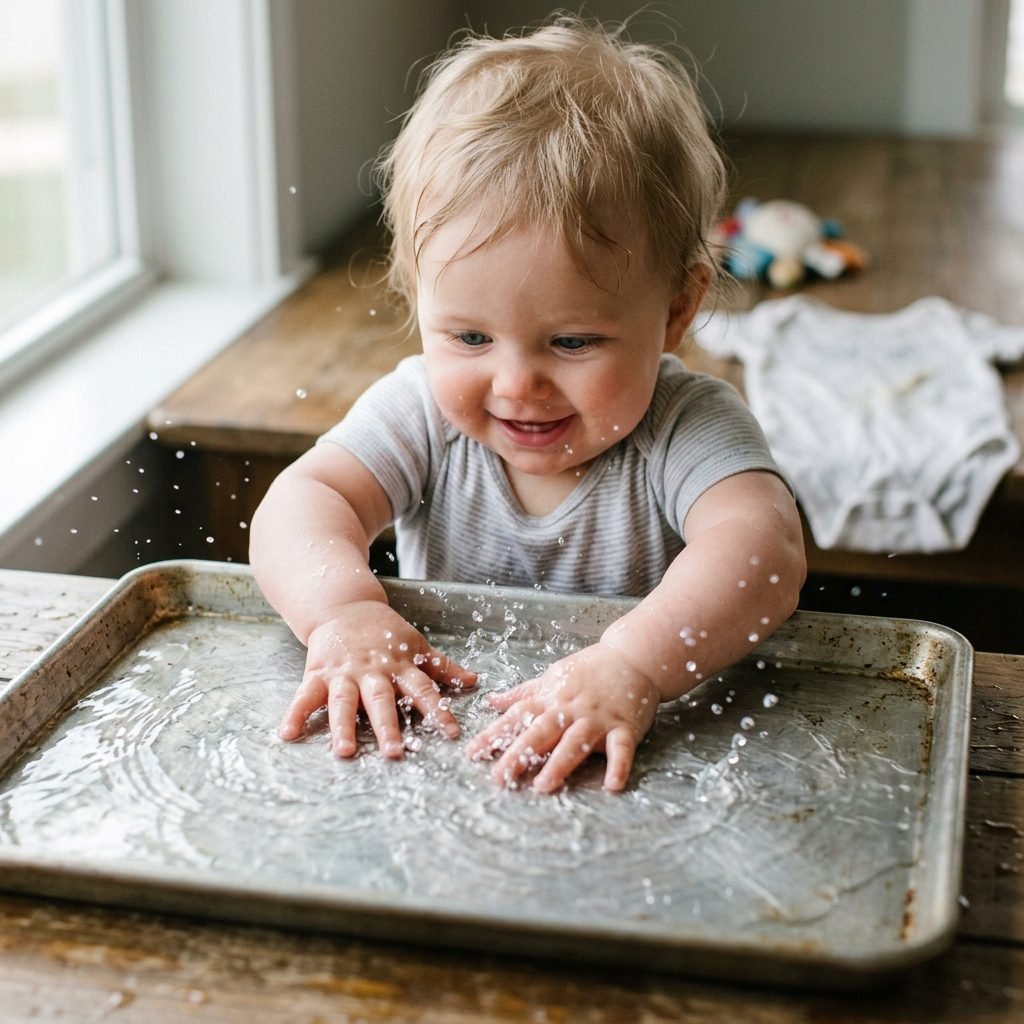
Before we pull out the baking sheets and towels, let’s talk about the why. Why is playing with a shallow pool of water so incredibly beneficial for a tiny human? During the first year of life, your baby’s brain is developing at a rapid, unprecedented rate. Every time they touch a new texture, hear a new sound, or see a new reflection, millions of neural pathways are firing and wiring together.
Turning Tummy Time Tears into Giggles
When a baby is placed on their tummy in front of a water-filled baking sheet, their focus shifts entirely. The discomfort of gravity is momentarily forgotten, replaced by sheer curiosity. Here are the specific developmental milestones this simple activity targets:
- Visual-Motor Integration: Watching a floating object (like a lemon slice) bob in the water, and then successfully reaching out to grab it, requires immense hand-eye coordination.
- Tactile Stimulation: The contrast between the cold, wet water and the hard, smooth metal of the baking sheet teaches the brain to process different sensory inputs simultaneously.
- Core and Neck Strength: As they lift their heads to see the water and shift their weight to one arm to reach with the other, they are doing a mini baby-workout!
- Cause and Effect: “When I slap my hand down, the water splashes up!” This is early scientific reasoning at its finest.
By offering a highly engaging focal point, the baking sheet method extends tummy time naturally, without forcing it. It’s evidence-based play wrapped up in a joyful, messy moment.
What You Need: Safe, Simple, and Already in Your Kitchen
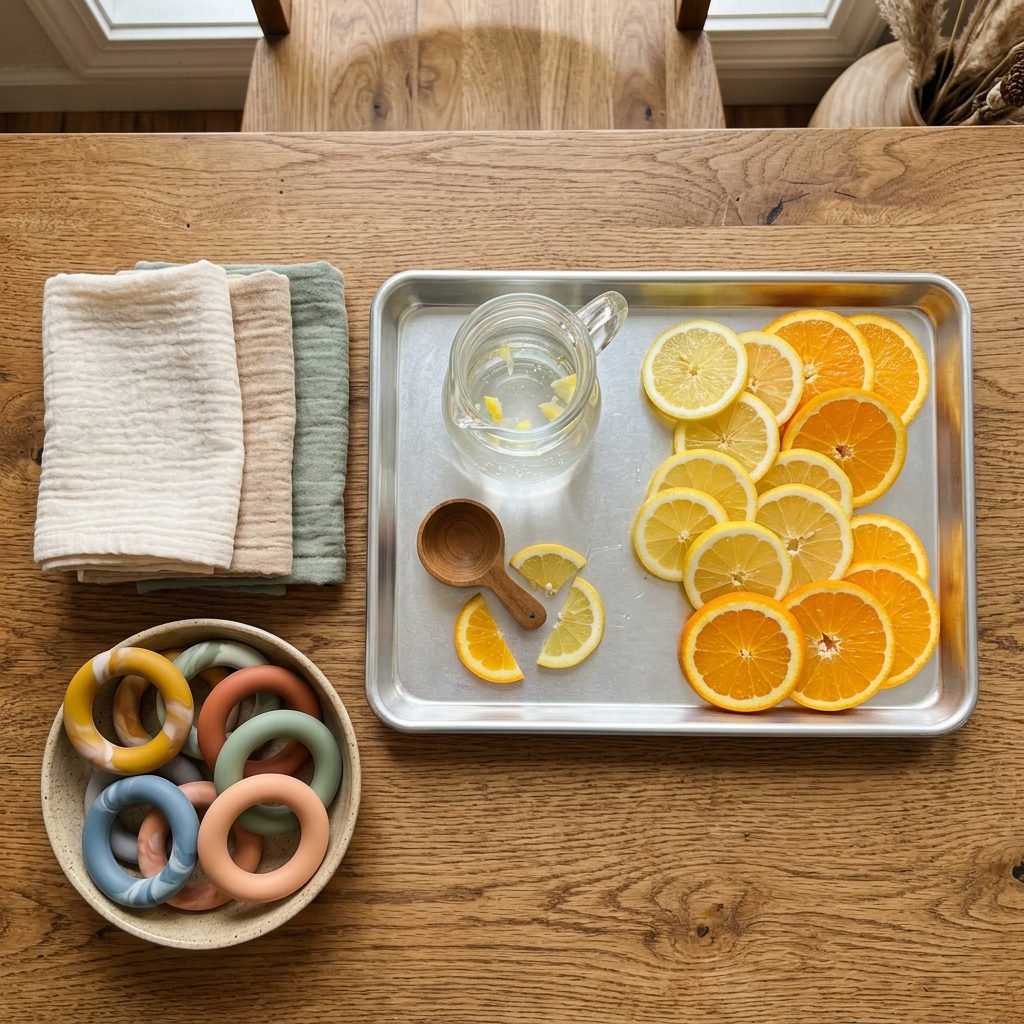
One of the core philosophies I share with expectant and postpartum moms is this: simplify your life. You do not need to run to a craft store to create a magical sensory experience. In fact, everything you need is likely sitting in your kitchen cabinets right now.
The Budget-Friendly Breakdown
We are focusing exclusively on taste-safe, non-toxic materials because, as we all know, everything goes straight into a baby’s mouth. Here is your simple inventory checklist:
| Material | Purpose | Estimated Cost |
|---|---|---|
| Standard Aluminum Baking Sheet (Rimmed) | Provides a shallow, reflective, and contained basin for the water. | $0 (Already own) |
| Lukewarm Water | The primary sensory medium. Must be room temp to avoid shocking baby. | $0 |
| Splat Mat or Large Plush Towels | Protects your nursery floors and provides a soft base for baby’s tummy. | $0 – $15 |
| Taste-Safe “Floaties” (Citrus, Ice, Silicone) | Encourages reaching, grasping, and visual tracking. | $0 – $5 |
Choosing the Right Add-Ins
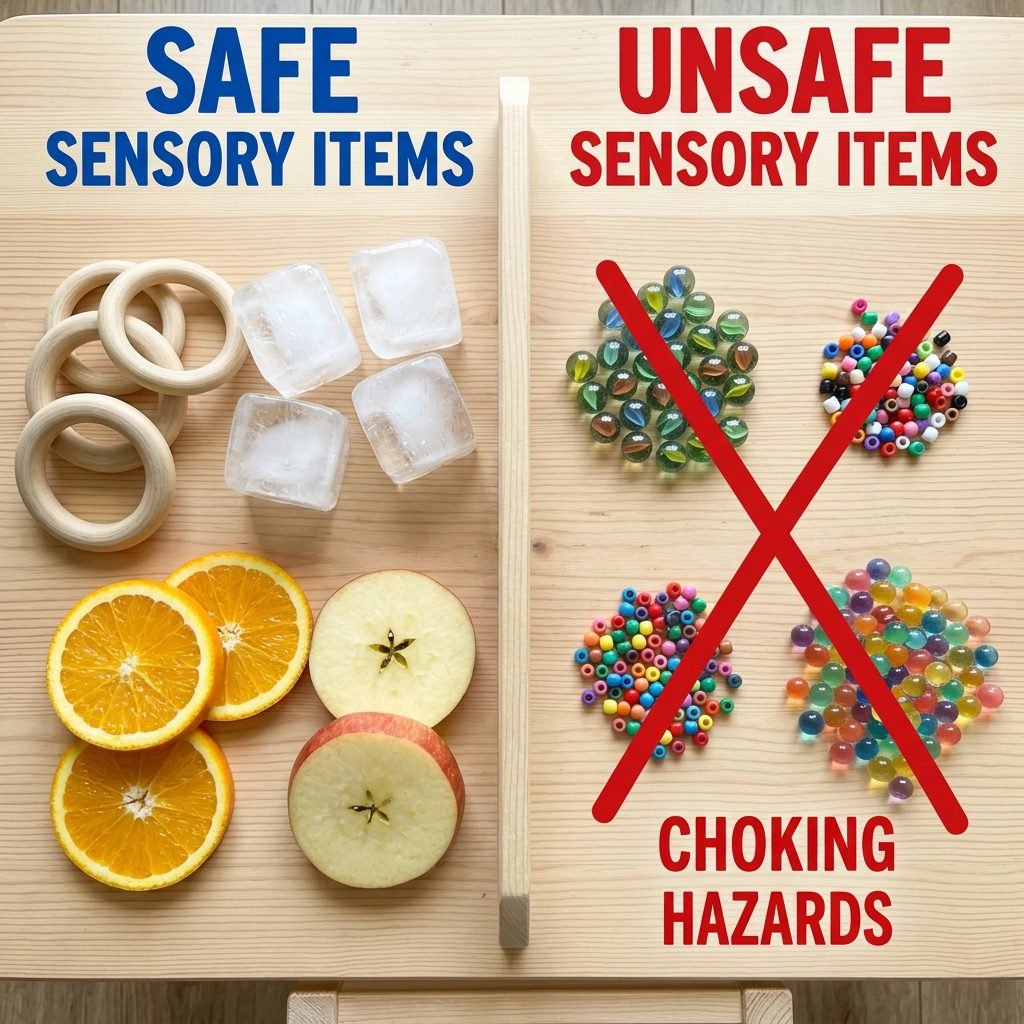
The items you place in the water are just as important as the water itself. For infants under 12 months, we must be incredibly vigilant about choking hazards. Avoid small beads, water beads (which are highly toxic if ingested), or small plastic pieces. Instead, opt for large, natural, and colorful items.
- Fresh Citrus Slices: Large slices of lemons, limes, or oranges. They float beautifully, smell amazing, and are completely safe if mouthed.
- Large Silicone Teethers: Your baby’s favorite silicone rings or oversized blocks sink and float, offering a familiar texture in a new environment.
- Giant Ice Cubes: Freeze water in oversized silicone molds. Babies love the temperature contrast as the ice slowly melts.
Step-by-Step: Setting Up Your Water-Filled Baking Sheet

Now for the fun part! Setting this up takes less than five minutes, making it the perfect activity for when you need a quick reset during a cranky afternoon. Follow these steps to ensure a safe, comfortable, and stylish setup.
The 5-Minute Setup Script
- Prep the Splash Zone: Lay down a waterproof splat mat (a stylish leather one looks great in a nursery!) or a thick, absorbent bath towel on a flat, even surface on the floor. Never do this on a raised surface like a bed or table.
- Position the Baking Sheet: Place your clean, rimmed baking sheet directly in the center of the towel. Ensure it sits completely flat so it won’t tip when baby leans on the edge.
- Add the Water: Using a pitcher, gently pour in just 1/4 inch to 1/2 inch of water. You want just enough to cover the bottom, allowing for splashes, but not enough to submerge a baby’s nose or mouth if they lay their head down. Temperature matters: aim for lukewarm, room-temperature water.
- Introduce the Sensory Items: Carefully place your chosen add-ins (citrus slices, large ice cubes, or silicone toys) into the water. Arrange them visually so they catch the light.
- Position the Baby: Gently lay your baby on their tummy, positioning their chest just outside the rim of the baking sheet so their arms can easily reach over the edge. Support them with a Boppy pillow or rolled towel under their chest if they need extra height!
“Remember, mama: the goal isn’t for them to play for an hour. Even 3 to 5 minutes of joyful, engaged splashing is a massive win for their development!”
Safety First: Golden Rules for Infant Water Play
As a postpartum nurse and doula, I cannot stress this enough: safety is the absolute foundation of all sensory play. While this activity only uses a tiny amount of water, infants require 100% active, arms-reach supervision at all times around any amount of liquid.
The Non-Negotiables of Water Play
- Never step away: Not to check your phone, not to flip the laundry, not to grab a coffee. If you must leave the room, pick the baby up and take them with you.
- Watch the posture: If your baby gets fatigued and starts dropping their head, tummy time is over. Scoop them up for some cuddles.
- Check the edges: Ensure your baking sheet doesn’t have sharp metal edges. Most modern, rolled-rim baking sheets are perfectly safe.
Safe vs. Unsafe Sensory Add-Ins
To make it incredibly clear, here is a quick reference guide on what is safe to put in your baby’s water station, and what should be strictly avoided.
| Safe Add-Ins (0-12 months) | Unsafe Add-Ins (Choking/Toxin Hazards) |
|---|---|
| Whole citrus slices (lemon, orange) | Water beads (Orbeez) – Highly Dangerous |
| Large silicone teething rings | Small plastic beads or buttons |
| Oversized ice cubes (too big to swallow) | Small foam pieces or packing peanuts |
| Edible flower petals (thoroughly washed) | Coins, marbles, or small pebbles |
Sensory play is about connection, not perfection. Your presence is the most important ingredient. By keeping the environment safe, you can relax and truly enjoy watching their little minds work.
Growing with Your Baby: Adapting the Play Station from 3 to 12 Months
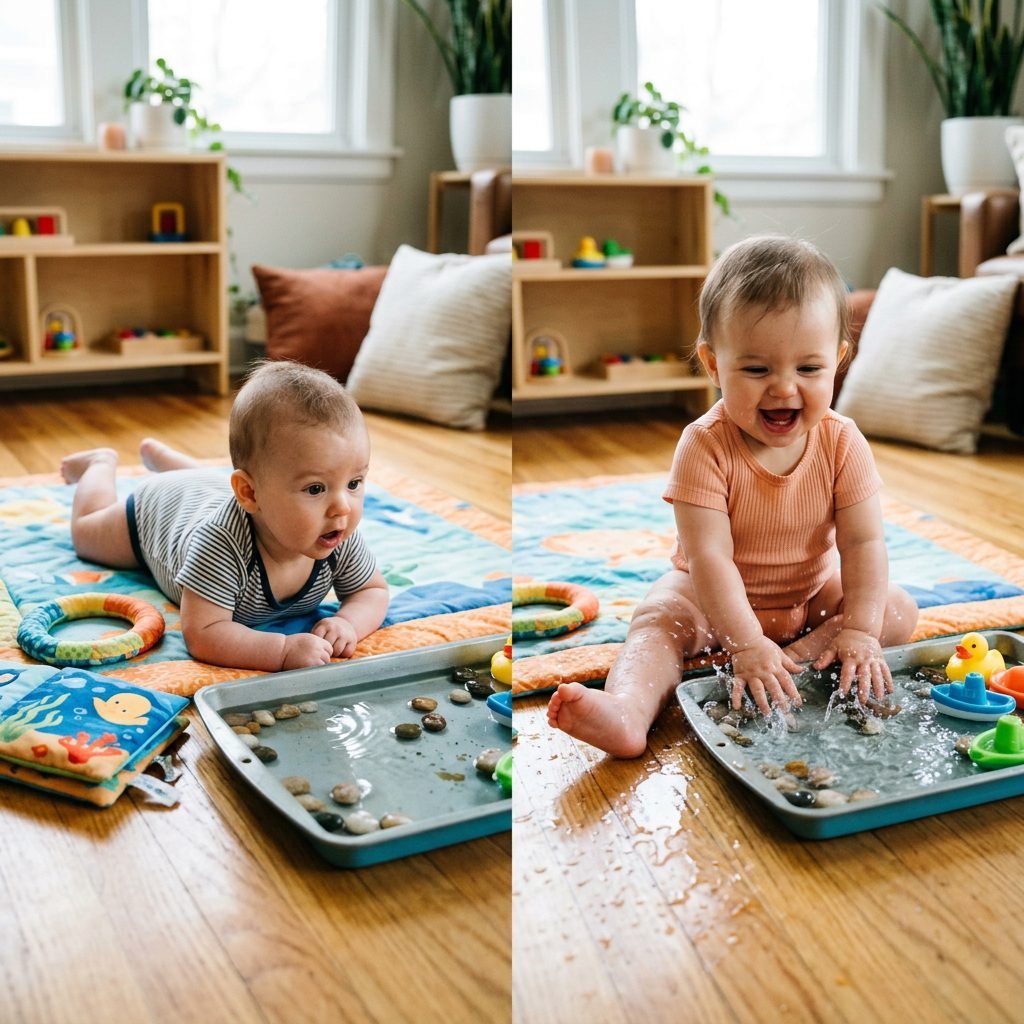
One of the best things about the water-filled baking sheet is that it evolves right alongside your baby. What starts as a simple visual exercise transforms into a complex fine-motor challenge as they grow. Here is how to adapt the setup for your baby’s current developmental stage.
3-5 Months: The Tummy Time Observer
At this age, your baby is just mastering head control. They may not reach for the items yet, and that is completely fine!
The Setup: Keep the water very shallow (1/4 inch). Use high-contrast items like dark green lime slices against the shiny silver pan.
The Goal: Visual tracking and keeping their head lifted to look at the reflections.
6-8 Months: The Sitter and Splasher
Your baby is likely sitting up independently or with tripod support, and their hands are ready for action.
The Setup: Move the baking sheet in front of them while they are in a seated position. Add slightly more water (1/2 inch) and introduce items that require grasping, like silicone blocks or large wooden spoons to bang on the water.
The Goal: Fine motor grasping, transferring objects from hand to hand, and exploring cause and effect (splashing!).
9-12 Months: The Standing Scientist
Hello, mobility! Your older infant might be crawling, pulling to stand, or cruising.
The Setup: Take the baking sheet outside to the patio or place it on a low, sturdy toddler table. Add a small cup or a clean sponge so they can practice scooping, pouring, and squeezing.
The Goal: Advanced fine motor skills, practical life skills (pouring), and independent exploration.
Mess-Free Magic: Cleanup Hacks and Protecting Your Space
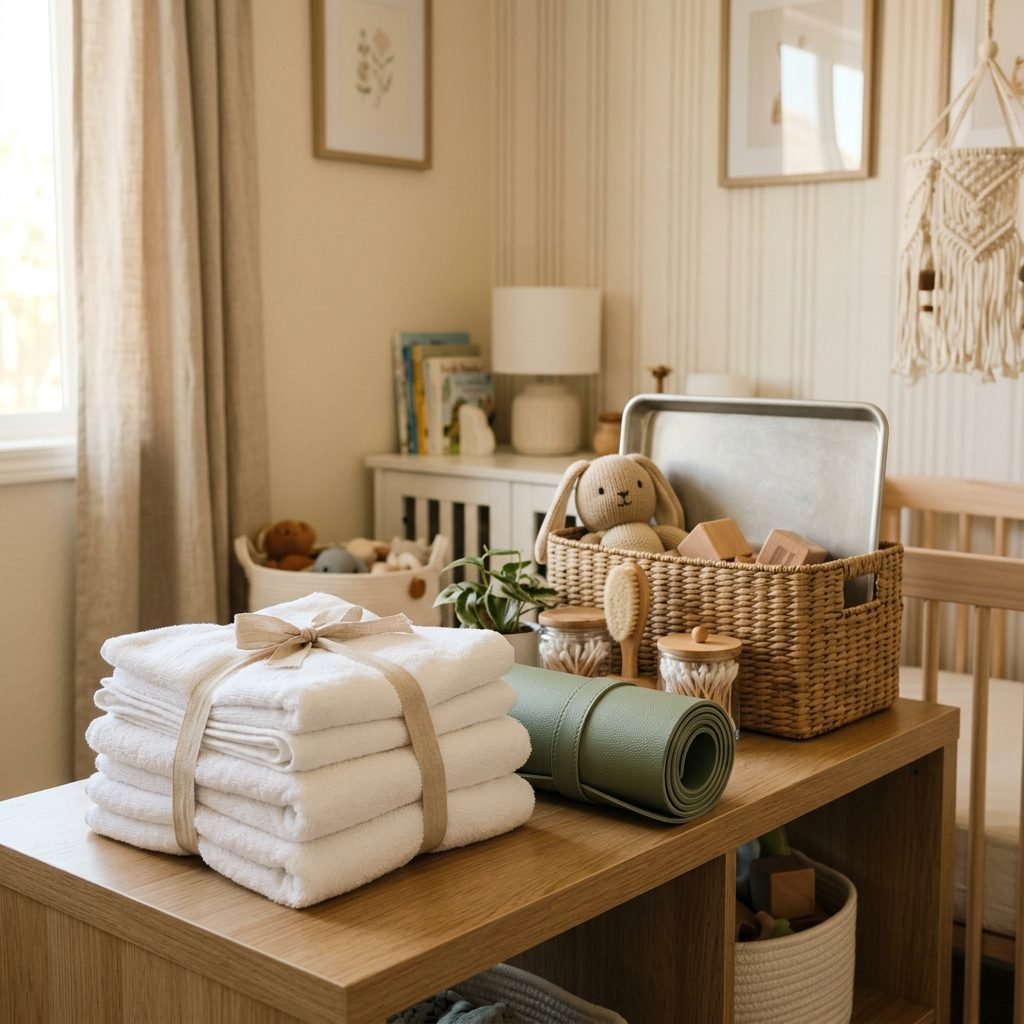
Let’s talk directly to my fellow nursery designers, hostesses, and neat-freak mamas (I see you, and I am you!). The idea of mixing water and beautifully curated nursery spaces can induce a little anxiety. But with a practical approach, you can have your sensory play and a clean house, too.
The “Containment” Strategy
- The Double-Towel Method: Place a standard bath towel down first to absorb any immediate splashes, and top it with a smaller, highly absorbent microfiber towel right under the baking sheet.
- Wipe-Clean Mats: Invest in a vegan leather splat mat. They are stunning, fold up easily, and wipe perfectly dry in seconds. They are a nursery storage dream!
- The Post-Play Wrap Up: Have a dry, warm baby towel sitting right next to you before you even begin. When baby is done (or gets fussy), immediately scoop them up into the dry towel. The floor mess can wait; keeping baby warm and happy is priority number one.
Once baby is settled, simply pick up the baking sheet, dump the water in the sink, toss the citrus slices in the compost, and throw the towels in the wash. It is a 60-second cleanup for a high-value developmental activity.
Conclusion
Setting up an easy water-filled baking sheet sensory play station is proof that the best parenting hacks are often the simplest. You are giving your infant a beautiful opportunity to explore their world, build their muscles, and wire their brain, all from the comfort of your living room floor.
Remember, sweet mama, whether your baby plays happily for ten minutes or decides they are “done” after thirty seconds, you are succeeding. You showed up, you offered an enriching experience, and you loved them through it. Give yourself grace, enjoy the little splashes, and don’t forget to snap a picture of those wet, chubby little hands.