

The Left Side-Lying Infant Massage Technique for Instant Gas Pain Relief
Oh, mama, I hear you. It is 2:00 AM, the house is silent except for those sharp, pained cries coming from your little one, and your heart is breaking right along with your sleep cycle. We have all been there—hovering over a changing table, trying the bicycle legs for the hundredth time, and wondering why our sweet baby seems to be in so much distress. Gas pain is one of the most common hurdles in the fourth trimester, but it can feel like an absolute mountain when you are in the thick of it. As a doula, I have spent countless hours supporting families through these ‘purple crying’ episodes, and I want to share a secret weapon that is often overlooked in the standard parenting manuals: The Left Side-Lying Infant Massage Technique.
Unlike traditional back-lying massages, the left side-lying position utilizes the natural laws of physics and infant anatomy to help trapped bubbles move through the digestive tract with far less resistance. It is gentle, it fosters incredible skin-to-skin bonding, and most importantly, it works. In this guide, we are going to dive deep into why this specific position is a game-changer, how to prepare your ‘healing space,’ and a step-by-step walkthrough of the strokes that will help your baby—and you—finally get some much-needed rest.
Remember, sweet mama: you are exactly what your baby needs. This gas is temporary, but the comfort you provide is building a lifetime of security.
The Science of the ‘Left Side’: Why Anatomy Matters
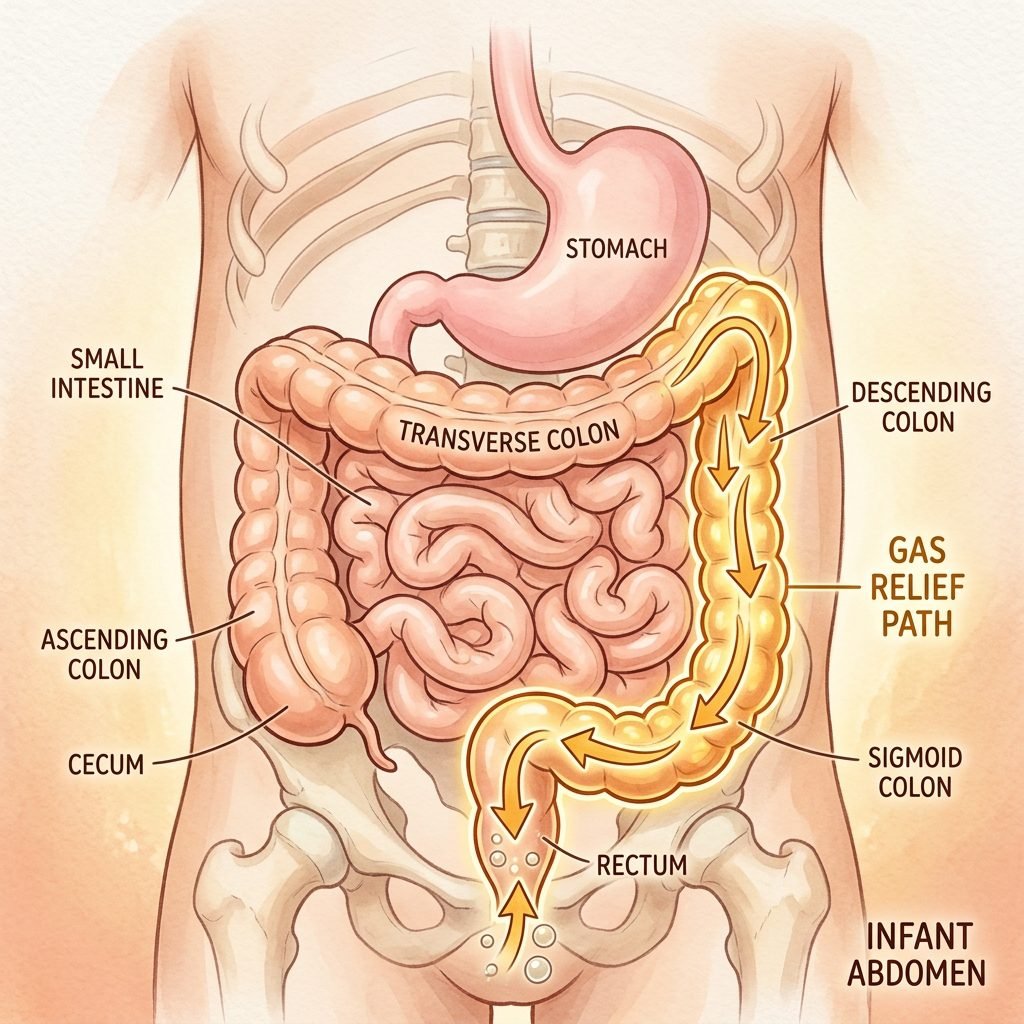
You might be wondering, ‘Why the left side specifically?’ To understand this, we have to look at the beautiful, albeit immature, digestive system of a newborn. A baby’s stomach is shaped somewhat like a kidney bean, and the way it connects to the small and large intestines is highly influenced by gravity. When a baby lies on their left side, the stomach is positioned lower than the esophagus, which can actually help prevent reflux. More importantly for gas, the descending colon—the final stretch of the large intestine where waste and gas prepare to exit—is located on the left side of the abdomen.
By placing your baby on their left side during a massage, you are allowing gravity to assist the movement of gas downward toward the rectum. When they are flat on their back, gas can sometimes get ‘stuck’ in the transverse colon (the part that runs across the top of the belly). By shifting the angle, we create a clear, downhill path for those painful bubbles. This position also helps relax the pyloric sphincter, allowing the stomach to empty more efficiently. It is not just a ‘trick’; it is biological support for a system that is still learning how to function.
| Feature | Left Side-Lying Benefit | Back-Lying Comparison |
|---|---|---|
| Gravity Assist | High; aids descending colon movement. | Neutral; gas can pool in the center. |
| Reflux Risk | Low; keeps stomach contents below esophagus. | Moderate; easier for acid to rise. |
| Abdominal Tension | Low; allows for deeper, softer pressure. | Moderate; babies often tense ‘abs’ when crying on back. |
| Gas Exit Path | Direct path to the rectum. | Requires more muscular effort from baby. |
Setting the Stage: Creating a Calming Sensory Environment

Before we even touch the baby, we have to regulate our own nervous systems. Babies are like little sponges; they pick up on our cortisol levels and tension. If you are stressed and frantic to ‘fix’ the gas, your baby will feel that tension and tighten their abdominal muscles, making the massage less effective. We want a parasympathetic response—the ‘rest and digest’ state.
- Temperature is Key: A cold baby is a tense baby. Ensure the room is warm (around 72-75°F) and use a heating pad to warm the surface where the baby will lie (remove it before placing the baby down!).
- The Right Oil: Use a food-grade, cold-pressed oil like fractionated coconut oil or grapeseed oil. Avoid essential oils for newborns unless specifically cleared by a professional, as their skin is incredibly permeable.
- Lighting and Sound: Dim the lights. If you use white noise, keep it low and rhythmic, resembling the sound of the womb. This signals to the baby’s brain that they are safe.
- Your Hands: Rub your hands together until they are toasty warm. Cold hands will cause a startle reflex that shuts down the digestive process.
Step-by-Step: The Left Side-Lying Massage Sequence
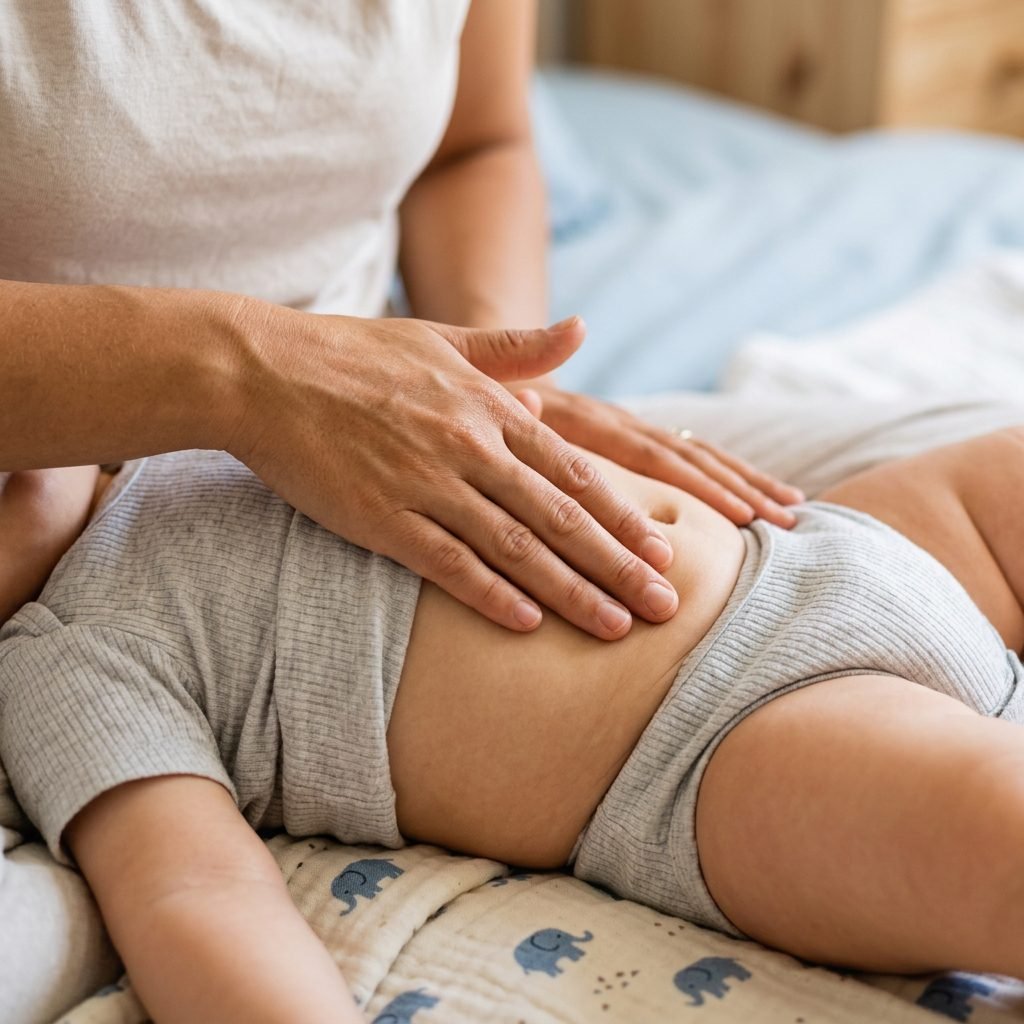
Now, let’s get into the physical technique. Follow these steps slowly, watching your baby’s cues. If they pull away or cry harder, stop and simply hold them; we never want to force a massage.
- The Setup: Lay your baby on their left side on a firm but soft surface. Place a small rolled-up receiving blanket behind their back for support and a tiny tuck of a cloth under their head to keep the spine neutral.
- The ‘C’ Hold: Cup your right hand over the baby’s right hip to stabilize them. Your left hand will be the ‘working’ hand.
- The Downward Slide: Using the palm of your left hand, start just below the ribcage on the baby’s right side (which is ‘up’ in this position) and glide slowly across the belly and down toward the left hip. This follows the path of the transverse and descending colon.
- The Pumping Leg: While the baby is on their side, gently take their top leg (the right leg) and fold it toward their tummy. Hold for 5 seconds, then straighten. This physical compression acts like a manual pump for the bowels.
- The Circular Rub: Use two fingers to make small, clockwise circles around the navel. Even on the side, the clockwise direction is vital as it follows the natural flow of digestion.
Pro-Tip: Listen for the ‘toots!’ When you hear gas escaping, keep the pressure steady but light. That is the sound of success, mama!
The ‘I Love You’ Adaptation for Side-Lying

You may have heard of the ‘I Love You’ (ILY) massage for babies on their backs, but we can adapt this beautifully for the side-lying position. This technique is specifically designed to move waste through the three parts of the large intestine.
The ‘I’ Stroke
On the side-lying baby, the ‘I’ stroke is a straight line down the left side of their belly (the side closest to the floor). Use two fingers to trace a line from the ribs to the hip. This clears the final exit path.
The ‘L’ Stroke
Trace an upside-down ‘L’. Start on the baby’s right side (the ‘top’ side), move across the belly toward the floor, and then down the left side. This moves gas from the ascending colon to the descending colon.
The ‘U’ Stroke
Trace an upside-down ‘U’. Start at the bottom right hip, go up toward the ribs, across the center, and down the left side. This is the most comprehensive stroke for full-system stimulation. Repeat this sequence 3 to 5 times, always ending with the downward stroke on the left side.
When to Use Which Method: A Quick Guide

Not all gas is created equal. Sometimes it is just a little ‘bubble’ from a fast let-down, and other times it is deep, colicky distress. Use this table to determine if the left side-lying massage is the right choice for the moment.
| Gas Severity | Signs & Symptoms | Recommended Technique |
|---|---|---|
| Mild/Occasional | Fidgeting after feeding, mild grunting. | Standard Burping & ‘Tiger in the Tree’ hold. |
| Moderate | Pulling legs to chest, red face, passing gas occasionally. | Left Side-Lying Massage (10-15 minutes). |
| Severe/Colic | Inconsolable screaming, rigid belly, happens same time daily. | Left Side-Lying Massage combined with warm compress and ‘Bicycle Legs’. |
Important Note: If your baby has a very full stomach immediately after a feed, wait at least 30 minutes before performing this massage to avoid inducing spit-up or reflux.
The Doula’s Checklist: Red Flags & Safety

While massage is a wonderful tool, we must always keep safety at the forefront of our minds. As much as I want to help you soothe your little one, there are times when a massage isn’t the answer and a call to the pediatrician is necessary. Trust your motherly intuition—it is the most powerful tool in your kit.
- Fever: If gas pain is accompanied by a fever over 100.4°F, skip the massage and call the doctor.
- Vomiting: Distinguish between a ‘happy spitter’ and projectile vomiting. If your baby cannot keep fluids down, seek medical advice.
- Bloody Stools: Any sign of blood or unusual mucus in the diaper requires a professional check-up.
- Hard Belly: If the abdomen feels hard like a board and doesn’t soften even between cries, it could indicate a more serious blockage.
Always use feather-light pressure. Your baby’s organs are right beneath the surface, and their ribcage is still very pliable. You are ‘petting’ the gas along, not forcing it.
Conclusion
Mama, you are doing an incredible job. The fourth trimester is a season of intense learning—for you and for your baby’s body. By using the Left Side-Lying Infant Massage Technique, you aren’t just relieving gas; you are teaching your baby that when they are in pain, you are there to provide comfort and relief. You are building a foundation of trust that will last a lifetime. So, the next time those tummy rumbles start, take a deep breath, warm up your hands, and lay your sweet babe on their left side. You’ve got this, and I am right here cheering you on.