

How to Stop the Startle Reflex from Waking Your Baby Without Using a Swaddle
The Midnight Jump: Understanding Your Baby’s Startle Reflex
Oh, mama, I see you. It is 3:00 AM, and you have just spent forty-five minutes rocking, swaying, and shushing your sweet little one to sleep. You move with the precision of a diamond thief, slowly lowering them into the crib. Their back touches the mattress, and then—bam. Their little arms fly out like they are falling through the clouds, their eyes snap open, and the crying begins. You have just met the Moro Reflex, often called the startle reflex.
As a doula and sleep consultant, I hear this story every day. While swaddling is the traditional ‘fix’ for this reflex, it isn’t always the right choice for every family. Perhaps your baby is already rolling (making swaddling unsafe), they have hip dysplasia concerns, or maybe they just flat-out hate having their arms restricted. Whatever the reason, you are looking for a way to help your baby stay asleep without the ‘burrito wrap.’ In this guide, we are going to dive deep into evidence-based, gentle techniques to dampen that startle reflex and get you both the rest you deserve.
Remember, mama: This reflex is a sign of a healthy, developing nervous system. It is not your enemy; it is just a primitive survival mechanism that needs a little extra comfort to quiet down.
The Science of the Startle: What Exactly is the Moro Reflex?
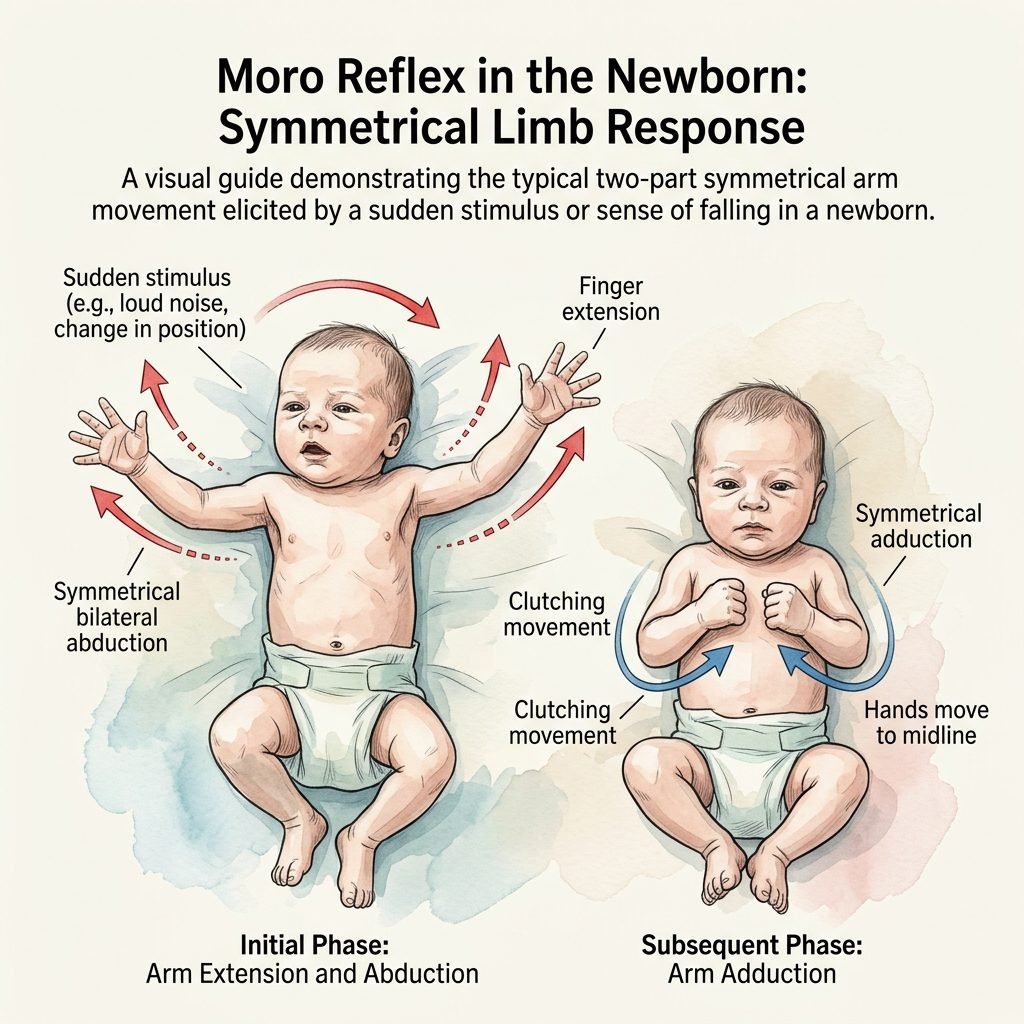
Before we can fix the wake-ups, we have to understand what is happening in that tiny, beautiful brain. The Moro reflex is one of many primitive reflexes babies are born with. It is an involuntary protective response to a sudden loss of support or a loud noise. To your baby, that slight tilt when you lay them down feels like they are falling.
Why It Happens
When the reflex is triggered, the baby experiences a three-phase reaction: 1. Arms extend, 2. Arms pull back in, and 3. Crying (usually). This usually peaks around month 2 and begins to disappear between 4 and 6 months as their neurological system matures.
| Feature | Moro Reflex (Startle) | Sleep Myoclonus (Twitch) |
|---|---|---|
| Physical Action | Symmetrical arm extension and retraction. | Brief, sporadic jerks of a single limb. |
| Trigger | Sudden movement, light change, or noise. | Occurs naturally during the transition to deep sleep. |
| Duration | Lasts until 4-6 months of age. | Can continue throughout childhood. |
Understanding this helps us realize that we aren’t ‘fixing’ a problem, but rather supporting a developmental phase. We want to minimize the triggers so the reflex doesn’t fire as often.
The Art of the ‘Slow-Motion’ Transfer

The most common time for the startle reflex to ruin your hard work is during the transfer from your warm arms to the cool crib. If you drop a baby into a crib ‘head-first’ or even ‘back-first,’ their inner ear senses the change in gravity, and zap—they startle awake.
The Step-by-Step Doula Transfer
- Wait for Deep Sleep: Do not move too soon! Wait for the ‘limp limb’ stage. If you lift their arm and it drops like a noodle, they are ready. This usually takes 10 to 20 minutes of sleep.
- The Chest-to-Chest Contact: Keep your chest pressed against theirs for as long as possible during the lower. This provides a sense of security and ‘grounding.’
- Feet First, Always: Lower the baby so their feet touch the mattress first, then their bottom, and finally their head. This prevents the sensation of falling.
- The ‘Heavy Hand’ Technique: Once they are down, do not pull your hands away immediately. Keep one hand firmly but gently on their chest and the other on their tummy or thighs. This ‘weight’ mimics the feeling of being held.
- The Five-Second Rule: Slowly lift your hands away over the course of 5 to 10 seconds. If they stir, apply gentle pressure again until they settle.
By changing the angle of entry, you bypass the vestibular system’s alarm bells, keeping the Moro reflex at bay.
Optimizing the Sleep Environment to Reduce Triggers
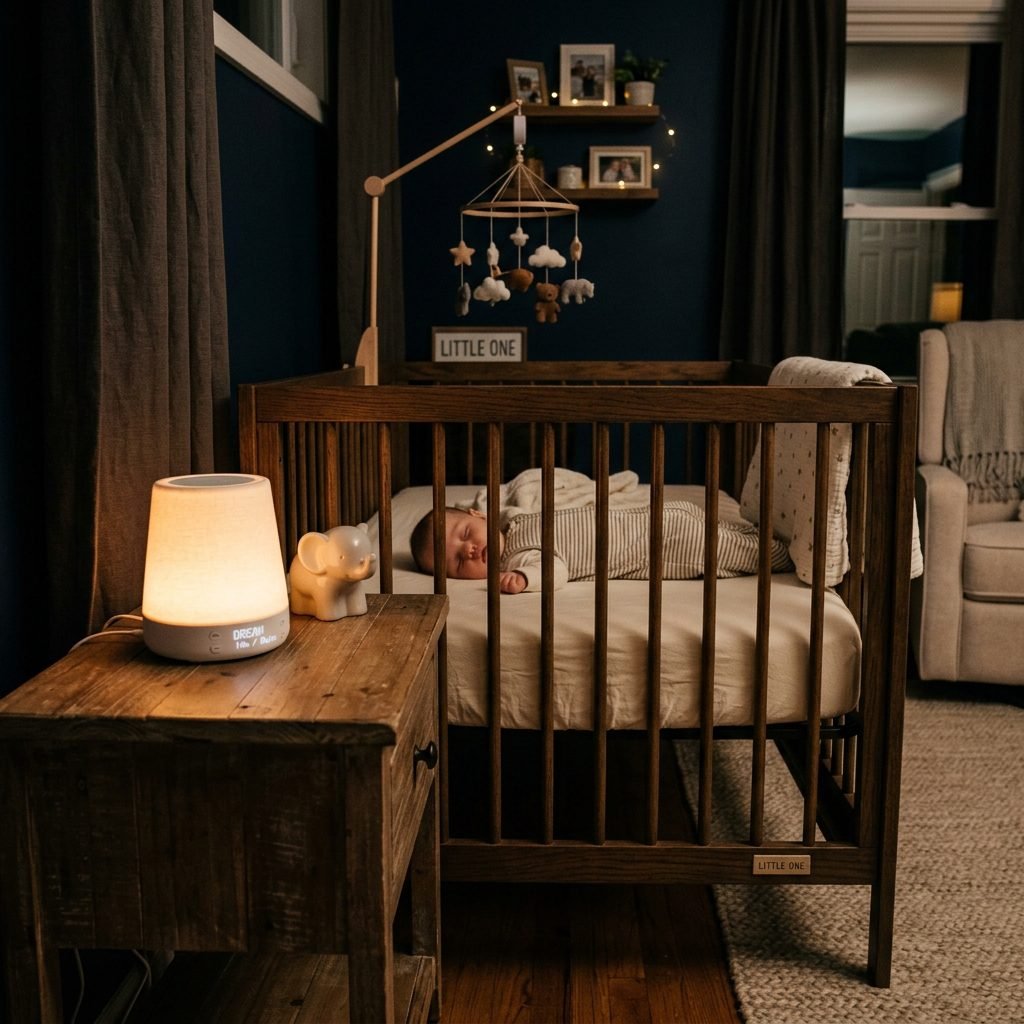
If we aren’t using a swaddle to physically hold the arms down, we must ensure the environment doesn’t provide any ‘excuses’ for the reflex to fire. A baby who is slightly startled by a noise is much more likely to have a full-blown Moro response if the room is too bright or the air is too chilly.
The Sensory Checklist
- White Noise is Non-Negotiable: A consistent, low-frequency white noise machine masks the sudden sounds (a barking dog, a floorboard creak) that trigger the startle. Aim for the volume of a running shower—around 50 to 60 decibels.
- Temperature Control: A cold mattress can trigger a startle. Consider warming the crib sheet with a heating pad (remove it before laying the baby down!) so the transition from your warm body isn’t so jarring.
- Blackout Curtains: Sudden light changes (a car driving by, the sun peeking through) can cause a startle. Make the room ‘pitch black’—you shouldn’t be able to see your hand in front of your face.
| Environmental Factor | Ideal Setting | Why It Helps |
|---|---|---|
| Sound | Continuous White Noise | Masks sudden auditory triggers. |
| Light | 100% Blackout | Prevents visual stimulation during light sleep. |
| Temperature | 68-72°F (20-22°C) | Prevents shivering or overheating startles. |
Safe Swaddle Alternatives: Transitioning with Style

If you are moving away from the swaddle because your baby is rolling, you need options that allow for arm freedom while still providing enough ‘snugness’ to dampen the twitching. As a fashion-forward mama, you want these to be both functional and cute!
The Best Options for Non-Swaddled Sleep
- Transition Sleep Sacks: These are slightly weighted or have thicker fabric (like 1.0 or 2.5 TOG) that provides a bit of resistance against the startle without pinning the arms down.
- The ‘Arms-Up’ Transition Suit: Some suits allow arms to be zip-off or have ‘wings’ that let the baby move but provide a ‘stop’ point so the arms don’t fly out 180 degrees.
- Zipties and Sleep Bags: Look for sleep bags that are snug around the chest but loose around the hips. The chest compression provides a ‘hug’ sensation that calms the nervous system.
Safety Warning: Never use a weighted sleep sack or blanket that exceeds 10% of your baby’s body weight, and always follow the manufacturer’s guidelines regarding rolling. Many pediatricians now recommend avoiding weighted products entirely—always check with yours first!
Physical Exercises to Mature the Nervous System

Did you know you can help your baby ‘work through’ the reflex during the day? By providing plenty of sensory input while they are awake, you help their nervous system mature faster, which can lead to less intense startling at night.
Daytime ‘Startle-Proofing’ Activities
- Tummy Time: This is the gold standard. Tummy time strengthens the neck, core, and back, providing the baby with a better sense of where their body is in space (proprioception).
- Baby Massage: Using a baby-safe oil, use firm (not ticklish) strokes down the arms and legs. This deep pressure is incredibly grounding and helps the brain map out the limbs.
- The ‘Slow Dance’: Hold your baby and gently sway in different directions—up, down, side-to-side. This safely ‘tests’ the vestibular system in a controlled way, helping it become less reactive to movement.
A baby who feels ‘grounded’ in their body during the day is often a baby who sleeps more soundly at night.
The ‘Hands-On’ Settling Method

When the startle reflex happens—and it will—how you respond dictates whether the baby fully wakes up or drifts back to sleep. Instead of picking them up immediately, try the Hands-On Settle.
If you see the arms fly out and the baby begins to fuss, immediately place your palm firmly on their chest. Use your other hand to gently cup their head or hold their hands together over their tummy. This ‘re-contains’ them without a swaddle. You are essentially acting as a human swaddle for 30 to 60 seconds until the ‘surge’ of the reflex passes. Combine this with a rhythmic ‘shhh-shhh’ sound right near their ear.
Conclusion
Rest is on the Horizon, Mama
Transitioning away from a swaddle or managing the startle reflex without one can feel like a daunting task, but it is a beautiful step toward your baby’s independence. By focusing on gentle transfers, a calibrated environment, and physical grounding techniques, you are giving your baby the tools they need to soothe their own nervous system. It won’t happen overnight, but with consistency and a lot of grace (for both of you!), those midnight jumps will eventually fade into peaceful, still nights. You’re doing an amazing job, and soon, you’ll both be dreaming sweetly. Sweet dreams, mama!