

The Heavy Hands Soothing Method to Help Your Baby Fall Asleep in the Crib
Oh, mama, I see you. It is 2:00 AM, and you have been rocking your sweet little one for what feels like hours. Your arms are aching, your eyes are heavy, and all you want is to be able to lay your baby down in that beautiful crib without them waking up the second their back touches the mattress. We call it the ‘ninja transfer,’ don’t we? That heart-pounding moment where we hold our breath, hoping the gravity of the crib doesn’t trigger those wide-open eyes and that familiar cry.
As a doula and someone who has sat in those quiet, dark rooms with many mothers, I want to tell you: you are doing an incredible job. The desire for sleep isn’t selfish; it’s a biological necessity for you to be the present, loving parent you want to be. Today, I’m going to share a technique that has been a game-changer for my clients. It’s called the Heavy Hands Soothing Method. It isn’t ‘crying it out,’ and it isn’t a magic wand—it is a physical, sensory-based bridge that helps your baby feel the security of your touch even as they move toward independent sleep. Let’s walk through this together, sister-to-sister, with all the warmth and practical wisdom you need to get some rest tonight.
Understanding the Science: Why ‘Heavy Hands’ Work
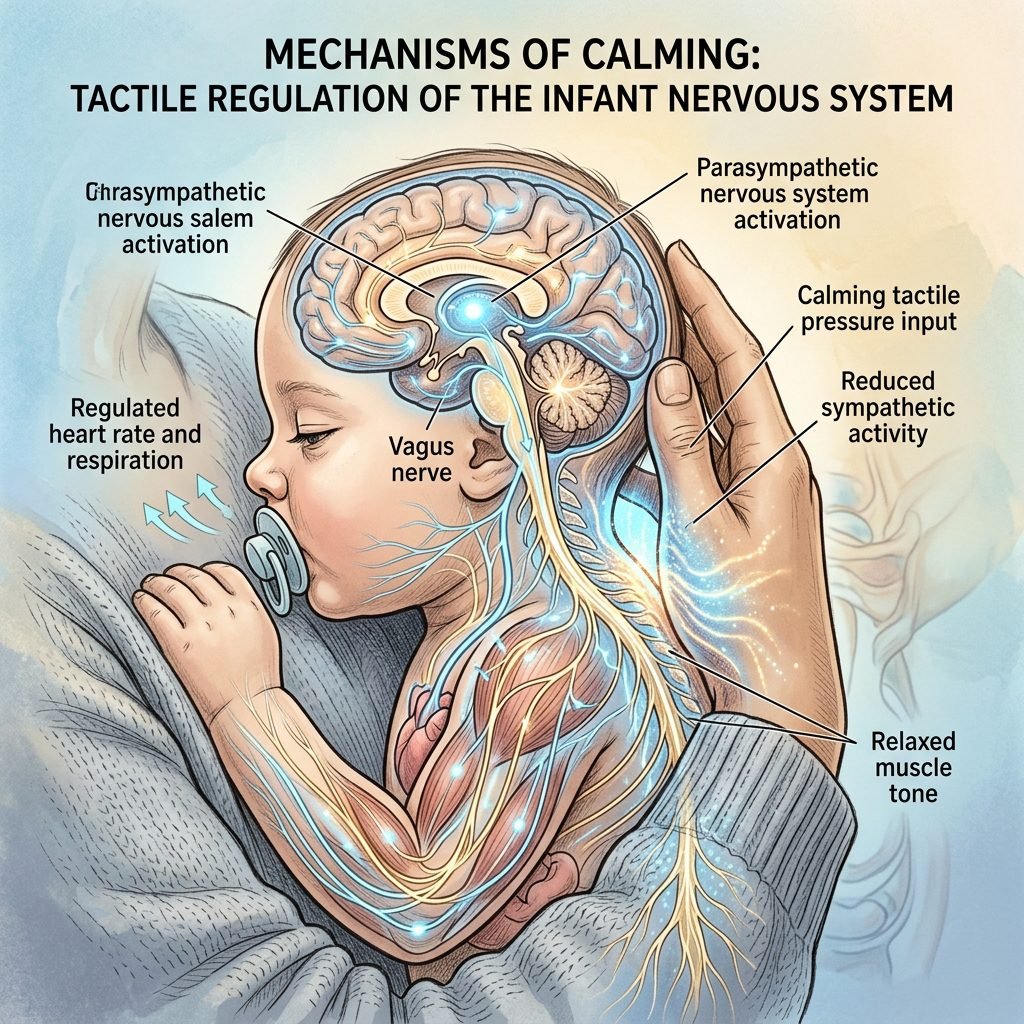
To understand why this method is so effective, we have to look at your baby’s developing nervous system. When babies are in the womb, they are under constant, gentle pressure from the uterine walls. This is why many newborns love being swaddled—it mimics that ‘snug’ feeling that tells their brain they are safe. Once they outgrow the swaddle or start rolling, they often lose that sense of containment, which can lead to the Moro reflex (that sudden startle) waking them up.
The Heavy Hands method utilizes Deep Pressure Stimulation (DPS). Just like a weighted blanket helps an adult feel grounded, your firm, steady hands provide a sensory anchor. This pressure helps lower cortisol levels and encourages the release of serotonin and dopamine. It’s not just about ‘holding’ them; it’s about signaling to their nervous system that the ‘outside world’ (the crib) is just as safe as your arms.
| Feature | How It Calms the Baby |
|---|---|
| Proprioceptive Input | Helps the baby understand where their body is in space, reducing ‘floating’ anxiety. |
| Vagus Nerve Activation | Steady pressure on the chest and tummy can stimulate the vagus nerve, slowing the heart rate. |
| Heat Transfer | The warmth of your palms acts as a biological heating pad, maintaining comfort. |
| Rhythmic Grounding | Combined with your breath, it provides a rhythmic cue for sleep. |
Setting the Stage: The Pre-Transfer Checklist

Before we even get to the crib, we need to ensure the environment is working with us, not against us. You wouldn’t try to sleep in a bright, noisy cafeteria, and your baby is even more sensitive to their surroundings. As a nursery organizer, I always suggest a ‘sensory sweep’ of the room.
- Temperature Control: Aim for 68–72°F (20–22°C). A baby who is too hot or too cold will never settle fully.
- The Soundscape: Use a high-quality white noise machine. It should be a low, continuous rumble, not a ‘rainforest’ sounds with chirping birds that can startle a light sleeper.
- The ‘Drowsy but Awake’ Sweet Spot: This is the holy grail of sleep. You want to see heavy eyelids and slow blinks. If they are already dead asleep, the ‘Heavy Hands’ method serves as a reinforcement. If they are wide awake, it serves as a soothing tool.
“Mama, remember: the crib is a happy place. It is a place of rest, not a place of abandonment. Your energy speaks louder than your actions. Breathe deep, stay calm, and let your baby feel your confidence.”
The Step-by-Step Heavy Hands Technique

This is the core of our practice. When you are ready to lay your baby down, follow these steps with intention and patience. Do not rush. Slowness is your superpower here.
- The Slow Descent: Lower your baby into the crib feet first, then bottom, then head. This prevents the sensation of falling.
- The Initial Contact: Once they are down, do not pull your hands away! This is where most parents fail. Instead, immediately place one hand firmly on their upper chest/shoulder area and the other on their lower tummy/hips.
- Apply the ‘Heavy’ Pressure: This should be more than a light touch but less than a push. Think of the weight of a heavy book. You want them to feel ‘pinned’ (in a loving way) so they don’t wiggle and wake themselves up.
- The Rhythmic Shush: Lean your face close to their ear and provide a rhythmic ‘shhh-shhh-shhh’ that matches their breathing. As they settle, slow your shushing down.
- The Incremental Release: This is the most critical part. After about 2 to 5 minutes of stillness, slowly—and I mean glacially slowly—lighten the pressure of your hands. Start with the hand on the hips, then finally the chest.
- The Hover: Keep your hands just an inch above them for another 30 seconds before fully retreating.
| Step Phase | Duration | Goal |
|---|---|---|
| Landing | 10 Seconds | Avoid the startle reflex. |
| Deep Pressure | 3-5 Minutes | Co-regulate the nervous system. |
| Lightening | 1 Minute | Transition to independent surface. |
| The Hover | 30 Seconds | Final check for movement. |
Troubleshooting: What to Do When They Resist

Not every night will be a ‘one-and-done’ success. Some nights, your baby might have gas, be teething, or simply be going through a developmental leap. If your baby starts to fuss while your hands are on them, do not immediately pick them up. This teaches them that the crib is a temporary stop on the way back to your arms.
Common Hurdles and Solutions
- The Wriggle: If they try to roll away, maintain the pressure on the hips. This ‘grounds’ them.
- The ‘Power Cry’: If they are letting out a loud, frustrated cry, try adding a gentle jiggle. While your hands are in the ‘Heavy’ position, gently rock their body side-to-side about 1 inch in each direction. This mimics the motion of the womb.
- The Eye Contact Trap: Try to avoid looking directly into your baby’s eyes during this process. Eye contact is a social stimulant and can wake their brain up. Look at their chest or forehead instead.
| Baby’s Action | Your Response |
|---|---|
| Arching Back | Check for gas; try ‘Bicycle Legs’ before the Heavy Hands method. |
| Whimpering | Increase the volume of your ‘Shushing’ to match their intensity. |
| Consistent Crying (>10 mins) | Pick up, soothe to calm, and reset the process. |
The Postpartum Support: Caring for the Caregiver

I want to take a moment to talk to you, mama. Sleep deprivation is a form of torture, and it is okay to feel frustrated. If you find your heart rate rising or your temper shortening while you are leaning over that crib, it is okay to step away. Place your baby in a safe space, walk out of the room, and take ten deep breaths. Your baby is safe, and you need to be regulated to help them regulate.
As your ‘style and comfort’ doula, I also suggest making your nursery a place you want to be. Have a comfortable chair nearby, a bottle of water, and maybe a soft robe. If you are comfortable, you will be more patient with the process. The ‘Heavy Hands’ method requires physical stamina—you are leaning over a crib, after all! Take care of your back by tucking your pelvis and engaging your core while you lean.
“You cannot pour from an empty cup. Your rest matters just as much as your baby’s. This season is hard, but it is temporary.”
Conclusion
The Heavy Hands Soothing Method is more than just a sleep trick; it is a way to communicate love and security through the power of touch. By providing that deep, grounding pressure, you are teaching your baby that the crib is a safe harbor. It takes practice, and some nights will be easier than others, but stay consistent. You are building the foundation for healthy sleep habits that will benefit your whole family for years to come.
Tonight, when you lay your little one down, remember to breathe, stay heavy with your hands and light with your heart. You’ve got this, mama. Sleep well.