7 Brain-Boosting Fine Motor Activities You Can Prep in Under 5 Minutes
The Magic of Tiny Hands and Big Brains
Mama, I see you. Between the laundry piles, the nap schedules, and that third cup of lukewarm coffee, you want to be the best ‘first teacher’ for your little one. You’ve seen those elaborate sensory rooms on social media and felt that pang of ‘I should be doing more.’ But here is a secret from my doula heart to yours: Your baby doesn’t need a Pinterest-perfect playroom to thrive. They need you, and they need simple, tactile experiences that challenge their growing nervous systems.
Fine motor skills—the ability to coordinate small muscle movements in the hands and fingers—are the building blocks for everything from feeding themselves to eventually writing their names. When your baby grasps a ribbon or pokes a finger through a hole, they aren’t just playing; they are building neural pathways. These seven activities are designed to be set up in the time it takes to toast a bagel, using things you already have in your kitchen or junk drawer. Let’s dive into these low-stress, high-impact brain boosters.
The Science of the Pincer Grasp: Why These 5 Minutes Matter
Understanding the Developmental Milestone
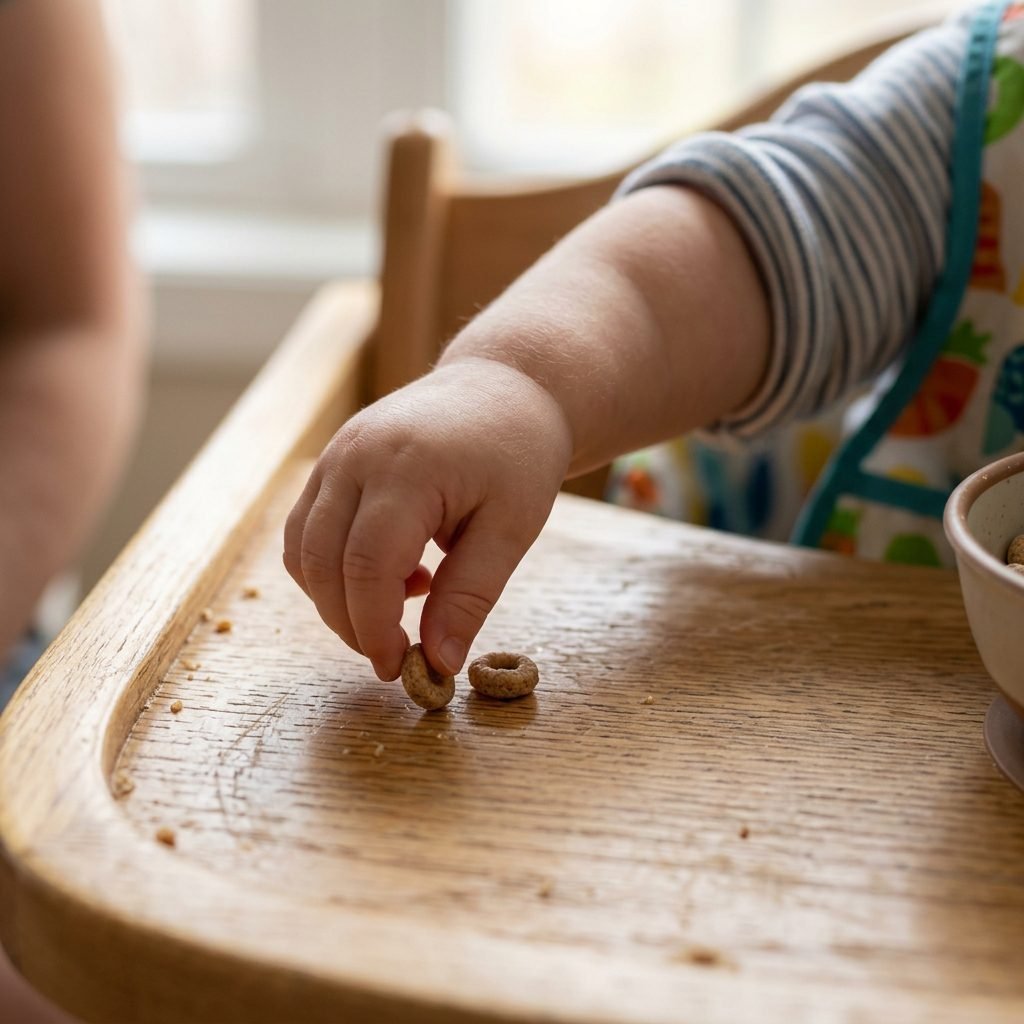
Before we jump into the ‘how,’ let’s talk about the ‘why.’ Around 9 to 12 months, most babies develop the pincer grasp—using the thumb and index finger to pick up small objects. This is a massive milestone in human evolution and infant development! It signals that the brain is communicating effectively with the peripheral nervous system.
The Connection Between Hands and Speech
Did you know that the parts of the brain responsible for fine motor skills and speech are located right next to each other? By stimulating those tiny finger muscles, you are actually giving the Broca’s area (the speech center) a gentle nudge. This is why sensory-rich play is often linked to better communication outcomes later on.
“Play is the work of the child.” – Maria Montessori. Your job is simply to provide the tools for that work to happen safely and joyfully.
| Age Range | Typical Fine Motor Milestone |
|---|---|
| 0-3 Months | Reflexive grasping of fingers/hair |
| 4-6 Months | Reaching with both hands; palmar grasp |
| 7-9 Months | Transferring objects from hand to hand |
| 10-12 Months | Established pincer grasp; poking with index finger |
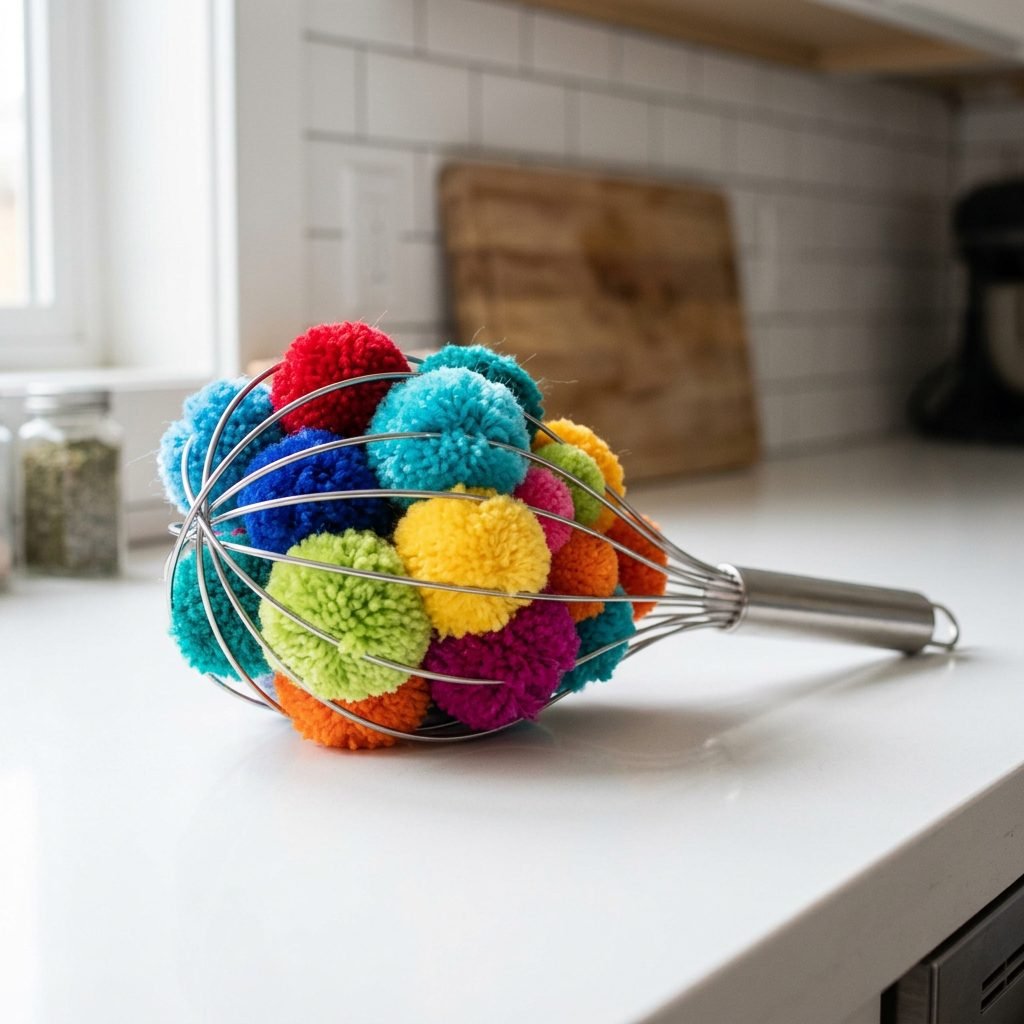
Activity 1: The Whisk & Pom-Pom Rescue
The Ultimate ‘Quiet Time’ Hack
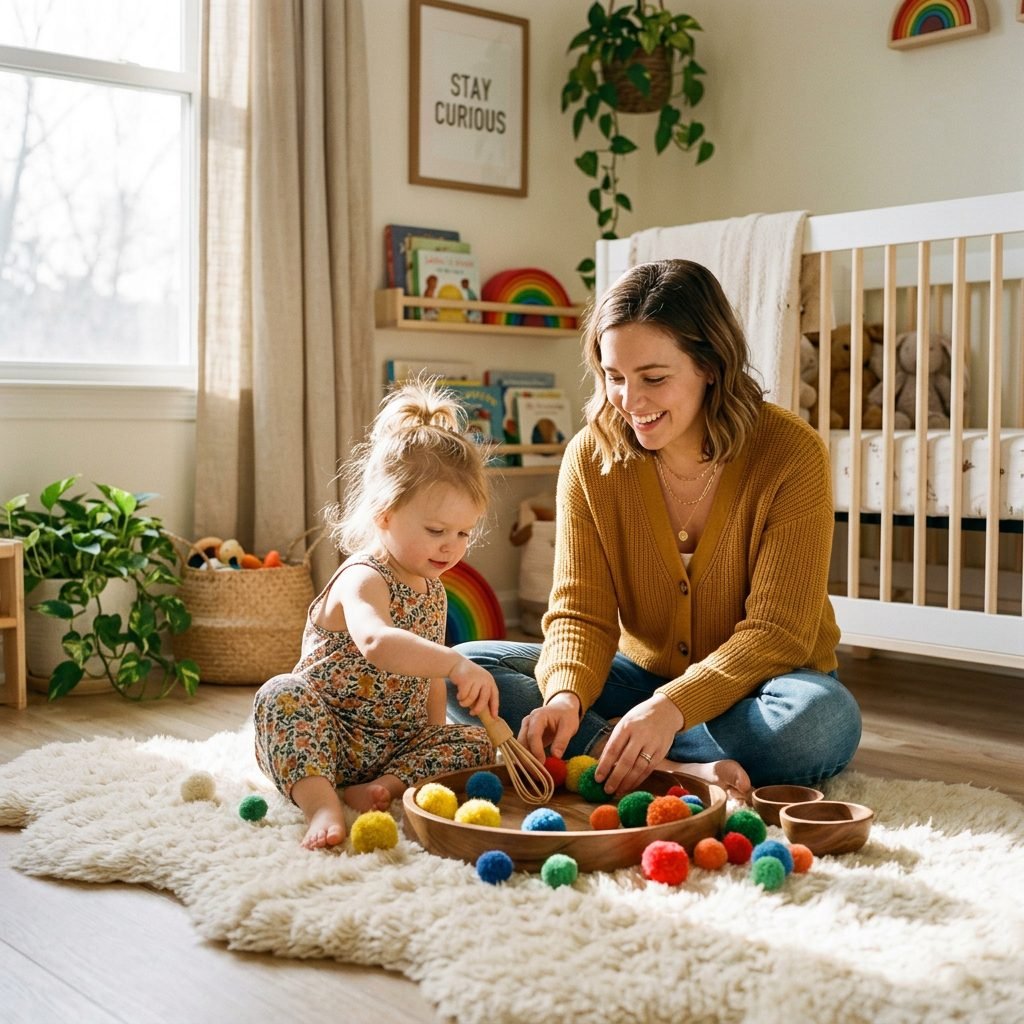
If you have a kitchen whisk and a bag of craft pom-poms, you have 15 minutes of guaranteed engagement. This activity is a masterclass in problem-solving. Your baby has to figure out how to navigate the metal or silicone wires to get the fuzzy balls out.
How to Set It Up
- Grab a standard balloon whisk.
- Stuff 10 to 15 colorful pom-poms (large enough not to be a choking hazard) inside the whisk.
- Hand it to your baby while they are in their high chair or on a play mat.
The Brain Boost: This encourages ‘bilateral coordination’—using one hand to hold the whisk while the other hand works to extract the pom-poms. It also introduces the concept of spatial awareness and resistance.
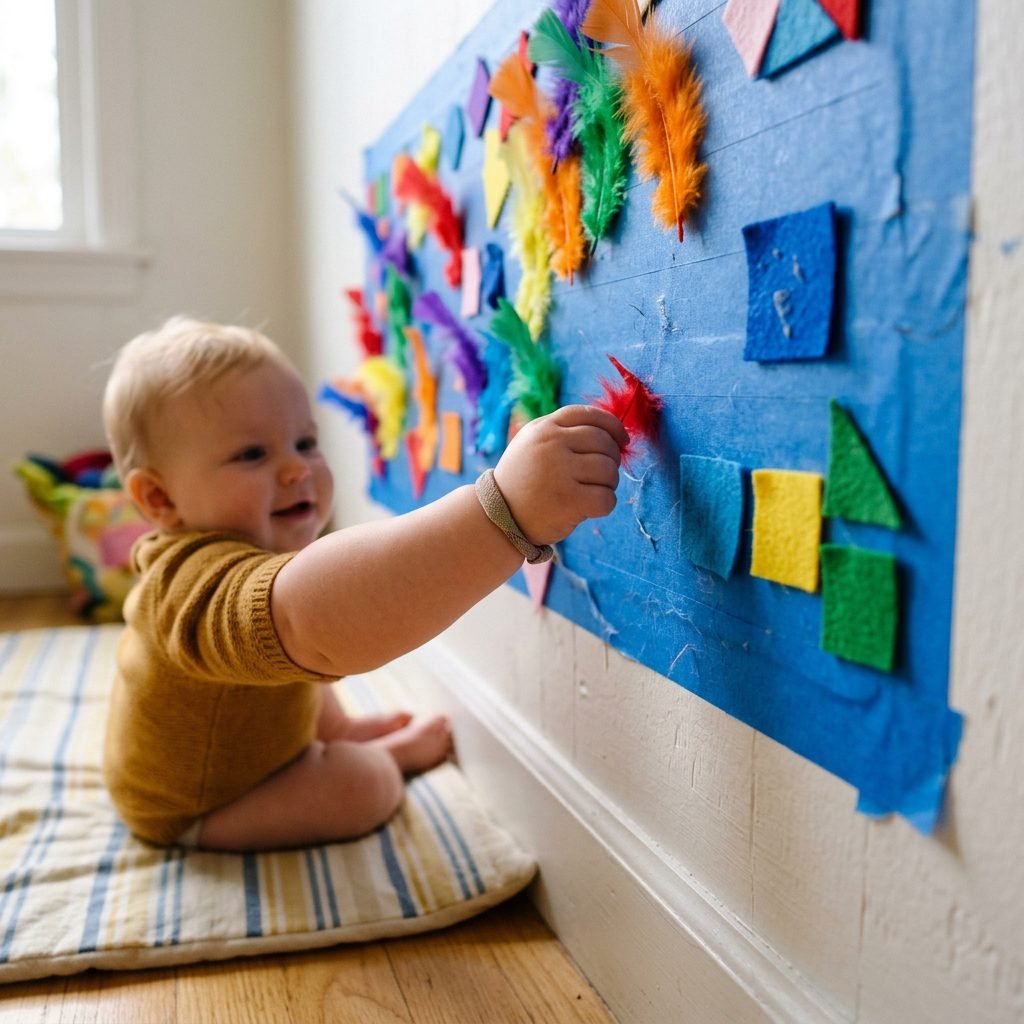
Activity 2: The Sticky Tape Wall Gallery
Vertical Play for Core Strength
Most play happens on the floor, but moving play to a vertical surface (like a wall or the side of a kitchen island) does wonders for shoulder stability and wrist extension. This is a fantastic ‘toddler-prep’ activity.
Instructions for the Sticky Wall
- Take a long strip of painter’s tape (blue tape is best as it won’t damage paint).
- Loop it so the sticky side faces out, or tape a piece of contact paper to the wall sticky-side out.
- Stick lightweight items to the tape: feathers, scraps of fabric, or cards.
- Let your baby pull them off!
Pro Tip: Use Painter’s Tape specifically. It provides just enough resistance to build muscle strength in the fingers without being so sticky that it frustrates the baby. Always supervise to ensure the tape doesn’t end up in the mouth.
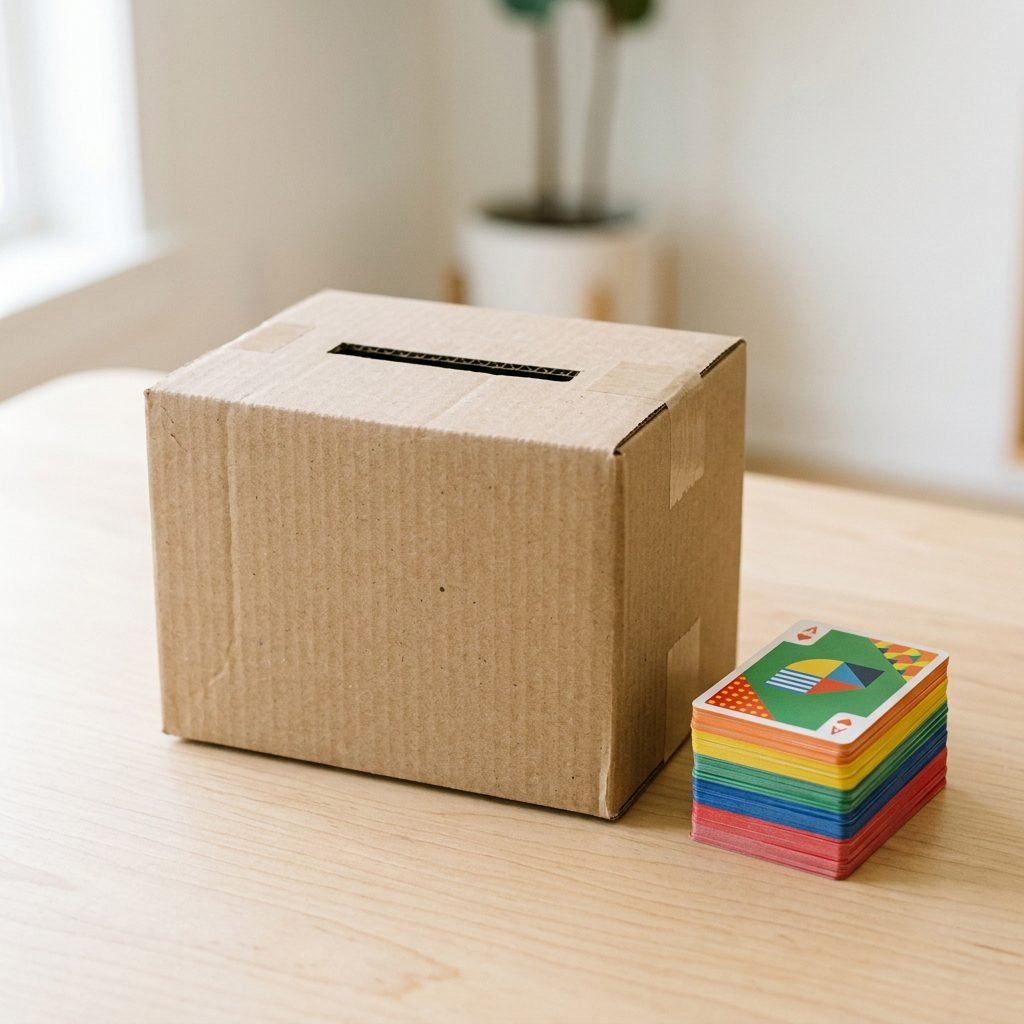
Activity 3: The Cardboard ‘Post Office’ Slot
Object Permanence and Precision
Babies are obsessed with putting things inside other things. It’s a stage called ‘posting.’ This activity costs zero dollars and uses that Amazon box sitting in your hallway.
How to Create the Post Office
- Take a small cardboard box with a lid.
- Cut a thin slot (about 3 inches wide) in the top.
- Give your baby old playing cards, stiff coasters, or large ‘milestone cards.’
- Show them how to ‘post’ the card through the slot.
The Brain Boost: This develops hand-eye coordination and the cognitive concept of object permanence—knowing the card still exists even though it has disappeared into the box.
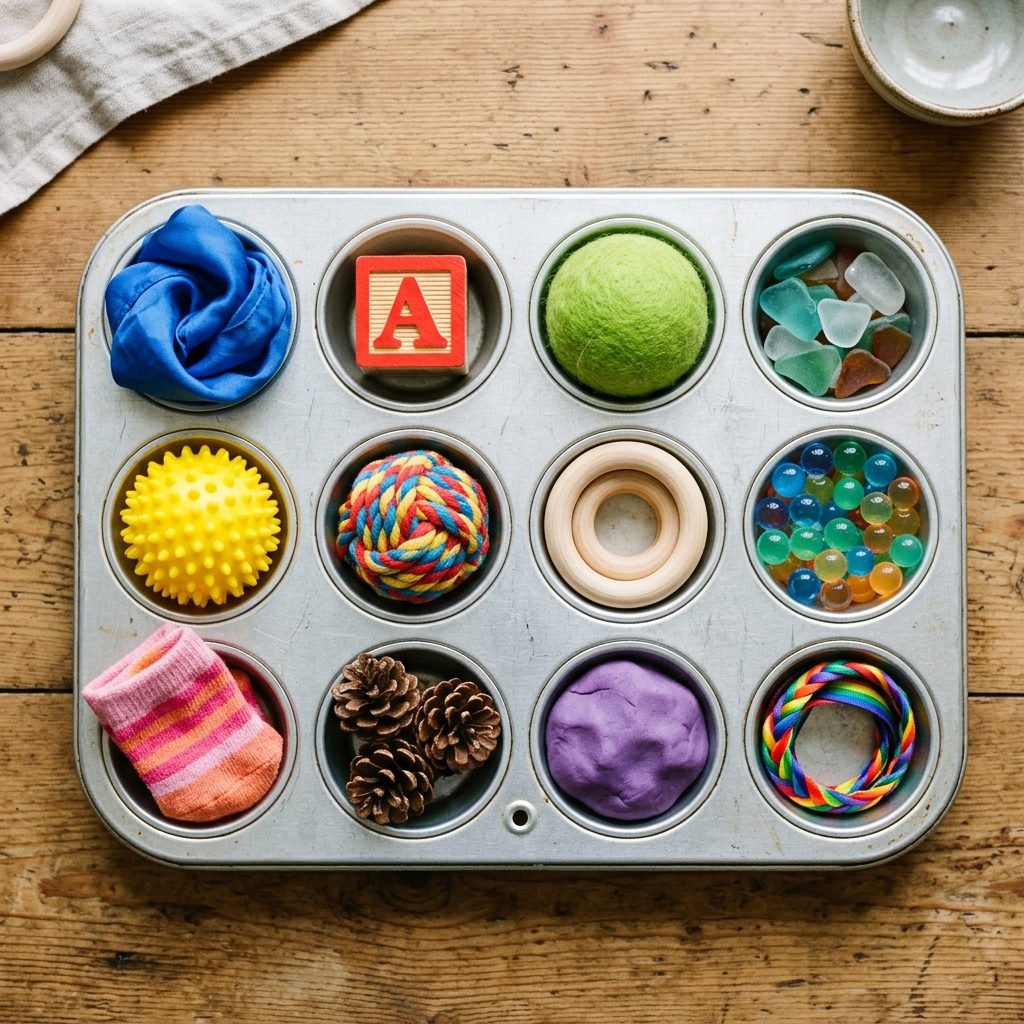
Activity 4: The Muffin Tin Color Sort
Early Math and Categorization
Your muffin tin is actually a 12-compartment sorting machine. This activity is perfect for babies who are sitting up well and starting to notice differences in color and shape.
Setup Guide
Place one colored object (a red block, a blue ball, a yellow sock) into each muffin cup. Encourage your baby to take them out and put them back in. For older babies (18 months+), you can ask them to match the object to a piece of colored paper at the bottom of the cup.
| Material Idea | Why It Works |
|---|---|
| Silicone Cupcake Liners | Bright colors and squishy texture |
| Large Pasta Shells | Interesting ridges for tactile input |
| Clean Sponges | Lightweight and easy to grasp |
Safety Note: Ensure all objects are at least 1.25 inches in diameter to prevent choking. If it can fit through a toilet paper roll, it’s too small!
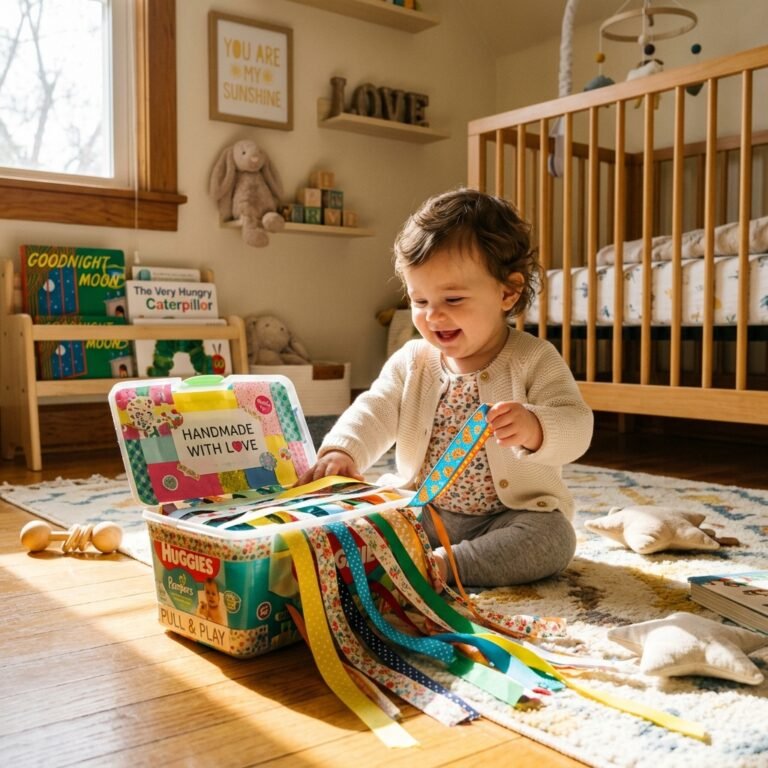
Activity 5: The ‘Pull-the-Ribbon’ Sensory Box

Resistance and Sensory Feedback
This is a favorite among pediatric occupational therapists. It provides ‘proprioceptive input’—which is just a fancy way of saying it helps your baby understand how much force their muscles need to use.
DIY Ribbon Box Steps
- Poke several small holes on opposite sides of a cardboard shoe box.
- Thread various ribbons (satin, grosgrain, ric-rac) through the holes.
- Tie large knots on the ends of the ribbons so they can’t be pulled all the way out.
- Your baby pulls the ribbon from one side, then flips the box and pulls from the other.
The Brain Boost: Different ribbon textures (bumpy vs. smooth) provide tactile discrimination, which helps the brain process sensory information more accurately.
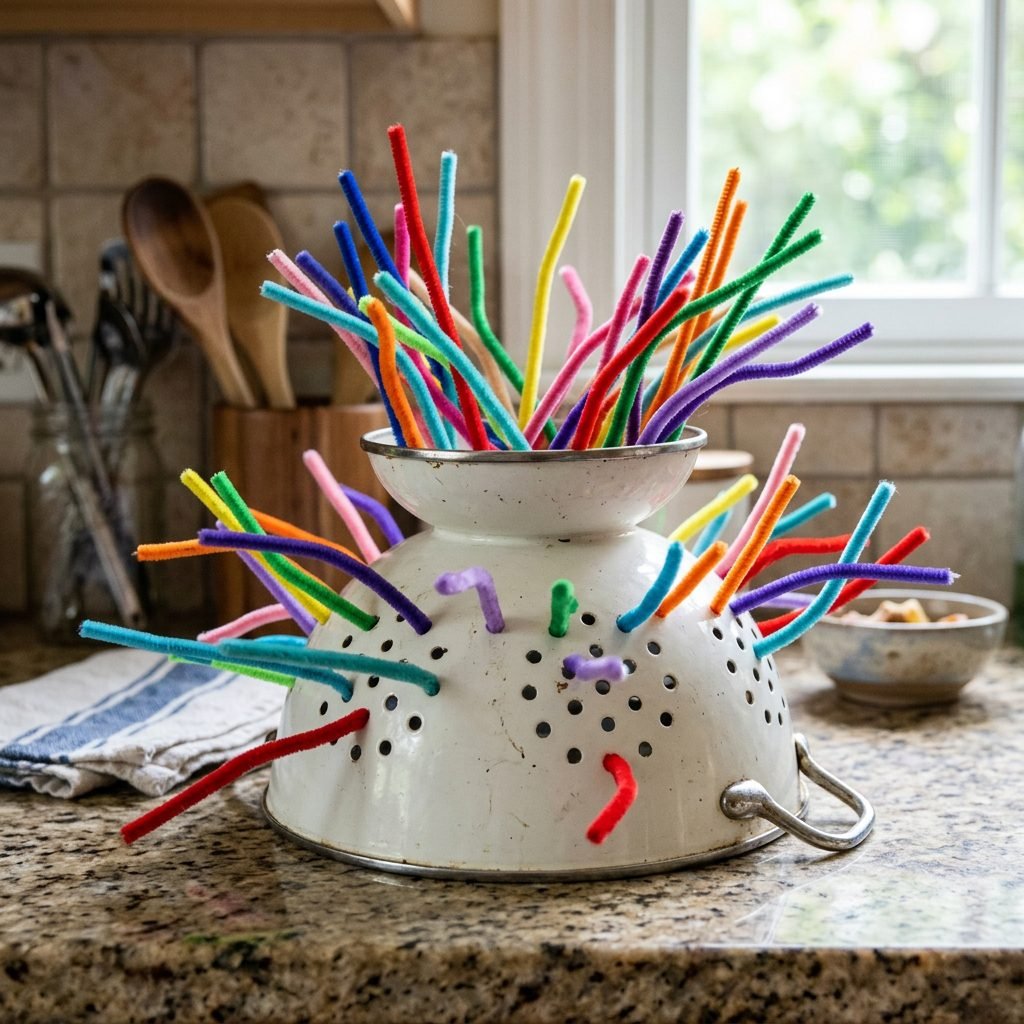
Activity 6: The Kitchen Colander & Pipe Cleaners
Concentration and Focus
If you need to get dinner started, this is your secret weapon. The small holes in a kitchen colander are the perfect size for pipe cleaners (chenille stems).
How to Play
Turn the colander upside down. Show your baby how to poke the pipe cleaners through the holes. They might just pull them out at first, and that’s okay! Eventually, they will try to thread them back in.
“Watching a baby concentrate on threading a hole is like watching a scientist at work. Give them the space to fail and try again.”
The Brain Boost: This requires intense visual tracking and steady hands. It’s one of the best ways to prep those tiny muscles for holding a pencil in the future.
Activity 7: High-Contrast Water Pouring
The Introduction to Cause and Effect
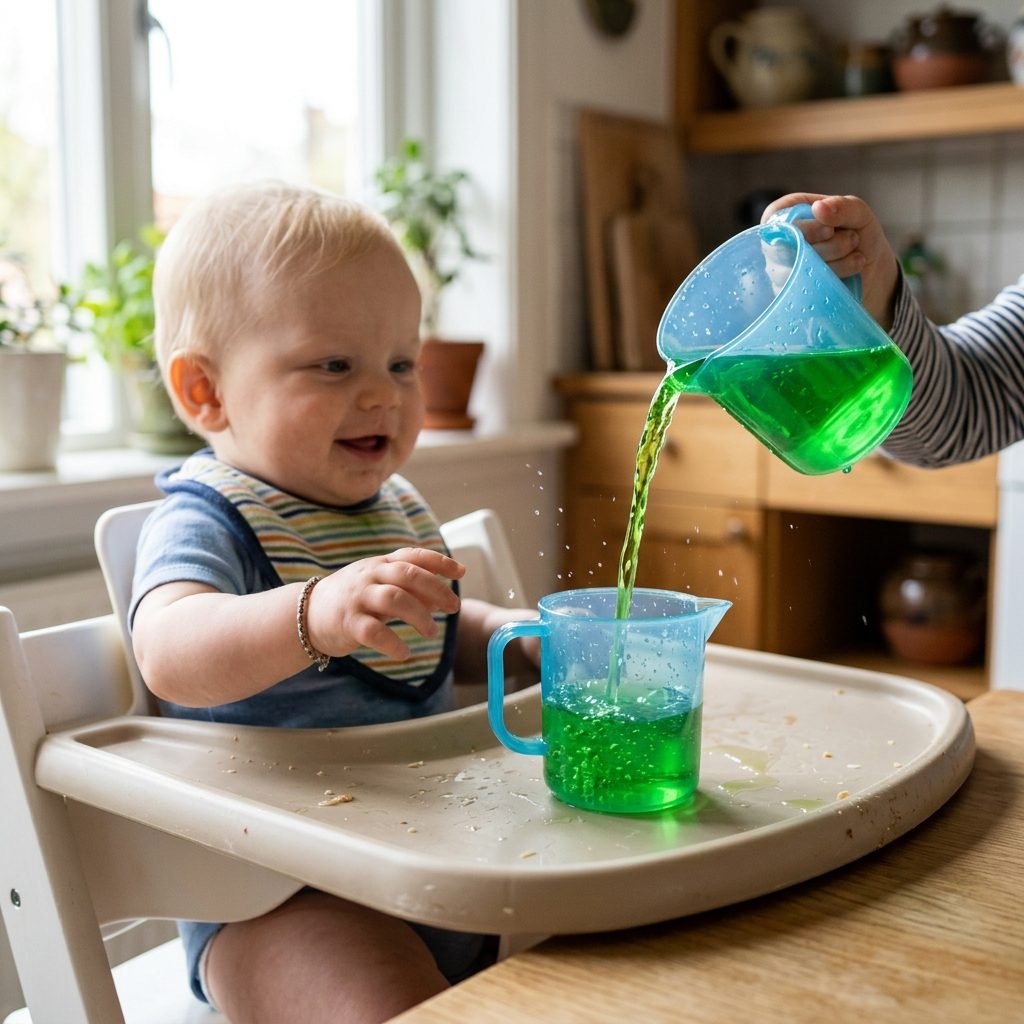
Water play is the ultimate sensory experience. To make it ‘brain-boosting’ for fine motor skills, we focus on the grip and pour. This is best done in the bathtub or a high chair tray to contain the mess.
The Setup
- Two small plastic pitchers or measuring cups.
- Add a drop of food coloring to the water to make it more visible (high contrast).
- Let your baby practice pouring from one container to another.
The Brain Boost: Pouring requires a ‘rotational’ movement of the wrist, which is a complex motor skill. It also teaches cause and effect—’If I tilt this, the water falls out.’
Budget Breakdown: Brain Boosting on a Dime
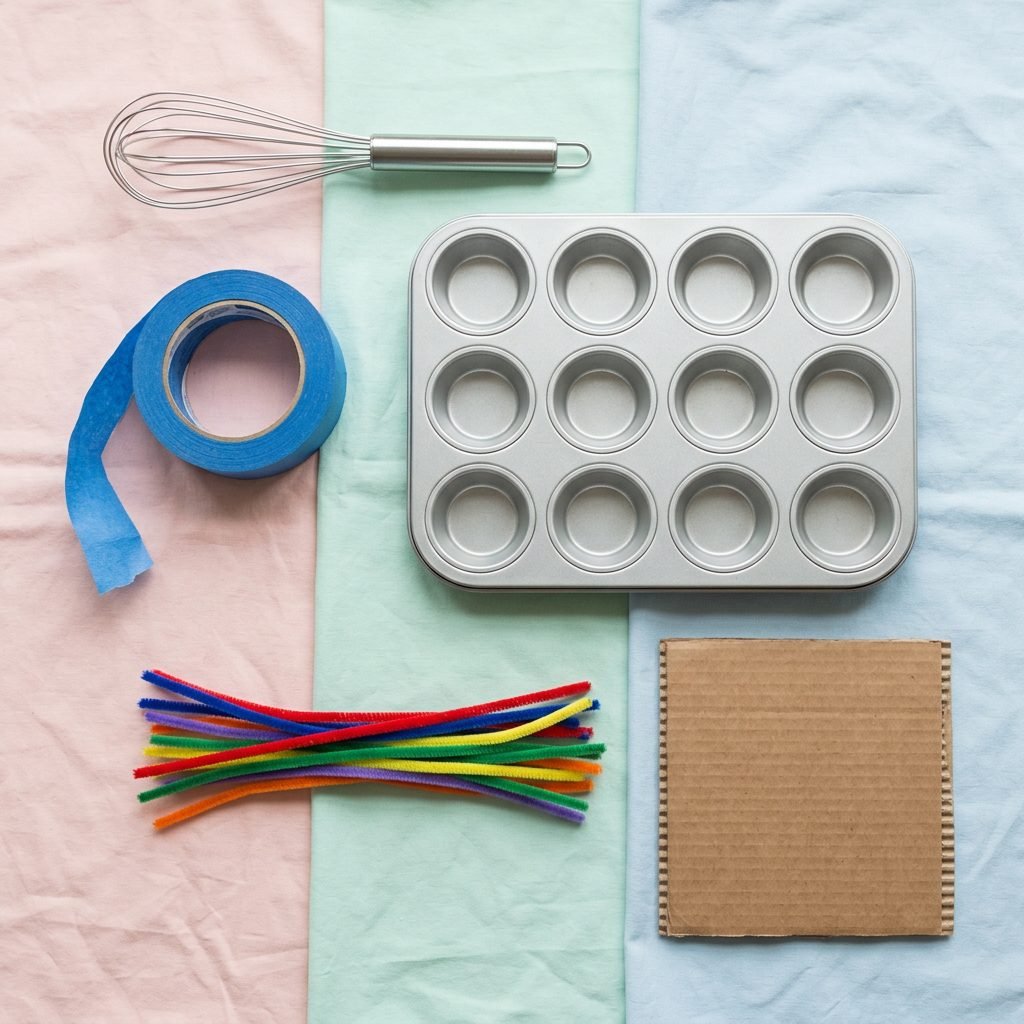
You don’t need a huge budget to support your baby’s development. In fact, most of these materials are likely in your recycling bin right now. Here is a quick look at the ‘investment’ required for these 7 activities.
| Activity | Material Needed | Estimated Cost |
|---|---|---|
| Whisk Rescue | Kitchen Whisk + Pom Poms | $0 – $5 |
| Sticky Wall | Painter’s Tape | $4 |
| Post Office | Cardboard Box + Cards | $0 |
| Muffin Sort | Muffin Tin + Household Items | $0 |
| Ribbon Box | Shoebox + Ribbon Scraps | $0 – $3 |
| Colander Poke | Colander + Pipe Cleaners | $2 |
| Water Pouring | Measuring Cups + Water | $0 |
Total Investment: Under $15 for hours of developmental play!
Conclusion
You Are Your Baby’s Best Toy
Mama, as you set up these little ‘invitations to play,’ remember that the most important ingredient is you. Your encouragement, your smiles when they finally ‘post’ that card, and your presence are what truly fuel their brain growth. These activities are just tools to help you navigate the day with a little more ease and a lot more fun.
Don’t worry if they only play for 30 seconds at first. Their attention spans are growing just like their muscles. Keep it light, keep it safe, and enjoy watching those tiny hands do big things. You’re doing an amazing job, one pom-pom at a time.