
The Best Cause and Effect Toys for a 9 Month Old’s Development
Welcome to the Age of Discovery, Mama!
If you have noticed your little one dropping their spoon from the high chair just to watch you pick it up—congratulations! You aren’t just being tested; you are witnessing a profound neurological breakthrough. At 9 months old, your baby is moving from accidental discovery to intentional experimentation. This is the dawn of cause and effect reasoning, the magical ‘if this, then that’ logic that forms the foundation of scientific thinking, problem-solving, and even social communication.
As a doula and maternal wellness guide, I see this stage as a beautiful transition. Your baby is no longer just a passive observer of the world; they are a tiny scientist in a diaper. They are learning that their actions have power—that pushing a button creates a song, or shaking a rattle creates a sound. Providing the right tools during this window doesn’t just keep them occupied; it builds the neural pathways for executive function and fine motor precision. In this guide, we will explore the best toys to support this developmental leap, how to create your own sensory activities at home, and how to style a play space that fosters focus and joy.
The Science of the ‘Aha!’ Moment: Why 9 Months is the Sweet Spot
Understanding the Cognitive Shift
At around 9 months, babies enter a phase Piaget called the sensorimotor stage, specifically focusing on ‘secondary circular reactions.’ This means they are beginning to coordinate their senses and motor skills to repeat actions that produce an interesting result. They are developing object permanence (knowing something exists even when hidden) and anticipation.
- Intentionality: They no longer hit a toy by accident; they reach for it with the specific goal of making it move.
- Memory: They can remember that a specific button leads to a specific sound.
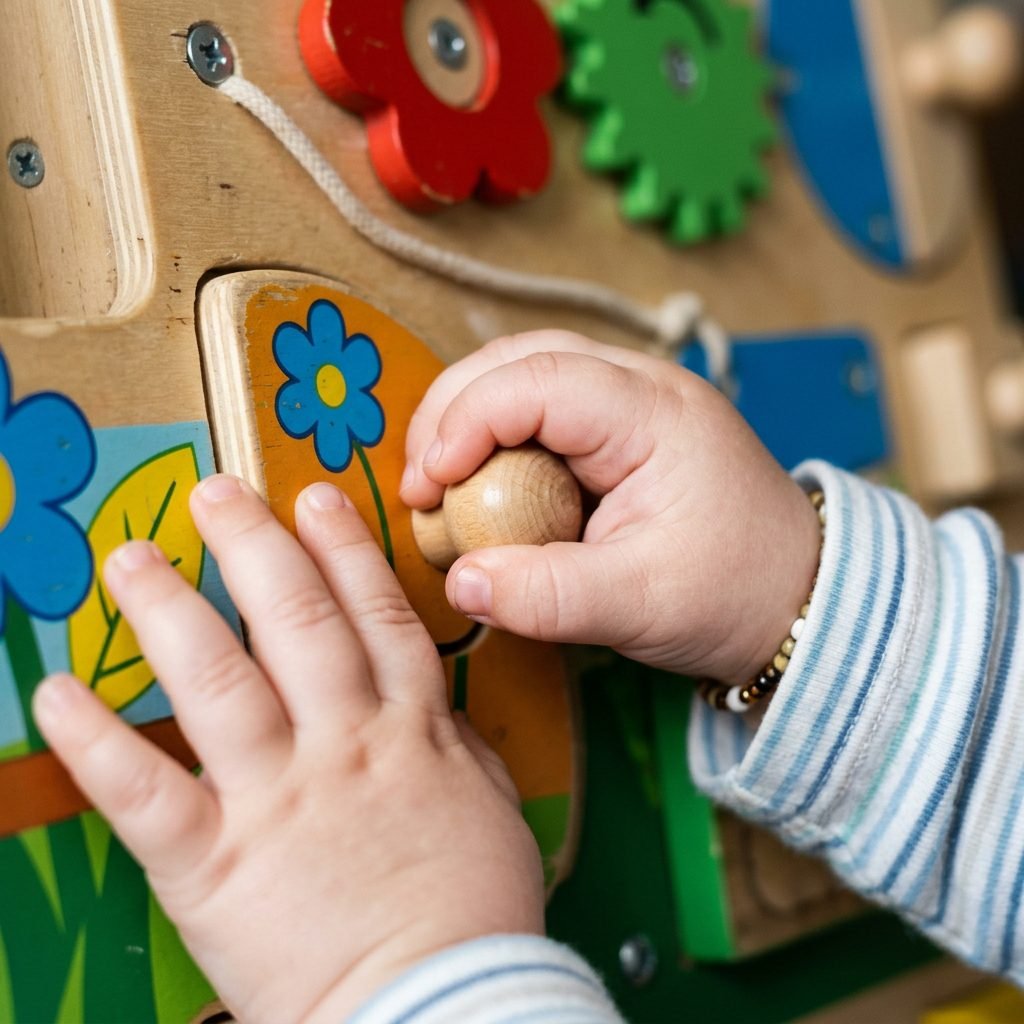
- Motor Control: Their pincer grasp (using the thumb and index finger) is refining, allowing them to manipulate smaller parts of toys.
Your baby’s brain is currently forming nearly 1 million new neural connections every second. Play is the ‘work’ that strengthens these connections.
Top-Rated Cause and Effect Toys: Our Expert Picks
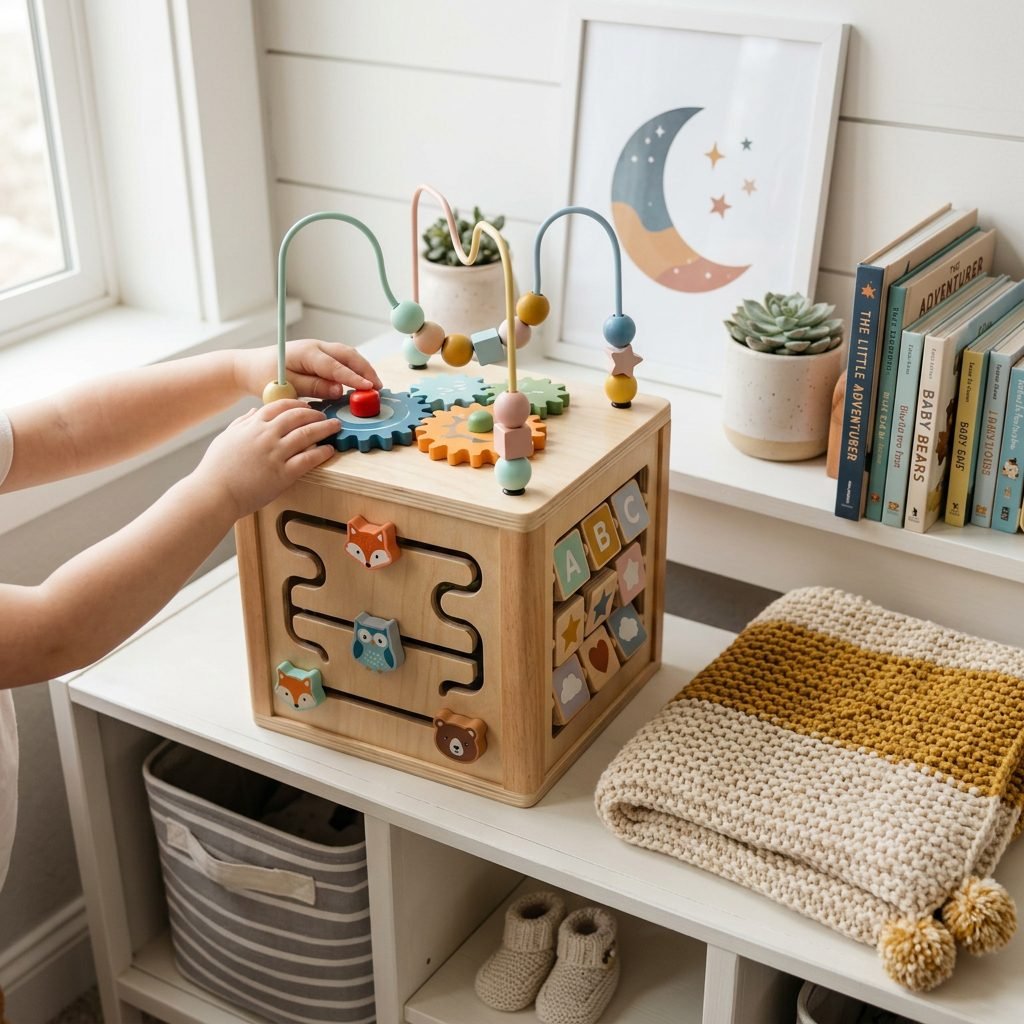
Curated Toys for Cognitive Growth
When selecting toys, look for items that provide immediate feedback. The more direct the link between the baby’s action and the toy’s reaction, the faster they grasp the concept. Here are our top recommendations for this specific age group.
| Toy Category | Developmental Benefit | Mess Level |
|---|---|---|
| Pop-Up Pal Toys | Fine motor strength & surprise response | Low |
| Pound-a-Ball Towers | Hand-eye coordination & tracking | Medium |
| Musical Instruments | Auditory processing & rhythm | High (Noise) |
| Stacking Cups | Spatial awareness & gravity lessons | Low |
| Activity Cubes | Multi-sensory exploration | Low |
1. The Classic Pop-Up Toy
These are the gold standard for 9-month-olds. Whether it involves sliding a lever, turning a dial, or pushing a button, each action requires a different fine motor movement to make an animal or character pop up. It teaches them that different actions yield the same result (a surprise!).
2. Pound-a-Ball or Hammer Benches
Using a soft mallet or even their hands to push a ball through a hole teaches force application. Watching the ball roll down a ramp provides excellent visual tracking practice, which is a precursor to reading skills later in life.
3. Interactive Musical Sets
A simple drum or a xylophone allows a baby to see that the harder they strike, the louder the sound. This introduces the concept of variability in cause and effect.
The DIY Discovery Bin: Budget-Friendly Sensory Play
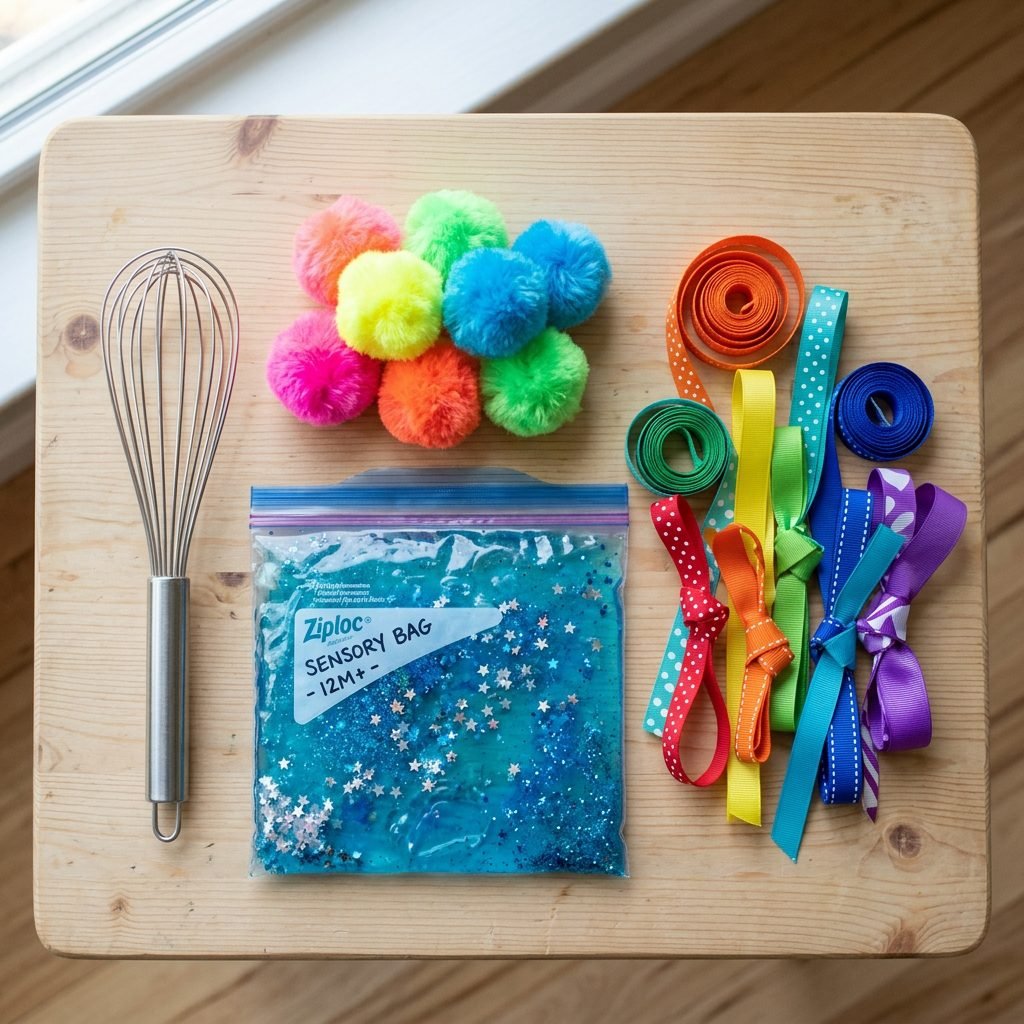
Harnessing the Power of Household Objects
You don’t need a massive budget to support your ‘tiny scientist.’ Some of the best cause and effect lessons happen with items already in your pantry or recycling bin. Crafty moms, this is your time to shine!
The ‘Tissue Box’ Pull
Take an empty boutique tissue box and stuff it with scrap fabric, silk scarves, or large pieces of crinkle paper. Your 9-month-old will spend ages pulling them out. The ’cause’ is the pull; the ‘effect’ is the endless stream of color and texture.
The Whisk and Pom-Pom Challenge
Stuff large, colorful pom-poms (ensure they are too large to be a choking hazard) into a kitchen whisk. Your baby will work their fine motor skills to figure out how to wiggle them out. It’s a fantastic lesson in persistence and problem-solving.
| DIY Activity | Materials Needed | Estimated Cost |
|---|---|---|
| Sensory Bags | Ziploc bag, hair gel, glitter, tape | $5.00 |
| The Pulley Box | Cardboard box, ribbons, knots | $0.00 |
| Water Bottle Shakers | Empty bottle, rice/beans, glue | $2.00 |
- Step 1: Select a clean, clear plastic bottle.
- Step 2: Fill it 1/3 full with dry pasta or colorful beads.
- Step 3: Super-glue the cap shut to prevent any choking hazards.
- Step 4: Let your baby shake, roll, and drop the bottle to hear the varying sounds.
Designing the ‘Discovery Zone’: Nursery Organization Hacks
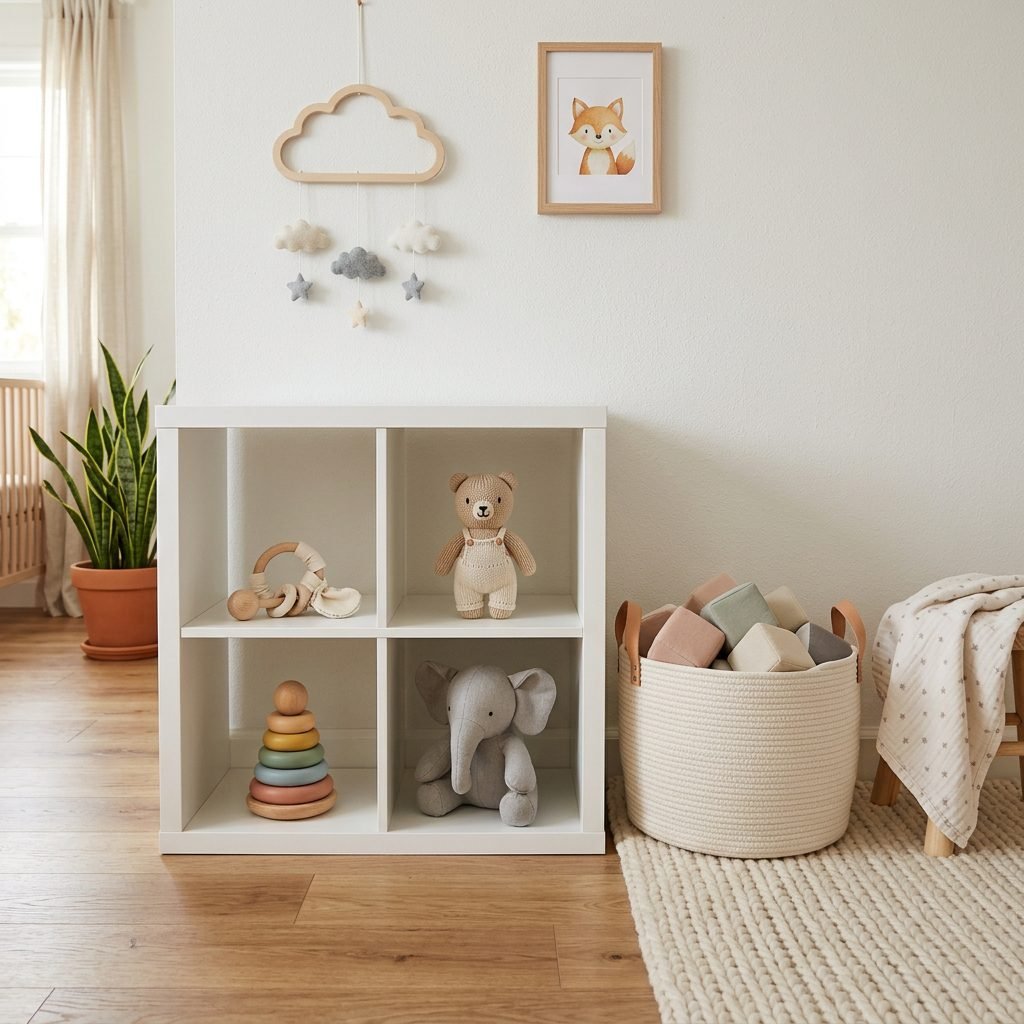
Creating a Focused Play Environment
As a nursery organizer, I always recommend the ‘Less is More’ approach. A 9-month-old can easily become overstimulated by a mountain of toys, which actually hinders their ability to focus on cause and effect. If there are 20 buttons to push, they may just swipe at all of them rather than learning what one specific button does.
The Toy Rotation Method
Instead of keeping all toys out, use a toy rotation system. Display only 5 to 8 toys at a time on low, open shelving (like an IKEA Kallax unit). This allows the baby to crawl to the toy that interests them, fostering independence.
- Use Clear Bins: Store the ‘off-rotation’ toys in clear, labeled bins in a closet so you can easily swap them every 2 weeks.
- Low Shelving: Ensure the shelves are at the baby’s eye level when they are sitting or crawling.
- Soft Landing: Use a high-quality, non-toxic play mat to define the ‘Discovery Zone’ and protect those little knees during active play.
A calm space leads to a calm mind. By limiting choices, you are helping your baby deepen their concentration and mastery of each skill.
Safety First: What to Look for in 9-Month-Old Toys
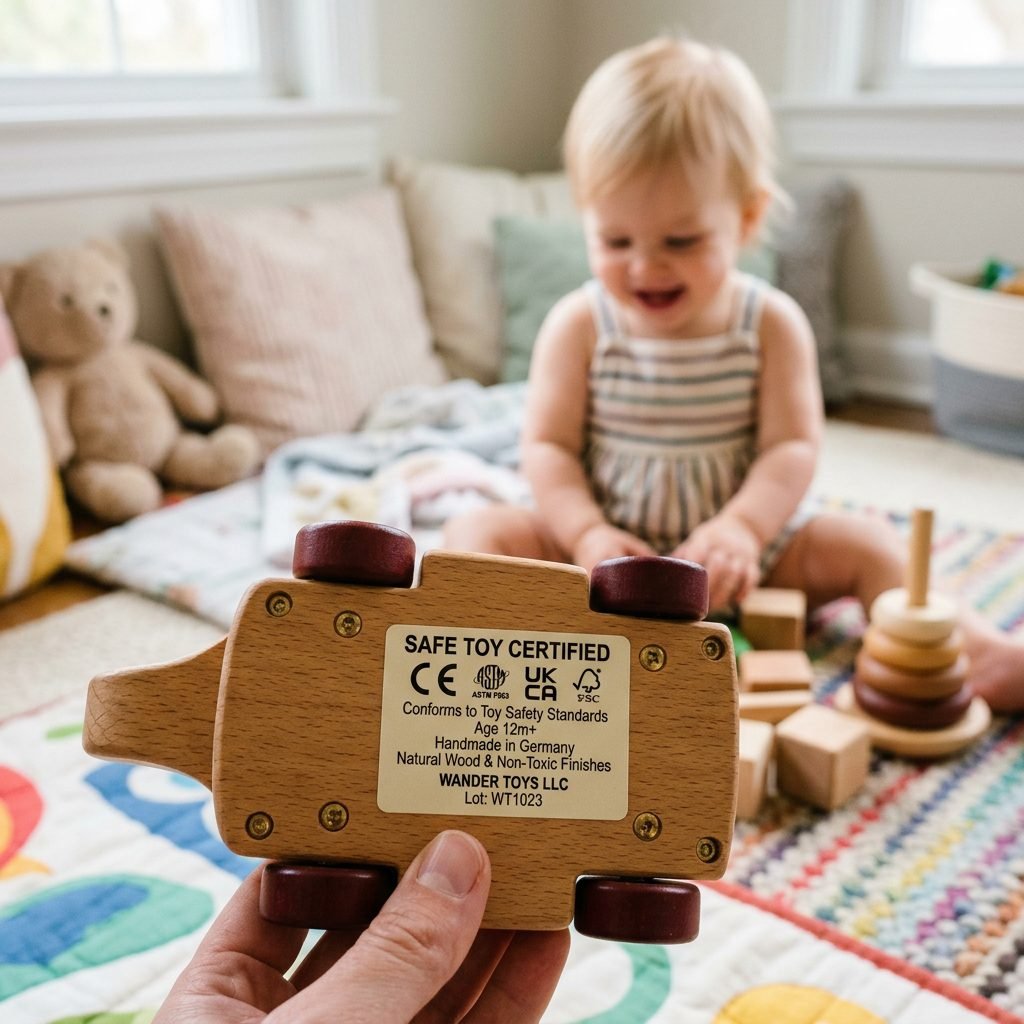
Prioritizing Physical and Chemical Safety
At 9 months, everything—and I mean everything—goes into the mouth. This is how they explore textures and temperatures, but it means we must be extra vigilant about safety standards.
The Choke Tube Test
A simple rule of thumb: if a toy or part of a toy can fit through a toilet paper roll, it is a choking hazard for a 9-month-old. Always check for small parts that could break off, like eyes on a stuffed animal or wheels on a car.
Materials Matter
Look for toys that are:
- BPA-Free and Phthalate-Free: Especially for plastic toys.
- Non-toxic Water-based Paints: For wooden toys, as they will definitely be chewed on.
- ASTM F963 Certified: This ensures the toy has met US safety standards for mechanical and chemical safety.
Warning: Always inspect wooden toys for splinters and plastic toys for sharp edges or cracks after they have been dropped or ‘investigated’ by your little scientist.
Conclusion
You are Your Baby’s Best Teacher
While the right toys can certainly facilitate development, the most important ’cause and effect’ in your baby’s life is you. When they babble and you respond, they are learning the cause and effect of communication. When they reach for you and you pick them up, they are learning the cause and effect of love and security. Trust your instincts, Mama. Whether you are buying the latest Montessori-inspired pop-up or simply letting them bang on a wooden spoon and a metal pot, you are providing the rich, sensory environment they need to thrive. Enjoy these ‘Aha!’ moments—they are the building blocks of a lifetime of learning.