White Noise vs. Pink Noise: Which One Actually Helps Babies Sleep Longer?
Welcome to the 3 AM Club, Mama
If you are reading this while rocking a fussy newborn or staring at a baby monitor hoping those little eyes stay closed for just ten more minutes, I want to wrap you in a giant hug. I’ve been there—the exhaustion that feels like it’s in your very bones, the desperation for just one solid stretch of sleep. As a doula and sleep consultant, I hear the same question from tired parents every single day: How do I get my baby to sleep longer?
We’ve all heard of white noise. It’s the staple of every baby registry. But lately, there’s a new buzz in the nursery world: Pink Noise. Is it just a marketing gimmick, or is there actual science behind these colors of sound? Today, we are going to dive deep into the auditory world of your little one. We’ll explore why silence is actually the enemy of sleep for a newborn, the technical differences between white and pink frequencies, and how you can use this knowledge to reclaim your own rest. Grab a lukewarm cup of coffee (or tea!), and let’s get your nursery set up for success.
The Womb was Never Silent: Recreating the Symphony

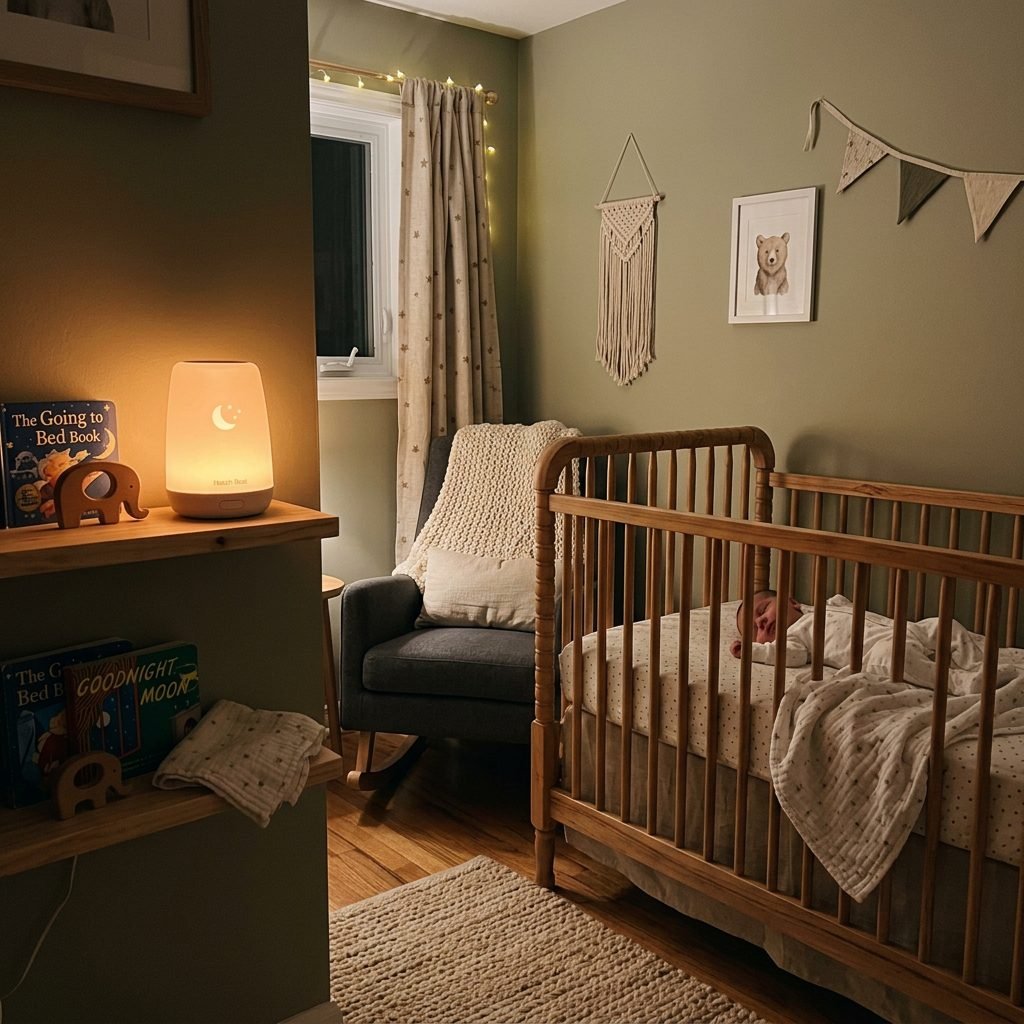
One of the biggest misconceptions new parents have is that a baby needs a ‘pin-drop’ quiet environment to sleep. In reality, the womb was a loud, rhythmic, and comforting orchestra. Your baby spent 9 months listening to the whoosh of your blood flow, the steady thrum of your heartbeat, and the muffled echoes of your voice. In fact, sound levels in the womb can reach up to 80 to 90 decibels—that’s as loud as a vacuum cleaner!
The ‘Fourth Trimester’ Transition
When we place a baby in a perfectly silent nursery, it can actually be startling and stressful for them. This transition is part of the ‘Fourth Trimester,’ where we aim to mimic the intrauterine environment as closely as possible. Sound machines serve two vital purposes:
- The Shushing Reflex: Loud, rhythmic sound triggers a natural calming reflex in infants, signaling their nervous system to move from ‘alert’ to ‘rest.’
- Sound Masking: It creates a consistent ‘blanket of sound’ that prevents sudden noises—like a dog barking, a door slamming, or a sibling yelling—from jolting the baby out of a sleep cycle.
‘Your baby isn’t looking for silence; they are looking for the familiar hum of safety they knew before they met the world.’
White Noise: The Classic ‘Wall of Sound’
What Exactly is White Noise?
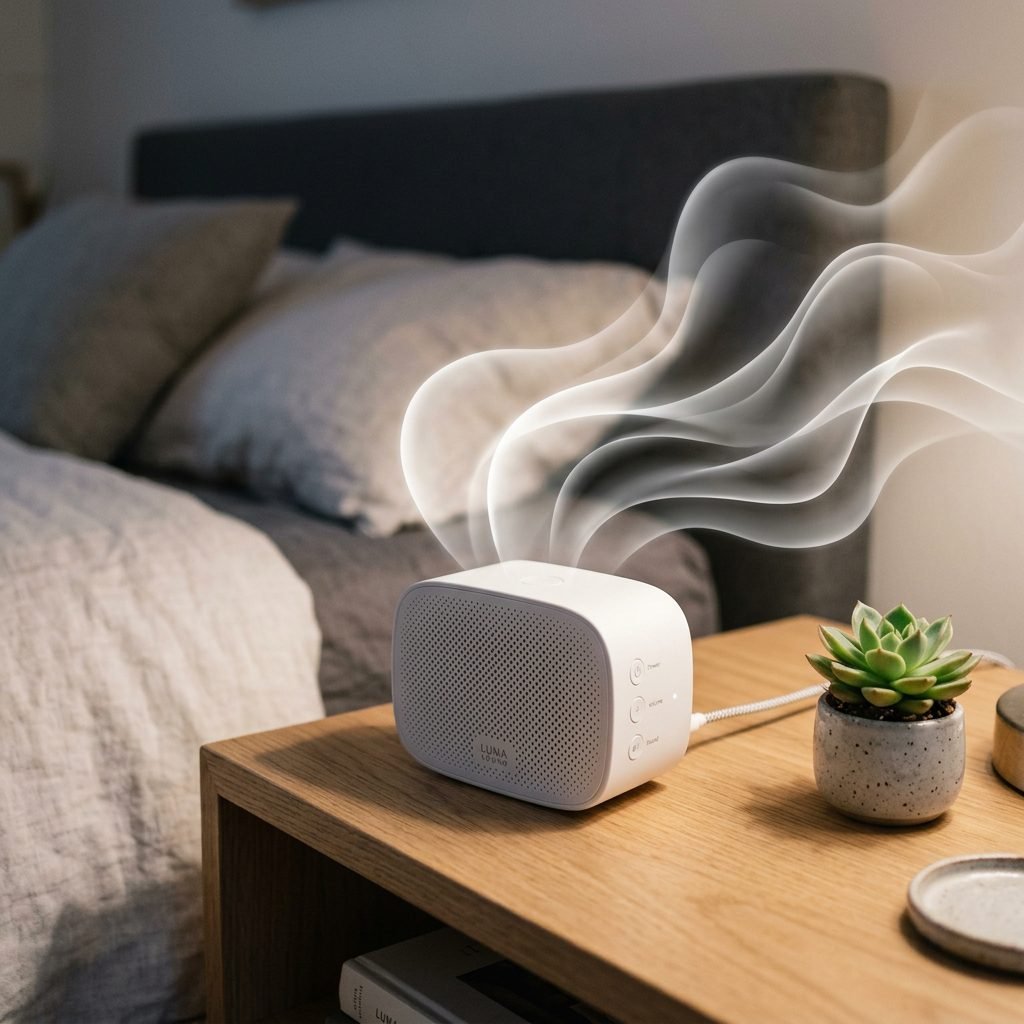
Technically speaking, white noise contains all frequencies across the spectrum of audible sound, played at the same intensity. Think of it like white light, which is a combination of all visible colors. In a nursery setting, white noise often sounds like a steady hiss, a radio between stations, or a powerful fan.
The Benefits of White Noise
- Total Masking Power: Because it covers all frequencies, it is incredibly effective at drowning out high-pitched noises (like a doorbell) and low-pitched noises (like a truck driving by).
- Consistency: It provides a flat, unchanging backdrop that helps the brain ‘tune out’ the environment.
- Accessibility: Most standard sound machines and apps default to white noise, making it the easiest tool to implement immediately.
However, some parents find white noise a bit ‘harsh’ or ‘tinny.’ Because it has so much energy at high frequencies, it can sound sharp to sensitive ears. This is where its softer cousin, pink noise, comes into play.
Pink Noise: The Deep, Natural Sleep Secret

The Science of Pink Noise
If white noise is a ‘hiss,’ pink noise is a ‘rush.’ Pink noise also contains all audible frequencies, but the energy is not distributed equally. Instead, the power per hertz decreases as the frequency increases. This creates a deeper, richer, and more ‘natural’ sound profile.
Why Pink Noise is Winning the Sleep Game
Recent studies in sleep science suggest that pink noise may actually be superior for prolonging deep sleep. Here’s why:
- Mimics Nature: Pink noise sounds like steady rain, rustling leaves, or the wind in the trees. These are sounds the human brain is evolutionarily wired to find soothing.
- Brain Wave Synchronization: Research has shown that listening to pink noise can help synchronize brain waves, leading to more stable NREM (non-rapid eye movement) sleep. For a baby, this means staying in those deep, restorative sleep phases longer without ‘clicking’ into an awake state between cycles.
- Less Harshness: By reducing the power of higher frequencies, pink noise is gentler on the ears, making it a favorite for parents who share a room with their infants.
Doula Tip: If your baby seems to startle even with white noise on, try switching to a ‘Rain’ or ‘Ocean’ setting. That deeper bass might be exactly what their nervous system needs to feel grounded.
Comparison: White Noise vs. Pink Noise
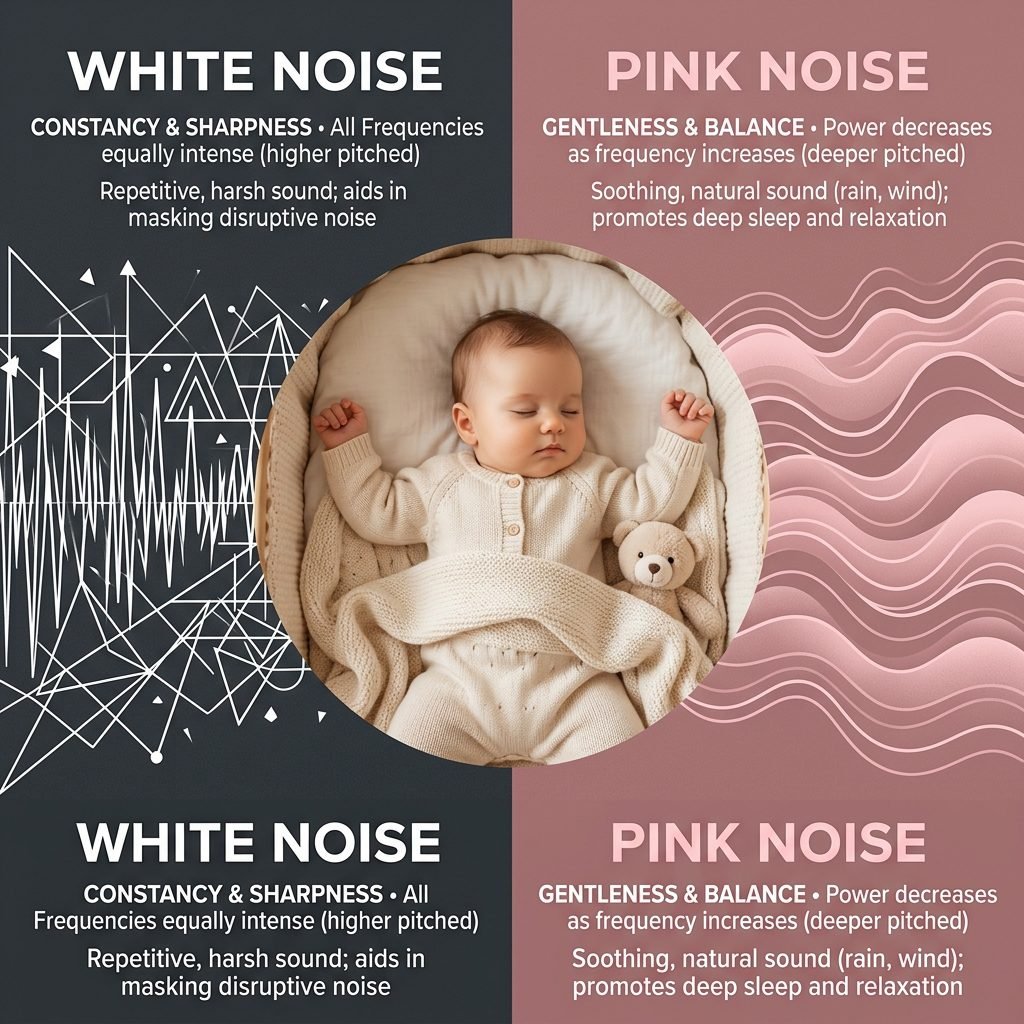
Choosing between the two depends on your specific environment and your baby’s temperament. Use this table to help you decide which ‘color’ of noise fits your nursery needs best.
| Feature | White Noise | Pink Noise |
|---|---|---|
| Sound Profile | Static, fan, ‘hissing’ | Rain, wind, ‘rushing’ |
| Frequency Focus | Equal energy across all | More energy in lower frequencies |
| Best For | Noisy apartments, barking dogs | Extending naps, deep sleep quality |
| Human Perception | Sharp, bright, intense | Deep, warm, soothing |
| Scientific Edge | Excellent for masking noise | Excellent for brain wave stability |
The Verdict: Many sleep experts now recommend Pink Noise for the overnight stretch to encourage longer sleep cycles, while White Noise remains the king of daytime naps when the rest of the world is busy and loud.
The Golden Rules of Sound Safety
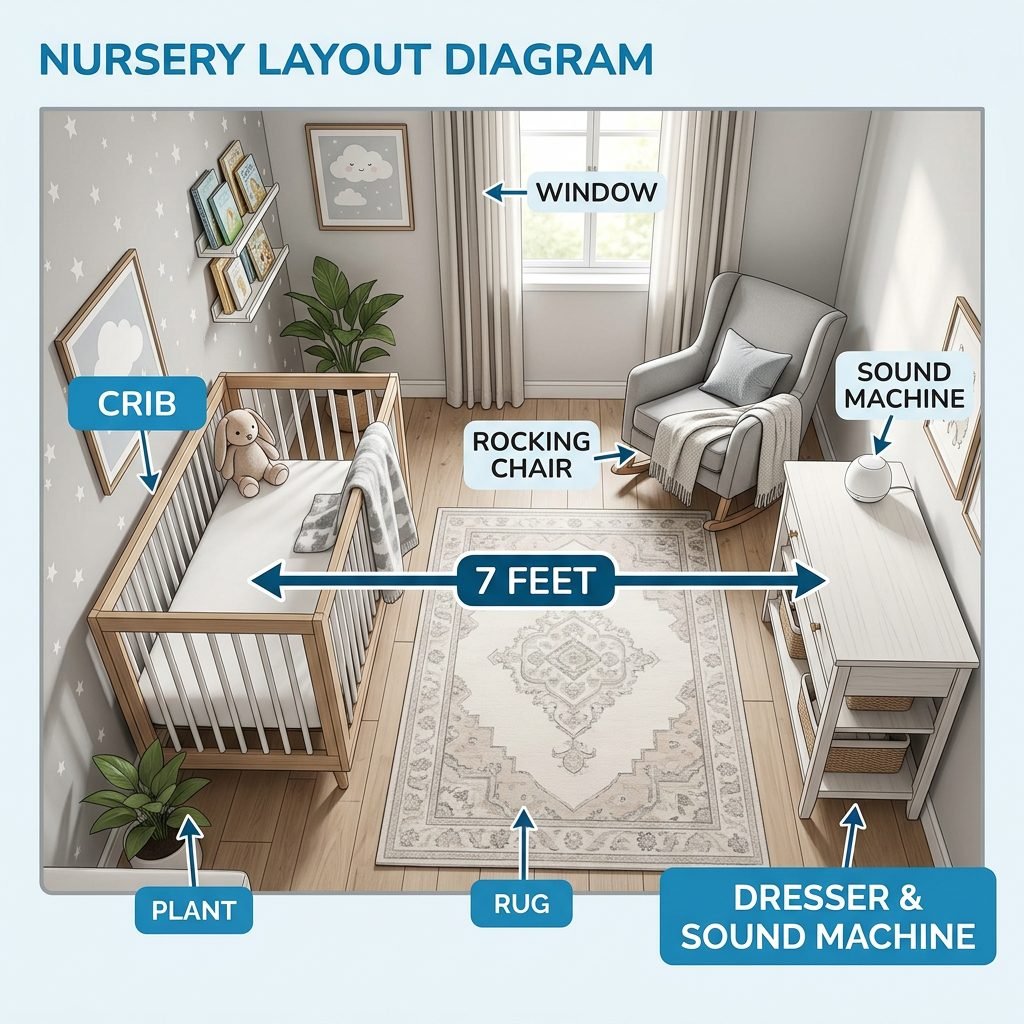
Mama, as much as we want that baby to sleep, safety is always our first priority. Sound machines are powerful tools, but they must be used correctly to protect your little one’s developing hearing.
- Watch the Decibels: The American Academy of Pediatrics (AAP) recommends that sound machines should be set no louder than 50 decibels if used all night. You can download a free ‘Decibel Meter’ app on your phone to check this!
- Distance is Key: Never place the sound machine inside the crib or attached to the slats. It should be at least 7 feet (2 meters) away from your baby’s head.
- The ‘Coffee Shop’ Test: The sound should be loud enough to mask a conversation in the next room, but not so loud that you have to shout to be heard over it.
- Continuous Play: Avoid ‘timer’ settings. When the sound suddenly shuts off, the change in the environment will often wake the baby. Keep it running for the entire duration of the sleep.
‘Consistency is the language of love for a baby’s nervous system. Keep the sound steady, and the sleep will follow.’
Step-by-Step: Setting Up Your Sleep Sanctuary
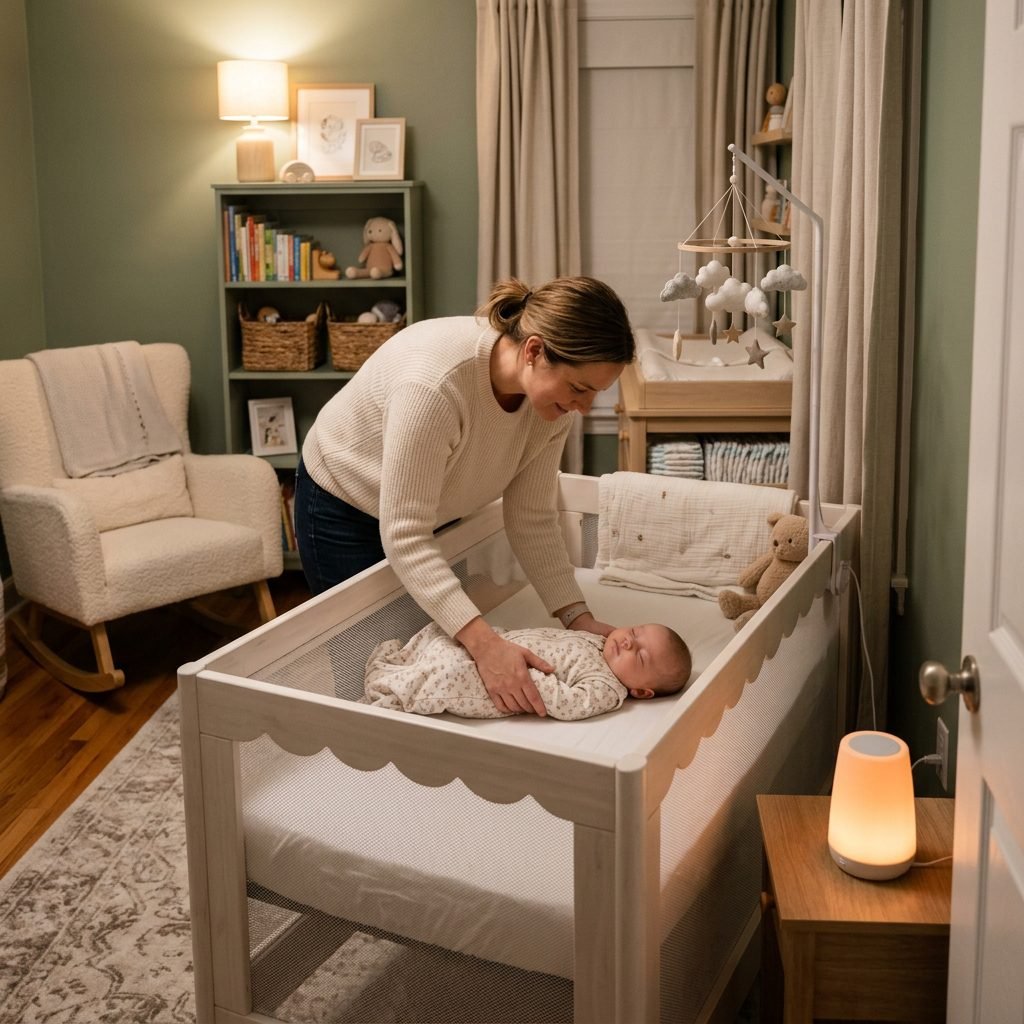
Ready to implement this tonight? Follow this simple protocol to optimize your nursery’s auditory environment:
1. Choose Your Device
Invest in a dedicated sound machine rather than using a phone or tablet. Dedicated machines often have better speakers that can handle the low-frequency ‘bass’ of pink noise without distorting.
2. Find the ‘Leaky’ Spots
Place the machine between the baby’s crib and the source of noise. If the noise comes from the hallway, put the machine near the door. If it comes from outside, put it near the window.
3. Layer Your Sounds
If you have a particularly fussy sleeper, you can use a ‘Pink Noise’ setting for the deep hum, and a ‘White Noise’ fan in the corner for extra air circulation and masking power. Just ensure the combined decibel level stays safe!
4. The Transition Ritual
Turn the sound on before you start your bedtime routine (bath, pajamas, feeding). This creates an auditory ‘anchor,’ telling your baby’s brain that it’s time to wind down before they even hit the mattress.
Conclusion
Sweet Dreams are Made of This
Whether you choose the classic mask of White Noise or the deep, restorative rhythm of Pink Noise, you are giving your baby (and yourself!) a incredible gift. Remember, mama, sleep is a developmental milestone, and every baby is unique. Some might thrive on the static of a fan, while others need the gentle rush of a rainstorm to stay in dreamland.
Don’t be afraid to experiment! Try pink noise for three nights and track the results. If you see longer stretches of NREM sleep and fewer ‘startle’ wake-ups, you’ve found your winner. You are doing an amazing job, and those long, peaceful nights are just around the corner. Sleep tight!