

No Birth Tub? How to Use a Standard Hospital Shower for Intense Labor Pain Relief
The Magic of the ‘Liquid Epidural’
Oh, sweet mama, I know that feeling. You had your heart set on that deep, glowing birth tub, the one where you can float away the intensity of your contractions. But then life happens—maybe the tub room is occupied, your hospital doesn’t offer them, or your water broke and your provider has specific protocols. I want you to take a deep breath and listen to me: The shower is your secret weapon. As a doula, I have seen the humble hospital shower transform a laboring person from overwhelmed to empowered in a matter of minutes. We often call it the ‘liquid epidural’ because the targeted heat and the sound of falling water can do wonders for your nervous system. In this guide, we are going to walk through exactly how to turn that sterile hospital stall into a sanctuary of relief. We will cover the science of why water works, the best positions to open your pelvis, and how your partner can support you while you are in the flow. You are a powerhouse, and your body knows exactly what to do. Let’s get you some relief.
The Science of Steam: Why Hydrotherapy Works

You might be wondering why something as simple as warm water can help with the intense physical work of labor. It isn’t just ‘relaxing’—it is physiological. Hydrotherapy works primarily through the Gate Control Theory of Pain. Essentially, your brain can only process a certain amount of information at once. When the warm water hits your skin, those temperature and pressure sensations travel to your brain faster than the pain signals from your uterus. This ‘closes the gate’ on some of the labor intensity.
Benefits of the Hospital Shower
- Endorphin Boost: Warm water encourages your body to release its own natural pain-relievers.
- Vasodilation: The heat helps your blood vessels expand, improving circulation and oxygen flow to your hardworking uterus.
- Reduced Adrenaline: The privacy and warmth of a shower help lower adrenaline, which can often stall labor if you are feeling watched or cold.
- Targeted Relief: Unlike a tub, a shower allows you to aim the water exactly where it hurts—usually the lower back or the top of the pubic bone.
| Benefit | How it Helps Labor |
|---|---|
| Gate Control | Blocks pain signals with heat/pressure |
| Hydrostatic Pressure | Reduces the feeling of gravity and pressure |
| Privacy | Boosts oxytocin by creating a ‘safe cave’ |
| Mobility | Easier to change positions than in a deep tub |
Setting the Scene: Creating Your ‘Spa-Spital’ Sanctuary
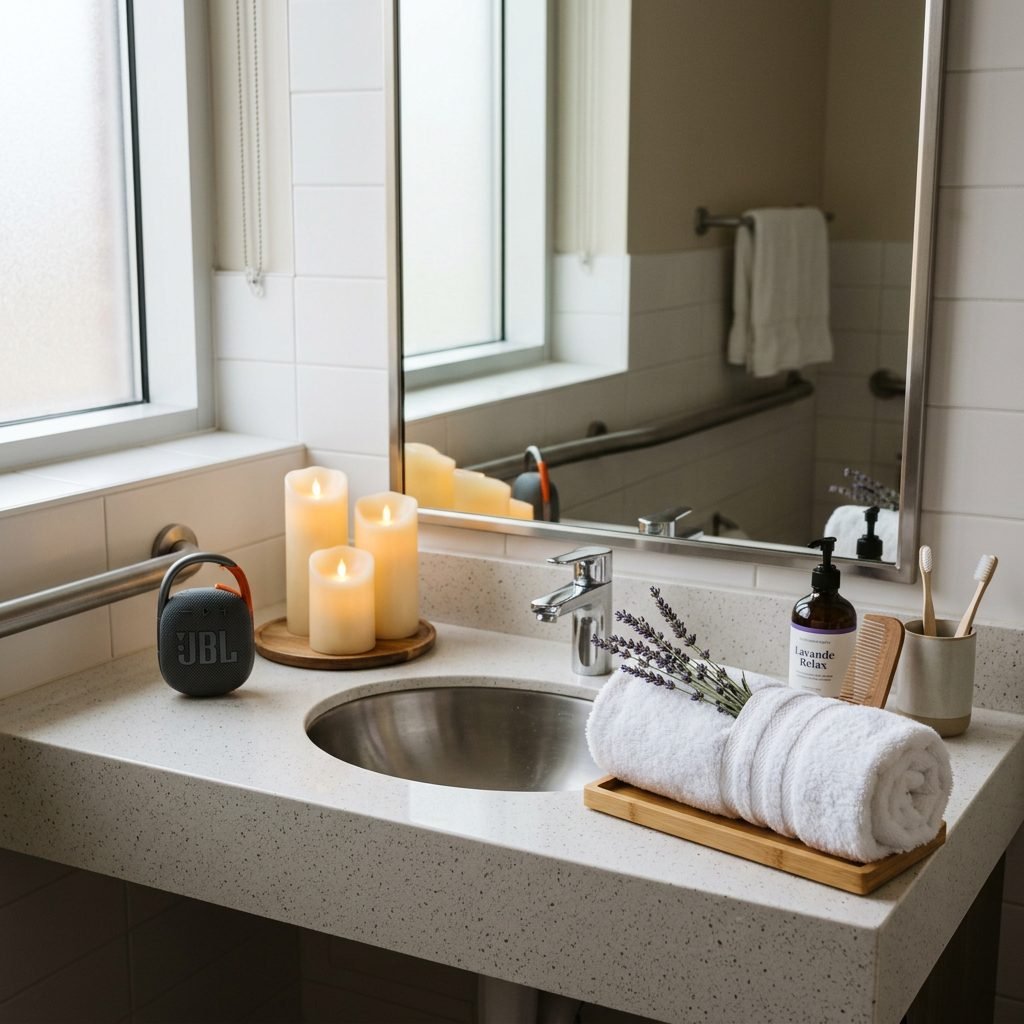
Most hospital bathrooms are, let’s be honest, a bit clinical. They have bright fluorescent lights and cold tile. To get the most out of your shower time, we need to hack the environment to trigger oxytocin—the hormone that drives labor. Oxytocin loves the ‘three Ds’: Dark, Down-regulated, and Do-not-disturb.
How to Prep the Bathroom
- Kill the Lights: Turn off the main overhead light. Use battery-operated tea lights or the light from the hallway to create a soft glow.
- Set the Soundtrack: Bring a waterproof Bluetooth speaker. Whether it is heavy metal to power through transition or soft ‘brown noise’ to stay grounded, sound is vital.
- Aromatherapy: Put a few drops of lavender or clary sage essential oil on a washcloth and place it in the corner of the shower where the steam will hit it.
- The Temperature Sweet Spot: Keep the water warm but not scalding. You don’t want to raise your core temperature too high, as this can affect the baby’s heart rate. Aim for what feels like a comfortable, hot bath.
Remember, mama: You are not a patient; you are a woman in labor. This is your space. Don’t be afraid to ask the nurses to dim the lights or leave the room while you find your rhythm.
Master the Flow: 5 Shower Positions for Labor Progress

The beauty of the shower is that it encourages movement. Standing still is often the hardest way to labor. By using these positions, you are helping your baby descend and rotate while getting the pain-relieving benefits of the water.
1. The Standing Sway
Stand facing the showerhead or the wall. Lean your forearms against the wall and rest your head on your arms. Let your partner spray the water on your lower back. Gently sway your hips from side to side like you are slow dancing. This uses gravity to help the baby’s head press against the cervix.
2. The Seated Throne
Almost every hospital shower has a plastic bench or a removable shower chair. Sit on the chair facing the back (straddling it) or sitting normally. This allows your legs to rest while you focus on your breathing. This is a great position for the Active Phase of labor.
3. The Hands-and-Knees Reset
If you are experiencing ‘back labor’ (where you feel the contractions intensely in your spine), get down on all fours on the shower floor. Safety Tip: Use a clean hospital towel or a non-slip mat under your knees. Let the water hit your lower back. This position can help a ‘sunny-side up’ baby rotate into a better position.
4. The Wall Lean (Squat Prep)
Face away from the water and lean your back against the shower wall. Slide down into a mini-squat during a contraction, then stand back up. The warm water running down your spine while you squat helps open the pelvic outlet.
5. The Partner Hug
Wrap your arms around your partner’s neck while they stand outside or inside the shower with you. Let your weight hang into them. This physical connection releases a massive surge of oxytocin.
| Position | Labor Stage | Best For… |
|---|---|---|
| Standing Sway | Early / Active | Gravity & Pelvic Opening |
| Seated Throne | Active / Transition | Conserving Energy |
| Hands & Knees | Transition | Relieving Back Labor |
| Partner Hug | Any Stage | Emotional Connection |
The Partner’s Role: Being the ‘Shower Guardian’
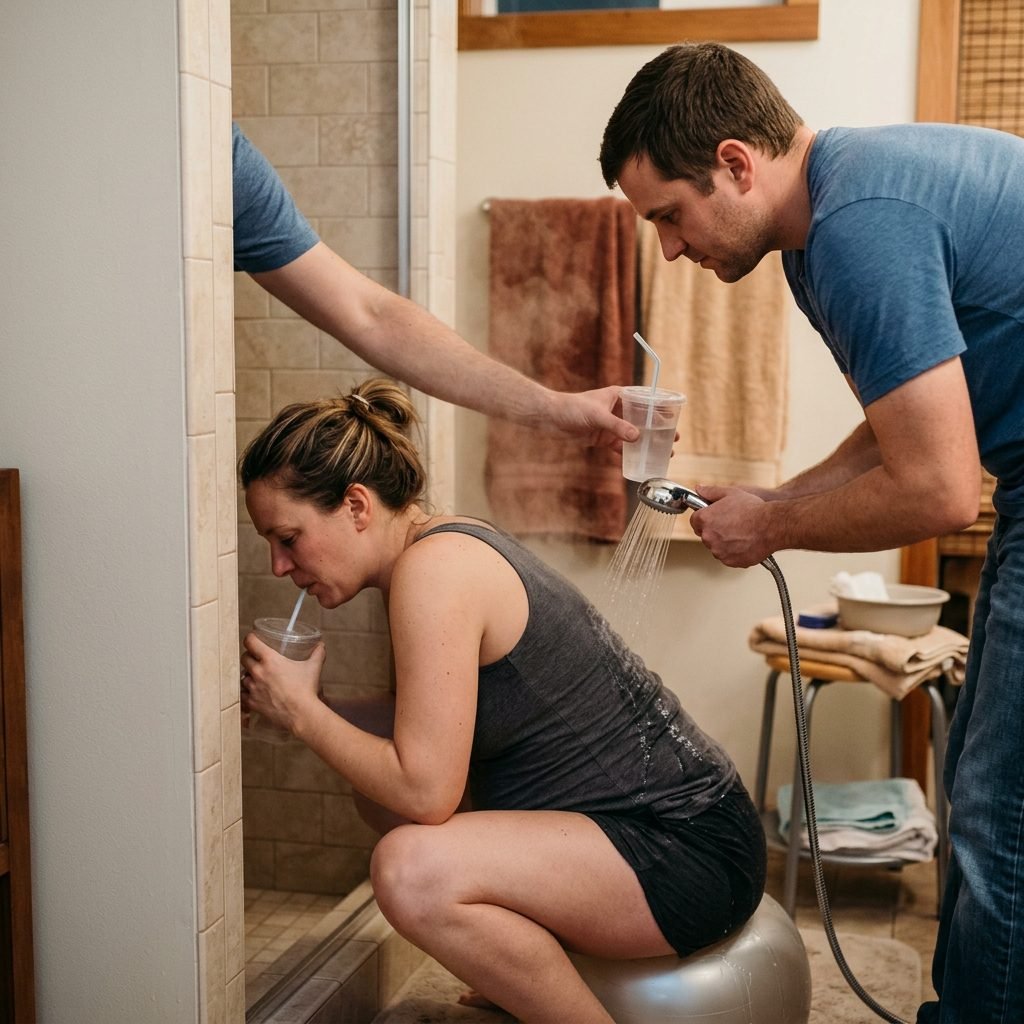
Partners, listen up! You are the most important piece of equipment in that bathroom. You aren’t just a spectator; you are the Guardian of the Flow. Your job is to make sure she feels safe, hydrated, and supported.
How to Support Her in the Shower
- Manage the Wand: If the shower has a handheld nozzle, you be the one to hold it. Ask her, ‘Higher? Lower? More to the left?’ Keep the water exactly where she needs it.
- Hydration Station: Labor is an athletic event. Every time she finishes a contraction, offer her a sip of water or coconut water through a straw. The steam can make her feel dehydrated quickly.
- Cool Compresses: While the warm water hits her back, a cold, damp washcloth on her forehead or the back of her neck can prevent her from overheating and feel incredibly grounding.
- The ‘Anchor’ Hold: If she is standing, let her lean her full weight into you. Be her physical anchor so she can let her muscles go limp during the peak of the contraction.
Script for Partners: ‘I’ve got the water right on your back. You are doing so well. Just breathe into my hands. This contraction is almost over.’
Safety, Logistics, and the ‘Shower Bag’ Checklist
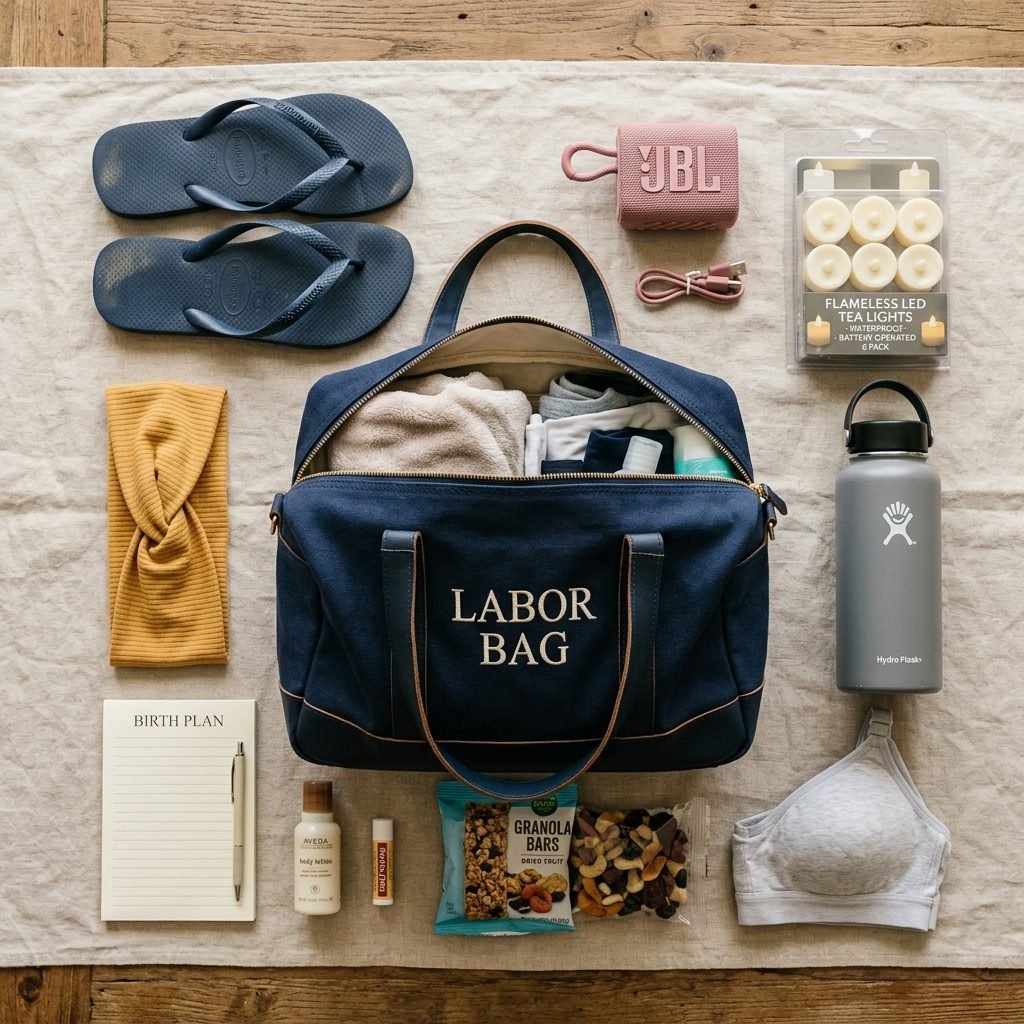
Before you hop in, there are a few practical things to keep in mind. Safety is our priority, especially when you are tired and the floor is wet.
Safety First
- Membrane Status: If your water has broken (SROM/AROM), some providers have rules about how long you can be in the water. Always check with your nurse first.
- Monitoring: If you are required to have continuous fetal monitoring, ask for telemetry (wireless) monitors. These are waterproof and allow you to stay in the shower while the nurses track the baby’s heart rate.
- Slipping: Hospital floors are notoriously slippery. Always wear flip-flops or water shoes in the shower.
What to Pack in Your Labor Bag
| Item | Why You Need It |
|---|---|
| Rubber Flip-flops | Safety and hygiene on hospital floors |
| Waterproof Speaker | To maintain your ‘labor vibe’ |
| Hair Ties / Headband | Keep wet hair out of your face during transition |
| Battery Tea Lights | To avoid the harsh fluorescent hospital lighting |
| Swim Trunks for Partner | In case they need to jump in and support you |
When to Transition Out of the Shower

The shower is a tool, not a destination. There will come a point where you might feel the need to change your environment. This often happens during Transition (the final stage of dilation) or when you feel the ‘urge to push.’
Signs it’s time to dry off:
- The ‘Pushy’ Feeling: If you start making grunting noises or feel intense pressure in your rectum, it’s time to get out and get checked.
- Shaking: If you start shivering or shaking uncontrollably (which is totally normal!), you might want the warmth of a bed and blankets.
- The ‘I Can’t Do This’ Moment: When you hit the emotional wall, a change of scenery—from the shower back to the birth ball or the bed—can help reset your focus.
When you get out, have your partner ready with warm towels (ask the nurse to pull some from the blanket warmer!). Being cold right after being warm can cause your muscles to tense up, so stay cozy!
Conclusion
You Are Ready for This
Whether you are in a high-tech birth center tub or a standard 3×3 hospital shower stall, the power of labor comes from within you. The water is simply there to hold you, soothe you, and give you the space to do your work. Don’t let the lack of a tub discourage you. Use the shower, use your partner, and use your breath. You are doing something incredible, and before you know it, you will be holding your sweet baby in your arms. You’ve got this, mama. We are all rooting for you.