How to Use the Hands-and-Knees Pelvic Sway to Relieve Back Labor Pain
Hello, beautiful mama. If you are reading this, you are likely preparing for the incredible, transformative journey of birth. As you pack your hospital bag, fold those tiny onesies, and mentally prepare for labor, you might have heard whispers—or perhaps loud warnings—about something called back labor. Take a deep breath and drop your shoulders. I am here to tell you that while back labor can be intense, you are not powerless against it. As a doula, one of my absolute favorite, most reliable tools in the birth room is the hands-and-knees pelvic sway. It is a simple, evidence-based movement that can completely shift your labor experience.
Back labor typically occurs when your sweet baby is in an Occiput Posterior (OP) position, meaning the back of their head is pressing directly against your spine. Instead of feeling contractions wrapping around your belly, you feel a deep, intense ache in your lower back that sometimes doesn’t fully fade even between contractions. It can feel overwhelming, but your body is beautifully designed to help your baby navigate the pelvis. By utilizing gravity, movement, and specific positioning, we can encourage your baby to rotate into a more optimal position while providing you with immediate, profound pain relief.
In this comprehensive guide, we are going to break down exactly how to use the hands-and-knees pelvic sway. Whether you are planning an unmedicated home birth, a hospital birth with an epidural, or you are just looking to build a robust toolbox of comfort measures, this technique is for you. We will cover the step-by-step mechanics, how your birth partner can amplify the relief, and how to adapt this movement for a hospital bed. You are strong, you are capable, and you have exactly what it takes to birth your baby. Let’s dive into the magic of the pelvic sway.
Understanding Back Labor and the OP Baby
Why Does Back Labor Happen?
Before we learn how to fix the discomfort, it helps to understand exactly what is happening inside your body. Think of your pelvis as a beautiful, intricate lock, and your baby’s head as the key. For the smoothest birth, the key needs to fit into the lock in a very specific way. Ideally, your baby is positioned Occiput Anterior (OA), meaning they are facing your spine. In this position, the smallest part of their head leads the way, and the soft front of their face is against your bony spine.
However, up to 30 percent of babies enter labor in the Occiput Posterior (OP) position, often affectionately called sunny-side up. In this position, the hard, bony back of your baby’s skull is pressing directly against your sacrum (the triangular bone at the base of your spine). During a contraction, your uterus bears down, pushing the baby deeper into the pelvis. When the baby is OP, this downward force grinds their skull against your sacrum, creating the intense, localized pain we call back labor.
How the Hands-and-Knees Position Changes the Game
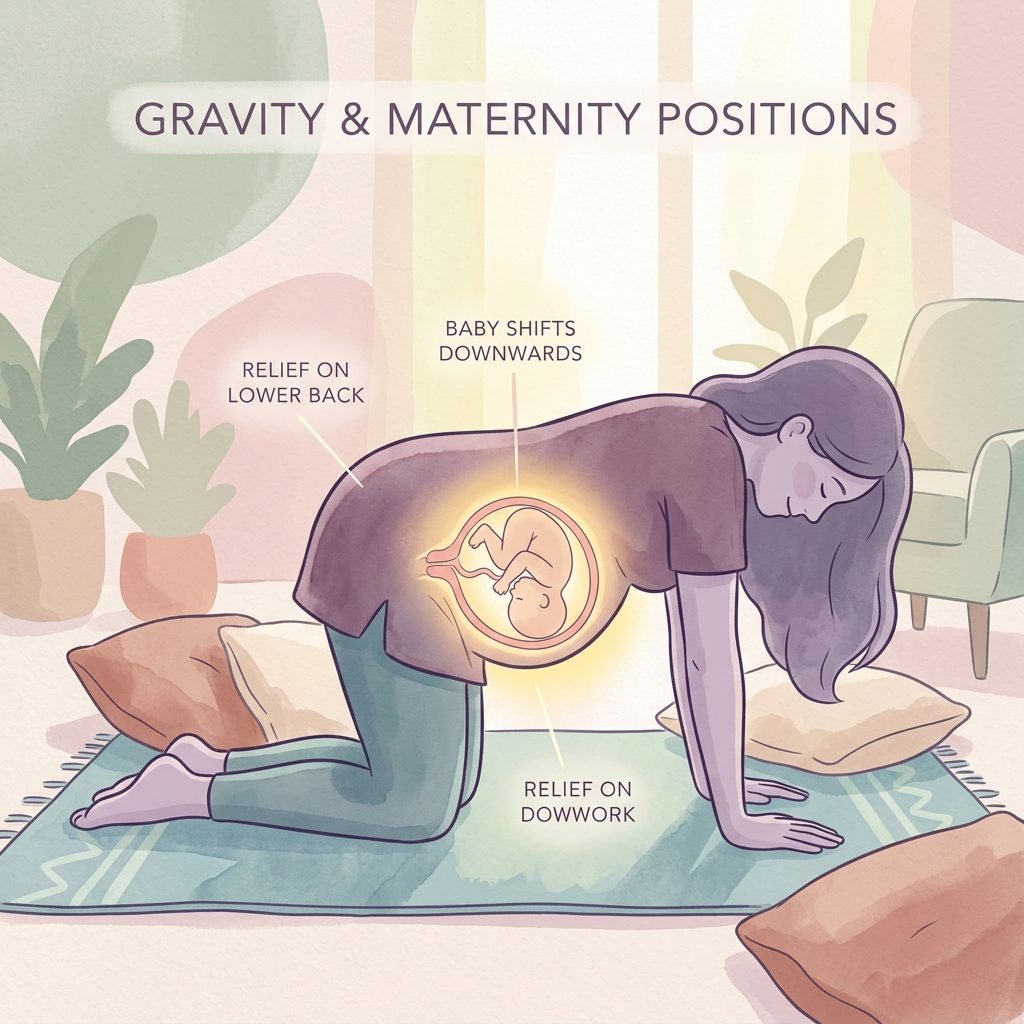
When you are lying on your back or sitting in a semi-reclined position, gravity is pushing the baby’s heavy spine directly into your spine. By simply flipping over onto your hands and knees, you are entirely changing the gravitational pull. Suddenly, gravity is pulling your baby’s weight away from your spine and toward your belly hammock. This achieves two vital things:
- Immediate Pain Relief: The pressure is instantly lifted off your sacrum and sciatic nerves, providing a massive reduction in back pain.
- Encouraging Baby to Rotate: The heaviest part of your baby is their back and the back of their head. Like a hammock, your belly creates a soft sling. Gravity gently encourages the heaviest part of the baby to swing downward toward the floor, effectively helping them rotate from OP (sunny-side up) to OA (facing your spine).
Step-by-Step Guide: Mastering the Hands-and-Knees Pelvic Sway

Setting Up for Success
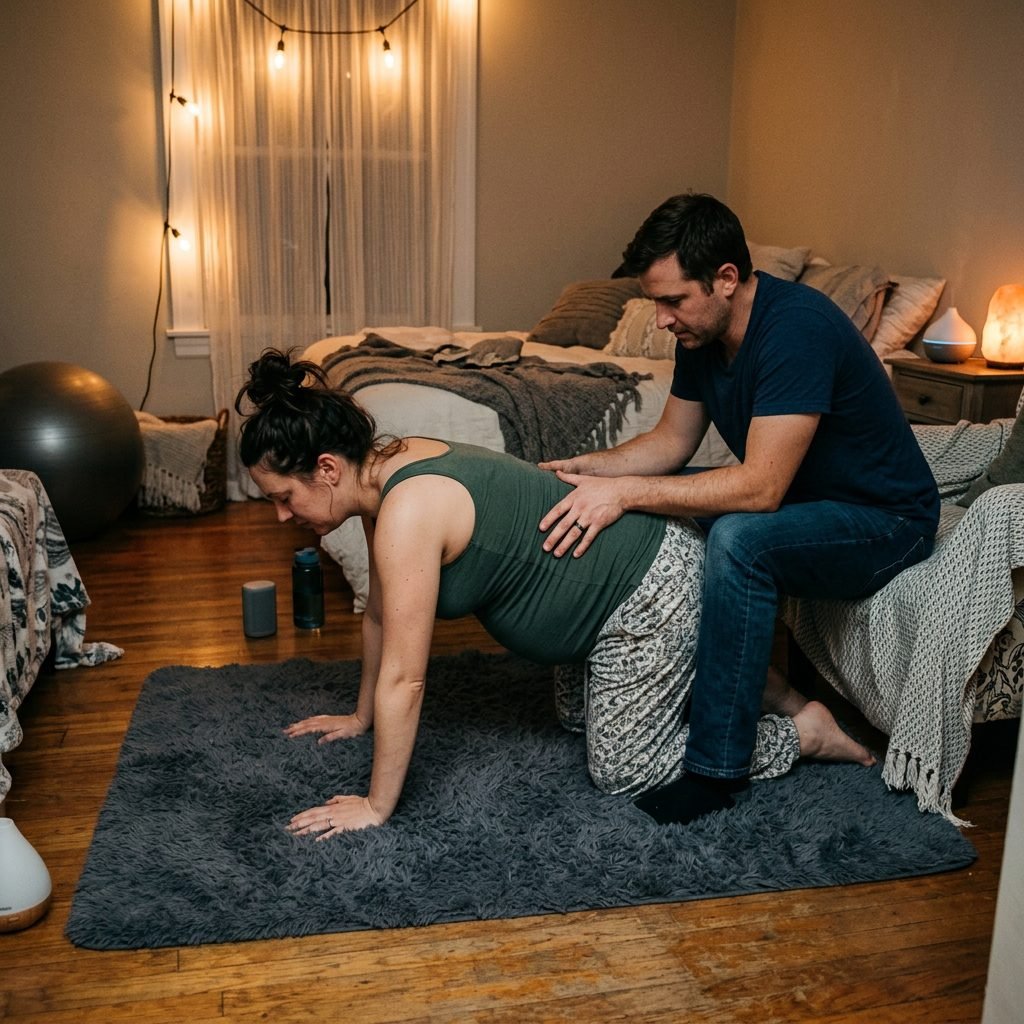
Now that we know why it works, let’s talk about exactly how to do it. The hands-and-knees pelvic sway is not just a static pose; it is a fluid, rhythmic movement that requires you to tune into your body’s natural instincts. During active labor, you want your environment to feel safe, dark, and cozy. Dim the lights, put on your favorite calming playlist, and follow these steps.
The Physical Steps
- Create a Soft Foundation: Labor is hard work, and your joints need protection. If you are on the floor, place a thick yoga mat, a folded comforter, or several pillows under your knees and wrists. Comfort is your number one priority right now.
- Get into Position: Slowly lower yourself onto all fours. Ensure your knees are spaced hip-width apart (or slightly wider if it feels better for your belly) and your wrists are directly under your shoulders. If your wrists get tired, you can lower down onto your forearms or rest your upper body on a birth ball, a stack of pillows, or the edge of the bed.
- Find a Neutral Spine: Try not to sag your belly heavily toward the floor (which can strain your lower back) or arch up too high like an angry cat. Find a comfortable, neutral middle ground where your neck is relaxed and your jaw is loose.
- Initiate the Sway: As a contraction begins, start to gently sway your hips from side to side, like a slow pendulum. Imagine you have a paintbrush attached to your tailbone, and you are slowly painting a horizontal line behind you.
- Incorporate the Figure-Eight: As the contraction peaks and becomes more intense, transition your sway into a figure-eight motion. Move your hips in slow, continuous loops. This asymmetrical movement opens up different quadrants of the pelvis, giving your baby the space they need to navigate the birth canal.
- Breathe Through the Movement: Pair your sway with deep, low-pitched vocalizations. Inhale deeply through your nose, expanding your ribcage, and exhale with a low, rumbling horse-lips or a deep ahhhh sound. Keep your jaw completely relaxed; a relaxed jaw equals a relaxed pelvic floor.
I am opening. My baby is moving perfectly. I trust the rhythm of my body.
Doula Magic: Enhancing the Sway with Partner Support
Teamwork in the Birth Room
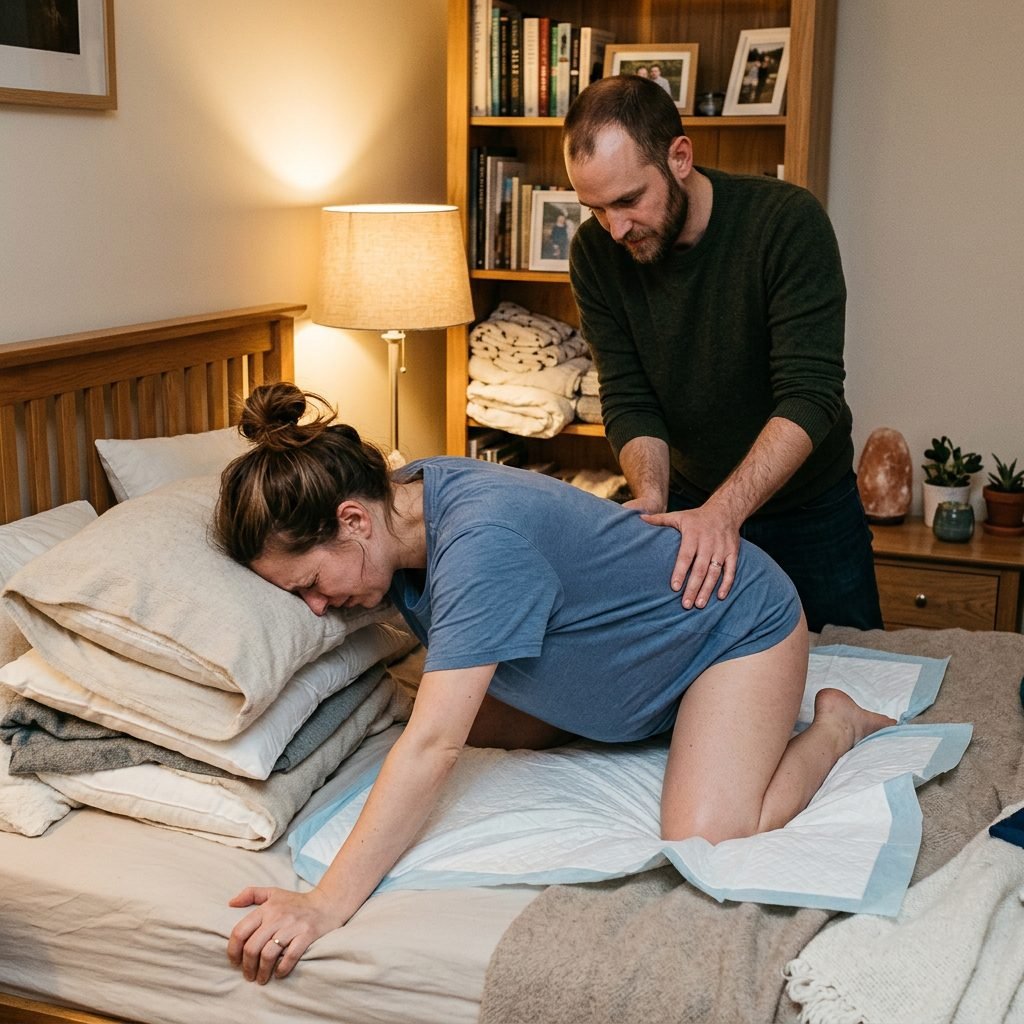
While the hands-and-knees pelvic sway is incredibly effective on its own, it becomes absolute magic when combined with partner support. If you have a partner, a doula, or a support person with you, this is their time to shine. Because your back is completely exposed in this position, it provides the perfect canvas for them to apply counter-pressure and massage.
The Double Hip Squeeze
This is the holy grail of back labor relief. While you are swaying on hands and knees, have your partner kneel behind you. They should place the heels of their hands on the fleshy part of your glutes, right over the sacroiliac (SI) joints. As a contraction builds, they will push their hands firmly in and up toward your head. This action physically forces the pelvic bones slightly apart, giving the baby more room and dramatically relieving the pressure on your sacrum.
Sacral Pressure and Massage
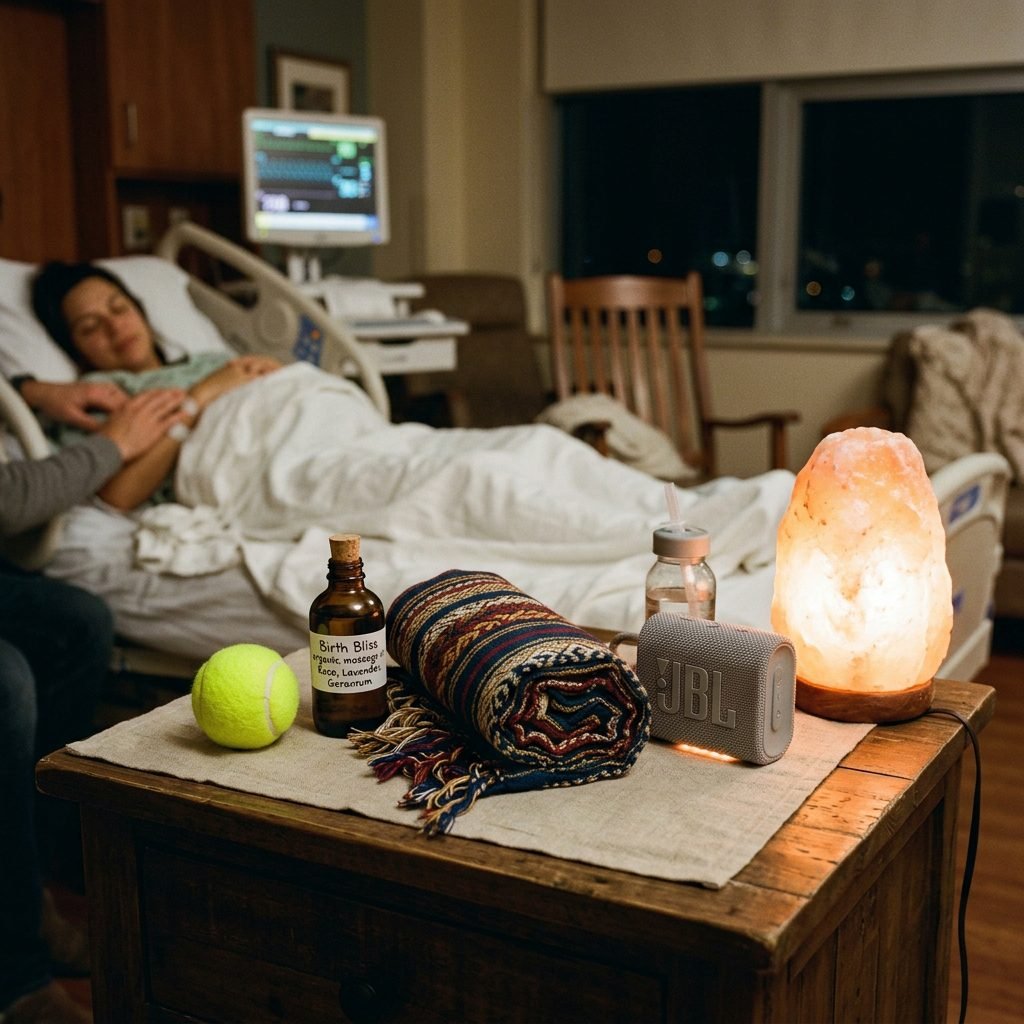
If the hip squeeze isn’t quite hitting the spot, your partner can use the heel of one hand, or a tennis ball, to apply firm, steady pressure directly to your sacrum (the flat bone just above your tailbone). They can press firmly during the peak of the contraction, holding it steady until the wave passes. Between contractions, they can use light, soothing strokes down your back to help you release tension.
Using the Rebozo
A Rebozo is a traditional Mexican woven shawl that doulas use to provide comfort during labor. Your partner can wrap the Rebozo under your belly while you are on hands and knees. Standing over you, they can gently lift the weight of your belly (taking the strain off your lower back) and perform a technique called sifting—a very gentle, rhythmic jiggling of the belly. This feels incredibly relieving and helps relax the uterine ligaments.
Partner Script: ‘You are doing beautifully. Let your belly hang heavy. I’ve got you. Breathe this wave away.’
Labor Positions Timeline: When to Sway
Strategic Movement Through the Phases of Labor
Labor is a dynamic process, and your body will crave different positions at different times. The hands-and-knees pelvic sway is versatile, but knowing when to deploy it can help you conserve energy and maximize its effectiveness. In early labor, you might prefer to rest or walk. But as you transition into active labor, the sway becomes an essential tool.
Below is a quick guide to help you and your birth team understand when to utilize the hands-and-knees position versus other comfort measures.
| Labor Phase | Recommended Positions & Techniques |
|---|---|
| Early Labor (0-6 cm) | Resting, side-lying, slow walking, light swaying on a birth ball. Conserve your energy. |
| Active Labor (6-8 cm) | Hands-and-knees pelvic sway, standing and leaning on partner, shower/tub, double hip squeezes. |
| Transition (8-10 cm) | Deep hands-and-knees sway, kneeling over the back of the hospital bed, intense counter-pressure. |
| Pushing (Second Stage) | Hands-and-knees (great for OP babies), side-lying, deep squatting, or semi-seated. |
Remember, there is no strict rulebook for labor. If the hands-and-knees position feels amazing in early labor, do it! If your body is screaming at you to stand up during transition, listen to it. Your intuition is the most powerful monitor in the room.
Modifying the Sway for Hospital Beds and Epidurals

Inclusivity for Every Birth Plan
One of the most common misconceptions about labor positioning is that you are stuck on your back once you get to the hospital, especially if you choose to have an epidural. This is simply not true! The hands-and-knees pelvic sway can be beautifully modified to fit the confines of a hospital bed and the realities of medical pain management.
The Hospital Bed Modification
If you are unmedicated but prefer to stay on the bed, hospital beds are incredibly adjustable. Have your nurse drop the bottom half of the bed entirely. You can kneel on the lower section and drape your upper body over the raised head of the bed. This creates a supported, inclined hands-and-knees position that takes the weight off your arms while allowing your hips complete freedom to sway, rock, and loop in figure-eights.
The Epidural Modification (The Peanut Ball)
If you receive an epidural, you will not have the motor control to safely support yourself on hands and knees. However, we can still trick the pelvis into thinking it is in that position using a magical tool called a peanut ball. While lying on your side, your nurse or doula will place a peanut-shaped exercise ball between your legs. This opens your pelvis asymmetrically, mirroring the exact pelvic angles of the hands-and-knees position. To mimic the sway, your team can gently rock your hips or use a Rebozo to lightly sift your hips from side to side while you rest comfortably.
Birth Affirmation: My birth space is safe. Whether I am on the floor, in a tub, or in a bed, my body knows exactly how to bring my baby into the world.
Conclusion
Navigating back labor can feel like climbing a mountain, but the hands-and-knees pelvic sway is like discovering a hidden, easier trail to the summit. By understanding the mechanics of your pelvis, utilizing gravity to encourage your baby to rotate, and leaning on your support team for counter-pressure, you can transform a painful experience into a manageable, empowering one. Remember to set up your space with comfort in mind, protect your joints with pillows, and let your breath guide your movements. Whether you are swaying on a yoga mat in your living room or leaning over a raised hospital bed, this technique is a powerful testament to the wisdom of the maternal body.
As you approach your birthing day, practice this sway with your partner. Show them exactly where your sacrum is, practice the double hip squeeze, and rehearse your affirmations. When the waves of labor wash over you, your muscle memory will take over, and you will know exactly what to do. You are embarking on the most profound physical, emotional, and spiritual journey of your life. Trust your body, trust your baby, and know that you are surrounded by the collective strength of millions of mothers who have swayed their babies into the world before you. You’ve got this, mama.