The Unglamorous Postpartum Care Kit No One Tells You You Need
Welcome to the Fourth Trimester, Sister
Listen, mama, I know your registry is probably filled with the cutest organic cotton onesies, high-tech strollers, and tiny swaddles that smell like dreams. But as your doula and your sister-in-healing, I need to lean in close and tell you the truth: the most important kit you will ever assemble is for you. The world focuses so much on the arrival of the baby that we often forget the mother is also being born—and she is usually birth-worn, bleeding, and incredibly tender.
Postpartum recovery isn’t always a soft-focus Instagram filter. It’s messy, it’s leaky, and it’s physically demanding. Whether you had a vaginal birth or a C-section, your body has just performed the equivalent of a multi-day marathon without any training. You deserve a recovery kit that honors that reality. We’re going to talk about the things people whisper about: the giant mesh panties, the stinging, the night sweats, and the first bathroom trip that feels like a mountain climb. You are not alone, this is normal, and we are going to get you through this with grace and the right tools.
Managing the ‘Down There’ Drama: Vaginal Recovery Essentials
The Perineal Care Routine
If you had a vaginal delivery, your perineum (the area between the vagina and the anus) has been through a lot. Whether you have stitches or just general swelling, the goal is to keep the area clean, numb, and supported. Here is the unglamorous list of what you actually need to survive the first week:
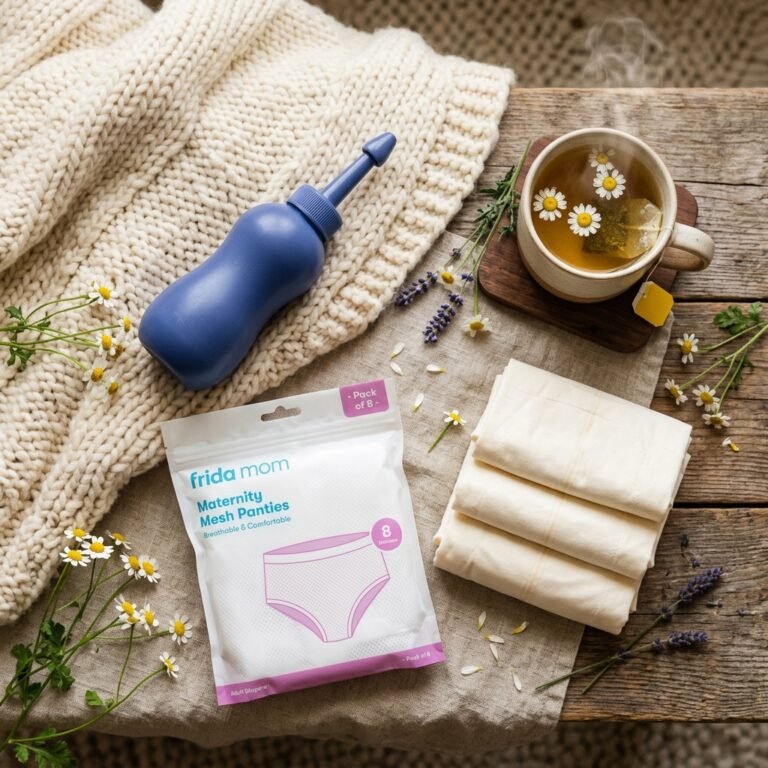
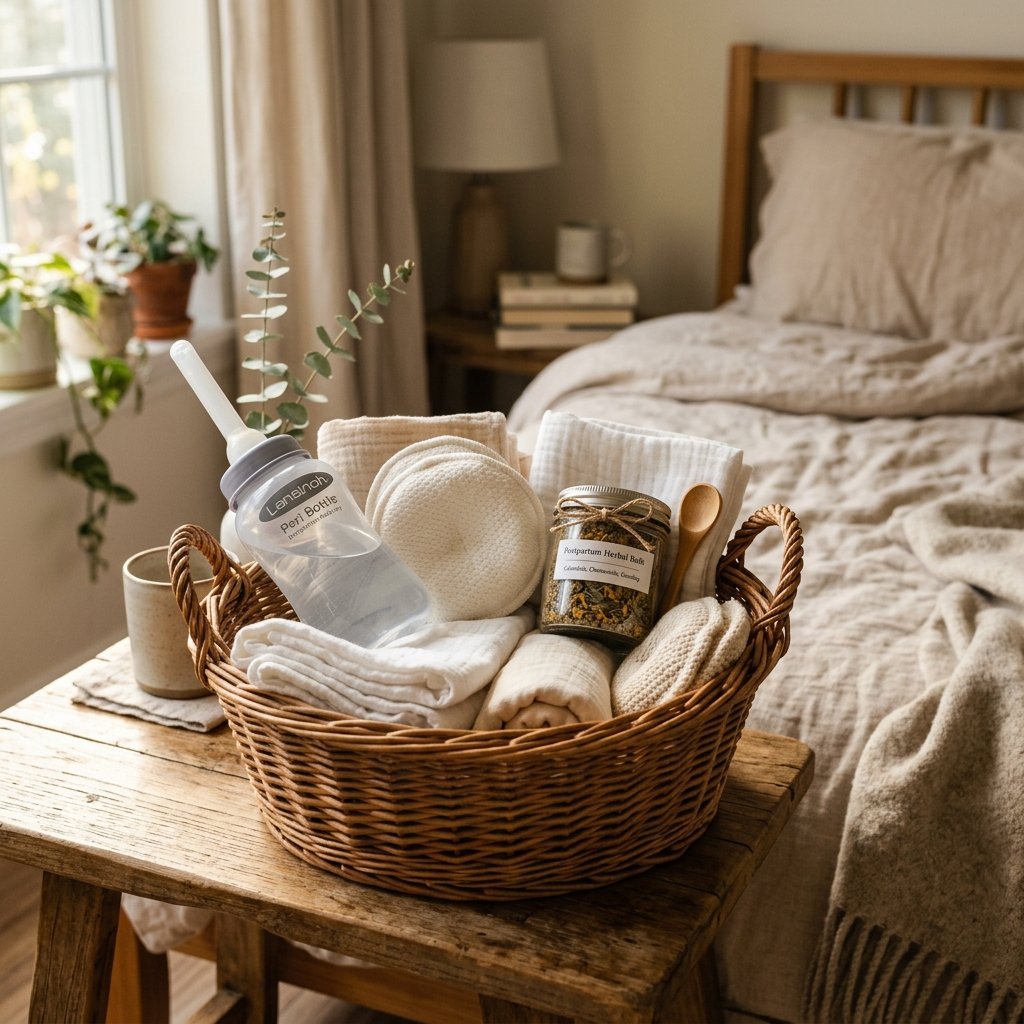
- The Angled Peri Bottle: Forget the standard hospital squirt bottle. You need one with an angled neck so you don’t have to perform gymnastics to reach the right spots. Fill it with warm water to dilute urine, which can sting fresh tears.
- Witch Hazel Liners: These are long, medicated cooling pads that sit on top of your maxi pad. They provide instant relief from burning and swelling.
- Perineal Healing Foam: Look for a foam with 5% lidocaine or natural witch hazel and peppermint. It’s easier to apply than a spray because it stays exactly where you put it.
“Your body is not broken; it is healing. Every sting and every ache is a testament to the incredible strength you displayed. Take it one bathroom trip at a time.”
Padsicles: The DIY Secret Weapon
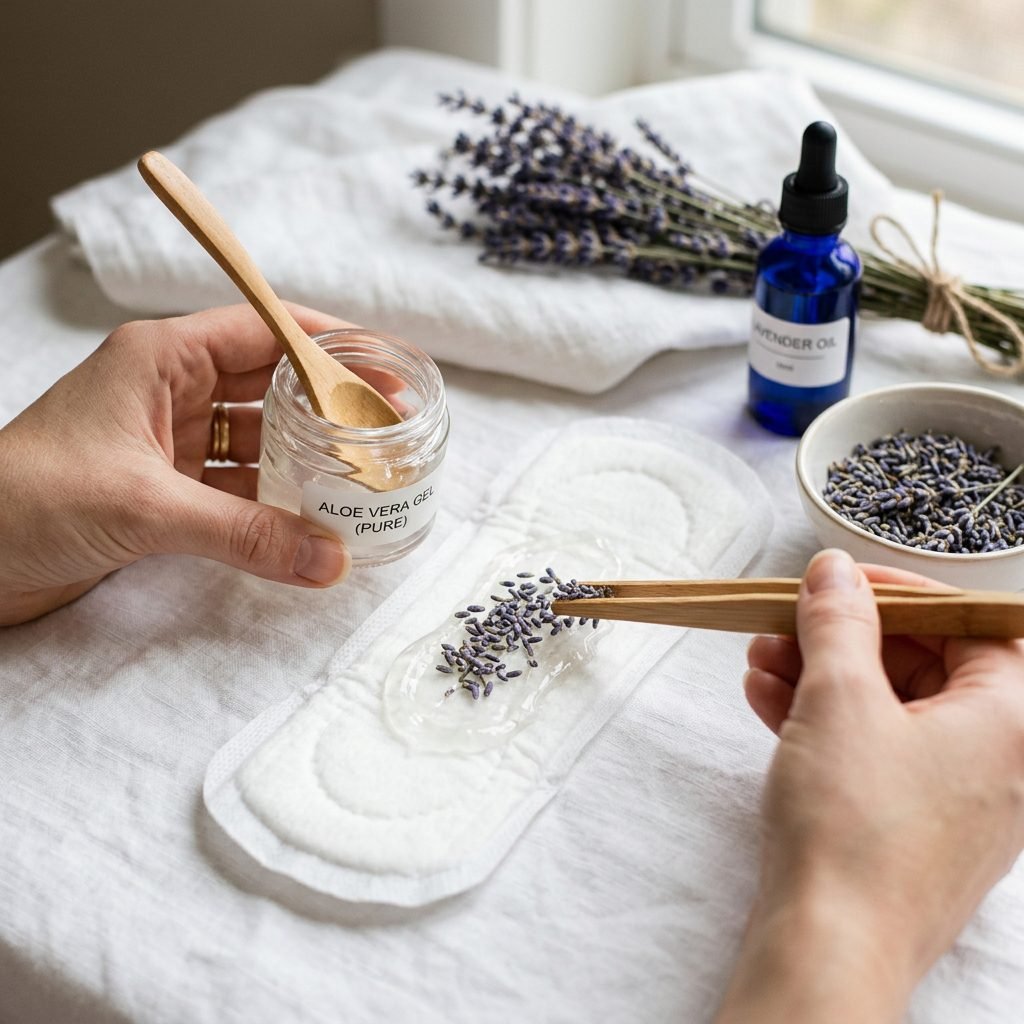
One of the best things you can do for yourself is to prep ‘padsicles’ before you go into labor. These are frozen maxi pads soaked in healing ingredients. Here is how you make them:
- Unfold a heavy-duty overnight maxi pad (do not remove the adhesive backing yet).
- Spread a generous layer of alcohol-free aloe vera gel down the center.
- Add a few drops of lavender essential oil and a splash of witch hazel.
- Fold it back up and store it in a gallon-sized freezer bag.
- When needed, let it thaw for 2 minutes before placing it in your underwear for 15-20 minutes of cooling relief.
The Mesh Panty Debate: Maximum Comfort for Maximum Flow
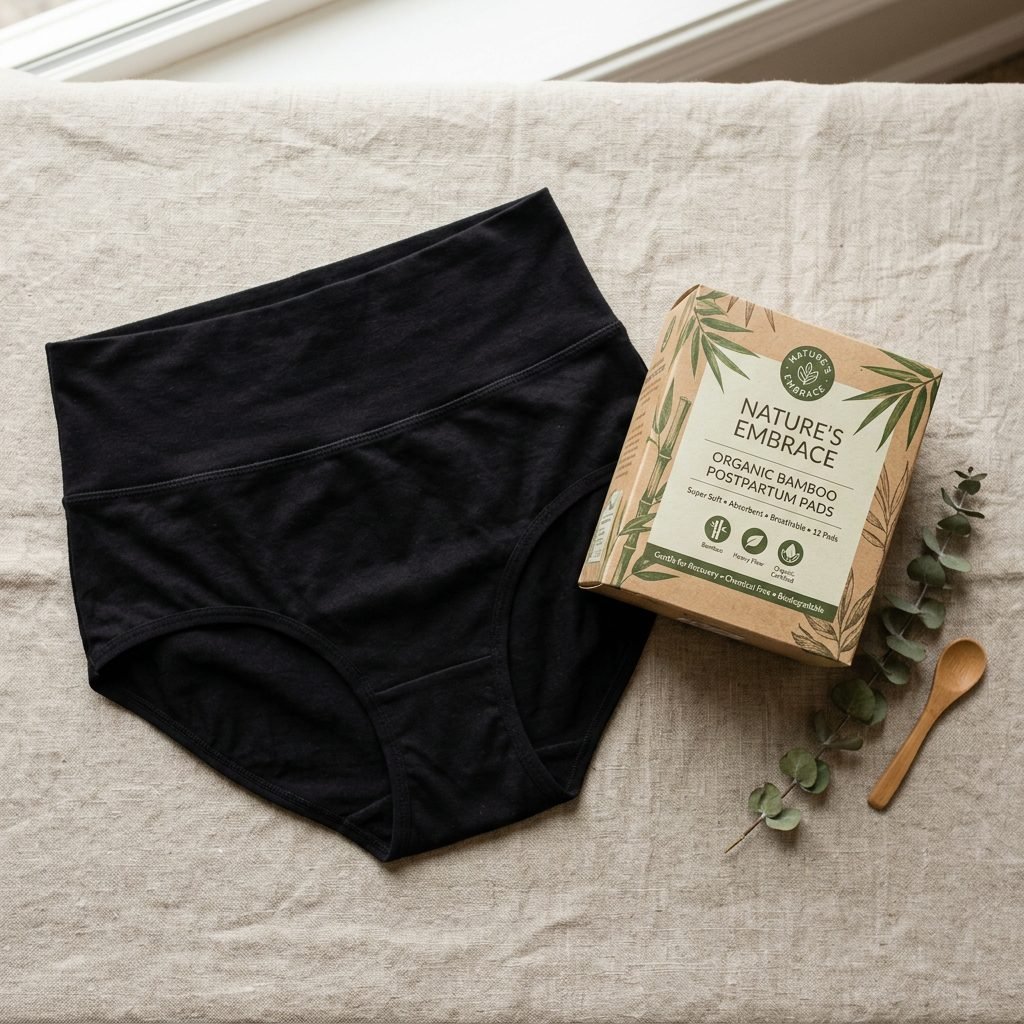
Why Your Regular Underwear Won’t Cut It
For the first 7 to 14 days, you will experience lochia—postpartum bleeding that is much heavier than a period. Your favorite lace thongs need to stay in the drawer for a while. You need something that can hold a pad the size of a surfboard and won’t put pressure on your abdomen. Many moms find themselves choosing between the hospital-issued mesh panties or adult diapers. Let’s look at the breakdown:
| Feature | Mesh Panties | Disposable Adult Diapers |
|---|---|---|
| Breathability | High – great for airflow to stitches. | Moderate – can feel a bit ‘plastic-y’ if low quality. |
| Security | Needs a separate pad; can shift. | All-in-one; very secure for heavy flow. |
| C-Section Friendly | Yes, if high-waisted and soft. | Yes, they sit high above the incision. |
| Ease of Use | Requires changing pads frequently. | Simply tear the sides and toss. |
Pro Tip: Buy a pack of high-waisted, black cotton ‘granny panties’ two sizes up. They are breathable, hold everything in place, and you won’t care if they get ruined by stains.
C-Section Recovery: Protecting the Golden Scar

The Incision Care Kit
If you had a Cesarean birth, your recovery kit looks a little different. You aren’t just healing from birth; you are healing from major abdominal surgery. Your core will feel non-existent for a few weeks, and any movement—like coughing or laughing—can feel scary.
- The Splinting Pillow: Keep a firm, small pillow nearby at all times. When you need to cough, sneeze, or laugh, press the pillow firmly against your incision. This ‘splinting’ provides physical support and reduces the sharp pain of abdominal contraction.
- Silicone Scar Sheets: Once your doctor clears you (usually around 6 weeks), silicone sheets can help flatten the scar and reduce redness.
- High-Waisted Compression Leggings: These provide a sense of ‘holding you together’ when your muscles feel weak, but ensure they don’t rub directly on the incision line.
Warning: Never apply creams or ointments to your C-section incision until your provider has confirmed it is fully closed and not showing signs of infection (redness, oozing, or heat).
The Bathroom Battleground: Digestion and Hemorrhoids
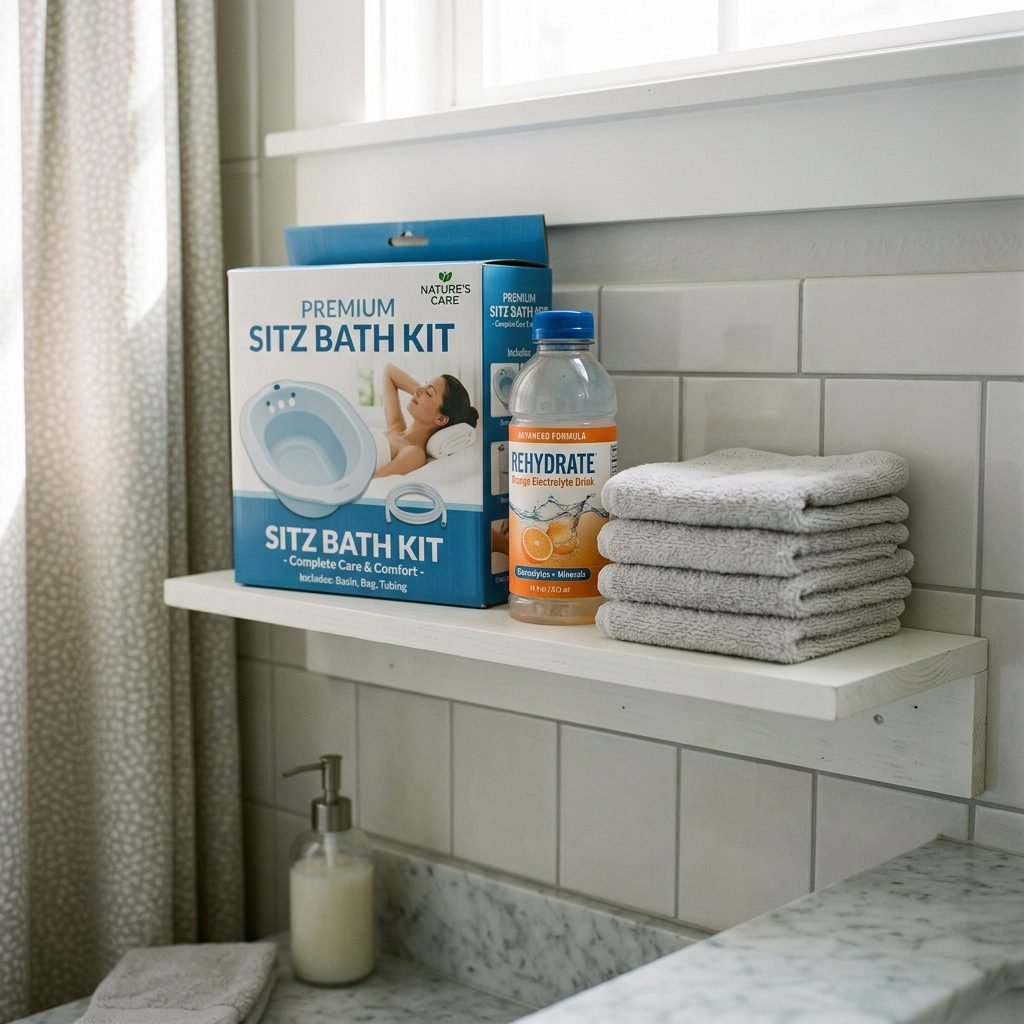
Winning the Battle Against Constipation
No one tells you that the first ‘number two’ after birth can feel as daunting as the birth itself. Between the dehydration of labor, the shift in organs, and potential pain medication, your digestive system often goes on strike. You need a strategy to make this process painless.
- Stool Softeners: Start taking these (with provider approval) immediately after birth. You want things to be as soft as possible to avoid straining.
- The Squatty Potty: Elevating your knees above your hips changes the angle of your colon and makes elimination much easier without pushing.
- Hydration with Electrolytes: Water isn’t enough. You need magnesium and potassium to help your muscles (including your bowels) relax and function.
Hemorrhoid Relief
If the pressure of labor left you with ‘angry grapes’ (hemorrhoids), you aren’t alone. Approximately 40% of postpartum women experience them. Use a sitz bath—a small plastic tub that fits over your toilet—filled with warm water and Epsom salts for 10 minutes twice a day to reduce swelling and increase blood flow to the area.
The Leaky Reality: Breasts, Sweats, and Tears

Hormonal Regulation Supplies
Around Day 3 to Day 5, your milk usually comes in, and your hormones take a massive nose-dive. This is the ‘baby blues’ window, but it’s also the ‘leaking from everywhere’ window. Your kit should include:
- Silver Nursing Cups: These tiny silver hats for your nipples are naturally antimicrobial and incredibly healing if you experience cracking or soreness in the early days of breastfeeding.
- Bamboo Breast Pads: Whether you are breastfeeding or not, you will likely leak. Bamboo is softer and more absorbent than disposable paper pads.
- Night Sweat Strategy: Postpartum night sweats are your body’s way of dumping all the extra fluid from pregnancy. Keep two extra sets of pajamas and a towel on your nightstand so you can change quickly in the middle of the night without waking the baby.
“If you find yourself crying over a dropped piece of toast or because the baby is ‘too cute,’ let it out. Your hormones are recalibrating. You are doing a great job, and this fog will lift.”
The Emotional First Aid Kit: Protecting Your Peace

Setting Boundaries and Scripts
Physical healing is only half the battle. Your emotional recovery requires a ‘kit’ of boundaries. You are in a vulnerable state, and your energy should be reserved for healing and bonding. Use these copy-paste scripts to protect your space:
When someone asks to visit: “We are so excited for you to meet the baby! Right now, we are focusing on recovery and bonding as a family. We aren’t ready for visitors quite yet, but we will let you know as soon as we are. Thank you for understanding!”
When someone offers ‘help’ that isn’t helpful: “I actually have the baby’s laundry covered, but if you’d like to help, we would love a hot meal or for someone to take the trash out!”
The Mental Health Checklist: Keep a list of three people you can call when you feel overwhelmed. This should include your partner, a non-judgmental friend, and your doula or a therapist specializing in postpartum care.
Conclusion
You Are the Priority
Mama, the unglamorous side of postpartum is where the real healing happens. By preparing this kit, you aren’t just buying supplies; you are telling yourself that your comfort matters. You cannot pour from an empty cup, and you certainly cannot heal while ignoring your own physical needs. Take the stool softeners, wear the giant mesh panties with pride, and don’t be afraid to ask for help. You have just done the most miraculous thing a human body can do. Now, it is time to be pampered, protected, and healed. You’ve got this, sister.