

The Pinky Slide Trick to Transfer a Sleeping Baby to the Crib Without Waking Them
The Ultimate Crib Transfer Dilemma
Mama, we have all been exactly where you are right now. You are sitting in the glider, the room is perfectly dim, the white noise is humming, and your sweet baby is finally, blissfully asleep on your chest. You have just spent the last forty-five minutes rocking, swaying, and shushing. Now comes the most terrifying part of the night: the crib transfer. It is a high-stakes mission. One wrong move, one sudden shift in temperature, or one tiny jolt, and those little eyes will pop wide open, undoing all of your hard work.
As a postpartum doula and pediatric sleep consultant, I hear this frustration from exhausted parents every single week. You are not doing anything wrong; babies are biologically wired to sense when they are being put down! They are hardwired to crave your warmth, your heartbeat, and your scent. When you suddenly remove all of those comforting elements, their tiny nervous systems sound an alarm. But do not worry, my friend. I am going to share one of my absolute favorite, tried-and-true nursery secrets with you: The Pinky Slide Trick. This gentle, precise technique is designed to trick your baby’s sensory receptors, preventing the dreaded startle reflex and keeping them in dreamland while you finally get to sneak away for some well-deserved rest.
You are doing an incredible job. Infant sleep is not a linear journey, and every baby is different. Give yourself grace as you learn these new techniques. You and your baby are learning this dance together.
In this comprehensive guide, we are going to break down the exact science of why babies wake up during transfers, how to read your baby’s sleep cycles to find the perfect transfer window, and provide a step-by-step masterclass on executing the Pinky Slide Trick flawlessly. Grab your favorite warm beverage, take a deep breath, and let’s reclaim your evenings.
Understanding the Moro Reflex and Infant Spatial Awareness
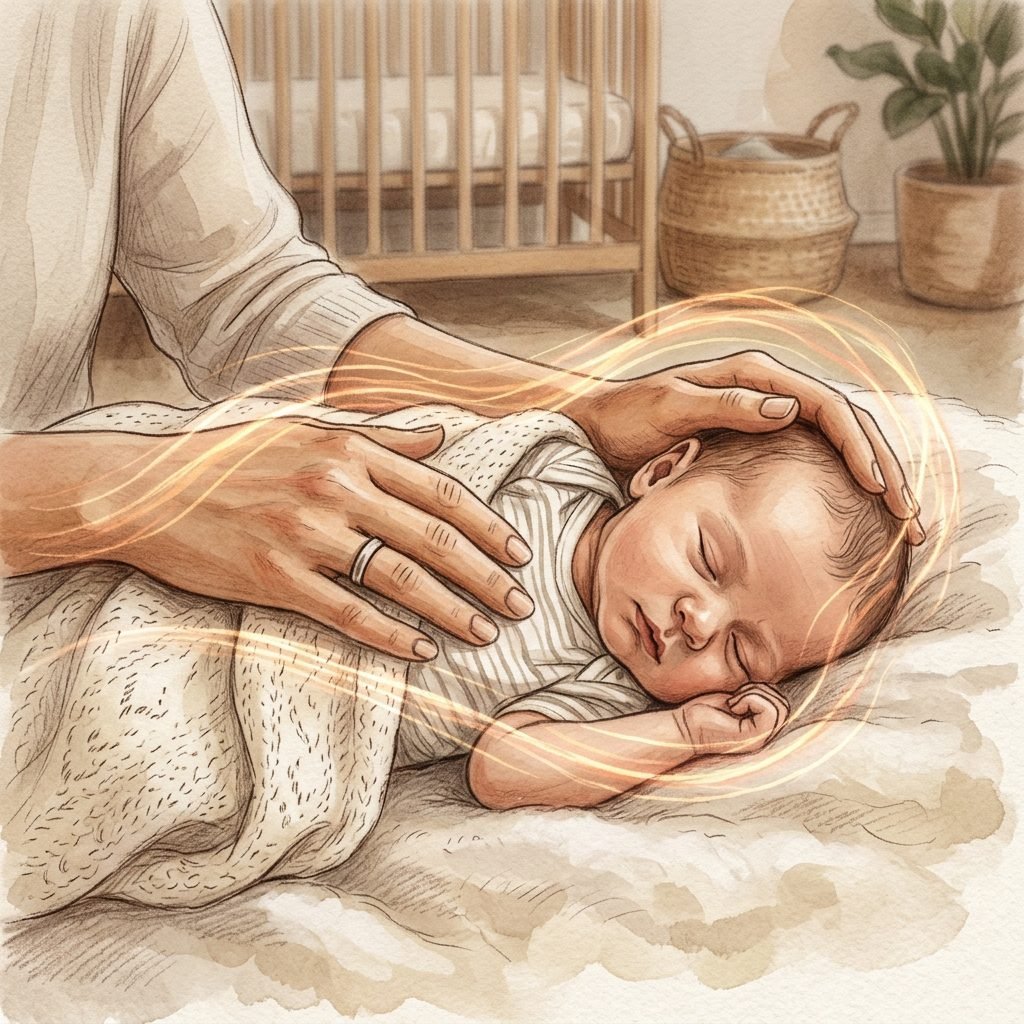
Before we dive into the physical mechanics of the Pinky Slide Trick, we need to understand the biological forces working against you during a crib transfer. Why does a baby who was sleeping like a rock in your arms suddenly flail and scream the second their back touches the mattress? The answer lies in primitive reflexes and spatial awareness.
The Moro Reflex (The Startle Reflex)
The Moro reflex is an involuntary, primitive reflex present in infants from birth until about 4 to 6 months of age. It is an evolutionary survival mechanism designed to protect the baby if they feel like they are falling. When a baby experiences a sudden change in position, a loud noise, or a rapid shift in temperature, this reflex is triggered. You will see their little arms fling outward, their hands open, and then quickly pull back in toward their chest, often accompanied by crying.
When you lower your baby into the crib horizontally, their inner ear (the vestibular system) detects that they are moving downward through space. If you lower them too quickly or remove your hands abruptly, their brain registers a ‘falling’ sensation, firing off the Moro reflex. The Pinky Slide Trick is specifically designed to bypass this vestibular alarm by maintaining continuous, grounding physical contact until the very last possible millisecond.
Temperature and Scent Sensors
Your body is a cozy, 98.6-degree human heating pad that smells like milk and safety. A crib mattress is flat, firm, and often cool to the touch. When you transfer a baby, you are asking them to transition from a warm, dynamic environment to a cold, static one. The contrast is jarring. By utilizing specific hand placements, like the Pinky Slide, you provide a gradual transition of warmth and pressure, easing them into their new environment without shocking their sensory system.
| Biological Trigger | What Happens During Transfer | How to Counteract It |
|---|---|---|
| Vestibular System (Balance) | Senses downward motion and triggers falling alarm. | Lower baby feet-first, keeping them close to your chest. |
| Moro Reflex (Startle) | Arms fling out, waking the baby instantly. | Maintain firm, steady pressure on the chest and head. |
| Thermal Shock | Transition from warm arms to a cool mattress. | Pre-warm the crib (safely) and remove hands slowly. |
The Pre-Transfer Checklist: Finding the Perfect Window

Timing is everything when it comes to the crib transfer. If you attempt the Pinky Slide Trick while your baby is still in active (REM) sleep, your chances of success plummet. Babies cycle through sleep stages much faster than adults, usually completing a full cycle every 45 to 50 minutes. To execute a flawless transfer, you must wait for them to enter deep, restorative sleep.
Signs Your Baby is in Deep Sleep
- The Spaghetti Arm Test: This is my absolute favorite doula trick! Gently lift your baby’s arm a few inches and let it drop. If they flinch, twitch, or pull the arm back, they are still in light sleep. If the arm drops limply like a piece of cooked spaghetti, you are in the golden zone.
- Breathing Patterns: In active sleep, a baby’s breathing is irregular, shallow, and sometimes rapid. In deep sleep, their breathing becomes deep, rhythmic, and incredibly steady.
- Facial Relaxation: Look at their mouth and eyes. If their eyelids are fluttering, or if they are smiling, sucking, or twitching, they are in REM sleep. Wait until their face is completely slack and their jaw is relaxed.
- Stillness: The occasional deep sigh is normal, but overall, their body should be completely still.
Pro Tip: It typically takes a baby about 20 to 25 minutes to transition from falling asleep to entering deep sleep. Do not rush the transfer! Enjoy the cuddles, listen to an audiobook or podcast, and wait for that 20-minute mark before making your move.
Step-by-Step: Mastering The Pinky Slide Trick

Now that your baby is in a deep sleep, it is time for the main event. The Pinky Slide Trick is a multi-phase operation. It requires patience, core strength (hello, leaning over the crib!), and a gentle touch. Follow these steps exactly for the best results.
Phase 1: The Descent (Feet-First Approach)
- Position Your Hands: Ensure one hand is firmly supporting your baby’s head and neck, and the other hand is supporting their bottom/lower back.
- Keep Them Close: As you stand up from your chair, keep your baby pressed tightly against your own chest. Do not hold them out away from your body; this triggers the falling sensation.
- The Feet-First Touchdown: As you lean over the crib, lower your baby so that their feet touch the mattress first. Then, slowly lower their bottom, then their back, and finally, their head. This angled descent prevents the Moro reflex from firing, as their brain registers that they are safely grounded from the bottom up.
Phase 2: The Hand on the Chest
- Maintain Pressure: Once your baby is fully flat on the mattress, do not immediately remove your hands! Keep your hand under their head, and move your bottom hand from their lower back to rest gently but firmly on their chest.
- Wait and Breathe: Hold this position for at least 30 to 60 seconds. Sync your breathing with theirs. This heavy, reassuring hand on the chest mimics the weight and pressure of your body, tricking them into thinking they are still being held.
Phase 3: The Pinky Slide (The Magic Move)
- The Head Hand Release: This is where the magic happens. You need to remove the hand that is pinned under your baby’s head. Instead of pulling your whole hand out at once (which shifts their head and wakes them), slowly slide your hand backward, leaving ONLY your pinky finger resting under their neck/base of the skull.
- The Micro-Support: Your pinky finger acts as a tiny, stabilizing bridge. It provides just enough pressure and support so the baby does not feel a sudden drop in their head position.
- The Roll Away: Once only your pinky is left, gently press down into the mattress with the side of your pinky, and slowly roll it outward, slipping it smoothly out from under their neck. The transition is so microscopic that the baby’s sensory receptors do not register the loss of contact.
- The Final Retreat: Keep your other hand on their chest for another 15 seconds. Slowly lighten the pressure of that hand, lifting it millimeter by millimeter, until you are completely hands-free. Sneak out of the room like a ninja!
| Transfer Phase | Key Physical Action | Why It Works |
|---|---|---|
| The Descent | Feet touch the mattress first, then bottom, then head. | Prevents the vestibular system from sensing a ‘free fall’. |
| The Chest Hand | Firm pressure on the sternum for 60 seconds. | Mimics the weight and security of being held against a parent’s chest. |
| The Pinky Slide | Leaving only the pinky under the neck before sliding out. | Provides a micro-bridge of support, preventing a sudden drop of the head. |
Troubleshooting the Transfer: When Things Go Wrong

Even with the flawless execution of the Pinky Slide Trick, babies are unpredictable. Sometimes, despite your best efforts, they might stir. Here is how to handle the most common transfer hiccups without having to pick them all the way back up and start over.
The Eye Flutter
If you lay them down and their eyes suddenly pop open or flutter, freeze. Do not make eye contact. Eye contact is highly stimulating for infants and will signal to their brain that it is time to wake up and play. Keep your gaze focused on their chest, keep your hand firmly applied to their torso, and make a loud, rhythmic shhhhh, shhhhh, shhhhh sound. Often, if you catch them within the first 5 seconds, they will drift right back off.
The Leg Thrash
If their legs pull up to their chest or they start to thrash, they might be experiencing a bit of trapped gas that shifted during the transfer. Keep one hand on their chest, and use your other hand to gently jiggle their thighs or pat their bottom rhythmically. The gentle, repetitive motion can soothe them back into a deeper sleep state.
The Suction Break (For Nursing/Pacifier Babies)
If your baby fell asleep nursing or sucking on a pacifier, the sudden loss of suction during the transfer can wake them. You can actually use a variation of the Pinky Slide here! Before you even begin the crib transfer, gently break the suction by slipping your clean pinky finger into the corner of their mouth. Let them suck on your pinky for a few seconds, then slowly slide it out. This allows you to break the seal on your own terms before moving them.
Remember, if the transfer fails completely and they start crying, it is okay. Pick them up, regulate their nervous system with some deep breaths, and try again. You are not failing; you are simply practicing.
Setting the Stage: Optimizing the Nursery for Sleep

The Pinky Slide Trick is incredibly effective, but it works best when the environment is fully optimized for infant sleep. You want the crib to be as inviting and womb-like as safely possible. Here are a few doula-approved nursery hacks to ensure your transfer is a success.
Pre-Warming the Crib (The Heating Pad Trick)
As mentioned earlier, the shock of a cold mattress is a major transfer-ruiner. About 15 minutes before you plan to put your baby down, place a standard heating pad or a warm water bottle on the crib mattress right where the baby’s back and head will go. CRITICAL WARNING: You MUST remove the heating pad completely before placing the baby in the crib. Always check the mattress with your bare hand to ensure it is comfortably warm, not hot. This simple trick mimics your body heat perfectly.
The Power of Pink and White Noise
While white noise is fantastic for blocking out household chatter and barking dogs, pink noise is actually deeply soothing for the nervous system. Pink noise has a lower frequency (think of a deep, rumbling waterfall or heavy rain) and mimics the sounds the baby heard inside the womb. Keep your sound machine running continuously at a safe volume (around 50 to 60 decibels) during the entire rocking and transfer process.
Lighting and Scent
Keep the nursery lighting as dim as possible. If you need a light to see the crib, use a red-hued nightlight. Red light does not interfere with the brain’s production of melatonin (the sleepy hormone) the way blue or white light does. Additionally, if your baby is over 6 months old and rolling safely, you can sleep with their crib sheet tucked into your shirt for a few hours before putting it on the mattress. Having your scent on the sheet provides immense sensory comfort.
| Nursery Element | Ideal Sleep Setup | Why It Helps the Transfer |
|---|---|---|
| Mattress Temperature | Slightly pre-warmed (remove heat source before baby enters). | Prevents thermal shock from a cold surface. |
| Sound Environment | Continuous Pink or White Noise (50-60 decibels). | Masks the sound of your footsteps sneaking away. |
| Lighting | Pitch black or a dim, red-hued nightlight. | Maintains melatonin production and prevents visual stimulation. |
| Scent | Crib sheet that smells like Mama. | Provides olfactory reassurance that they are safe. |
Conclusion
You’ve Got This, Mama
Mastering the crib transfer is a rite of passage in motherhood. It takes practice, patience, and a whole lot of deep breathing. By understanding your baby’s sleep cycles, respecting their biological reflexes, and utilizing the Pinky Slide Trick, you are setting yourself up for much smoother nights and longer stretches of sleep for everyone. Remember to trust your instincts, prepare your sleep environment, and go slow. The days are long, but the nights can feel even longer—just know that you are doing a beautiful job nurturing your little one.
Next time you find yourself nap-trapped and ready to make the move, visualize the steps: feet first, hand on chest, and the smooth, gentle pinky slide. May your coffee be warm, your transfers be seamless, and your nights be restful!