How To Walk A Pulling Dog Safely While Pregnant (Without Falling)
Walking with Your Best Friend, Safely
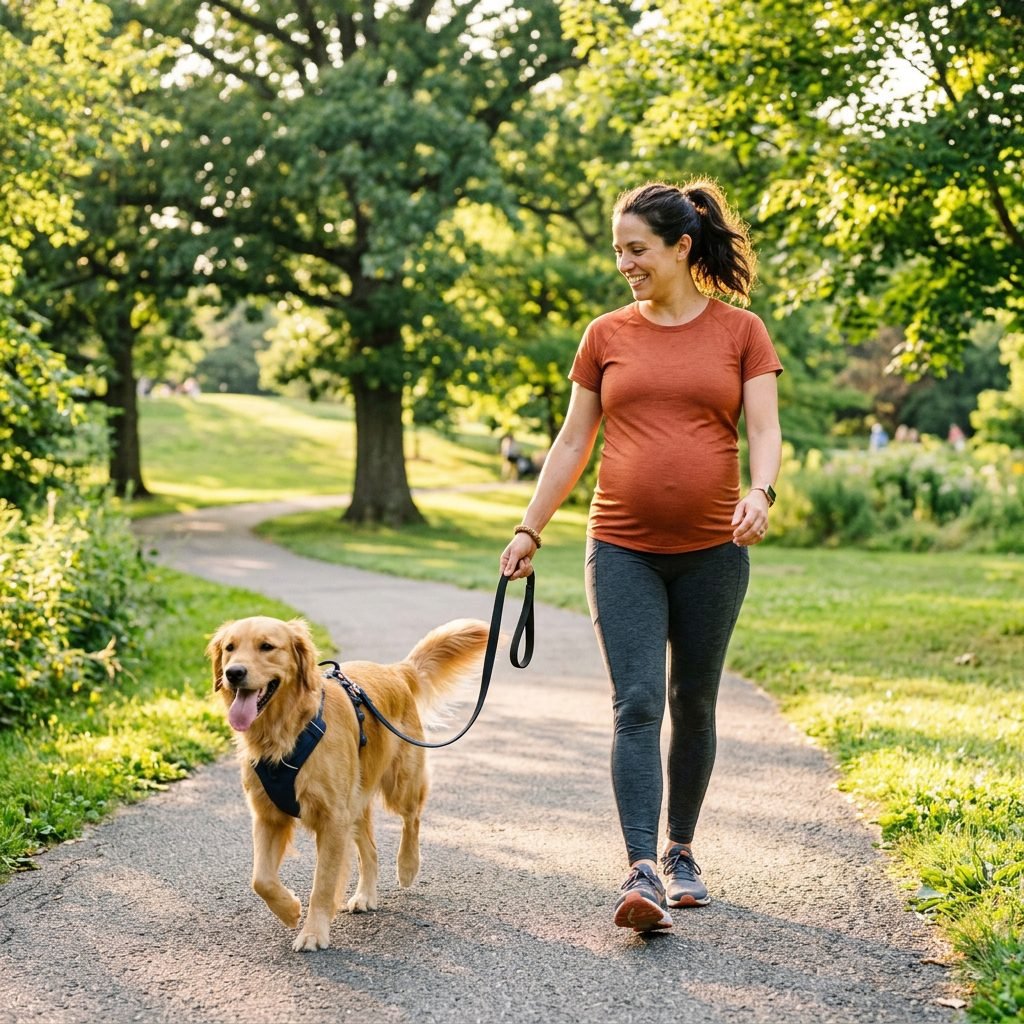
Hello, mama! There is nothing quite like the bond between a woman and her dog, especially when you are preparing to bring a new human into the pack. Your pup has likely been your shadow through the morning sickness and the fatigue, and they still need their daily dose of fresh air and exercise. However, as your belly grows and your center of gravity shifts, that enthusiastic ‘puller’ at the end of the leash can start to feel like a serious safety risk. As a doula, I’ve seen many expectant mothers worry about losing their balance or, heaven forbid, taking a tumble while out for a stroll.
The physical changes of pregnancy—specifically the hormone relaxin—make your joints more mobile and your balance a bit more precarious. When you add a 70-pound Labrador who just saw a squirrel into the mix, the stakes get higher. But don’t hang up the leash just yet! With the right gear, a few adjustments to your walking mechanics, and some ‘sisterly’ advice on dog management, you can continue to enjoy your walks safely until your due date. Let’s dive into how we can protect that precious bump while keeping your furry first-born happy.
Remember, mama: your safety and the safety of your baby always come first. There is no shame in adjusting your routine to fit your changing body.
The Relaxin Factor: Why Your Balance Feels ‘Off’

During pregnancy, your body produces a hormone called relaxin. Its job is exactly what it sounds like: it relaxes your ligaments and joints, particularly in the pelvis, to prepare your body for birth. While this is a miracle of biology, it also means your ankles, knees, and hips are less stable than they used to be. Your center of gravity is also moving forward and upward as your baby grows, which naturally makes you more prone to tripping.
Understanding Your Changing Body
- Joint Laxity: Your ligaments are softer, meaning a sudden jerk from a dog can strain your shoulders or lower back more easily than before.
- Center of Gravity: As your bump grows, your ‘balance point’ shifts. You may find yourself leaning back to compensate, which puts stress on your spine.
- Vision Changes: Believe it or not, some women experience slight changes in depth perception during pregnancy, making uneven sidewalks a bit trickier.
Because of these factors, a dog that pulls isn’t just an annoyance—they are a physical hazard. We need to focus on stability and ‘anchor’ techniques to keep you upright.
Gear Up for Safety: The Best Tools for a Pulling Pup
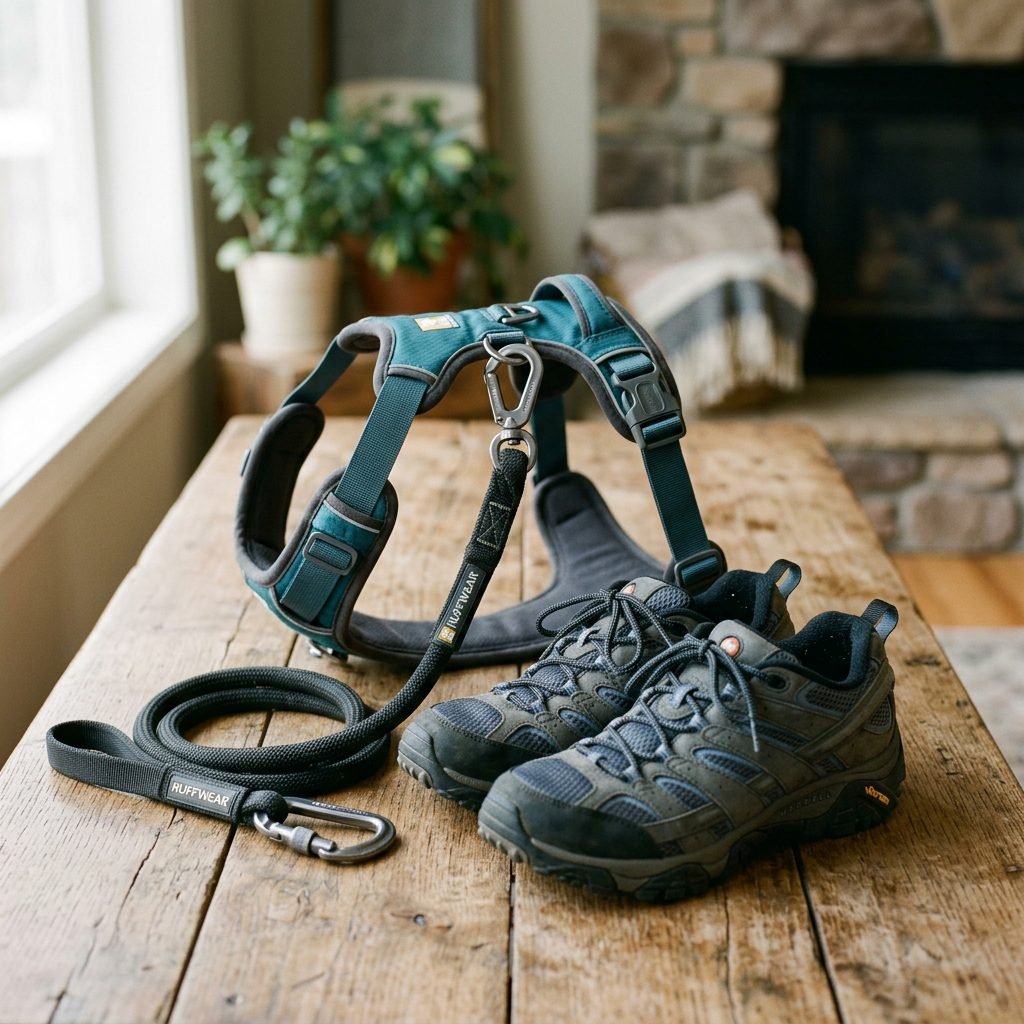
The right equipment can be a total game-changer. If you are still using a standard neck collar for a dog that pulls, you are fighting an uphill battle. Not only is it hard on the dog’s neck, but it also gives you the least amount of control. Here is a breakdown of the gear that will help you maintain your footing.
| Gear Type | Why It’s Good for Pregnancy | Safety Rating |
|---|---|---|
| Front-Clip Harness | Redirects the dog’s momentum back toward you when they pull, preventing forward lunges. | High |
| Hands-Free Waist Leash | Keeps your center of gravity at your hips (your strongest point) rather than pulling on your arms. | Moderate (Use with caution) |
| Head Halter (Gentle Leader) | Gives you control over the dog’s head direction; if they can’t look forward, they can’t pull forward. | High |
| Short Traffic Lead | Keeps the dog right at your side, reducing the ‘sling-shot’ effect of a long leash. | High |
| Retractable Leash | DO NOT USE. These offer zero control and are a major trip hazard for pregnant women. | Dangerous |
I highly recommend the front-clip harness. When the dog pulls, the leash attachment on the chest causes the dog to pivot back toward you. This prevents that sudden ‘snap’ that can pull you off balance. If you choose a waist leash, ensure it has a quick-release buckle in case you need to let go for your safety.
The Prenatal Power Stance: Mastering Your Mechanics
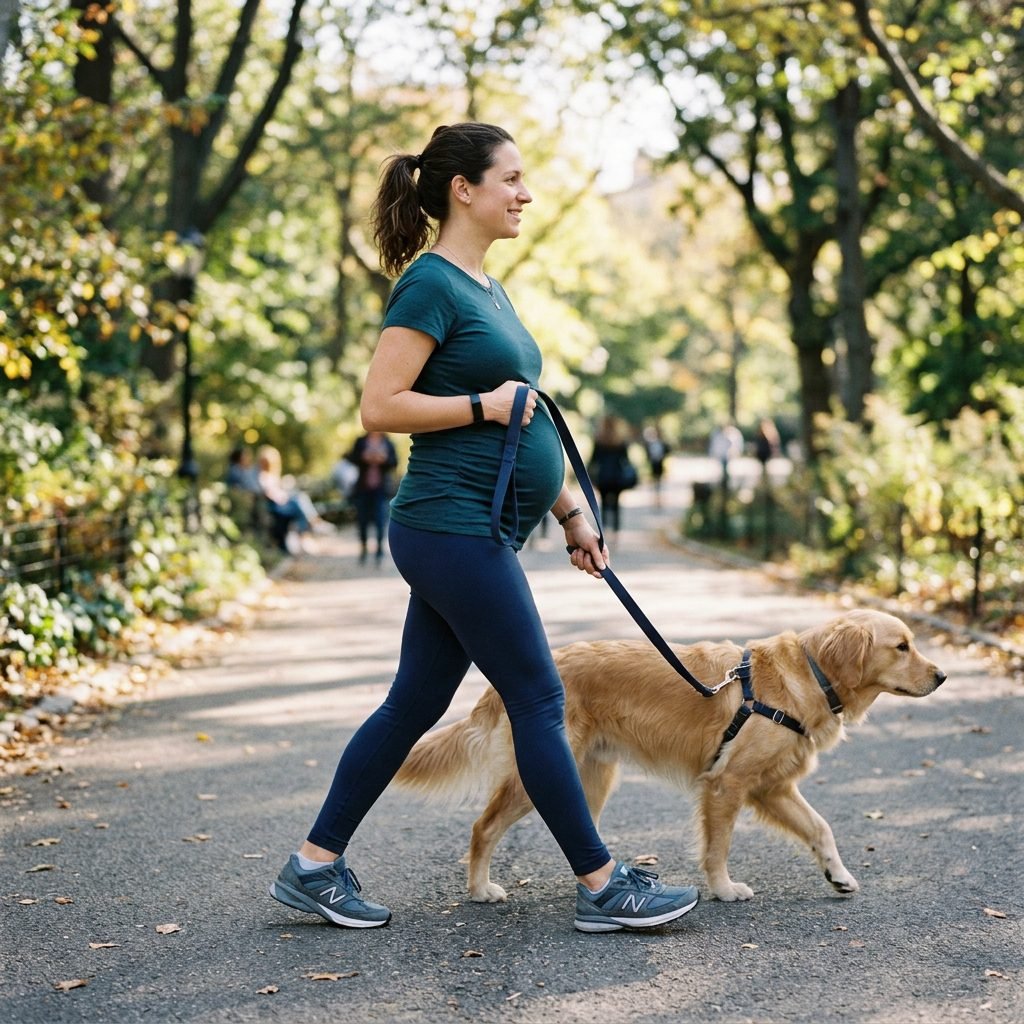
When walking a dog that pulls, your posture is your best defense. We want to avoid being ‘arm-pulled.’ Instead, we want to use our entire body weight as an anchor. Here is how to position yourself for maximum stability:
- Soft Knees: Never lock your knees. Keeping a slight bend allows your legs to act as shock absorbers if the dog suddenly lunges.
- The Low Center: Keep your walking arm tucked close to your side. If your arm is extended, the dog has more leverage to pull you over. If your elbow is tucked into your ribcage (just above the bump), you are much stronger.
- Wide Base: Take slightly wider steps than usual. This ‘penguin walk’ (as we lovingly call it in the doula world) provides a more stable foundation.
- Engage the Core: While you can’t ‘crunch’ your abs right now, you can gently hug your baby toward your spine. This engages your deep transverse abdominis muscles and protects your lower back.
Affirmation: I am strong, I am stable, and I am in control of this walk.
Training Tips: Teaching Your Dog ‘Pregnancy Manners’
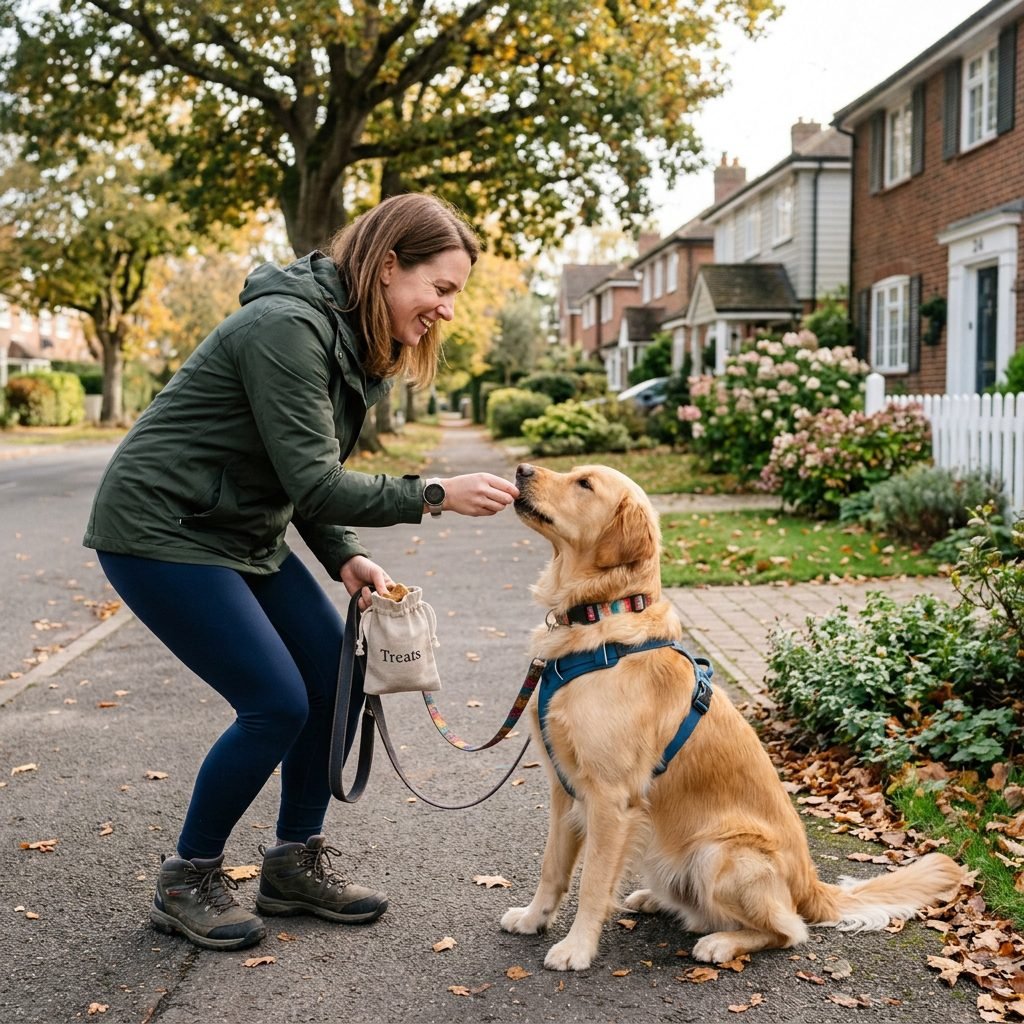
Your dog is smart, and they can sense changes in you! Now is the perfect time to reinforce some basic leash manners. You don’t need to be a professional trainer to implement these three ‘Sisterly’ tricks:
The ‘Be a Tree’ Technique
When your dog pulls, stop walking immediately. Become as still as a tree. Do not move forward until the leash goes slack. This teaches the dog that pulling actually results in zero forward progress. Once they look back at you or step back toward you, praise them warmly and continue.
High-Value Distractions
Carry a small pouch of ‘high-value’ treats (boiled chicken or cheese). If you see a ‘trigger’—like another dog or a squirrel—distract your pup before they react. Use a ‘watch me’ command to keep their eyes on you and their feet on the ground.
The ‘U-Turn’ Maneuver
If you see a situation ahead that looks too chaotic (a group of off-leash dogs or a loud construction site), don’t be afraid to just turn around. A quick 180-degree turn keeps you in control and avoids the risk of a lunging dog altogether.
Navigating the Neighborhood: Avoiding High-Risk Hazards
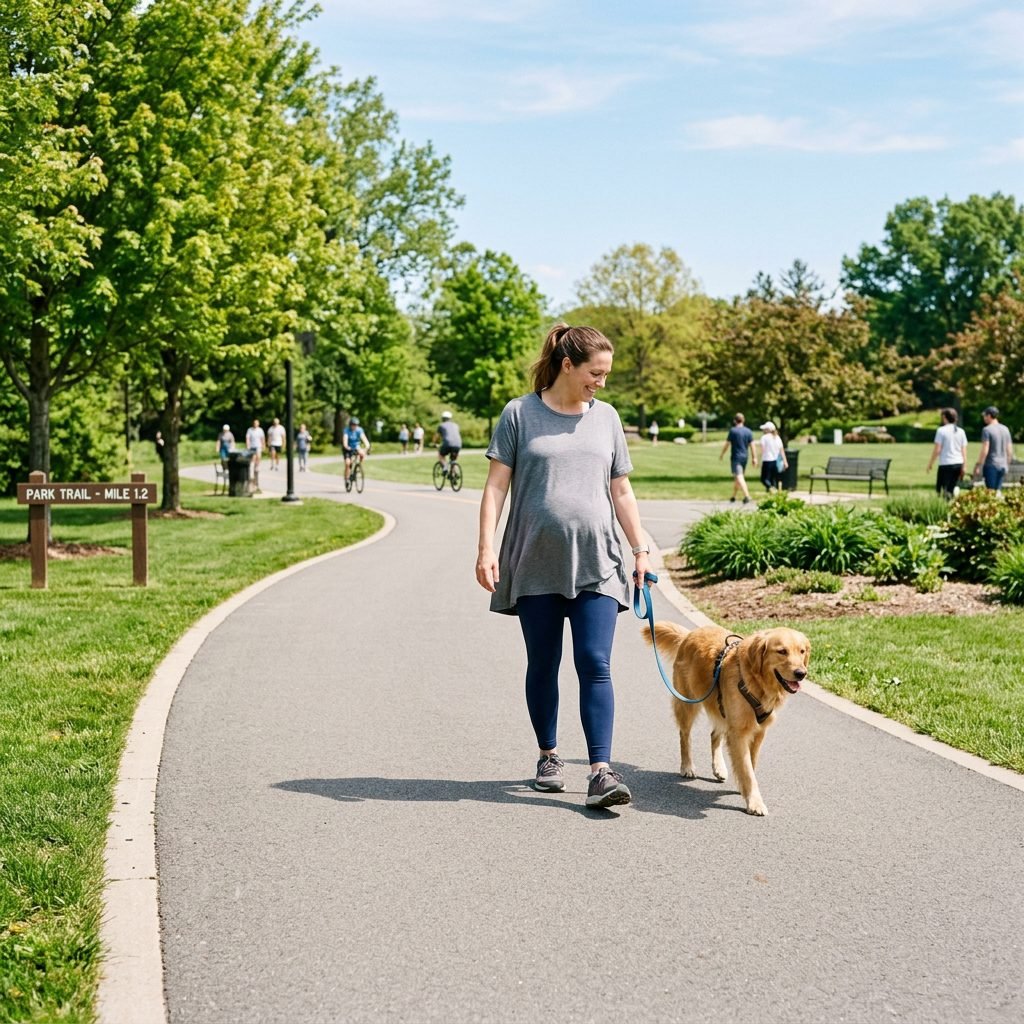
Sometimes, safety is all about the environment. When you are pregnant, your ‘risk assessment’ needs to be a bit higher. Let’s look at what to avoid to ensure you don’t take an accidental spill.
- Uneven Terrain: Stick to paved paths or flat gravel. Avoid hiking trails with loose rocks or slippery mud, especially in the third trimester.
- High-Traffic Times: If your dog is reactive, avoid walking during ‘rush hour’ when everyone else is walking their dogs. Early mornings or mid-afternoons are usually quieter.
- Icy or Wet Conditions: If it has been raining or snowing, the risk of slipping is exponentially higher. This is the time to stay indoors and play ‘find the treat’ instead of going for a walk.
- The ‘Squirrel Zones’: If you know a specific park is crawling with squirrels that send your dog into a frenzy, find a new route for the next few months.
Pro Tip: Always carry your phone in an easy-to-reach pocket (not buried in a bag) just in case you do trip and need to call for a ride home.
Listening to Your Body: When it’s Time to Hand Over the Leash
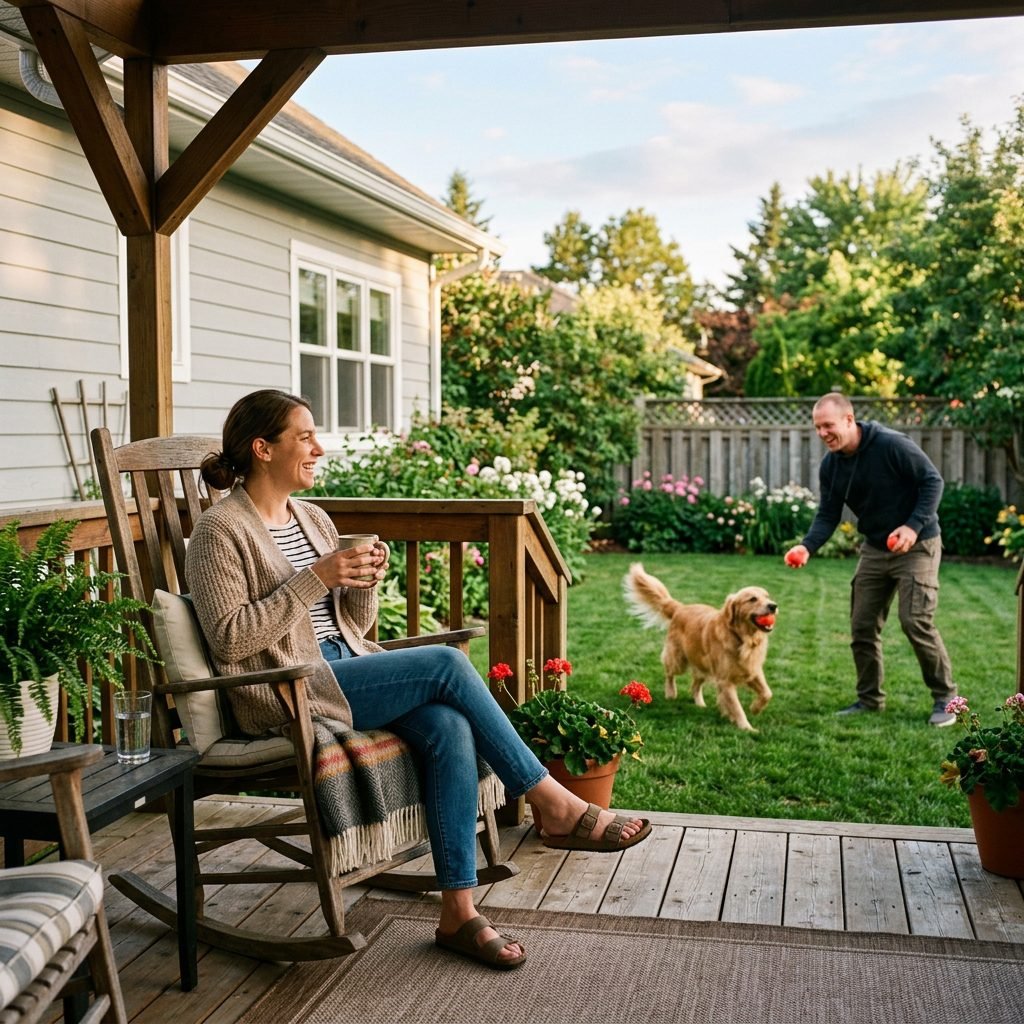
Mama, I want to give you permission right now: It is okay to stop walking the dog. There may come a point in your pregnancy—whether it’s at 28 weeks or 38 weeks—where it simply doesn’t feel safe or comfortable anymore. Pelvic girdle pain (SPD), heavy Braxton Hicks, or extreme fatigue are all valid reasons to delegate this task.
Options for When You Can’t Walk the Dog
- Hire a Dog Walker: Even twice a week can take the pressure off you.
- Enlist Your Partner or Friend: Make the dog walk their ‘special time’ together.
- Backyard Play: If you have a yard, a game of fetch or using a ‘flirt pole’ can burn off just as much energy as a walk.
- Mental Stimulation: Snuffle mats and puzzle toys can tire a dog out mentally, which is often more effective than a walk for a pulling dog.
If you feel any sharp pains, dizziness, or if the dog pulls you and you feel a ‘tweak’ in your belly or back, stop immediately. Your body is doing the hard work of growing a human; it’s okay to outsource the dog walking!
Conclusion
You’ve Got This, Mama!
Walking your dog is a beautiful way to stay active and prepare your body for labor, but it should never feel like a source of anxiety. By switching to a front-clip harness, mastering your power stance, and being selective about your walking routes, you can keep those tail-wags going safely. Trust your intuition—if a walk feels too risky today, stay home and snuggle instead. Your pup will understand, and your body will thank you. Stay safe, stay stable, and enjoy these final months of ‘quiet’ time with your first fur-baby!