
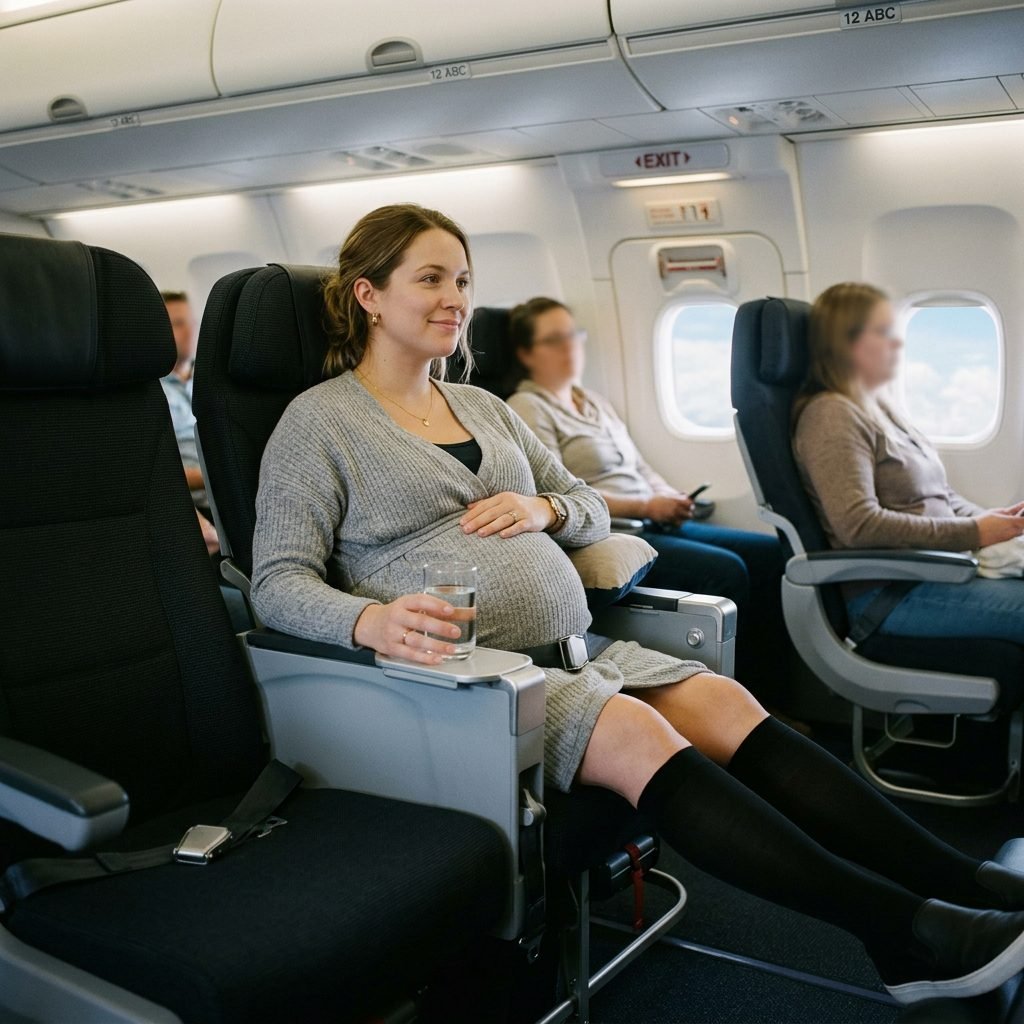
Flying Heavily Pregnant? 7 Strict Rules Airlines Won’t Tell You
Welcome, Mama-to-Be! Let’s Get You Cloud-Ready
Oh, sweet sister, I see you. You’re balancing that beautiful, heavy bump, perhaps a bit of lower back ache, and the excitement (or necessity) of a flight. Whether it’s a final ‘babymoon’ before your world changes forever or a cross-country trip for work, flying while ‘heavily’ pregnant—typically defined as the third trimester—is a whole different ballgame than your usual travel. As your doula and sister-in-arms, I want you to feel empowered, not overwhelmed. Airlines have their standard policies, but there is a layer of ‘unspoken’ reality that they rarely mention in the fine print. Today, we are going to pull back the curtain on the 7 strict rules and physiological realities of high-altitude travel. My goal is to ensure you and your little one stay hydrated, circulated, and deeply comfortable from takeoff to touchdown. You aren’t just a passenger; you are carrying the most precious cargo in the world, and you deserve a first-class experience in care, no matter which cabin you’re sitting in.
Remember, Mama: Your body is already doing the hard work of growing a human. Air travel is just a temporary environment—we are going to make it work for you, not against you.
1. The ‘Invisible’ 28-Week Documentation Trap
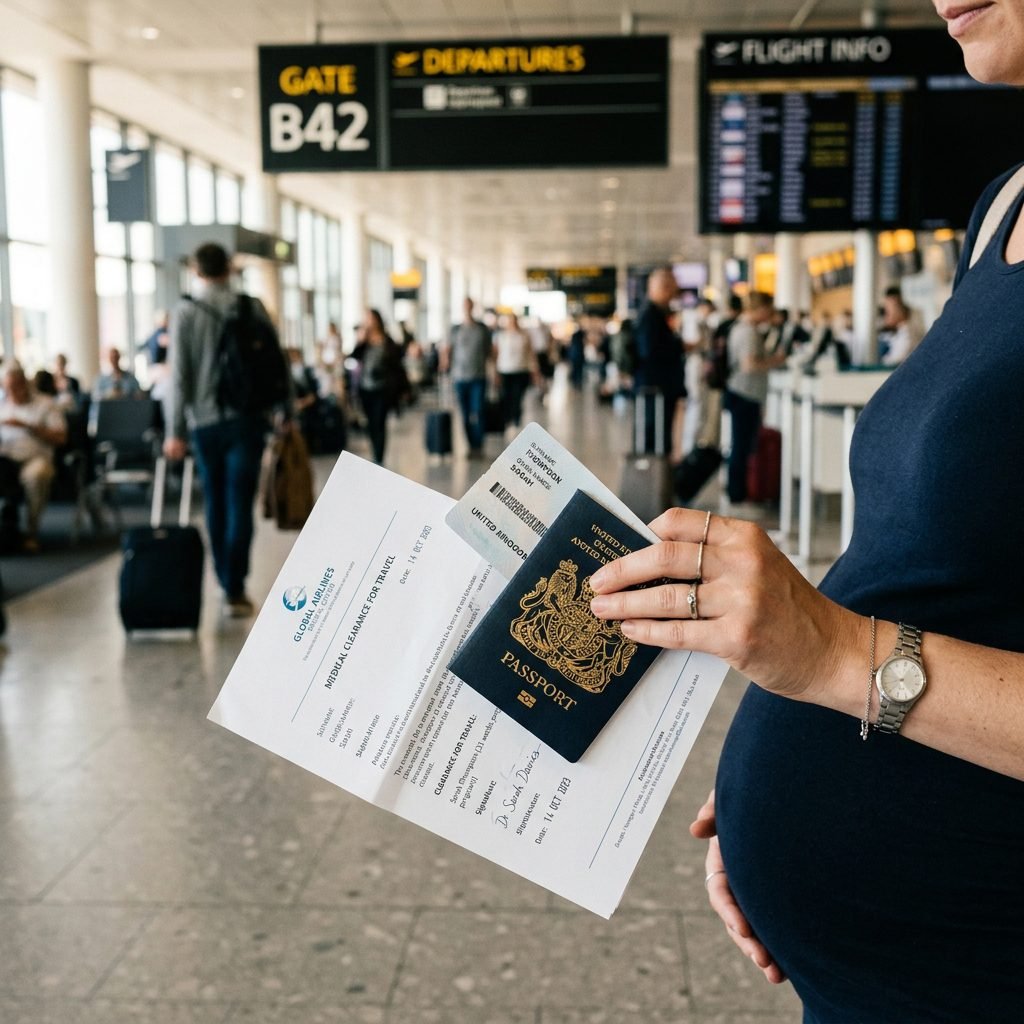
The Rule They Hide in the Fine Print
Most airlines will tell you that you can fly up to 36 weeks for domestic flights and 32 weeks for international ones. However, what they often fail to mention is the ‘gray zone’ that begins at 28 weeks. Many gate agents are trained to look for ‘visibly pregnant’ passengers. If you look like you might be close to your due date, they have the authority to deny boarding unless you possess a specific medical clearance.
The Doula’s Solution
Don’t just bring a generic note. You need a letter on your OB-GYN or Midwife’s letterhead that includes:
- Your exact due date.
- A statement that you are in good health and have a low-risk pregnancy.
- Explicit permission to fly on the specific dates of your itinerary.
| Pregnancy Phase | Airline Requirement (Typical) | Doula’s Recommendation |
|---|---|---|
| 0-27 Weeks | Usually no documentation needed. | Keep a digital copy of your prenatal records. |
| 28-35 Weeks | May require a ‘Fit to Fly’ letter. | Carry a physical, signed letter dated within 7 days. |
| 36+ Weeks | Often restricted or banned. | Avoid flying unless medically necessary. |
2. The Silent Risk: DVT and the Compression Protocol
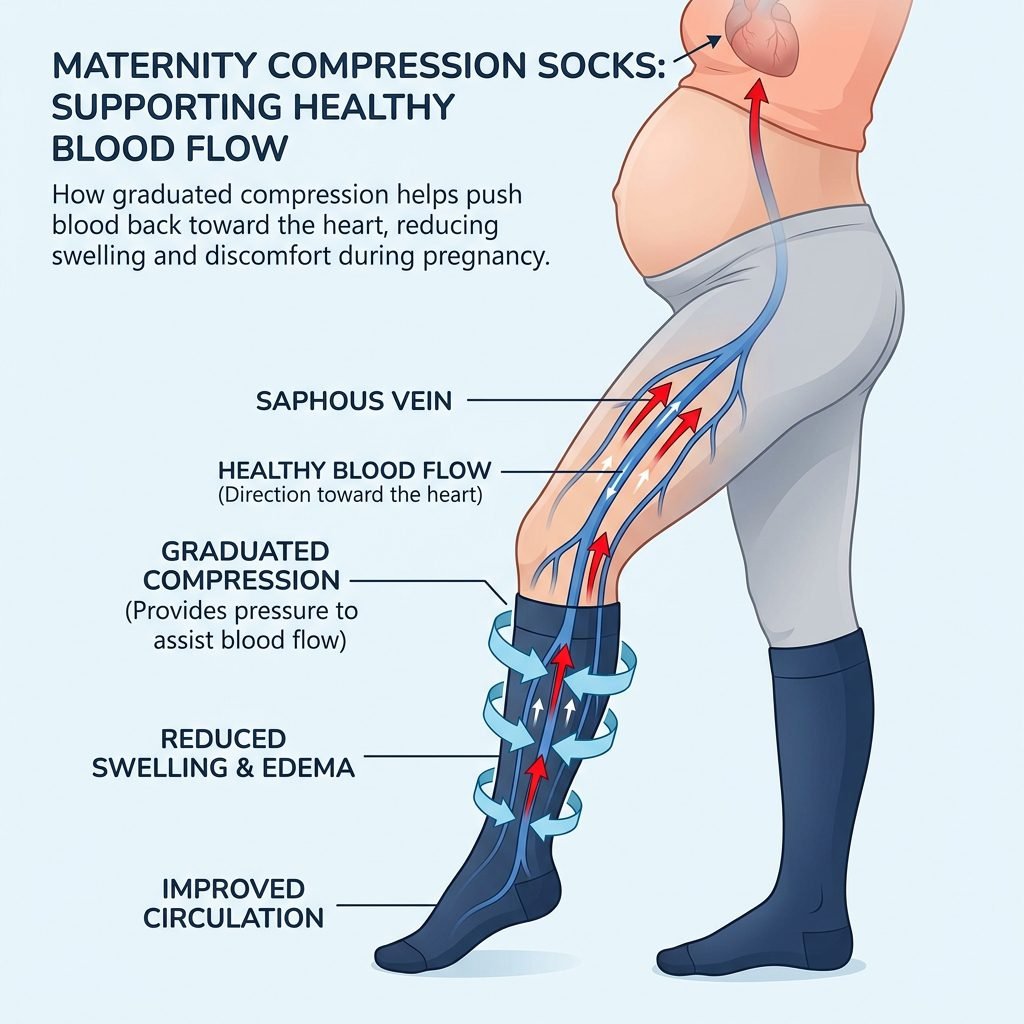
Why Your Blood Flow Changes at 30,000 Feet
Airlines won’t explicitly warn you about Deep Vein Thrombosis (DVT), but pregnancy already puts you at a 5x higher risk for blood clots. Combine that with the cramped seating and the pressure changes of a cabin, and the risk climbs. This isn’t to scare you, but to prepare you. The ‘rule’ here is that your circulation needs active assistance.
The Compression Secret
Don’t settle for ‘support socks’ from the drugstore. You need grade 1 or grade 2 (20-30 mmHg) medical-grade compression stockings. Put them on before you even get out of bed on the morning of your flight. They prevent blood from pooling in your ankles and keep that vital oxygen flowing to your placenta.
Mama Tip: If you feel a sudden, sharp pain in your calf or see significant swelling in only one leg after landing, seek medical attention immediately. Safety first, always.
3. The ‘Aisle Seat’ Mandate and Bladder Physics
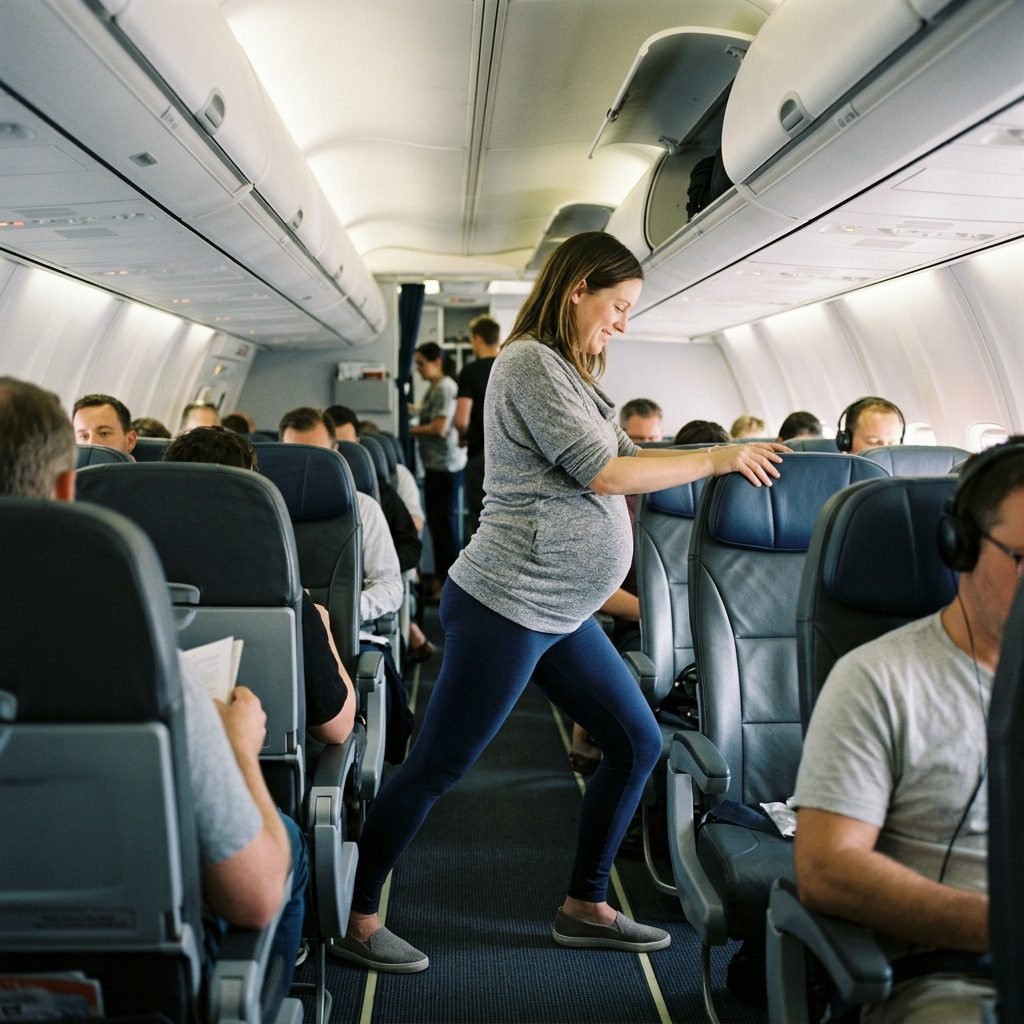
The Window Seat is a Trap
We all love the view, but when you are heavily pregnant, the window seat is your enemy. Airlines won’t tell you that the ’30-minute rule’ is vital: you should be standing up and moving every 30 to 60 minutes. If you are tucked into a window seat, you are less likely to move because you don’t want to disturb your neighbors. This leads to stasis and discomfort.
Strategic Seating
Always book an aisle seat. This gives you the freedom to reach the lavatory (which you’ll visit often as the baby presses on your bladder) and to perform ‘aisle yoga.’
Doula-Approved In-Flight Moves
- Ankle Circles: Rotate 10 times clockwise, 10 times counter-clockwise.
- Point and Flex: Wake up those calf muscles!
- Shoulder Rolls: Release the tension from carrying that extra weight.
4. Altitude-Induced Braxton Hicks & The Hydration Gap
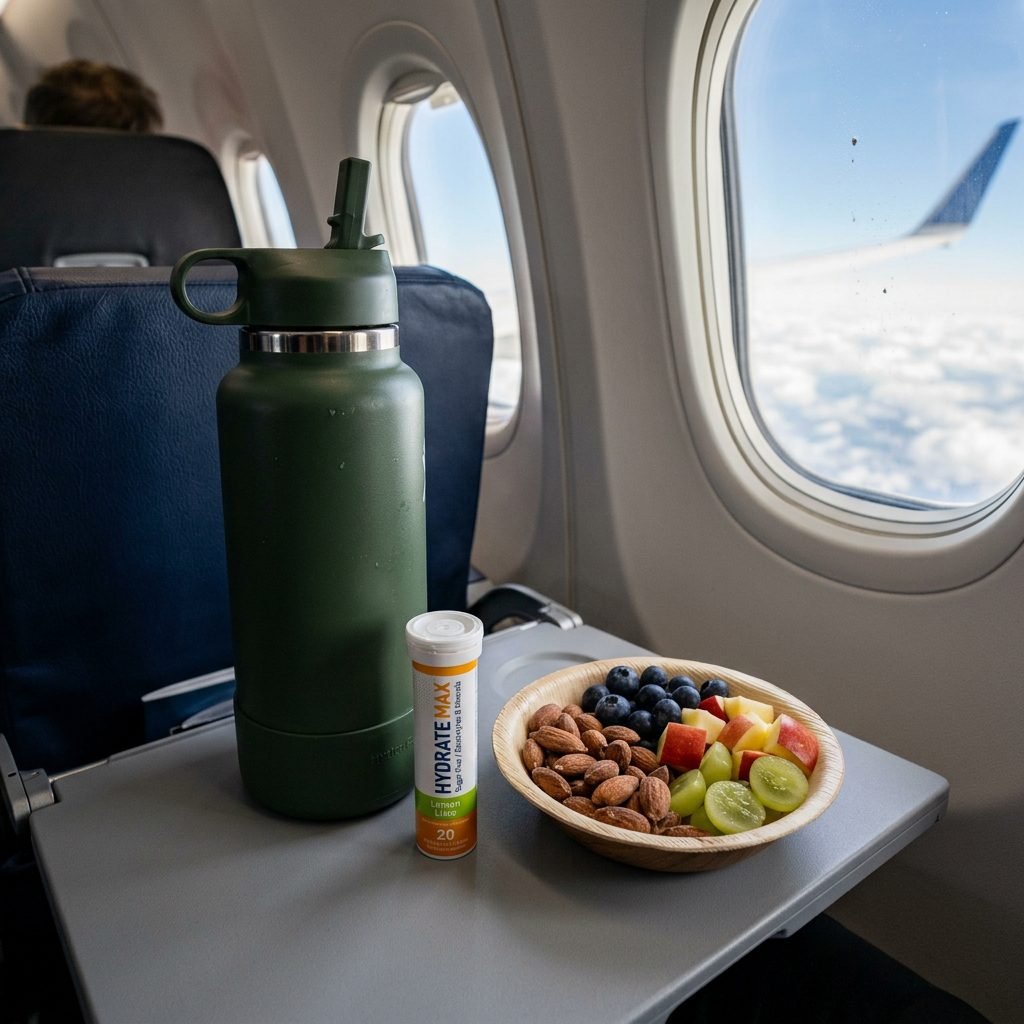
The Physics of Humidity
Did you know airplane cabins often have humidity levels lower than 20%? This extreme dryness causes rapid dehydration. For a pregnant mama, dehydration is a leading trigger for Braxton Hicks contractions. The airline provides tiny 4-ounce cups of water, but that is nowhere near enough.
The Hydration Strategy
You must drink at least 8-10 ounces of water for every hour you are in the air. Avoid caffeine and high-sodium airport snacks, which pull more water from your cells. Electrolytes are your best friend here—drop a hydration tablet into your water bottle to keep your minerals balanced and those ‘practice contractions’ at bay.
| What to Sip | What to Skip |
|---|---|
| Filtered Water with Lemon | Caffeinated Coffee/Tea |
| Coconut Water (Electrolytes) | Sugary Sodas |
| Red Raspberry Leaf Tea (Iced) | Alcohol (Absolute No) |
5. The Seatbelt Placement: Protecting the Bump
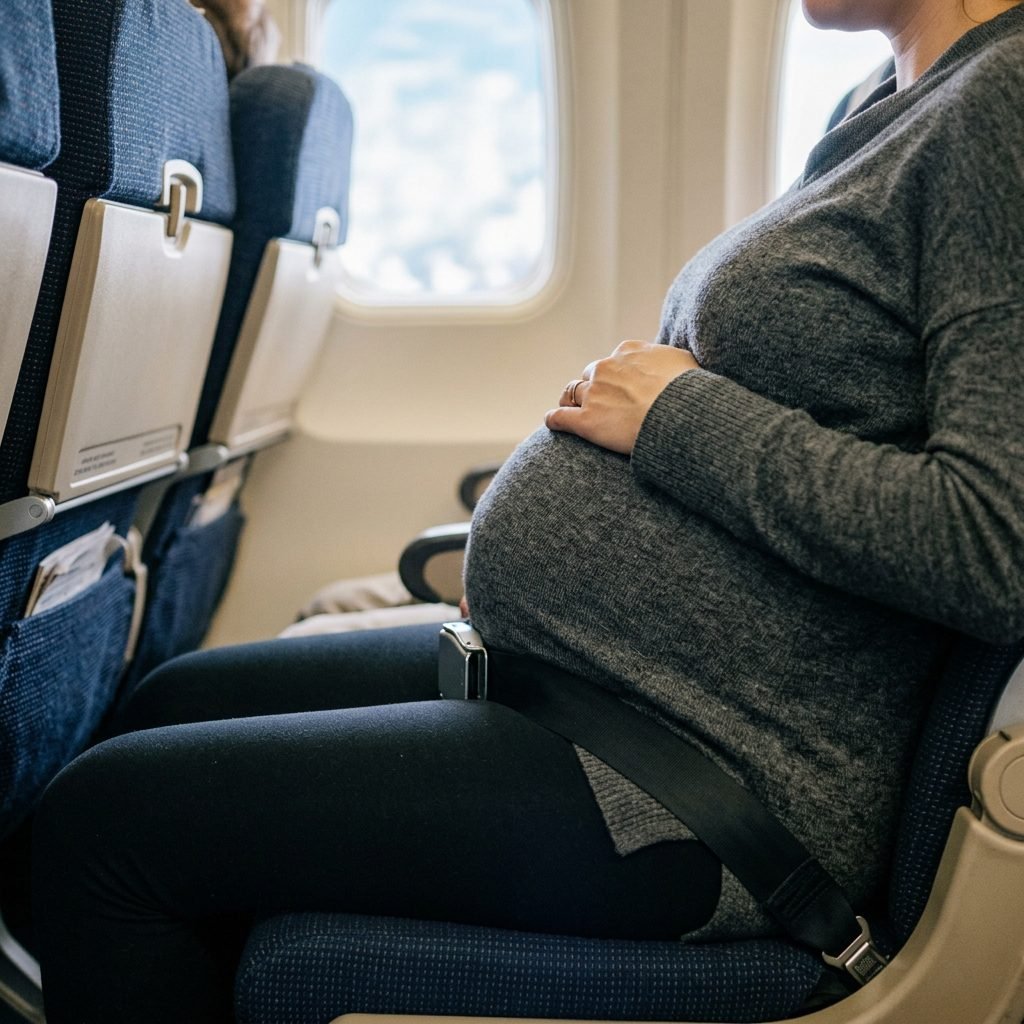
The Safety Misconception
Many women instinctively want to loosen the seatbelt or place it over the widest part of their belly. Airlines rarely give a specific ‘pregnancy briefing,’ but the placement of that belt is critical for fetal safety during turbulence. Never place the belt across your midsection or above the bump. If the plane hits a sudden pocket of air, the pressure on the placenta could be dangerous.
The Proper Fit
Position the seatbelt low, under your abdomen, across your pelvic bones. It should feel snug but not restrictive. If the belt is too short, don’t be shy—ask the flight attendant for a seatbelt extender. It is a common request and will make your flight significantly more comfortable.
Affirmation: I am safe, my baby is safe, and we are traveling in a bubble of peace.
6. Radiation, Scanners, and the ‘Pat-Down’ Choice
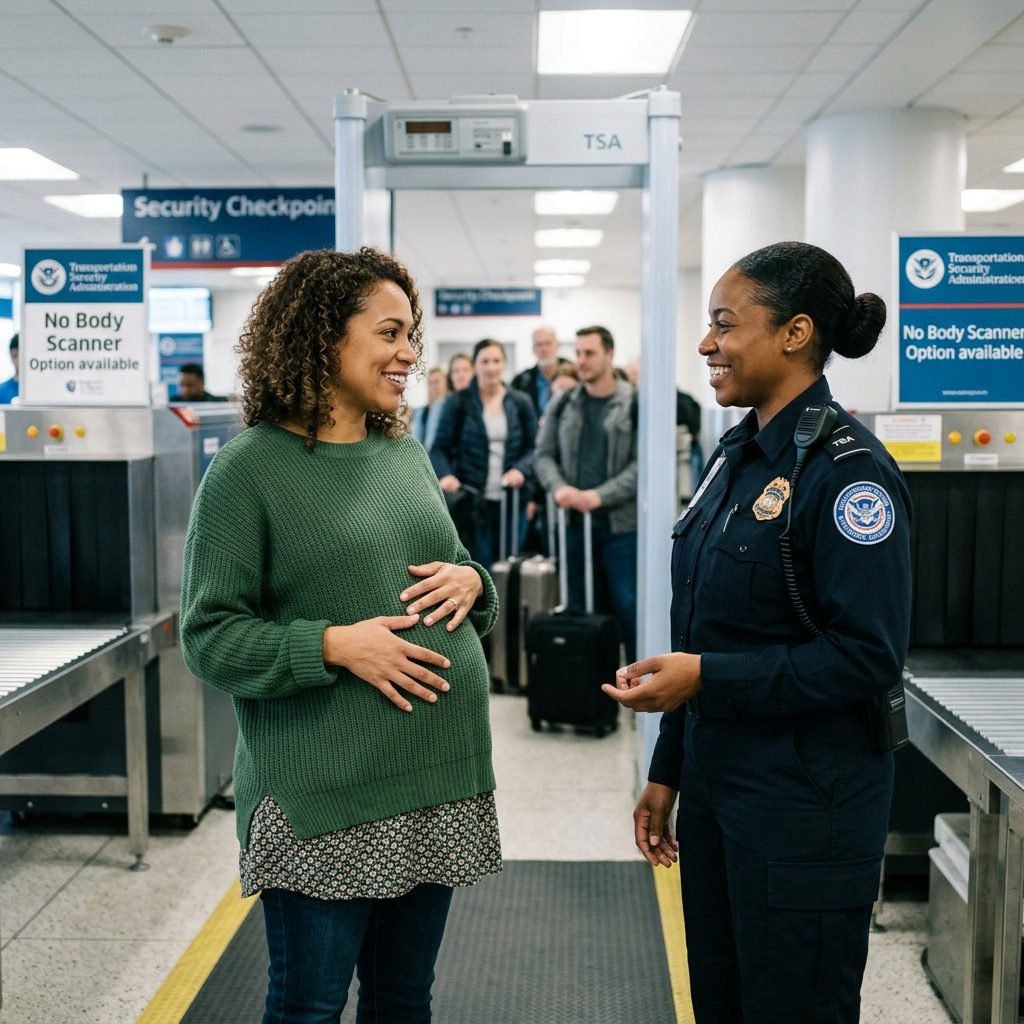
Demystifying Airport Security
Airlines and airport security (TSA) often insist that Advanced Imaging Technology (AIT) scanners are safe. While the science generally supports this, many expectant mothers feel a deep ‘gut’ hesitation about unnecessary radiation. You have a legal right that they don’t always advertise: The Right to a Manual Pat-Down.
Advocating for Yourself
If you feel any anxiety about the scanners, simply tell the agent, ‘I am pregnant and I would like a female pat-down, please.’ You do not need to justify your choice. It may take an extra 10 minutes, so arrive early, but the peace of mind is worth the wait.
7. The Emergency Landing Reality & Insurance Gaps

The ‘Hidden’ Travel Insurance Rule
This is the rule that breaks my heart when mamas find out too late. Most standard travel insurance policies exclude claims related to ‘normal pregnancy’ or ‘childbirth’ after a certain week (often 24 or 26 weeks). If you go into preterm labor in a foreign city or mid-flight, the cost of an emergency landing and neonatal intensive care can be hundreds of thousands of dollars.
The Doula’s Safety Check
Before you fly, call your insurance provider. Ask specifically: ‘Am I covered for emergency delivery and neonatal care in my destination?’ If the answer is no, look for a specialized maternal travel rider. Also, research the nearest Level III or IV NICU at your destination. It’s better to have the info and not need it than to need it and not have it.
Conclusion
Safe Travels, Beautiful Mama
You are now armed with the ‘insider’ knowledge that airlines don’t always make obvious. Remember, flying while heavily pregnant is an exercise in advocacy and self-care. Listen to your body—if you feel tired, rest. If you feel stiff, move. If you feel thirsty, drink. You are doing a magnificent job, and this journey is just one small part of the incredible adventure of motherhood. Pack your compression socks, grab your medical note, and breathe deep. You’ve got this!