
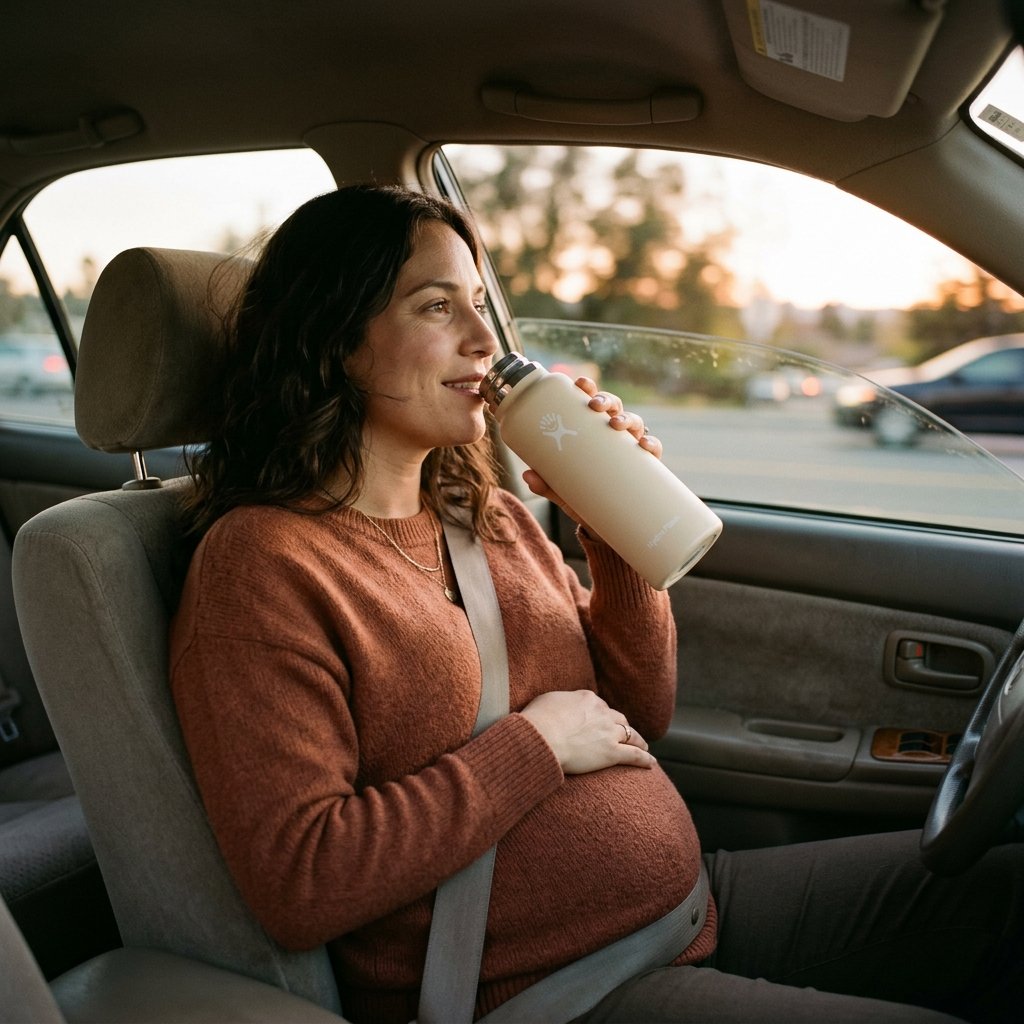
Suddenly Car Sick? How To Survive The Commute Without Throwing Up
Oh, mama. I see you. You have finally managed to drag yourself out of bed, navigated the exhaustion of the first trimester, and put on real pants. You grab your keys, step into your car, and before you have even pulled out of the driveway, it hits you. The sudden, overwhelming wave of nausea. The unmistakable, deeply unpleasant sensation that your breakfast is about to make a reappearance. If you are suddenly finding yourself intensely car sick during pregnancy, please know this first: you are absolutely not alone, and you are not going crazy.
As a doula, one of the most common, yet least talked about, complaints I hear from expectant mothers is how the daily commute has suddenly transformed into an extreme endurance sport. The car—once a quiet sanctuary for listening to podcasts and drinking your morning tea—now feels like a rolling torture chamber of weird smells, terrifying bumps, and stop-and-go misery.
Pregnancy motion sickness is a very real, very frustrating collision of hormones, heightened senses, and inner-ear confusion. But we are going to get through this together. Take a deep breath (maybe not through your nose if the car smells weird today), and let’s dive into exactly why this is happening and, more importantly, a comprehensive, step-by-step doula guide to surviving your commute without throwing up.
Why Your Commute Suddenly Feels Like a Rollercoaster

Before we can fix the problem, we need to understand the root cause. Why does a route you have driven a thousand times suddenly make you feel like you are on a turbulent boat ride? The answer lies in the beautiful, chaotic symphony of your pregnancy hormones and how they rewire your body’s sensory processing.
The Hormonal Heavy Hitters
During the first trimester, your body is flooded with Human Chorionic Gonadotropin (hCG) and estrogen. These hormones are essential for maintaining your pregnancy, but they are also the primary culprits behind morning sickness. Alongside them, progesterone is working overtime to relax your smooth muscles (to make room for your growing baby). Unfortunately, this also relaxes the valve at the top of your stomach, making heartburn and nausea much more prevalent.
The Vestibular Mismatch
Motion sickness occurs when there is a disconnect between what your eyes see and what your inner ear (the vestibular system) feels. When you are pregnant, your vestibular system can become hyper-sensitive. Your body is already working overtime to pump extra blood and oxygen; adding the physical sensation of a moving vehicle to this delicate balance often tips the scales into full-blown nausea.
The Olfactory Overload
Let’s talk about your superpower: pregnancy smell. Your olfactory nerves are highly sensitized right now. The faint smell of leather seats, the lingering scent of last week’s drive-thru fries, or the exhaust from the truck in front of you can trigger your gag reflex instantly. When your brain registers a smell as “offensive,” it sends a distress signal to your stomach.
“Your body is not fighting you; it is furiously building a human being from scratch. Give yourself grace when the simple act of riding in a car feels like a monumental task.”
The Pre-Commute Prep: Setting Yourself Up for a Puke-Free Ride
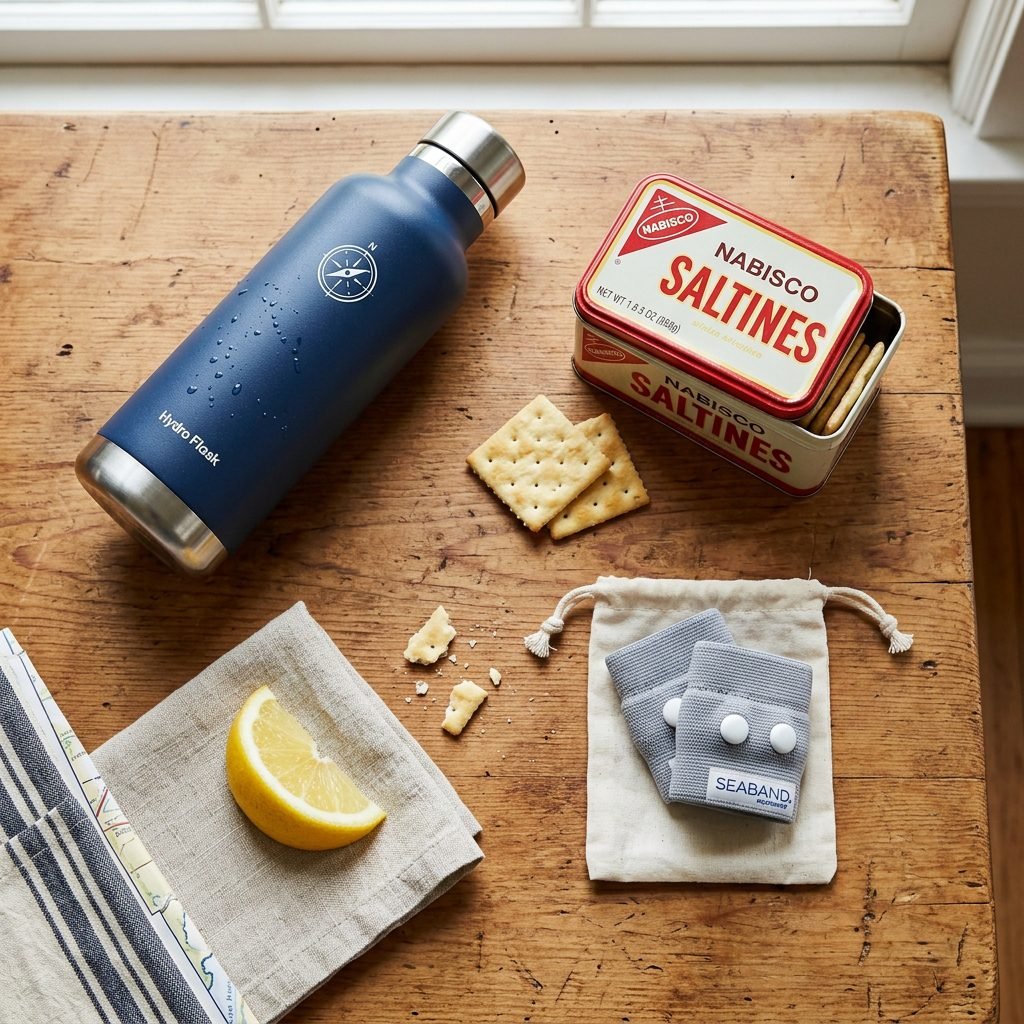
Surviving the commute starts long before you turn the ignition. The way you wake up, what you put in your stomach, and how you prepare your environment can make or break your journey. Let’s create a protective bubble around your morning routine.
The Nightstand Strategy
An empty stomach is a nauseous stomach. When your stomach is empty, the gastric acids have nothing to digest, which exacerbates the feeling of sickness. Before your feet even hit the floor in the morning, you need a bland base.
- Keep simple carbs nearby: Saltines, oyster crackers, or plain rice cakes on your nightstand.
- Eat before moving: Nibble on 2-3 crackers while you are still lying down. Wait 10-15 minutes before sitting up.
- Hydrate strategically: Sip cold water. Room temperature water can sometimes trigger the gag reflex in early pregnancy.
The 30-Minute Rule
Try to eat a small, protein-rich snack about 30 minutes before you get into the car. A piece of whole-wheat toast with a thin layer of almond butter, or a hard-boiled egg if you can stomach it, will help stabilize your blood sugar. Avoid greasy, highly acidic, or overly sweet foods before your drive.
What’s Safe vs. What to Avoid
To keep things simple, I have created a cheat sheet for your morning routine. Stick to the “Safe” column to give your stomach the best chance of a peaceful commute.
| Category | What to Embrace (Safe & Soothing) | What to Avoid (Nausea Triggers) |
|---|---|---|
| Beverages | Ice-cold water, ginger tea, electrolyte sips | Hot coffee, acidic orange juice, dairy milk |
| Breakfast | Dry toast, plain oatmeal, crackers, almonds | Greasy breakfast sandwiches, heavy pastries |
| Car Environment | Fresh air (windows cracked), cool AC | Heated seats, strong air fresheners, perfumes |
| Visuals | Looking at the horizon, sunglasses | Scrolling on your phone, reading emails |
In-Transit Tactics: How to Hack Your Car Environment

You have prepped your stomach, and now it is time to face the car. Whether you are driving yourself or sitting in the passenger seat, you have control over your micro-environment. Here is how to hack your ride for maximum comfort.
Positioning is Everything
If you are not driving, you absolutely must claim the front passenger seat. The back seat is a one-way ticket to motion sickness because your visual field is restricted, increasing the sensory mismatch we talked about earlier. If you are driving, ensure your seat is adjusted so you have a clear, commanding view of the road ahead. Keep your eyes locked on the horizon line—the furthest stationary point you can see.
Temperature and Airflow Control
Heat is the enemy of nausea. When you start to feel sick, your body temperature often rises, leading to a hot flash or cold sweat. Combat this proactively:
- Blast the AC: Aim the air conditioning vents directly at your face and chest. The sensation of cold air can interrupt the nausea signals traveling to your brain.
- Crack a window: Even in the dead of winter, cracking a window for just two minutes to let fresh, moving air circulate can clear out stagnant smells and reset your senses.
- Turn off the heated seats: As cozy as they are, warming your core can quickly make you feel woozy.
The Power of Olfactory Distraction
Since your nose is currently operating like a bloodhound’s, we need to trick it. Keep an “emergency scent” in your center console. When you smell something offensive (like exhaust or old fast food), immediately counteract it.
- Fresh Lemons: Keep a fresh lemon wedge in a small Tupperware container. Scratching the rind and sniffing it provides an instant, bright, acidic scent that cuts through nausea.
- Peppermint Essential Oil: Place a single drop of pregnancy-safe peppermint oil on a cotton ball and keep it in your car’s cup holder. (Do not apply undiluted oils directly to your skin).
- Alcohol Prep Pads: This is an old nursing trick! Sniffing a small isopropyl alcohol prep pad for just a few seconds can acutely interrupt the nausea reflex.
Grounding Breathwork
When the wave of nausea hits, your heart rate spikes and anxiety sets in, which only makes the nausea worse. Use this simple Box Breathing script to ground your nervous system.
The Commute Box Breath:
1. Inhale deeply through your nose for a count of 4 seconds.
2. Hold that breath gently at the top for 4 seconds.
3. Exhale slowly through pursed lips (like blowing through a straw) for 4 seconds.
4. Hold the empty breath at the bottom for 4 seconds.
Repeat until the wave passes. You are safe. You are okay.
Doula-Approved Remedies to Keep Down Your Breakfast

Sometimes, environmental hacks aren’t quite enough, and you need to bring in the reinforcements. Over the years, I have helped countless mamas build an arsenal of safe, effective remedies to combat commute nausea. Here are the heavy hitters you should consider adding to your daily routine.
Acupressure and Sea-Bands
Acupressure has been used for centuries to relieve nausea, and modern science backs it up. The magic spot is the P6 (Neiguan) point. To find it, place three fingers on the inside of your wrist, just below the crease. The P6 point is right under your index finger, between the two central tendons.
You can massage this point manually, or invest in a pair of Sea-Bands (elastic wristbands with a small plastic nub that applies constant pressure to the P6 point). Put these on before you get in the car. Many mothers swear by them as a totally drug-free way to survive the drive.
The Magic of Ginger
Ginger is the undisputed queen of natural nausea relief. It contains compounds called gingerols and shogaols, which help speed up stomach emptying and reduce inflammation in your gut. Keep a variety of ginger products in your car:
- Ginger Chews: Great for a slow release of flavor.
- Hard Ginger Candies: Good for keeping your mouth busy and producing saliva (which neutralizes stomach acid).
- Ginger Capsules: If you cannot stand the taste of ginger, ask your provider about taking a pregnancy-safe ginger supplement with your breakfast.
Sour and Tart Candies
There is a reason “Preggie Pops” are so incredibly popular. The tart, sour flavor profiles (like sour apple, lemon, and tangerine) stimulate saliva production and distract the brain’s sensory processing from the feeling of nausea. Keep a tin of sour lemon drops in your glove box for immediate relief when a wave hits.
Vitamin B6 and Unisom
If natural remedies are not cutting it, it might be time to talk to your OB-GYN or midwife about the B6/Unisom combination. The American College of Obstetricians and Gynecologists (ACOG) frequently recommends a combination of Vitamin B6 (Pyridoxine) and Doxylamine (Unisom SleepTabs) as a first-line pharmacological treatment for morning sickness. Always consult your healthcare provider before starting any new medication, even over-the-counter ones, to get the correct dosage and timing for your specific body.
The “Emergency Pull-Over” Protocol: What to Do When It Happens
Sister, let’s have a moment of brutal honesty. Despite all the preparation, the crackers, the AC blasting, and the ginger chews, there may come a day when you simply cannot fight it anymore. The wave crests, and you know it is happening. First rule: There is zero shame in this game. Your body is doing something incredibly taxing. If you need to throw up, you throw up.
The key to surviving this without a complete breakdown is having an “Emergency Pull-Over Protocol” ready to go.
Step 1: Safely Pull Over
Do not try to tough it out while merging onto the highway. Put your blinker on, pull onto the shoulder or into a parking lot, put the car in park, and turn on your hazard lights. Your safety and your baby’s safety are the only things that matter right now.
Step 2: Deploy the “Throw-Up Kit”
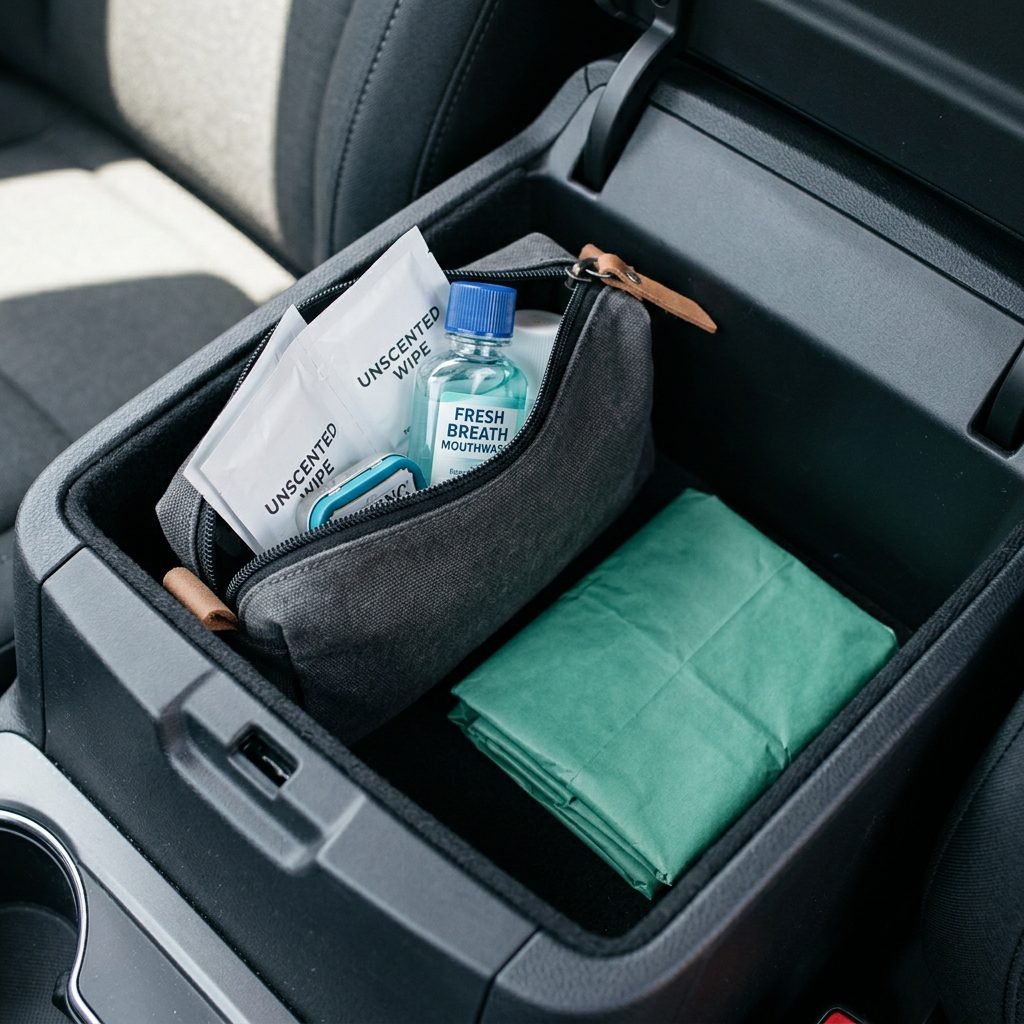
Every pregnant woman should have a dedicated, easily accessible emergency kit in her car. Keep this in the passenger seat or the center console, NOT the trunk. Your kit should include:
- Medical-grade emesis bags: These are the blue or green bags with the hard plastic rings around the top that they use in hospitals. They are cheap on Amazon, leak-proof, twist to seal, and completely eliminate the stress of aiming into a flimsy grocery bag.
- Unscented baby wipes: For cleaning your face and hands immediately after.
- A small bottle of alcohol-free mouthwash: To rinse the acid out of your mouth. (Do not brush your teeth immediately after throwing up, as the stomach acid softens your enamel and brushing can cause damage. Just rinse!)
- Mints or mild gum: To freshen your breath and reset your palate.
- A plastic bag: To tie up the used emesis bag and wipes until you find a trash can.
Step 3: The Recovery Reset
Once it is over, take a moment. Do not immediately throw the car in drive. Wipe your face, rinse your mouth, and recline your seat for a minute. Take a sip of your ice-cold water. Remind yourself that the worst part is over, and you usually feel a sense of relief after being sick. Give yourself a little grace, take three deep breaths, and when you feel steady, continue your drive.
Conclusion
Navigating the daily commute while battling pregnancy nausea is a true test of endurance, mama. It is exhausting, it is messy, and some days it feels completely unfair. But please remember this: you are doing an incredibly hard, beautiful thing. Every single day you get into that car, you are showing up for your life, your career, and your growing baby.
Equip yourself with your crackers, your icy water, your acupressure bands, and your emergency kit. Hack your environment, advocate for your comfort, and never feel ashamed if you need to pull over and take a minute for yourself. This season of intense nausea is temporary. The hormones will eventually level out, the car will stop smelling like a medieval torture chamber, and you will get your commute back.
Until then, take it one mile, one breath, and one ginger chew at a time. I am so proud of you. You’ve got this.