

Ears Clogged Shut? Why Pregnancy Causes Hearing Loss (Patulous Eustachian Tube)
Welcome, Mama. Let’s Take a Deep Breath Together
Mama, if you have found your way to this article, I want to start by taking a deep, grounding breath with you. You are likely feeling incredibly frustrated, disoriented, and maybe even a little bit scared. You are trying to enjoy the beautiful journey of pregnancy, but instead, you are dealing with a bizarre, maddening symptom: your ears feel completely clogged shut, you can hear your own breathing echoing loudly in your head, and your voice sounds like you are trapped underwater. You might even hear your own heartbeat or the sound of your joints moving. It is a sensory overload that no one warned you about in the pregnancy books.
As a doula and maternal wellness expert, I hear this from expectant mothers more often than you might think. I have sat with mamas who were in tears, terrified that they were permanently losing their hearing or that they were simply losing their minds. I am here to wrap you in a warm, virtual hug and tell you this: You are not crazy, you are not alone, and this is a very real, documented medical condition related to pregnancy. It is called a Patulous Eustachian Tube (PET), and while it is incredibly annoying, it is also highly treatable and almost always temporary.
“You are growing a whole human being from scratch. Your body is undergoing a massive, systemic transformation. Give yourself grace for how uncomfortable this sensory shift feels right now. It is okay to be frustrated by the weird side effects of pregnancy.”
In this comprehensive guide, we are going to dive deep into exactly why your ears feel like they are stuffed with cotton, the hormonal shifts causing this strange phenomenon, and the most effective, pregnancy-safe ways to find relief. Grab a large glass of water, get into a comfortable position, and let us demystify this challenging pregnancy symptom together.
What Exactly is Happening? The Science of Patulous Eustachian Tube (PET)
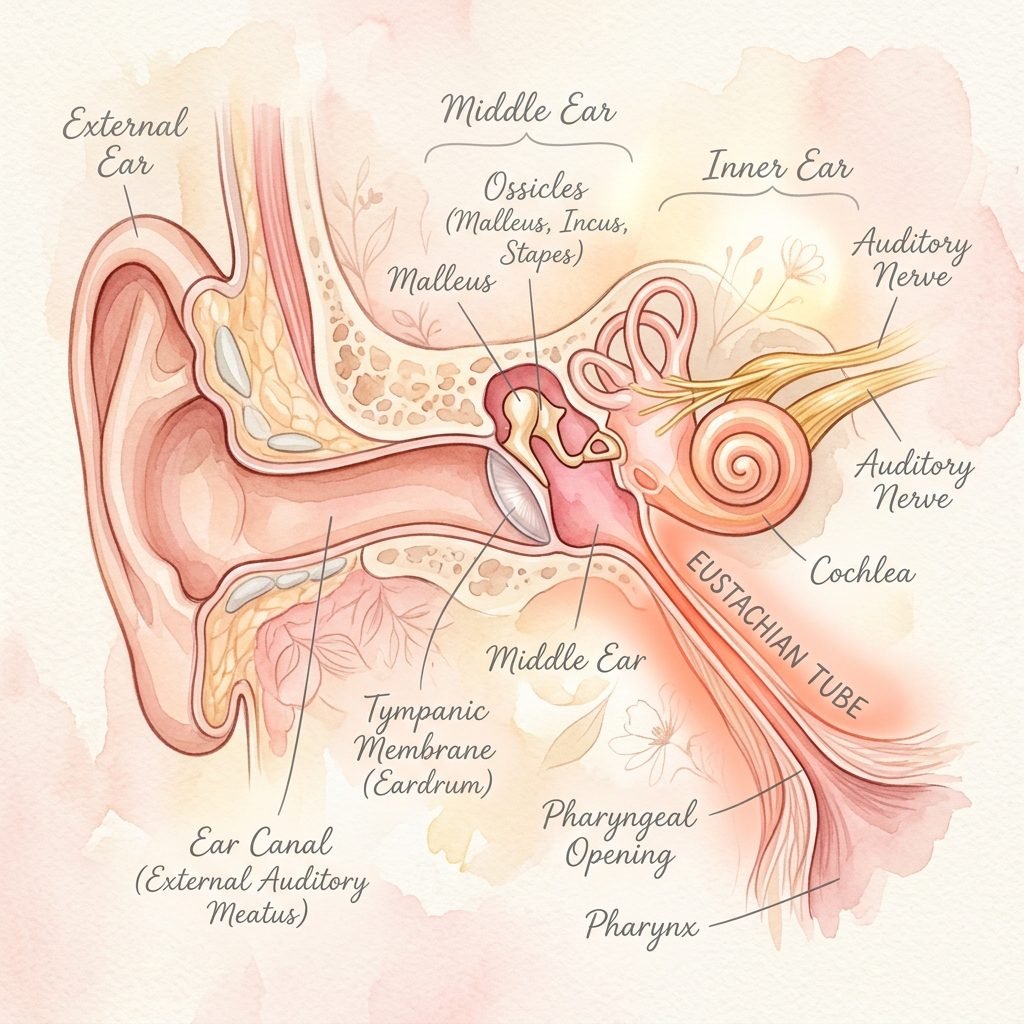
The Anatomy of Your Ear
To understand why your ears feel clogged shut, we first need to look at a tiny but mighty part of your anatomy: the Eustachian tube. This is a small passageway that connects the middle ear to the back of your throat (the nasopharynx). In a typical, non-pregnant body, the Eustachian tube remains perfectly closed most of the time. It only opens for a fraction of a second when you swallow, yawn, or chew. This brief opening allows air to flow into the middle ear, equalizing the pressure on both sides of your eardrum and allowing fluids to drain.
When the Tube Stays Open
However, when you have a Patulous Eustachian Tube (PET), the word “patulous” literally means “open” or “distended.” Instead of staying neatly closed, the tube becomes stuck in an open position. When this passageway is constantly open, the acoustic barrier between your mouth/throat and your middle ear is completely lost. This leads to a phenomenon known as autophony.
Autophony is the medical term for hearing the internal sounds of your own body at an amplified, incredibly loud volume. Because the tube is open, the sound of your own voice, your breathing, and even your heartbeat travel directly up the tube and strike the eardrum from the inside. This is why your own voice sounds overwhelmingly loud and echoey, while sounds from the outside world feel muffled or distant. It is a jarring, uncomfortable experience that can make holding a normal conversation or even trying to sleep feel like an impossible task.
Why Pregnancy Triggers Clogged Ears and Hearing Loss

The Hormonal Rollercoaster
You might be wondering, “Why is this happening to me now?” The answer, as with so many pregnancy symptoms, comes down to your hormones. During pregnancy, your body produces massive amounts of estrogen and progesterone. These hormones are absolutely essential for maintaining a healthy pregnancy, growing your baby, and preparing your body for labor. However, they also have systemic effects on your mucous membranes.
Estrogen, in particular, causes the mucous membranes throughout your entire body to swell and produce more secretions. This is the exact same reason why you might be experiencing “pregnancy rhinitis” (that constant stuffy nose that just won’t go away) or why your gums might bleed when you brush your teeth. The tissues lining your Eustachian tube are also mucous membranes. When they swell and their surface tension changes due to hormonal fluctuations, the tube can lose its ability to snap shut properly, leaving it stuck open.
Changes in Blood Volume and Fluid Retention
Another major factor is the drastic change in your body’s fluid dynamics. During pregnancy, your blood volume increases by up to 50 percent to support your growing baby. This massive increase in fluids, combined with changes in how your body retains water, alters the pressure inside your head and neck. The fatty tissue that surrounds and supports the Eustachian tube (known as the Ostmann fat pad) can also be affected by weight fluctuations and fluid shifts, causing the tube to lose its structural support and remain open.
Dehydration and Fatigue
Interestingly, while your body is retaining fluid, you as a mother can still become systematically dehydrated. Growing a baby requires an immense amount of water. If you are not drinking enough, the mucous lining of the Eustachian tube can dry out, making it even harder for the tube to close. Combined with the physical fatigue of pregnancy, your body’s muscles—including the tiny muscles that control the Eustachian tube—can become fatigued and less responsive.
Is It PET, Pregnancy Rhinitis, or an Ear Infection?
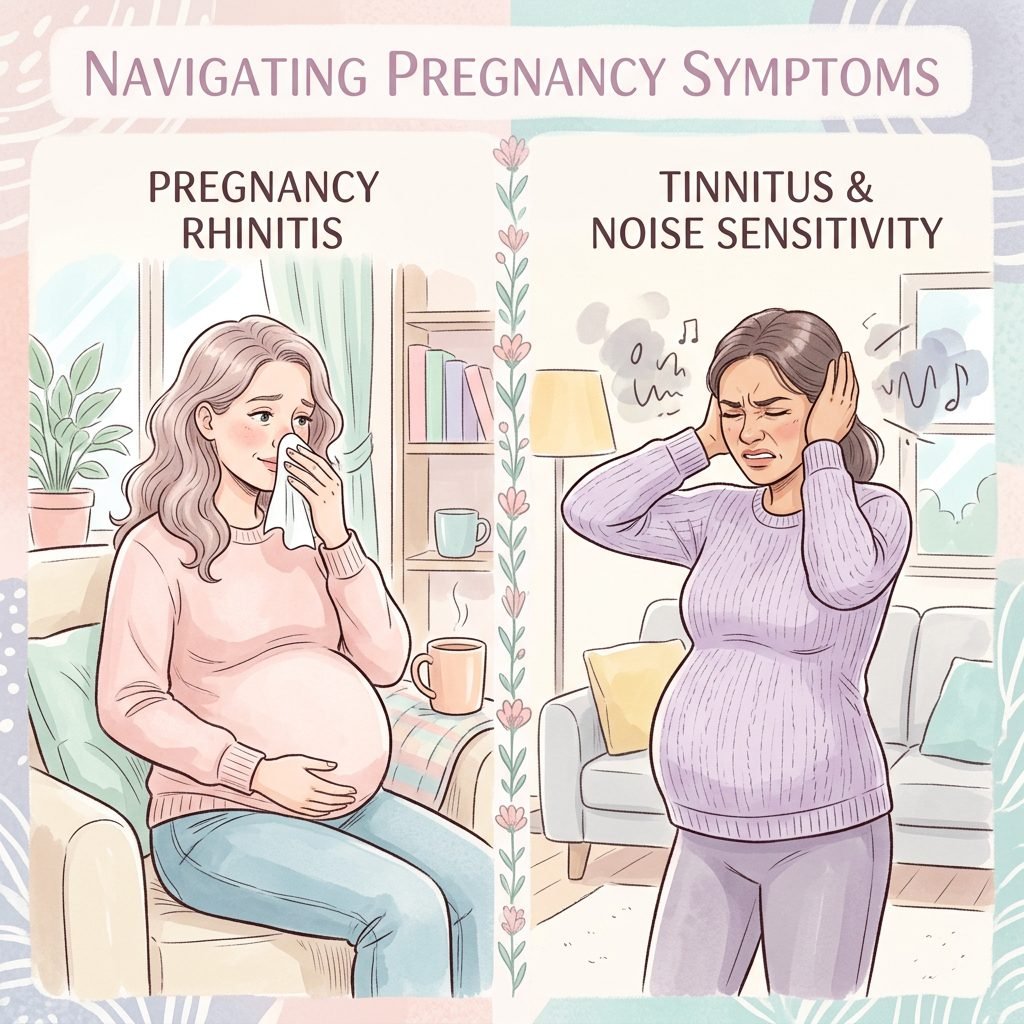
Decoding Your Symptoms
Because pregnancy can cause a myriad of ear, nose, and throat issues, it is crucial to differentiate between a Patulous Eustachian Tube, standard pregnancy congestion, and an actual ear infection that requires medical attention. As your doula, I always want to make sure we are addressing the right root cause. Let’s break down the differences.
| Symptom / Condition | Patulous Eustachian Tube (PET) | Pregnancy Rhinitis (Congestion) | Ear Infection (Otitis Media) |
|---|---|---|---|
| Primary Sensation | Echoing, hearing your own breathing/voice loudly (Autophony) | Stuffy nose, mild ear fullness, sinus pressure | Sharp or throbbing pain, deep ache in the ear |
| Relief with Posture | Improves when lying down or putting head between knees | Often gets worse when lying down | No relief from posture changes; pain persists |
| Hearing Loss Type | Muffled external sounds, amplified internal sounds | Mild muffling due to sinus pressure | Significant hearing loss accompanied by pain/fever |
| Presence of Fever | No fever | No fever | Fever is often present |
| Discharge | No discharge | Clear nasal mucus | Possible yellow/green fluid draining from ear |
If you are experiencing sharp, stabbing pain, a fever, or any pus-like drainage from your ear, please contact your OBGYN, midwife, or primary care physician immediately, as these are signs of an infection that may require pregnancy-safe antibiotics. However, if your main complaint is the maddening echo of your own voice and a feeling of “openness” or “clogged fullness” without pain, you are likely dealing with PET.
Safe, Natural Relief Strategies for PET During Pregnancy
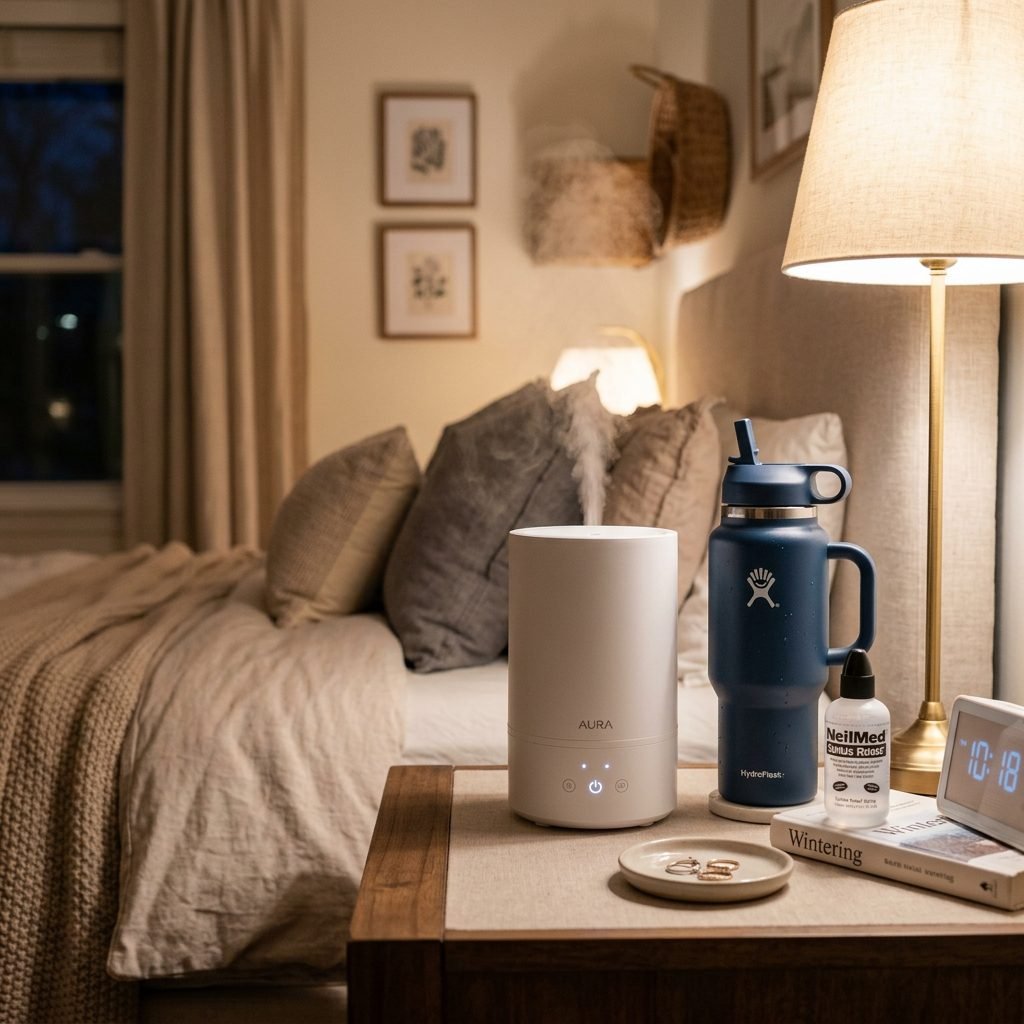
Actionable Relief for Mamas-to-Be
While there is no magic pill to instantly cure PET during pregnancy, there are several highly effective, completely safe, and natural strategies you can use to manage the symptoms and find comfort. These techniques focus on altering the physical pressure in your head and re-hydrating the mucous membranes.
1. The Postural Shift (Immediate, Temporary Relief)
Because PET is heavily influenced by gravity and blood pressure in the head, changing your physical position is one of the fastest ways to force the Eustachian tube to close temporarily. Try these steps when the echoing becomes unbearable:
- The Head-Between-Knees Maneuver: Sit safely on the edge of your bed or a sturdy chair. Slowly lower your head down between your knees. Hold this position for 30 to 60 seconds. This increases venous blood pressure in your head, which swells the tissues around the tube and forces it shut. Slowly sit back up to avoid dizziness.
- Lie Down Flat: If you are at home, simply lying down flat on your back (if you are early in pregnancy) or on your left side (if you are in your second or third trimester) can provide instant relief. Gravity pulls the blood and fluids toward your head, plumping the tissues and closing the tube.
- The Sniffing Technique: Gently pinch your nose and take a sharp, quick sniff inwards. This creates negative pressure in the nasopharynx and can sometimes temporarily lock the tube closed.
2. Aggressive Hydration
I cannot stress this enough, Mama: you need to drink more water than you think is humanly possible. When you are dehydrated, the mucous blanket lining the Eustachian tube thins out, making it easier for the tube to pop open. Aim for at least 80 to 100 ounces of water a day. Add electrolytes if you are struggling with water retention, as this helps your body absorb the hydration on a cellular level rather than just flushing it out.
3. Saline Drops and Humidifiers
Keeping the nasal passages moist is key. Use a sterile, over-the-counter saline nasal spray 3 to 4 times a day. Unlike medicated sprays, pure saline is 100% safe for pregnancy and simply adds moisture to the tissues. Additionally, run a cool-mist humidifier in your bedroom every single night. The added moisture in the air prevents the delicate tissues in your throat and ears from drying out while you sleep.
“Doula Tip: Keep a large, insulated tumbler of ice water and your saline spray right on your nightstand. Make it a habit to take a few sips and a quick spray every time you wake up to pee during the night!”
What NOT to Do: The Decongestant Trap

The Counterintuitive Truth About Clogged Ears
When our ears feel clogged, our immediate instinct—trained by years of dealing with colds and allergies—is to reach for a decongestant like Sudafed (pseudoephedrine) or a medicated nasal spray like Afrin. Do not do this! This is the biggest trap expectant mothers fall into when dealing with a Patulous Eustachian Tube.
Here is why: Decongestants work by shrinking swollen blood vessels and drying up mucous membranes. If you have a standard cold with a blocked Eustachian tube, this helps open it up. But with PET, your tube is ALREADY stuck open! Taking a decongestant will dry out the tissues even further, stripping away the natural mucous blanket and making the tube stay open even wider. It will actively make your autophony and echoing symptoms significantly worse.
Safe vs. Avoid: Your Quick Reference Guide
| Treatment / Action | Status for PET in Pregnancy | Why? |
|---|---|---|
| Sterile Saline Nasal Spray | Highly Recommended | Safely moisturizes the mucous membranes, helping the tube close. |
| Sudafed / Oral Decongestants | AVOID | Dries out the tissues, causing the tube to stay open wider and longer. |
| Afrin / Medicated Nasal Sprays | AVOID | Causes extreme drying and rebound congestion; worsens PET symptoms. |
| Cool-Mist Humidifier | Highly Recommended | Adds essential environmental moisture to prevent tissue dryness. |
| Neti Pot / Sinus Rinse | Use with Caution | Can help clear mucus, but use only distilled water to avoid rare infections. |
| Caffeine | Limit Intake | Caffeine is a diuretic and can contribute to systemic dehydration. |
Always consult with your healthcare provider before taking any over-the-counter medications during pregnancy, but as a general rule for PET, moisture is your best friend and drying agents are your worst enemy.
When Will It Go Away? The Postpartum Recovery Timeline

The Light at the End of the Tunnel
When you are in the thick of it—exhausted, hormonal, and listening to the deafening sound of your own breath—it can feel like you will never hear normally again. As your doula, I want to look you in the eyes and promise you this: This is temporary. Your body is not broken.
For the vast majority of women, Patulous Eustachian Tube is strictly a pregnancy-induced condition. It is directly tied to the elevated levels of estrogen and progesterone, the increased blood volume, and the fluid retention that are currently sustaining your baby. Once you deliver your beautiful baby and the placenta is born, your body will undergo a massive, rapid shift in hormones.
Your Healing Timeline
- The First 48 Hours Postpartum: You will experience a dramatic drop in estrogen and progesterone. You will also begin the process of postpartum diuresis (sweating and peeing out all that excess pregnancy fluid). You may notice your ear symptoms begin to fluctuate during this time.
- Days 3 to 14 Postpartum: As your fluid levels return to a non-pregnant baseline and the swelling in your mucous membranes decreases, the Eustachian tube will gradually regain its ability to snap shut. Many mothers report waking up one morning during their first week postpartum and realizing the echoing is simply gone.
- Weeks 2 to 6 Postpartum: By your six-week postpartum checkup, your body’s blood volume and hormonal balance will have largely stabilized. It is incredibly rare for pregnancy-induced PET to persist beyond this point.
While you are waiting for that sweet postpartum relief, lean on the physical management techniques we discussed. Rest when you can, hydrate aggressively, and give yourself a massive amount of grace. Sensory overload is exhausting. If the echoing becomes too much, put on some soft pink noise or white noise in the background to help mask the internal sounds. You are doing an incredible job, Mama.
Conclusion
Final Thoughts: You Are Doing Amazingly Well
Navigating the physical changes of pregnancy is no small feat, and dealing with a rare, frustrating symptom like a Patulous Eustachian Tube requires an extra level of resilience. Remember that your body is currently performing a miracle. It is okay to feel annoyed by the side effects, and it is okay to advocate for your comfort. Keep hydrating, use your postural shifts when you need a break from the echoing, and trust that this, too, shall pass.
If you ever feel overwhelmed, remember to take that deep breath. Yes, you might hear it echoing in your ears right now, but soon enough, the only beautiful sounds you will be focusing on are the sweet coos and sighs of your newborn baby. You’ve got this, Mama, and I am cheering you on every step of the way.
Medical Disclaimer: The content provided in this article is for informational and educational purposes only and is not intended as a substitute for professional medical advice, diagnosis, or treatment. Always seek the advice of your physician, obstetrician, midwife, or qualified health provider with any questions you may have regarding a medical condition or pregnancy symptom. Never disregard professional medical advice or delay in seeking it because of something you have read on this website.