How to Turn a Spare Closet Into a Cozy Baby Nursery Nook
Embracing the Magic of Small Spaces
Hello, sweet mama. If you are staring at a spare closet and wondering if it could truly become a sanctuary for your little one, let me wrap you in a big, reassuring hug and say: yes, it absolutely can. As a doula, I have seen families flourish in everything from sprawling suburban homes to tiny studio apartments. Your baby doesn’t need a thousand square feet to feel loved; they need a safe, cozy, and calm environment where they can rest and grow. The ‘cloisery’—or closet nursery—is a brilliant way to keep your newborn close while maintaining the flow of your home.
In this guide, we are going to walk through the transformation process together, step-by-step. We’ll cover everything from the structural safety of removing doors to the aesthetic touches that make a small space feel like a high-end boutique. Grab a cup of red raspberry leaf tea, and let’s start nesting!
Phase 1: Clear Out and Safety Assessment
Prepping the Canvas
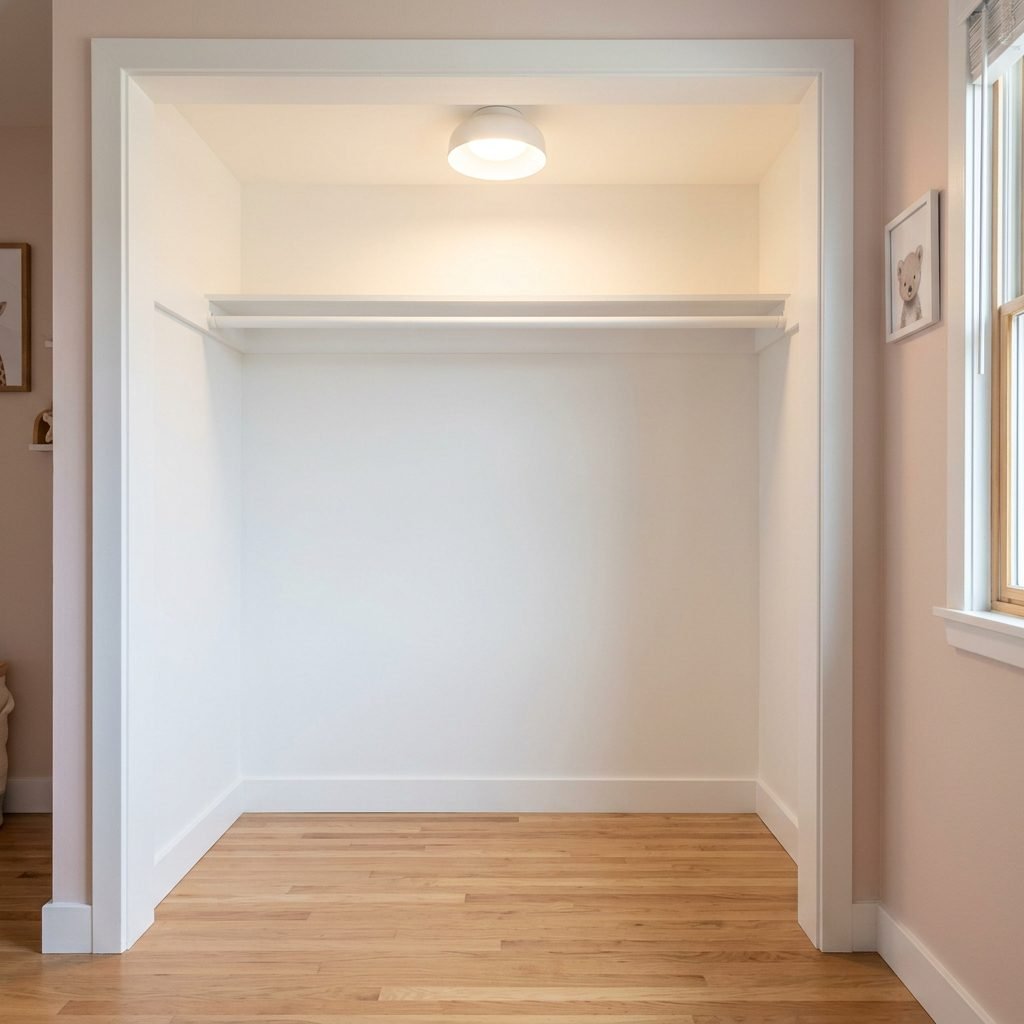
Before we pick out the cute wallpaper, we have to do the ‘dirty work.’ Start by completely emptying the closet. This is a great time to declutter your own belongings—if you haven’t used it in a year, it doesn’t need to take up space in your baby’s new room! Once the space is clear, we need to focus on ventilation and air quality. Closets often lack windows and vents, so we must ensure a steady flow of fresh air.
- Remove the Doors: Standard bifold or sliding doors take up valuable ‘swing space.’ Removing them opens the nook to the rest of the room’s airflow and light.
- Check for Mold: Since closets are often enclosed, check the corners for any signs of dampness or mildew before painting.
- Electrical Safety: If you plan to use a monitor or a sound machine, ensure any cords are safely tucked away behind furniture or encased in cord covers. Never leave a cord within 3 feet of the crib.
| Safety Feature | Why It Matters | Action Item |
|---|---|---|
| Airflow | Prevents overheating and SIDS risk | Install a small, quiet ceiling fan or use a floor fan in the main room. |
| VOC-Free Paint | Protects baby’s developing lungs | Choose paints labeled ‘Zero VOC’ or ‘Greenguard Gold Certified.’ |
| Lighting | Prevents overstimulation | Install a dimmer switch or use battery-operated warm LEDs. |
‘Remember, mama: A safe sleep space is the most beautiful gift you can give your baby. It doesn’t need to be big; it just needs to be secure.’
Phase 2: Choosing the Right Furniture for a Nook
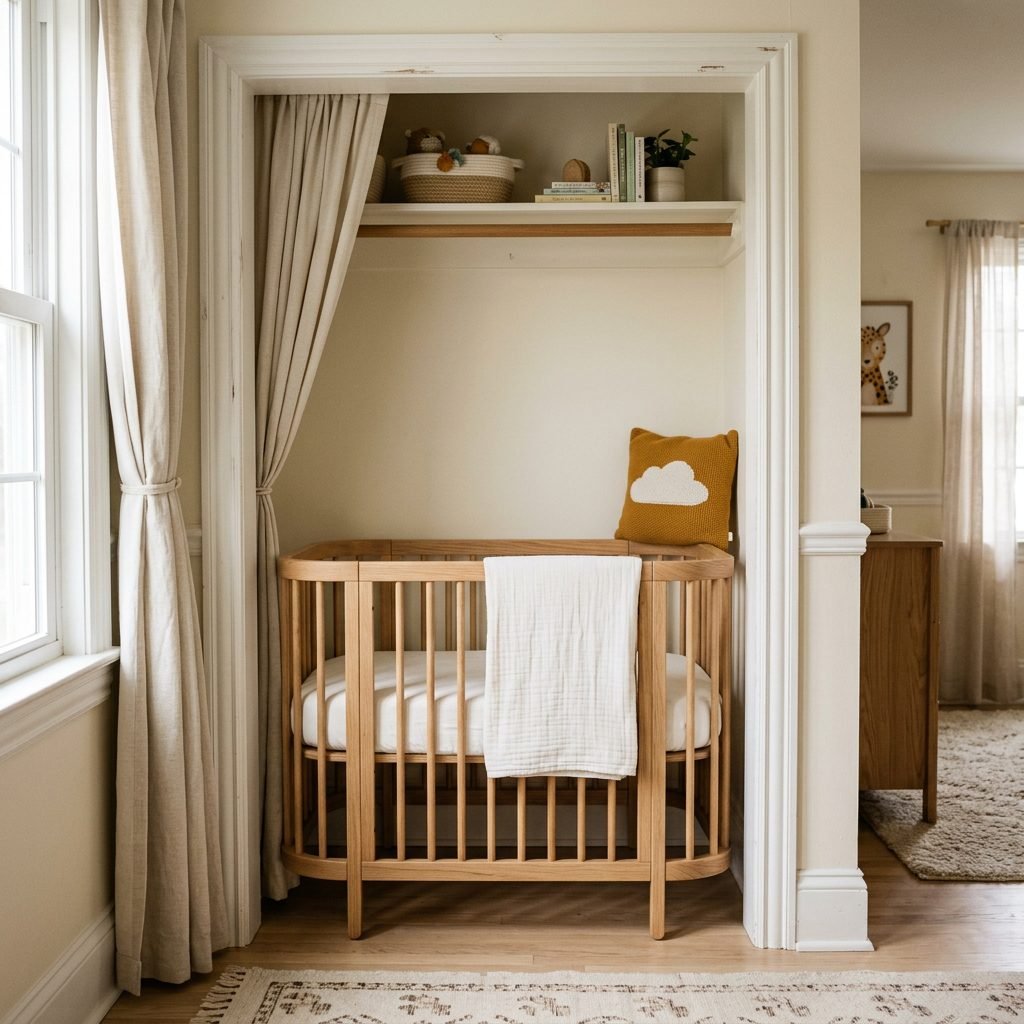
The Centerpiece: The Mini-Crib
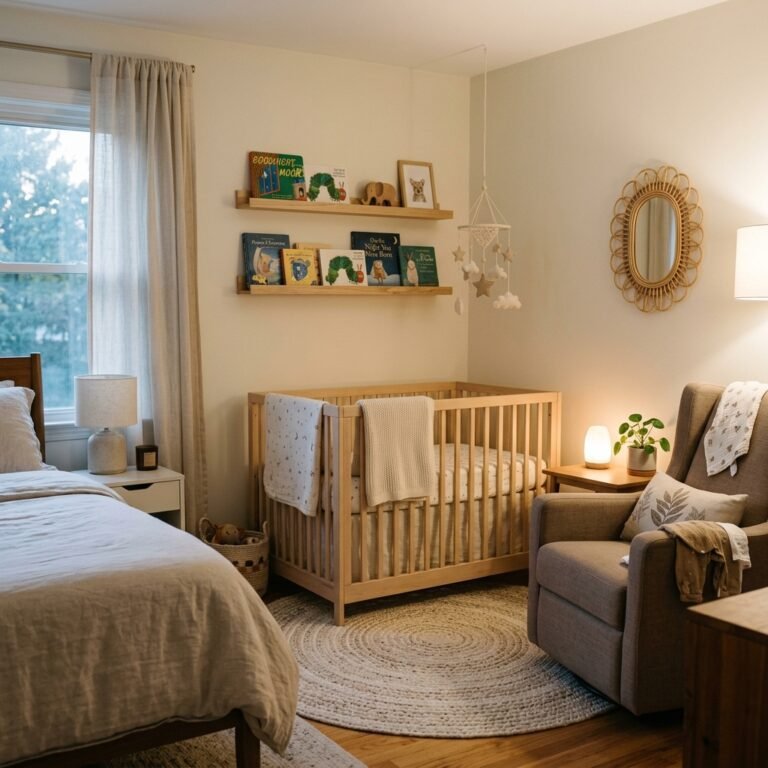
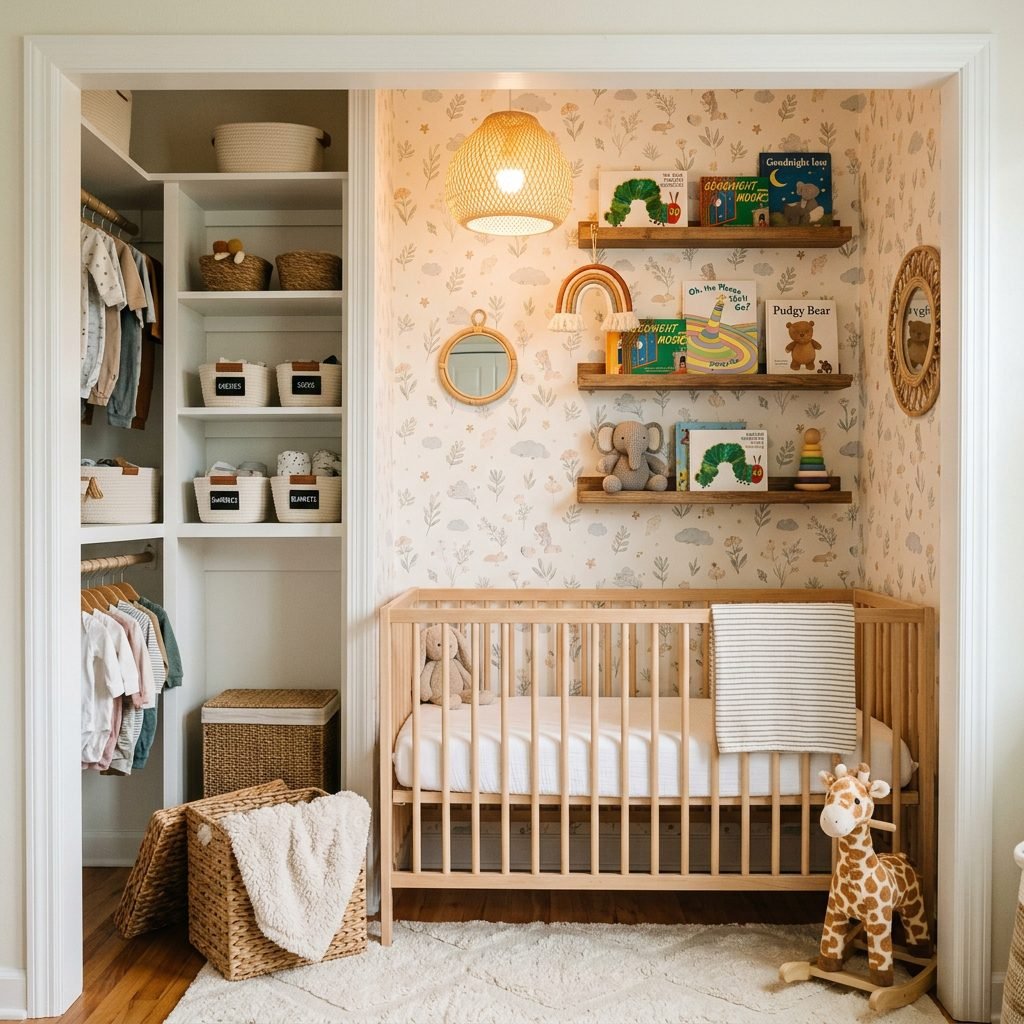
In a closet nursery, every inch is precious. A standard-sized crib is usually 52 inches long, which may not fit in a standard reach-in closet. This is where the mini-crib becomes your best friend. Mini-cribs are typically around 38 inches long and offer the same safety standards as full-sized models. Many even come with wheels, allowing you to move the crib out for cleaning or to reposition it as the baby grows.
Multi-Functional Surfaces
If your closet is deep enough, you might be tempted to put a changing table inside. However, for most nooks, I recommend a ‘vertical’ approach. Use the space above the crib for storage and find a different spot for heavy furniture. If you must have a changing station in the nook, consider a wall-mounted fold-down table—just ensure it is anchored into the studs with heavy-duty hardware.
| Furniture Type | Ideal Dimensions | Best For |
|---|---|---|
| Mini-Crib | 24″ x 38″ | Standard reach-in closets |
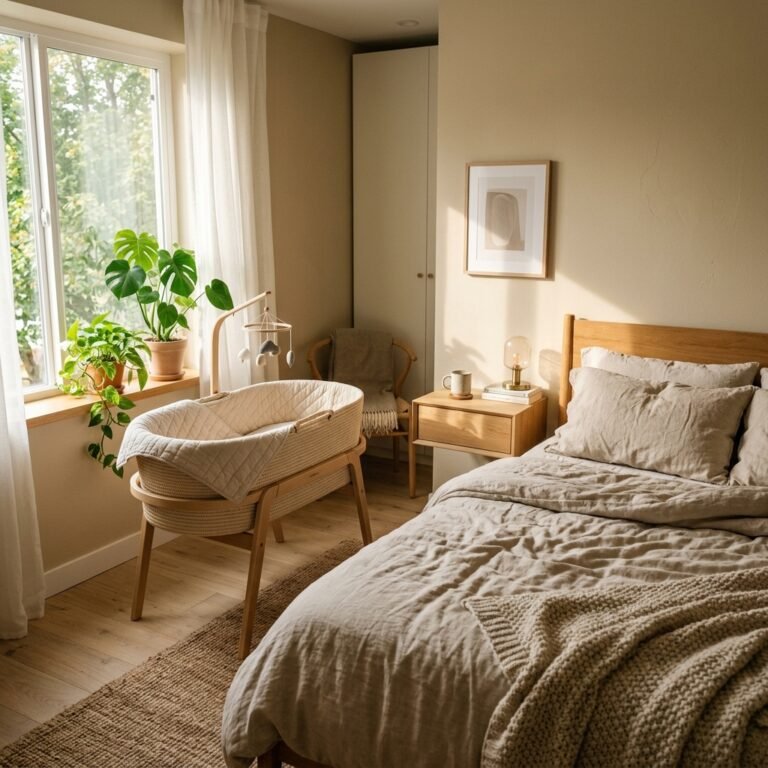
| Bassinet | 18″ x 30″ | The first 4-6 months only |
| Floating Shelves | 10″ depth | Storing diapers and wipes up high |
Phase 3: Vertical Storage and Organization Hacks
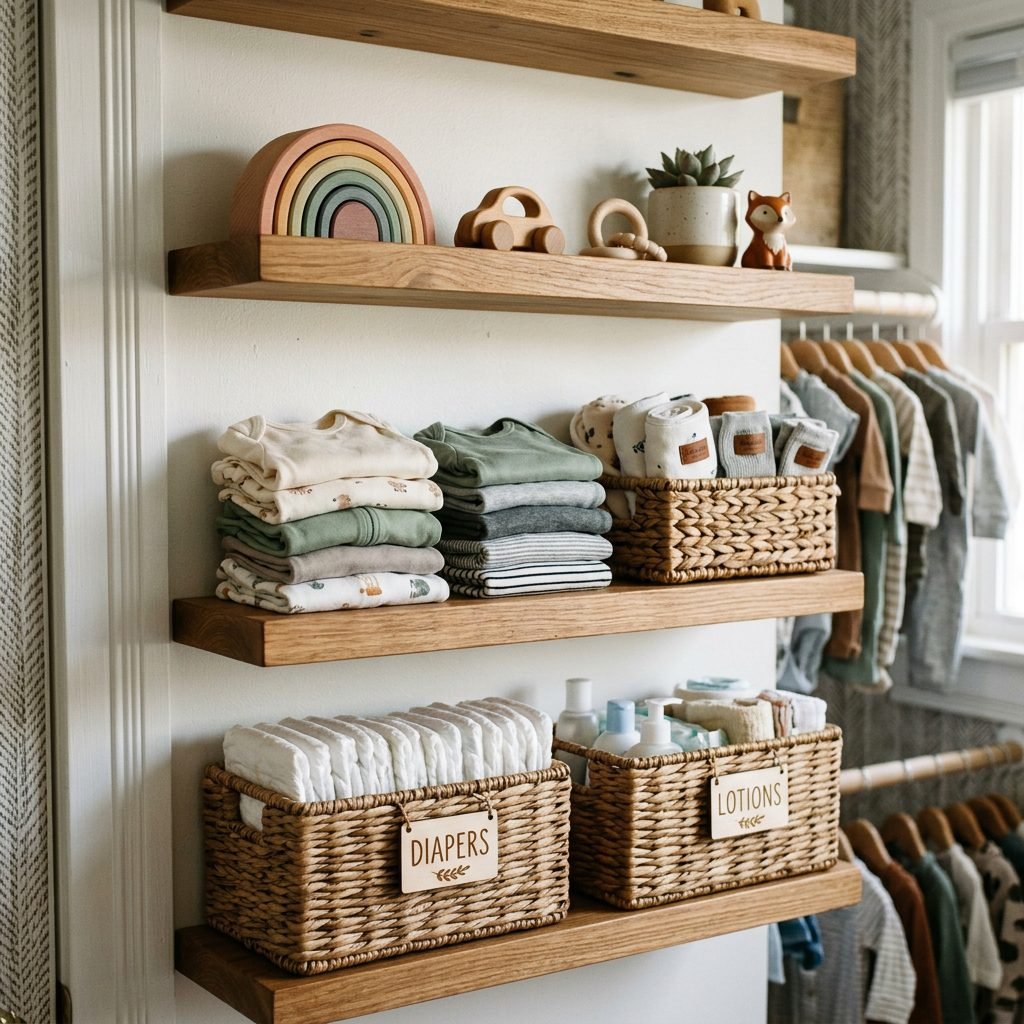
The ‘Doula-Design’ Organization Method
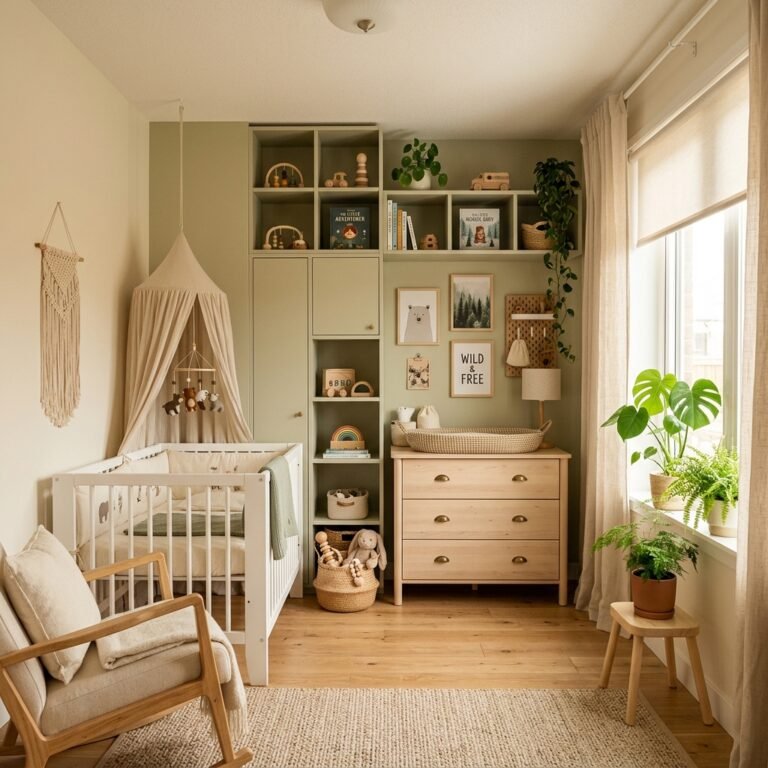
When you have zero floor space, you have to look up! As an interior organizer, I recommend the ‘Zone System’ for your nursery nook. This ensures that even at 3:00 AM, you can find exactly what you need without waking the baby further.
- Zone 1 (Top Shelf): Items you don’t need daily, like next-size-up clothes, extra blankets, and keepsake boxes. Use matching fabric bins to keep it looking tidy.
- Zone 2 (Eye Level): Frequently used items. This is where you place a ‘diapering station’ on a floating shelf. Keep 20-30 diapers, a pack of wipes, and diaper cream within arm’s reach.
- Zone 3 (Below the Crib): If your crib has space underneath, use low-profile rolling bins for extra sheets and sleep sacks.
IKEA Hacks for the Nook
The IKEA RÅSKOG cart is a legend for a reason. It fits perfectly next to a closet nursery and can hold everything from nursing pads to burp cloths. Another favorite is the IKEA BEKVÄM spice rack, which makes the perfect ‘bookshelf’ for a small wall space. Simply paint them to match your decor and mount them at a height where you can easily grab a bedtime story.
‘A place for everything and everything in its place isn’t just about aesthetics—it’s about reducing the mental load of motherhood.’
Phase 4: Creating a Sensory Sanctuary
Lighting and Sound
Closets can feel dark and cave-like, or conversely, too bright if they are in a high-traffic room. We want to create a ‘womb-like’ environment. Use warm-toned lighting (around 2700K) to avoid disrupting the baby’s melatonin production. A simple string of fairy lights or a battery-powered sconce can add a magical glow without the need for an electrician.
Aesthetics and Softness
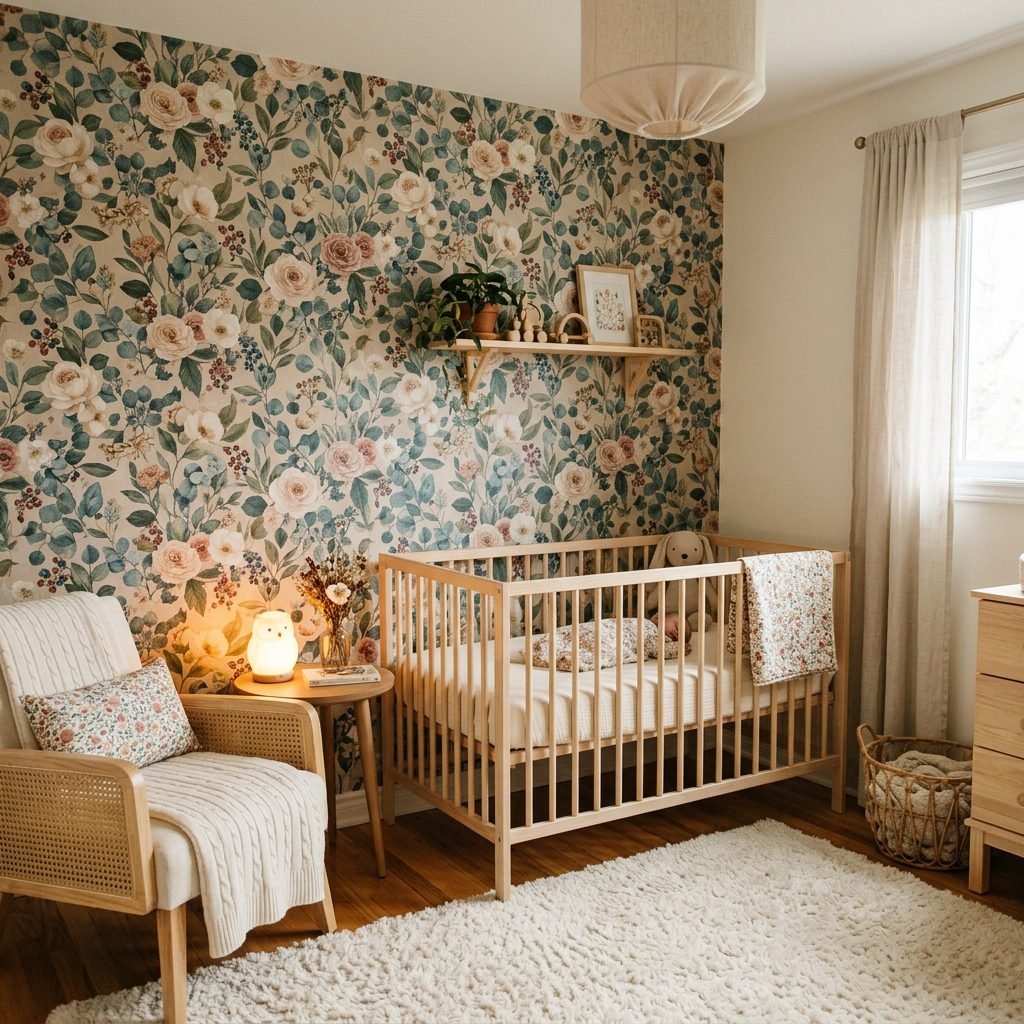
Since the ‘room’ is small, you can afford to splurge a little on high-quality materials because you won’t need much of them. One roll of peel-and-stick wallpaper is usually enough to cover the back wall of a closet, creating a stunning focal point. For the floor, a plush, washable rug that extends slightly outside the closet will help define the space and provide sound dampening.
- Soundproofing: If the closet is near a noisy hallway, consider hanging heavy, ‘blackout’ velvet curtains across the opening. This helps with both light control and noise reduction.
- Scent: Avoid heavy perfumes. A small bag of dried lavender kept high on a shelf can provide a very subtle, calming aroma.
Phase 5: The Daily Workflow and Maintenance
Managing the ‘Nook Life’
Living with a nursery nook requires a bit more discipline than a full-sized room. Because the space is small, it can become cluttered very quickly. I recommend a ‘Five-Minute Reset’ every evening. Before you go to bed, restock the diaper station, put away any stray clothes, and clear the floor space. This ensures that when you walk into the room for the first morning feed, you are met with calm rather than chaos.
Transitioning as Baby Grows
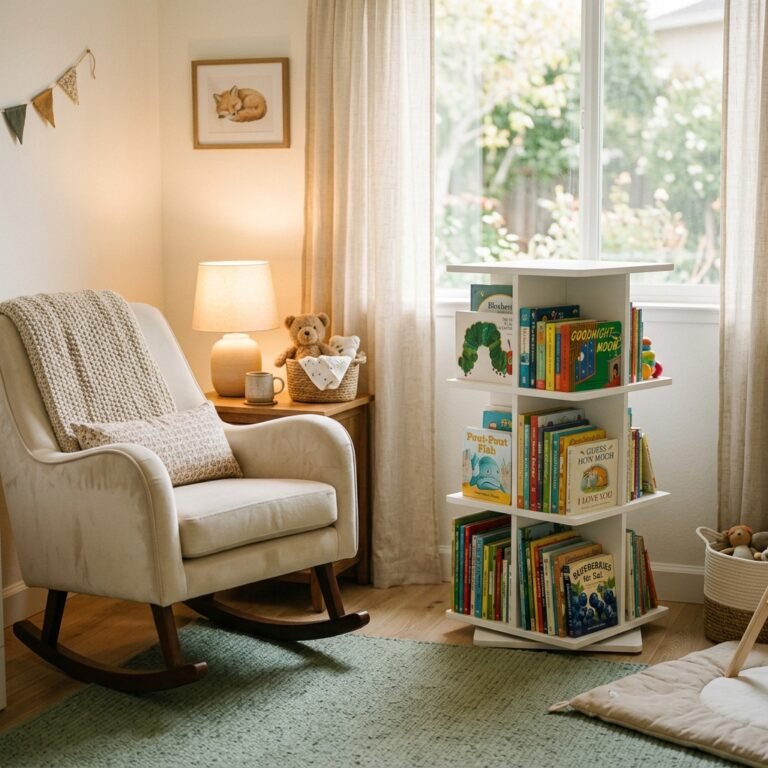
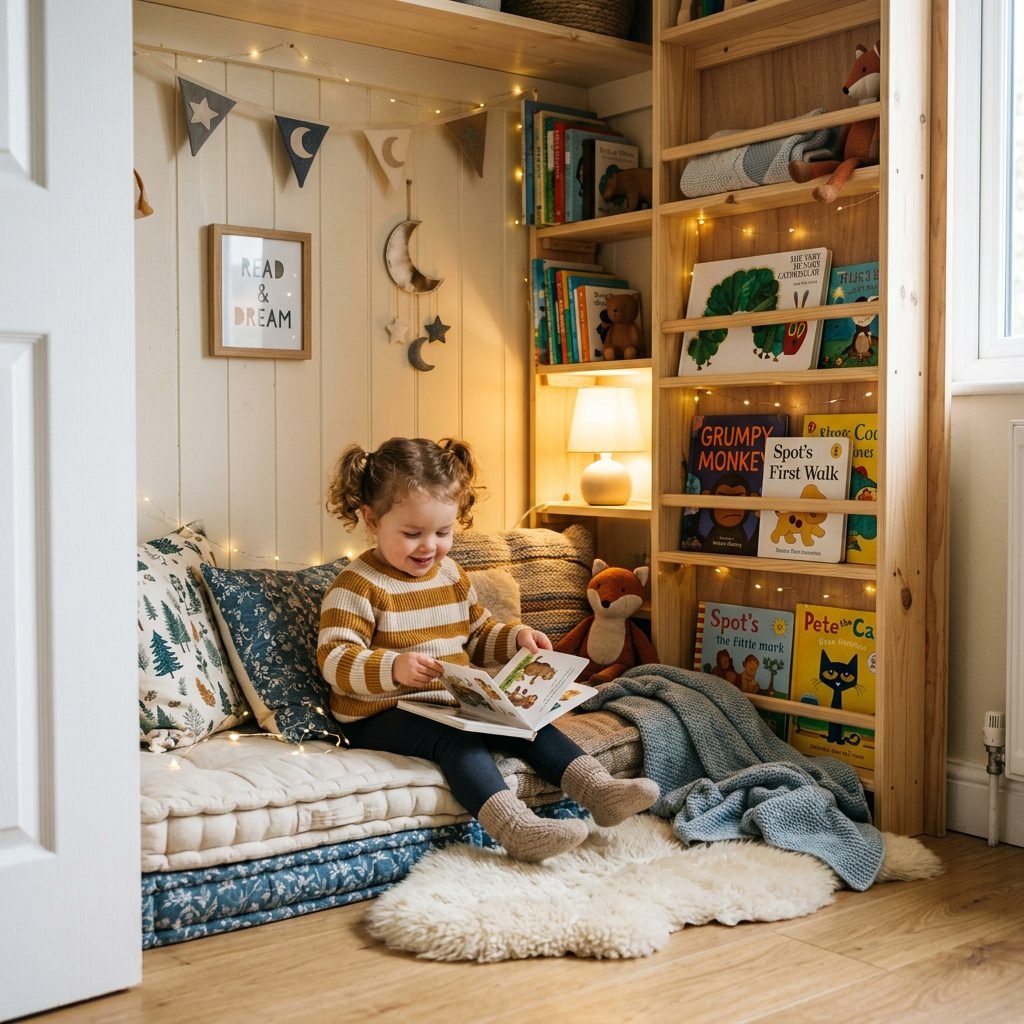
Around the 12-to-18-month mark, your little one may start to outgrow the mini-crib or become curious enough to try climbing out. Be prepared to transition the nook. The beauty of this setup is that once the crib is gone, the space can easily become a ‘toddler reading cave’ or a small desk area. The investment you make now in shelving and lighting will continue to serve your family for years.
| Age Milestone | Nook Adjustment | Safety Focus |
|---|---|---|
| 0-6 Months | High-contrast art on walls | Ensure no loose items in crib |
| 6-12 Months | Lower the crib mattress | Remove any wall decor within reach |
| 12+ Months | Transition to toddler bed or floor bed | Anchor all shelves to the wall |
Conclusion
You’ve Got This, Mama
Creating a nursery nook is an act of love and creativity. It proves that you don’t need a mansion to provide a beautiful, nurturing start for your child. By focusing on safety, smart organization, and intentional design, you have turned a simple closet into a sanctuary. When you hold your baby in that cozy corner for the first time, the size of the room won’t matter at all—only the size of the love filling it. You are doing an incredible job, and your little one is so lucky to have a mama as thoughtful as you.
Medical Disclaimer: This guide is for informational and design purposes only. Always follow the AAP (American Academy of Pediatrics) guidelines for safe sleep, which include placing baby on their back on a firm, flat sleep surface in a crib or bassinet free of blankets, pillows, or toys. Consult with your pediatrician regarding specific safety concerns for your home environment.