Is Your Baby Hard to Burp? Try the Gentle Seated Twist Method
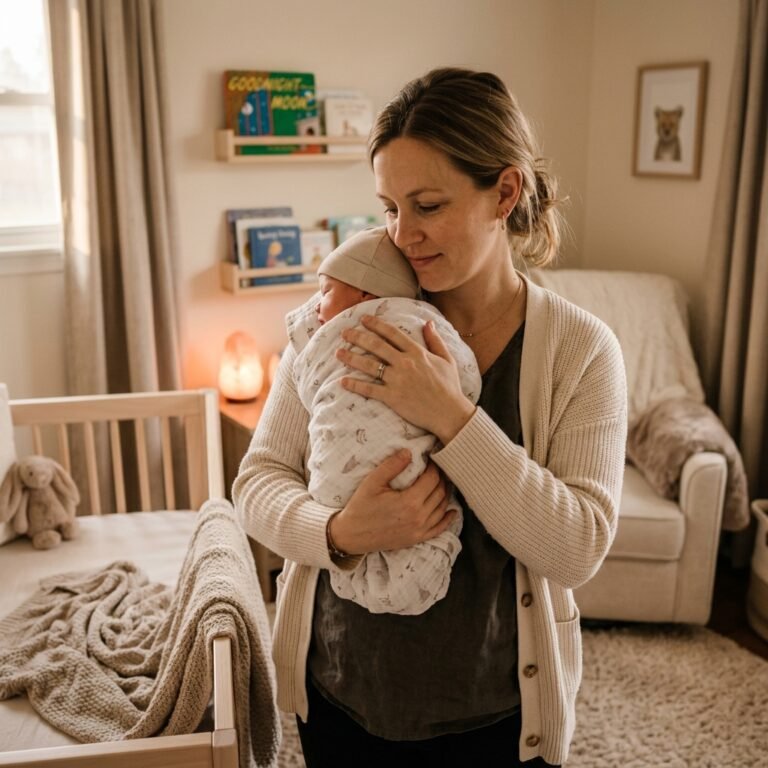
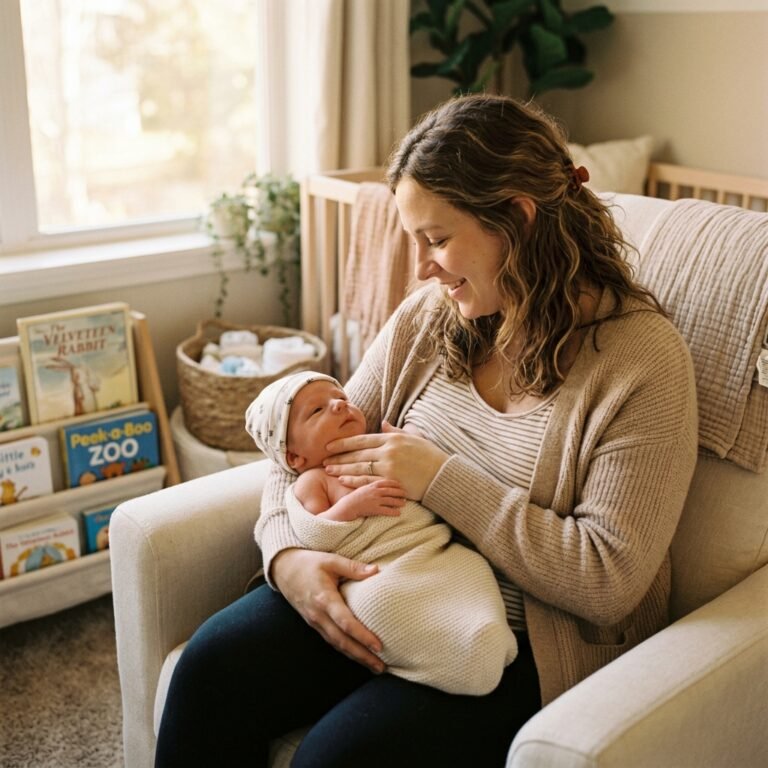
Oh, mama, I see you. It is 3:00 AM, the house is silent except for the rhythmic ticking of the clock and the fussy, strained whimpers of your precious little one. You have tried the classic over-the-shoulder patting for twenty minutes. You have tried laying them across your knees. You have even tried the football hold. But that stubborn air bubble just won’t budge, and you can feel your baby’s tiny tummy tightening with every passing second. As a doula and a mama who has been in those exact trenches, I want to wrap you in a virtual hug and tell you: it is not your fault, and there is a better way. Some babies are simply ‘hard burpers.’ Their little digestive systems are still learning the ropes, and sometimes a standard pat on the back isn’t enough to navigate the winding path of their esophagus. That is where the Gentle Seated Twist Method comes in. This technique is a game-changer for gassy newborns, utilizing gentle physics and soft spinal elongation to help those trapped bubbles find their way out. In this guide, we are going to dive deep into why your baby might be struggling, how to master this specific twist, and how to turn those fussy post-feed moments into peaceful sleep for both of you.
The Science of the ‘Stuck’ Burp: Why Traditional Methods Fail
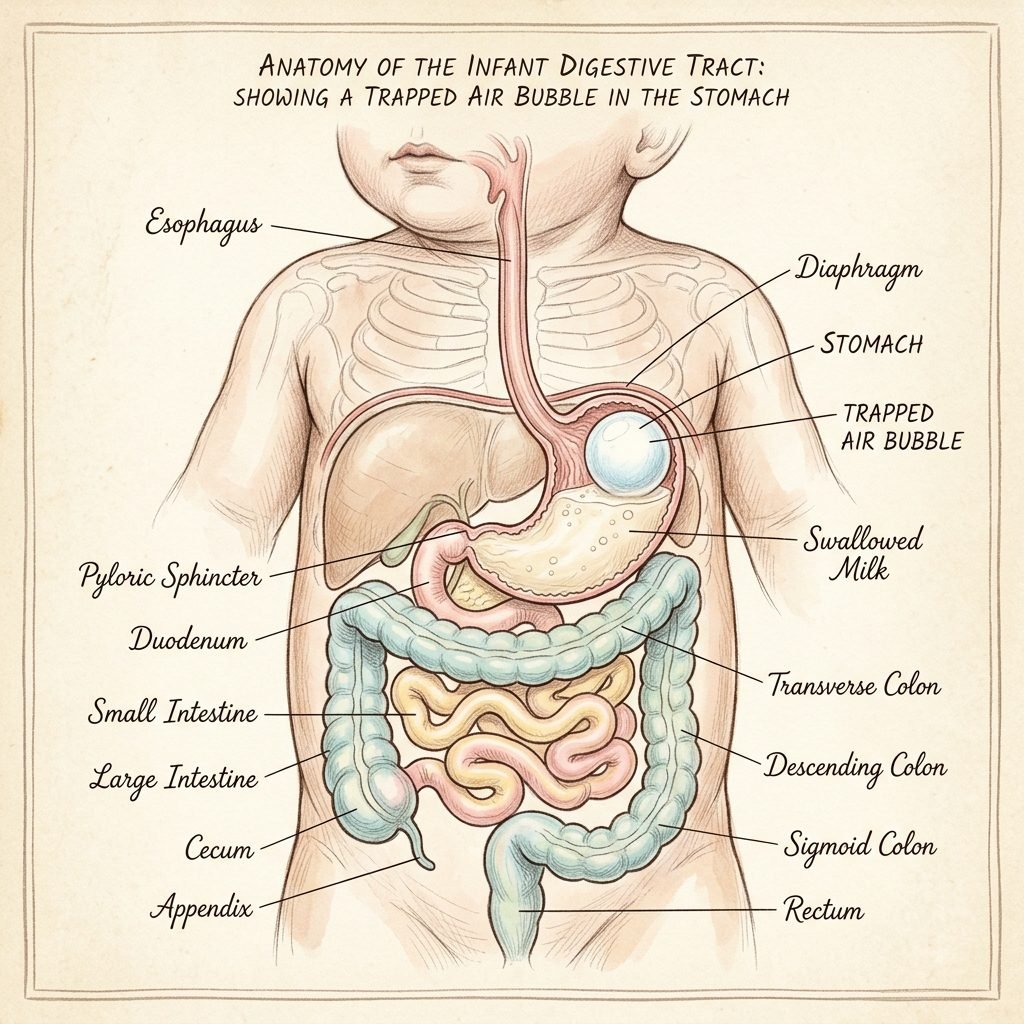
To understand why the Gentle Seated Twist works so effectively, we first need to look at why babies get gassy in the first place. When a baby feeds—whether by breast or bottle—they inevitably swallow small amounts of air. This air can become trapped under the milk or caught in the folds of the stomach lining. For many infants, a simple vertical position and a few firm pats are enough to encourage that air to rise. However, for babies with reflux, silent reflux, or a particularly narrow esophageal sphincter, that air bubble can get lodged. Traditional patting often just ‘bounces’ the bubble without actually moving it upward.
Remember, mama: Burping isn’t just about the ‘thump’; it’s about the ‘pathway.’ If the path is blocked by a slouch or a curve in the spine, the air stays put.
By understanding the anatomy of your baby, you can see that a slumped posture during burping actually compresses the stomach. When we use the Gentle Seated Twist, we are essentially ‘straightening the pipe.’ This section explores the physiological reasons behind gas pain and why some babies require a more active, rotational approach to find relief. We will look at how immature digestive valves and swallowing patterns contribute to the ‘hard to burp’ phenomenon that leaves so many parents feeling exhausted and helpless.
Preparing for the Twist: Setting the Stage for Success

Before we jump into the physical movement, we need to ensure the environment and your own body are ready. Burping is as much about calm energy as it is about technique. If you are tense, your baby will sense it and tighten their abdominal muscles, making it even harder for gas to escape. Start by finding a comfortable, firm seat where your feet can rest flat on the floor. You want to be upright, not reclining. Gather your essentials: a soft burp cloth (because the twist can sometimes bring up a little ‘happy spit-up’) and a supportive pillow if you need it for your back.
The ‘C-Hold’ Foundation
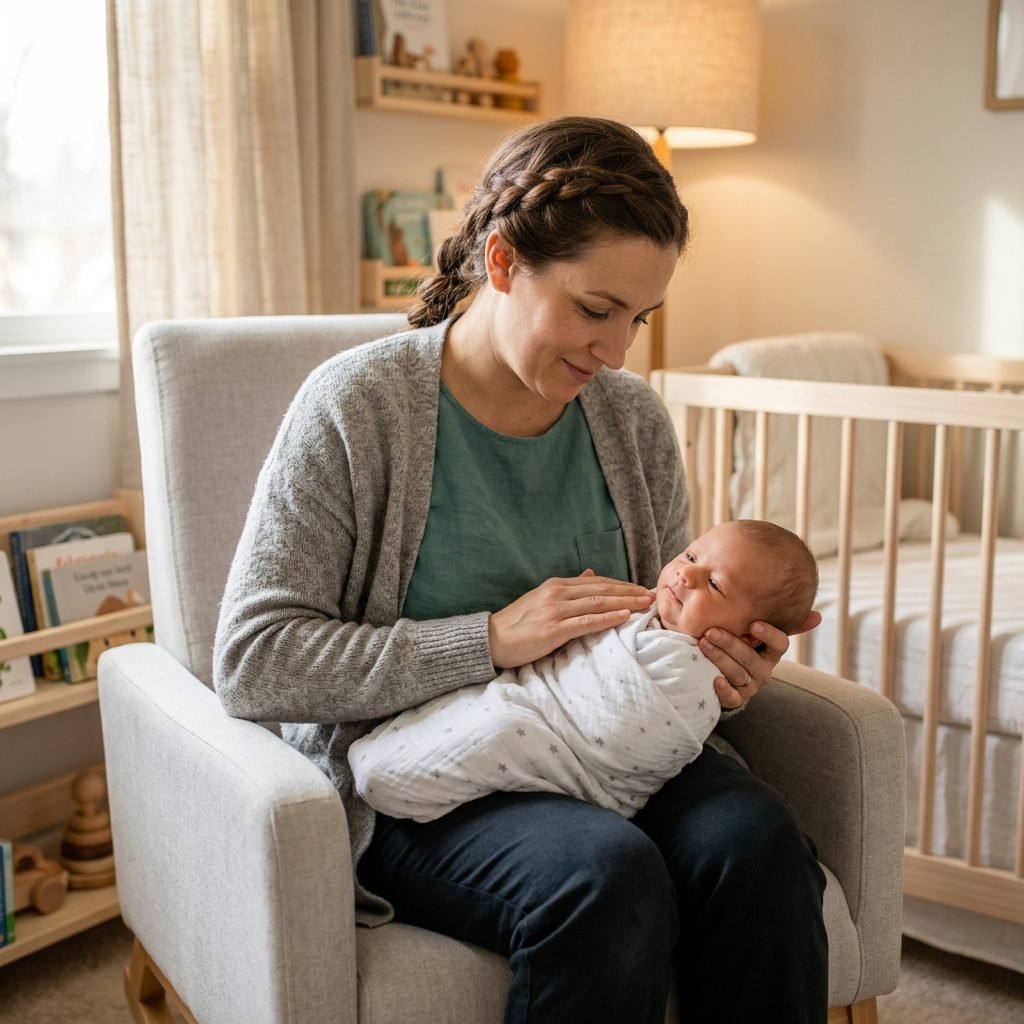
The most important part of the setup is how you support your baby’s head. You must never put pressure on the soft tissue of the throat. Instead, use what we call the ‘C-Hold.’ Place your thumb and forefinger along the baby’s jawline, creating a stable ‘C’ shape. This allows the head to be supported by the bony structure of the jaw while keeping the airway completely clear. This preparation ensures that when you begin the rotation, the baby feels secure and supported, allowing their muscles to relax.
| Preparation Step | Why It Matters |
|---|---|
| Flat Feet | Provides a stable base for your own torso rotation. |
| The C-Hold | Supports the jaw without compressing the airway. |
| Deep Breathing | Lowers baby’s cortisol and relaxes their tummy. |
Step-by-Step: Mastering the Gentle Seated Twist
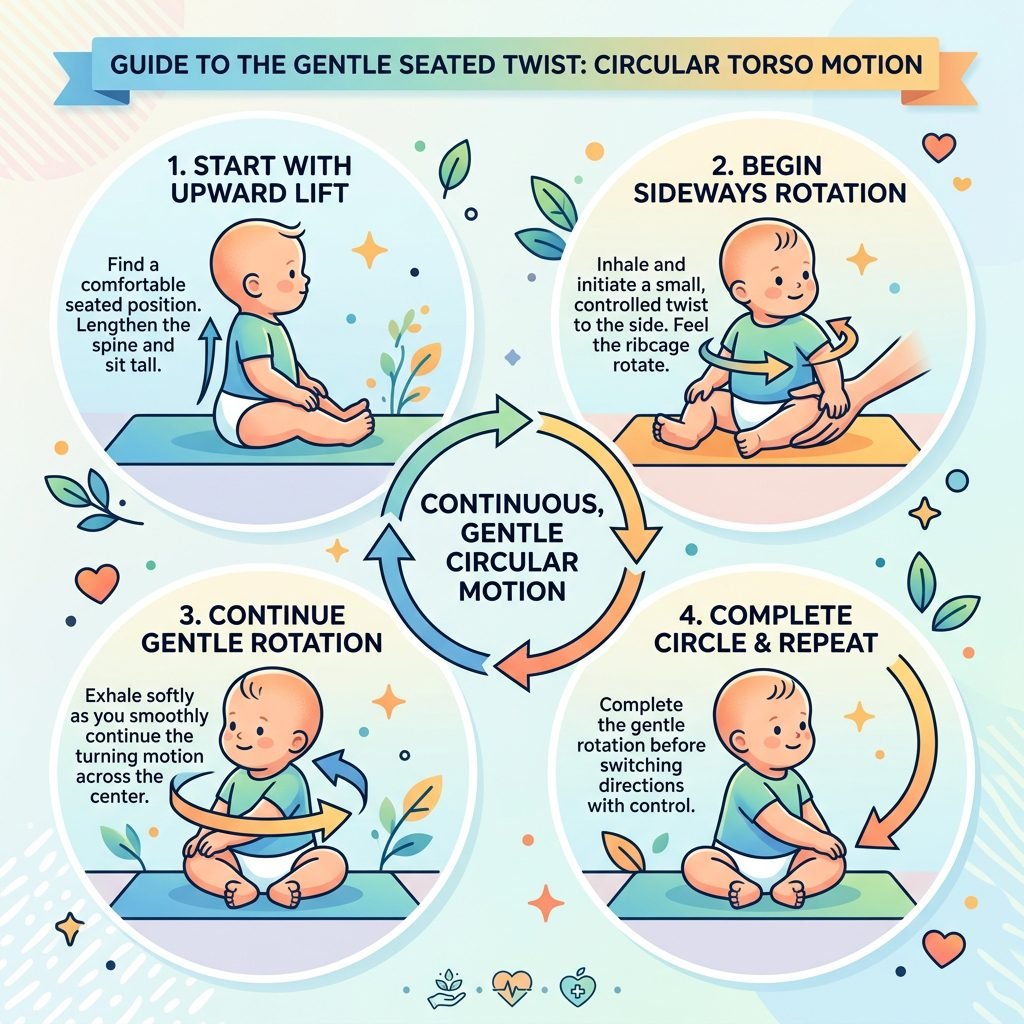
Now, let’s walk through the method itself. This is a slow, rhythmic movement—think of it as a gentle dance rather than a mechanical exercise.
- Positioning: Sit your baby upright on your lap, facing away from you or to the side. Ensure their spine is as straight as possible.
- The Support: Place one hand in the ‘C-Hold’ on their jaw and the other hand flat against their back, spanning from the base of the neck to the mid-back.
- The Elongation: Gently lift your hand on the jaw upward just a fraction of an inch—not to pull, but to encourage the baby to sit tall and ‘lengthen’ their torso.
- The Rotation: Slowly begin to rotate the baby’s upper body in a small, horizontal circle. Imagine their nose is drawing a circle the size of a saucer on the ceiling.
- The Rhythm: Move clockwise for three rotations, then counter-clockwise for three. The goal is to create a soft ‘spiraling’ motion in the torso that massages the stomach from the inside out.
This movement helps the air bubble ‘find the exit’ by shifting the stomach’s position relative to the esophagus. It is incredibly effective for those deep, stubborn bubbles that patting just can’t reach.
You may hear a series of small ‘micro-burps’ or one large, satisfying release. Stay patient; it may take 2-3 minutes of this gentle spiraling to work.
Comparing Techniques: Which Method for Which Gas?
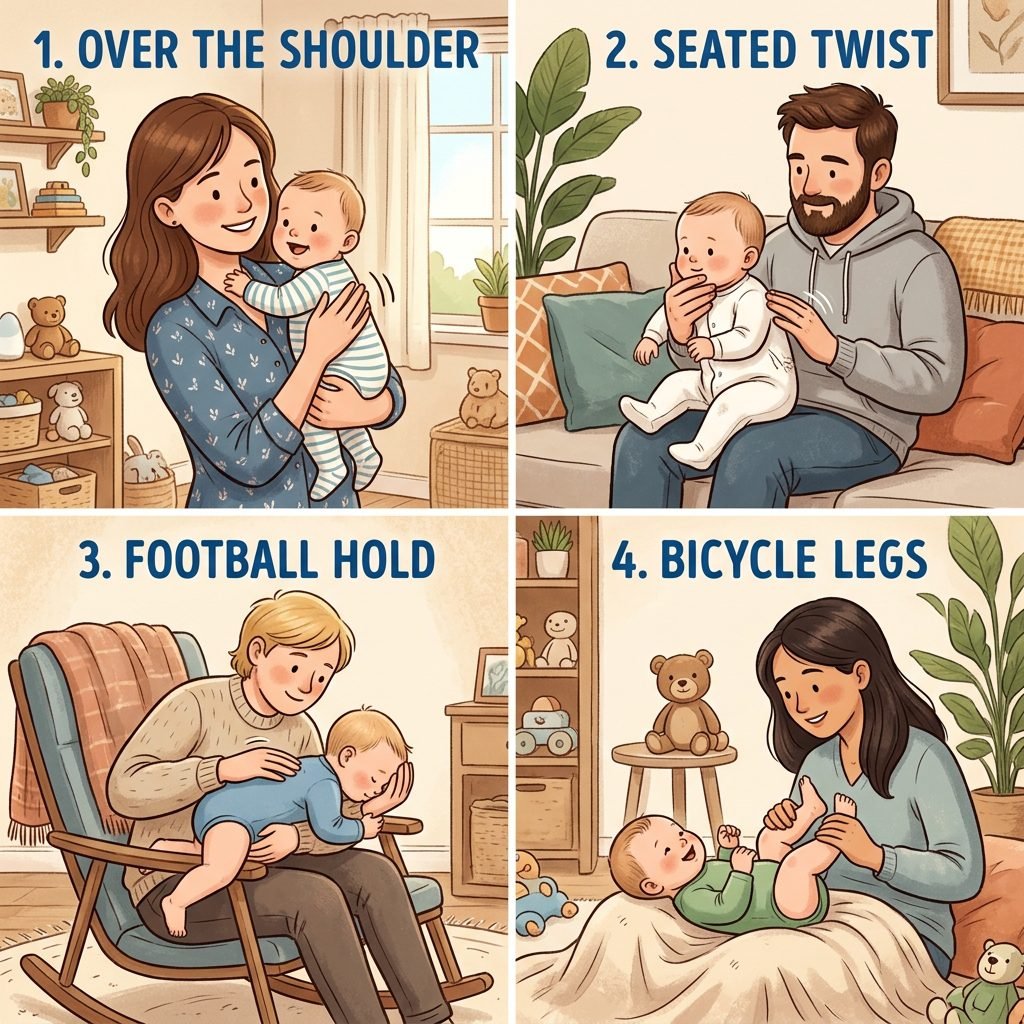
Not all gas is created equal, and as a doula, I always recommend having a toolkit of techniques. While the Gentle Seated Twist is my ‘gold standard’ for hard-to-burp babies, it helps to know when to pivot. Some babies respond better to the ‘Tiger in the Tree’ hold when they have lower intestinal gas, while others need the ‘Over the Shoulder’ pressure for immediate post-feed bubbles. Below is a comparison to help you decide which tool to pull from your mama-toolbelt.
| Method | Best For… | Effort Level |
|---|---|---|
| Over the Shoulder | Initial bubbles immediately after feeding. | Low |
| Gentle Seated Twist | Stubborn, trapped air and ‘hard-to-burp’ babies. | Medium |
| The Football Hold | Lower abdominal gas and colicky crying. | Medium |
| Bicycle Legs | Passing gas through the lower digestive tract (farts). | High |
By alternating these methods, you ensure that you are addressing gas from both the top and the bottom of the digestive system. If the twist doesn’t work after a few minutes, try transitioning to the ‘Tiger in the Tree’ to see if the air has moved further down.
Troubleshooting: What to Do If the Burp Still Won’t Come
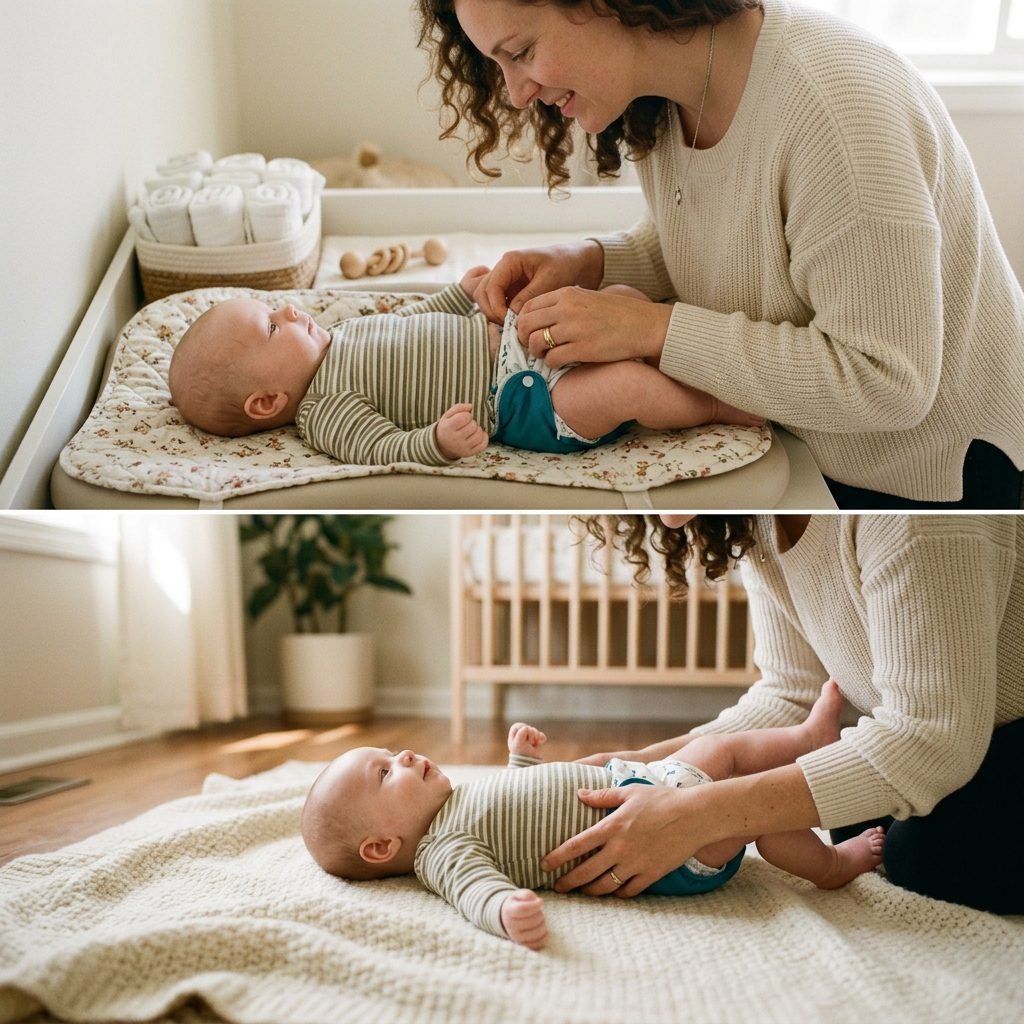
Sometimes, despite our best efforts and the most perfect ‘twist,’ that burp remains elusive. First, take a breath. It is okay. If your baby is not acting in pain, they may simply not have a burp ready. However, if they are arching their back, pulling their legs up, or turning red, they are definitely uncomfortable.
The ‘Magic Reset’
If the seated twist isn’t working, try the ‘Magic Reset.’ Lay the baby flat on their back on a firm surface for 30 seconds. This allows the air bubbles to regroup and rise to the ‘top’ of the milk in the stomach. Then, bring them back up into the Gentle Seated Twist. Often, this change in gravity is all that’s needed to reposition the air for a successful exit. Also, check your baby’s clothing. If a diaper is too tight or a onesie is restrictive around the waist, it can create a ‘kink’ in the digestive ‘hose,’ making burping nearly impossible. Loosen the diaper and try again. Consistency is key. Don’t give up after thirty seconds; give the technique time to work its magic on your little one’s internal rhythm.
The Doula’s Secret: Prevention and Post-Burp Comfort

While mastering the Gentle Seated Twist is vital, preventing excessive air intake is even better. As a doula, I look at the feeding mechanics. Are you using a slow-flow nipple for bottle feeding? Is the baby’s latch deep enough during breastfeeding?
- Paced Feeding: Keep the bottle horizontal so the baby has to work for the milk, reducing air gulping.
- Upright Feeding: Try to keep the baby at a 45-degree angle during feeds to let gravity help the milk stay down and the air stay up.
- The Mid-Feed Burp: Don’t wait until the end! Try the Gentle Seated Twist halfway through the feed to clear out the ‘first layer’ of air.
After the burp finally happens, don’t rush to lay them down. Keep your baby upright for 15 to 20 minutes. This uses gravity to ensure the milk is well on its way into the small intestine, significantly reducing the risk of ‘silent reflux’ or painful gas later in the sleep cycle. You are doing an amazing job, mama. These small adjustments in technique lead to much bigger stretches of sleep for everyone.
Conclusion
Mastering the Gentle Seated Twist Method is like unlocking a secret level of parenting. It transforms those stressful, tear-filled post-feeding sessions into moments of calm connection. Remember that every baby is a unique little puzzle; what works today might need a slight adjustment tomorrow, and that is perfectly normal. You are the expert on your baby, and by adding this doula-approved technique to your repertoire, you are giving your little one the gift of comfort and yourself the gift of confidence. Be patient with yourself as you learn the rhythm of the twist, and always trust your intuition. You’ve got this, sister. Sweet dreams to you and your little one.
Medical Disclaimer: This guide is for educational and informational purposes only and does not constitute medical advice. Always consult with your pediatrician or a qualified healthcare provider regarding your baby’s health, especially if you notice signs of extreme distress, projectile vomiting, or poor weight gain. I am a doula, but I am not your medical doctor.