
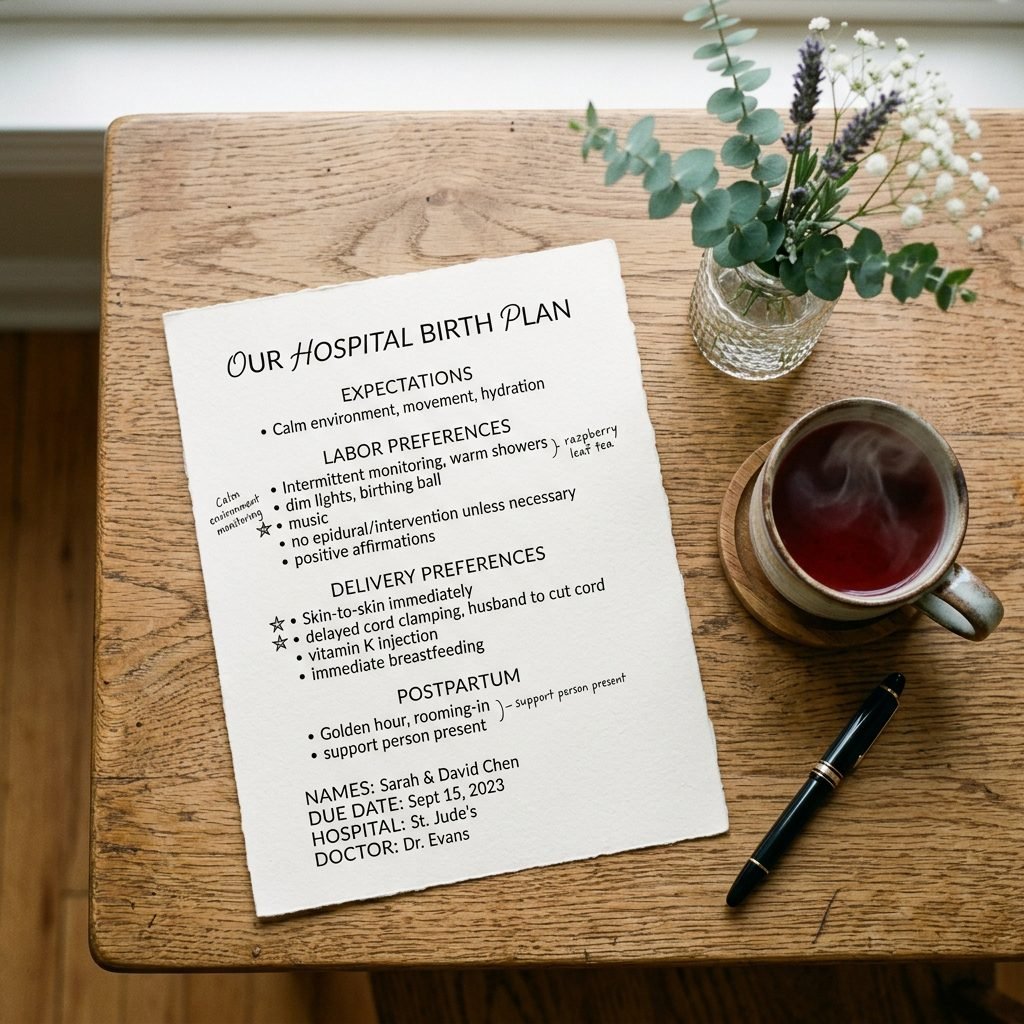
How to Write a Doula-Approved Hospital Birth Plan That Doctors Respect
Hello, beautiful mama. Take a deep breath, drop your shoulders, and let us sit down together with a warm cup of tea. If you are reading this, you are likely preparing for one of the most transformative days of your life: the day you meet your baby. As a doula, I know firsthand that stepping into a hospital environment can sometimes feel intimidating. You might be wondering how to ensure your voice is heard, your body is respected, and your birth space remains sacred amidst the beeping monitors and medical protocols.
Creating a birth plan is not about controlling every single second of labor—birth is a wild, beautiful, and unpredictable journey, after all. Instead, a birth plan is a vital communication tool. It is your way of introducing yourself, your values, and your evidence-based preferences to your medical team before the intense waves of contractions begin. When written thoughtfully, a birth plan bridges the gap between your holistic desires and the hospital’s clinical routines.
The secret to a birth plan that doctors and nurses actually read, respect, and advocate for lies in its structure, tone, and clarity. Medical professionals want you to have a safe and positive birth experience, but they are also working in fast-paced environments. Today, we are going to walk through exactly how to craft a doula-approved hospital birth plan that builds a collaborative team around you. We will cover the specific language to use, the formatting rules you absolutely must follow, and the gentle scripts to help you discuss your preferences with your OB-GYN or midwife. You are strong, you are capable, and your voice matters deeply in your birth space.
The Golden Rule: Keep It to One Page and Highly Visual

Let us start with the most critical piece of advice from the delivery room: your birth plan must fit on a single page. Labor and Delivery nurses are incredible, hardworking angels, but they are often managing multiple patients or walking into your room in the middle of a shift change. If you hand them a four-page essay detailing your birth philosophy, they simply will not have the time to read it thoroughly while simultaneously checking your vitals and monitoring your baby.
Your birth plan needs to be highly scannable. Think of it as an infographic of your preferences. Use bullet points, bold text for crucial medical information, and plenty of white space. You want the charge nurse to be able to glance at it for 30 seconds and instantly know your primary goals. At the very top of the page, include your name, your partner or doula’s name, your provider’s name, and any absolute medical non-negotiables (like severe allergies, Group B Strep status, or previous trauma that requires a trauma-informed approach).
Formatting Hacks for Maximum Impact
- Use clear categories: Break the page down into “Labor Environment,” “Pain Management,” “Pushing/Delivery,” and “Newborn Care.”
- Highlight the essentials: Use bold text for things like “Desires Unmedicated Birth” or “Planning for Epidural.”
- Add a touch of warmth: Include a short, one-sentence intro thanking the team. For example: “We are so grateful for your expertise and support in helping us safely welcome our baby.”
| What to Include on Page One | What to Leave Out (or Discuss Verbally) |
|---|---|
| Allergies and critical medical history | Long paragraphs about your birth philosophy |
| Pain management preferences (Epidural vs. Unmedicated) | Standard hospital practices (e.g., “I want the baby to breathe”) |
| Environment requests (Dim lights, quiet voices) | Aggressive or legally threatening language |
| Infant care (Delayed cord clamping, Vitamin K, eye ointment) | Detailed explanations of *why* you chose a preference |
Tone Matters: The Power of Collaborative Language

The words you choose to put on paper hold immense power. Historically, some birth plans have been written from a place of fear, using combative or defensive language like “I refuse,” “Under no circumstances,” or “Do not touch me.” While it is completely understandable to want to fiercely protect your bodily autonomy, presenting a list of demands can inadvertently put your medical team on the defensive. We want them to be your allies, not your adversaries.
Instead, adopt a tone of collaboration and informed consent. Frame your document as “Birth Preferences” rather than a rigid “Plan.” This subtle shift acknowledges that birth is dynamic and that you trust your team to help you navigate unexpected turns while honoring your core values as much as safely possible.
“I prefer to labor without an epidural and would love your support and encouragement in coping with contractions. If I decide I need pain medication, I will ask for it directly. Please do not offer it to me unless I request it.”
Notice how the quote above sets a firm boundary (do not offer the epidural) but does so with warmth and clarity? This tells the nurse exactly how to support you. Let us look at a few more examples of how to translate defensive statements into doula-approved, collaborative requests.
| Instead of Saying… | Try This Collaborative Phrasing… |
|---|---|
| “I refuse continuous fetal monitoring.” | “I would love intermittent monitoring if baby and I are stable, so I can move freely.” |
| “No IVs allowed.” | “I prefer a saline lock upon admission so I can stay hydrated orally and remain mobile.” |
| “Do not cut my perineum.” | “I prefer to tear naturally and would appreciate warm compresses and perineal support to avoid an episiotomy.” |
| “No formula for my baby.” | “We are exclusively breastfeeding. Please consult us before offering any formula or pacifiers.” |
Step-by-Step: Structuring Your Birth Preferences
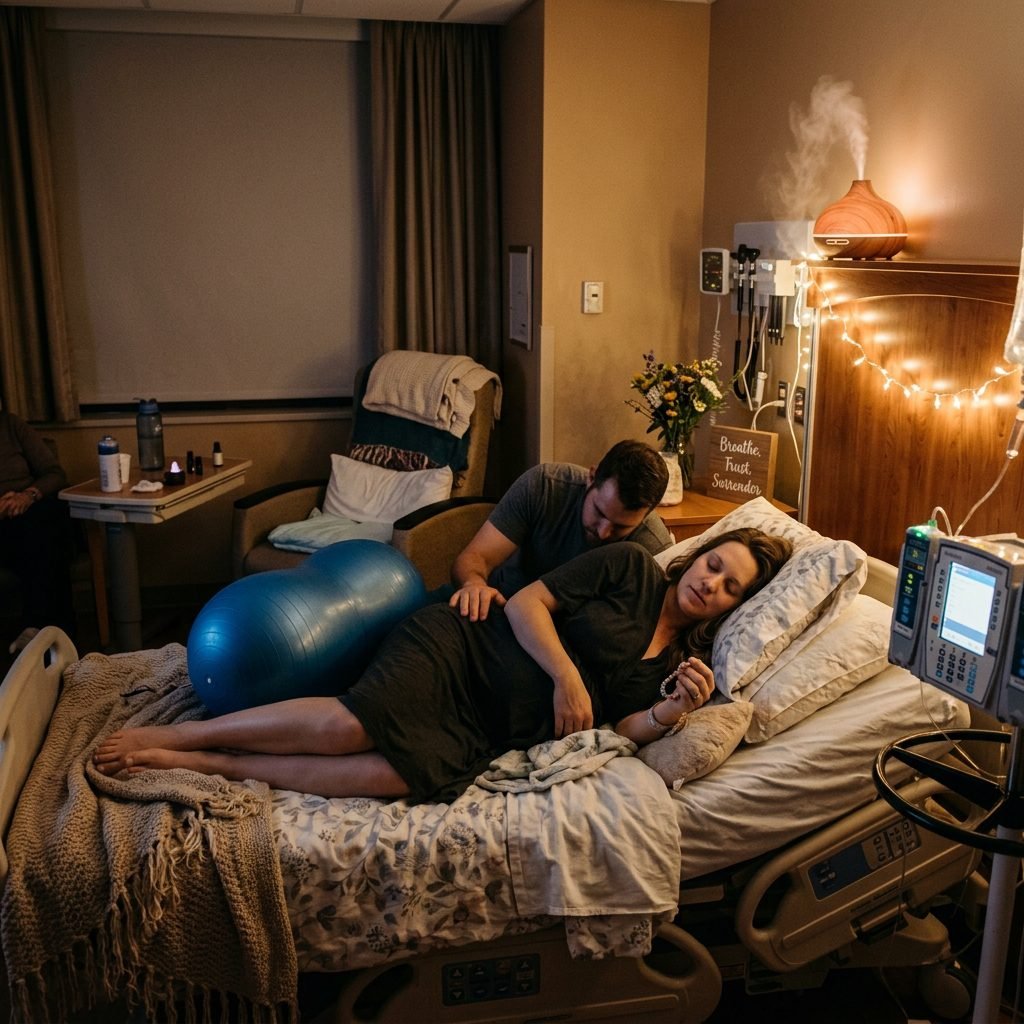
Now that we have the formatting and tone locked in, let us build the actual content of your birth preferences. As a doula, I recommend breaking your plan down into chronological phases. This makes it incredibly easy for the staff to reference the exact section they need based on where you are in your labor journey. Here is the ultimate step-by-step structure to follow:
- The Introduction & Medical Baseline: Start with your names, your baby’s sex/name (if you want to share!), your blood type, GBS status, and any allergies. Add a brief note of gratitude to the staff.
- Labor Environment & Support: Describe the vibe of your room. Do you want dim lighting? Battery-operated candles? A specific playlist? State who will be in the room (e.g., “My partner, David, and my doula, Sarah, will be supporting me.”). Mention if you want cervical checks kept to an absolute minimum.
- Coping Mechanisms & Pain Relief: Be crystal clear about your pain management goals. If you are aiming for an unmedicated birth, list the tools you plan to use: the shower, a birth ball, a peanut ball, counter-pressure, or hypnobirthing tracks. If you do want an epidural, state when you prefer to receive it (e.g., “I plan to request an epidural when I am in active labor and need help resting.”).
- Pushing & Delivery: Specify your desires for the second stage of labor. You might request to push in alternative positions (hands and knees, side-lying, or using a squat bar), use a mirror to see the baby crowning, or have your partner help catch the baby. Also, request “mother-directed pushing” (pushing when you feel the urge) rather than forced purple-pushing, as long as the baby’s heart rate is stable.
- Immediate Postpartum & Newborn Care: This is crucial! Outline your desires for the “Golden Hour.” Standard doula-approved requests include delayed cord clamping (waiting until the cord turns white and stops pulsing, usually 1 to 3 minutes), immediate uninterrupted skin-to-skin for at least 60 minutes, and delaying newborn procedures (like weighing and measuring) until after the first feed. Specify your preferences for the Vitamin K shot, Erythromycin eye ointment, and Hepatitis B vaccine.
The ‘Plan B’: Writing a Gentle Cesarean Section Plan
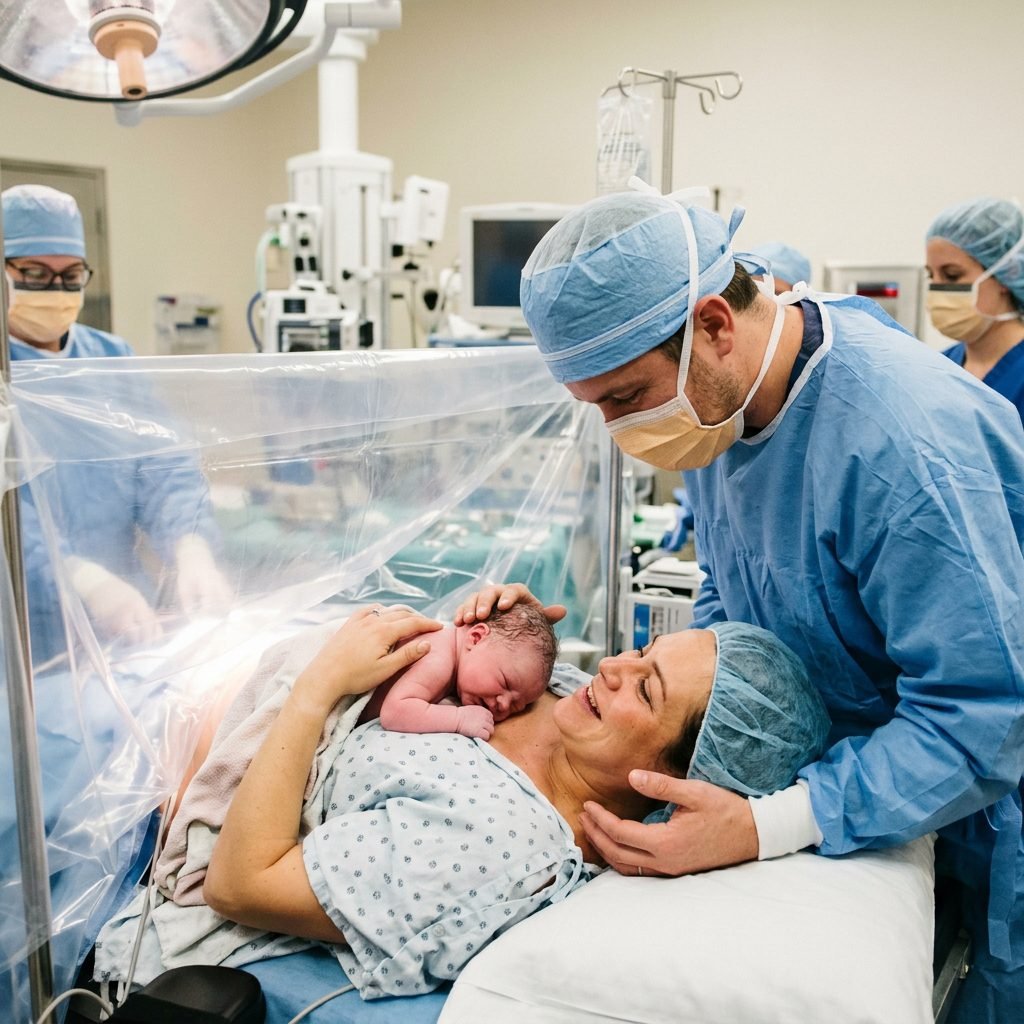
Sister, I know that thinking about a C-section might feel scary, especially if your heart is set on a physiological vaginal birth. But as a postpartum recovery nurse and doula, I promise you this: preparing a “Plan B” does not mean you are manifesting a surgical birth. It means you are empowering yourself to remain an active participant in your birth story, no matter how your baby decides to enter the world. A change in birth plan is never a failure; it is simply a pivot.
If a belly birth becomes the safest route for you and your baby, there are still so many beautiful ways to make the experience feel sacred, gentle, and family-centered. By including a small “In the Event of a Cesarean” section on your birth plan, you communicate to the surgical team that you still want to be deeply involved in the process.
“Birth is not just about making babies. Birth is about making mothers—strong, competent, capable mothers who trust themselves and know their inner strength.” — Barbara Katz Rothman
Gentle Cesarean Preferences to Consider:
- Clear Drape: Request a clear surgical drape (or ask them to lower the solid drape) so you can witness your baby being born.
- Music in the OR: Ask if your partner can play your birth playlist on a small speaker during the surgery to maintain a calm environment.
- Slow Delivery: If it is not a dire emergency, request that the doctor delivers the baby slowly, allowing the chest to be squeezed as it passes through the incision to help clear the lungs of amniotic fluid.
- Immediate Skin-to-Skin: Request that the baby be placed on your chest in the operating room while you are being stitched up, provided the baby is stable. Your partner can help hold the baby securely against you.
- Vaginal Seeding: If this is something you have researched and discussed with your provider, you can request vaginal seeding to help transfer beneficial microbiome bacteria to your baby.
Advocating for Yourself: How to Discuss Your Plan Prenatally

A birth plan should never be a surprise to your provider on the day you go into labor. The absolute best time to review your birth preferences is during your prenatal appointments, ideally between 32 and 34 weeks of pregnancy. This gives you ample time to ensure that your desires align with your provider’s standard practices and the hospital’s policies.
Bring two copies to your appointment—one for your doctor or midwife to keep in your file, and one for you to reference during the conversation. Approach the discussion with curiosity. If your provider pushes back on a certain preference, do not immediately panic or get defensive. Instead, use the BRAIN acronym to navigate the conversation: Ask about the Benefits, Risks, Alternatives, what your Intuition is saying, and what happens if you do Nothing.
“I have put together a one-page list of my birth preferences. I would love to go over this with you today to make sure we are on the same page and to see if any of these requests conflict with standard hospital policy. Your guidance means a lot to me.”
If your provider dismisses your birth plan outright, laughs at it, or tells you “we do not need to look at this, you just need a healthy baby,” I want you to listen to your gut. A healthy baby is the ultimate goal, yes, but a healthy, respected, and non-traumatized mother is equally important. If your provider is unwilling to have a respectful dialogue about your body and your birth, it is not too late to switch providers, even in your third trimester.
| Provider’s Response | Your Empowered Follow-Up Question |
|---|---|
| “We usually just do continuous monitoring for everyone.” | “I understand that is standard. Since my pregnancy is low-risk, are there portable telemetry monitors available so I can walk around?” |
| “You will need to stay in bed once your water breaks.” | “Could you explain the specific medical risks for my situation if I stand up or use the birth ball after my water breaks?” |
| “We give the baby their first bath right away.” | “We strongly prefer to delay the bath until we are home to preserve the vernix. Can we put a note in the chart to skip the hospital bath?” |
Conclusion
Trusting Your Body and Your Team
Writing a doula-approved hospital birth plan is one of the most empowering steps you can take in your pregnancy journey. By keeping it concise, using collaborative language, and preparing for the unexpected, you are setting yourself up for a birth experience where you feel seen, heard, and deeply respected. Remember, your birth plan is not a contract that guarantees a perfect outcome; it is a compass that points your team toward your values. As you pack your hospital bag, slip a few printed copies of your beautiful birth preferences into your folder. Trust your body, trust the process, and know that you are stepping into motherhood with strength, grace, and incredible fierce love. You have got this, mama.
Medical Disclaimer: The information provided in this article is for educational and informational purposes only and is not intended as medical advice. Every pregnancy and birth is unique. Always consult with your qualified healthcare provider, OB-GYN, or certified nurse-midwife regarding any questions or concerns you have about your specific health, birth plan, or medical treatments.