
Liquid Gold: Why Drinking Bone Broth Might Be The Best Thing For Your Growing Baby
Welcome to Your Nourishment Journey, Mama
Hello, beautiful soul. If you are reading this, you are likely navigating the incredible, sometimes exhausting, and always transformative journey of growing a tiny human. As a doula, I often talk about ‘liquid gold’ in the context of colostrum, but today, we are diving into another form of liquid gold that can be a total game-changer for your pregnancy and postpartum vitality: bone broth.
For centuries, traditional cultures across the globe have revered long-simmered bone broth as a sacred food for mothers-to-be. It’s not just a trend; it is a deeply restorative tonic packed with the very building blocks your body needs to knit together a new life. In this guide, we are going to explore why this humble savory tea is perhaps the most potent tool in your prenatal pantry, how it supports your baby’s developing structure, and why it will be your best friend during those first few weeks of healing after birth.
“Nourishing yourself is the first act of mothering your child. When you fill your own cup—quite literally—you are providing the foundation for your baby’s future health.”
The Science of the Simmer: Why Bone Broth is Different
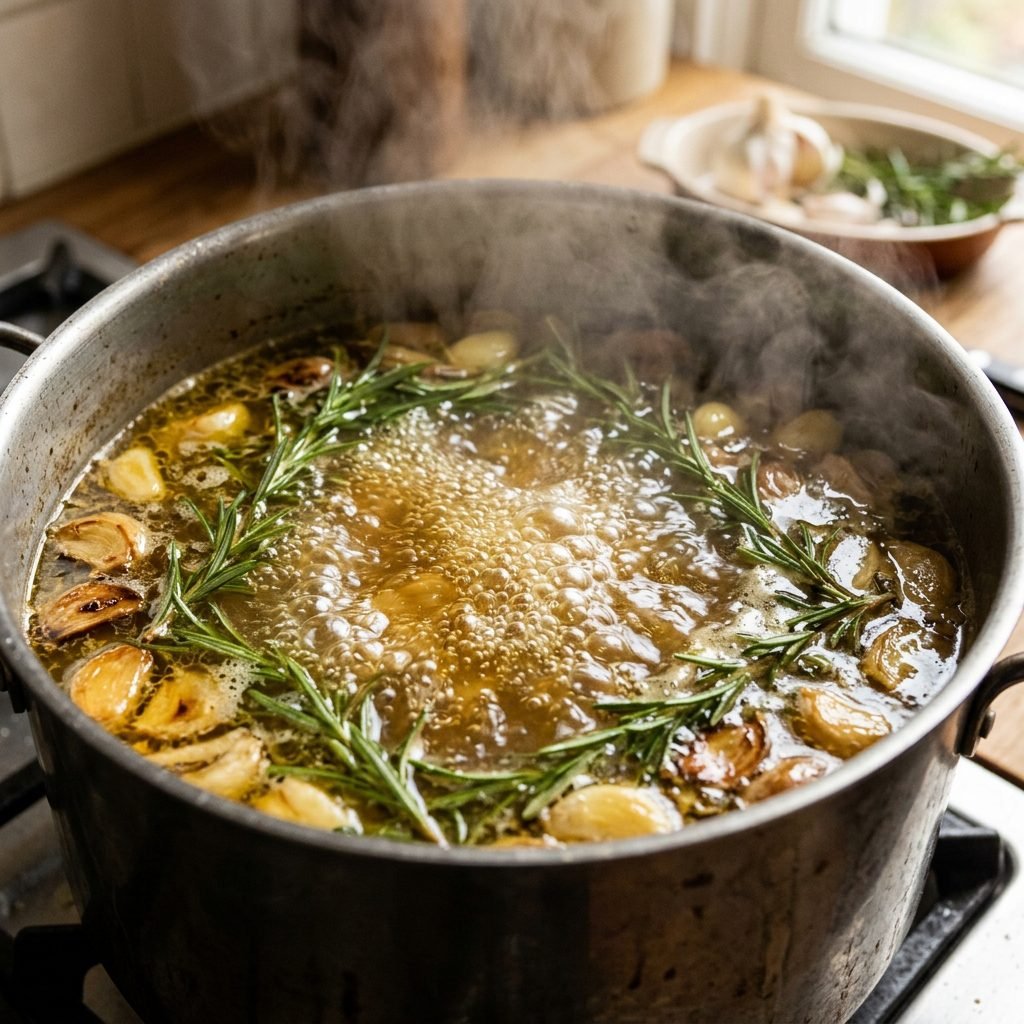
You might be wondering, ‘Isn’t this just chicken soup?’ Not quite, sweet mama. While standard stock is simmered for a couple of hours, true bone broth is slow-cooked for 12 to 24 hours (sometimes even 48!). This extended time, often with a splash of apple cider vinegar, breaks down the bones and connective tissues, releasing a treasure trove of nutrients that are usually locked away.
The Key Nutrients Inside
- Collagen and Gelatin: These are the stars of the show. Collagen is the most abundant protein in our bodies and is essential for the structural integrity of your baby’s skin, bones, and organs.
- Glycine: An amino acid that supports liver detoxification and helps manage the increased physiological stress of pregnancy.
- Proline: Crucial for skin health and tissue repair—think of it as your internal defense against those itchy, stretching belly marks.
- Glutamine: The ‘gut healer’ that helps maintain a healthy intestinal lining, which is vital for your immune system.
- Trace Minerals: Easily absorbable forms of calcium, magnesium, phosphorus, and potassium.
When you drink bone broth, you aren’t just hydrating; you are delivering a concentrated dose of bioavailable nutrients directly to your bloodstream and, by extension, to your baby’s developing systems.
Building Baby’s Foundation: Benefits for Your Little One

From the moment of conception, your baby is a master builder, and they are looking to your nutritional stores for materials. Bone broth provides a unique ‘blueprint’ of nutrients that specifically support structural development.
Developing Strong Bones and Joints
The calcium and phosphorus found in bone broth are in a form that your body recognizes and can easily pass to the placenta. This supports the hardening of your baby’s skeletal system without depleting your own bone density—a common concern for many mothers.
Brain and Nervous System Support
The healthy fats and amino acids in bone broth contribute to the formation of the myelin sheath, the protective coating around your baby’s nerves. This is essential for healthy brain development and cognitive function later in life.
Healthy Gut Seeding
We now know that a baby’s microbiome begins to develop even before birth. By consuming gut-healing gelatin and collagen, you are supporting your own microbiome health, which is the first ‘gift’ of bacteria you pass to your baby during a vaginal birth. A healthy gut for mama often translates to a less colicky, more settled baby.
Safe Sipping: Navigating the Grocery Aisle vs. The Home Kitchen
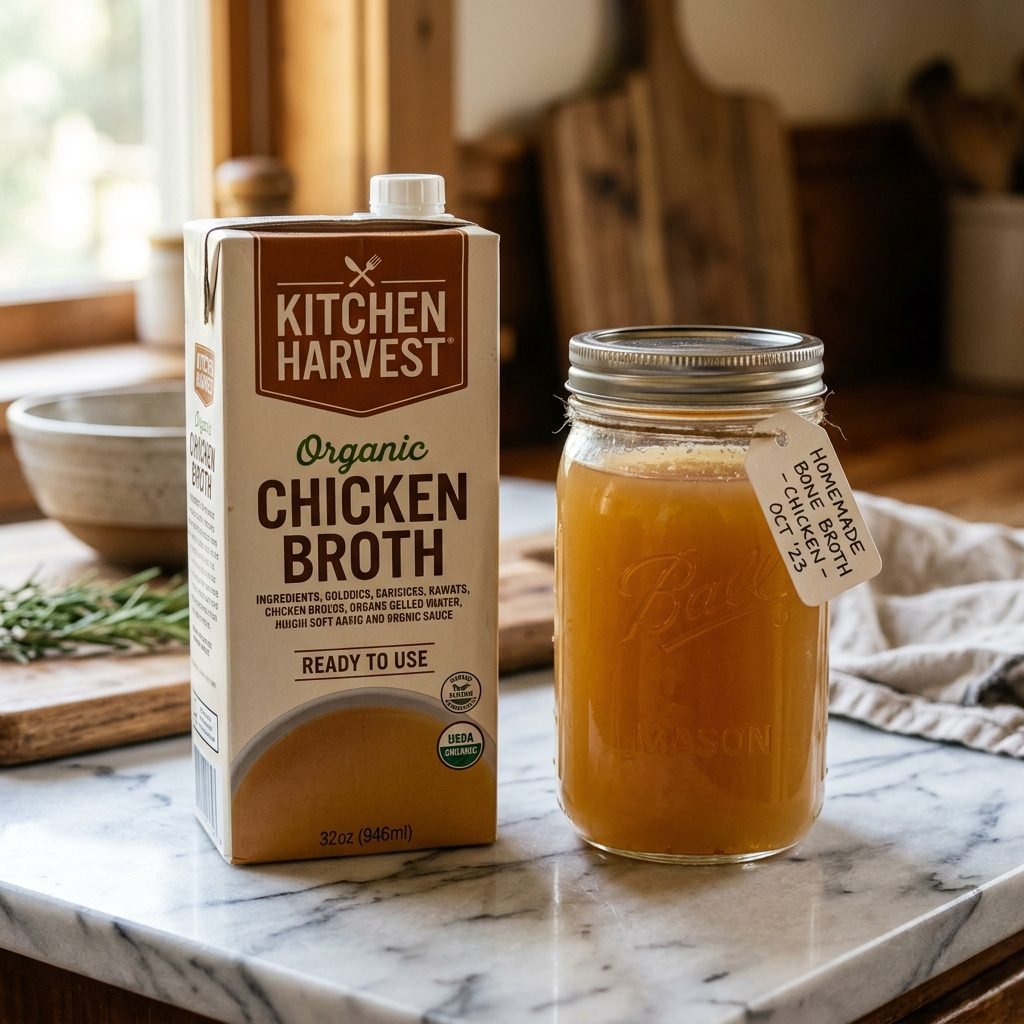
Not all broths are created equal, especially when you are eating for two. When you’re at the store, you’ll see shelves lined with ‘stock’ and ‘broth,’ but many of these are filled with high sodium, MSG, and artificial flavorings that we want to avoid during pregnancy.
I always recommend making your own if you have the energy, but I know that ‘pregnancy fatigue’ is very real! If you buy pre-made, look for ‘Organic Bone Broth’ in the refrigerated or frozen section, rather than the shelf-stable cartons which often use high-heat processing that destroys the delicate proteins.
| Feature | Homemade/High-Quality Bone Broth | Standard Store-Bought Stock |
|---|---|---|
| Simmer Time | 12–48 Hours | 1–3 Hours |
| Protein Content | High (approx. 7-10g per cup) | Low (approx. 1-2g per cup) |
| Additives | Pure: Bones, Water, Veggies, Herbs | Often contains Yeast Extract, MSG, Sugar |
| Gelatin Factor | Gels when cold (shows high collagen) | Stays liquid (low collagen) |
| Sodium | Controlled by you | Usually very high (500mg+) |
Pro-tip: If you are struggling with morning sickness and the smell of cooking meat is a ‘no-go,’ try using a slow cooker in the garage or a well-ventilated laundry room. Your future self will thank you for the nutrients!
Managing Pregnancy Aches and Pains Naturally

As your belly grows, your center of gravity shifts, putting immense pressure on your hips, lower back, and pelvic floor. This is where the ‘liquid gold’ really shines for you, mama. The collagen in bone broth isn’t just for the baby—it’s for your own connective tissues that are currently being stretched to their limits by the hormone relaxin.
Joint Relief and Pelvic Support
Relaxin makes your ligaments soft to allow for birth, but it can also lead to ‘lightning crotch,’ SPD (Symphysis Pubis Dysfunction), and general achiness. Regular consumption of bone broth provides the amino acids necessary to support and repair these overstretched ligaments, potentially reducing some of that late-pregnancy discomfort.
The ‘Pregnancy Glow’ and Stretch Marks
While we love our stripes as badges of honor, the itching and tightness of stretching skin can be uncomfortable. Collagen is the primary protein in skin. By nourishing your skin from the inside out, you improve its elasticity, which can help your skin bounce back more easily and stay hydrated during the third trimester.
“Think of bone broth as your internal prenatal yoga. It provides the flexibility and strength your tissues need to expand with grace.”
The Postpartum ‘Golden Month’ and Healing

In many Eastern traditions, the first 40 days after birth are considered a ‘Golden Month’ where the mother is fed only warm, easy-to-digest, nutrient-dense foods. Bone broth is the cornerstone of this recovery period. After birth, your body has a ‘void’—physically and energetically—and you need to stay warm and grounded.
Repairing the Birth Canal and C-Section Incisions
Whether you had a vaginal birth or a C-section, your body has undergone a major physical event. The proline and glycine in bone broth are essential for wound healing and the remodeling of tissue. It helps the uterus contract back to its original size and supports the healing of any tears or surgical sites.
Combating Postpartum Depletion
The ‘baby blues’ and postpartum exhaustion are often exacerbated by nutrient depletion. Bone broth is incredibly easy for your tired digestive system to process, meaning you get a quick hit of minerals without your body having to work hard to break it down. It’s the ultimate comfort food when you’re running on three hours of sleep.
Liquid Gold for Liquid Gold: Breastfeeding Support
For my breastfeeding mamas, hydration is key. Bone broth is more hydrating than plain water because of its electrolyte content (sodium, potassium, magnesium). It also provides the protein needed to keep your energy stable while your body works overtime to produce milk.
How to Incorporate Bone Broth Into Your Routine
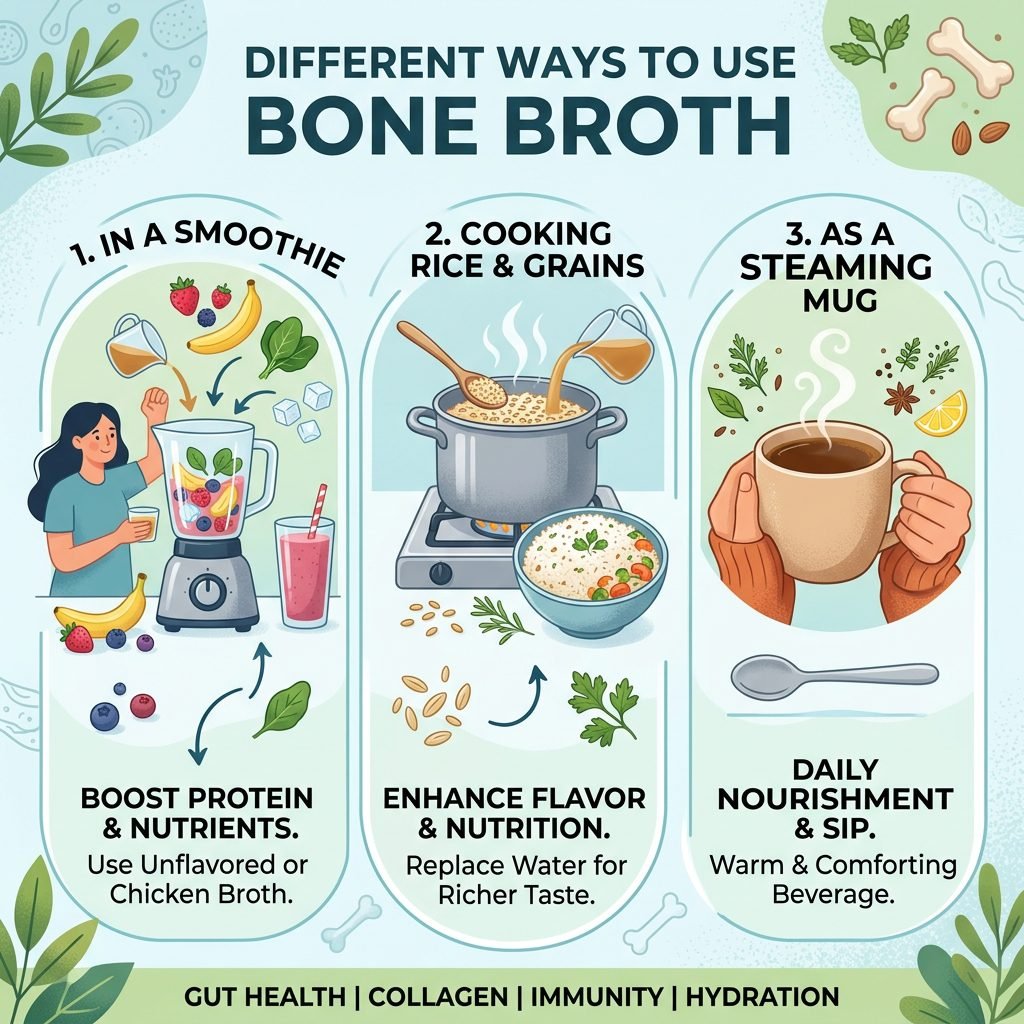
If the idea of drinking a mug of warm broth every morning doesn’t appeal to you—especially during the ‘nausea phase’—don’t worry! There are so many sneaky ways to get this liquid gold into your diet.
Practical Ways to Use It
- Cook Your Grains: Use bone broth instead of water to cook rice, quinoa, or farro. It adds a rich flavor and a massive protein boost.
- The Ultimate Smoothie Base: Believe it or not, frozen bone broth cubes can be blended into a fruit smoothie. If you use a mild chicken broth, the fruit and yogurt will completely mask the savory flavor.
- The 3:00 PM Pick-Me-Up: Instead of a second cup of coffee (which can interfere with iron absorption), try a mug of salted broth with a squeeze of lemon and a pinch of ginger.
- Soups and Stews: This is the classic way. Make a big batch of ‘Doula’s Healing Chicken Soup’ and freeze it in individual portions for those first few weeks home from the hospital.
A Simple ‘Mama-to-Be’ Broth Recipe
- Place 2-3 lbs of organic grass-fed beef bones or a leftover chicken carcass in a slow cooker.
- Add 2 tablespoons of apple cider vinegar (this is key to pulling the minerals out!).
- Add 1 onion, 2 carrots, 2 stalks of celery, and 4 cloves of garlic.
- Fill with filtered water until bones are covered.
- Cook on LOW for 18 to 24 hours.
- Strain and store in glass jars. It stays fresh in the fridge for 5 days or in the freezer for 6 months.
Conclusion
Your Body is Doing Incredible Work
Mama, you are literally building a legacy, one cell at a time. It is so easy to get overwhelmed by the ‘dos and don’ts’ of pregnancy nutrition, but if you can do just one thing for yourself today, let it be a warm, nourishing cup of broth. Whether you use it to settle a nervous stomach, to heal your body after the marathon of birth, or simply to take a quiet moment for yourself, know that you are giving your baby—and yourself—a beautiful gift of strength and health.
You are strong, you are capable, and you are doing a wonderful job. Drink up that liquid gold, and feel the warmth radiating through you and your little one. You’ve got this!