The Warm Bath Infant Massage Method to Instantly Soothe Gassy, Colicky Babies
Mama, I See You in the Quiet Hours
Oh, sweet mama, I know that look in your eyes. It is 2:00 AM, your arms are aching from hours of rhythmic bouncing, and your heart is breaking because your little one is screaming in a way that feels impossible to soothe. You’ve checked the diaper, offered the breast or bottle, and checked their temperature, yet they are still pulling their tiny legs up to their chest, face flushed red with the effort of a cry that sounds like pure discomfort. You are not doing anything wrong. Gas and colic are not reflections of your mothering; they are simply the result of an immature digestive system finding its way in a big, new world.
As a doula, I have sat on many nursery floors with mothers just like you. I have found that when traditional burping fails and the ‘football hold’ isn’t enough, we need to turn to the most primal forms of comfort: warmth and intentional touch. The Warm Bath Infant Massage Method is more than just a bath; it is a therapeutic ritual that uses hydrostatic pressure and thermal regulation to relax the abdominal wall, allowing trapped gas to move and the nervous system to reset. Let’s walk through this together, step by step, so you can bring peace back to your home tonight.
The Science of the Soothe: Why Gas and Colic Happen
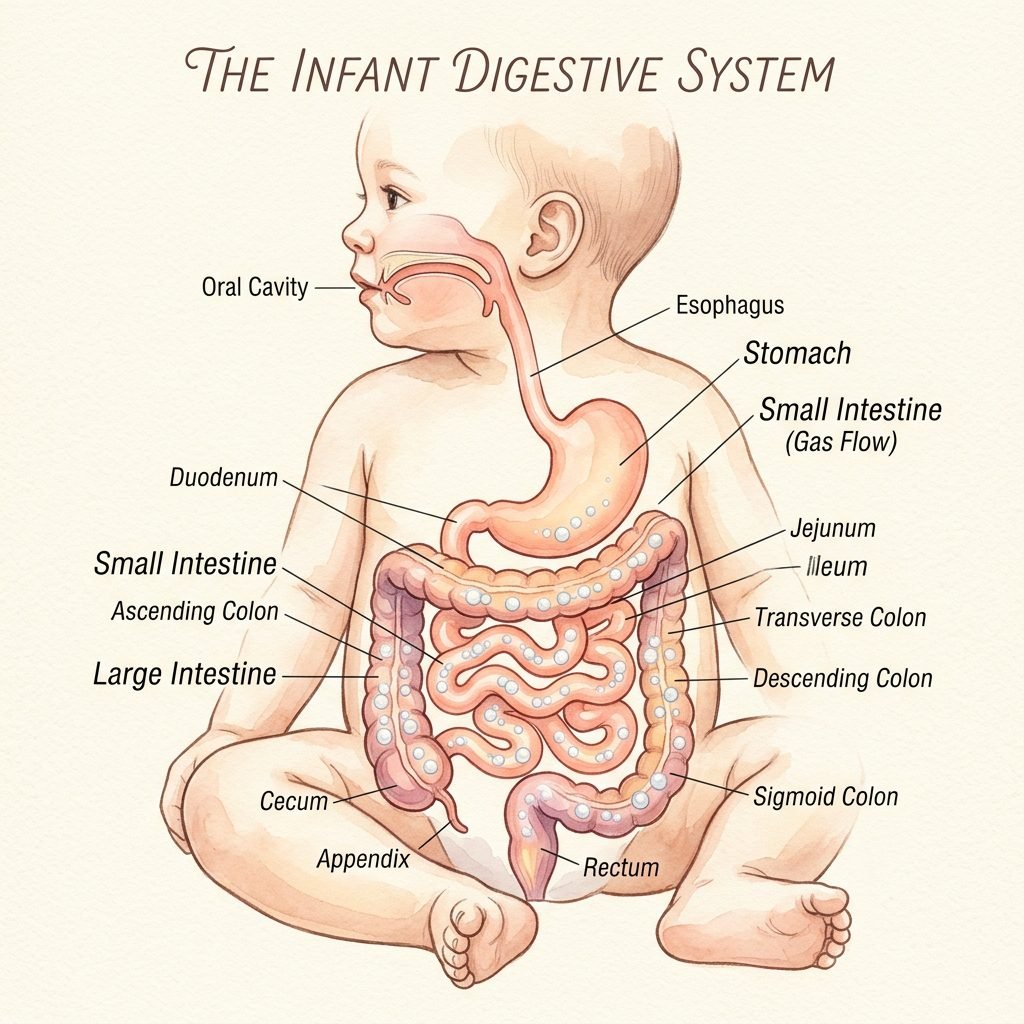
Before we dive into the technique, it helps to understand what is happening inside that sweet little belly. A newborn’s digestive tract is essentially ‘learning’ how to function. The muscles that move food along (peristalsis) aren’t always coordinated yet, leading to trapped air bubbles that cause sharp pain. This is often why your baby might seem perfectly fine one moment and inconsolable the next.
The Culprits of Infant Discomfort
- Immature Gut Flora: The microbiome is still developing, which can lead to excess gas production.
- Overstimulation: A baby’s nervous system can become ‘fried’ by the end of the day, leading to the dreaded ‘witching hour’ where crying becomes a physical release.
- Swallowed Air: Whether from a fast let-down, a poor latch, or crying itself, air gets trapped in the intestines.
The warm water acts as a natural muscle relaxant. Much like a heating pad helps us with cramps, the 100°F water increases blood flow to the gut and softens the abdominal muscles, making the massage far more effective than it would be on dry land.
Setting the Sanctuary: Preparing for the Healing Bath
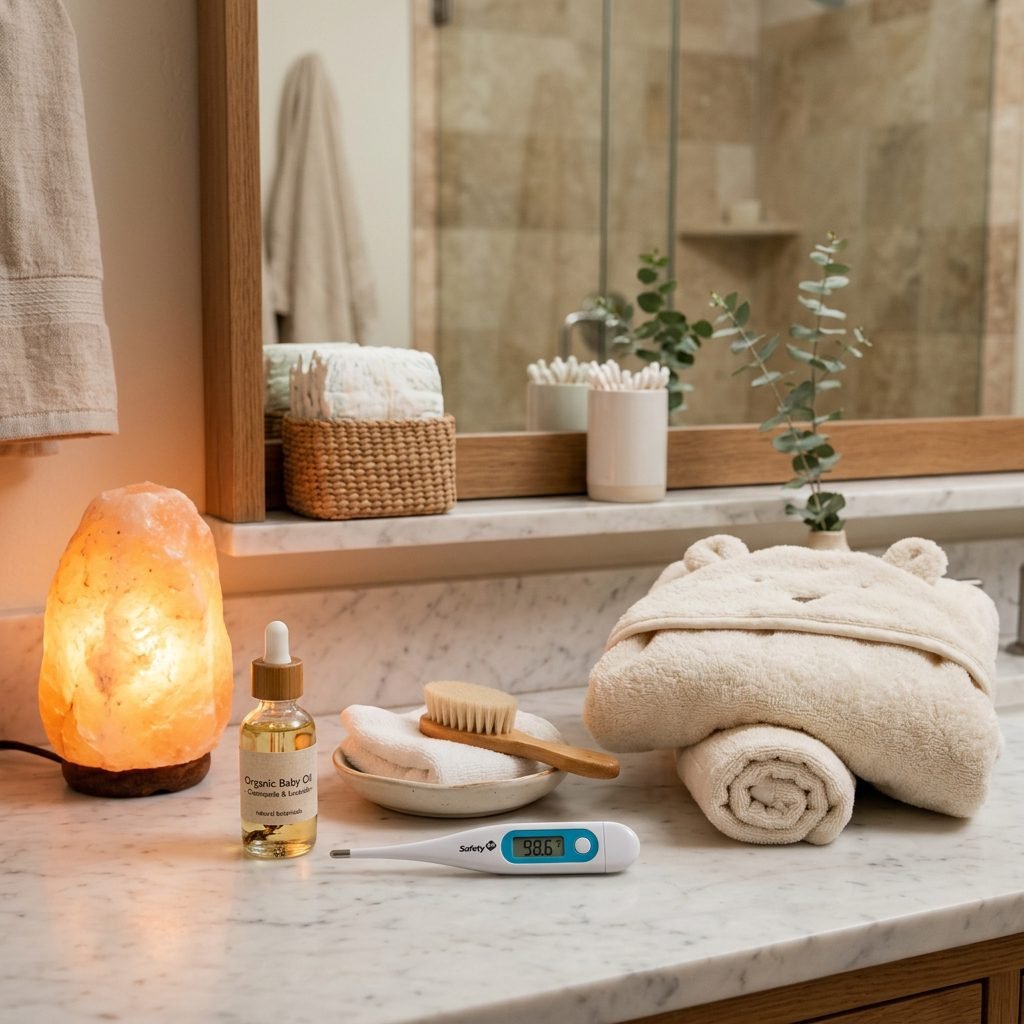
Success with this method starts before the first drop of water touches your baby’s skin. We want to create a sensory environment that signals to the baby’s brain that the ‘fight or flight’ response can end. If the room is cold or the lights are bright, the baby will remain tense, making it harder to move that stubborn gas.
Your Preparation Checklist
- Water Temperature: Aim for exactly 100°F (37.8°C). Use a digital thermometer; water that is too cool won’t relax the muscles, and water too warm will cause further agitation.
- Ambient Heat: Run a small space heater in the bathroom for 10 minutes before the bath (ensure it is safely away from water) so the air is a cozy 75-78°F.
- Lighting and Sound: Dim the lights. If you have a white noise machine, set it to a low ‘heartbeat’ or ‘rain’ setting.
- The Oil: Keep a small bottle of organic fractionated coconut oil or grapeseed oil nearby. These are safe for newborn skin and provide the glide needed for the massage.
| Element | Ideal Setting | Why It Matters |
|---|---|---|
| Water Temp | 100°F | Relaxes the abdominal wall muscles. |
| Room Temp | 75-78°F | Prevents the ‘startle reflex’ when exiting water. |
| Lighting | Dim/Amber | Encourages melatonin production. |
| Oil Type | Edible/Cold-pressed | Safe for skin and accidental ingestion. |
The Step-by-Step Warm Bath Massage Sequence
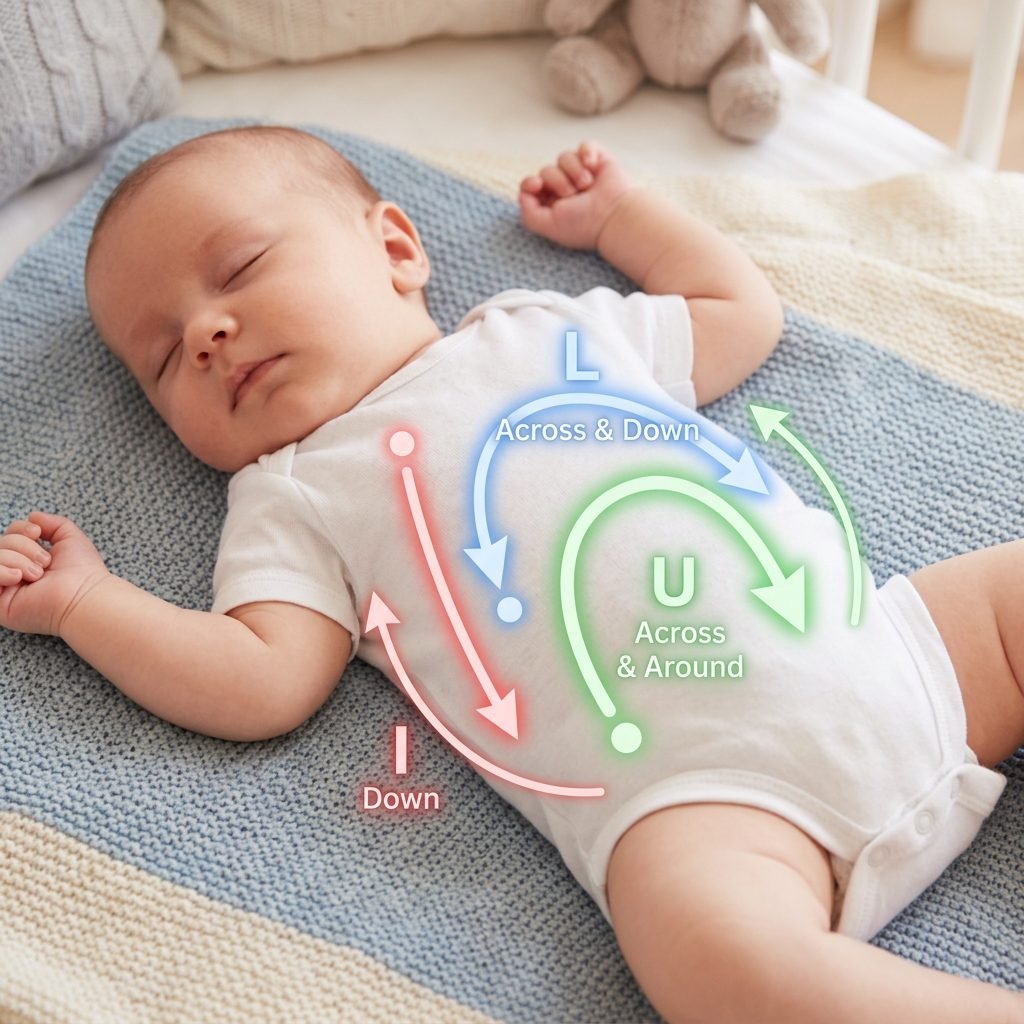
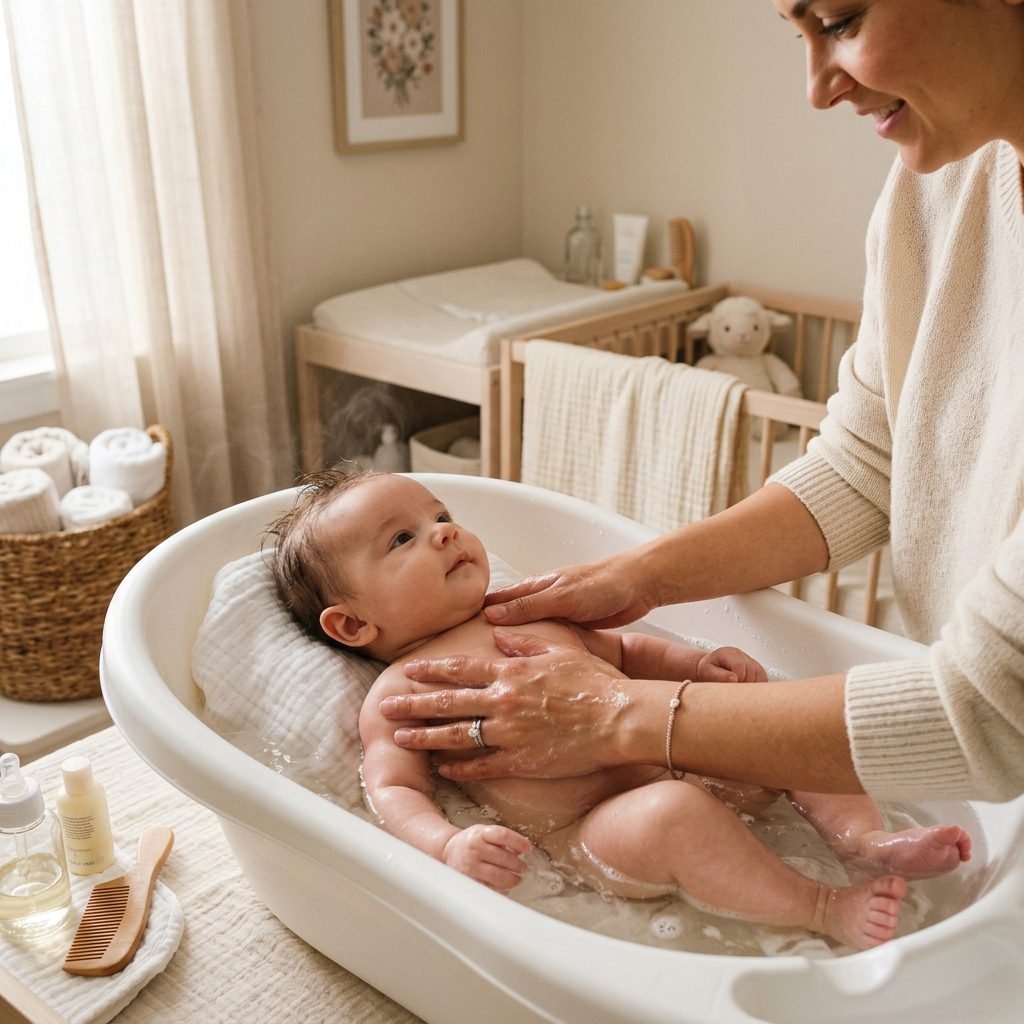
Once your baby is submerged up to their chest in the warm water (use a supportive bath seat if necessary), let them acclimate for two minutes. Gently splash water over their tummy. Once they seem settled, begin these specific strokes. Always move in a clockwise direction—this follows the natural path of the large intestine.
1. The ‘I Love You’ (ILU) Stroke
- The ‘I’: On the baby’s left side (your right), stroke a straight line down from under the ribs to the hip.
- The ‘L’: Stroke across the top of the belly from the baby’s right to left, then down the left side.
- The ‘U’: Trace an upside-down ‘U’ shape, starting at the bottom right hip, moving up to the ribs, across the top, and down to the left hip.
2. The Sun and Moon
Use your left hand to make a full circle (the Sun) clockwise around the belly button. While that hand is moving, use your right hand to make a half-circle (the Moon) from the 12 o’clock to 6 o’clock position. This constant circular motion keeps gas moving steadily toward the exit.
3. The Water Wheel
Using the pinky side of your hands, gently ‘paddle’ from the base of the ribcage down toward the pelvis. This is particularly effective for babies with high-up gas that causes ‘silent reflux’ symptoms.
“As you massage, look into your baby’s eyes and whisper: ‘You are safe, your belly is soft, we are letting the bubbles go.’ Your calm voice is just as medicinal as your touch.”
Advanced Relief: Combining Hydrotherapy with Movement
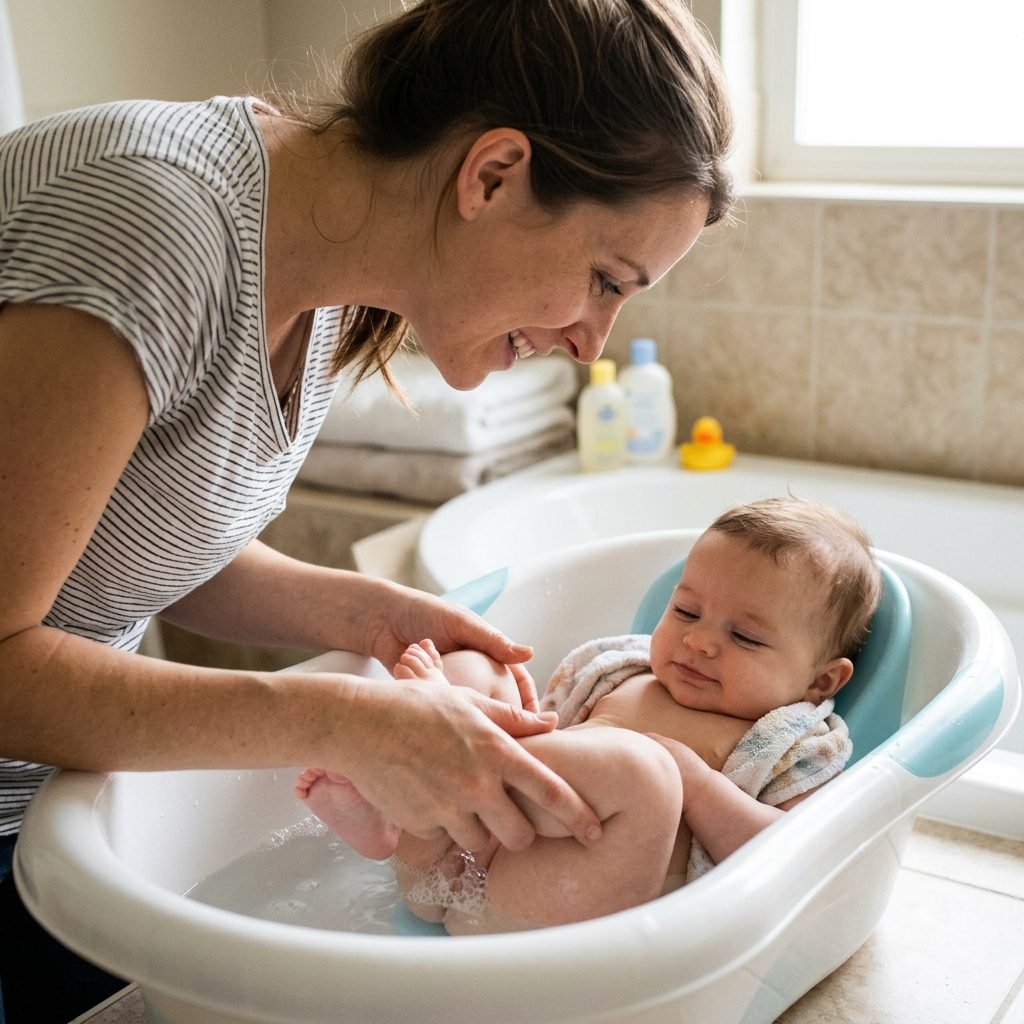
Sometimes, the massage needs a little extra ‘oomph’ to get those bubbles moving. If the strokes alone aren’t producing the desired ‘toots,’ you can incorporate these movements while the baby is still in the warm water. The buoyancy of the water makes these moves much more comfortable for a colicky infant.
The ‘Bicycle’ and ‘Frog’ Combo
- Bicycle Legs: While the baby is reclining in the bath, gently cycle their legs in a slow, rhythmic motion. The key is to bring the knee all the way up to gently press against the side of the tummy.
- The Frog Squat: Hold both of the baby’s ankles and gently push their knees up toward their chest and then out to the sides. Hold this ‘squat’ position for 5 seconds, then straighten. This mimics the natural position for bowel movements.
| Technique | Duration | Best For… |
|---|---|---|
| ILU Strokes | 3-5 Minutes | General gas and constipation. |
| Bicycle Legs | 20 Rotations | Lower intestinal gas pressure. |
| Frog Squat | 3 Reps (5s hold) | Encouraging a bowel movement. |
| Water Wheel | 2 Minutes | Upper gastric pressure/reflux discomfort. |
Post-Bath Rituals: Transitioning to Sleep
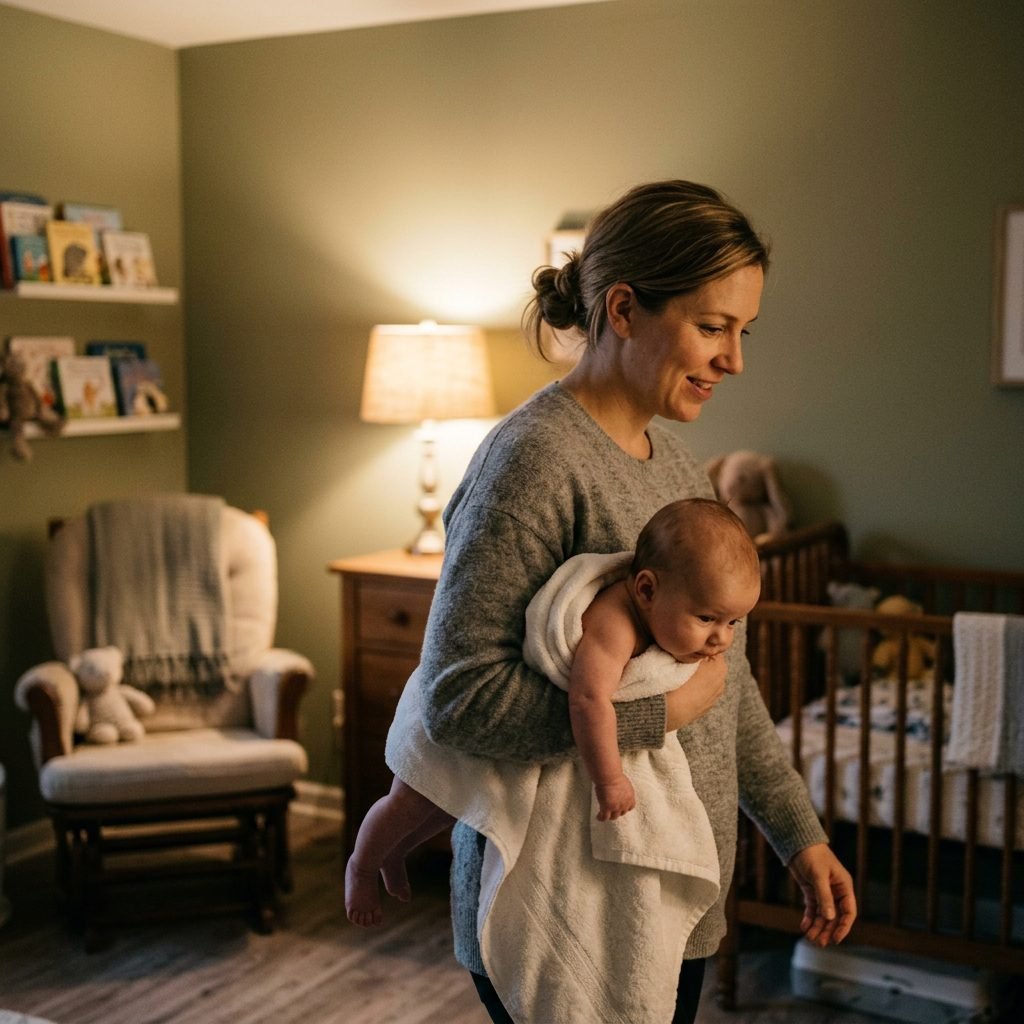
The biggest mistake many parents make is ending the bath and immediately moving into a cold, bright room to get dressed. This sudden change can cause the baby to tense up again, undoing all your hard work. We want to maintain that ‘parasympathetic’ state (the rest and digest mode).
The Warm Towel Wrap
Before the bath ends, toss a thick, cotton hooded towel into the dryer for 5 minutes. When you lift your baby out of the water, immediately cocoon them in the warm towel. Do not rub the skin dry; simply pat gently. The transition from water to air is the most common trigger for a crying relapse.
The ‘Tiger in the Tree’ Finish
If your baby is still a bit fussy after being dressed, use the ‘Tiger in the Tree’ hold. Lay the baby face-down along your forearm, with their head resting near your elbow and their legs straddling your hand. Use your other hand to gently pat their back. The pressure of your arm against their warm, massaged belly provides the final bit of compression needed to settle them for the night.
When the Crying Won’t Stop: A Note for the Weary Mom

I want to be very real with you, sister. There will be nights when you do the bath, you do the massage, you do the bicycle legs, and they still cry. In those moments, it is not a failure of the method, and it is certainly not a failure of your heart. Some babies simply have a harder time processing the world than others.
Self-Regulation for the Parent
If you feel your heart racing or your jaw clenching, it is okay to put the baby in a safe place (like their crib) and walk into the other room for 5 minutes. Take deep breaths. Drink a glass of water. A baby can sense your cortisol levels; by calming yourself, you are actually helping them calm down. You are a good mother. This phase is temporary, even though it feels like forever when you’re in the thick of it.
“This is just a season of growth. Your baby is learning to live, and you are learning to lead them through it. You are doing a beautiful job.”
Conclusion
The Gift of a Soft Belly
The Warm Bath Infant Massage Method is more than just a remedy for gas; it is a way to communicate love through the language of touch. By taking these 20 minutes to slow down, warm up, and intentionally move through the discomfort with your baby, you are building a foundation of trust. You are teaching your little one that when they are in pain, you will be there to help them through it. Tonight, try the 100°F water, the ‘I Love You’ strokes, and the warm towel wrap. You might just find that as your baby’s belly softens, your own heart feels a little lighter too. Sleep well, mama. You’ve got this.