
Beyond the Basics: How to Create a Sensory Birth Plan for a Peaceful Delivery
Welcome to Your Sensory Sanctuary, Mama
Hello, sweet friend. As a doula, I have sat beside many women as they navigated the powerful waves of labor. What I’ve learned is that while we cannot always control the path labor takes, we can absolutely influence the environment in which it unfolds. Most birth plans focus on medical interventions—which are important—but they often overlook the powerful impact of our five senses on the nervous system. A sensory birth plan is about more than just aesthetics; it is a strategic tool designed to keep your body in a state of parasympathetic dominance (the ‘rest and digest’ mode), which allows your natural oxytocin to flow and your labor to progress more smoothly.
When we engage our senses intentionally, we create ‘anchors’ that ground us when the intensity of a contraction builds. We are moving beyond the basics of ‘epidural or no epidural’ and stepping into a realm where your surroundings serve as your greatest support system. Let’s walk through how to curate each sense to build your own peaceful delivery sanctuary.
Visual Harmony: Creating a Low-Stimulus Environment

The hospital or even a birth center can often feel clinical and bright. To keep your brain focused on the task of birthing, we want to minimize ‘visual noise.’ High-intensity lighting can trigger adrenaline, which is the enemy of oxytocin. By curating what you see, you tell your brain it is safe to open and let go.
Practical Visual Tweaks
- Dim the Lights: Ask your birth team to keep the overhead lights off. Use battery-operated tea lights or fairy lights to create a warm, golden glow.
- Focal Points: Bring a printed ultrasound photo, a birth affirmation card, or a religious icon. Place it where you can easily see it during the peak of a contraction.
- Eye Masks: If you cannot control the light, an eye mask is a game-changer for ‘going inward’ during the active phase of labor.
- Clutter Control: Ask your partner or doula to keep medical equipment tucked away or covered with a clean towel if it feels overwhelming.
By lowering the visual stimulation, you allow your neocortex to quiet down, helping you drop into that ‘labor land’ headspace where time and worry seem to slip away.
The Auditory Landscape: Soundscapes for Grounding
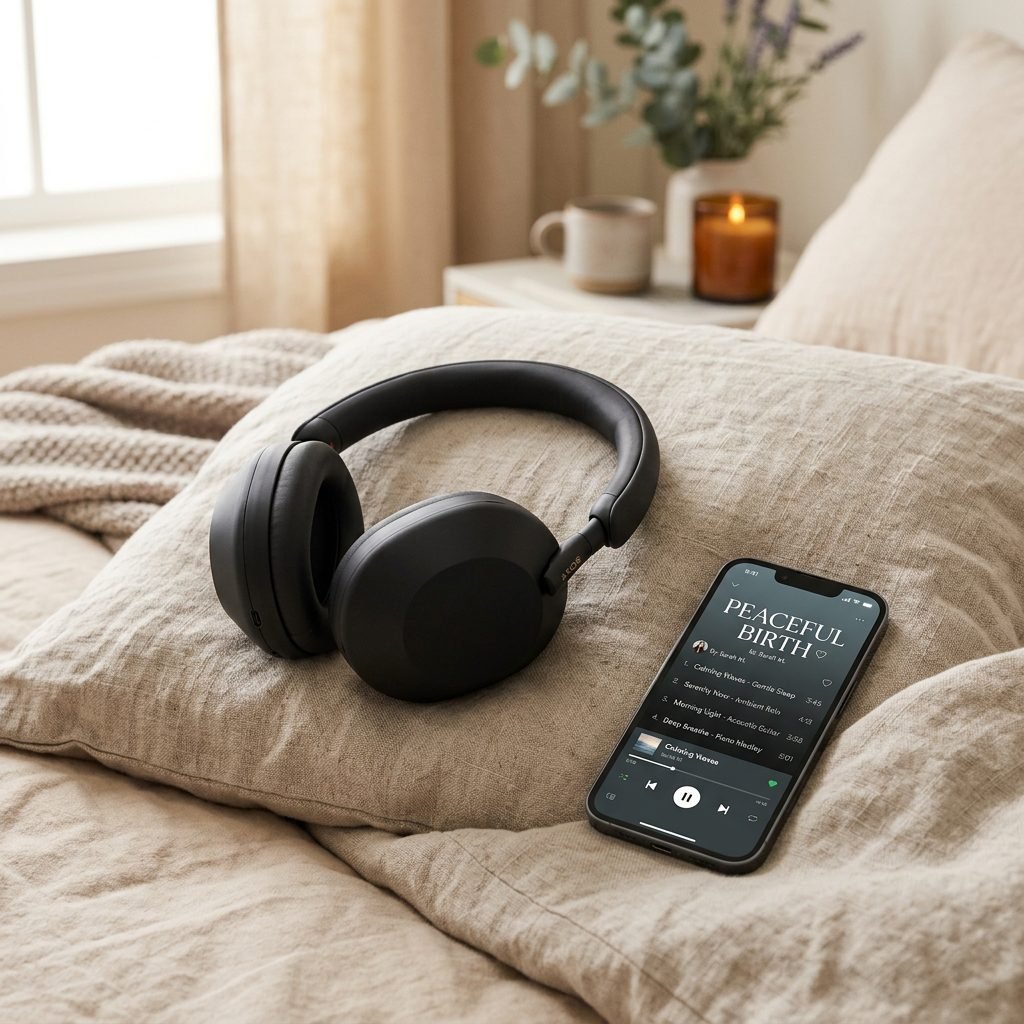
Sound is one of the most evocative senses. The beeps of monitors or the chatter of staff in the hallway can pull you out of your rhythm. Creating a curated auditory landscape helps you maintain a consistent ‘beat’ for your labor.
Choosing Your Labor Soundtrack
- Early Labor: Upbeat, joyful music that keeps you moving and distracted.
- Active Labor: Rhythmic, low-tempo beats or nature sounds (waves, rain, or brown noise) that match the steady pace of your breath.
- Transition: Deeply grounding tracks, perhaps binaural beats or specific guided meditations that offer a calm voice to follow.
“My breath is a wave, and I am the ocean. Every sound I hear reminds me that I am safe and my body knows what to do.”
Don’t forget to pack noise-canceling headphones. If the hospital is particularly loud, these can be your best friend for maintaining your internal peace.
The Tactical Touch: Step-by-Step Comfort Measures

Touch is perhaps the most powerful tool in a doula’s kit. The right physical sensation can literally block pain signals from reaching the brain—a phenomenon known as the Gate Control Theory. Here is how you and your partner can use touch to navigate labor.
Step-by-Step Physical Support Techniques
- The Double Hip Squeeze: Have your partner stand behind you while you lean on a bed or ball. They place their hands on the fleshy part of your hips and apply firm, inward and upward pressure during a contraction. This helps create space in the pelvis.
- The Sacral Press: Using the heel of the hand, your partner applies firm, steady pressure to the lower back (the sacrum). This is especially helpful for ‘back labor.’
- The Counter-Pressure Stroke: Using a tennis ball or a dedicated massage tool, have your partner roll it firmly down your lower back and out toward your hips in a rhythmic motion.
- The Rebozo Sift: Using a long woven scarf (a rebozo) draped under your belly while you are on hands and knees, your partner gently jiggles the ends of the scarf to relax the abdominal muscles.
Remember to pack different textures: a soft minky blanket for comfort and a cool washcloth for your forehead when things get intense. Texture matters more than you think when you are in the thick of it!
Olfactory & Gustatory Grounding: Scent and Taste
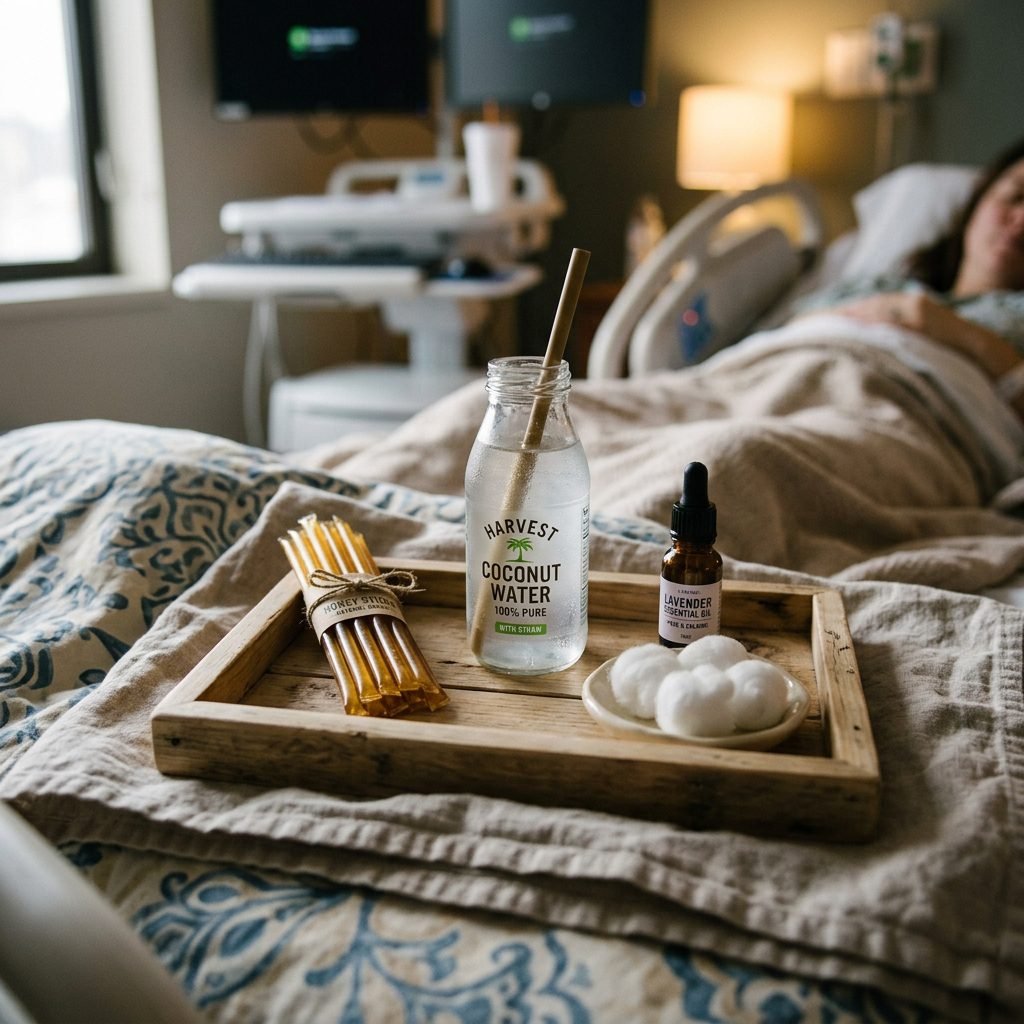
Never underestimate the power of a scent to change your mood instantly. Lavender can soothe anxiety, while peppermint can help with the nausea that often hits during transition. Similarly, keeping your energy up with the right tastes is vital for the ‘marathon’ of birth.
Aromatherapy and Nourishment Tips
- Scent on a Cotton Ball: Instead of diffusing into the whole room, put a few drops of essential oil on a cotton ball. This way, if you suddenly find the smell overwhelming (which happens!), you can just toss it away.
- Hydration Stations: Use a straw for your water bottle so you don’t have to lift your head to drink. Coconut water is excellent for electrolytes.
- Honey Sticks: These provide a quick burst of glucose for your muscles during the pushing phase without feeling heavy in your stomach.
Avoid strong perfumes or heavy food smells in the room, as your sense of smell becomes incredibly heightened during labor.
The Sensory Birth Matrix: A Quick Reference Guide
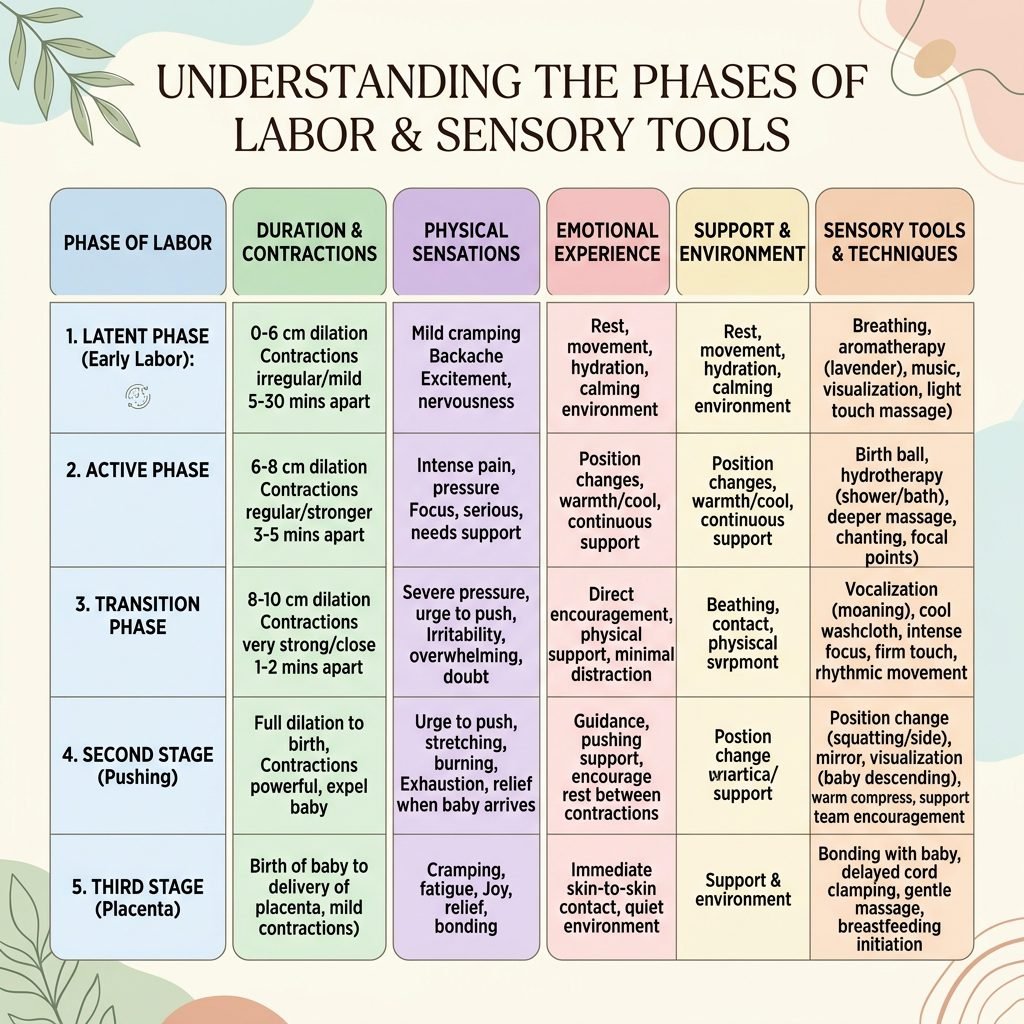
To help your partner and birth team support you, use this table to outline what you need during each phase of your journey. It makes it easy for them to check in on your sensory needs without having to ask you too many questions while you are focusing.
| Labor Phase | Sensory Focus | Recommended Tool/Action |
|---|---|---|
| Early Labor | Distraction & Joy | Upbeat music, warm shower, light snacks. |
| Active Labor | Rhythm & Grounding | Dim lights, rhythmic breathing, hip squeezes. |
| Transition | Intense Focus | Eye mask, peppermint oil for nausea, total silence or affirmations. |
| Pushing | Energy & Power | Cool washcloth, honey sticks, empowering vocalizations. |
| Golden Hour | Bonding & Peace | Skin-to-skin contact, soft lighting, quiet voices. |
Conclusion
You Are Ready for This, Mama
Creating a sensory birth plan isn’t about achieving a ‘perfect’ birth—it’s about giving yourself the grace and the tools to feel safe and supported no matter how the day unfolds. By preparing your environment to cater to your sight, sound, touch, smell, and taste, you are building a sanctuary that honors the incredible work your body is doing. Pack your bag with these sensory anchors, share this plan with your partner, and then trust in your strength. You are a birthing goddess, and you’ve got this!